
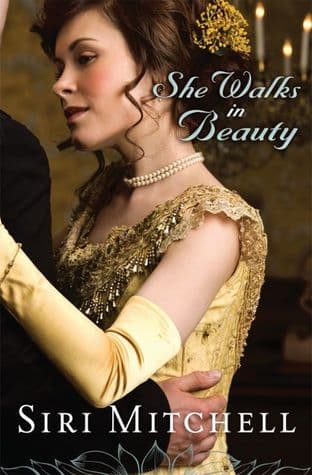
Synopsis
Covers the whole plot, including the ending.
- Difficulty
- Easy
- Pacing
- Moderate
- Mood
- Romantic, Reflective, Historical, Dramatic
- Read it if
- You enjoy historical romance set in the Gilded Age with strong female characters navigating societal expectations and family duty.
- Skip it if
- You prefer fast-paced plots with minimal focus on social etiquette or dislike love triangles.
She Walks in Beauty Plot Summary
Covers the whole plot, including the ending.
The Pressure of Debutante Season
Clara Carter, from a respectable but struggling New York family in the late 1890s, prepares for her debutante season. Her mother and aunt stress the importance of marrying a wealthy, well-connected man to save the family from financial ruin. Clara feels the weight of these expectations, knowing her future and her family's depend on her success. She trains in etiquette, dance, and fashion to become an appealing prospect in the competitive marriage market. Her family's main target is Franklin De Vries, the city's most eligible bachelor.
Entering Society and Meeting Franklin
Clara makes her debut into New York society, a grand event of opulent gowns, elaborate balls, and the watchful eyes of suitors and their families. Her preparations succeed, and she quickly gains a reputation for beauty and charm. Soon, she catches the eye of Franklin De Vries. Franklin, though reserved, seems genuinely interested in Clara. Society closely watches their interactions, and Clara's family is happy with this promising development, believing their financial salvation is near. Clara, however, finds Franklin somewhat distant and questions if she truly feels a connection beyond social expectations.
Friendship and Rivalry
Clara's close friend, Eleanor Van Buren, a lively and ambitious young woman, also enters society that season. Initially, Eleanor supports Clara, but a subtle tension grows as both navigate the same social circles and seek attention. Eleanor also aims for Franklin De Vries, seeing him as the best match. This creates an unspoken rivalry, making Clara question their friendship. While her family encourages Clara to secure Franklin, she feels increasingly conflicted about competing with Eleanor and about the transactional nature of the marriage market.
The Appearance of Mr. Harding
Among the glittering balls and calculated flirtations, Clara meets Mr. Harding, a journalist or intellectual. His presence contrasts with society's superficiality. Unlike Franklin and other bachelors, Mr. Harding talks with Clara about literature, art, and social issues, genuinely interested in her thoughts rather than her social standing or family. He challenges her ideas about life and love, making her feel seen and understood in a way no one else has. Their interactions, though discreet, begin to stir a different kind of feeling in Clara, one not tied to duty or expectation.
Growing Doubts and Societal Scrutiny
As Clara spends more time with Mr. Harding, her feelings for him grow, causing a deep internal conflict. She finds herself drawn to his intellect and genuine nature, even as she continues to entertain Franklin De Vries to please her family. This growing affection for Mr. Harding does not go unnoticed. Whispers and gossip spread in society, questioning Clara's intentions and her suitability for Franklin. Her family, especially her mother, becomes agitated, reminding Clara of their financial situation and the severe consequences if she deviates from their plan.
The De Vries Proposal
Franklin De Vries, after some courtship, formally proposes marriage to Clara. This moment, which her family has so eagerly awaited, brings Clara to a crisis. Accepting Franklin's proposal would secure her family's future, fulfill her social duty, and provide her with a life of comfort and prestige. However, it would mean denying her feelings for Mr. Harding and committing to a life without genuine emotional connection. Her mother's pressure is immense, painting a clear picture of poverty if Clara refuses the most eligible bachelor in New York. Clara is torn between obligation and her heart's desire.
Eleanor's Revelation and Betrayal
The tension between Clara and Eleanor reaches a peak. Eleanor, perhaps feeling threatened by Franklin's proposal to Clara, reveals her own long-held feelings for Franklin and hints at actions she took to get his attention. This revelation further complicates Clara's decision, making her question Franklin's sincerity and Eleanor's friendship. The betrayal hurts Clara deeply, showing the ruthless nature of society and the sacrifices made for wealth and status. It also makes Clara reconsider the true value of the prize she is meant to secure.
The Scandal and Public Backlash
The whispers about Clara's secret meetings with Mr. Harding become a full-blown scandal. Society, always eager for gossip, turns against Clara. Her reputation is damaged, and she becomes the subject of ridicule and condemnation in the society pages. The very fame that once made her popular now makes her a target. This public backlash threatens not only her chances of a good marriage but also her family's social standing and, consequently, their financial prospects. Her mother is devastated, seeing their last hope for stability disappear due to Clara's perceived defiance of social norms.
The Family's Financial Crisis Deepens
The scandal's consequences are swift and severe for the Carter family. Potential supporters withdraw, invitations to social events decrease, and their already difficult financial situation worsens. Mrs. Carter is distraught, blaming Clara for endangering their future. The pressure on Clara increases as she sees the direct impact of her choices on her loved ones. She realizes her personal desires have far-reaching effects, and her family's survival rests on her shoulders, forcing her to consider the true cost of following her heart.
Clara's Decision and Resolution
Facing social isolation and her family's nearing financial ruin, Clara must make a final choice. She confronts her situation, weighing the security and social acceptance from Franklin against the genuine love and intellectual connection she shares with Mr. Harding, and the devastating impact her choices have had on her family. She makes a decision that shows her growth throughout the season, demonstrating courage and a nuanced understanding of what happiness and duty truly mean. The resolution involves a difficult sacrifice, but one that leads to a path of authenticity and self-discovery, defining her future on her own terms.
Principal Figures
Clara Carter
Protagonist
A young woman torn between societal expectations and personal desires.
Clara is a dutiful and intelligent young woman from a respectable but financially struggling family in late 19th-century New York. Initially compliant with her mother's wishes, she embarks on her debutante season with the singular goal of marrying well to secure her family's future. She possesses an inner thoughtfulness and a desire for genuine connection, which is often at odds with the superficiality of her social world. Her initial naiveté gives way to a more discerning perspective as she navigates the complexities of love, friendship, and duty.
Relationships: Mrs. Carter (Daughter, under immense pressure from her mother's expectations.); Franklin De Vries (Potential suitor, initially a target for marriage, later a source of conflict.); Eleanor Van Buren (Best friend turned rival in the pursuit of Franklin.); Mr. Harding (Love interest, offering a genuine intellectual and emotional connection.)
Mrs. Carter
Supporting
Clara's mother, driven by a desperate desire for social and financial security.
Mrs. Carter is Clara's mother, a woman deeply entrenched in the social anxieties of her time. Her primary motivation is to secure her family's financial stability and social standing, which she believes can only be achieved through Clara's advantageous marriage. She is often overbearing and manipulative, using emotional appeals and guilt to pressure Clara into pursuing Franklin De Vries. While her intentions stem from a place of love and concern for her family's survival, her methods often stifle Clara's individuality and happiness, making her an antagonist to Clara's personal desires.
Relationships: Clara Carter (Mother, exerting significant pressure and influence over Clara's choices.); Aunt Helen (Sister-in-law, a confidante and fellow advocate for Clara's advantageous marriage.)
Franklin De Vries
Supporting
The city's most eligible bachelor, representing wealth and social status.
Franklin De Vries is the epitome of the coveted bachelor in late 19th-century New York society. He is wealthy, well-connected, and considered an ideal match for any aspiring debutante. Franklin is somewhat reserved and polite, fitting the mold of a suitable husband. While he shows interest in Clara, his affections often seem more a matter of social calculation and propriety than deep emotional connection. He represents the secure, albeit potentially unfulfilling, path that society dictates for Clara, serving as a catalyst for her internal conflict.
Relationships: Clara Carter (Potential suitor, the object of Clara's family's ambitions.); Eleanor Van Buren (Also pursued by Eleanor, creating a rivalry with Clara.)
Eleanor Van Buren
Supporting
Clara's ambitious and competitive best friend.
Eleanor is Clara's best friend and fellow debutante, initially appearing as a supportive companion. However, she quickly reveals herself to be ambitious and fiercely competitive, especially when it comes to securing a prominent marriage. Eleanor is charming and socially adept, but her underlying insecurity and desire for status lead her to pursue Franklin De Vries, creating a significant rift in her friendship with Clara. She embodies the cutthroat nature of the marriage market and the compromises women were expected to make for social advancement, eventually acting as a rival.
Relationships: Clara Carter (Best friend turned rival.); Franklin De Vries (Also pursues Franklin, creating conflict with Clara.)
Mr. Harding
Love Interest
A journalist/intellectual who offers Clara genuine connection and intellectual stimulation.
Mr. Harding is a contrasting figure to the high society bachelors. He is portrayed as a journalist or intellectual, valuing genuine conversation, intellect, and authenticity over social status and wealth. He is perceptive and kind, seeing Clara for who she truly is beyond her debutante facade. His presence in Clara's life challenges her understanding of love and happiness, offering an alternative path based on shared values and emotional connection. He represents the allure of a life lived on one's own terms, free from societal constraints, and becomes the true object of Clara's affections.
Relationships: Clara Carter (Love interest, offering a genuine and intellectual connection.)
Aunt Helen
Supporting
Clara's aunt, a traditional figure who reinforces societal expectations.
Aunt Helen is Clara's maternal aunt and a staunch supporter of Mrs. Carter's efforts to secure a good match for Clara. She embodies the traditional values and societal expectations of the era, constantly advising Clara on proper etiquette, appearance, and the importance of a financially advantageous marriage. While she cares for Clara, her perspective is firmly rooted in the belief that a woman's primary duty and source of security lies in marrying well. She serves as another voice of societal pressure, reinforcing the difficult choices Clara faces.
Relationships: Clara Carter (Aunt, offering guidance (and pressure) on social conduct.); Mrs. Carter (Sister-in-law, united in their goal for Clara's marriage.)
The Society Pages
Mentioned
A collective entity representing public opinion and gossip.
The 'society pages' are not a single character but a pervasive force in the novel, acting as a collective character representing public opinion, gossip, and the media's influence in late 19th-century New York. They are the arbiters of social standing, capable of elevating a debutante to celebrity status or condemning her to social ruin. The fear of being featured negatively in these pages drives much of Clara's and her family's actions, demonstrating the immense power of public perception in shaping personal destinies during this era.
Themes & Insights
Societal Expectations vs. Individual Desire
This theme is central to Clara's journey. She is constantly pulled between her family's and society's pressure to marry for financial security and status, and her own desire for genuine love and intellectual connection. The debutante season itself shows these expectations, a ritual designed to secure good matches. Clara's internal struggle, especially as she develops feelings for Mr. Harding, highlights the difficult choices women faced when personal happiness was often less important than duty and economic survival. Her final decision reflects an effort to balance these opposing forces.
“A girl’s worth, Mama always said, was measured not by her heart or her mind, but by the size of her husband’s fortune.”
The Nature of Love and Marriage
The novel explores different kinds of love and marriage: the transactional, duty-bound marriage expected of Clara with Franklin De Vries, and the more authentic, emotionally connected love she finds with Mr. Harding. Society dictates that marriage is mainly a financial and social arrangement, a way to gain status and stability. Clara's growing discomfort with this transactional view, and her attraction to Mr. Harding's genuine interest in her, question the prevailing norms. The story looks at whether true happiness can be found in a marriage of convenience or if genuine affection is most important, even at great cost.
“Was love a gilded cage, or was it the freedom to be truly seen?”
Friendship and Betrayal
The relationship between Clara and Eleanor shows friendship strained and broken by a competitive social environment. Initially, their bond seems strong, but the intensity of the marriage market, especially their shared pursuit of Franklin De Vries, turns their friendship into rivalry and then betrayal. Eleanor's actions highlight how ambition and insecurity can harm even close relationships, making Clara confront the realities of trust and loyalty in a superficial society. This theme shows the personal cost of navigating a world where every interaction can be a strategic move.
“In this game, even friendship was a fragile thing, easily shattered by ambition.”
The Power of Public Opinion and Reputation
The novel clearly shows the immense power of public opinion, especially through the 'society pages' and the constant threat of gossip. A young woman's reputation is her most valuable asset, able to make or break her future. Clara's initial rise to 'society darling' status, followed by her quick fall into scandal due to her association with Mr. Harding, shows how fast public perception can change. The fear of social isolation and the devastating impact of negative publicity on her family's standing are strong motivators, highlighting the restrictive and often unforgiving nature of late 19th-century high society.
“A whisper could travel faster than a carriage, and destroy more thoroughly than any financial ruin.”
Plot Devices & Literary Techniques
The Debutante Season
A structured social ritual that drives the plot and creates conflict.
The debutante season itself functions as a central plot device, providing the framework for the entire narrative. It's a highly formalized, high-stakes competition for marriage, forcing Clara into situations where her values are tested. The season's events—balls, teas, promenades—are settings for key character interactions, advancements in relationships, and the emergence of conflicts. It acts as a ticking clock, creating urgency for Clara to secure a match, and its rules and expectations are the primary source of external pressure on her.
The Society Pages
A narrative tool reflecting and influencing public opinion and reputation.
The society pages of local newspapers serve as a recurring plot device, acting as a barometer of social standing and a source of both celebrity and scandal. They are used to publicly validate Clara's initial success and later to broadcast her perceived transgressions, directly impacting her reputation and her family's standing. This device illustrates the pervasive surveillance and judgment of society, demonstrating how external perceptions can dictate personal destinies and escalate conflict, pushing Clara towards a crisis point.
The Eligible Bachelor (Franklin De Vries)
A symbolic character representing the ideal societal prize and a catalyst for conflict.
Franklin De Vries, as the 'city's most eligible bachelor,' serves less as a fully developed character and more as a symbolic plot device. He represents the ultimate prize in the marriage market, embodying wealth, status, and security. His presence drives the ambitions of both Clara and Eleanor, creating a central conflict and rivalry. He is the tangible goal that Clara's family pushes her towards, and her interactions with him, along with his eventual proposal, are crucial turning points that force Clara to confront her true desires.
She Walks in Beauty Quotes
“The past is a stubborn thing, always trying to pull you back into its embrace.”
“True beauty isn't about the face you're given, but the heart you cultivate.”
“Sometimes the greatest act of love is letting go of what you thought you wanted for someone else's happiness.”
“A lady's reputation is like a delicate porcelain doll; once broken, it can never be truly mended.”
“Hope is a fragile bird, easily frightened away, but it always finds its way back if you leave a window open.”
“The world doesn't care for your delicate sensibilities; it demands action, even from a lady.”
“It's not enough to simply exist; one must live, truly live, with passion and purpose.”
“Sometimes the greatest strength lies not in fighting, but in yielding to what is right.”
“A shared glance can speak volumes more than a thousand carefully chosen words.”
“Every choice we make, no matter how small, carves the path of our future.”
“The greatest prison is often the one we build for ourselves with fear and expectation.”
“Love isn't a sudden burst of fireworks; it's the quiet, steady warmth that grows over time.”
“Even in the darkest of times, a single candle can illuminate the way forward.”
“To be truly seen for who you are, flaws and all, is the most precious gift.”
Quiz
10 questions on the plot and the characters. Each answer comes with a short explanation.
Question 1
What is Clara Carter's primary goal during her social season debut, as set by her family?
- To become a celebrated independent artist.
- To secure the affections of the city's most eligible bachelor.
- To avoid marriage and pursue a career in medicine.
- To expose the hypocrisy of high society.
Show answer
B. To secure the affections of the city's most eligible bachelor. The synopsis explicitly states Clara's goal: 'secure the affections of the city's most eligible bachelor.'
Question 2
What kind of preparations does Clara undergo for her debut into society?
- Studying literature and philosophy.
- Learning to fence and ride horses competitively.
- Corset fittings, dance mastering, and manners perfecting.
- Training in business management and financial investments.
Show answer
C. Corset fittings, dance mastering, and manners perfecting. The text mentions 'corsets to be fitted, dances to master, manners to perfect' as part of her training.
Question 3
What is the name of the 'city's most eligible bachelor' Clara is tasked with pursuing?
- Lord Byron
- Franklin De Vries
- Mr. Darcy
- Julian Blackwood
Show answer
B. Franklin De Vries The synopsis explicitly names 'Franklin De Vries' as the eligible bachelor.
Question 4
What internal conflict does Clara experience despite her initial success in society?
- She struggles with the physical demands of her debut.
- She wonders if the life she is pursuing is what she truly wants.
- She fears she will not be accepted by the elite.
- She regrets leaving her rural home for the city.
Show answer
B. She wonders if the life she is pursuing is what she truly wants. The text states, 'Yet Clara wonders if this is the life she really wants,' highlighting her internal struggle.
Question 5
What complication arises involving Clara's best friend?
- Her best friend encourages her to abandon her social duties.
- Her best friend also sets her sights on Franklin De Vries.
- Her best friend reveals a secret that could ruin Clara's family.
- Her best friend helps her elope with another man.
Show answer
B. Her best friend also sets her sights on Franklin De Vries. The synopsis mentions, 'especially when she learns her best friend has also set her sights on Franklin De Vries.'
Question 6
What significant event causes Clara to realize her family's future is at stake?
- She learns her family has lost all their wealth.
- A man appears who loves her for who she is, and gossip backlash turns ugly.
- Franklin De Vries publicly rejects her proposal.
- She is disinherited by a distant relative.
Show answer
B. A man appears who loves her for who she is, and gossip backlash turns ugly. The text states, 'When a man appears who seems to love her simply for who she is, and gossip backlash turns ugly, Clara realizes it's not just her heart at stake—the future of her family depends on how she plays the game.'
Question 7
What is the primary societal expectation placed upon young women like Clara in the late 1890s, as depicted in the book?
- To pursue higher education and a professional career.
- To secure a favorable marriage and maintain social standing.
- To become financially independent through personal ventures.
- To engage in political activism and social reform.
Show answer
B. To secure a favorable marriage and maintain social standing. The opening line emphasizes 'so much depends on her social season debut' for 'a young society woman seeking a favorable marriage in the late 1890s,' highlighting the societal pressure.
Question 8
How does Clara's initial success in society manifest?
- She receives a prestigious academic scholarship.
- She becomes a 'society-page darling' and gains celebrity's spotlight.
- She is offered a partnership in a prominent business.
- She wins a substantial monetary prize in a talent competition.
Show answer
B. She becomes a 'society-page darling' and gains celebrity's spotlight. The text states, 'Her training soon pays off, however, as celebrity's spotlight turns Clara into a society-page darling.'
Question 9
What is the central theme explored through Clara's journey, particularly when she questions her desired life and faces gossip?
- The importance of individual freedom versus societal expectations.
- The inevitable decline of the aristocracy.
- The superiority of city life over rural existence.
- The benefits of arranged marriages for social stability.
Show answer
A. The importance of individual freedom versus societal expectations. Clara's questioning 'if this is the life she really wants' and her attraction to a man who loves her 'simply for who she is,' contrasting with her family's social and financial dependence on a strategic marriage, highlights the conflict between individual desire and societal pressure.
Question 10
What is the ultimate consequence for Clara if she 'plays the game' incorrectly, according to the synopsis?
- She will be disowned by her immediate family.
- Her own heart will be at stake, and the future of her family.
- She will be forced to leave the country permanently.
- She will lose her personal fortune and inheritance.
Show answer
B. Her own heart will be at stake, and the future of her family. The synopsis explicitly states, 'Clara realizes it's not just her heart at stake—the future of her family depends on how she plays the game.'
She Walks in Beauty FAQ
What is the central conflict Clara Carter faces during her social season debut?
Clara Carter's central conflict revolves around balancing her family's expectations to secure a marriage with the city's most eligible bachelor, Franklin De Vries, against her own desires for genuine affection and a life beyond societal pressures. This is complicated by the realization that her best friend, Eleanor, also harbors feelings for Franklin.
Who is Franklin De Vries and why is he so important to Clara's family?
Franklin De Vries is presented as the most eligible bachelor in the city, possessing wealth, social standing, and a desirable family name. Securing his affections for Clara would not only elevate her own status but also significantly improve her family's financial stability and social standing, which is a primary goal for her mother.
How does Clara's friendship with Eleanor complicate her pursuit of Franklin?
Clara's friendship with Eleanor becomes strained and complicated when she discovers that Eleanor also has feelings for Franklin De Vries. This creates a moral dilemma for Clara, forcing her to choose between her loyalty to her best friend and her family's desperate need for a strategic marriage.
What role does 'celebrity' and society-page attention play in Clara's journey?
The attention from society pages and her newfound 'celebrity' initially serves as validation of Clara's success in navigating the social season, fulfilling her family's goal. However, this public scrutiny eventually turns into negative gossip and backlash, revealing the superficial and often cruel nature of society's judgment and making her question the value of such fame.
Who is the 'man who seems to love her simply for who she is,' and how does he challenge Clara's perspective?
The 'man who seems to love her simply for who she is' is Julian Thorne, a less affluent but kind-hearted artist who sees beyond Clara's social facade. He challenges her perspective by offering a vision of love based on authenticity and personal connection, contrasting sharply with the transactional nature of the marriages society expects her to pursue.
What specific 'hidden detail' foreshadows the shift in public opinion against Clara?
Early in the story, comments from rival debutantes or subtle remarks in society columns about Clara's rapid rise could foreshadow the eventual backlash. Perhaps a fleeting mention of how quickly society lifts someone up only to tear them down, or Eleanor's early jealousy, hints at the volatility of public opinion.
Are there any subtle clues about Franklin De Vries's true character before his intentions become fully clear?
Yes, subtle clues about Franklin's true character might include his slightly detached demeanor, his focus on societal expectations rather than Clara's genuine interests during their conversations, or perhaps a moment where he prioritizes his reputation over showing true empathy, hinting that he is more concerned with appearances than with deep connection.
What specific historical detail of the late 1890s social season is subtly used to highlight Clara's internal struggle?
The constant emphasis on corset fittings, mastering specific dance steps, and rigid etiquette lessons, while outwardly about perfection, subtly highlights Clara's internal struggle. These physical constraints and strict rules mirror the emotional and societal confinement she feels, representing how her true self is being molded and suppressed for public presentation.
How does Clara's mother's past influence her intense pressure on Clara to marry well?
Clara's mother likely experienced her own financial or social struggles, possibly from a less advantageous marriage or a family downturn, which instills in her a fierce determination to secure Clara's future. Her past likely informs her belief that a good marriage is the only path to security and respectability, making her push Clara with such intensity.
Analyze the psychological impact of the 'gossip backlash' on Clara's self-perception.
The gossip backlash profoundly impacts Clara's self-perception, causing her to doubt her worth and question the value of the 'beauty' and 'charm' she cultivated. It forces her to confront the superficiality of societal validation and leads to a period of introspection, where she must decide if her identity is defined by public opinion or her inner values.
How does Eleanor's psychological state evolve from best friend to rival?
Eleanor's psychological state likely evolves from a supportive best friend to a rival due to a combination of jealousy, perceived betrayal, and her own societal pressures. Her initial admiration for Clara's success could curdle into resentment as Clara inadvertently threatens Eleanor's own prospects or long-held desires, particularly regarding Franklin.
What internal conflict does Clara experience regarding her 'performance' during the social season?
Clara experiences significant internal conflict regarding her 'performance,' feeling increasingly like she is playing a role rather than being her authentic self. The constant need to perfect manners and master dances makes her question if the person society admires is truly her, or merely a carefully constructed facade designed to achieve a specific outcome.
Is Clara's ultimate choice primarily for her own happiness or for her family's future, and why?
Clara's ultimate choice is likely a complex blend of both, but leans more towards her own happiness, as she realizes true happiness is intertwined with her family's genuine well-being, not just their financial security. She understands that a loveless marriage, even if financially advantageous, would ultimately bring misery to her and indirectly impact her family's emotional stability, leading her to prioritize authentic connection.
How does the book interpret the idea of 'beauty' in the context of the late 1890s society?
The book initially presents 'beauty' as a superficial tool for social advancement, focusing on physical appearance and refined manners. However, it ultimately reinterprets beauty as something deeper – an inner quality of kindness, integrity, and authenticity that truly endures and attracts genuine affection, contrasting with the fleeting nature of external charm.
Does Franklin De Vries ever truly love Clara, or is his interest purely strategic?
Franklin De Vries's interest in Clara appears to be primarily strategic, driven by her rising social star and suitability as a wife who would enhance his own standing. While he may be charmed by her, his actions and priorities suggest a focus on societal expectations and personal gain rather than a deep, unconditional love for Clara as an individual.
What is the significance of the title 'She Walks in Beauty' in relation to Clara's journey?
The title 'She Walks in Beauty' initially refers to Clara's external presentation and societal admiration, aligning with the Byron poem's focus on visible grace. However, as Clara evolves, the title gains deeper meaning, suggesting she learns to 'walk in beauty' by embracing her inner strength, authenticity, and moral courage, transcending superficial definitions of beauty.
Could Clara have navigated the social season differently to avoid the gossip backlash?
Given the strictures of late 1890s society, it would have been extremely difficult for Clara to entirely avoid gossip backlash. Her rapid rise naturally attracted envy, and the very act of seeking a prominent marriage made her a public figure. Perhaps being less overtly 'celebrated' or more discreet in her interactions could have lessened the intensity, but the underlying societal scrutiny was unavoidable.
How does the ending suggest the future of women's roles in society might change?
The ending, with Clara choosing love and authenticity over a purely strategic marriage, subtly suggests a coming shift in women's roles. It implies a move towards greater personal agency and the possibility for women to define their own happiness and futures, even if still within societal constraints, rather than being solely dictated by family or economic necessity.
Similar books
- The Age of Innocence
Edith Wharton
4.0 (139k) average on GoodreadsHistorical FictionExplores similar themes of societal pressure, class, and romance in 19th-century New York.
- To Kill a Mockingbird
Harper Lee
4.3 (4.5M) average on GoodreadsHistorical FictionIn the 1930s Jim Crow South, Harper Lee writes about racial injustice, moral growth, and the quiet courage of a lawyer father, Atticus Finch, as seen through his young daughter's eyes.
- The Great Gatsby
F. Scott Fitzgerald
3.9 (3.8M) average on GoodreadsHistorical FictionIn the opulent Roaring Twenties, a mysterious millionaire's lavish parties hide his desperate, tragic pursuit of a lost love, exposing the emptiness within the American Dream.
- Pride and Prejudice
Jane Austen
4.3 (3M) average on GoodreadsHistorical FictionIn a society focused on status and money, Elizabeth Bennet navigates love and pride, challenging Mr. Darcy and social expectations to find true affection.
- Angels & Demons
Dan Brown
3.9 (2.7M) average on GoodreadsThrillerA Harvard symbologist races through Rome's ancient sites, deciphering cryptic clues to unmask the Illuminati and stop a vengeful plot to destroy the Vatican with a stolen antimatter weapon.
- The Kite Runner
Khaled Hosseini
4.3 (2.4M) average on GoodreadsHistorical FictionIn pre-Taliban Afghanistan, a wealthy boy's betrayal of his servant's son during a kite-running tournament starts a lifelong journey for amends as his country collapses.






Enjoyed the summary?
A summary gives you the shape of the book. The book itself has the detail, the examples and the voice.
Find She Walks in Beauty on AmazonAs an Amazon Associate, BookBrief earns from qualifying purchases. How we're funded