

Synopsis
Covers the whole plot, including the ending.
- Difficulty
- Medium
- Pacing
- Slow
- Mood
- Atmospheric, Melancholy, Reflective, Restrained
- Read it if
- You enjoy intricate historical fiction with a focus on societal norms, unrequited love, and psychological depth.
- Skip it if
- You prefer fast-paced plots, clear-cut romance, or characters who actively defy societal expectations.
The Age of Innocence Plot Summary
Covers the whole plot, including the ending.
The Opera and the Countess Olenska's Return
The story begins at the Academy of Music in New York during a performance of Gounod's 'Faust.' Newland Archer, a prominent lawyer from an old New York family, watches his fiancée, May Welland, with a sense of satisfaction. His world is one of strict social rules. However, this balance is broken by the arrival of Countess Ellen Olenska, May's cousin, who has returned to New York after a scandalous separation from her dissolute Polish husband, Count Olenski. Ellen's unconventional behavior and European style immediately cause a stir among the conservative New York elite, threatening the respected Welland family and, by extension, May's upcoming marriage to Newland.
The Family's Dilemma and Newland's Defense
The Mingott and Welland families, led by the strong Mrs. Manson Mingott, meet to discuss the social problem Ellen's return creates. They want to avoid scandal and protect May's reputation. At first, the family considers isolating Ellen, but Newland, despite his adherence to convention, is drawn to Ellen's independent spirit and argues for her acceptance. He sees the unfairness in her treatment and persuades the families to publicly embrace her by attending a dinner party Mrs. Mingott hosts in Ellen's honor. This act, while seeming like family support, quietly positions Newland as Ellen's protector and begins his fascination with her.
Growing Fascination and the Engagement Ball
As Newland prepares for his engagement ball with May, he thinks more and more about Ellen. He finds her intelligence, worldliness, and disregard for stifling social norms refreshing, a stark contrast to May's innocent and conventional beauty. He begins to question the very society he once supported. During the elaborate engagement ball, Newland observes Ellen, noting how she easily commands attention despite — or perhaps because of — her controversial past. He feels a growing conflict between his duty to May and his developing feelings for Ellen, recognizing that Ellen offers a freedom and intellectual companionship he never knew he wanted.
The Attempted Divorce and Newland's Intervention
Ellen expresses her plan to divorce Count Olenski, a move that would be an unprecedented social disaster in New York society. The family, particularly Mrs. Welland, is horrified, fearing irreparable damage to their reputation. Newland, acting as the family lawyer, is tasked with convincing Ellen not to divorce. Despite his personal feelings, he argues that a divorce would completely ostracize her and destroy any chance of social acceptance, even suggesting it would harm May's standing. He convinces her to drop the divorce proceedings. This decision leaves Ellen feeling trapped but also deepens her reliance on Newland, further entangling their lives.
The Florida Trip and a Confession
Newland's internal struggle grows, and he eventually follows Ellen to St. Augustine, Florida, where she is visiting her aunt, Mrs. Mingott. In a key moment, he confesses his deep love for her, saying he is willing to break off his engagement to May and defy social conventions for a life with her. Ellen, deeply moved but also keenly aware of society's destructive power, returns his feelings but firmly refuses to let him ruin his life or May's. She insists that he keep his commitment to May, believing that their love, if pursued, would only bring scandal and unhappiness to everyone involved, especially May.
Marriage to May and Lingering Longing
Following Ellen's firm refusal, Newland returns to New York and marries May Welland. Their wedding is a grand event, celebrated by society, but for Newland, it has a deep sense of loss and resignation. He is a devoted husband, fulfilling all social expectations, yet his intellectual and emotional connection to Ellen remains. Their early married life is outwardly perfect, filled with the routines and pleasures of their class, but Newland often feels a quiet desperation and a longing for the vibrant, unconventional world Ellen offered. He sees May as innocent and pure, but also somewhat limited and conventional, unable to fully understand his unspoken desires.
Ellen's Departure and a Final Encounter
The social pressure on Ellen to conform, along with her own desire to protect Newland and May, eventually leads her to decide to return to Europe. Before her departure, there is a final, emotional meeting between Ellen and Newland. They meet in secret, and their conversation is filled with unspoken words and the weight of their unfulfilled love. Ellen repeats her belief that they cannot be together without causing immense pain, urging Newland to be a good husband to May. Newland is devastated but understands her reasoning, recognizing the unchangeable barriers society has placed between them. This farewell confirms the end of their potential romance, though not the end of Newland's feelings.
Years of Conventional Life
Years pass. Newland and May build a family, having three children, and live a life perfectly aligned with New York society's expectations. Newland becomes a successful lawyer, a respected member of his community, and a seemingly content father. He and May maintain a front of a happy marriage, attending social functions, raising their children according to strict rules, and never openly discussing the unspoken tensions beneath the surface. Newland often feels a sense of quiet despair, realizing that he has traded true passion and intellectual companionship for social stability and the approval of his peers. He occasionally sees Ellen's name in newspapers, a brief reminder of the path not taken.
May's Revelation
Just before May's death, she reveals to Newland that she was not as naive or unaware as he had always believed. She confesses that she knew about his feelings for Ellen and had deliberately made certain decisions, such as announcing her pregnancy early, to secure her claim on Newland and subtly pressure Ellen to leave. This revelation shatters Newland's view of his wife as a simple, innocent creature. He realizes May's quiet strength and strategic intelligence, and how much she had protected her marriage and family within their society's unspoken rules. Her confession is a poignant moment, highlighting the hidden complexities of their seemingly conventional marriage.
A Trip to Paris and a Final Decision
Many years after May's death, Newland, now an elderly widower, travels to Paris with his son, Dallas. Dallas, who has a more modern sensibility and knows of his father's past feelings, arranges for them to visit Ellen's apartment. Dallas, who admires Ellen, encourages his father to go up and see her. Newland stands across the street, looking up at Ellen's window, filled with a lifetime of longing and regret. However, despite the opportunity finally presenting itself, Newland ultimately decides not to go up. He sends Dallas alone, choosing to preserve the idealized memory of Ellen and their unfulfilled love, rather than confront the reality of what they might have become.
Principal Figures
Newland Archer
Protagonist
A young, prominent lawyer torn between societal expectations and forbidden love.
Newland Archer is a well-educated, intelligent, and socially prominent young lawyer from one of New York's oldest families. Initially, he is a staunch defender of the city's rigid social conventions, valuing tradition and propriety above all else. However, his encounter with Countess Ellen Olenska awakens a dormant desire for intellectual stimulation, emotional depth, and a more authentic existence that challenges his ingrained beliefs. He is deeply conflicted, yearning for a life of passion and freedom with Ellen while simultaneously bound by his sense of duty to May Welland and the expectations of his class.
Relationships: May Welland (Fiancé/Wife; represents duty, innocence, and societal expectation.); Countess Ellen Olenska (Love interest; represents freedom, passion, and unconventionality.); Mrs. Manson Mingott (Grandmother-in-law; a matriarchal figure whose approval he seeks and whose influence he navigates.); Dallas Archer (Son; represents the next generation, more open-minded and understanding of his father's past.)
Countess Ellen Olenska
Love Interest/Catalyst
A free-spirited, unconventional woman ostracized by New York society.
Countess Ellen Olenska is May Welland's cousin, who returns to New York after a scandalous separation from her European husband. She is beautiful, intelligent, worldly, and possesses an independent spirit that clashes sharply with the rigid social codes of 1870s New York. Her experiences abroad have made her disdainful of superficial conventions, and she seeks genuine connection and freedom. Despite her desire for acceptance, she refuses to fully compromise her integrity. She is deeply empathetic and sacrifices her own happiness to protect Newland and May from scandal, demonstrating a profound sense of selflessness.
Relationships: Newland Archer (Reciprocal love interest; represents a potential for a different life.); May Welland (Cousin; a bond of family, but also a rival for Newland's affection.); Mrs. Manson Mingott (Aunt; her staunchest defender and supporter within the family.); Count Olenski (Estranged husband; a source of her scandal and desire for freedom.)
May Welland Archer
Wife/Symbol of Convention
Newland's beautiful, innocent, and seemingly conventional wife, who hides a shrewd understanding of society.
May Welland is Newland Archer's fiancée and later wife. She embodies the ideal of purity, innocence, and conventional beauty prized by New York society. Initially, Newland perceives her as a charming but somewhat naive and uninteresting woman, a perfect product of her sheltered upbringing. However, as the story progresses, it becomes clear that May possesses a quiet strength, a deep understanding of social dynamics, and a subtle determination to protect her marriage and family. Her innocence is a carefully cultivated facade, beneath which lies a shrewd awareness of the unspoken rules and a fierce loyalty to her position.
Relationships: Newland Archer (Fiancé/Husband; her primary relationship, which she fiercely protects.); Countess Ellen Olenska (Cousin; a rival for Newland's affection, whom May subtly outmaneuvers.); Mrs. Welland (Mother; guiding her in social propriety and expectations.)
Mrs. Manson Mingott
Supporting
The formidable, unconventional matriarch of the Mingott and Welland families.
Mrs. Manson Mingott is the matriarch of the prominent Mingott family and grandmother to May and Ellen. She is a larger-than-life figure, known for her immense wealth, her physical bulk, and her surprising disregard for some of the finer points of social convention, despite being a pillar of society. She lives in a lavish, slightly ostentatious house and often makes her own rules, yet her influence is undeniable. She is fiercely loyal to her family, particularly Ellen, whom she champions and protects, even if it means bending a few social norms. She represents a blend of old money and a pragmatic, sometimes irreverent, approach to life.
Relationships: Countess Ellen Olenska (Grand-niece; her most fervent supporter and protector.); Newland Archer (Grandson-in-law; she approves of him and relies on his judgment.); May Welland (Granddaughter; she holds a traditional affection for her.)
Mrs. Augusta Welland
Supporting
May's mother, a meticulous guardian of social propriety and family reputation.
Mrs. Augusta Welland is May's mother and a devoted upholder of New York's strict social code. She is perpetually concerned with appearances, propriety, and the family's standing in society. Her main objective is to ensure her daughter's successful marriage and to protect the family from any hint of scandal, especially that brought by Ellen Olenska. She is well-meaning but often narrow-minded, embodying the restrictive nature of the society Newland increasingly questions. She represents the collective anxieties and conformist pressures of the upper class.
Relationships: May Welland (Daughter; she meticulously guides May through social expectations.); Newland Archer (Son-in-law; she approves of him as a suitable match for May.); Countess Ellen Olenska (Niece; a source of constant anxiety and social concern.)
Lawrence Lefferts
Supporting
A prominent social arbiter who embodies the hypocrisy of New York society.
Lawrence Lefferts is a leading figure in New York society, known for his impeccable taste, his adherence to social etiquette, and his self-appointed role as a moral arbiter. He is one of the first to openly criticize Ellen Olenska's unconventional behavior, always quick to point out deviations from the norm. However, it is subtly hinted that Lefferts himself has a mistress, exposing the hypocrisy inherent in the society he so diligently upholds. He serves as a symbol of the double standards and superficiality that Newland comes to despise.
Relationships: Newland Archer (Acquaintance/Social peer; Newland initially respects him but later sees through his hypocrisy.); Countess Ellen Olenska (Object of his social scrutiny and judgment.)
Julius Beaufort
Supporting
A wealthy, charismatic banker with a scandalous reputation.
Julius Beaufort is a charismatic and wealthy banker, known for his lavish lifestyle and his questionable financial dealings. He is an outsider to the old New York aristocracy, having made his own fortune, and is therefore viewed with a mixture of admiration and suspicion. He is also known for his affairs, and at one point, shows a keen interest in Ellen Olenska, further fueling the gossip surrounding her. His eventual financial ruin and social ostracism serve as a stark warning of the consequences of stepping too far outside the established norms, even for the wealthy.
Relationships: Countess Ellen Olenska (Admirer; his pursuit of her adds to her controversial status.)
Dallas Archer
Supporting
Newland and May's eldest son, representing a more modern and understanding generation.
Dallas Archer is Newland and May's eldest son, who appears late in the novel as an adult. He is a modern, uninhibited young man, more attuned to the changing social landscape than his father. He possesses a frankness and an understanding that transcends the rigid conventions of his parents' generation. Dallas is aware of his father's unspoken past and subtly encourages Newland to confront his feelings for Ellen. He represents the possibility of a future where emotional honesty and personal freedom are more valued than strict adherence to outdated social codes.
Relationships: Newland Archer (Father; he deeply respects his father but also represents a different worldview.); May Welland Archer (Mother; he carries her legacy but questions the unspoken rules of her time.)
Themes & Insights
The Tyranny of Social Convention
The novel carefully shows the stifling power of New York society's unwritten rules and expectations. Characters like Newland Archer are constantly limited by the need to maintain appearances and follow strict etiquette, even at the cost of personal happiness. The fear of 'scandal' and 'bad form' dictates every social interaction, from who is invited to dinner to the very possibility of divorce. Ellen Olenska's struggle for acceptance shows how society punishes individuality and deviation, forcing her into exile to preserve the collective illusion of propriety. Newland's ultimate decision not to pursue Ellen is a direct result of this overwhelming social pressure, showing how deeply ingrained these conventions are.
“It was the standard of behavior, the code of manners, that New York exacted from all its children, and particularly from its women.”
Unfulfilled Love and Sacrifice
At the story's heart is the tragic, unfulfilled love between Newland Archer and Ellen Olenska. Their connection is intellectual, passionate, and deeply meaningful, offering each a glimpse of a more authentic life. However, their love is doomed by the social structures they inhabit. Ellen, understanding the destructive potential of their affair, makes the deliberate sacrifice to leave New York, protecting Newland and May from scandal. Newland, though initially willing to defy society, ultimately gives in to the pressure, sacrificing his deepest desires for duty and conformity. Their love remains a beautiful, painful 'might-have-been,' showing the cost of following convention.
“Her eyes had that look of profound understanding, of an almost maternal pity, which he had so often seen in them.”
The Illusion of Innocence vs. Hidden Knowledge
The idea of innocence, especially female innocence, is central and often misleading. May Welland embodies the ideal of purity and naiveté, a quality Newland first admires but later finds limiting. However, the novel gradually reveals that May's innocence is a carefully built facade. Her quiet intelligence and strategic actions, such as her early announcement of her pregnancy, show a shrewd understanding of social manipulation and a fierce determination to protect her marriage. This challenges Newland's perception and highlights how women of the era, though seemingly powerless, influenced through subtle means, often hiding their knowledge behind a veil of conventional innocence.
“But she was not an innocent, as he had imagined. She had known... she had always known.”
The Conflict Between Individual Desire and Social Duty
Newland Archer's internal struggle is a main part of this theme. He is constantly torn between his personal yearning for freedom, intellectual companionship, and passionate love with Ellen, and his ingrained sense of duty to his family, his fiancée (and later wife) May, and his social class's expectations. Every decision he makes is weighed against these two opposing forces. The novel suggests that in this society, individual desire is almost always overcome by social duty, leading to lives of quiet desperation and resignation. Newland's ultimate choice to remain within convention shows duty's powerful hold over personal fulfillment.
“He saw that they were all in fact, as he was himself, in the toils of an invisible social web, and he knew that it was strong enough to hold them all.”
The Changing Nature of New York Society
While mainly focused on the established aristocracy, the novel subtly hints at the changing New York society in the 1870s. The 'old money' families, like the Archers and Wellands, cling fiercely to their traditions, but new influences are emerging. Characters like Julius Beaufort, a self-made man, represent the rise of wealth not tied to lineage. Ellen Olenska, with her European sophistication, symbolizes a broader world entering the insulated community. The younger generation, shown by Dallas Archer, has a more open-minded perspective, suggesting that the rigid conventions so limiting to Newland's generation will eventually give way to new values. The novel captures a moment of transition, where the old guard is still dominant but its foundations are starting to crack.
“New York was a metropolis, and a metropolis must be open to new ideas, new influences.”
Plot Devices & Literary Techniques
Social Satire and Irony
Wharton uses subtle humor and ironic juxtaposition to critique the hypocrisy and rigidity of New York society.
Wharton employs social satire and irony throughout the novel to expose the absurdities and double standards of the upper class. For example, characters like Lawrence Lefferts, who is a self-appointed moral guardian, are subtly revealed to be hypocrites with their own illicit affairs. The elaborate rituals and unspoken rules of society are depicted with a keen, often sardonic, eye, highlighting their superficiality and the emotional cost they exact. This device allows Wharton to critique society's flaws without overt condemnation, letting the ironic situations speak for themselves, such as the elaborate lengths taken to avoid a scandal that everyone secretly knows about.
Symbolism of Houses and Interiors
Architectural spaces reflect characters' social standing, personalities, and emotional states.
Houses and their interiors serve as powerful symbols in the novel. The old, conservative brownstones of the Archers and Wellands represent tradition, conformity, and emotional restraint. In contrast, Mrs. Manson Mingott's more opulent, slightly ostentatious house, with its 'French' drawing-room, symbolizes her greater freedom and disregard for some conventions. Ellen Olenska's small, unconventional house, filled with exotic objects and a more relaxed atmosphere, reflects her independent spirit and European sensibilities, standing in stark contrast to the stifling formality of her family's homes. These settings visually underscore the characters' internal and external conflicts.
Foreshadowing and Retrospection
Hints of future events and Newland's later reflections deepen the sense of tragic inevitability.
Wharton masterfully uses foreshadowing to build a sense of tragic inevitability. Early in the novel, Newland's musings about the limitations of his world and his engagement to May hint at the dissatisfaction that will consume him. The narrative also employs a retrospective element, with an older Newland Archer looking back on his life, which adds layers of irony and poignancy to his past decisions. This technique allows the reader to understand the weight of his choices and the enduring impact of his unfulfilled desires, emphasizing the theme of lost opportunities and the enduring power of memory.
The Unspoken and the Subtext
Much of the novel's drama unfolds through unspoken thoughts, glances, and subtle social cues.
A significant plot device is the emphasis on what is left unsaid. In New York society, direct confrontation or honest emotional expression is often considered 'bad form.' Characters communicate through subtle glances, veiled remarks, and adherence to intricate social rituals. Newland and Ellen's love, for example, is largely expressed through unspoken understanding and shared glances across crowded rooms. May Welland's knowledge of Newland's feelings is revealed not through direct accusation, but through subtle actions and a late-life confession. This device highlights the repressive nature of the society and the profound emotional depth hidden beneath a veneer of polite conversation.
The Age of Innocence Quotes
“It was the custom for betrothed couples to be seen as little as possible in public, to each other.”
“Archer had been brought up to believe that a gentleman chose a wife rather for the sake of her house than for her house of cards.”
“The feeling of a man for a woman and of a woman for a man, and the feeling of two friends for each other, were things that were not meant to be analyzed.”
“It was the old New York way of taking life 'without effusion of blood': the way of people who dreaded scandal more than disease, who placed decency above courage, and who considered that nothing was more ill-bred than 'a scene.'”
“Each time he looked at May, he thought that he was looking at a stranger.”
“The real loneliness is living among all these dear people who don't know you.”
“What was the use of rebelling against it? It was the fate of all women.”
“He saw that he was in the presence of a woman who had a past, and that past was the most interesting thing about her.”
“It was Beaufort, the man who was not allowed to be ill, because he was always well.”
“He had not wanted to commit himself; and now he was committed for life.”
“But the world she was in was a world where 'personal independence' was a phrase without a meaning.”
“He had never known May to be so eloquent, so direct. It was as if she had suddenly grown up.”
“He understood that he was expected to say 'Good-bye' to the past, and to live in the present.”
“It was the custom, in old New York, for a gentleman to go to the club every evening.”
Quiz
10 questions on the plot and the characters. Each answer comes with a short explanation.
Question 1
What is the name of the man who falls in love with Ellen Olenska, despite his engagement to May Welland?
- Lawrence Lefferts
- Newland Archer
- Sillerton Jackson
- Julius Beaufort
Show answer
B. Newland Archer Newland Archer is the central male protagonist who becomes infatuated with Ellen Olenska while engaged to her cousin, May Welland.
Question 2
Which city does Ellen Olenska return from, having left her husband, Count Olenski?
- London
- Paris
- Warsaw
- Europe (unspecified but implied)
Show answer
D. Europe (unspecified but implied) Ellen Olenska returns to New York after separating from her husband, Count Olenski, in Europe, bringing with her a scandal that challenges New York society's norms.
Question 3
What is the primary reason New York society is scandalized by Ellen Olenska's return?
- She is too wealthy and ostentatious.
- She is seeking a divorce from her husband.
- She has inherited a fortune under suspicious circumstances.
- She refuses to attend social gatherings.
Show answer
B. She is seeking a divorce from her husband. The scandal surrounding Ellen Olenska stems from her intention to divorce her husband, a concept deeply frowned upon by the rigid New York society of the 1870s.
Question 4
What object does Newland Archer keep as a memento of his unfulfilled love for Ellen Olenska?
- A specific letter from her
- A yellow rose
- Her fan
- A book she lent him
Show answer
C. Her fan Newland Archer keeps Ellen's discarded fan, which she left behind in his hansom cab, as a tangible symbol of their secret connection and his enduring affection.
Question 5
What is the implied fate of Newland Archer's artistic and intellectual ambitions after his marriage?
- He pursues them vigorously, becoming a renowned scholar.
- He finds a way to integrate them into his social life.
- They are largely sublimated and unfulfilled due to societal expectations.
- He shares them with May, who becomes his intellectual equal.
Show answer
C. They are largely sublimated and unfulfilled due to societal expectations. Newland's intellectual and artistic inclinations, which initially seem promising, are gradually stifled and unfulfilled by the demands of his marriage and the restrictive social conventions he ultimately conforms to.
Question 6
How does May Welland subtly assert her knowledge of Newland's feelings for Ellen towards the end of the novel?
- She confronts him directly with a letter from Ellen.
- She tells him she is pregnant and mentions Ellen's name.
- She arranges for Ellen to leave New York permanently.
- She forbids him from ever seeing Ellen again.
Show answer
B. She tells him she is pregnant and mentions Ellen's name. May reveals her pregnancy and, in the same conversation, mentions that she had told Ellen about it 'the day before yesterday,' subtly implying she knew of Newland's plan to run away with Ellen and used her pregnancy to secure her position and Ellen's departure.
Question 7
What is the significance of the phrase 'the Age of Innocence' in the context of the novel's title?
- It refers to the perceived moral purity and naivete of New York society, which is ultimately revealed as restrictive and hypocritical.
- It describes the innocent and pure love between Newland and May.
- It suggests a time before the characters experienced any personal hardships.
- It is a direct reference to a painting that hangs in the Archer home.
Show answer
A. It refers to the perceived moral purity and naivete of New York society, which is ultimately revealed as restrictive and hypocritical. The title is ironic; it refers to the superficial innocence and rigid adherence to unspoken rules within New York society, which, while appearing pure, stifles individuality and true emotion.
Question 8
When Newland Archer travels to Paris with his son, Dallas, years later, why does he ultimately decide not to go up to Ellen Olenska's apartment?
- He learns she has moved away and is no longer there.
- He realizes that the 'real' Ellen is the one he created in his memory, and he fears confronting reality.
- His son convinces him it would be inappropriate.
- He receives a telegram from New York calling him home.
Show answer
B. He realizes that the 'real' Ellen is the one he created in his memory, and he fears confronting reality. Newland chooses not to go up, realizing that his idealized memory of Ellen, nurtured over decades, is more precious to him than a potentially disappointing reunion with the actual woman, who would represent a past he never fully embraced.
Question 9
What specific architectural detail of the Van der Luyden's drawing-room is often highlighted by Wharton to emphasize its rigid, unchanging nature?
- The ornate, gilded mirrors
- The stiff, 'sacred' chairs that no one ever sat in
- The large, drafty windows overlooking the street
- The dark, heavy velvet curtains
Show answer
B. The stiff, 'sacred' chairs that no one ever sat in Wharton frequently describes the 'sacred' chairs in the Van der Luyden's drawing-room, which are never sat upon, symbolizing the frozen, unyielding nature of the old New York elite and their adherence to strict, often meaningless, conventions.
Question 10
Which of the following best describes the novel's portrayal of 'freedom' for women in 1870s New York society?
- Women had significant personal and financial autonomy, particularly if they were wealthy.
- Freedom was largely conditional upon adhering to strict social codes, with deviance leading to ostracization.
- Women could easily pursue careers and intellectual interests outside the domestic sphere.
- Marriage offered women the greatest form of personal liberation.
Show answer
B. Freedom was largely conditional upon adhering to strict social codes, with deviance leading to ostracization. The novel vividly illustrates that 'freedom' for women, especially those of the upper class, was severely limited. Any deviation from prescribed roles and behaviors, like Ellen's attempt to divorce, resulted in social condemnation and isolation, demonstrating that their perceived 'innocence' was a cage.
The Age of Innocence FAQ
What is the central conflict driving the plot of 'The Age of Innocence'?
The central conflict revolves around Newland Archer's internal struggle between his genuine love and intellectual kinship with Ellen Olenska, and his ingrained adherence to the rigid social conventions and expectations of 1870s New York aristocracy, which dictate his marriage to May Welland and his duty to his family's position. This societal pressure ultimately prevents him from pursuing true happiness.
Who are the three main characters and what are their primary roles in the narrative?
The three main characters are Newland Archer, a young lawyer torn between passion and duty; May Welland, his fiancée and later wife, who embodies the innocent yet subtly manipulative ideals of New York society; and Ellen Olenska, May's cousin, a sophisticated and unconventional woman who challenges the societal norms and captivates Newland's heart.
How does the novel portray the role of women in 1870s New York society?
The novel portrays women as largely ornamental figures, expected to uphold societal appearances, manage households, and produce heirs, with their intellectual and emotional lives often suppressed. May Welland exemplifies the 'innocent' ideal, while Ellen Olenska represents the dangerous, ostracized alternative of a woman seeking independence and genuine experience outside these narrow confines.
What is the significance of the 'age of innocence' mentioned in the title?
The 'age of innocence' refers to the seemingly pristine and morally unblemished façade of Old New York society, where unpleasant truths and scandals were meticulously swept under the rug to maintain appearances. It also ironically highlights the naiveté and emotional repression of its inhabitants, particularly Newland, who struggles to break free from its suffocating embrace.
What role does Mrs. Manson Mingott play in Ellen's social acceptance (or lack thereof)?
Mrs. Manson Mingott, Ellen's formidable grandmother, attempts to use her considerable social influence to reintegrate Ellen into New York society, inviting her to dinners and defending her. However, even Mingott's power is limited against the collective, unspoken disapproval of the other families, who view Ellen's European divorce as an unforgivable transgression.
What is the implied fate of Ellen Olenska after her final departure from New York?
After her final departure, Ellen Olenska is presumed to live a life of relative independence and intellectual freedom in Europe, away from the stifling judgment of New York society. While she may experience loneliness, she maintains her autonomy, a stark contrast to the constricted life Newland Archer continues to lead.
How does the final scene in Paris, where Newland sees his son Dallas, subtly reveal Newland's true feelings about his past?
In the final scene, Newland sends Dallas up to Ellen's apartment but chooses not to follow, instead sitting on a bench across the street. This action subtly reveals his enduring love for Ellen and his deep regret, but also his ultimate acceptance of his fate and his inability to disturb the idealized memory of what could have been, choosing instead to preserve the 'unblemished' memory.
What is the significance of the yellow roses sent to Ellen by Newland?
The yellow roses are a recurring symbol of Newland's unspoken affection and desire for Ellen. They are often sent discreetly and represent a secret, passionate language between them, contrasting sharply with the more conventional white flowers associated with May and the purity of marriage. They signify a love that must remain hidden.
How does May's pregnancy announcement at the end of the novel function as a final trap for Newland?
May's pregnancy announcement is the ultimate, inescapable trap for Newland, effectively severing any last thread of hope he had of leaving May for Ellen. It appeals directly to his sense of duty and honor, making it impossible for him to abandon his wife and unborn child without incurring complete social ruin and moral condemnation, thereby cementing his fate within the conventional world.
Analyze Newland Archer's internal conflict regarding his desire for intellectual stimulation versus societal expectations.
Newland Archer desires a wife who is an intellectual companion, capable of discussing art and literature, a role Ellen Olenska fulfills. However, his upbringing and social position demand a wife like May Welland, who embodies innocence and adherence to tradition. His internal conflict is the agonizing struggle between his authentic self and the identity imposed by his class, leading to a life of quiet resignation.
Discuss May Welland's psychological complexity; is she truly innocent, or is there a manipulative side to her character?
May Welland, while appearing innocent and naive, possesses a subtle, almost instinctual understanding of her societal power and how to wield it. Her 'innocence' is a carefully cultivated weapon, allowing her to manipulate situations, such as her strategically timed pregnancy announcement, to secure her position and Newland's loyalty, suggesting a deeper, more calculating complexity beneath her placid exterior.
How does Ellen Olenska's past trauma and unconventional experiences shape her interactions with New York society?
Ellen Olenska's traumatic marriage and subsequent separation from her abusive husband in Europe have given her a broader, less conventional worldview, making her immune to many of New York society's unspoken rules. She seeks genuine connection and freedom, which clashes with the superficiality and rigid decorum of Old New York, causing her to be both fascinating and frightening to its inhabitants.
In what ways does Newland Archer exhibit a form of arrested development or emotional cowardice?
Newland Archer exhibits emotional cowardice by consistently retreating from direct confrontation and difficult choices. Despite his intellectual critiques of society, he lacks the courage to truly break free, opting for the path of least resistance and social approval. He remains emotionally stunted, never fully realizing his potential for passionate love or independent thought, preferring to live within the safe confines of convention.
Is 'The Age of Innocence' ultimately a tragedy or a poignant commentary on societal constraints?
'The Age of Innocence' is arguably both. It is a tragedy for Newland and Ellen, whose love is thwarted by insurmountable social barriers, leading to lives of quiet regret. Simultaneously, it serves as a powerful, poignant commentary on the destructive nature of rigid societal conventions and the sacrifices individuals are forced to make to maintain appearances and uphold an illusory 'innocence'.
To what extent is Newland Archer responsible for his own unhappiness, versus being a victim of his society?
Newland Archer is responsible for his unhappiness to a significant extent. While society undeniably exerted immense pressure, he consistently chose conformity over courage, prioritizing his reputation and ease of life over genuine love and personal fulfillment. He was aware of the societal constraints but lacked the will to truly challenge them, making him a willing participant in his own gilded cage.
Could Ellen and Newland have truly been happy together, even if they had defied society?
It's debatable whether Ellen and Newland could have found lasting happiness. Their love was born partly from the forbidden nature of their connection. Defying society would have meant social ostracism, financial hardship, and constant judgment, which might have strained their relationship. Their happiness was always conditional on a world that didn't exist for them.
How does the ending, with Newland choosing not to see Ellen, reflect his character development (or lack thereof)?
The ending reflects a poignant lack of true character development in Newland. While he has aged and gained perspective, he ultimately remains bound by the same internal inhibitions that prevented him from pursuing Ellen decades earlier. He chooses to preserve the idealized memory rather than confront the reality, demonstrating that he never fully escaped the 'age of innocence' mentally.
What is the novel's stance on the concept of 'freedom' within its historical context?
The novel suggests that true freedom, especially for women like Ellen Olenska, was an illusion or came at an enormous social cost. For men like Newland Archer, freedom was constrained by duty, reputation, and the subtle, pervasive control of societal norms. It critiques the idea that the wealthy elite of Old New York were truly free, revealing their lives to be as confined as any.
About the author
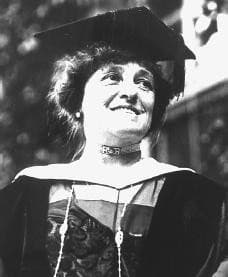
Edith Wharton was an American writer and designer. Wharton drew upon her insider's knowledge of the upper-class New York "aristocracy" to portray realistically the lives and morals of the Gilded Age. In 1921, she became the first woman to win the Pulitzer Prize in Fiction, for her novel The Age of Innocence. She was inducted into the National Women's Hall of Fame in 1996. Among her other well known works are The House of Mirth, the novella Ethan Frome, and several notable ghost stories.
Similar books
- Pride and Prejudice
Jane Austen
4.3 (3M) average on GoodreadsHistorical FictionExplores societal expectations and marriage in a historical setting, though with a more optimistic romantic arc.
- The Portrait of a Lady
Henry James
3.8 (73k) average on GoodreadsHistorical FictionFeatures an independent American woman navigating European society and difficult relationships, with a focus on character psychology.
- Ethan Frome
Edith Wharton
3.4 (108k) average on GoodreadsHistorical FictionAnother Wharton novel exploring themes of duty, longing, and societal constraints, though in a different setting and tone.
- To Kill a Mockingbird
Harper Lee
4.3 (4.5M) average on GoodreadsHistorical FictionIn the 1930s Jim Crow South, Harper Lee writes about racial injustice, moral growth, and the quiet courage of a lawyer father, Atticus Finch, as seen through his young daughter's eyes.
- The Great Gatsby
F. Scott Fitzgerald
3.9 (3.8M) average on GoodreadsHistorical FictionIn the opulent Roaring Twenties, a mysterious millionaire's lavish parties hide his desperate, tragic pursuit of a lost love, exposing the emptiness within the American Dream.
- Angels & Demons
Dan Brown
3.9 (2.7M) average on GoodreadsThrillerA Harvard symbologist races through Rome's ancient sites, deciphering cryptic clues to unmask the Illuminati and stop a vengeful plot to destroy the Vatican with a stolen antimatter weapon.






Enjoyed the summary?
A summary gives you the shape of the book. The book itself has the detail, the examples and the voice.
Find The Age of Innocence on AmazonAs an Amazon Associate, BookBrief earns from qualifying purchases. How we're funded