
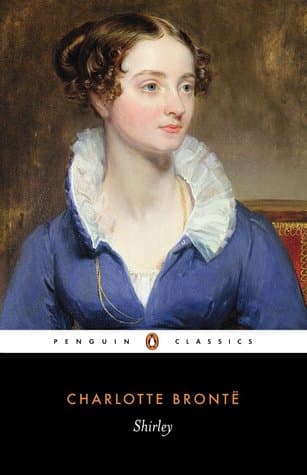
Synopsis
Covers the whole plot, including the ending.
- Difficulty
- Medium
- Pacing
- Moderate
- Mood
- Thought-provoking, Reflective, Character-driven, Socially aware
- Read it if
- You enjoy classic historical fiction with strong female characters and social commentary on 19th-century England, focusing on industrial change and women's roles.
- Skip it if
- You prefer fast-paced plots with constant action, as the novel has extended periods of character development and social observation.
Shirley Plot Summary
Covers the whole plot, including the ending.
The Mill and the Rectory
The novel begins in industrializing Yorkshire in 1811-1812, during the Napoleonic Wars and Luddite unrest. Robert Moore, a Belgian-English mill owner, faces severe financial problems because of trade restrictions with America and hostility from his workers, who fear new machines. He is a driven but often harsh man, determined to succeed. Meanwhile, his cousin, Caroline Helstone, lives a confined life with her uncle, Reverend Matthew Helstone. Caroline is gentle and smart but suffers from loneliness and the lack of purpose given to single women of her time. She secretly loves Robert, who seems not to notice, as he prioritizes his business.
A New Heiress Arrives
The community buzzes with the return of Shirley Keeldar, the wealthy heiress to the Briarfield estate. Shirley is an unconventional, independent young woman who challenges social norms with her outspoken opinions and active management of her property. She quickly befriends Caroline Helstone, offering much-needed companionship and intellectual stimulation. Shirley's presence contrasts with Caroline's restricted life, showing how wealth and social standing affect women in their society. Shirley takes an interest in community affairs, including the struggles of mill workers and Robert Moore's business.
Growing Friendships and Lingering Doubts
Caroline and Shirley's friendship grows, with Shirley often calling Caroline her 'sister.' Their bond brings comfort to both, though Caroline continues to long for Robert, who remains busy with his mill and seems unaware of her feelings. Robert, however, starts to notice Shirley's intelligence and financial power, making Caroline fear he might pursue Shirley for her wealth. As Luddite tensions rise and Robert faces more threats, Caroline's health worsens, made worse by her emotional distress and oppressive home life. Her illness shows the psychological toll of her confined existence.
The Luddite Attack
The tensions between mill owners and Luddite workers erupt in a violent attack on Robert Moore's mill. Under cover of darkness, a large mob of desperate workers attacks the mill, trying to destroy the machinery. Robert, with his loyal foremen and some local gentry, including Reverend Helstone and Shirley, defends the mill. The fight is brutal, causing injuries and increasing fear and division in the community. This event highlights the severe social and economic unrest in England at this time, directly affecting everyone's lives.
Shirley's Proposal and Robert's Dilemma
Shirley, despite her wealth and independence, faces pressure from marriage proposals. She rejects Sir Philip Nunnely, a wealthy but uninspiring suitor, valuing intellectual connection and genuine affection over social status. Meanwhile, Robert Moore, facing ruin, considers a desperate plan to travel abroad for new markets, a decision that would leave his mill vulnerable and further distance him from Caroline. His ambition and pride clash with his growing awareness of the personal sacrifices he might have to make. He continues to see Shirley as a possible financial savior, further upsetting Caroline.
The Arrival of Louis Moore
Shirley's former tutor, Louis Moore, Robert's younger brother, returns to Briarfield as a private tutor to the Yorke children. Louis is an intelligent and quiet man, often overlooked because of his lack of wealth. He and Shirley share a complex history, marked by deep mutual respect and unspoken affection from their tutoring days. His presence creates a new dynamic, especially as Shirley, despite her outward independence, is drawn to his intellectual strength and moral integrity, challenging her own ideas of what she wants in a partner.
Caroline's Illness and a Revelation
Caroline's health worsens, and she becomes gravely ill, near death. During her illness, a significant event occurs: Mrs. Pryor, Shirley's governess and a close friend, confesses she is Caroline's long-lost mother. Mrs. Pryor, formerly Miss Wooler, had abandoned Caroline as an infant due to difficult circumstances and a mistaken sense of duty. This discovery gives Caroline a much-needed sense of belonging and maternal love, helping her slow recovery and offering hope for her future, challenging her lifelong isolation.
Robert's Near-Fatal Attack
Robert Moore, returning from his unsuccessful trip to London, is ambushed and shot by a disgruntled former worker, Mike Hartley, who blames him for economic problems. The shooting leaves Robert critically wounded, forcing him into a period of recovery. This near-fatal experience changes him. It softens his demeanor, makes him realize the foolishness of his ambition, and opens his eyes to the true value of human connection. He begins to see Caroline not just as a cousin but as the woman he truly loves.
Confessions and Engagements
During Robert's recovery, he finally confesses his deep and long-standing love for Caroline, admitting his past blindness. Caroline, overjoyed, returns his feelings, and they become engaged. At the same time, Shirley and Louis Moore openly acknowledge their affection and intellectual bond. Despite their differing social standing and wealth, Shirley, valuing Louis's intellect and character above all, accepts his proposal. Their engagements show a triumph of genuine affection and mutual respect over societal expectations and financial concerns, paving the way for a more hopeful future for both couples.
The Future of Briarfield
As the war ends and trade restrictions are lifted, Robert Moore's mill begins to prosper, signaling economic recovery for Briarfield. Robert, now changed and more compassionate, plans to run his business with more consideration for his workers. Shirley, with Louis, plans to manage her estate, ensuring a life of purpose and intellectual partnership. The novel ends with the two couples looking forward to their marriages and futures. Their unions, especially Shirley and Louis's, symbolize a new era where love and compatibility, rather than just wealth or status, determine marital choices, hinting at broader societal shifts.
Shirley Characters
Caroline Helstone
Protagonist
The gentle, lonely niece of the rector, struggling with societal constraints.
Caroline is a quiet, sensitive, and intelligent young woman trapped by the limited opportunities available to single women in early 19th-century England. She lives a life of stifling domesticity with her uncle, Reverend Helstone, and suffers from profound loneliness and a sense of unfulfillment. Her unrequited love for her cousin, Robert Moore, consumes her, contributing to her declining health. She represents the plight of women who lack financial independence and agency, yet she possesses a deep capacity for love and resilience.
Relationships: Robert Moore (Cousin and unrequited/later requited love interest); Shirley Keeldar (Best friend and confidante); Reverend Matthew Helstone (Uncle and guardian); Mrs. Pryor (Miss Wooler) (Mother and governess)
Shirley Keeldar
Protagonist
The wealthy, independent, and unconventional heiress.
Shirley is a vibrant, outspoken, and fiercely independent young woman who inherits a large estate, granting her an unusual degree of freedom and power for her time. She is intelligent, spirited, and has a strong sense of justice, often challenging societal expectations for women. She forms a deep friendship with Caroline, acting as a foil and a source of empowerment. Shirley embodies Brontë's vision of what a woman might achieve with independence and means, unafraid to express her opinions and manage her own affairs.
Relationships: Caroline Helstone (Best friend); Louis Moore (Former tutor and eventual love interest/husband); Robert Moore (Acquaintance and object of some speculation); Mrs. Pryor (Governess and confidante)
Robert Moore
Protagonist/Love Interest
The ambitious, struggling mill owner.
Robert is a determined and often harsh mill owner, driven by ambition and a strong desire to succeed in his business despite the economic hardships caused by the Napoleonic Wars and the Luddite unrest. His focus on industry and profit often makes him seem cold and insensitive, particularly towards Caroline's feelings. He represents the industrialist class struggling to adapt to new technologies and economic pressures. His journey involves a significant transformation, learning compassion and recognizing the importance of human relationships over purely material success.
Relationships: Caroline Helstone (Cousin and eventual love interest/husband); Louis Moore (Brother); Shirley Keeldar (Business associate and potential strategic marriage prospect (initially))
Louis Moore
Love Interest
Robert's intellectual and principled younger brother, Shirley's former tutor.
Louis is Robert's younger brother, a man of profound intellect, moral integrity, and quiet strength. Despite his lack of wealth and social standing, he possesses a deep understanding of human nature and a keen mind. He was Shirley's tutor in the past, and their intellectual sparring and mutual respect developed into a deep, unspoken affection. Louis represents a different kind of masculine strength – one based on intellect and character rather than wealth or brute force. He challenges Shirley to examine her own desires beyond superficial attractions.
Relationships: Shirley Keeldar (Former tutor and eventual love interest/husband); Robert Moore (Brother); Caroline Helstone (Cousin-in-law)
Reverend Matthew Helstone
Supporting
Caroline's stern, traditional, and often insensitive uncle.
Reverend Helstone is Caroline's uncle and guardian, a gruff, old-fashioned clergyman who embodies the conservative values of the era. He is well-meaning but often insensitive to Caroline's emotional needs, dismissing her quiet suffering. He represents the patriarchal authority and the limited understanding of women's inner lives prevalent in his society. His character highlights the oppressive atmosphere Caroline endures.
Relationships: Caroline Helstone (Uncle and guardian)
Mrs. Pryor (Miss Wooler)
Supporting
Shirley's governess and Caroline's long-lost mother.
Mrs. Pryor is Shirley's quiet and reserved governess, initially appearing as a rather timid and unassuming figure. She becomes a confidante to Shirley and a source of comfort for Caroline. Her secret past as Caroline's mother, Miss Wooler, who abandoned her daughter due to extreme poverty and a sense of unworthiness, is a significant revelation. Her character explores themes of maternal sacrifice, regret, and the societal pressures that could force women into impossible choices.
Relationships: Shirley Keeldar (Employer and confidante); Caroline Helstone (Daughter and friend)
Hortense Moore
Supporting
Robert and Louis's sister, a strict and somewhat pedantic woman.
Hortense is the sister of Robert and Louis Moore, a well-meaning but rather rigid and pedantic woman. She is proud of her French heritage but often critical and demanding, especially towards Caroline, whom she attempts to instruct in domestic duties. She represents a certain type of old-fashioned feminine propriety, often clashing with the more liberal views of Shirley.
Relationships: Robert Moore (Brother); Louis Moore (Brother); Caroline Helstone (Cousin and object of her instruction)
The Yorke Family
Supporting/Mentioned
A prominent local family, representing different facets of the Yorkshire community.
The Yorke family, consisting of the pragmatic and outspoken Mr. Yorke, his more refined wife, and their various children (including Martin, Rose, and Matthew), provide a microcosm of the Yorkshire community. Mr. Yorke, a wealthy landowner, offers a blend of shrewdness and rough honesty. The family serves as a social hub and a source of commentary on the local events, Luddite unrest, and the characters' personal lives. Their household is where Louis Moore is employed as a tutor, allowing for interactions with Shirley.
Relationships: Shirley Keeldar (Neighbors and friends); Robert Moore (Business associates/neighbors); Louis Moore (Employer/employee relationship (Louis tutors their children))
Shirley Themes
The Plight of Women in the 19th Century
The novel shows the limited opportunities, societal expectations, and emotional restrictions faced by women, especially single women, in early 19th-century England. Caroline Helstone's loneliness, lack of a profession, and dependence on her uncle highlight the confined lives many women endured. Her declining health directly reflects her emotional and social imprisonment. Shirley, though wealthy and independent, still faces pressure to marry for status and conform to gender roles, as seen when she rejects Sir Philip Nunnely. Brontë uses these characters to criticize the patriarchal systems that denied women agency and purpose beyond marriage and domesticity.
“A woman's life is not a man's. When men are afraid of war, they have the resource of arms; when they are afraid of peace, they have the resource of industry. What is left us? What is left us, if we are not loved?”
Industrial Unrest and Social Class
Set during the Luddite revolts, the novel depicts the harsh realities of industrialization, the conflict between mill owners and workers, and the stark divisions of social class. Robert Moore's struggles with his machinery and the attack on his mill illustrate the fear of technological unemployment and the desperation of the working class. Brontë explores the complex reasons for both sides, showing the mill owners' ambition and the workers' suffering. The novel highlights how economic policies and social structures create deep-seated grievances, leading to widespread unrest and affecting everyone.
“Misery generates hate. These sufferers are desperate, they are dangerous. We are all bound together.”
Independence vs. Interdependence
Brontë explores the tension between a woman's desire for independence and the human need for connection. Shirley Keeldar embodies fierce independence, valuing her freedom and intellectual autonomy, initially resisting marriage to keep her power. However, her choice to marry Louis Moore, a man of lower social standing but equal intellect, suggests that true independence can be found within a partnership based on mutual respect and shared values, not in isolation. Caroline's journey, from complete dependence to finding both love and a family, also speaks to this theme, showing that interdependence can be empowering when based on genuine affection.
“I am no angel, but I will be myself.”
Love and Marriage Beyond Convention
The novel challenges conventional ideas of love and marriage, which were often based on financial and social considerations in the 19th century. Both main romantic pairings defy societal expectations. Caroline and Robert's union is based on a deep, lasting affection that goes beyond his initial ambition and her perceived lack of status. More strikingly, Shirley, a wealthy heiress, chooses to marry Louis Moore, her former tutor who is poor and of lower social standing. This choice emphasizes intellectual compatibility, moral worth, and genuine love over wealth or social advantage, advocating for marriage as a partnership of equals, even if unconventional.
“It is not wealth, it is not station, that can make the married state happy.”
Nature and the Human Spirit
Nature, especially the wild Yorkshire moors, acts as a backdrop and a reflection of the characters' inner lives and broader societal forces. The untamed landscape mirrors Shirley's spirited independence and offers comfort for Caroline's troubled soul. The changing seasons and the rugged beauty of the environment often provide a sense of freedom and authenticity that contrasts with the restrictive social conventions. Brontë uses descriptions of nature to highlight moments of introspection, emotional release, and to show the raw aspects of human nature and societal conflict.
“The wild, bleak moors were always to her a refuge, a church, a home.”
Plot Devices & Literary Techniques
Foil Characters
Caroline and Shirley act as foils to highlight different facets of womanhood.
Caroline Helstone and Shirley Keeldar serve as powerful foil characters. Caroline, the gentle, dependent, and suffering woman, embodies the traditional plight of single women in the 19th century, highlighting their lack of agency and the emotional toll of societal constraints. Shirley, the wealthy, independent, and outspoken heiress, represents a more modern, empowered vision of womanhood. Their contrasting circumstances and personalities allow Brontë to explore the full spectrum of female experience, demonstrating how wealth and social position could either exacerbate or mitigate the challenges faced by women, while also showing their shared humanity and capacity for friendship.
Social Commentary through Dialogue and Narration
Characters' conversations and the omniscient narrator critique societal norms.
Brontë uses extensive dialogue, particularly between the female characters, and the omniscient narrator's direct addresses to the reader, to provide sharp social commentary. Conversations between Caroline and Shirley often delve into the injustices faced by women, the limitations of marriage, and the desire for intellectual fulfillment. The narrator frequently interjects with observations on the political climate, the Luddite unrest, and the hypocrisy or shortcomings of various social classes. This device allows Brontë to explicitly articulate her criticisms of patriarchal society, economic inequality, and the narrow-mindedness of her era, making the novel a powerful vehicle for social critique.
Symbolism of Industry and Nature
The mill and the moors symbolize opposing forces and human conditions.
The mill, particularly Robert Moore's, symbolizes the harsh realities of industrialization, economic struggle, and the relentless pursuit of progress, often at the expense of human well-being. It represents the artificial, man-made world of commerce and conflict. In contrast, the wild Yorkshire moors symbolize untamed nature, freedom, spiritual solace, and a connection to a more authentic, less constrained existence. For Shirley, the moors are a reflection of her independent spirit; for Caroline, they offer a refuge from her oppressive domestic life. The interplay between these symbols highlights the conflict between progress and tradition, and the human need for both material sustenance and spiritual freedom.
The Unseen Threat of War and Economic Depression
The Napoleonic Wars and Orders in Council create an pervasive atmosphere of hardship.
Though the Napoleonic Wars are largely off-stage, their economic repercussions, specifically the Orders in Council, act as a pervasive plot device, driving much of the conflict and hardship in the novel. The trade restrictions directly cause Robert Moore's financial distress, fueling the Luddite unrest and creating a climate of fear and desperation among the working class. This unseen threat shapes the characters' decisions, their struggles, and the overall grim atmosphere of the period. It underscores how global events can profoundly impact individual lives and local communities, creating a sense of external pressure that influences personal fates.
Shirley Quotes
“A woman's place, some people say, is with her husband. But I say, a woman's place is where she's useful.”
“It is right to be content with what we have, but never with what we are.”
“If a man has a talent and cannot use it, he has failed. If he has a talent and uses it only for himself, he has failed. If he has a talent and uses it for his people, he is a great man.”
“I will not marry a man who is not my intellectual equal, nor one who cannot appreciate the beauty of independence.”
“The human heart has hidden treasures, in secret kept, in silence sealed; the thoughts, the hopes, the dreams, the pleasures, whose charms were ever unrevealed.”
“Prejudices, it is well known, are most difficult to eradicate from the heart whose soil has never been loosened or fertilised by education: they grow there, firm as weeds among stones.”
“I am not a man, but I have a man's heart.”
“Oppression makes a wise man mad.”
“A great deal of good can be done in the world, if we are not too careful who gets the credit.”
“The keenest pangs the wretched know Are sharpest felt from fancied woe.”
“It is not the eye of the body, but the eye of the mind, which can penetrate the most profound mysteries.”
“We are all in some way or other debtors to our fellow-creatures.”
“I like to be my own mistress.”
“To be well-off and to be happy are two different things.”
Quiz
10 questions on the plot and the characters. Each answer comes with a short explanation.
Question 1
Which historical period and social unrest form the backdrop for the novel 'Shirley'?
- The Victorian Era and Chartist movements
- The Napoleonic Wars and Luddite revolts
- The English Civil War and Royalist uprisings
- The Industrial Revolution and agrarian reforms
Show answer
B. The Napoleonic Wars and Luddite revolts 'Shirley' is set during the Napoleonic Wars and amidst the Luddite revolts of 1811-12, a period of significant social and industrial upheaval.
Question 2
What distinguishes Shirley Keeldar from Caroline Helstone in terms of their social standing and independence?
- Shirley is an orphan, while Caroline has a large family.
- Shirley inherits an estate and wealth, granting her independence, unlike the financially dependent Caroline.
- Shirley is married, while Caroline remains single.
- Shirley works in a factory, and Caroline is a governess.
Show answer
B. Shirley inherits an estate and wealth, granting her independence, unlike the financially dependent Caroline. Shirley Keeldar's inheritance of a local estate and wealth liberates her from convention, contrasting with Caroline Helstone's more constrained existence.
Question 3
What specific location symbolizes Caroline Helstone's constrained and oppressive life?
- A bustling market town
- A Yorkshire rectory
- A London boarding house
- A remote country cottage
Show answer
B. A Yorkshire rectory Caroline Helstone is described as being 'trapped in the oppressive atmosphere of a Yorkshire rectory,' which symbolizes her plight.
Question 4
According to the provided text, what makes 'Shirley' Brontë's 'most feminist novel'?
- It features a strong male protagonist who champions women's rights.
- It focuses solely on romantic relationships between women.
- It imagines a confident young woman, Shirley, with independence, means, and intellect, possessing a new form of power equal to men.
- It advocates for women to remain in traditional domestic roles.
Show answer
C. It imagines a confident young woman, Shirley, with independence, means, and intellect, possessing a new form of power equal to men. The text states that Shirley 'imagined a new form of power, equal to that of men, in a confident young woman [whose] extraordinary freedom has accustomed her to think for herself....Shirley [is] Brontë's most feminist novel.'
Question 5
How does Charlotte Brontë's intention for 'Shirley' contrast with her previous novel, 'Jane Eyre'?
- She aimed for a more Gothic and supernatural narrative in 'Shirley'.
- She vowed to write a sweeping social chronicle focused on 'something real and unromantic as Monday morning' for 'Shirley'.
- She intended 'Shirley' to be a direct sequel to 'Jane Eyre'.
- She sought to make 'Shirley' even more scandalous than 'Jane Eyre'.
Show answer
B. She vowed to write a sweeping social chronicle focused on 'something real and unromantic as Monday morning' for 'Shirley'. After the success of 'Jane Eyre', Charlotte Brontë 'vowed to write a sweeping social chronicle that focused on 'something real and unromantic as Monday morning'' for 'Shirley'.
Question 6
The description of Caroline Helstone's 'bare life' symbolizes what broader issue for women in the nineteenth century?
- The challenges of managing a large household.
- The plight of single women.
- The difficulties of finding employment in factories.
- The struggles of married women with children.
Show answer
B. The plight of single women. Caroline Helstone's 'bare life symbolizes the plight of single women in the nineteenth century,' highlighting their limited options and dependency.
Question 7
What does Brontë biographer Lyndall Gordon suggest about Shirley Keeldar's existence in 1811-12?
- She was a common figure, representing many women of her time.
- She was a historically accurate portrayal of an independent woman.
- She is described as a 'theoretic possibility,' almost unbelievable for her time, representing what a woman *might* be.
- She was a direct copy of a real person Brontë knew.
Show answer
C. She is described as a 'theoretic possibility,' almost unbelievable for her time, representing what a woman *might* be. Lyndall Gordon states, 'Shirley follows Jane Eyre as a new exemplar but so much a forerunner of the feminist of the later twentieth century that it is hard to believe in her actual existence in 1811-12. She is a theoretic possibility.'
Question 8
How does 'Shirley' combine different aspects of Brontë's literary talent, according to the description?
- By focusing exclusively on the supernatural elements of the era.
- By blending sweeping social commentary with the more private preoccupations seen in 'Jane Eyre'.
- By abandoning romance entirely in favor of historical documentation.
- By adopting a purely satirical tone throughout the narrative.
Show answer
B. By blending sweeping social commentary with the more private preoccupations seen in 'Jane Eyre'. 'Shirley' is described as 'a work that combines social commentary with the more private preoccupations of Jane Eyre, demonstrating the full range of Brontë's literary talent.'
Question 9
What specific characteristic does Shirley Keeldar possess that allows her 'extraordinary freedom' to 'think for herself'?
- Her exceptional beauty.
- Her status as the youngest child in her family.
- Her combination of independence, means of her own, and intellect.
- Her adherence to all traditional societal norms.
Show answer
C. Her combination of independence, means of her own, and intellect. Lyndall Gordon notes that Shirley combines 'independence and means of her own with intellect,' which grants her 'extraordinary freedom' to think for herself.
Question 10
How did the popular success of 'Jane Eyre' impact Charlotte Brontë's reputation, leading to her motivation for writing 'Shirley'?
- It earned her recognition as a conservative author.
- It led to her being celebrated primarily for her historical accuracy.
- It earned her lifelong notoriety as a moral revolutionary.
- It caused her to abandon writing altogether.
Show answer
C. It earned her lifelong notoriety as a moral revolutionary. The text states that 'Jane Eyre...earned her lifelong notoriety as a moral revolutionary,' which then prompted her to write 'Shirley' with a different focus.
Shirley FAQ
What is the primary historical backdrop for 'Shirley' and how does it influence the plot?
'Shirley' is set against the turbulent backdrop of the Napoleonic Wars and the Luddite revolts in England during 1811-1812. This period of industrial unrest, marked by factory closures and worker protests against new machinery, directly impacts the economic struggles of Robert Moore and fuels the social commentary on class conflict and the plight of the working poor.
Who are the two main heroines, Caroline Helstone and Shirley Keeldar, and how do their circumstances contrast?
Caroline Helstone is a shy, dependent orphan living with her uncle, the oppressive Rector Helstone, symbolizing the limited options and societal constraints faced by single women without means in the 19th century. In stark contrast, Shirley Keeldar is a wealthy, independent heiress who inherits a local estate, allowing her the freedom to defy conventional expectations and pursue her own intellectual and personal interests.
What is the central romantic dilemma faced by Caroline Helstone throughout the novel?
Caroline Helstone is deeply in love with her cousin, Robert Moore, the mill owner, but he seems more preoccupied with his business and appears to be considering a marriage of convenience to Shirley Keeldar. This unrequited love, combined with her societal dependency, causes Caroline profound emotional distress and highlights the vulnerability of women reliant on male affection and financial security.
How does Shirley Keeldar challenge traditional gender roles of the 19th century?
Shirley Keeldar challenges gender roles by owning and managing her own estate, making independent decisions, and engaging in intellectual discussions typically reserved for men. Her refusal to marry solely for societal expectation and her assertive personality mark her as a 'new exemplar' of female independence, as described by Brontë's biographer.
What role do the Luddite revolts play in the narrative, particularly concerning Robert Moore?
The Luddite revolts are central to the novel's conflict, as Robert Moore, a mill owner, faces threats and attacks from workers protesting his use of new machinery and his dismissal of employees. This industrial unrest culminates in a violent assault on his mill and later, an assassination attempt on Robert himself, directly impacting his business and personal safety.
What is the significance of the 'curate' characters in the novel, and how do they reflect Brontë's social commentary?
The curates—Mr. Malone, Mr. Sweeting, and Mr. Donne—are often depicted as bumbling, self-important, and morally dubious figures, particularly in their interactions with women. Brontë uses them to satirize the complacency and hypocrisy within the Anglican Church, and their presence highlights the intellectual and moral superiority of women like Shirley and Caroline.
How does the eventual revelation of Robert Moore's true feelings for Caroline subtly foreshadow his character development?
Robert Moore's initial coldness and perceived focus on business, despite his underlying affection for Caroline, foreshadows his eventual maturation. His later confession that he always loved Caroline, but felt he couldn't afford her due to his financial struggles, reveals a pragmatic but ultimately caring nature, suggesting his character arc involves overcoming pride and economic ambition to embrace genuine emotional connection.
What is the symbolic meaning behind Shirley Keeldar's name and her association with the male pronoun in the narrative?
Shirley's name, traditionally masculine, and the narrator's occasional use of 'he' when referring to her, symbolize her unconventional, independent spirit and her ability to transcend traditional gender boundaries. This detail emphasizes her role as a 'theoretic possibility' of a woman possessing power and intellect equal to men, challenging 19th-century expectations.
How does the novel subtly address the theme of female friendships, particularly between Caroline and Shirley?
The deep bond between Caroline and Shirley is a central aspect, offering mutual support and understanding in a society that often isolates women. Their friendship provides intellectual companionship and emotional solace, contrasting with the often superficial or patriarchal relationships they encounter. It highlights the importance of female solidarity in navigating societal pressures.
Discuss the psychological impact of societal expectations on Caroline Helstone's mental and physical health.
The societal expectation for women to marry, coupled with her unrequited love for Robert and her dependent status, profoundly impacts Caroline's mental and physical health. She experiences periods of deep melancholy, isolation, and eventually a serious illness, reflecting the psychological toll of limited opportunities and emotional suppression on women in the 19th century.
How does Shirley Keeldar's outward assertiveness mask any underlying vulnerabilities or internal conflicts?
Shirley's vivaciousness and intellectual confidence often mask her internal struggles with loneliness and the pressure to conform. Despite her independence, she grapples with the societal expectation of marriage and the desire for a true intellectual equal, revealing that even liberated women faced emotional complexities beneath their strong exteriors.
Analyze Robert Moore's psychological journey from ambitious mill owner to a more empathetic individual.
Robert Moore's journey begins with an almost ruthless ambition, prioritizing his mill's success over the welfare of his workers and seemingly over personal affection. His near-death experience and the subsequent reflection on his past actions lead to a psychological shift, fostering greater empathy, a deeper understanding of human suffering, and a realization of the true value of love and community.
What psychological complexities are explored through the character of Mrs. Pryor, Caroline's governess and eventual mother?
Mrs. Pryor, initially depicted as reserved and somewhat detached, harbors deep psychological trauma from her past, specifically the forced separation from her daughter, Caroline. Her eventual revelation of her true identity and her subsequent embrace of motherhood explore themes of repressed grief, guilt, and the profound longing for familial connection, revealing the lasting impact of past suffering.
In what ways can 'Shirley' be considered Charlotte Brontë's most feminist novel, despite its historical setting?
'Shirley' is considered Brontë's most feminist novel due to its explicit exploration of female independence, economic autonomy, and intellectual equality, primarily through Shirley Keeldar. It boldly critiques the limited roles for women in society and champions their right to self-determination and education, making Shirley a revolutionary figure for her time.
How does the novel's ending, with both heroines marrying, reconcile its feminist themes with conventional romantic conclusions?
The novel's ending, while featuring marriages, attempts to reconcile feminist themes by ensuring the heroines retain a degree of independence. Shirley marries Louis Moore, who respects her intellect and allows her agency, while Caroline's marriage to Robert Moore occurs after he has matured and recognized her worth beyond societal status. Their unions are portrayed as partnerships of equals, rather than mere subjugation.
What broader social commentary does Brontë offer regarding class conflict and industrialization in 'Shirley'?
Brontë offers a nuanced social commentary on the harsh realities of industrialization, depicting the desperate plight of the working class and the owners' struggles. She criticizes the indifference of some factory owners while also showing the complexities of economic progress, illustrating the suffering caused by technological advancement and the inherent conflict between capital and labor.
Discuss the significance of the Yorkshire landscape and weather in shaping the novel's mood and characters.
The wild, often harsh Yorkshire landscape and unpredictable weather serve as a powerful backdrop, mirroring the emotional turbulence and social unrest within the story. The rugged moors symbolize freedom and untamed spirit, particularly for Shirley, while the bleakness of the industrial towns reflects the characters' struggles and the oppressive atmosphere of the era.
How does Brontë use the character of Louis Moore to present an alternative ideal of masculinity compared to Robert?
Louis Moore, Shirley's tutor and eventual husband, presents an alternative ideal of masculinity through his intellectual depth, sensitivity, and respect for Shirley's independence. Unlike Robert, who initially prioritizes ambition, Louis values intellect and emotional connection above wealth, offering a partnership based on mutual respect and understanding rather than economic pragmatism.
About the author
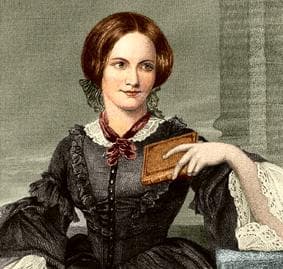
Charlotte Brontë was an English novelist and poet, the eldest of the three Brontë sisters who survived into adulthood and whose novels became classics of English literature.
Similar books
- Middlemarch
George Eliot
4.0 (136k) average on GoodreadsHistorical FictionExplores complex social structures, individual lives, and the roles of women in a 19th-century English provincial town.
- North and South
Elizabeth Gaskell
4.2 (57k) average on GoodreadsHistorical FictionDeals with industrial conflict, class divides, and a strong female protagonist navigating societal expectations in Victorian England.
- Jane Eyre
Charlotte Brontë
4.1 (1.6M) average on GoodreadsHistorical FictionFeatures a strong, independent Brontë heroine grappling with societal constraints, though 'Shirley' has a broader social scope.
- To Kill a Mockingbird
Harper Lee
4.3 (4.5M) average on GoodreadsHistorical FictionIn the 1930s Jim Crow South, Harper Lee writes about racial injustice, moral growth, and the quiet courage of a lawyer father, Atticus Finch, as seen through his young daughter's eyes.
- The Great Gatsby
F. Scott Fitzgerald
3.9 (3.8M) average on GoodreadsHistorical FictionIn the opulent Roaring Twenties, a mysterious millionaire's lavish parties hide his desperate, tragic pursuit of a lost love, exposing the emptiness within the American Dream.
- Pride and Prejudice
Jane Austen
4.3 (3M) average on GoodreadsHistorical FictionIn a society focused on status and money, Elizabeth Bennet navigates love and pride, challenging Mr. Darcy and social expectations to find true affection.





Enjoyed the summary?
A summary gives you the shape of the book. The book itself has the detail, the examples and the voice.
Find Shirley on AmazonAs an Amazon Associate, BookBrief earns from qualifying purchases. How we're funded