
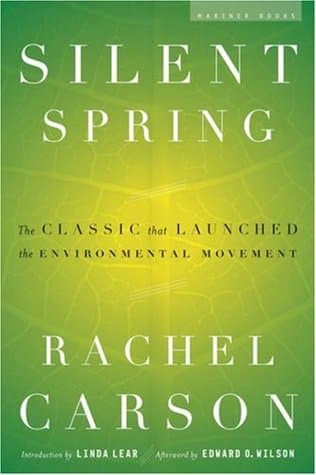
Core Idea
- Difficulty
- Medium
- Read it if
- You are interested in the foundational text of the environmental movement, the history of pesticide use and its ecological consequences, or understanding the origins of the precautionary principle in public policy.
- Skip it if
- You prefer a purely scientific textbook on toxicology or a contemporary analysis of current environmental issues without historical context.
Key Takeaways from Silent Spring
The Unseen Scourge
Pesticides are not selective; they are biocides with widespread, indiscriminate effects.
Carson shows that 'selective' pesticides are a myth, revealing them as powerful poisons that harm entire ecosystems, not just target pests. She argues that chemical warfare against insects harms non-target species, including birds, fish, mammals, and humans, through direct exposure and accumulation in the food chain. This widespread contamination is often invisible at first, making its long-term effects subtle and hard to trace. The book highlights how these chemicals disrupt nature's balance, leading to unforeseen problems that often worsen the issues they were meant to solve. This insight challenges the industrial idea of progress through chemicals.
“It is not until the public becomes aroused to the danger and demands action that the government will begin to act. This is the great challenge of our age.”
In the book: Carson details numerous instances, such as the widespread bird deaths observed after DDT spraying for Dutch elm disease, demonstrating the chemical's non-selectivity. She also cites studies showing DDT accumulation in food chains.
Try this: Before adopting any chemical solution for pest control, research its broader ecological impact. Prioritize integrated pest management (IPM) strategies that minimize chemical use and support natural predators.
Related ideas: biocide, ecological-magnification, non-target-species
The Web of Life Interrupted
Nature's intricate balance is easily disrupted by human intervention, leading to cascading ecological failures.
Carson illustrates that all living things in an ecosystem are connected. She argues that putting synthetic chemicals into this delicate system always creates ripple effects, often far from the intended target. When predators are killed by pesticides, for instance, their prey can have population explosions, leading to new pest outbreaks. This shows a deep misunderstanding of ecological principles by those who supported widespread chemical use. Carson suggests that true 'control' of nature is an illusion, and that humanity's role should be one of understanding and care, not domination. This idea was revolutionary in a time of technological confidence.
“The 'control of nature' is a phrase conceived in arrogance, born of the Neanderthal age of biology and philosophy, when it was supposed that nature exists for the convenience of man.”
In the book: The book describes how the spraying of DDT to control mosquitos in Borneo led to a chain of events: DDT killed predatory wasps, leading to a caterpillar outbreak that ate thatched roofs; then DDT-poisoned cockroaches were eaten by geckos, which were eaten by cats, leading to a rat population explosion and a potential plague threat, necessitating the parachuting of cats.
Try this: Before making significant changes to a natural environment, conduct thorough ecological impact assessments. Foster biodiversity in your garden or community to create resilient ecosystems that naturally resist pests.
Related ideas: ecosystem-balance, trophic-cascade, biodiversity
The 'Silent Spring' Foreshadowed
The widespread death of birds due to pesticide poisoning is a stark metaphor for broader environmental collapse.
The title itself captures one of Carson's most unsettling predictions: a future where the joyful sound of birds is silenced by human-made poisons. She documents mass bird deaths directly caused by pesticide use, particularly DDT. These bird deaths serve as an early warning system, signaling a larger, unseen threat to the entire natural world. The absence of birds is not just an aesthetic loss; it signifies a major disruption in the food chain and a loss of natural pest controls, further showing the interconnectedness she champions. This 'silent spring' becomes a powerful symbol of environmental harm.
“Over increasingly large areas of the United States, spring now comes unheralded by the return of the birds, and the early mornings are strangely silent where once they were filled with the beauty of bird song.”
In the book: Carson cites numerous reports from ornithologists and concerned citizens detailing sudden, widespread bird deaths following pesticide applications, particularly after large-scale spraying programs for fire ants or Dutch elm disease.
Try this: Support bird conservation efforts and advocate for policies that protect bird habitats and reduce pesticide use. Create bird-friendly environments in your own backyard by avoiding chemicals and providing food and water.
Related ideas: avian-mortality, habitat-loss, indicator-species
The Human Cost
Pesticides are not just an environmental problem; they pose a direct, long-term threat to human health.
Carson extends her analysis beyond wildlife to address the alarming effects of pesticide exposure on human health. She details how these chemicals build up in human tissues, appear in breast milk, and can lead to chronic illnesses, including cancer, neurological disorders, and reproductive problems. She connects specific chemicals to their known toxic effects on human bodies, challenging industry assurances of safety. This focus on human health was crucial in sparking public concern, as it brought the idea of 'environmental damage' into the personal realm of individual well-being and the health of future generations. Her work set the stage for environmental health as a distinct field.
“For the first time in the history of the world, every human being is now subjected to contact with dangerous chemicals, from the moment of conception until death.”
In the book: Carson discusses the chemical structure of DDT and its relatives, linking them to known carcinogens and neurotoxins. She cites studies on occupational exposure and the presence of pesticides in human fat tissues and mother's milk.
Try this: Choose organic produce when possible, especially for foods with high pesticide residues. Filter your drinking water and advocate for stricter regulations on chemical use in agriculture and public spaces.
Related ideas: carcinogen, neurotoxin, endocrine-disruptor, environmental-health
The Power of Industry & Government Collusion
The widespread adoption of dangerous chemicals was driven by powerful industrial interests and government inaction.
Carson exposes the systemic forces that allowed dangerous chemicals to spread unchecked. She critiques the close ties between the chemical industry and government regulators, showing how business interests often outweighed public health and environmental safety. She reveals how industry-funded research often downplayed risks, and how government agencies, often understaffed, failed to adequately test or regulate these compounds. This critique was not just about chemicals; it was about the integrity of science and the accountability of powerful institutions. Her work started a public debate about corporate influence in public policy and the need for independent oversight.
“The public is fed a steady diet of misinformation and half-truths, designed to allay anxiety and promote the continued use of pesticides.”
In the book: Carson details how chemical companies actively promoted pesticides, often with misleading advertising, and how government agencies, like the USDA, were often complicit in advocating for widespread spraying without sufficient long-term studies.
Try this: Be critical of information from industry-funded sources. Support independent scientific research and advocate for stronger, independent regulatory bodies free from corporate influence.
Related ideas: corporate-lobbying, regulatory-capture, scientific-integrity
Alternatives Exist, Ignored
Effective, non-chemical pest control methods were known but often dismissed in favor of profitable chemical solutions.
An important, often overlooked part of Carson's argument is her detailed explanation of existing, non-chemical ways to control pests. She highlights biological controls, such as introducing natural predators or parasites, as well as practices like crop rotation and resistant plant varieties. Her frustration is clear as she points out that these ecologically sound methods were largely ignored or suppressed in favor of more profitable chemical solutions. This shows that the problem was not a lack of options, but a failure of imagination and a focus on short-term profit over long-term ecological health. She supported a holistic approach that respected natural processes.
“The truly extraordinary thing is that these things have been allowed to happen, because there are other ways.”
In the book: Carson describes successful biological control programs, such as the use of parasitic wasps to control scale insects in citrus groves in California, and the sterile male technique for screw-worm flies, demonstrating viable alternatives to broad-spectrum pesticides.
Try this: Research and implement integrated pest management (IPM) strategies in your garden or farm. Support companies and agricultural practices that prioritize biological and ecological pest control over chemical solutions.
Related ideas: biological-control, integrated-pest-management, sustainable-agriculture
The Right to Know
Citizens have a fundamental right to be informed about the dangers to their environment and health.
Carson's work shows the need for transparency and public education. She believed that informed citizens were the only safeguard against unchecked corporate and government power. By presenting scientific data in an accessible and compelling way, she empowered ordinary people to question authority and demand accountability. She argued that withholding information or misleading the public about environmental dangers was a deep violation of democratic principles. Her book was not just a scientific text; it was a call to civic action, asserting the public's right to participate in decisions that affect their well-being and the planet's future.
“The public must be informed, and it must be given the facts, for only in this way can it make its own decisions.”
In the book: Carson's entire book is an act of providing detailed, scientific information to the public that had previously been obscured or dismissed by industry and government agencies.
Try this: Actively seek out unbiased information on environmental issues. Support whistleblowers and organizations that promote transparency. Engage in local and national policy debates concerning environmental protection.
Related ideas: public-awareness, environmental-justice, civic-engagement
Precautionary Principle in Practice
When potential harm is great, action should be taken even without full scientific certainty.
Although the term 'precautionary principle' was not widely used until later, Carson's entire argument embodies its idea. She argues that the potential for widespread, irreversible harm from synthetic chemicals requires a cautious approach, even if all long-term effects are not yet fully understood. The burden of proof, she suggests, should be on those introducing new chemicals to show their safety, rather than on the public to prove their harm after the fact. Her work is a historical example of how societal decisions about technology and environmental impact should favor caution, prioritizing health and ecological integrity over economic gain. This shift in perspective was foundational for future environmental policy.
“If we are to live so intimately with these chemicals, we had better know what they are and what they can do.”
In the book: Carson highlights the lack of comprehensive testing for many pesticides before their widespread release and the industry's focus on acute toxicity rather than chronic, long-term effects.
Try this: Support policies that require rigorous independent testing of new chemicals before market release. Advocate for a shift in regulatory philosophy towards prevention rather than reaction.
Related ideas: precautionary-principle, risk-assessment, environmental-regulation
The Birth of a Movement
Silent Spring catalyzed the modern environmental movement and fundamentally altered humanity's relationship with nature.
Silent Spring was a major event that reshaped public awareness and policy. It launched the modern environmental movement, inspiring millions to question the unlimited use of technology and demand greater protection for nature. Its impact led to immediate legislative changes, most notably the ban of DDT, and set the stage for the creation of the Environmental Protection Agency (EPA) in the United States and similar bodies globally. Carson transformed the abstract idea of 'conservation' into a tangible, urgent concern for human health and planetary survival. Her legacy is a lasting call for ecological understanding and responsible care.
“The book was a turning point, awakening a sleeping public to the dangers of pollution and sparking a revolution in environmental consciousness.”
In the book: The historical context of the book's publication shows that it directly led to congressional hearings, a presidential science advisory committee report, and ultimately, the banning of DDT and the establishment of the EPA.
Try this: Educate yourself and others about environmental issues. Participate in environmental advocacy groups and support policies aimed at protecting ecosystems and human health. Recognize the ongoing relevance of Carson's warnings.
Related ideas: environmental-movement, DDT-ban, EPA, environmental-consciousness
Silent Spring Quotes
“The 'control of nature' is a phrase conceived in arrogance, born of the Neanderthal age of biology and philosophy, when it was supposed that nature exists for the purpose of man.”
“For the first time in the history of the world, every human being is now subjected to contact with dangerous chemicals, from the moment of conception until death.”
“Can anyone believe it is possible to lay down such a barrage of poisons on the surface of the earth without making it unfit for all life? They should not be called 'insecticides,' but 'biocides.'”
“We stand now at a crossroads. The road we have long been traveling is deceptively easy, a smooth superhighway on which we progress with great speed, but at its end lies oblivion. The other road, a less traveled one, offers our last, our only chance to arrive at a destination that assures the preservation of the earth.”
“It is not until we are faced with the evidence, however, that we begin to realize the extent of the damage that has already been done.”
“The most alarming of all man's assaults upon the environment is the contamination of air, earth, rivers, and sea with dangerous and even lethal materials.”
“Man, however much he may like to pretend the contrary, is part of nature.”
“The public is fed a steady diet of misinformation and reassurance, when what they need is the truth.”
“Future generations are unlikely to condone our lack of prudent concern for the integrity of the natural world that supports all life.”
“A Who's Who of pesticides is therefore also a Who's Who of poisons.”
“We are still in the Dark Ages where the science of ecology is concerned.”
“The most important single fact about the presently used pesticides is that they are poisons.”
“The history of life on earth has been a history of interaction between living things and their surroundings.”
“The fact that the chemical industry is a child of the twentieth century is a disquieting thought.”
“It is a sobering thought that the future of life on earth may depend on the success of man's efforts to control his own activities.”
Quiz
10 questions on the main ideas. Each answer comes with a short explanation.
Question 1
Which specific chemical, widely used as an insecticide, did Rachel Carson most famously target in 'Silent Spring' for its detrimental environmental effects?
- Glyphosate
- DDT
- Atrazine
- Malathion
Show answer
B. DDT Rachel Carson's 'Silent Spring' primarily focused on the widespread use and harmful impacts of DDT (dichlorodiphenyltrichloroethane), leading to its eventual ban and significant changes in pesticide regulation.
Question 2
What common symptom in birds, detailed in 'Silent Spring', was linked to DDT accumulation and its impact on reproduction?
- Loss of flight feathers
- Deformed beaks
- Thinning eggshells
- Increased aggression
Show answer
C. Thinning eggshells Carson meticulously documented how DDT bioaccumulation led to the thinning of eggshells in various bird species, making them fragile and prone to breaking, thus severely impacting reproductive success.
Question 3
In what year was 'Silent Spring' first published as a book?
- 1958
- 1960
- 1962
- 1964
Show answer
C. 1962 'Silent Spring' was first published in three serialized excerpts in the New Yorker in June 1962, and the full book appeared in September of that same year.
Question 4
Rachel Carson argued that pesticides, instead of being isolated treatments, should be understood as what kind of force in the environment?
- Localized irritants
- Global contaminants
- Beneficial agricultural aids
- Temporary solutions
Show answer
B. Global contaminants Carson emphasized that pesticides, particularly persistent organic pollutants like DDT, do not stay where they are applied but spread through air, water, and food chains, becoming 'global contaminants' affecting ecosystems far beyond their initial target.
Question 5
What significant governmental body was established in the United States, partly in response to the public outcry and scientific awareness raised by 'Silent Spring'?
- Department of Agriculture
- National Park Service
- Environmental Protection Agency (EPA)
- Food and Drug Administration (FDA)
Show answer
C. Environmental Protection Agency (EPA) While not directly created upon the book's publication, the public awareness and policy shifts initiated by 'Silent Spring' were instrumental in laying the groundwork for the creation of the Environmental Protection Agency (EPA) in 1970.
Question 6
Carson used the metaphor of a 'silent spring' to describe what specific environmental consequence?
- The quiet spread of chemical pollution
- The absence of bird song due to pesticide poisoning
- The lack of human awareness about environmental issues
- The decline in agricultural productivity
Show answer
B. The absence of bird song due to pesticide poisoning The title 'Silent Spring' refers to Carson's harrowing vision of a future where springs are devoid of bird song, directly caused by the widespread death of birds and other wildlife due to pesticide accumulation.
Question 7
Beyond direct toxicity, what ecological principle did Carson extensively illustrate in 'Silent Spring' regarding how chemicals move through ecosystems?
- Competitive exclusion principle
- Succession
- Biomagnification / Bioaccumulation
- Photosynthesis
Show answer
C. Biomagnification / Bioaccumulation Carson meticulously explained how persistent chemicals like DDT accumulate in individual organisms (bioaccumulation) and become more concentrated at higher trophic levels in the food chain (biomagnification), leading to severe impacts on top predators.
Question 8
What was a primary argument made by critics and chemical companies against 'Silent Spring'?
- That Carson's research was outdated and irrelevant.
- That pesticides were essential for global food security and disease control, and Carson was promoting famine and disease.
- That her writing style was too academic and inaccessible to the public.
- That the book did not offer any alternative solutions to pest control.
Show answer
B. That pesticides were essential for global food security and disease control, and Carson was promoting famine and disease. Critics, often funded by the chemical industry, aggressively attacked Carson, accusing her of being an alarmist and arguing that banning pesticides like DDT would lead to widespread famine and uncontrolled disease outbreaks, particularly malaria.
Question 9
Carson advocated for a shift towards what type of pest control methods, emphasizing understanding ecological relationships?
- Exclusive reliance on biological warfare agents
- Integrated Pest Management (IPM) and biological controls
- Genetically modified crops resistant to all pests
- Increased use of broad-spectrum herbicides
Show answer
B. Integrated Pest Management (IPM) and biological controls Carson championed a more nuanced approach to pest control, advocating for methods like biological controls (using natural predators) and what would later be formalized as Integrated Pest Management (IPM), which seeks to minimize chemical use by understanding and working with ecological systems.
Question 10
What was the broader societal impact of 'Silent Spring' that led to it being considered a landmark book of the twentieth century?
- It led directly to the invention of new, safer pesticides.
- It primarily influenced agricultural practices without affecting public policy.
- It launched the modern environmental movement and spurred revolutionary changes in environmental law.
- It caused a complete halt to all chemical production worldwide.
Show answer
C. It launched the modern environmental movement and spurred revolutionary changes in environmental law. The book's profound impact was its role in launching the modern environmental movement, raising public awareness about human impact on nature, and directly leading to significant changes in laws affecting air, land, and water, including the banning of DDT.
Silent Spring FAQ
What is 'Silent Spring' about?
'Silent Spring' by Rachel Carson details the devastating effects of indiscriminate pesticide use, particularly DDT, on the environment and human health. It exposes how these chemicals disrupt ecosystems, harm wildlife, and contaminate food chains, leading to a 'silent spring' devoid of bird song.
What is DDT and why was it controversial?
DDT (dichlorodiphenyltrichloroethane) is a synthetic organochlorine insecticide. It became controversial due to Carson's research highlighting its persistence in the environment, bioaccumulation in animal tissues, and its role in thinning bird eggshells, leading to reproductive failure and population decline.
Does DDT still work as a pesticide, and is it used today?
DDT is an effective insecticide, but its widespread agricultural use was banned in many countries, including the U.S. in 1972, due to environmental and health concerns raised by 'Silent Spring.' Limited use is still permitted in some regions for public health purposes, primarily for malaria control, under strict international guidelines.
What impact did 'Silent Spring' have on environmental policy?
'Silent Spring' had a profound impact, directly leading to the banning of DDT in the United States and spurring revolutionary changes in environmental laws. It was instrumental in the creation of the U.S. Environmental Protection Agency (EPA) and significantly accelerated the global environmental movement.
How did the chemical industry react to 'Silent Spring'?
The chemical industry reacted with fierce opposition, launching a massive campaign to discredit Rachel Carson and her work. They funded counter-research, published negative reviews, and attempted to portray her as an alarmist and a scientist lacking proper credentials, despite her extensive research.
What is the difference between 'Silent Spring' and other early environmental texts?
While other texts discussed conservation, 'Silent Spring' uniquely focused on the widespread, unseen chemical pollution caused by human activity and its systemic impact on entire ecosystems. It shifted the environmental discourse from preservation to an active critique of industrial practices and their consequences.
What scientific evidence did Rachel Carson use in 'Silent Spring'?
Rachel Carson meticulously compiled scientific data from various sources, including government reports, academic studies, and interviews with scientists and medical professionals. She synthesized complex ecological and toxicological information into an accessible narrative, demonstrating the interconnectedness of environmental systems.
Is 'Silent Spring' still relevant today?
'Silent Spring' remains highly relevant today as its core message about the dangers of unchecked technological advancement and the importance of ecological balance persists. It continues to serve as a foundational text for understanding environmental ethics, the precautionary principle, and the ongoing challenges of pollution and biodiversity loss.
About the author
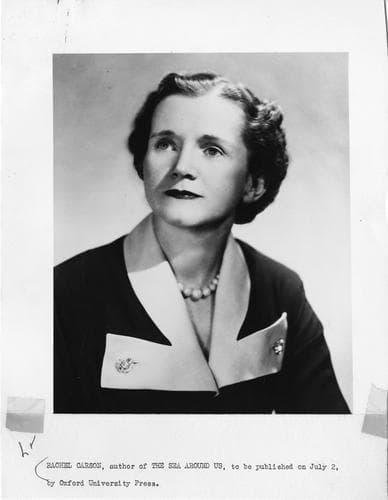
Rachel Carson was an American marine biologist and conservationist known for her influential work in environmental science. Her notable book, "Silent Spring," published in 1962, raised public awareness about the dangers of pesticides and is credited with advancing the global environmental movement. Carson's writings have had a lasting impact on environmental policy and awareness.
Similar books
- 1984
George Orwell
4.2 (3.1M) average on GoodreadsPoliticsIn a future where surveillance and thought control are absolute, a man's search for truth clashes with the Party, showing that hope can be a form of rebellion.
- Animal Farm
George Orwell
4.0 (2.7M) average on GoodreadsPoliticsA farm animals' rebellion against humans turns into a pig-led dictatorship, showing how power corrupts and revolutionary ideals are betrayed.
- Freakonomics: A Rogue Economist Explores the Hidden Side of Everything
Steven D. Levitt
4.0 (709k) average on GoodreadsBusinessThis book uses economic principles to reveal the surprising incentives behind everything from drug dealing and real estate to cheating teachers and the decline of crime.
- I Am Malala: The Story of the Girl Who Stood Up for Education and Was Shot by the Taliban
Malala Yousafzai
4.1 (419k) average on GoodreadsPoliticsA teenage girl from a Taliban-controlled valley refuses to give up her books, becoming a global voice for education even after an assassination attempt.
- Atlas Shrugged
Ayn Rand
3.7 (354k) average on GoodreadsPoliticsIn a dystopian America where innovators vanish, a brilliant heiress races to uncover the truth behind the disappearing industrialists and the enigmatic John Galt, who vows to stop the world's progress.
- The Art of War
Sun Tzu
4.0 (330k) average on GoodreadsBusinessLearn ancient strategies for outsmarting rivals, whether on the battlefield or in the boardroom.






Enjoyed the summary?
A summary gives you the shape of the book. The book itself has the detail, the examples and the voice.
Find Silent Spring on AmazonAs an Amazon Associate, BookBrief earns from qualifying purchases. How we're funded