

Synopsis
Covers the whole plot, including the ending.
- Difficulty
- Medium
- Pacing
- Moderate
- Mood
- Gritty, Tragic, Hopeful, Suspenseful, Romantic
- Read it if
- You enjoy historical fiction set during the harrowing final months of WWII, with a focus on survival, difficult moral choices, and a compelling romance against a backdrop of immense tragedy.
- Skip it if
- You prefer lighthearted stories or are sensitive to graphic descriptions of war, violence, and the suffering of civilians.
Skeletons at the Feast Plot Summary
Covers the whole plot, including the ending.
The Retreat from East Prussia
In January 1945, the Soviet Red Army rapidly advances into East Prussia, throwing the Emmerich family estate near Königsberg into chaos. Eighteen-year-old Anna Emmerich, her Scottish POW lover Callum Finella, and Uri Singer – a Jewish man disguised as Wehrmacht corporal Manfred – must flee. Anna’s father, a Prussian aristocrat, initially refuses to leave his land, but the Soviet threat forces them onto the treacherous roads west. They join a desperate exodus of refugees, facing freezing conditions, starvation, and constant danger from Soviet soldiers and retreating German forces. This escape sets the harrowing tone and immediate stakes of their journey.
The Loss of Family
During their chaotic escape, Anna experiences significant loss. Her younger sister, Lotte, is separated from the family in the panic, presumed lost among the refugees. Soon after, Anna's mother, weakened by the harsh conditions and emotional stress, dies on the roadside. Anna's father, already broken by the loss of his estate and family, is last seen trying to protect his wife's body. Anna and Callum must leave him behind as the Soviet advance continues. These events isolate Anna and make her rely on Callum and Uri, stripping her of her aristocratic past.
Uri's Secret Revealed
As they continue their dangerous journey west, Uri, known to them as 'Manfred,' reveals his true identity. He confesses to Anna and Callum that he is Uri Singer, a German Jew who escaped a train to Auschwitz. He explains how he got the uniform and papers of a dead Wehrmacht corporal to survive. This revelation deepens the bond between the three and adds more danger to their already uncertain situation. Anna and Callum, despite their shock, choose to protect Uri, solidifying their shared fate.
Encountering the German Military
The trio often encounters remnants of the retreating German military, which poses a constant threat. Uri, disguised as a corporal, must maintain his deception perfectly, while Callum, a former POW, risks immediate execution if discovered. They witness the brutal discipline of the Wehrmacht, including executions of deserters, showing the desperation of the dying regime. These encounters force them to be constantly alert, relying on Uri's quick thinking and their collective ability to blend in or avoid detection, adding great tension to their daily lives.
The Search for Safety
Moving through the devastated German countryside, Anna, Callum, and Uri search for food, shelter, and safety. They scavenge abandoned farms, hide in bombed-out buildings, and occasionally seek help from sympathetic, though fearful, civilians. Their journey becomes a daily struggle for survival, marked by hunger, exhaustion, and the constant threat of discovery by German or Soviet forces. They learn to trust their instincts and each other completely, forming a close unit against the backdrop of a crumbling nation. Each temporary haven offers a brief rest before they must move on.
The Bridge Crossing
A particularly difficult event involves crossing a major river, where a bridge is under constant bombardment and heavily guarded by German forces. The bridge is a bottleneck for refugees and military personnel, a target for Allied planes, and a symbol of their desperate push west. The trio must navigate the chaos, the fear of collapsing structures, and the scrutiny of soldiers, all while maintaining their deceptions. This intense sequence tests their courage and resilience, showing the physical and psychological toll of their journey and the constant danger of wartime travel.
The Betrayal and Separation
While seeking shelter, the group is betrayed by a seemingly helpful family who, suspicious of Uri's identity or desperate for resources, reports them to local authorities. In the resulting chaos, Uri is forced to flee alone, barely escaping capture. Anna and Callum are separated from him, believing he has been caught or killed. This event is a devastating blow, shattering their small, protective unit and leaving Anna and Callum to continue their journey with renewed fear and a deep sense of loss for their friend, increasing the emotional stakes for the remaining two.
Anna and Callum Alone
After Uri's presumed capture, Anna and Callum face the world alone. Their love, which grew during the war, is now their only anchor. They rely on each other for emotional support and practical survival, their bond deepening amidst the relentless hardships. However, constant fear, hunger, and trauma also strain their relationship, forcing them to confront their limits. Callum's protectiveness and Anna's growing resilience define their individual and shared struggle for survival, hoping to reach Allied lines and freedom.
The End of the War and Liberation
Anna and Callum eventually reach British and American lines, where they are finally safe from the immediate dangers of the collapsing Third Reich. News of Germany's surrender and the war's official end brings a mix of relief and deep exhaustion. They are processed as refugees and displaced persons, a stark contrast to Anna's former aristocratic life. Their physical journey ends, but emotional and psychological scars remain. They begin the long process of healing and adjusting to a world without war, uncertain of their future but together.
The Aftermath and Revelation
Years after the war, Anna and Callum, now living in Scotland, receive unexpected news: Uri Singer survived. Through an international tracing service, they learn he made it to Palestine and later to Israel, where he built a new life. This revelation brings a powerful sense of closure and joy, confirming the resilience of the human spirit. The book ends with Anna and Callum reflecting on their shared experiences, the deep impact of their journey across war-torn Germany, and the lasting bonds formed in survival, showing how their past continues to shape their present.
Principal Figures
Anna Emmerich
Protagonist
An eighteen-year-old Prussian aristocrat forced to flee her home.
Anna begins as a sheltered, privileged daughter of Prussian landed gentry, but the war's brutal realities quickly strip away her innocence. She is intelligent, observant, and fiercely loyal, especially to Callum and Uri. Her journey transforms her from a girl into a resilient woman capable of enduring immense hardship and making difficult choices. She carries the weight of her family's lost legacy and the trauma of witnessing the collapse of her world, yet she never fully loses her capacity for hope and love.
Relationships: Callum Finella (Lover and fellow survivor, their bond is the emotional core of the story.); Uri Singer (Manfred) (A trusted friend and companion, bound by shared survival and secrets.); Herr Emmerich (Father) (Her aristocratic father, whose pride and eventual despair contrast with Anna's pragmatism.); Frau Emmerich (Mother) (Her mother, who succumbs to the hardships of the flight.); Lotte Emmerich (Her younger sister, lost during the chaotic retreat.)
Callum Finella
Protagonist
A Scottish prisoner of war and Anna's lover.
Callum is a twenty-year-old Scottish soldier, captured early in the war and forced to labor on the Emmerich estate. He is resourceful, pragmatic, and deeply devoted to Anna. His experiences as a POW have made him resilient and wary, but he retains a fundamental decency and courage. He is fiercely protective of Anna and Uri, often taking the lead in dangerous situations. His love for Anna is a driving force, providing hope and purpose amidst the devastation, and his military background gives him practical skills for survival.
Relationships: Anna Emmerich (Lover and fellow survivor, their bond is the emotional core of the story.); Uri Singer (Manfred) (A trusted friend and companion, bound by shared survival and secrets.)
Uri Singer (Manfred)
Protagonist
A German Jew disguised as a Wehrmacht corporal.
Uri is a twenty-six-year-old German Jew who narrowly escaped a transport to Auschwitz. He assumes the identity of a dead Wehrmacht corporal, 'Manfred,' a disguise he maintains with remarkable skill and courage. Uri is intelligent, quick-witted, and possesses an incredible will to survive. He carries the immense burden of his Jewish identity in Nazi Germany, living in constant fear of exposure. Despite his trauma, he forms a deep bond with Anna and Callum, displaying loyalty and resourcefulness that proves invaluable to their group's survival. His true identity adds layers of tension and moral complexity to their journey.
Relationships: Anna Emmerich (A trusted friend and companion, bound by shared survival and secrets.); Callum Finella (A trusted friend and companion, bound by shared survival and secrets.)
Herr Emmerich
Supporting
Anna's proud Prussian aristocratic father.
Herr Emmerich is a man deeply rooted in the traditions and land of East Prussia. Initially, he embodies the stubborn pride of the Prussian Junkers, reluctant to abandon his estate even as the Soviets approach. He struggles to adapt to the collapse of his world and the loss of his social standing. His character represents the fading old order of Germany, unwilling or unable to comprehend the full scope of the war's devastation until it directly impacts him. His eventual despair and presumed death highlight the complete destruction of his former life.
Relationships: Anna Emmerich (His daughter, with whom he has a complex relationship, marked by his traditional expectations.); Frau Emmerich (His wife, whom he tries to protect amidst their flight.)
Frau Emmerich
Supporting
Anna's mother, who struggles with the hardships of their flight.
Frau Emmerich is Anna's mother, a woman accustomed to a life of comfort and privilege. She is less resilient than Anna to the brutal conditions of their flight. Her character represents the vulnerability of those unprepared for the harsh realities of war. She quickly succumbs to illness and despair, highlighting the physical and emotional toll the journey takes on many refugees. Her death is a poignant moment, signifying another profound loss for Anna and the final severing of her family unit.
Relationships: Anna Emmerich (Her daughter, whom she loves but cannot protect from the war's horrors.); Herr Emmerich (Her husband, who is devastated by her suffering and eventual death.)
Lotte Emmerich
Mentioned
Anna's younger sister, lost during the initial retreat.
Lotte is Anna's younger sister, briefly seen before being separated from the family during the chaotic initial flight from East Prussia. Her disappearance is a traumatic event for Anna, symbolizing the innocent lives lost and the fragmentation of families in wartime. Though she is not a prominent character, her absence and the uncertainty of her fate weigh heavily on Anna, underscoring the arbitrary and devastating nature of the war's impact on civilians.
Relationships: Anna Emmerich (Her older sister, who grieves her loss.)
Various German Soldiers
Supporting
The desperate and dangerous remnants of the Wehrmacht.
Throughout their journey, Anna, Callum, and Uri encounter numerous German soldiers – some fanatical, some demoralized, others simply trying to survive. These soldiers represent the dying gasp of the Nazi regime and the chaos of its collapse. They are often unpredictable, capable of both brutality and moments of surprising humanity. Their presence forces Uri to maintain his elaborate deception and poses a constant threat to Callum as an enemy combatant. They serve as a constant reminder of the war's ongoing grip on the landscape and its people.
Refugees
Supporting
The desperate masses fleeing the Red Army.
The roads are filled with countless German refugees, a desperate tide of humanity fleeing the advancing Red Army. They are a collective character, illustrating the scale of the humanitarian crisis and the shared suffering of civilians. They are often portrayed as fearful, hungry, and sometimes predatory, driven to extreme measures for survival. Anna, Callum, and Uri blend into this mass, finding anonymity and occasional aid, but also facing the dangers posed by desperate strangers. They represent the silent victims of the war, their individual stories lost in the larger tragedy.
Themes & Insights
Survival and Resilience
The main theme is the characters' constant struggle for survival against overwhelming odds. Anna, Callum, and Uri face starvation, freezing conditions, constant violence, and deep loss, yet they keep pushing westward. Their resilience shows in their ability to adapt to extreme situations, find food, and keep hope. Uri's very existence, living as a German corporal while Jewish, is an ultimate act of survival. The theme is powerfully shown in their daily perseverance, their refusal to give up, even when facing unimaginable horrors, and their eventual success in reaching safety.
“The war had taught them that the only thing that mattered was the next breath, the next step, the next crumb.”
Love and Loyalty Amidst War
The book explores how love and loyalty can last and even grow stronger in extreme hardship. The romance between Anna and Callum, born on the Emmerich estate, becomes an unbreakable bond as they navigate the horrors of their journey. Their mutual devotion provides comfort and motivation. Similarly, the loyalty among Anna, Callum, and Uri, despite their different backgrounds and Uri's dangerous secret, becomes the foundation of their survival. They choose to protect each other, even at great personal risk, showing the deep human need for connection and trust when everything else falls apart. This theme highlights humanity's capacity for compassion in inhumane circumstances.
“They were three broken pieces of a world that had shattered, but together, they were whole.”
The Dehumanizing Effects of War
The book clearly shows how war strips away humanity, forcing people into morally difficult situations and revealing the darkest parts of human nature. The desperate refugees, brutalized soldiers, and constant threat of violence all contribute to a world where life is cheap and survival often comes at a moral cost. Anna's initial innocence is broken as she sees atrocities and makes hard decisions. Constant hunger, fear, and exposure reduce people to basic instincts. Uri's need to deny his identity is a stark example of war's dehumanizing power, forcing him to live a lie to survive. The book does not avoid showing the psychological and emotional scars that remain long after the fighting ends.
“The war had made monsters of them all, some more overtly than others, but monsters nonetheless.”
Loss and Memory
Loss is a constant theme, from the physical destruction of cities and landscapes to the personal tragedies of lost family members and a vanished way of life. Anna loses her family, her home, and her privileged existence. Callum loses his freedom and his comrades. Uri loses his entire community and his identity. The book explores how these deep losses shape the characters, forcing them to face grief while also fighting for their future. Memory also plays a role, as the characters carry the weight of their pasts and the trauma of their experiences. The ending, with Uri's survival, offers healing and the chance to reconcile with the past, but the scars of memory remain.
“The ghosts of what they had lost walked beside them, a silent, heavy burden.”
Identity and Deception
The theme of identity, especially false identity and deception, is central to Uri's story. His survival depends entirely on his ability to convincingly act as a German corporal, hiding his true Jewish identity. This deception is not just a plot device but a deep look at what it means to hide one's true self to survive in a hostile world. Anna and Callum also adopt different roles to navigate their journey, whether Anna shedding her aristocratic manner or Callum hiding his Allied soldier identity. The war forces people to question who they are and what they will become to endure, blurring the lines between self and performance.
“He was not Manfred. He was Uri. And he was nobody, and everybody, all at once.”
Plot Devices & Literary Techniques
The Journey West
A literal and metaphorical trek across a collapsing nation.
The physical journey from East Prussia to the Allied lines in the west serves as the primary plot device, driving the narrative forward. It is a classic 'road story' structure, but set against the backdrop of a collapsing Nazi Germany. This journey is not just a geographical movement but a metaphorical one, representing the characters' transformation, their struggle for survival, and their search for hope and a new beginning. Each step westward brings new challenges, encounters, and revelations, constantly testing their endurance and forcing them to confront the brutal realities of war.
Uri's Disguise
The perilous secret of Uri's true identity as a Jewish man disguised as a German soldier.
Uri's disguise as a Wehrmacht corporal is a critical plot device that fuels much of the novel's tension and moral complexity. It creates constant suspense, as his exposure would mean certain death not only for him but potentially for Anna and Callum. This device allows for exploration of themes like identity, deception, and the extreme measures people take to survive. It also forces Anna and Callum to confront their own prejudices and loyalties, deepening their bond with Uri and highlighting the absurdity and tragedy of wartime loyalties.
The Advancing Red Army
The relentless, unseen force driving the characters westward.
The Soviet Red Army, while rarely seen directly by the protagonists, acts as a powerful, unseen force that propels the narrative. Its relentless advance is the catalyst for the Emmerich family's flight and the constant pressure driving the refugees westward. The fear of the Soviets, fueled by propaganda and real atrocities, adds an omnipresent sense of urgency and danger to the journey. This device effectively establishes the high stakes and the desperate scramble for survival, pushing the characters into increasingly precarious situations and forcing them to make difficult choices.
The Lost Sister (Lotte)
A symbol of the war's indiscriminate loss and lingering grief.
Lotte's disappearance early in the story serves as a poignant plot device, symbolizing the countless innocent lives swallowed by the chaos of war and the fragmentation of families. Her unknown fate haunts Anna throughout her journey, representing an unresolved grief and the ever-present threat of loss. This device adds emotional weight to Anna's personal struggle, reminding the reader of the broader human cost of the conflict beyond the main characters' immediate survival. It underscores the arbitrary nature of wartime tragedies and the enduring pain of uncertainty.
Skeletons at the Feast Quotes
“There are some things in this world that can’t be fixed, no matter how much you want to.”
“The past is a stubborn thing. It clings to you, no matter how far you run.”
“Sometimes the only way to survive is to forget, and sometimes the only way to live is to remember.”
“Love, even in the darkest of times, is a powerful weapon.”
“The wind carries the ghosts of the dead, if you listen closely enough.”
“We were all just trying to make it to tomorrow, even if tomorrow was just another day of hell.”
“There’s a difference between living and merely existing.”
“Hope is a dangerous thing, but sometimes it’s all you have.”
“The world was on fire, and we were just tiny sparks trying not to be consumed.”
“Even the smallest acts of kindness can be a lifeline.”
“You can never truly escape what you’ve seen, what you’ve done.”
“History isn't just dates and names; it's the echoes of lives lived and lost.”
“Silence can be louder than any scream.”
“The taste of freedom, even if just a fleeting moment, was intoxicating.”
Quiz
10 questions on the plot and the characters. Each answer comes with a short explanation.
Question 1
What is the primary goal of Anna, Callum, and Manfred as they begin their journey in January 1945?
- To find a safe haven within a German-controlled city.
- To reach the British and American lines west of the Rhine.
- To liberate a prisoner-of-war camp.
- To return to Anna's family farm in Prussia.
Show answer
B. To reach the British and American lines west of the Rhine. The synopsis clearly states their goal is 'an attempt to cross the remnants of the Third Reich, from Warsaw to the Rhine if necessary, to reach the British and American lines.'
Question 2
What is Callum Finella's background before he becomes forced labor on Anna's family farm?
- He was a German civilian conscripted into labor.
- He was an American soldier captured during the Battle of the Bulge.
- He was a Scottish prisoner of war.
- He was a Polish resistance fighter.
Show answer
C. He was a Scottish prisoner of war. The description identifies Callum as 'a twenty-year-old Scottish prisoner of war who was brought from the stalag to her family’s farm as forced labor.'
Question 3
What is the true identity of the character known to Anna and Callum as Manfred?
- A disillusioned German officer seeking to defect.
- Uri Singer, a Jew from Germany who escaped an Auschwitz-bound train.
- A captured Soviet spy posing as a German soldier.
- Anna's long-lost brother, presumed dead.
Show answer
B. Uri Singer, a Jew from Germany who escaped an Auschwitz-bound train. The text explicitly states: 'And there is a twenty-six-year-old Wehrmacht corporal, who the pair know as Manfred–who is, in reality, Uri Singer, a Jew from Germany who managed to escape a train bound for Auschwitz.'
Question 4
In what specific month and year does the story 'Skeletons at the Feast' primarily begin?
- September 1944
- January 1945
- March 1945
- November 1944
Show answer
B. January 1945 The synopsis clearly states, 'In January 1945, in the waning months of World War II, a small group of people begin the longest journey of their lives.'
Question 5
Which of the following best describes Anna Emmerich's social background?
- She is the daughter of working-class German farmers.
- She is the daughter of Prussian aristocrats.
- She is a refugee from an Eastern European village.
- She is a German nurse conscripted for the war effort.
Show answer
B. She is the daughter of Prussian aristocrats. The description states Anna Emmerich is 'the daughter of Prussian aristocrats,' providing insight into her social standing.
Question 6
What literary work is 'Skeletons at the Feast' compared to for its blend of romance, terror, and tragedy?
- All Quiet on the Western Front
- Doctor Zhivago
- The English Patient
- A Farewell to Arms
Show answer
C. The English Patient The synopsis explicitly draws a comparison: 'Perhaps not since The English Patient has a novel so deftly captured both the power and poignancy of romance and the terror and tragedy of war.'
Question 7
What specific challenge will the flight across the Third Reich pose to Anna and Callum's relationship and their friendship with Manfred?
- They will face internal conflicts over their differing political ideologies.
- The journey will test their love and friendship, assuming they survive.
- They will encounter a love triangle that strains their bonds.
- Their relationships will be strengthened by a shared sense of adventure.
Show answer
B. The journey will test their love and friendship, assuming they survive. The synopsis states: 'Their flight will test both Anna’s and Callum’s love, as well as their friendship with Manfred–assuming any of them even survive.'
Question 8
The novel is set during the 'waning months of World War II.' Which specific geographical region are they attempting to cross?
- Occupied France to neutral Switzerland.
- From Warsaw across the remnants of the Third Reich to the Rhine.
- Southern Germany to the Italian front.
- Eastern Prussia to the Soviet Union.
Show answer
B. From Warsaw across the remnants of the Third Reich to the Rhine. The text details their journey as 'an attempt to cross the remnants of the Third Reich, from Warsaw to the Rhine if necessary, to reach the British and American lines.'
Question 9
What is the significance of Manfred's true identity as Uri Singer, a Jew, given his disguise as a Wehrmacht corporal?
- It highlights the ironic twist of fate for German soldiers during the war.
- It emphasizes the extreme measures taken for survival and the pervasive danger for Jews in Nazi Germany.
- It suggests a subplot involving espionage against the German army.
- It foreshadows his eventual desertion to the Soviet forces.
Show answer
B. It emphasizes the extreme measures taken for survival and the pervasive danger for Jews in Nazi Germany. Uri Singer's disguise as a Wehrmacht corporal, despite being a Jew who escaped Auschwitz, underscores the desperate and dangerous lengths individuals went to for survival during the Holocaust and under Nazi rule.
Question 10
Chris Bohjalian's writing is praised for 'skillfully portraying the flesh and blood of history' and 'creating a rich tapestry.' What specific aspect of history does the novel aim to put a face on?
- The political maneuvering behind the Allied invasion.
- The strategic decisions made by military generals.
- One of the twentieth century’s greatest tragedies.
- The economic impact of post-war reconstruction.
Show answer
C. One of the twentieth century’s greatest tragedies. The text states Bohjalian 'has crafted a rich tapestry that puts a face on one of the twentieth century’s greatest tragedies,' referring to the human cost and experiences of WWII.
Skeletons at the Feast FAQ
What is the primary setting and time period of 'Skeletons at the Feast'?
The novel is primarily set in January 1945, during the final months of World War II. The characters embark on a perilous journey across the collapsing Third Reich, beginning near Warsaw and aiming for the British and American lines west of the Rhine.
Who are the three central characters and what are their initial relationships?
The central characters are eighteen-year-old Anna Emmerich, a Prussian aristocrat; her twenty-year-old Scottish lover, Callum Finella, a former POW who worked on her family's farm; and twenty-six-year-old Manfred, a Wehrmacht corporal who is secretly Uri Singer, a German Jew who escaped Auschwitz.
What is the main objective of Anna, Callum, and Manfred's journey?
Their main objective is to travel west across the war-torn remnants of Germany, from the eastern front lines near Warsaw, to reach the safety of the British and American Allied forces, hoping to escape the advancing Soviet army and the collapse of the Reich.
How does the war impact the physical and emotional landscape the characters traverse?
The war utterly devastates the landscape, presenting a constant threat of starvation, freezing temperatures, bombings, and encounters with desperate soldiers and civilians. This brutal environment profoundly tests the characters' resilience, moral compass, and their relationships.
What makes Manfred's true identity as Uri Singer particularly dangerous for the group?
Manfred's true identity as Uri Singer, a Jewish escapee, makes their journey incredibly perilous. If discovered by Nazi authorities or even zealous German civilians, he would face immediate execution, and Anna and Callum could be implicated for aiding an enemy of the state.
Are there any specific historical events or atrocities that feature prominently in the background or direct experience of the characters?
The novel vividly portrays the chaos of the eastern front's collapse, the brutal winter conditions, and the desperation of refugees fleeing the Soviet advance. Uri's backstory explicitly references the Holocaust and his escape from a train bound for Auschwitz, grounding the narrative in specific historical atrocities.
How does Anna's aristocratic background both help and hinder her during the journey?
Anna's aristocratic background initially provides her with some resources and a sense of entitlement, but it often hinders her as she struggles to adapt to the harsh realities of survival without privilege. Her upbringing makes her initially naive to the true horrors outside her estate, forcing a rapid, painful maturation.
What psychological toll does the constant threat of discovery take on Uri Singer (Manfred)?
The constant threat of discovery as a Jew disguised as a Wehrmacht corporal inflicts immense psychological strain on Uri. He lives in perpetual fear, constantly vigilant, and must suppress his true identity, leading to a profound sense of isolation and internal conflict about his past and future.
How does Callum Finella's experience as a POW shape his actions and perspectives during the escape?
Callum's past as a POW instills in him a deep understanding of survival, resourcefulness, and the brutality of war. This experience makes him pragmatic and resilient, but also perhaps more hardened, influencing his decisions and protective instincts towards Anna, yet also his capacity for violence.
In what ways do Anna and Callum's love story evolve or devolve under the extreme pressures of their journey?
Anna and Callum's love is severely tested by the journey's extreme pressures. It deepens in shared trauma and reliance, but also faces strains from differing survival instincts, moral compromises, and the constant fear of separation, forcing them to confront the true nature of their bond beyond romance.
What is the significance of the novel's title, 'Skeletons at the Feast'?
The title 'Skeletons at the Feast' likely alludes to the grim reality of a dying regime (the Third Reich) attempting to maintain an illusion of power and normalcy amidst widespread death and destruction. It suggests the presence of death, starvation, and hidden horrors lurking beneath a façade, or the emaciated survivors of a brutal war.
How does the novel explore themes of identity, particularly through Uri's character?
Through Uri, the novel deeply explores themes of identity, as he is forced to shed his Jewish identity to survive, adopting the persona of a German soldier. This constant deception forces him to grapple with who he truly is versus who he must pretend to be, questioning the essence of self in dire circumstances.
Is the ending of 'Skeletons at the Feast' generally considered hopeful, tragic, or ambiguous?
The ending of 'Skeletons at the Feast' is often considered bittersweet, offering a glimmer of hope for survival and new beginnings for some, but also acknowledging the profound and lasting scars of war and loss. It's a complex resolution, reflecting the mixed realities of post-war life.
How does Chris Bohjalian use the historical backdrop to comment on broader human nature?
Bohjalian uses the brutal historical backdrop to expose the extremes of human nature – both the depths of cruelty and the heights of resilience, compassion, and courage. He illustrates how war strips away societal veneers, revealing inherent good and evil, and the enduring human will to survive and connect.
What moral dilemmas do Anna, Callum, and Uri face, and how do their choices reflect their evolving characters?
They face constant moral dilemmas regarding survival: stealing food, abandoning others, or killing to protect themselves. Their choices, often difficult and morally gray, reveal their evolving characters; Anna sheds her innocence, Callum grapples with his humanity, and Uri struggles with the compromises necessary to live.
Are there any instances of unexpected kindness or betrayal that significantly alter the group's journey?
Yes, the group encounters both profound acts of unexpected kindness from desperate strangers, offering food or shelter, and shocking betrayals, sometimes from those they initially trusted. These moments highlight the unpredictable nature of human behavior under extreme duress and significantly redirect their path.
How does the narrative structure build suspense and maintain reader engagement throughout the long journey?
The narrative structure builds suspense through constant immediate threats – bombings, patrols, starvation – combined with the overarching goal of reaching the Allied lines. Bohjalian uses character-focused chapters and reveals details about their pasts and inner conflicts, keeping readers invested in their personal survival and emotional journeys.
About the author

Chris Bohjalian is a prolific author known for his gripping novels that often explore complex moral and ethical dilemmas. His works, including the bestselling 'Midwives,' 'The Double Bind,' and 'The Guest Room,' have garnered critical acclaim and a dedicated readership. Bohjalian's writing is often characterized by its suspenseful plots, well-developed characters, and insightful social commentary.
Similar books
- The English Patient
Michael Ondaatje
3.9 (113k) average on GoodreadsLiterary FictionCaptures the power and poignancy of romance amidst the terror and tragedy of war.
- All the Light We Cannot See
Anthony Doerr
4.3 (1M) average on GoodreadsHistorical FictionExplores human connection and survival during WWII with a focus on ordinary people caught in extraordinary circumstances.
- The Nightingale
Kristin Hannah
4.6 (698k) average on GoodreadsHistorical FictionFeatures strong female characters surviving and resisting during WWII, with themes of love, loss, and resilience.
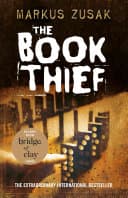
- The Book Thief
Markus Zusak
4.4 (1.8M) average on GoodreadsHistorical FictionZusak's novel also portrays German civilians but uses a unique narrative voice (Death) and focuses on the power of stories and humanity within a single town. Bohjalian’s scope is broader, following a desperate migration across a landscape, and his narrative is more traditionally structured, emphasizing the relentless, physical journey and the direct impact of war on a fleeing population.
- To Kill a Mockingbird
Harper Lee
4.3 (4.5M) average on GoodreadsHistorical FictionIn the 1930s Jim Crow South, Harper Lee writes about racial injustice, moral growth, and the quiet courage of a lawyer father, Atticus Finch, as seen through his young daughter's eyes.
- The Great Gatsby
F. Scott Fitzgerald
3.9 (3.8M) average on GoodreadsHistorical FictionIn the opulent Roaring Twenties, a mysterious millionaire's lavish parties hide his desperate, tragic pursuit of a lost love, exposing the emptiness within the American Dream.





Enjoyed the summary?
A summary gives you the shape of the book. The book itself has the detail, the examples and the voice.
Find Skeletons at the Feast on AmazonAs an Amazon Associate, BookBrief earns from qualifying purchases. How we're funded