
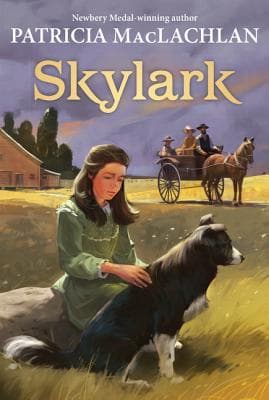
Synopsis
Covers the whole plot, including the ending.
- Difficulty
- Easy
- Pacing
- Slow
- Mood
- Reflective, Hopeful, Gentle, Melancholy
- Read it if
- You enjoy quiet, character-driven historical fiction about family, resilience, and finding home, especially for young readers.
- Skip it if
- You prefer fast-paced plots, high fantasy, or stories with complex world-building.
Skylark Plot Summary
Covers the whole plot, including the ending.
The Prairie's Harsh Embrace
Anna, a young girl on the prairie, tells her family's story. Her mother, Sarah, misses her Maine home and finds the flat prairie difficult. Sarah often sings sad songs and looks east, longing for the ocean. Anna's father, Jacob, connected to the land, tries to comfort Sarah, but a relentless drought increases her unease. Fields turn to dust, well water shrinks, and fire threatens. This environmental crisis worsens Sarah's homesickness and fear, setting a somber mood for the family's future.
A Mother's Decision
The drought worsens, bringing devastating prairie fires. The sky fills with smoke, and the air smells of burning grass. Animals, like coyotes, desperate for water, come closer to the farmhouse. Sarah, overwhelmed by the harsh conditions and constant danger, decides to leave. She believes it is the only way to protect her children, Anna and Caleb. Despite Jacob's quiet request for her to stay, Sarah is firm, packing their few things for the long trip back to Maine, leaving Jacob to care for the land he will not abandon.
The Journey East
Anna, Caleb, and Sarah begin their train journey to Maine. The children are excited by the train and changing scenery, but Anna also feels a deep loss and worry for her father. Sarah, relieved to leave the drought-stricken prairie, carries a heavy heart, often looking back as if she might change her mind. During the trip, Anna tries to comfort her mother, understanding her longing for the familiar. The train ride symbolizes both escape and separation, showing the emotional gap in their family.
Life in Maine
In Maine, Sarah, Anna, and Caleb are welcomed by Sarah's two aunts, who live by the sea. The environment is very different from the prairie: lush, green, and filled with the sound and smell of the ocean. Anna and Caleb enjoy exploring the beach and playing with their cousins. However, despite the beauty and comfort of family, Anna misses the prairie and, most of all, her father. Sarah, though seemingly more at peace, still carries a quiet sadness, often staring out at the sea with a distant look, thinking of Jacob.
Longing for Home
As weeks pass, Anna's longing for her father and the prairie grows. She writes letters to Jacob, describing her experiences but also expressing her deep wish to return. Sarah, though seemingly happier by the sea, still shows signs of inner conflict. She often talks about Jacob and the farm, showing that part of her remains on the prairie. Anna notices that while Sarah is physically in Maine, her heart is divided. This time highlights the complex idea of 'home' and strong family bonds, even when separated by long distances.
A Letter from Jacob
One day, a letter from Jacob arrives. Anna eagerly reads it, her heart full of hope. Jacob writes that the much-awaited rain has come to the prairie, and the land is slowly recovering. He mentions green shoots appearing and renewed life. Though his words are simple, Anna senses a deep longing for his family in them. The letter restarts the children's wish to return and subtly influences Sarah, who begins to think seriously about their future.
Sarah's Internal Conflict
Jacob's letter starts a visible inner struggle for Sarah. She spends more time by the window, looking at the ocean, but her thoughts are elsewhere. She talks to Anna about the conflicting pull of her two homes — the comfort of Maine versus love for her husband and the life they built on the prairie. Anna, sensing her mother's trouble, gently reminds her of Jacob and their shared life. Sarah's decision is not easy; it means choosing between two deeply rooted parts of herself.
The Decision to Return
After much thought, Sarah decides to return to the prairie. This choice comes not just from news of rain, but from her deep love for Jacob and the realization that their family is incomplete without him. Anna and Caleb are overjoyed, their excitement clear. Sarah understands that while the prairie may not be her first love, it is where her family is, and that is where her heart belongs. The decision marks a big change in Sarah's view, as she embraces her prairie life with new purpose.
The Journey West
Sarah, Anna, and Caleb begin their journey back to the prairie. This time, the train ride is filled with a different kind of anticipation. Anna notices a new lightness in her mother. Sarah is still quiet, but her gaze no longer longs for the past; it looks toward the future. The children talk excitedly about seeing their father and the farm. The journey west symbolizes a family reuniting and a woman embracing her chosen life, ready to face the prairie's challenges with her husband.
Homecoming
The train arrives, and Jacob is there to meet them. The reunion is tender and emotional, showing their lasting love. Anna sees the prairie, now green after the rains, a sharp contrast to the dry land they left. Sarah, seeing Jacob and the revitalized land, finally seems to find peace. The family returns to their farmhouse, not just to a place, but to a re-established sense of belonging and completeness. The drought's challenges have made them a stronger, more resilient family.
A New Beginning
Back on the prairie, Sarah seems changed. She still misses the sea, but her sadness is balanced with quiet acceptance and a growing affection for the land. She helps Jacob with chores, sings songs, and finds joy in their daily life. Anna notices Sarah watching the 'skylarks' — the small, tough birds — with new understanding, perhaps seeing herself in their persistence. The family, having endured separation and hardship, is now stronger and more united, ready to face whatever the prairie brings with shared resilience and love.
Skylark Characters
Anna
Protagonist
The observant and empathetic daughter, narrator of the story.
Anna is a sensitive and observant young girl, deeply connected to both her parents. She loves the prairie and understands its beauty, but also keenly feels her mother's unhappiness. She acts as the narrator, providing insight into the family's emotional landscape. Her empathy extends to both her parents, as she misses her father while in Maine but also tries to comfort her homesick mother. She is practical and resilient, adapting to changes while holding onto her core values of family and home.
Relationships: Sarah (Daughter, empathetic observer of her mother's struggles); Jacob (Daughter, deeply misses and loves her father); Caleb (Older sister, protective and playful)
Sarah
Supporting
Anna's mother, who struggles with homesickness for Maine and the harshness of the prairie.
Sarah is a complex character, initially defined by her deep longing for her past life in Maine. She finds the prairie stark and unforgiving, and the drought exacerbates her unhappiness and fear. Her decision to leave with the children is driven by a mother's instinct to protect. While in Maine, she finds temporary peace, but ultimately realizes that her true home and family are with Jacob on the prairie. Her journey is one of acceptance and finding peace in her chosen life.
Relationships: Anna (Mother, relies on Anna's quiet understanding); Jacob (Wife, deeply loves him but struggles with his connection to the prairie); Caleb (Mother, protective and caring)
Jacob
Supporting
Anna's father, a quiet and steadfast man deeply rooted in the prairie land.
Jacob is a man of few words, but his actions speak volumes. He embodies the spirit of the prairie farmer, resilient and deeply connected to his land. He loves Sarah deeply and tries to make her happy, but his bond with the land is unshakeable, leading him to stay during the drought. His quiet strength and unwavering presence are a grounding force for his family. He represents perseverance and the enduring power of commitment.
Relationships: Anna (Father, deeply loved and missed by his daughter); Sarah (Husband, patiently loves and waits for his wife to return); Caleb (Father, source of security)
Caleb
Supporting
Anna's younger brother, playful and less burdened by the family's emotional struggles.
Caleb is Anna's younger brother, a typical energetic and curious child. He is less aware of the deep emotional complexities affecting his parents, often finding joy in simple things like playing on the train or exploring the beach in Maine. He provides a childlike perspective, often through simple questions or observations, and helps to lighten the mood during difficult times. His primary role is to represent the innocence and resilience of childhood.
Relationships: Anna (Younger brother, companion in play and travel); Sarah (Son, receives her protection and care); Jacob (Son, looks up to his father)
Sarah's Aunts (Aunt Harriet and Aunt Bess)
Supporting
Sarah's relatives in Maine who provide shelter and comfort.
Sarah's aunts, Aunt Harriet and Aunt Bess, represent the comfort and familiarity of Sarah's past life in Maine. They welcome Sarah and the children into their home by the sea, offering a safe haven from the prairie's hardships. They are kind and nurturing, providing a temporary sense of stability. Their presence highlights the contrast between the two environments and the different kinds of support available to Sarah.
Relationships: Sarah (Aunts, provide a safe home); Anna (Great-aunts, provide care and a new environment); Caleb (Great-aunts, provide care and a new environment)
Skylark Themes
The Definition of Home
The novel explores what 'home' truly means. For Sarah, home is initially Maine and the ocean, causing deep homesickness on the prairie. For Jacob, home is the land he farms. Anna struggles with the idea that home is where her family is, feeling incomplete without her father. The separation helps Sarah realize that while Maine offers comfort, her true home is with her husband and children, even if the landscape is difficult. This idea is central when Sarah chooses to return to the prairie, putting family before her personal preference for a place.
“''I miss the sea,' Mama would say sometimes, gazing east. But she would say, 'I miss Papa,' too, as if he were the sea.”
Resilience in the Face of Adversity
The harsh prairie environment, especially the severe drought and fires, tests the characters' resilience. Jacob shows this through his firm commitment to his land, refusing to abandon it despite hardship. Sarah's resilience is clear in her difficult decision to leave to protect her children, and then in her even harder decision to return and accept a life she once struggled with. Anna and Caleb also show resilience by adapting to new places and enduring separation. The 'skylarks' in the title and text are a metaphor for this theme, small birds that thrive in the open, often harsh prairie.
“Sometimes I felt as if we were all skylarks, flying high, but always coming back to the nest.”
Love and Family Bonds
At its heart, the story is about the lasting power of love and family bonds. Sarah's love for her children makes her leave the prairie, and her love for Jacob eventually brings her back. Anna's deep affection for both parents and her wish for a complete family unit are central to the story. The separation, though painful, ultimately strengthens these bonds, as the characters realize how essential they are to each other's happiness. The quiet, steady love between Jacob and Sarah, even when separated, is a strong undercurrent throughout the book.
“It was quiet in the house, but it was not empty. It was full of Papa.”
Man vs. Nature
The book clearly shows the challenging relationship between humans and nature, specifically the prairie. The drought, fires, and the vast landscape are not just backgrounds but active forces shaping characters' lives and choices. Sarah struggles against the prairie's harshness, while Jacob works with it. The story highlights nature's power to both sustain and destroy, and the need to adapt to its unpredictable rhythms. The return of rain symbolizes nature's eventual generosity and the cycle of life on the plains.
“The land was brown and cracked. The sky was the same, brown and cracked, too.”
Plot Devices & Literary Techniques
First-Person Narration (Anna)
The story is told through the eyes of the young daughter, Anna.
Anna's first-person perspective allows the reader to experience the family's struggles and triumphs through an empathetic, observant, and slightly innocent lens. Her narration captures the emotional nuances of her mother's homesickness and her own longing for her father, making the complex adult themes accessible and relatable. It also provides a sense of immediacy and personal connection to the events, as Anna processes the changes in her world.
Symbolism of the Skylark
The small, resilient bird symbolizes hope, perseverance, and finding joy in challenging environments.
The skylark, mentioned explicitly in the title and implicitly throughout the narrative, symbolizes the characters' ability to find beauty and hope amidst hardship. Like the bird that sings joyfully even in the vast, sometimes desolate prairie, Sarah, Anna, and Jacob learn to persevere. The skylark represents resilience, the quiet beauty of the prairie, and the idea that even in tough times, there is always a song to be sung, a reason to hope, and a spirit to endure.
Contrasting Settings (Prairie vs. Maine)
The stark differences between the prairie and Maine highlight the characters' internal conflicts.
The novel uses the contrasting settings of the arid, challenging prairie and the lush, ocean-side environment of Maine to underscore Sarah's internal conflict and the family's journey. The prairie represents hardship, Jacob's steadfastness, and the chosen life. Maine represents Sarah's past, comfort, and a temporary refuge. The juxtaposition of these two places amplifies the emotional weight of Sarah's decision and clarifies the different pulls on her heart and the family's identity.
The Drought
The environmental crisis serves as the primary external conflict driving the plot.
The severe drought is not just a natural phenomenon but a central plot device. It acts as the catalyst for Sarah's decision to leave the prairie, creating the family's separation and the core conflict of the story. The drought symbolizes the overwhelming challenges of life and the way external pressures can impact personal relationships. Its eventual breaking, marked by the arrival of rain, signifies a turning point, allowing for resolution and reunion.
Skylark Quotes
“The prairie had its own kind of beauty, Sarah said, a quiet beauty.”
“Sometimes I think I was born in the wrong place. Sometimes I think I have sand in my shoes and the sea in my heart.”
“Mama said that words were like seeds. Plant them carefully, she said, and they will grow into something beautiful. Or something thorny.”
“The wind was a constant companion on the prairie, whispering secrets, telling stories.”
“Sometimes, when you miss something so much it hurts, you have to find a way to carry it with you.”
“Love is not a house, Anna. It is a feeling. It can live anywhere.”
“Books were windows to other worlds, and Anna loved to look through them.”
“The sky was so big out here, bigger than anything she had ever known. It made her feel small, but in a good way.”
“A family is like a quilt, Mama said. Each piece different, but all sewn together with love.”
“There are some things you carry with you, like a stone in your pocket. Heavy, but familiar.”
“Even the quietest things have a voice, if you listen closely enough.”
“Hope is a small bird, Mama said. You have to feed it, or it will fly away.”
“The world is full of beauty, Anna, even in the smallest things. You just have to open your eyes to see it.”
“Sometimes, the hardest journeys are the ones that lead you home.”
Quiz
10 questions on the plot and the characters. Each answer comes with a short explanation.
Question 1
Why did Sarah take Anna and Caleb back East from the prairie?
- She wanted them to experience city life.
- A drought caused fires and water scarcity on the prairie.
- Papa insisted they leave for their safety.
- She missed her family in Maine and wanted to visit.
Show answer
B. A drought caused fires and water scarcity on the prairie. The excerpt states that a drought turned the land dry and brown, fires swept across the fields, and coyotes came to the well, leading Sarah to take the children back east for safety.
Question 2
Where did Sarah originally come from before marrying Papa and moving to the prairie?
- New York
- Kansas
- Maine
- Ohio
Show answer
C. Maine The text explicitly states, 'Sarah came to the prairie from Maine to marry Papa.'
Question 3
What was Papa's primary reason for staying behind on the prairie when Sarah took the children East?
- He had to work and couldn't leave his job.
- He refused to abandon his land.
- He preferred to be alone.
- He was ill and couldn't travel.
Show answer
B. He refused to abandon his land. The excerpt states, 'Papa stayed behind. He would not leave his land,' indicating his strong attachment to the prairie.
Question 4
Which of the following environmental events occurred on the prairie, causing Sarah to fear for her children's safety?
- A blizzard and heavy snow
- A flood and overflowing rivers
- A drought, leading to dry land, fires, and coyotes at the well.
- A locust plague destroying crops.
Show answer
C. A drought, leading to dry land, fires, and coyotes at the well. The passage details 'a drought turned the land dry and brown. Fires swept across the fields and coyotes came to the well in search of water.'
Question 5
What is Anna's primary internal conflict or worry as weeks pass in Maine?
- She worries about making new friends in Maine.
- She misses the beauty of Maine and doesn't want to return to the prairie.
- She wonders if her family will ever be reunited if the drought continues.
- She is concerned about her mother's happiness in Maine.
Show answer
C. She wonders if her family will ever be reunited if the drought continues. The text states, 'Anna missed home, and Papa. And as the weeks went by, she began to wonder what would happen if the rains never came. Would she and Caleb and Sarah and Papa ever be a family again?'
Question 6
How does Sarah's initial experience on the prairie contrast with her memories of Maine?
- She found the prairie more beautiful than Maine immediately.
- She tried to love the prairie but couldn't help remembering what she knew first in Maine.
- She never thought about Maine after moving to the prairie.
- She found both places equally challenging.
Show answer
B. She tried to love the prairie but couldn't help remembering what she knew first in Maine. The passage states, 'My mother, Sarah, doesn't love the prairie. She tries, but she can't help remembering what she knew first,' indicating her preference for Maine.
Question 7
What does the phrase 'Papa stayed behind. He would not leave his land' reveal about his character?
- He is irresponsible and doesn't care about his family's safety.
- He is stubborn and unwilling to adapt to change.
- He possesses a deep sense of commitment and connection to his property and livelihood.
- He is secretly planning to sell the land and move to Maine.
Show answer
C. He possesses a deep sense of commitment and connection to his property and livelihood. Papa's refusal to leave his land, despite the dangers, highlights his strong commitment and connection to his home and perhaps his identity as a farmer or landowner.
Question 8
What is the central theme introduced by Anna's question, 'Would she and Caleb and Sarah and Papa ever be a family again?'
- The importance of travel and exploration.
- The challenges of maintaining family unity and identity amidst hardship and separation.
- The preference for city life over rural life.
- The inevitability of natural disasters.
Show answer
B. The challenges of maintaining family unity and identity amidst hardship and separation. Anna's question directly addresses the core concern of whether the family will overcome their separation and the environmental challenges to be a complete family once more.
Question 9
The description of 'Maine was beautiful' immediately followed by 'but Anna missed home, and Papa' suggests what about Anna's feelings?
- She appreciates natural beauty more than family.
- Her emotional connection to her family and the prairie outweighs the aesthetic appeal of Maine.
- She found Maine to be boring despite its beauty.
- She is indifferent to her surroundings.
Show answer
B. Her emotional connection to her family and the prairie outweighs the aesthetic appeal of Maine. This juxtaposition shows that while Maine might be beautiful, Anna's true 'home' and her heart are with her father and the prairie, emphasizing her longing for her family and familiar surroundings.
Question 10
What does the phrase 'Sarah doesn't love the prairie. She tries, but she can't help remembering what she knew first' imply about her adaptation to her new life?
- She has fully embraced the prairie lifestyle.
- Her past experiences in Maine significantly hinder her ability to fully appreciate or adjust to the prairie.
- She is indifferent to her surroundings, whether prairie or Maine.
- She dislikes the prairie specifically because of Papa.
Show answer
B. Her past experiences in Maine significantly hinder her ability to fully appreciate or adjust to the prairie. This statement reveals Sarah's ongoing internal struggle; despite her efforts, her memories and perhaps preferences from her earlier life in Maine prevent her from fully loving the prairie.
Skylark FAQ
What is the central conflict that drives the plot of 'Skylark'?
The central conflict revolves around a severe drought on the prairie, which forces Sarah to take Anna and Caleb back to Maine, separating the family from Papa. Anna deeply misses her father and their prairie home, leading to her yearning for their family to be reunited and for the drought to end.
Who are the main characters in the story, and what are their primary roles?
Anna is the protagonist, a young girl who longs for her family to be together again. Sarah is Anna's mother, who struggles with her dislike for the prairie and feels compelled to return to Maine for safety. Papa is Anna's father, who remains on the prairie, unwilling to abandon his land despite the drought.
Where does the story begin, and where do Anna and Caleb travel during the drought?
The story begins on the prairie, where Anna and her family live. Due to the drought and its dangers, Sarah takes Anna and Caleb back east to Maine, the place Sarah originally came from, seeking safety and familiarity.
What significant natural disasters impact the family in the early part of the book?
The family is severely impacted by a prolonged drought that turns the land dry and brown, leading to widespread fires. The lack of water also drives coyotes to the family's well, indicating the dire environmental conditions.
What is Papa's unwavering commitment, and how does it create a dilemma for the family?
Papa's unwavering commitment is to his land on the prairie; he refuses to leave it even during the severe drought. This creates a dilemma because it necessitates the separation of the family when Sarah takes Anna and Caleb to Maine for their safety, leaving Papa behind.
How does Anna's perspective on Maine differ from her mother Sarah's?
While Sarah finds beauty and comfort in Maine, remembering it as 'what she knew first,' Anna misses her prairie home and Papa. Anna's perspective is one of longing for the familiar, contrasting with her mother's relief at being back in a place she feels safe.
Are there any subtle indications of hope or resilience amidst the despair of the drought?
Yes, even as the land turns dry and brown, the fact that coyotes come to the well, though a sign of desperation, also subtly indicates that the well still holds some water, suggesting a lingering source of life. Additionally, Papa's steadfastness itself is a form of resilience.
What might be the symbolic significance of the 'skylark' in the title?
The skylark, often associated with hope, freedom, and the heavens, likely symbolizes Anna's longing for her family to be reunited and for the rains to come, bringing new life and a brighter future. It suggests a perspective that looks upwards, beyond the immediate hardship.
How does Sarah's past in Maine influence her decision-making during the drought?
Sarah's past in Maine profoundly influences her decision, as she 'can't help remembering what she knew first' and associates Maine with safety and familiarity. This nostalgia and her discomfort with the harsh prairie conditions drive her to take the children back east.
Analyze Anna's emotional journey and her internal conflict during the separation.
Anna experiences deep sadness and longing, missing both her home and Papa intensely. Her internal conflict stems from her desire for family unity versus the reality of their separation, leading her to question if they will 'ever be a family again,' highlighting her emotional vulnerability.
What psychological impact does the drought and separation have on Papa, even though he stays behind?
Although Papa's direct feelings are not explicitly detailed in the synopsis, his decision to stay behind despite his family leaving suggests a profound sense of duty and perhaps a deep connection to the land, which could manifest as loneliness or determination in the face of adversity, carrying the emotional weight of his choice.
How does the author use the natural environment to reflect the characters' emotional states?
The author uses the 'dry and brown' land and 'swept across the fields' fires to mirror the family's despair and the breakdown of their unity. Conversely, the eventual return of rain (implied by the question of 'if the rains never came') would symbolize hope and the potential for emotional healing and reunion.
Is Sarah's decision to leave the prairie an act of weakness or strength?
Sarah's decision can be interpreted as both. It could be seen as a weakness in her inability to adapt to the prairie's harshness, but also as a strength, as she prioritizes her children's safety above all else, making a difficult choice for their well-being.
What is the primary theme the author explores through the family's separation and longing for reunion?
The author primarily explores themes of family bonds, resilience, and the concept of 'home.' The separation highlights the strength of their familial love and Anna's longing underscores that home is not just a place, but where one's family is, especially in challenging times.
How does the book challenge the traditional romanticized view of pioneer life?
The book challenges a romanticized view by portraying the harsh realities of pioneer life, specifically through the devastating drought, fires, and the emotional toll it takes on families. It highlights the struggles and sacrifices, rather than just the triumphs, of settling the land.
Could Papa's refusal to leave his land be seen as stubbornness rather than admirable dedication?
While often viewed as admirable dedication, Papa's refusal could also be interpreted as stubbornness, especially given the immediate danger to his family. This perspective suggests a possible rigidity that contributes to the family's separation, forcing Sarah's hand.
What message about adapting to new environments might the story convey?
The story conveys that adapting to new environments, especially harsh ones like the prairie, is incredibly challenging and not everyone can do it easily, as seen with Sarah. It also suggests that true adaptation involves finding resilience and a sense of belonging amidst adversity.
What is the significance of the question, 'Would she and Caleb and Sarah and Papa ever be a family again?'
This question encapsulates the core emotional conflict and Anna's deepest fear. It signifies the fragility of family unity when faced with extreme hardship and serves as the driving force behind the narrative, focusing on the hope for reconciliation and return to normalcy.
About the author

Patricia MacLachlan is an American author known for her works of children's and young adult fiction. Her notable books include "Skylark," "Waiting for the Magic," "White Fur Flying," and "The Facts and Fictions of Minna Pratt," which often explore themes of family and connection. MacLachlan's writing has received various accolades, reflecting her impact on children's literature.
Similar books
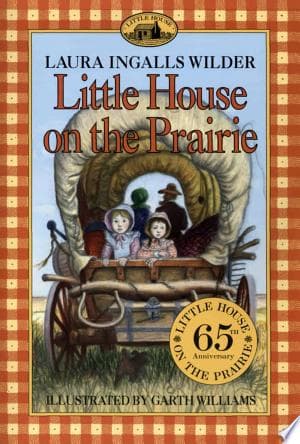
- Little House on the Prairie
Laura Ingalls Wilder
4.2 (256k) average on GoodreadsChildren'sClassic children's historical fiction depicting the challenges and joys of pioneer life on the prairie.
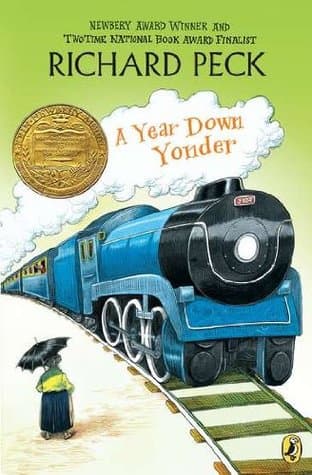
- A Year Down Yonder
Richard Peck
4.1 (28k) average on GoodreadsChildren'sBoth Skylark and A Year Down Yonder feature young protagonists adapting to new, often challenging environments, but their tones and narrative approaches differ significantly. Peck's novel, while also historical fiction, is characterized by its humor, quirky characters, and episodic adventures, focusing on a girl sent to live with her eccentric grandmother during the Great Depression. Skylark, however, maintains a more serious, tender, and melancholic tone, prioritizing the emotional journey of longing for home and family reunion. MacLachlan's narrative is more concentrated on the theme of belonging and the impact of absence, whereas Peck explores coming-of-age through humorous encounters and a broader social context.
- Harry Potter and the Sorcerer's Stone
J.K. Rowling
4.5 (7M) average on GoodreadsFantasyRescued from a miserable life under the stairs, an orphaned boy discovers he's a wizard destined for a magical school, where he uncovers a dangerous secret tied to the dark wizard who murdered his parents.
- The Hobbit, or There and Back Again
J.R.R. Tolkien
4.3 (2.9M) average on GoodreadsFantasyA comfort-loving hobbit named Bilbo Baggins is whisked away by a mischievous wizard and a band of dwarves on an unexpected journey to reclaim stolen treasure from a fearsome dragon, discovering courage and a magical ring along the way.
- Harry Potter and the Goblet of Fire
J.K. Rowling
4.6 (2.6M) average on GoodreadsFantasyA bewildered Harry Potter, underage and thrust into a deadly Triwizard Tournament, must brave dragons, mermaids, and a resurgent dark magic to survive a year that will forever alter the wizarding world.
- Harry Potter and the Order of the Phoenix
J.K. Rowling
4.5 (2.5M) average on GoodreadsFantasyIn a year of oppressive secrets and the threat of Voldemort, Harry Potter and Dumbledore's Army secretly train for war, shown through Jim Kay and Neil Packer's dark illustrations.




Enjoyed the summary?
A summary gives you the shape of the book. The book itself has the detail, the examples and the voice.
Find Skylark on AmazonAs an Amazon Associate, BookBrief earns from qualifying purchases. How we're funded