
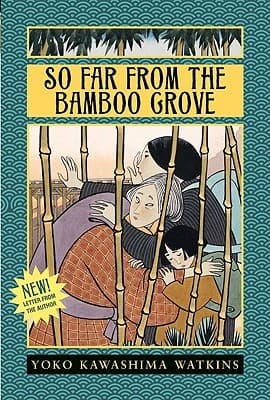
Synopsis
Covers the whole plot, including the ending.
- Difficulty
- Medium
- Pacing
- Fast
- Mood
- Gritty, Hopeful, Suspenseful, Harrowing, Resilient
- Read it if
- You are interested in a true, harrowing story of survival during wartime from a child's perspective, or want to understand the human cost of conflict and displacement.
- Skip it if
- You prefer lighthearted stories or are sensitive to themes of war, starvation, and the loss of family.
So Far from the Bamboo Grove Plot Summary
Covers the whole plot, including the ending.
The End of the War and the Beginning of Fear
In August 1945, eleven-year-old Yoko, her older sister Ko, and their mother live a comfortable life in Nanam, northern Korea. Their father works for the Japanese government. Despite being Japanese, Yoko has known no other home. One evening, their father returns with bad news: Japan has surrendered, ending World War II. This news ends their peace, as Japanese people, who occupied Korea for decades, are now targets of Korean anger and violence. Their father, worried for his family's safety, tells them to flee to Japan right away. He and their older brother, Hideyo, who is in the Japanese navy, will follow later. The family must leave their home and beloved bamboo grove.
The Perilous Train Journey
Following their father's urgent instructions, Yoko, Ko, and Mother pack few belongings and go to the Nanam train station. The atmosphere is chaotic and terrifying; Koreans are openly hostile towards the Japanese, and the station is full of desperate Japanese families trying to escape. They manage to board an overcrowded train heading south, but the journey is full of danger. Korean mobs often stop the train, pulling Japanese passengers off and abusing them. Yoko sees terrible acts, clinging to her mother and sister, as the constant threat of violence is a clear part of their escape.
Separation and Desperation in Seoul
The train eventually reaches Seoul, a city filled with both fleeing Japanese and vengeful Koreans. The situation gets worse, and during a violent stop or a rush at the station, Yoko and Ko are separated from their mother. Panic sets in as the two young girls are left alone in a foreign, hostile city, without their protector. They must take care of themselves, relying on their wits and any kindness from strangers. The separation is a devastating blow, adding great emotional and physical stress to their already desperate situation, as they now face the journey completely alone.
Sisters Alone: Survival on the Road
Alone and without resources, Yoko and Ko decide to walk south towards the port city of Pusan, hoping to find a way to Japan. Their journey is difficult and full of hardship. They walk for days, often without food or clean water, resorting to begging or looking for scraps. They sleep in fields, abandoned buildings, or sometimes, if lucky, are offered shelter by sympathetic Koreans, though this is rare. Both girls suffer from malnutrition and exhaustion. Ko, as the older sister, takes on the responsibility of caring for Yoko, often sacrificing her own well-being to protect her younger sibling, showing great strength and courage.
The Kindness of Strangers and Hidden Dangers
During their walk, Yoko and Ko meet different kinds of people. Some Koreans, despite the anti-Japanese feelings, offer them food, water, or a safe place to rest, often risking their own safety. These moments of unexpected kindness are lifelines for the girls. However, they also face continued hostility, threats, and close calls with vengeful Koreans. They also meet Russian soldiers, whose presence is frightening and unpredictable, adding more fear and danger to their already uncertain lives. The girls learn to be constantly alert, trusting few and always ready to run.
Ko's Illness and Yoko's Despair
As their journey continues, Ko's health quickly worsens. Weakened by starvation, exposure, and constant stress, she gets dysentery and becomes too ill to walk. This puts a huge burden on Yoko, who at just eleven, must now care for her sick sister while still trying to find food and safe passage. Yoko's despair grows as she watches Ko suffer, fearing she will lose the only family she has left. She struggles to find medicine or proper food for Ko, often begging or stealing, pushing her own limits of endurance and emotional strength in a desperate attempt to keep her sister alive.
A Temporary Haven and a Difficult Decision
Miraculously, Yoko and Ko are taken in by a kind Korean family, who, despite the risks, provide them with shelter, food, and some basic medical care for Ko. This short period of stability offers a break, but Ko's illness is severe. The family does what they can, but Ko's condition does not significantly improve. The Korean family, understanding the girls' desperate need to reach Japan for better medical attention, advises them to continue their journey to Pusan, despite the dangers. It is a heartbreaking decision to leave their temporary home, but it is their only hope.
Reaching Pusan and a Glimmer of Hope
With new determination, Yoko continues to carry and support her weakened sister. They eventually reach the busy port city of Pusan, a chaotic place filled with other Japanese refugees desperate to return home. The sight of the sea and the possibility of passage to Japan offers a glimmer of hope after months of unimaginable hardship. However, getting passage is not easy; ships are overcrowded, and resources are scarce. They must deal with bureaucracy and compete with countless others for a spot on a vessel, all while Ko's health remains very fragile.
The Journey Across the Sea
After much struggle and effort, Yoko and Ko manage to get passage on a ship going to Japan. The voyage itself is another difficulty. The ships are overcrowded, unsanitary, and many passengers are ill or starving. Ko's condition remains critical throughout the journey. Yoko continues to care for her sister, her hopes and fears changing with every wave. The sisters cling to each other, their bond stronger from shared suffering, as they make the final push towards what they hope will be safety and reunion in their homeland.
Arrival in Japan and Uncertain Future
Yoko and Ko finally arrive in Hakata, Japan. While they are now on Japanese soil, their difficulties are far from over. They are refugees in their own country, with no home, no money, and no news of their father or brother. Ko is immediately hospitalized, her life still uncertain. Yoko, alone once more, faces the difficult task of navigating post-war Japan, searching for relatives, and trying to rebuild a life from nothing. The war may be over, but for Yoko and Ko, the struggle for survival and the search for family continue in a devastated homeland.
So Far from the Bamboo Grove Characters
Yoko Kawashima
Protagonist
An eleven-year-old Japanese girl forced to flee Korea.
Yoko is the youngest of the three siblings who flee Korea. Initially a somewhat naive and protected child, she is thrust into unimaginable hardship. Her journey forces her to mature rapidly, developing resilience, resourcefulness, and immense courage. She deeply loves her family, especially her sister Ko, and her primary motivation is survival and reunion. Her observations and experiences form the core of the narrative, highlighting the brutal realities of war and displacement through a child's eyes.
Relationships: Ko Kawashima (Older sister, protector, and later, dependent); Mother (Caring mother, initially separated from, then reunited with); Father (Loving father, separated from at the beginning); Hideyo Kawashima (Older brother, separated from at the beginning)
Ko Kawashima
Supporting
Yoko's older sister and initial protector during their escape.
Ko is Yoko's older sister, perhaps in her late teens, who takes on the role of primary caregiver and protector for Yoko after their separation from their mother. She is responsible, brave, and demonstrates immense fortitude in their early journey, often sacrificing her own needs for Yoko's. However, the extreme conditions take a toll, and she falls gravely ill, becoming dependent on Yoko for survival. Her vulnerability highlights the physical and emotional toll of their ordeal.
Relationships: Yoko Kawashima (Younger sister, her primary responsibility and companion); Mother (Caring mother, initially separated from); Father (Loving father, separated from at the beginning); Hideyo Kawashima (Older brother, separated from at the beginning)
Mother (Mrs. Kawashima)
Supporting
The girls' mother, separated from them early in their journey.
Yoko and Ko's mother is a strong, loving, and resourceful woman. She is the initial guiding force in their escape, making difficult decisions and doing everything in her power to protect her children. Her separation from Yoko and Ko is a pivotal moment, forcing the girls to rely on themselves. Her eventual reunion with her daughters provides a powerful emotional anchor for the story, symbolizing hope and the enduring strength of family bonds. She embodies maternal sacrifice and resilience.
Relationships: Yoko Kawashima (Daughter); Ko Kawashima (Daughter); Father (Husband); Hideyo Kawashima (Son)
Father (Mr. Kawashima)
Mentioned
Yoko's father, who initiates the family's flight from Korea.
Yoko's father is a Japanese official working in Korea. He is the first to understand the grave danger facing Japanese families after the surrender and makes the agonizing decision to send his wife and younger children ahead to Japan while he stays behind. Though physically absent for most of the narrative, his presence is felt through his initial instructions and the girls' enduring hope of reuniting with him. He represents the responsible, albeit absent, patriarch.
Relationships: Yoko Kawashima (Daughter); Ko Kawashima (Daughter); Mother (Wife); Hideyo Kawashima (Son)
Hideyo Kawashima
Mentioned
Yoko's older brother, serving in the Japanese navy.
Hideyo is Yoko's oldest brother, serving in the Japanese navy. He is mentioned only briefly at the beginning as another family member separated by the war, with the hope that he too will eventually make it to Japan. His existence reinforces the widespread impact of the war on Japanese families and the uncertainty of reunion.
Relationships: Yoko Kawashima (Sister); Ko Kawashima (Sister); Mother (Mother); Father (Father)
Korean Man on the Train
Supporting
A compassionate Korean man who warns Yoko's family of danger.
This unnamed Korean man demonstrates surprising compassion amidst widespread hostility. He risks his own safety to warn Yoko's family about the dangers of remaining on the train and advises them on how to proceed. His actions highlight that not all Koreans were uniformly hostile, and that individual kindness could still exist even in times of extreme ethnic conflict. He represents an unexpected ally.
Kind Korean Family
Supporting
A family who shelters Yoko and Ko during their journey.
This unnamed Korean family provides a crucial haven for Yoko and Ko when Ko is gravely ill. They offer shelter, food, and basic care, despite the significant risks they face for harboring Japanese refugees. Their generosity and humanity are a stark contrast to the widespread animosity and demonstrate the capacity for compassion even in the most divided times. They are a lifeline for the sisters.
Relationships: Yoko Kawashima (Host to); Ko Kawashima (Host to)
So Far from the Bamboo Grove Themes
Survival and Resilience
The most important theme is the strong will to survive despite great hardship. Yoko and Ko endure starvation, illness, constant fear, and threats of violence, yet they keep going. Their strength is shown through their continuous movement, their search for food, and their firm decision to reach Japan. Scenes of Yoko carrying her sick sister, or begging for food, show their fight for life. This theme highlights how humans can endure and overcome even in the worst situations.
“Even though I was only eleven, I knew I couldn't give up. I had to keep Ko alive, and we had to get to Japan.”
The Brutality of War and Displacement
The novel clearly shows the terrible effects of war, not just on soldiers but on innocent civilians, especially children. The girls see extreme violence, lose their home, are separated from their family, and become refugees in a hostile land. The constant threat of Korean mobs, the desperation of other Japanese refugees, and the physical suffering they experience all highlight the widespread cruelty and chaos that war brings. Their displacement from a comfortable life to one of constant fear shows the deep disruption caused by conflict.
“The war was over, but for us, the war had just begun.”
Family Bonds and Sacrifice
The deep love and loyalty within the Kawashima family drive much of the story. The initial separation from their father and brother, and then their mother, leaves Yoko and Ko relying only on each other. Ko's protective instincts towards Yoko, and later Yoko's selfless care for the sick Ko, show deep sibling love and sacrifice. The lasting hope of reuniting with their parents and brother fuels their journey. The mother's early efforts to protect her children also show the theme of parental sacrifice.
“As long as we had each other, we could keep going.”
The Duality of Humanity: Kindness and Cruelty
Throughout their journey, Yoko and Ko experience both extreme cruelty and unexpected kindness. While many Koreans are hostile and vengeful, some individuals risk their own safety to offer the girls help, food, or shelter. The contrast of violent mobs with the kind Korean man on the train or the compassionate Korean family who shelters them shows the complex nature of humanity, even during times of intense conflict and ethnic hatred. It shows that individual empathy can go beyond group animosity.
“For every cruel face, there was sometimes a kind one, a reminder that not all people were the same.”
Plot Devices & Literary Techniques
First-Person Narration
The story is told from Yoko's perspective, enhancing emotional impact.
The use of first-person narration allows the reader to experience the events directly through Yoko's eyes and emotions. This perspective creates a strong sense of empathy and immediacy, making the horrors and triumphs more personal and impactful. It allows for a child's innocent yet increasingly mature observations of a brutal world, highlighting the contrast between her age and the atrocities she witnesses. This device makes the story feel authentic and deeply moving.
Journey as Metaphor
The physical journey mirrors the characters' emotional and psychological transformation.
The arduous physical journey from Nanam, Korea, to Hakata, Japan, serves as a powerful metaphor for Yoko and Ko's transformation. Each step, each obstacle, and each act of survival contributes to their emotional and psychological development. The journey represents their loss of innocence, their struggle for identity as displaced Japanese, and their resilience. It's not just a path from one place to another, but a passage through trauma and growth, ultimately leading to a changed understanding of themselves and the world.
Symbolism of the Bamboo Grove
The bamboo grove represents lost peace and the safety of home.
The bamboo grove at Yoko's home in Nanam is introduced as a place of peace, beauty, and security. Its forced abandonment symbolizes the loss of their childhood, their home, and the idyllic life they once knew. It becomes a poignant image of what was left behind and what can never be fully recovered. The memory of the bamboo grove serves as a constant contrast to the harsh realities of their journey, emphasizing the profound sense of displacement and longing for a lost past.
Foreshadowing (via Father's Warning)
The father's urgent warning sets the tone for the impending dangers.
The father's initial, urgent command for his family to flee, coupled with his grim demeanor, immediately foreshadows the extreme dangers they are about to face. This early warning establishes a sense of dread and impending doom, preparing both the characters and the reader for the brutal realities of their escape. It creates immediate tension and underscores the severity of the post-war situation for Japanese civilians in Korea, validating the subsequent horrors the girls endure.
So Far from the Bamboo Grove Quotes
“When you have hope, you have everything. And you must not lose hope. It is the most important thing.”
“We must always be kind to others, even if they are not kind to us. That is the way of a good person.”
“Just remember, the sun always rises. No matter how dark the night, morning always comes.”
“My mother always told me, 'Yoko, you must always be strong. You must never give up.'”
“We were not just running from the war; we were running for our lives, for our future.”
“A good education is the most important thing you can have. No one can ever take that away from you.”
“Even when you are afraid, you must try to be brave. It is not about not being afraid, but about acting despite it.”
“The memory of food was sometimes more painful than the hunger itself.”
“We were Japanese, and they were Koreans, but we were all human beings, suffering the same way.”
“My mother's strength was not in her muscles, but in her spirit.”
“Sometimes, the smallest kindness can make the biggest difference.”
“I learned that tears are not a sign of weakness, but a way to let out the pain.”
“Home was not a place anymore, but a feeling, a memory.”
“To forgive is to set a prisoner free and discover that the prisoner was you.”
Quiz
10 questions on the plot and the characters. Each answer comes with a short explanation.
Question 1
At the beginning of the story, what country does Yoko's family live in, despite being Japanese?
- China
- Japan
- Korea
- Manchuria
Show answer
C. Korea Yoko and her family live in Nanam, Korea, near the border with China, at the beginning of the story.
Question 2
What significant historical event triggers the family's flight from their home?
- The Korean War begins
- The end of World War II
- A natural disaster
- Their father loses his job
Show answer
B. The end of World War II The end of World War II means the Japanese occupation of Korea is over, leading to danger for Japanese residents.
Question 3
What is the name of Yoko's older sister?
- Ko
- Hideyo
- Akiko
- Kimiko
Show answer
B. Hideyo Yoko's older sister, who accompanies her and their mother, is named Hideyo.
Question 4
What valuable item does Yoko's mother manage to keep hidden and use to buy food during their journey?
- A family heirloom sword
- Her diamond wedding ring
- A pouch of gold coins
- Expensive silk kimonos
Show answer
B. Her diamond wedding ring Mother cleverly hides her diamond wedding ring and uses it to barter for food when they have no money.
Question 5
What mode of transportation do Yoko, her mother, and sister primarily use to travel from Nanam to Seoul?
- They mostly travel by train
- They primarily walk on foot
- They use a rented horse cart
- They hitchhike on military trucks
Show answer
B. They primarily walk on foot Despite the long distance and hardships, the family travels primarily by walking on foot for much of their journey.
Question 6
What significant challenge do Yoko and Hideyo face when their mother falls ill during their journey?
- They are forced to leave her behind
- They must carry her and find shelter on their own
- They are separated from her by soldiers
- They have to beg strangers for medical supplies
Show answer
B. They must carry her and find shelter on their own When their mother becomes very ill with cholera, Yoko and Hideyo must take turns carrying her and find a safe place for her to recover, demonstrating their resilience.
Question 7
What is the primary reason the Korean people are hostile towards the Japanese characters in the story?
- Religious differences
- Racial prejudice unrelated to politics
- Resentment over years of Japanese occupation and colonial rule
- Competition for scarce resources after the war
Show answer
C. Resentment over years of Japanese occupation and colonial rule The hostility stems from the long-standing Japanese occupation of Korea, which ended with WWII, leading to Koreans seeking retribution.
Question 8
What specific act of kindness from a Korean woman helps Yoko and Hideyo when they are starving and their mother is ill?
- She gives them money to buy train tickets
- She offers them shelter in her home for several days
- She shares her family's meager meal of rice and kimchi with them
- She helps them find a doctor for their mother
Show answer
C. She shares her family's meager meal of rice and kimchi with them A kind Korean woman, despite the prevailing anti-Japanese sentiment, shares her family's food (rice and kimchi) with the starving sisters.
Question 9
What does the 'Bamboo Grove' in the title symbolize for Yoko and her family at the beginning of the story?
- A dangerous place where they were often attacked
- Their peaceful, secure home in Korea before the war's end
- A specific landmark they had to reach for safety
- The Japanese homeland they longed to return to
Show answer
B. Their peaceful, secure home in Korea before the war's end The bamboo grove represents their lost home, a place of peace and security that they were forced to flee.
Question 10
After finally reaching Japan, what challenging condition do Yoko, Hideyo, and their mother face regarding their family?
- They immediately reunite with their father and brother
- They find out their entire extended family has perished
- They are still separated from their father and brother
- They are forced to live in a refugee camp alone
Show answer
C. They are still separated from their father and brother Upon arrival in Japan, they are still separated from their father and brother, who were in a different part of Korea and had a different journey.
So Far from the Bamboo Grove FAQ
What is the primary historical context for Yoko's family's flight?
The story begins in August 1945, immediately after Japan's surrender in World War II. Japanese civilians living in Korea, which Japan had occupied for 35 years, suddenly became targets of Korean retribution and were forced to flee for their lives amidst the power vacuum and anti-Japanese sentiment.
Where does Yoko's family initially live, and what is their social standing?
Yoko, her mother, and her sister Ko live in Nanam, northern Korea, near the border with Manchuria. Their father works for the Japanese government, which suggests a comfortable, perhaps privileged, life before the war's end, marked by their beautiful house with a bamboo grove.
Who are the main characters accompanying Yoko on her journey?
Yoko is accompanied by her older sister, Ko, who is responsible and often takes charge, and her mother, who despite her frailty and illness, demonstrates immense strength and resourcefulness in protecting her daughters. Her father and brother are separated from them early on.
What are some of the immediate dangers Yoko and her family face upon fleeing Nanam?
Immediately after fleeing, they encounter hostile Korean mobs, Russian soldiers, and widespread chaos. They face starvation, exposure, and the constant threat of violence, including witnessing others being attacked and killed, making their escape treacherous.
How do Yoko and Ko initially try to reunite with their father and brother?
Their mother instructs Yoko and Ko to try and reach Seoul, where they hope to find their father. They attempt to travel by train and on foot, enduring incredible hardships, with the ultimate goal of reuniting their fragmented family.
What is the significance of the 'bamboo grove' mentioned in the title?
The bamboo grove represents the peaceful, secure life Yoko knew in Korea before the war's end. It symbolizes their lost home, innocence, and the sudden, violent rupture from their idyllic past, contrasting sharply with the harsh realities of their journey.
How does the sister, Ko, evolve throughout the journey?
Initially, Ko is a typical older sister, but the journey forces her to become a primary protector and provider, often making difficult decisions for Yoko. She displays immense courage and resourcefulness, taking on a quasi-parental role as their mother weakens, demonstrating remarkable maturity under duress.
What role do small acts of kindness play in their survival?
Despite the overwhelming hostility, occasional acts of kindness, like a Korean woman offering food or a sympathetic soldier providing shelter, are crucial for their survival. These moments offer fleeting hope and demonstrate that humanity can persist even in extreme circumstances, providing essential physical and emotional sustenance.
How does Yoko's perspective as a child influence the narrative?
Yoko's childlike perspective often highlights the stark contrast between her innocent understanding and the brutal realities she faces. Her observations are direct and unfiltered, emphasizing the sensory details of hunger, cold, and fear, making the horrors of war more immediate and poignant through her eyes.
What is the ultimate fate of Yoko's mother?
Yoko's mother, weakened by hunger, illness, and the immense stress of the journey, eventually dies. Her death is a heartbreaking turning point, leaving Yoko and Ko to continue their arduous journey alone, forced to rely solely on each other.
How does the author portray the complex relationship between Koreans and Japanese during this period?
The author portrays a highly volatile and often violent relationship, reflecting the deep-seated resentment of Koreans towards their Japanese occupiers. While showing widespread hostility, the narrative also includes rare instances of Korean individuals showing compassion, illustrating the complexities beyond simple good vs. evil.
What challenges do Yoko and Ko face after their mother's death?
After their mother's death, Yoko and Ko must navigate the dangerous landscape entirely on their own, facing continued starvation, exposure, and the constant threat of violence. They are forced to make their own decisions about seeking shelter, food, and safe passage, relying solely on their wits and bond.
In what ways does Yoko demonstrate resilience throughout the ordeal?
Yoko demonstrates resilience by enduring extreme physical hardship, witnessing atrocities, and coping with the loss of her family members without giving up. She finds strength in her sister, holds onto fragments of hope, and continues to move forward despite unimaginable circumstances, showing incredible fortitude for her age.
How does the book address themes of loss and survival?
The book explores profound loss of home, family, innocence, and security, juxtaposed against an unwavering will to survive. It shows how individuals adapt to extreme adversity, finding strength in familial bonds and small acts of courage, even when everything familiar has been stripped away.
What is the significance of the repeated motif of hunger?
Hunger is a pervasive and debilitating force throughout the narrative, driving many of the characters' decisions and highlighting their desperate circumstances. It's not just a physical sensation but a constant threat that underscores their vulnerability and the harshness of their environment.
How does the ending of the book connect to its sequel, 'My Brother, My Sister, and I'?
The book concludes with Yoko and Ko finally reaching Japan, specifically the city of Fukuoka, where they hope to find safety and potentially reunite with their father and brother. This arrival sets the stage for the challenges they face as displaced persons in post-war Japan, which is explored in the sequel.
What message about the human spirit does the book convey?
The book conveys a powerful message about the incredible resilience of the human spirit, especially in children, when faced with unimaginable adversity. It highlights the enduring strength of family bonds, the power of hope, and the capacity for survival against overwhelming odds, even in the darkest times.
What critical debate sometimes surrounds the historical accuracy or perspective of the book?
Some critics have debated the book's portrayal of Koreans, suggesting it overemphasizes their hostility towards Japanese civilians without fully contextualizing the Japanese occupation. Others defend it as a personal memoir reflecting the author's direct experience, arguing for the validity of her subjective perspective during a chaotic period.
About the author

Yoko Kawashima Watkins is a Japanese author known for her works of fiction. She is best recognized for her novel "So Far from the Bamboo Grove," which draws on her experiences during World War II. Watkins' writing often explores themes of displacement and cultural identity.
Similar books
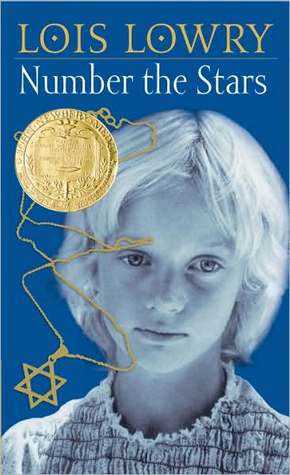
- Number the Stars
Lois Lowry
4.2 (448k) average on GoodreadsChildren'sFeatures a young protagonist navigating the dangers of war and helping others survive.
- Pachinko
Min Jin Lee
4.3 (208k) average on GoodreadsLiterary FictionWhile an adult novel, "Pachinko" offers a deeply researched and multifaceted portrayal of Koreans in Japan before and during WWII. It contrasts sharply with Watkins' book by providing a balanced, nuanced historical context and avoiding simplistic victim/aggressor narratives, focusing on the systemic injustices faced by Koreans. Lee's work is celebrated for its historical accuracy and complex character development, making it a more reliable source for understanding the period.
- Harry Potter and the Sorcerer's Stone
J.K. Rowling
4.5 (7M) average on GoodreadsFantasyRescued from a miserable life under the stairs, an orphaned boy discovers he's a wizard destined for a magical school, where he uncovers a dangerous secret tied to the dark wizard who murdered his parents.
- The Hobbit, or There and Back Again
J.R.R. Tolkien
4.3 (2.9M) average on GoodreadsFantasyA comfort-loving hobbit named Bilbo Baggins is whisked away by a mischievous wizard and a band of dwarves on an unexpected journey to reclaim stolen treasure from a fearsome dragon, discovering courage and a magical ring along the way.
- Harry Potter and the Goblet of Fire
J.K. Rowling
4.6 (2.6M) average on GoodreadsFantasyA bewildered Harry Potter, underage and thrust into a deadly Triwizard Tournament, must brave dragons, mermaids, and a resurgent dark magic to survive a year that will forever alter the wizarding world.
- Harry Potter and the Order of the Phoenix
J.K. Rowling
4.5 (2.5M) average on GoodreadsFantasyIn a year of oppressive secrets and the threat of Voldemort, Harry Potter and Dumbledore's Army secretly train for war, shown through Jim Kay and Neil Packer's dark illustrations.





Enjoyed the summary?
A summary gives you the shape of the book. The book itself has the detail, the examples and the voice.
Find So Far from the Bamboo Grove on AmazonAs an Amazon Associate, BookBrief earns from qualifying purchases. How we're funded