
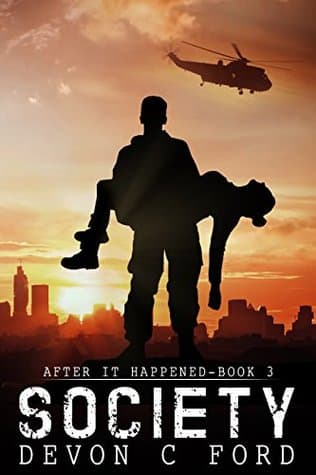
Synopsis
Covers the whole plot, including the ending.
- Difficulty
- Medium
- Pacing
- Fast
- Mood
- Gritty, tense, bleak, action-packed
Society Plot Summary
Covers the whole plot, including the ending.
A New Beginning, A Lingering Threat
Years after the collapse, survivors in the Valley have built a self-sufficient and prosperous society. Led by figures like Marcus, they've created a functioning community, growing crops, raising livestock, and maintaining order. However, the 'Scourge' – the event that destroyed the old world – still affects them. Their cautious nature and the fortified perimeter around their settlement show this. Children born in the Valley know only this new world, unaware of the past's luxuries and complexities. The community focuses on defense, with regular patrols and a sharp awareness of dangers beyond their walls, especially mutated creatures and other human groups.
First Contact, First Conflict
A small scouting party, led by Marcus and his trusted lieutenants, goes beyond the Valley's immediate defenses to check the surrounding area. Their main goal is reconnaissance, looking for resources and potential threats. They encounter a group of heavily armed raiders, a common sight in the lawless post-apocalyptic world. The meeting quickly turns into a brutal firefight. The Valley scouts, though skilled, are outnumbered. They inflict casualties but are forced to retreat, suffering losses. This incident reminds them that despite their prosperity, the Valley is not safe. Hostile forces are active nearby, threatening their peace.
The Council Convenes
After the skirmish, the Valley's governing council, made up of elders, military leaders, and community representatives, meets to discuss the increasing number and aggression of outside threats. Opinions are split: some favor a defensive stance, reinforcing walls and avoiding direct conflict; others, like Marcus, argue for a more active approach, believing passivity will invite more attacks. The debate is intense, showing the community's fear and their desire to protect their way of life. They decide to strengthen defenses and prepare for potential offensive actions, acknowledging that their current plan might not be enough to deter a determined enemy.
Whispers of a Larger Force
During a later defensive engagement, the Valley forces capture a few raiders alive. Through questioning, they learn unsettling information: the raiders are not an isolated group but part of a larger, organized faction called the 'Warlord's Army.' This army is led by a ruthless individual who wants to expand his territory and control resources. The Valley, with its fertile land and thriving community, is a prime target. The news shocks the Valley. They realize they face not just sporadic banditry but a systematic invasion, requiring a unified and strategic response beyond simple defense.
Preparing for War
With the Warlord's Army threatening, the Valley prepares for war. Every able-bodied citizen helps, from reinforcing perimeter walls and setting traps to stockpiling food and ammunition. Training for the militia increases, with new recruits practicing combat tactics and defensive maneuvers. Marcus and his military advisors create detailed battle plans, anticipating various attack routes. The community's morale is a mix of fear and determination; they know their survival depends on fighting as one. Old rivalries and minor disagreements are put aside as the common enemy unites them against a shared threat.
The First Wave
The Warlord's Army launches its expected assault. The attack is relentless and overwhelming, with waves of heavily armed raiders trying to breach the Valley's defenses. The Valley defenders, though prepared, face a brutal attack. They use their knowledge of the terrain, their fortified positions, and their disciplined training to repel the initial advances. Casualties mount on both sides, but the Valley's resolve holds. The battle shows their resilience and effective preparations, but it also highlights the attackers' sheer numerical superiority and ferocity, signaling a prolonged and costly conflict.
Desperate Measures
As the siege continues, the Valley's resources become strained. Ammunition grows scarce, and medical supplies dwindle. The constant fighting wears down the defenders, physically and mentally. The council discusses drastic measures, including a possible counter-offensive to disrupt the Warlord's supply lines or assassinate key commanders. This is a high-risk plan, as it would expose their limited forces to the full strength of the enemy. Marcus, though cautious, sees the need for such a move to break the siege and prevent their society's collapse. Pressure builds to make a decision that will determine their fate.
The Turning Point
A small, elite strike team, led by Marcus, carries out a daring night raid on a key Warlord's encampment. Their goal is to destroy supply caches, disable siege weapons, and create chaos among the enemy ranks. The mission is dangerous, and the team faces fierce resistance. However, their precision and bravery succeed. They destroy vital resources and inflict significant damage, creating disorder within the Warlord's Army. This tactical victory, though not decisive, boosts the Valley's morale and shows that the Warlord's forces are not invincible. It buys them precious time and renews their will to fight.
An Alliance of Necessity
Realizing they cannot win alone, the Valley sends envoys to neighboring, smaller survivor communities, some of whom they've had cautious contact with. These communities are also threatened by the Warlord's expansion, though perhaps less directly. The envoys ask for an alliance, offering shared resources and a united front against the common enemy. While some groups hesitate, fearing the Warlord's wrath, others, recognizing the threat, agree to join forces. This alliance, though fragile, gives the Valley needed reinforcements and resources, slightly shifting the balance of power.
The Final Battle
With reinforcements from their allies, the Valley launches a coordinated counter-attack against the Warlord's main forces. This final battle is brutal and chaotic, involving skirmishes across multiple fronts. The combined forces use innovative tactics, exploiting weaknesses in the Warlord's command structure and overwhelming their positions. Marcus leads his troops, inspiring them. The Warlord's Army, though still strong, begins to falter under the sustained pressure and the unexpected resilience of their opponents. This confrontation will determine the Valley's fate and potentially set a precedent for future interactions among survivor groups.
Victory and Its Cost
After a grueling and costly battle, the Warlord's Army is broken, and the Warlord himself is killed or captured, ending his reign. The Valley wins, but at a tremendous cost. Many lives are lost, and resources are depleted. The community is scarred by the conflict, but they have shown their resilience and ability to act together. The victory solidifies their position as a formidable force in the post-apocalyptic world, but it also makes them confront the future: how to rebuild, how to maintain alliances, and how to prevent such a devastating conflict from happening again.
Rebuilding and Reflection
In the aftermath of the war, the Valley begins the hard task of rebuilding. Homes are repaired, fields are replanted, and the dead are mourned. The alliances made during the conflict strengthen, leading to a new era of cooperation and shared defense among survivor communities. Marcus and the council face the challenge of integrating new members and establishing a stronger regional defense network. They reflect on the brutality they had to use to survive, questioning the balance between necessary force and the values they uphold. The experience has hardened them, but also reinforced their commitment to their collective future.
Principal Figures
Marcus
Protagonist
The steadfast leader of the Valley community.
Marcus is a pragmatic and experienced leader who emerged from the chaos of the 'Scourge' to help establish the Valley community. He is fiercely protective of his people and is willing to make difficult, often ruthless, decisions for their survival. While he values peace and order, he understands the harsh realities of their post-apocalyptic world and the necessity of force. He is a skilled tactician and fighter, earning the respect of his community through his actions and his unwavering resolve. He carries the heavy burden of leadership, constantly weighing the lives of his people against the threats they face.
Relationships: Valley Council (Leader and decision-maker); Valley Militia (Commander); The Warlord (Primary antagonist)
The Warlord
Antagonist
The ruthless leader of a marauding army.
The Warlord is the primary antagonist, a charismatic yet brutal leader who has consolidated power over a vast army of raiders. He is driven by a desire for conquest and control, viewing other survivor communities, especially prosperous ones like the Valley, as resources to be plundered. He employs fear and overwhelming force as his primary tactics, showing little regard for human life outside of his own immediate followers. His past is shrouded in mystery, but his present actions demonstrate a cunning and ruthless mind, making him a formidable and dangerous adversary to the Valley and any other group standing in his way.
Relationships: Marcus (Arch-nemesis); Warlord's Army (Commander and absolute ruler)
Lena
Supporting
Marcus's trusted second-in-command and tactical advisor.
Lena is a strong and capable woman who serves as Marcus's closest confidante and military advisor. She is a skilled fighter and strategist, often providing a pragmatic perspective to Marcus's leadership. Her loyalty to the Valley and to Marcus is absolute, but she is also willing to challenge his decisions when she believes there's a better path. She plays a crucial role in training the militia and organizing the Valley's defenses. Lena represents the strength and resilience of the community's women, who contribute equally to its survival and defense, embodying both compassion and ferocity.
Relationships: Marcus (Trusted lieutenant and confidante); Valley Militia (Trainer and commander)
Elder Thomas
Supporting
A wise and respected member of the Valley Council.
Elder Thomas is one of the oldest surviving members of the Valley community and a respected voice on the council. He often represents the more cautious and traditional viewpoint, advocating for peace and diplomacy whenever possible. While he understands the necessity of defense, he is wary of excessive violence and the potential for their society to lose its humanity in the struggle for survival. His wisdom and historical perspective are invaluable to the younger leaders, providing a moral compass amidst the brutal realities of their world. He often acts as a mediator during council debates.
Relationships: Marcus (Advisor and moral compass); Valley Council (Respected member)
Kael
Supporting
A young, eager, and skilled scout/militia member.
Kael represents the younger generation born into the post-apocalyptic world. He is eager to prove himself, highly skilled in scouting and combat, and fiercely loyal to the Valley. Initially, he may be somewhat idealistic or naive about the true brutality of the outside world, but through his experiences in skirmishes and the full-scale war, he quickly matures. He embodies the future of the Valley, demonstrating the adaptability and resilience of those who have known no other life. Kael's perspective offers a glimpse into how the new society shapes its youth.
Relationships: Marcus (Subordinate and mentee); Lena (Commander and mentor)
The Allied Leader (various)
Supporting
Representatives of other survivor groups forming an alliance.
These characters represent the leaders of the smaller, independent survivor communities who eventually form an alliance with the Valley. They are initially wary and self-interested, hesitant to commit their limited resources to another group's fight. However, facing the common threat of the Warlord's Army, they realize the necessity of unity. Each leader brings their own unique perspective, resources, and fighting style to the alliance, highlighting the diverse ways humanity has adapted to the collapse. Their decision to join forces underscores the novel's theme of collective survival over individual isolation.
Relationships: Marcus (Alliance partner); The Warlord (Common enemy)
Dr. Anya Sharma
Supporting
The Valley's dedicated medical expert.
Dr. Anya Sharma is the primary medical professional in the Valley, responsible for the health and well-being of its citizens. Her role becomes critical during the conflict, as she tirelessly works to treat the wounded, manage limited medical supplies, and prevent outbreaks of disease. She represents the compassionate and nurturing aspect of the society, balancing the harsh realities of combat with the imperative to heal and preserve life. Her presence highlights the comprehensive nature of the Valley's self-sufficiency and the value placed on every individual's health.
Relationships: Marcus (Colleague and essential community member); Valley Community (Healer and caretaker)
Jax
Supporting
A grizzled veteran and scout, skilled in wilderness survival.
Jax is a veteran member of the Valley's scouting and defense force. He is older, gruff, and possesses an encyclopedic knowledge of the surrounding wilderness, its dangers, and its resources. His experience from before the 'Scourge' or from the early days of the collapse makes him an invaluable asset for tracking, reconnaissance, and survival in hostile environments. He often provides a dose of cynical realism, but his loyalty to the Valley is unquestionable. Jax embodies the practical, hardened wisdom necessary for surviving in a dangerous world.
Relationships: Marcus (Trusted scout and advisor); Kael (Mentor figure)
Themes & Insights
The Nature of Society in Collapse
The novel explores what makes a society when traditional structures have collapsed. It looks at the balance between staying human and using brutality to survive. The Valley tries to rebuild a moral and structured society, while the Warlord's Army represents anarchy and might-makes-right. The conflict forces the Valley to consider how much of its 'society' it will change to survive, questioning if the ends justify the means in a brutal world.
“We built this place on hope and hard work, but the world outside only understands one language: force. If we don't speak it, we'll be erased.”
Survival vs. Humanity
A main theme is the constant tension between the need for brutal, often violent, survival tactics and the desire to uphold human values, empathy, and morality. The Valley community seeks peace and order but must repeatedly respond with 'savagery' to protect itself. This internal conflict is clear in council debates and the personal struggles of characters like Marcus. The novel asks how much humanity can be compromised before survival becomes no different from the barbarism it fights.
“How many monsters do we have to become to protect what little humanity we have left?”
The Price of Prosperity
The Valley's success in creating a prosperous and self-sufficient community makes it a target. This theme explores how security and abundance in a post-apocalyptic world are not only hard to achieve but also unstable, attracting the envious and predatory. The novel shows that prosperity comes with the heavy cost of constant vigilance and the willingness to defend what has been built. It highlights the vulnerability of success in a lawless environment and the constant struggle to protect one's gains.
“Our fields grow food, our people grow strong. That makes us a beacon, and a target, in equal measure.”
Unity and Alliance
The novel shows the importance of unity and cooperation, both within a community and among different groups, for collective survival. Initially, the Valley tries to stand alone, but the growing threat forces them to see the need for alliances. The formation of a coalition against the Warlord's Army shows that even in a world broken by catastrophe, strength in numbers and shared purpose can overcome great odds. This theme suggests that true 'society' extends beyond individual settlements to include broader networks of mutual support and defense.
“Alone, we are just another meal for the wolves. Together, we are a pack.”
Plot Devices & Literary Techniques
The Siege
A prolonged military blockade and assault.
The siege is a central plot device, driving much of the narrative tension and character development. It creates a confined, high-stakes environment where resources dwindle, and morale is constantly tested. The prolonged nature of the siege forces the Valley to innovate, adapt, and make increasingly desperate decisions, highlighting their resilience and the brutal cost of survival. It serves as a crucible, forging their identity and testing the very foundations of their society, pushing them to their limits and revealing their true nature under extreme pressure.
The Unseen Threat (initially)
The presence of a larger, organized enemy revealed gradually.
Initially, the threats to the Valley are perceived as sporadic raider attacks. This device creates a sense of escalating danger as the true nature of the Warlord's Army is gradually revealed through captured enemies and reconnaissance. The 'unseen' or underestimated nature of the threat builds suspense and emphasizes the Valley's initial complacency or misjudgment. It forces a dramatic shift in their strategy from mere defense to active, preventative measures, demonstrating how ignorance of a true enemy can be just as dangerous as the enemy itself, leading to a more profound understanding of their perilous situation.
The Resource Scarcity
Dwindling supplies during the conflict.
Resource scarcity, particularly of ammunition, food, and medical supplies, acts as a powerful plot device throughout the siege. It constantly raises the stakes, forcing difficult decisions regarding rationing, risky supply runs, and the consideration of desperate, often dangerous, tactics. This scarcity amplifies the feeling of desperation and realism, showing the tangible pressures on the community. It underscores the fragility of their self-sufficiency and highlights the brutal economic realities of a post-apocalyptic existence, where every bullet and every meal can mean the difference between life and death.
The Moral Dilemma
Choices between ethical conduct and brutal necessity.
The moral dilemma is a recurring device, particularly for Marcus and the Valley Council. They are constantly faced with choices that pit their desire to maintain a civilized society against the brutal necessities of survival in a lawless world. Examples include interrogating prisoners, launching preemptive strikes, or deciding how much 'savagery' to adopt in their defense. This device explores the grey areas of morality in extreme circumstances, forcing characters and readers to question where the line is drawn and what price is paid for survival when the very definition of humanity is at stake.
Quiz
10 questions on the plot and the characters. Each answer comes with a short explanation.
Question 1
What is the genre of the book "Society"?
- Fantasy
- Science Fiction
- Mystery
- Thriller
Show answer
B. Science Fiction The book is explicitly stated to be Science Fiction.
Question 2
What is the primary conflict faced by the survivors in "Society"?
- Internal strife and disagreement
- A natural disaster threatening their home
- Their home being targeted by outsiders
- A plague spreading through their population
Show answer
C. Their home being targeted by outsiders The description states their home is an 'enticing prospect for others to take' and they are 'besieged'.
Question 3
How do the survivors decide to respond to the threats against them?
- With diplomacy and negotiation
- By seeking help from other communities
- With extreme and savage force
- By abandoning their home and fleeing
Show answer
C. With extreme and savage force The text mentions they 'must respond with a savagery to dissuade further attempts'.
Question 4
What is the stated purpose of the survivors' 'savagery' in their response?
- To conquer and expand their territory
- To establish dominance over potential invaders
- To punish those who attacked them
- To demonstrate their advanced technology
Show answer
B. To establish dominance over potential invaders The savagery is intended 'to dissuade further attempts', implying a goal of deterring future attacks.
Question 5
The question 'Is this the end of society?' suggests a theme of:
- Technological advancement
- Social collapse and survival
- Interstellar exploration
- Political intrigue
Show answer
B. Social collapse and survival The question directly probes the fate of their society in the face of existential threats.
Question 6
The description implies that the survivors have achieved a state of prosperity prior to being besieged. What does this suggest about their society?
- They are inherently aggressive and expansionist.
- They have overcome significant challenges to reach this point.
- Their prosperity is unsustainable and doomed to fail.
- They are reliant on external help for their survival.
Show answer
B. They have overcome significant challenges to reach this point. The fact that they 'have prospered' implies they have successfully navigated previous difficulties, suggesting resilience and achievement.
Question 7
The phrase 'enticing prospect for others to take' suggests that the survivors' home possesses:
- Significant natural resources or strategic value
- A history of conflict and violence
- A weak and undefended population
- An isolated and inaccessible location
Show answer
A. Significant natural resources or strategic value For a location to be an 'enticing prospect for others to take', it must offer something desirable, such as resources or strategic advantage.
Question 8
The requirement for the survivors to respond with 'savagery' implies that:
- Their society has a fundamentally violent nature.
- Conventional or less extreme measures would be ineffective.
- They are morally compromised by their past actions.
- Their opponents are technologically superior.
Show answer
B. Conventional or less extreme measures would be ineffective. The choice of 'savagery' suggests it's a necessary, perhaps regrettable, response because other methods are deemed insufficient to deter the attackers.
Question 9
Considering the description, what ethical dilemma might the survivors face?
- Whether to share their prosperity with less fortunate societies.
- The conflict between preserving their society and maintaining their humanity.
- Deciding which factions within their society are worthy of survival.
- Whether to seek revenge for past injustices.
Show answer
B. The conflict between preserving their society and maintaining their humanity. The need to use 'savagery' to survive raises questions about the cost of survival and whether the methods employed degrade their own societal values and humanity.
Question 10
The narrative structure, beginning with prosperity and moving to siege, suggests a common trope in dystopian or post-apocalyptic science fiction. What is this trope?
- The cycle of creation and destruction
- The discovery of a lost civilization
- The journey of a chosen one
- The merging of different species
Show answer
A. The cycle of creation and destruction Many stories in these genres depict a society that has rebuilt itself after a catastrophe, only to face new threats that challenge its existence, highlighting the fragility of civilization and the cyclical nature of conflict.
Society FAQ
What is the genre of the book 'Society'?
'Society' by Devon C. Ford is a science fiction novel. It explores themes of survival, defense, and the consequences of societal conflict in a futuristic setting.
What is the main conflict in 'Society'?
The main conflict arises when the prosperous home of the survivors becomes a target for outsiders. They are besieged and must defend their home with extreme measures to deter further attacks.
Who is the author of 'Society'?
The author of the science fiction novel 'Society' is Devon C. Ford.
What does the title 'Society' refer to?
The title 'Society' likely refers to the community of survivors who have managed to rebuild and prosper. It also hints at the broader implications of their actions and whether their response defines or destroys their society.
What kind of world do the survivors live in?
The survivors live in a world where they have managed to rebuild and prosper after some past catastrophe. However, their home is now a desirable location, leading to external threats.
What does 'savagery' mean in the context of the book?
In this context, 'savagery' implies a brutal, fierce, and unrestrained response to defend their home. It suggests the survivors must resort to extreme violence to ensure their long-term safety.
Is 'Society' a standalone novel or part of a series?
Information about whether 'Society' is a standalone novel or part of a series by Devon C. Ford is not provided in the synopsis. Further details would be needed to confirm.
What themes are explored in 'Society'?
The book explores themes of survival, the cost of prosperity, defense, the nature of savagery, and the potential erosion of societal values when faced with existential threats.
What is the overall tone of the book 'Society'?
Given the premise of being besieged and responding with savagery, the tone of 'Society' is likely to be intense, action-packed, and possibly grim or thought-provoking.
Is this the end of society?
The question 'Is this the end of society?' is a central thematic inquiry. The book explores whether the extreme measures taken to preserve their society ultimately lead to its moral or literal demise.
Similar books
- 1984
George Orwell
4.2 (3.1M) average on GoodreadsPolitics"Society" shares significant thematic DNA with Orwell's "1984," particularly in its depiction of an all-encompassing surveillance state, the manipulation of truth, and the protagonist's struggle against an oppressive regime. Both novels explore the psychological toll of living under constant scrutiny and the individual's desperate search for freedom. However, "Society" introduces a more explicit post-apocalyptic context, with the city-state being humanity's last bastion, adding an external threat that justifies (to some) the internal oppression, a nuance less central to "1984."
- Brave New World
Aldous Huxley
4.0 (1.4M) average on GoodreadsFantasyWhile "1984" focuses on control through fear and deprivation, "Society", like Huxley's "Brave New World," also delves into control through comfort and manufactured contentment. The citizens of Ford's 'Society' are provided with security and a seemingly utopian existence, much like the citizens of the World State, making their eventual questioning of the system all the more impactful. Both books critically examine the trade-off between freedom and stability, but "Society" places a greater emphasis on the forgotten history and external dangers that define its particular brand of dystopia, differentiating it from Huxley's vision of a perpetually stable, pleasure-driven society.
- Wool
Hugh Howey
4.1 (76k) average on GoodreadsFantasyA more contemporary comparison, "Society" echoes the enclosed, isolated community of Howey's "Wool" series. Both narratives feature humanity surviving in a sealed environment, with strict rules and a hidden truth about the outside world. The protagonists in both stories are driven by a similar curiosity to uncover these secrets, facing severe consequences for their dissent. "Society" distinguishes itself by focusing more on the psychological and political machinery of control within the city, whereas "Wool" often places more emphasis on the logistical challenges of survival and the physical exploration of the silo's layers.
- The Hunger Games
Suzanne Collins
4.3 (6.4M) average on GoodreadsFantasyIn a future where children fight to the death on live television, Katniss Everdeen volunteers for the arena, turning a death sentence into a fight for survival and a spark of rebellion.
- Divergent
Veronica Roth
4.2 (2.9M) average on GoodreadsFantasyIn a society divided by virtues, a sixteen-year-old's difference from the norm starts a rebellion that threatens her world.
- Animal Farm
George Orwell
4.0 (2.7M) average on GoodreadsPoliticsA farm animals' rebellion against humans turns into a pig-led dictatorship, showing how power corrupts and revolutionary ideals are betrayed.





Enjoyed the summary?
A summary gives you the shape of the book. The book itself has the detail, the examples and the voice.
Find Society on AmazonAs an Amazon Associate, BookBrief earns from qualifying purchases. How we're funded