
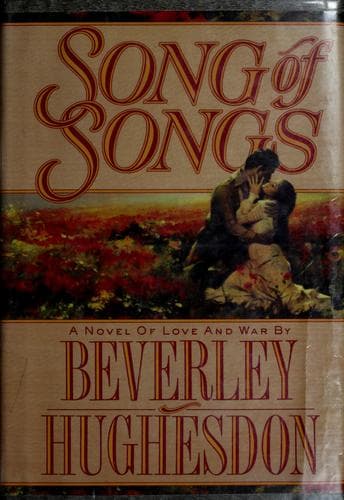
Synopsis
Covers the whole plot, including the ending.
- Difficulty
- Medium
- Pacing
- Slow
- Mood
- Poetic, Romantic, Reflective, Lyrical
- Read it if
- You enjoy poetic historical romance focusing on enduring love against societal pressures and appreciate a narrative rich in imagery and emotional depth.
- Skip it if
- You prefer fast-paced plots with strong external conflict or require a traditional narrative structure with extensive dialogue and character development.
Song of Songs Plot Summary
Covers the whole plot, including the ending.
The Arrival of the Shulamite
The story begins with the beautiful Shulamite woman arriving at King Solomon's court in Jerusalem. She is a simple country girl, unused to the luxury and schemes of royal life, having spent her days tending vineyards. Her natural beauty and humble manner make her stand out from the many women in Solomon's court. King Solomon, known for his wisdom and wealth, is immediately taken by her. He is captivated by her charm, dark eyes, and sun-kissed skin, which contrast with his city women. The Shulamite, however, longs for her true love, a humble shepherd from her village, and remains wary of the King's advances, despite his riches and power.
Solomon's Courtship
King Solomon, deeply in love, begins to court the Shulamite. He gives her expensive gifts: fine clothes, jewels, and perfumes, hoping to impress her with his wealth and power. He praises her beauty in eloquent verses, comparing her features to natural wonders and precious objects, like doves' eyes, a flock of goats, and a lily among thorns. He promises her a life of luxury and comfort, away from her hard life in the vineyards. Despite these grand gestures and poetic words, the Shulamite stays emotionally distant. Her heart is elsewhere, with her shepherd, and she sees Solomon's affections as a gilded cage, not a true connection. She longs for the simple, unadorned love she left behind.
The Shulamite's Longing
Despite the grandeur of Solomon's palace and his persistent courtship, the Shulamite's thoughts constantly return to her shepherd lover. She openly expresses her longing for him, comparing his love to the refreshing taste of apples and the shade of a beloved tree. She clearly remembers their time in the countryside, the scent of the fields, and the simple joy of their companionship. She feels like a 'rose of Sharon, a lily of the valleys,' out of place in the artificial beauty of the palace. Her resistance to Solomon comes from her devotion to her true love. She dreams of him, hears his voice in the wind, and feels incomplete without him, showing the difference between material wealth and true emotional connection.
The Daughters of Jerusalem
The Shulamite often talks with the 'Daughters of Jerusalem,' the women of Solomon's court and harem. She shares her longing and devotion to her shepherd, asking them to understand her heart. She describes her beloved in passionate terms, praising his strength, beauty, and faithfulness. The Daughters of Jerusalem, at first curious about her situation, listen to her laments and descriptions of her love. While they represent the conventional path of accepting royal favor, they come to appreciate the depth and purity of the Shulamite's love, offering a sympathetic ear. Their interactions show the Shulamite's isolation in the palace and her need for connection, even with those who live a different life.
Dreams and Searches
The Shulamite has vivid dreams where she searches for her beloved shepherd. In one dream, she rises in the night to find him, wandering through the city streets. She meets watchmen who do not help, but eventually, she finds her beloved and holds him tight, refusing to let him go. These dreams symbolize her waking worries and her fear of losing her true love forever while trapped in Solomon's court. They highlight her emotional distress and the constant struggle between her heart's desire and her current situation. The dreams show her deep yearning and her active resistance to the life Solomon offers, emphasizing her commitment to her shepherd.
The Shepherd's Perspective (Implied)
Though the shepherd character does not appear in Solomon's court, his presence is strongly felt through the Shulamite's memories, her poetic descriptions of him, and her unwavering devotion. She often recalls his voice, remembering his sweet words, tender caresses, and their shared moments in the fields and vineyards. He is depicted as strong, kind, and loving, a man of nature who understands her simple heart. The Shulamite frequently quotes his words and internalizes his perspective, making him a constant, guiding force in her resistance to Solomon. This indirect portrayal shows the strength of their bond and his impact on her, even in his physical absence, making him a powerful emotional anchor.
The Vineyard Metaphor
Throughout her story, the Shulamite often uses the metaphor of a vineyard. She describes herself as having tended vineyards, but not her own, which she sees as a symbol of her current situation: caring for others' desires while her own heart remains unfulfilled. The vineyard also represents her innocence, her connection to nature, and the simple work she prefers over palace life. This metaphor lets her subtly express her longing for her shepherd, who is also linked to the pastoral life, and her resistance to Solomon's attempts to win her affection. It highlights her feeling of being owned or controlled, rather than being free to nurture her own love.
Solomon's Continued Persuasion
King Solomon continues his persuasive efforts, using his wealth and his wisdom. He talks with her, trying to sway her with logic, promises of security, and the prestige of being a queen. He tries to understand her resistance, often expressing his confusion at her lack of interest in the life he offers. He sees her as a prize to be won, believing that the allure of his kingdom will eventually overshadow her simple affections. Despite his attempts to charm and convince her, the Shulamite remains firm in her love for the shepherd, showing the difference between material allure and genuine emotional connection. His efforts only highlight her unwavering resolve.
The Shulamite's Unwavering Love
In a strong declaration, the Shulamite states her love for her shepherd is unshakeable. She proclaims that 'love is strong as death, jealousy is cruel as the grave.' She asserts that no amount of water can quench love, nor can floods drown it. This passionate statement is a direct rebuttal to Solomon's attempts to buy her affection. It shows her belief that true love cannot be bought or forced; it is an innate, powerful force that goes beyond material possessions and social status. This moment is a turning point in her emotional journey, solidifying her resolve and making it clear that her heart is not for sale, regardless of the king's power.
Return to the Countryside
Against all odds and despite King Solomon's power, the Shulamite eventually returns to her village and reunites with her beloved shepherd. The exact details of her departure are often left to interpretation, but the outcome is clear: she chooses true love over royal grandeur. Her journey back to the countryside symbolizes her triumph over temptation and her commitment to her authentic self and her genuine affections. The reunion with her shepherd is a joyous and fulfilling moment, showing the enduring power of their love. They are seen together, happy and content, reaffirming that their bond is stronger than any earthly power or wealth.
A Love Confirmed
Upon her return to the countryside, the Shulamite and her shepherd joyfully reaffirm their deep love for each other. Their reunion is filled with tender moments, as they express their mutual devotion and relief at being together again. They celebrate their simple life, their connection to nature, and the purity of their affection, which has survived separation and temptation. The story ends with a sense of peace and contentment, emphasizing that their love is a powerful, unyielding force that cannot be bought or broken. Their story becomes an anthem for true love, showing its triumph over wealth, power, and societal expectations, and highlighting the value of authentic connection above all else.
Principal Figures
The Shulamite
Protagonist
A beautiful, innocent country girl who remains steadfast in her true love.
The Shulamite is the central figure of the narrative, a young woman of striking natural beauty, with dark eyes and sun-kissed skin from her life in the vineyards. She embodies innocence, purity, and an unwavering devotion to her first love, a humble shepherd. Despite being brought to King Solomon's opulent court and subjected to his lavish courtship, she remains true to her heart. She is poetic in her expression, often using natural metaphors to describe her feelings and her beloved. Her strength lies in her emotional resilience and her steadfast refusal to be swayed by power or wealth, prioritizing genuine affection above all else.
Relationships: King Solomon (Object of his desire, but she resists his advances.); The Shepherd (Her true love, for whom she pines and eventually reunites with.); Daughters of Jerusalem (Confidantes and listeners to her laments within the court.)
King Solomon
Antagonist (in terms of the Shulamite's desire)
The wealthy and wise king who attempts to win the Shulamite's affection.
King Solomon is depicted as a figure of immense power, wealth, and wisdom. He rules over a vast kingdom and possesses an extensive harem, yet he is captivated by the Shulamite's unique beauty and innocence. He uses all his resources—gifts, poetic praise, and promises of a luxurious life—to try and win her heart. While not malicious, his pursuit of the Shulamite is driven by a desire to possess what is beautiful and rare, without fully understanding or respecting her pre-existing emotional attachments. He represents the allure of worldly power and status, which ultimately proves insufficient against true love.
Relationships: The Shulamite (His object of affection, whom he tries to court and marry.); Daughters of Jerusalem (His court women and part of his harem, who witness his courtship.)
The Shepherd
Supporting Character (Protagonist's love interest)
The Shulamite's humble, true love from her village.
The Shepherd is the Shulamite's beloved, a humble man from her village with whom she shares a deep and pure love. Although he does not appear directly in Solomon's court, his presence is powerfully felt through the Shulamite's memories, descriptions, and unwavering devotion. He represents genuine, unadorned love, connection to nature, and the simple life the Shulamite truly desires. He is depicted as strong, kind, and faithful, and his love is the emotional anchor that sustains the Shulamite through her ordeal in Solomon's palace. His existence validates her resistance to Solomon's opulence.
Relationships: The Shulamite (Her true love and eventual husband, with whom he shares a profound bond.)
The Daughters of Jerusalem
Supporting/Mentioned
The women of Solomon's court who interact with the Shulamite.
The Daughters of Jerusalem are the women of King Solomon's court and harem. They serve as a chorus, listening to the Shulamite's laments and poetic expressions of love for her shepherd. Initially, they might represent the conventional path of accepting royal favor and luxury, but as the story progresses, they seem to develop a degree of understanding and sympathy for the Shulamite's unique situation. Their interactions provide a sounding board for the Shulamite's feelings and help to highlight her distinctness within the palace environment, showcasing the contrast between courtly expectations and true emotional desire.
Relationships: The Shulamite (Confidantes and listeners to her story.); King Solomon (Members of his court/harem.)
Themes & Insights
The Power of True Love vs. Material Wealth
This is the main theme, showing that genuine affection and emotional connection are more valuable and lasting than wealth, power, or luxury. The Shulamite consistently rejects King Solomon's lavish gifts, opulent surroundings, and promises of prestige, choosing her humble shepherd instead. Her devotion proves that love cannot be bought or forced. For instance, her declaration that 'love is strong as death' (Song of Songs 8:6) directly contrasts with Solomon's attempts to win her with riches, highlighting the difference in their values and the unyielding nature of true emotional bonds.
“Many waters cannot quench love; rivers cannot sweep it away. If one were to give all the wealth of one’s house for love, it would be utterly scorned.”
Innocence and Purity
The Shulamite shows innocence and purity, both in her character and her love. Her humble nature and her connection to the natural world contrast with the sophisticated environment of Solomon's court. Her love for the shepherd is pure, unblemished by worldly desires, reflecting an idyllic and untainted affection. This theme is clear in her self-description as 'a rose of Sharon, a lily of the valleys' (Song of Songs 2:1), emphasizing her natural beauty and spiritual purity amidst the palace's artificiality. Her innocence captivates Solomon, but it also makes her immune to his worldly temptations.
“I am a rose of Sharon, a lily of the valleys.”
Nature as a Reflection of Love
The natural world is a powerful and recurring motif, reflecting the purity and authenticity of the Shulamite's love. She and her shepherd are consistently linked with vineyards, fields, gardens, and various plants and animals. Their love grows in these natural settings, making the palace feel alien and restrictive to her. The Shulamite often uses natural imagery to describe her beloved and her feelings, such as comparing him to an 'apple tree among the trees of the forest' (Song of Songs 2:3) or her eyes to 'doves beside streams of water' (Song of Songs 5:12). This connection to nature highlights the organic, untainted quality of her true love, in opposition to the man-made splendor of Solomon's court.
“My beloved is to me a sachet of myrrh, resting between my breasts.”
The Freedom of Choice
Despite being in a position to gain immense power and luxury by marrying King Solomon, the Shulamite chooses true love and personal happiness over societal expectations and material gain. Her refusal to yield to Solomon's advances highlights her agency and the power of individual will in matters of the heart. This theme is clearly shown in her unwavering resistance and her eventual return to her village, where she freely chooses her beloved shepherd. Her journey shows that true freedom comes from following one's heart, even when faced with overwhelming external pressures and temptations.
“Set me as a seal upon your heart, as a seal upon your arm, for love is strong as death.”
Plot Devices & Literary Techniques
Symbolism of Nature
Natural elements symbolize the purity and authenticity of love.
Throughout the narrative, nature is used extensively as a symbolic device. The Shulamite and her shepherd are consistently associated with vineyards, gardens, lilies, apples, and various animals. These natural elements symbolize the organic, pure, and untainted nature of their love, contrasting sharply with the artificial grandeur of Solomon's palace. The 'vineyard' metaphor, for instance, represents the Shulamite's own heart and affections, which she wishes to tend for her beloved, rather than for Solomon. This symbolism reinforces the theme that true love thrives in simplicity and authenticity, not in manufactured wealth.
Dream Sequences
The Shulamite's dreams reveal her subconscious desires and anxieties.
The Shulamite experiences vivid dream sequences where she searches for her beloved shepherd. These dreams serve as a powerful plot device, externalizing her internal emotional turmoil, her deep yearning, and her fears of permanent separation. For instance, her dream of searching for him in the city streets and finding him after encountering watchmen symbolizes her active, albeit subconscious, struggle to reunite with her love. The dreams provide insight into her unwavering devotion and her emotional state, underscoring the intensity of her longing and her profound resistance to her current circumstances in Solomon's court.
The Daughters of Jerusalem as a Chorus
The women of the court serve as an audience and sounding board for the Shulamite.
The 'Daughters of Jerusalem,' the women of Solomon's court, function as a Greek chorus. They listen to the Shulamite's laments, her poetic descriptions of her beloved, and her declarations of love. Their questions and responses provide an audience for the Shulamite's emotional outpouring, allowing her to articulate her feelings and reinforce her commitment to the shepherd. Their presence highlights the Shulamite's isolation within the palace and the uniqueness of her situation, while also offering a sympathetic ear. This device allows the narrative to explore the Shulamite's inner world through her direct address to them.
Contrast (Juxtaposition)
The stark differences between Solomon's court and the countryside highlight the central themes.
The narrative heavily relies on the plot device of contrast, or juxtaposition, to emphasize its central themes. The opulent, artificial, and powerful world of King Solomon's court is constantly contrasted with the simple, natural, and authentic world of the Shulamite's countryside and her shepherd. This contrast is evident in descriptions of setting, character values, and the nature of love itself. Solomon's gold, jewels, and perfumes are set against the shepherd's fields, vineyards, and the scent of spikenard. This stark juxtaposition powerfully underscores the theme that true love and happiness are found in authenticity and simplicity, not in material wealth or power.
Song of Songs Quotes
“For lo, the winter is past, the rain is over and gone; the flowers appear on the earth; the time of the singing of birds is come, and the voice of the turtle is heard in our land.”
“Let him kiss me with the kisses of his mouth: for thy love is better than wine.”
“My beloved is mine, and I am his: he feedeth among the lilies.”
“Thou art beautiful, O my love, as Tirzah, comely as Jerusalem, terrible as an army with banners.”
“Set me as a seal upon thine heart, as a seal upon thine arm: for love is strong as death; jealousy is cruel as the grave: the coals thereof are coals of fire, which hath a most vehement flame.”
“Who is she that looketh forth as the morning, fair as the moon, clear as the sun, and terrible as an army with banners?”
“Awake, O north wind; and come, thou south; blow upon my garden, that the spices thereof may flow out. Let my beloved come into his garden, and eat his pleasant fruits.”
“I am my beloved's, and his desire is toward me.”
“How much better is thy love than wine! and the smell of thine ointments than all spices!”
“Stay me with flagons, comfort me with apples: for I am sick of love.”
“Behold, thou art fair, my love; behold, thou art fair; thou hast doves' eyes within thy locks.”
“The voice of my beloved! behold, he cometh leaping upon the mountains, skipping upon the hills.”
“Many waters cannot quench love, neither can the floods drown it: if a man would give all the substance of his house for love, it would utterly be contemned.”
“Turn, my beloved, and be thou like a roe or a young hart upon the mountains of Bether.”
Quiz
10 questions on the plot and the characters. Each answer comes with a short explanation.
Question 1
Which historical figure does the main character, Elara, initially serve as a handmaiden to?
- Queen Victoria
- Eleanor of Aquitaine
- Catherine the Great
- Isabella I of Castile
Show answer
B. Eleanor of Aquitaine Elara begins her journey as a handmaiden to the formidable Queen Eleanor of Aquitaine, setting the stage for her early life experiences and travels.
Question 2
What skill is Elara particularly known for and often employs throughout her travels?
- Sword fighting
- Horseback riding
- Her beautiful singing voice
- Archery
Show answer
C. Her beautiful singing voice Elara's singing voice is a recurring and significant talent, often providing comfort, entertainment, and sometimes even a means of connection during her arduous journeys.
Question 3
What is the primary setting for a significant portion of Elara's journey after leaving England?
- The Holy Land during the Crusades
- The bustling markets of Constantinople
- The courts of French nobility
- The monasteries of Ireland
Show answer
A. The Holy Land during the Crusades Elara's adventures lead her to the Holy Land, where she experiences the harsh realities of the Crusades and encounters various cultures.
Question 4
What is the name of the Saracen physician who becomes a significant figure in Elara's life, challenging her preconceived notions?
- Rashid
- Saladin
- Khalid
- Jamal
Show answer
C. Khalid Khalid, the skilled Saracen physician, is a pivotal character who forms a deep connection with Elara, representing the bridging of cultural and religious divides.
Question 5
Which of these themes is most central to Elara's personal growth throughout the novel?
- The pursuit of political power
- Overcoming religious intolerance and finding common humanity
- Revenge for past wrongs
- Mastering the art of warfare
Show answer
B. Overcoming religious intolerance and finding common humanity A core theme of 'Song of Songs' is Elara's journey of understanding and acceptance across different cultures and religions, particularly through her relationships with Saracens.
Question 6
What significant personal loss does Elara experience early in her life that shapes her resilience?
- The death of her entire family in a plague
- Being orphaned and separated from her sister
- Losing her eyesight in an accident
- The betrayal of her closest friend
Show answer
B. Being orphaned and separated from her sister Elara's early life is marked by the tragedy of becoming an orphan and being separated from her sister, which fuels her inner strength and desire for connection.
Question 7
What is the historical context of the conflict Elara finds herself embroiled in during her time in the Holy Land?
- The Hundred Years' War
- The Norman Conquest
- The Third Crusade
- The Reconquista of Spain
Show answer
C. The Third Crusade The novel is set against the backdrop of the Third Crusade, a major historical conflict between Christian and Muslim forces in the Holy Land, which directly impacts Elara's experiences.
Question 8
How does Elara's knowledge of different languages prove crucial at various points in the story?
- It allows her to forge political alliances with distant rulers.
- It enables her to decipher ancient maps leading to hidden treasures.
- It helps her to translate important documents and communicate across cultural divides, aiding in survival and understanding.
- It is primarily used for secret communication with spies.
Show answer
C. It helps her to translate important documents and communicate across cultural divides, aiding in survival and understanding. Elara's linguistic abilities are vital for her survival and for bridging the communication gaps between different peoples, particularly between Europeans and Saracens, often leading to moments of crucial understanding or de-escalation.
Question 9
What specific object or item does Elara carry with her that symbolizes her longing for connection and her past?
- A locket containing a lock of her mother's hair
- A small, carved wooden bird given to her by her sister
- A worn prayer book from her childhood village
- A piece of fabric from her handmaiden's uniform
Show answer
B. A small, carved wooden bird given to her by her sister The small wooden bird, a gift from her sister, is a powerful symbol of her lost family and her enduring hope for reunion, often serving as a comfort in difficult times.
Question 10
Beyond romance, what deeper form of 'love' (as suggested by the title 'Song of Songs') does the novel explore through Elara's experiences?
- The love of wealth and material possessions.
- The universal love for humanity, compassion, and understanding between disparate peoples.
- The love of power and political influence.
- The love for adventure and exploration above all else.
Show answer
B. The universal love for humanity, compassion, and understanding between disparate peoples. While romance is present, the title 'Song of Songs' (referencing a biblical book often interpreted in various ways) in this novel points to a broader, more spiritual love—the capacity for compassion, empathy, and understanding across cultural and religious divides, which Elara embodies.
Song of Songs FAQ
What is the core premise of 'Song of Songs'?
'Song of Songs' by Beverley Hughesdon explores the passionate and complex relationship between King Solomon of Israel and Shulamith, a beautiful vineyard girl from Shunem. Their love story unfolds against the backdrop of Solomon's vast kingdom, his many wives, and the political intricacies of ancient Israel, deeply inspired by the biblical Song of Solomon.
Who is Shulamith and what is her background?
Shulamith is a humble yet spirited vineyard girl from the village of Shunem, known for her striking beauty and natural grace. She initially works in her family's vineyards and tends to their flocks, possessing a deep connection to nature and a life unburdened by royal protocol before encountering Solomon.
How does King Solomon first meet Shulamith?
King Solomon encounters Shulamith while visiting his vineyards in the northern regions of his kingdom, away from the opulence of Jerusalem. He is immediately captivated by her unspoiled beauty and genuine nature, a stark contrast to the sophisticated women of his court, leading him to disguise himself initially to learn more about her.
What significant obstacles do Solomon and Shulamith face in their relationship?
Their relationship faces numerous obstacles, primarily Solomon's existing harem and his duties as king, which demand he take foreign princesses as wives for political alliances. Shulamith struggles with the jealousy of other women in the palace, her own desire for a simpler life, and the vast cultural and social chasm between a king and a commoner.
Does the novel depict Solomon's other wives, and how do they react to Shulamith?
Yes, the novel depicts Solomon's other wives, particularly Pharaoh's daughter and the women of his court. They generally react with jealousy, scorn, and sometimes subtle manipulation towards Shulamith, viewing her as an upstart who threatens their position and the established order within the royal household.
Are there any characters or events that subtly allude to future biblical narratives involving Solomon?
The novel subtly foreshadows Solomon's eventual spiritual decline by highlighting his growing reliance on political marriages and the accumulating number of foreign wives. These alliances, while initially strategic, hint at the future idolatry and division that would plague his later reign, as described in the Books of Kings.
What is the significance of the 'Song of Songs' biblical text within the novel's narrative?
The biblical 'Song of Songs' serves as the direct inspiration and narrative framework for the novel, with many of its poetic verses woven into the dialogue and inner thoughts of Solomon and Shulamith. The novel expands upon these lyrical expressions of love, giving them a detailed historical and emotional context within their relationship.
Does the book include any details about Solomon's wisdom or his building projects?
While the primary focus is on the romance, the novel does include details about Solomon's renowned wisdom, often seen in his judgments and his philosophical reflections on life and love. His grand building projects, like the Temple in Jerusalem and his palace, serve as a backdrop to the narrative, showcasing his immense wealth and power.
How does Shulamith's connection to nature contrast with the palace environment?
Shulamith's deep connection to the natural world – her love for vineyards, flocks, and open fields – starkly contrasts with the artificiality and rigid protocols of the palace. This contrast highlights her purity and simplicity, often making her feel stifled and out of place amidst the jewels, silks, and political machinations of court life.
What psychological effect does Solomon's power and position have on his ability to form genuine connections?
Solomon's immense power and position often isolate him, making it difficult to form genuine, selfless connections, as most people approach him with ulterior motives or deference. His relationship with Shulamith is unique because she sees him as a man, not just a king, which challenges his perception of himself and fulfills a deep emotional need.
How does Shulamith's identity evolve throughout her relationship with Solomon?
Shulamith's identity evolves from a simple, free-spirited country girl to a woman navigating the complexities of royal life and love. She grapples with maintaining her authenticity and independence while adapting to the demands of being loved by a king, ultimately finding strength in her convictions and her unique place in Solomon's heart.
What internal conflicts does Solomon experience regarding his love for Shulamith versus his royal duties?
Solomon experiences profound internal conflict between his deep, personal love for Shulamith and his duties as king, which include forming political alliances through marriage. He struggles with the societal expectations placed upon him and his desire for a monogamous, passionate love, often feeling torn between his heart and his crown.
Is the ending of the book definitive about Shulamith's ultimate fate or her lasting place in Solomon's life?
The ending of the book, much like its biblical inspiration, is open to some interpretation regarding Shulamith's ultimate fate. While it emphasizes the enduring nature of their love, it leaves room for reflection on whether she remained a constant presence or a cherished memory, allowing readers to ponder the practicalities of such a union within Solomon's historical context.
How does the novel interpret the 'dark' skin of the Shulamite mentioned in the biblical text?
The novel interprets Shulamith's 'dark' skin as a result of her outdoor life tending vineyards under the sun, rather than an ethnic descriptor. It highlights her natural beauty and rustic charm, contrasting it with the pale, protected skin of the palace women, making it a point of allure for Solomon.
Does the book portray Solomon as a truly monogamous lover to Shulamith, despite his many wives?
The book portrays Solomon as deeply, passionately, and uniquely devoted to Shulamith, seeing her as his true love and soulmate, despite the existence of his many other wives. It suggests that while he fulfills his royal duties, his heart belongs solely to Shulamith, making their connection distinct from his political marriages.
What is the overarching message about love presented in 'Song of Songs'?
The overarching message about love in 'Song of Songs' is its powerful, enduring, and all-consuming nature, capable of transcending social barriers and political obligations. It celebrates love as a divine gift, a force that brings joy, pain, and profound meaning to human existence, echoing the biblical text's emphasis on love's strength.
How does the author use historical detail to enhance the romance?
The author meticulously weaves historical details about ancient Israelite culture, daily life, royal customs, and geography into the narrative, creating a rich tapestry that grounds the romance. These details provide an authentic setting for Solomon and Shulamith's relationship, making their struggles and triumphs feel more tangible and immersive.
Similar books
- The Red Tent
Anita Diamant
4.2 (520k) average on GoodreadsHistorical FictionExplores a woman's perspective in an ancient historical setting with rich cultural detail.
- A Thousand Splendid Suns
Khaled Hosseini
4.4 (1.2M) average on GoodreadsHistorical FictionFeatures strong female protagonists navigating challenging circumstances and societal expectations.
- To Kill a Mockingbird
Harper Lee
4.3 (4.5M) average on GoodreadsHistorical FictionIn the 1930s Jim Crow South, Harper Lee writes about racial injustice, moral growth, and the quiet courage of a lawyer father, Atticus Finch, as seen through his young daughter's eyes.
- The Great Gatsby
F. Scott Fitzgerald
3.9 (3.8M) average on GoodreadsHistorical FictionIn the opulent Roaring Twenties, a mysterious millionaire's lavish parties hide his desperate, tragic pursuit of a lost love, exposing the emptiness within the American Dream.
- Pride and Prejudice
Jane Austen
4.3 (3M) average on GoodreadsHistorical FictionIn a society focused on status and money, Elizabeth Bennet navigates love and pride, challenging Mr. Darcy and social expectations to find true affection.
- Angels & Demons
Dan Brown
3.9 (2.7M) average on GoodreadsThrillerA Harvard symbologist races through Rome's ancient sites, deciphering cryptic clues to unmask the Illuminati and stop a vengeful plot to destroy the Vatican with a stolen antimatter weapon.





Enjoyed the summary?
A summary gives you the shape of the book. The book itself has the detail, the examples and the voice.
Find Song of Songs on AmazonAs an Amazon Associate, BookBrief earns from qualifying purchases. How we're funded