
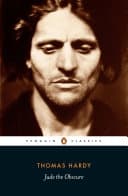
Synopsis
Covers the whole plot, including the ending.
- Difficulty
- Hard
- Pacing
- Slow
- Mood
- Melancholy, Tragic, Reflective, Critical
- Read it if
- You appreciate classic Victorian literature exploring themes of social class, marriage, intellectual ambition, and tragic romance, with a focus on psychological depth and societal critique.
- Skip it if
- You prefer light-hearted reads or stories with optimistic outcomes, as this novel is relentlessly bleak and focuses on the suffering of its characters.
Jude the Obscure Plot Summary
Covers the whole plot, including the ending.
Aspirations and Early Disappointments
Jude Fawley, an orphaned boy living in Marygreen with his great-aunt, becomes fascinated with the distant university city of Christminster. He spends his youth reading classical texts and teaching himself Latin and Greek, hoping to become a scholar and a divine. His studies are interrupted by his attraction to Arabella Donn, a coarse but attractive village girl. Arabella tricks Jude into marriage by pretending to be pregnant, trapping him in a life he did not want. The marriage is a disaster, marked by their incompatibility and Arabella's narrow-mindedness. She eventually leaves him and moves to Australia with her parents, leaving Jude free but disappointed, though still legally bound.
Arrival in Christminster and Encounter with Sue
After Arabella leaves, Jude moves to Christminster, hoping to enroll in one of the university colleges. He works as a stone mason, spending his evenings studying and watching academic life from afar. However, his humble background and lack of formal education are impossible barriers; his applications are rejected, often with condescending advice. During this time, he learns of his cousin, Sue Bridehead, who is studying at a teacher training college in the city. Intrigued by her intelligence and independent spirit, Jude seeks her out. Their first meetings show an immediate intellectual and emotional connection, though Sue is cautious and values her independence most.
Sue's Escape and Phillotson's Influence
Sue Bridehead, feeling stifled by the strict environment of the teacher training college and her own unconventional views, runs away to live with Jude. Their platonic cohabitation raises eyebrows, and Jude, aware of social expectations and his own feelings for Sue, encourages her to consider her options. Meanwhile, Richard Phillotson, Jude's former schoolmaster and a kind, scholarly man, has proposed marriage to Sue. Phillotson, much older than Sue, knows her eccentricities but genuinely cares for her. Despite her deep affection for Jude and her dislike of conventional marriage, Sue, perhaps wanting stability or to avoid scandal, eventually agrees to marry Phillotson, much to Jude's despair.
Unraveling Marriages and Growing Affection
Jude’s marriage to Arabella is still legally binding, though she is far away. Sue's marriage to Phillotson quickly goes wrong. Sue finds the physical intimacy of marriage repulsive and her intellectual freedom limited. Phillotson, recognizing her deep unhappiness and her strong, though perhaps unacknowledged, love for Jude, makes the unusual decision to grant her a separation. This selfless act, though scandalous, allows Sue to return to Jude. Their bond, initially platonic, deepens as they live together, sharing their intellectual pursuits and their increasingly unconventional views on marriage and social norms. They are drawn to each other by a strong, often unexpressed, emotional and intellectual connection.
Life as Unmarried Partners and Public Scrutiny
Jude and Sue, now both free from their previous spouses (Jude's divorce from Arabella is final, and Sue is separated from Phillotson), choose to live together as unmarried partners. They travel from town to town, seeking work and trying to escape society's judgment. Jude continues his work as a stone mason, while Sue attempts teaching, but their 'irregular' relationship makes it hard for them to find steady employment or acceptance. They face constant scrutiny, whispers, and outright rejection from landlords, employers, and the public. Despite these hardships, their intellectual and emotional bond stays strong, and they find comfort in each other's companionship and shared ideals, even as their circumstances become more difficult.
Arabella's Return and the Children
Arabella Donn unexpectedly returns from Australia, bringing a young boy, Little Father Time, who she claims is Jude's son. Jude, despite his initial shock and the disruption this causes to his life with Sue, accepts the boy. Soon after, Sue gives birth to two children of her own with Jude. Their household now includes Jude, Sue, Little Father Time, and their two infants. The financial strain on Jude, who struggles to find work due to his reputation, becomes immense. The children further complicate their already uncertain social standing, making it even harder for them to find housing and employment, as society views their arrangement with increasing disapproval.
The Christminster Rejection and Little Father Time's Despair
Jude, still holding onto his academic dreams, makes one last desperate attempt to return to Christminster, hoping to find work and perhaps some acceptance. He brings his family, including the three children, to the city, but their arrival is met with the usual social condemnation. They cannot find suitable lodgings, and their poverty deepens. Little Father Time, an unusually melancholic and philosophical child, becomes acutely aware of their family's outcast status and the burden they place on his parents. Overwhelmed by the world's indifference and their bleak future, and believing he is helping his parents by reducing their burden, he tragically kills his younger siblings and then himself.
The Aftermath of Tragedy and Sue's Religious Turn
The deaths of the children completely devastate Jude and Sue. The tragedy pushes Sue to the edge of madness, and she sees the events as divine punishment for their 'sinful' cohabitation and defiance of conventional marriage. Overcome with guilt and a desperate need for forgiveness, she undergoes a profound and extreme religious conversion. She believes that their suffering is God's judgment and that they must atone for their 'crimes.' This leads her to an increasingly ascetic and self-punishing lifestyle, rejecting all earthly comforts and pleasures, including Jude's love. She becomes convinced that her only path to salvation is to return to her lawful husband, Richard Phillotson.
Sue's Return to Phillotson and Jude's Decline
Driven by her overwhelming guilt and religious fervor, Sue divorces Jude and, against Phillotson's initial reluctance and her own deep-seated dislikes, remarries him. This act is a deep betrayal for Jude, who cannot understand her radical change. He tries to reason with her, reminding her of their shared ideals and love, but Sue remains firm, believing her actions are necessary for her soul's salvation. Devastated and broken by Sue's departure and the loss of his children, Jude's health quickly declines. He succumbs to illness, made worse by his constant struggles and deep emotional pain, finding comfort only in alcohol.
Jude's Final Illness and Arabella's Re-entry
Jude, now completely alone and gravely ill, finds himself again with Arabella. She returns to him, supposedly to nurse him in his final days, but her motives are, as always, self-serving. She sees a chance to gain some financial benefit or at least avoid social criticism by appearing to care for her dying husband. Jude, weakened and resigned, cannot resist her presence. His last days are marked by deep sadness, a longing for Sue, and bitter thoughts on his failed ambitions and life's cruelties. He remains intellectually and emotionally distant from Arabella, despite her physical closeness.
The Final Tragic Sermon
In a moment of delirium or desperate clarity, Jude, on his deathbed, overhears a procession from Christminster. He gathers his last strength to quote Job 3:3-11, a passage expressing a deep wish for death and release from suffering. This act is his final, bitter sermon, a lament against life's unfulfilled promise and the crushing weight of social judgment and personal failure. His words are a direct accusation against the institutions and rules that stopped his ambitions and destroyed his happiness. He dies shortly after, his dreams of scholarship and love shattered, leaving behind only the cynical Arabella.
Aftermath and Unending Cycles
After Jude's death, Arabella quickly moves on, showing little real grief. She attends his funeral, mainly concerned with appearances and her own future. She later reunites with her former lover, Cartlett, and returns to her previous life, seemingly unaffected by the profound tragedy that has happened. Sue Bridehead, still caught in her self-imposed religious penance with Phillotson, remains tormented by her past and the memory of Jude. The novel ends with the sense that the cycles of disappointment, social limits, and personal suffering will continue, and that Jude's life, despite his great intelligence and noble aspirations, will largely be forgotten, an obscure footnote in a world that refused to accept him.
Jude the Obscure Characters
Jude Fawley
Protagonist
An intelligent, aspiring scholar and stone mason, perpetually thwarted by circumstances.
Jude is a deeply sensitive and intelligent young man with a profound thirst for knowledge and a strong spiritual inclination. Orphaned and self-taught, he dreams of attending the University of Christminster and becoming a scholar or a divine. He is inherently moral and kind, but also prone to impulsive decisions, particularly in matters of the heart. His idealism constantly clashes with the harsh realities of his social class and the rigid conventions of Victorian society. He is a tragic figure, defined by his unfulfilled aspirations and his persistent, yet ultimately futile, quest for happiness and intellectual fulfillment.
Relationships: Sue Bridehead (Intellectual soulmate and forbidden lover, the object of his deepest affection.); Arabella Donn (His first wife, a coarse and manipulative woman who traps him in a loveless marriage.); Richard Phillotson (His former schoolmaster, a kind and understanding man who becomes Sue's husband.); Little Father Time (His melancholic son, a symbol of the world's suffering.)
Sue Bridehead
Co-protagonist/Love Interest
Jude's intellectual cousin, an unconventional, independent, and neurotic woman.
Sue is Jude's cousin and intellectual soulmate, a woman of sharp intellect, deep sensitivity, and fiercely independent spirit. She rebels against conventional norms, particularly regarding marriage and religion, valuing freedom and platonic companionship above all. However, she is also deeply neurotic, prone to extreme emotional and psychological shifts, and struggles with physical intimacy. Her intellectual radicalism is often undermined by her emotional fragility and a deep-seated fear of societal judgment, which ultimately leads her to a destructive religious conversion and self-punishment.
Relationships: Jude Fawley (Her intellectual and spiritual partner, the man she truly loves but ultimately abandons.); Richard Phillotson (Her first and second husband, an older man she marries for stability but cannot love physically.); Little Father Time (Her stepson, whose tragic act profoundly impacts her.)
Arabella Donn
Antagonist
Jude's coarse, earthy, and manipulative first wife.
Arabella is Jude's first wife, a woman of strong physical appetites and cunning practicality. She represents the antithesis of Jude's intellectual and spiritual aspirations. She is provincial, materialistic, and lacks any intellectual curiosity. Her relationship with Jude is purely physical and manipulative; she tricks him into marriage and later returns only when it suits her convenience. She is robust, resilient, and utterly devoid of sentimentality, always looking out for her own interests. She embodies the raw, unrefined aspects of human nature that Jude tries to escape.
Relationships: Jude Fawley (Her husband, whom she manipulates and exploits.); Little Father Time (Her son with Jude, whom she is largely indifferent to.); Cartlett (Her lover and eventual second husband.)
Richard Phillotson
Supporting
Jude's former schoolmaster and Sue's kind but conventional husband.
Richard Phillotson is Jude's former schoolmaster, a kind, scholarly, and principled man. He is a figure of quiet integrity and deep empathy. Despite his conventional nature, he possesses a remarkable understanding of human psychology, particularly regarding Sue's unique temperament. His decision to grant Sue a separation, recognizing her unhappiness and her love for Jude, is an act of profound selflessness and moral courage, though it costs him his reputation. He represents a more humane and understanding aspect of society, contrasting sharply with its general intolerance.
Relationships: Jude Fawley (His former pupil, whom he respects and eventually understands.); Sue Bridehead (His wife, whom he loves and treats with gentle understanding, despite her aversion to him.)
Little Father Time
Supporting/Symbolic
Jude and Arabella's melancholic and prematurely wise son.
Little Father Time is Jude and Arabella's son, a child burdened by an unnaturally grave and pessimistic outlook on life. He is depicted as prematurely aged, with a profound awareness of suffering and the bleakness of existence. He rarely smiles and often expresses a desire not to have been born. His character embodies the inherited misery and the crushing weight of societal judgment that afflicts Jude and Sue. His tragic act of filicide and suicide is a horrifying climax, symbolizing the ultimate despair born from an inhospitable world.
Relationships: Jude Fawley (His father, whose struggles he observes and internalizes.); Sue Bridehead (His stepmother, whose despair he tries to alleviate.); His younger siblings (His half-siblings, whom he kills in a misguided act of mercy.)
Aunt Drusilla
Supporting
Jude's great-aunt, who raises him and instills a sense of duty.
Aunt Drusilla is Jude's great-aunt and guardian. She is a practical, somewhat fatalistic woman of the rural working class. She instills in Jude a strong sense of duty and morality, but also represents the limited horizons of his background. She cares for Jude but is unable to fully comprehend his intellectual aspirations or his unconventional choices. Her pronouncements often carry a sense of foreboding, reflecting the ingrained superstitions and conservative values of the rural community.
Relationships: Jude Fawley (Her great-nephew, whom she raises and cares for.); Sue Bridehead (Her great-niece, whose unconventionality she views with apprehension.)
Mrs. Edlin
Mentioned
An old woman who advises Jude.
Mrs. Edlin is an elderly woman who occasionally appears to offer Jude advice or commentary. She is a minor character but serves as a voice of traditional wisdom and sometimes fatalism, reflecting the prevailing attitudes of the older generation in rural Wessex. Her observations often highlight the unchanging nature of human experience and the difficulties faced by those who try to break from convention.
Relationships: Jude Fawley (An acquaintance who occasionally seeks her advice or receives her observations.)
Vilbert
Mentioned
A quack doctor.
Vilbert is a minor character, a quack doctor whom Arabella consults for her feigned pregnancy. He represents a touch of the rural deceit and superstition that pervades Arabella's world. His brief appearance highlights Arabella's manipulative nature and the gullibility or desperation of those who seek his services.
Relationships: Arabella Donn (Her accomplice in deceiving Jude.)
Cartlett
Mentioned
Arabella's lover and eventual second husband.
Cartlett is a minor character, an innkeeper or pig-breeder who becomes Arabella's lover while she is still married to Jude. He represents the kind of pragmatic, earthy man Arabella is more naturally suited to. His presence underscores Arabella's infidelity and her lack of commitment to Jude, as well as her ability to always land on her feet, finding companionship and stability despite her actions.
Relationships: Arabella Donn (Her lover and eventual second husband.)
Jude the Obscure Themes
The Conflict Between Aspiration and Social Class
The novel clearly shows how social class limits individual ambition. Jude Fawley, despite his intelligence and strong desire for knowledge, is repeatedly denied higher education because of his humble background and lack of money. The 'Christminster' he dreams of remains an inaccessible place, shown by the condescending rejection letters he receives. His attempts to bridge the gap between his working-class reality and his intellectual hopes are met with scorn and indifference, illustrating how rigid Victorian class structures stifle individual potential, regardless of merit. The theme highlights the unfairness of a system that values birth and wealth over talent and dedication.
“'It was not till now that he fully realized what an ironical thing it was that he should have chosen for his field of labour the very city to which his aspirations had tended, and where his dreams lay like the dead body of a dear friend.'”
The Tyranny of Conventional Morality and Marriage
Hardy criticizes the restrictive and often hypocritical nature of Victorian moral codes, particularly about marriage and cohabitation. Jude and Sue's attempts to live authentically, based on love and intellectual companionship rather than legal ties, are constantly punished by society. Their 'irregular' union leads to social exclusion, job loss, and the ultimate tragedy of their children's deaths, which Sue sees as divine retribution. The novel shows how social institutions, especially marriage, can become tools of oppression, forcing individuals into unhappy unions and condemning those who dare to defy convention. Sue's eventual return to Phillotson, driven by guilt and fear, emphasizes the immense pressure to conform.
“'The beggarly question of what he was, and of what this man was, had been with him ever since he could remember; and for a man to be a stonemason, and not a doctor or a parson, was a cruel punishment for having been born in such a position.'”
The Nature of Love, Desire, and Intellectual Compatibility
The novel explores the complex and often contradictory aspects of human relationships. Jude and Sue's bond is primarily intellectual and spiritual, a meeting of minds that goes beyond conventional physical desire, which Sue finds especially challenging. Their love is presented as a higher, more refined connection, yet it is ultimately too weak to withstand external pressures and internal neuroses. In contrast, Jude's relationship with Arabella is purely physical and practical, without intellectual or emotional depth. Hardy questions whether true love can survive in a world that prioritizes social norms over individual happiness, suggesting that a purely spiritual connection, while deep, may be too fragile for life's harsh realities.
“'I think I am an idealist… I can't bear to associate with any one for long, except you. And I can't bear to be married to you, either!'”
Fate, Determinism, and Human Agency
A strong sense of fatalism runs through the novel, suggesting that characters are often controlled by forces beyond them. Jude's life is a series of misfortunes, from his early, ill-fated marriage to Arabella to his persistent inability to achieve his academic dreams. The story often hints at an indifferent or even malicious universe, where human aspirations are destined to be stopped. While characters make choices, these choices often seem to lead inevitably to suffering, reinforcing the idea that individuals are trapped by their circumstances, their pasts, and the inherent 'curse' of their nature or lineage. The tragic death of the children, especially Little Father Time's philosophical despair, underscores this pervasive sense of determinism.
“'Events did not rhyme with principles.'”
The Decline of Traditional Faith and the Search for Meaning
Jude initially hopes to become a divine, reflecting a traditional path to intellectual and spiritual fulfillment. However, his experiences lead him to question and ultimately lose his faith in conventional Christianity and its institutions. Sue, too, is a skeptic, initially rejecting religious dogma. Yet, facing immense tragedy, Sue undergoes a radical religious conversion, seeing their suffering as divine punishment and seeking atonement through extreme self-denial. This theme explores the void left by declining traditional faith and the desperate, sometimes destructive, ways individuals seek meaning and comfort in a world that offers little solace, highlighting the human need for belief even when it leads to suffering.
“'I am in a chaos of principles--groping in the dark--for a little light.'”
Plot Devices & Literary Techniques
Foreshadowing
Hints at future tragic events and character fates.
Hardy frequently employs foreshadowing to create a sense of impending doom and inevitability. Early in the novel, Jude's great-aunt makes comments about the Fawley family's history of unhappy marriages and ill-fated intellectual pursuits, hinting at Jude's own tragic trajectory. Little Father Time's melancholic nature and his early expressed wish never to have been born strongly foreshadow his eventual, devastating act. These subtle and sometimes overt hints contribute to the novel's fatalistic atmosphere, suggesting that the characters' fates are largely predetermined, amplifying the sense of tragedy as events unfold.
Irony (Situational and Dramatic)
The contrast between expectation and reality, often with tragic results.
Irony is a pervasive device in *Jude the Obscure*, highlighting the gap between characters' aspirations and their grim realities. Situational irony is evident in Jude's move to Christminster, the very city of his dreams, only to find himself an outcast, working as a stone mason on the colleges he can never attend. Dramatic irony occurs when the reader understands the destructive nature of certain choices (like Sue's extreme penance) before the characters fully grasp their consequences. The entire narrative is an ironic commentary on the 'obscurity' of Jude, whose profound intellect and noble spirit are ignored by a society obsessed with superficial distinctions, ultimately leading to his tragic demise.
Symbolism
Objects, places, and characters representing abstract ideas.
Hardy uses rich symbolism to deepen the novel's themes. Christminster symbolizes unreachable intellectual aspiration and societal exclusion. The pigs, particularly the one Arabella slaughters, represent the raw, earthy, and often brutal realities of life that clash with Jude's refined sensibilities. Little Father Time is a powerful symbol of inherited suffering, the crushing weight of societal judgment, and the ultimate despair of a world that offers no hope. Phillotson's schoolhouse symbolizes conventional education and morality, which Sue initially rejects but eventually returns to, representing her forced conformity. These symbols infuse the narrative with deeper layers of meaning, underscoring the novel's critique of Victorian society.
Narrative Voice (Omniscient and Detached)
An all-knowing narrator who comments on society and fate.
The novel is told by an omniscient third-person narrator who frequently interjects with philosophical observations and moral judgments. This narrative voice is often detached and fatalistic, emphasizing the characters' powerlessness against societal forces and an indifferent universe. The narrator provides insights into the characters' inner thoughts and motivations while also maintaining a critical distance, allowing for a broader commentary on the human condition and the injustices of Victorian society. This detached yet knowing perspective reinforces the tragic tone and the sense of inevitability that pervades Jude's story, framing it as a universal struggle against an unyielding world.
Jude the Obscure Quotes
“The world seems to be constructed in such a horrible way that the most necessary things are those which are most hated.”
“It was a moment when the ties of blood were as naught, and the only bond was the equality of their misfortune.”
“We are a base, heartless, immoral, and degraded crew, I know. But we are not so bad as you think.”
“The letter 'A' was a cross. He had never before seen a 'cross' which was not a 't'.”
“I am in a vale of tears, and never shall I get out of it again.”
“The social moulds are constructed to hold so much, and no more.”
“You are a creature of your time, Jude. You cannot escape your destiny.”
“Marriage is a sort of legal adultery, isn't it?”
“The University was to him a sort of Holy City, thither he was bound.”
“We are a jaded, sorry couple, are we not?”
“The great social law was against them, and they were against the great social law.”
“It was no use to him to have come to Christminster, if he could not be one with its spirit.”
“Is there anything more ruinous than a good education for a poor man?”
“The ultimate aim of the universe is to produce a good man, but it does not succeed.”
Quiz
10 questions on the plot and the characters. Each answer comes with a short explanation.
Question 1
What is Jude Fawley's primary occupation at the beginning of the novel?
- A university lecturer
- A baker
- A stone mason
- A school teacher
Show answer
C. A stone mason Jude Fawley begins his adult life as a stone mason, a trade he learned from his master, Mr. Phillotson, and one that allows him to work near the university town of Christminster.
Question 2
What is the name of the university town that Jude Fawley idealizes and wishes to attend?
- Wessex College
- Melchester
- Christminster
- Shaston
Show answer
C. Christminster From a young age, Jude is captivated by the distant lights and academic promise of Christminster, which represents his intellectual aspirations.
Question 3
Who is Jude Fawley's first wife?
- Sue Bridehead
- Arabella Donn
- Vilbert
- Mrs. Edlin
Show answer
B. Arabella Donn Jude's first wife is Arabella Donn, a coarse country girl who tricks him into marriage.
Question 4
What is Sue Bridehead's initial profession when Jude first encounters her in Christminster?
- A university student
- A schoolmistress in training
- A librarian
- A shop assistant
Show answer
B. A schoolmistress in training When Jude first meets Sue in Christminster, she is a student at a training college for teachers, aspiring to be a schoolmistress.
Question 5
Why does Jude ultimately fail to gain admission to the colleges at Christminster?
- He is deemed too old for entry.
- He lacks the necessary financial resources and social standing.
- His academic scores are too low.
- He is rejected due to his previous marriage to Arabella.
Show answer
B. He lacks the necessary financial resources and social standing. Jude's humble background, lack of proper schooling, and poverty make him an undesirable candidate for the elitist institutions of Christminster, which ultimately reject his pleas for admission.
Question 6
What unconventional view does Sue Bridehead hold regarding marriage?
- She believes it is a sacred institution that should never be broken.
- She advocates for multiple marriages throughout one's lifetime.
- She views it as a social convention that can be restrictive and unnecessary.
- She believes it should only be for procreation, not companionship.
Show answer
C. She views it as a social convention that can be restrictive and unnecessary. Sue has a modern and unconventional perspective on marriage, seeing it as a restrictive social construct that often stifles individual freedom and natural affection.
Question 7
What tragic event involving their children deeply affects Jude and Sue, leading to a significant turning point in the novel?
- Their children are separated from them by social services.
- Their children are kidnapped by Arabella.
- Their children die in a fire.
- Their children are murdered by 'Little Father Time'.
Show answer
D. Their children are murdered by 'Little Father Time'. The most devastating event in the novel is when Jude's son, 'Little Father Time', murders Sue's two younger children and then hangs himself, leaving a note about 'we are too many'.
Question 8
After the tragedy, what extreme action does Sue Bridehead take, influenced by her guilt and a return to religious orthodoxy?
- She becomes a nun.
- She divorces Jude and marries a wealthy benefactor.
- She remarries her first husband, Mr. Phillotson, despite her aversion to him.
- She leaves England to start a new life abroad.
Show answer
C. She remarries her first husband, Mr. Phillotson, despite her aversion to him. Overwhelmed by guilt and convinced their unconventional life was a sin, Sue returns to Phillotson, believing it to be a penance and an act of religious duty, despite her continued lack of affection for him.
Question 9
Which of the following best describes the central theme of 'Jude the Obscure'?
- The triumph of love over societal conventions.
- The futility of intellectual ambition without social standing.
- The conflict between individual desire and restrictive social institutions, particularly marriage and class.
- The redemptive power of suffering and sacrifice.
Show answer
C. The conflict between individual desire and restrictive social institutions, particularly marriage and class. The novel critically examines how Victorian society's rigid institutions of marriage, class, and education crush the aspirations and happiness of individuals like Jude and Sue.
Question 10
What is the ultimate fate of Jude Fawley?
- He achieves his academic dreams and becomes a professor.
- He finds happiness with Sue Bridehead and lives a quiet life.
- He dies alone and heartbroken in Christminster, attended by Arabella.
- He leaves England to escape his past and start anew.
Show answer
C. He dies alone and heartbroken in Christminster, attended by Arabella. Jude Fawley ultimately dies a lonely and broken man in Christminster, weakened by illness and despair after being abandoned by Sue, with only Arabella nearby.
Jude the Obscure FAQ
What is the central conflict Jude Fawley faces throughout the novel?
Jude Fawley's central conflict stems from the clash between his intellectual aspirations and the societal barriers, primarily poverty and class prejudice, that prevent him from entering the University of Christminster. This external struggle is compounded by his internal battle against conventional morality and the restrictive social norms of Victorian England, particularly concerning marriage and relationships, which ultimately lead to his tragic downfall.
How does Sue Bridehead's character challenge Victorian societal norms?
Sue Bridehead challenges Victorian societal norms through her radical views on marriage, religion, and gender roles. She initially resists physical intimacy, views marriage as a repressive institution, and openly expresses agnostic beliefs, all of which were highly unconventional and scandalous for a woman of her time. Her intellectual independence and desire for a platonic union with Jude directly oppose the era's expectations for female submission and domesticity.
What role does Christminster play in Jude's life?
Christminster represents Jude's lifelong dream of intellectual fulfillment and social advancement, symbolizing higher education and a world beyond his humble origins as a stone mason. However, it ultimately becomes a symbol of his crushing failure and the unyielding class divisions of society, as he is repeatedly rejected and never gains entry to its hallowed halls, despite his persistent efforts and self-education.
Describe the relationship between Jude and Arabella Donn.
Jude and Arabella Donn's relationship is characterized by impulsivity, physical attraction, and fundamental incompatibility. Arabella, a coarse and sensual woman, initially tricks Jude into marriage through a false pregnancy, and her pragmatic, materialistic nature constantly clashes with Jude's intellectual and idealistic temperament. Their union is marked by mutual dissatisfaction, separation, and ultimately, a destructive cyclical return that prevents Jude from finding happiness elsewhere.
How does the death of the children impact Jude and Sue?
The tragic deaths of Jude's children, particularly the murder-suicide orchestrated by 'Little Father Time,' devastate Jude and Sue, serving as a catastrophic turning point. For Sue, it shatters her unconventional beliefs and drives her into extreme religious penance, convinced that their 'sinful' union caused the tragedy. For Jude, it compounds his despair, solidifying his belief that their love is cursed and accelerating his physical and emotional decline.
What is the significance of the pig-killing scene in Jude's early life?
The pig-killing scene is significant as it foreshadows Jude's later struggles and moral compromises. His initial squeamishness and empathy for the animal clash with Arabella's pragmatic brutality, highlighting their inherent incompatibility. It also symbolizes the harsh realities and physical demands of rural life that Jude tries to escape, and his forced participation marks an early loss of innocence and a submission to the darker aspects of existence.
Are there any subtle indications of Sue's neurosis or psychological fragility prior to the children's deaths?
Yes, subtle indications of Sue's psychological fragility appear early, such as her extreme aversion to physical intimacy, her initial flight from Phillotson on their wedding night, and her often contradictory intellectual arguments. Her intense need for platonic affection, her oscillating religious beliefs, and her sometimes erratic behavior, even before the children's deaths, hint at a deeply sensitive and perhaps neurotic temperament struggling with societal expectations and her own internal conflicts.
How does the recurring motif of 'irony' manifest in Jude's experiences?
The recurring motif of irony manifests profoundly in Jude's experiences, most notably in his failure to gain access to Christminster despite his superior intellect and dedication, while less deserving individuals succeed. It's also ironic that his pursuit of an unconventional, intellectually stimulating relationship with Sue ultimately leads to more suffering than conventional marriage, and that his greatest intellectual aspirations are constantly thwarted by the very institutions he admires.
What is the psychological impact of repeated societal rejection on Jude?
The repeated societal rejection, particularly from Christminster, profoundly impacts Jude's psychology, leading to a deep sense of disillusionment, bitterness, and self-worth erosion. It fuels his fatalistic outlook, making him question the value of his intellectual pursuits and ultimately contributing to his physical decline and despair. This constant reinforcement of his 'outsider' status crushes his spirit and reinforces his belief that he is destined for failure.
Analyze Sue Bridehead's psychological transformation after the children's deaths.
Sue Bridehead undergoes a drastic psychological transformation after the children's deaths, abandoning her free-thinking, agnostic beliefs for extreme religious fanaticism and self-mortification. Overwhelmed by guilt and convinced of divine punishment for their 'sinful' union, she believes she must atone by returning to Phillotson and denying her love for Jude. This radical shift is a desperate attempt to regain control and alleviate her unbearable suffering through conventional piety.
How does Jude's early idealization of Christminster contribute to his later psychological suffering?
Jude's early idealization of Christminster creates an unattainable standard of success and happiness, setting him up for profound psychological suffering when his dreams are repeatedly crushed. His unwavering belief in its promise blinds him to the harsh realities of class and privilege, leading to deep disillusionment and a sense of personal failure that he never fully recovers from. This initial idealistic vision makes his eventual rejection all the more devastating.
Discuss Jude's internal conflict between his intellectual aspirations and his carnal desires.
Jude's internal conflict between his intellectual aspirations and carnal desires is a central psychological struggle. He yearns for higher knowledge and a life of the mind, yet he is repeatedly drawn into passionate, often destructive relationships, first with Arabella and then with Sue, where physical and emotional intimacy complicate his intellectual pursuits. This duality highlights his struggle to reconcile his spiritual and physical selves in a society that offers little room for both.
Is Jude primarily a victim of circumstances, or do his own flaws contribute significantly to his downfall?
This is a matter of interpretation, but Jude is arguably a victim of both. While societal structures like class prejudice and rigid marriage laws are undeniably oppressive circumstances, Jude's own flaws—his impulsiveness (marrying Arabella), his idealism that borders on naivete, and his inability to fully adapt to or reject societal norms—also contribute significantly to his downfall. His persistent pursuit of the unattainable, both academically and romantically, often leads him into self-destructive paths.
To what extent is 'Jude the Obscure' a critique of Victorian marriage institutions?
'Jude the Obscure' is a profound critique of Victorian marriage institutions, portraying them as rigid, unforgiving, and often destructive. The novel illustrates how marriage, rather than fostering happiness or stability, traps individuals in incompatible unions (Jude and Arabella, Sue and Phillotson) and punishes those who attempt to deviate from conventional norms (Jude and Sue's 'free union'). It argues that the legal and social constraints of marriage often prioritize appearances and property over genuine affection and individual liberty.
Could Jude and Sue have found happiness in a different time or place?
It's debatable, but likely they could have found more happiness in a different time or place with more liberal social attitudes. Their unconventional views on marriage, religion, and intimacy were fundamentally at odds with Victorian society, leading to their ostracization and suffering. In a more open-minded era, their desire for an intellectual and platonic bond, and their eventual wish for a less conventional family structure, might have been tolerated or even celebrated, allowing their love to flourish without such tragic consequences.
What is the novel's stance on the pursuit of higher education for the working class?
The novel's stance on the pursuit of higher education for the working class is deeply pessimistic and critical. It portrays the academic institutions of Christminster as elitist, exclusive, and indifferent to genuine talent if it comes from the lower classes. Jude's repeated rejections, despite his immense self-taught knowledge, suggest that the system is designed to maintain class divisions rather than promote intellectual meritocracy, thus crushing the aspirations of individuals like Jude.
Is Sue Bridehead truly in love with Jude, or is her affection more intellectual and dependent?
Sue's love for Jude is complex and open to interpretation. While she clearly has deep affection and intellectual affinity for him, her persistent resistance to physical intimacy and her later religious fanaticism suggest her love might be more intellectual, spiritual, and dependent than fully romantic or carnal. She values Jude as a kindred spirit and intellectual equal, but struggles with the conventional expectations of a marital relationship, hinting at a love that exists more in the realm of shared ideals than passionate union.
About the author
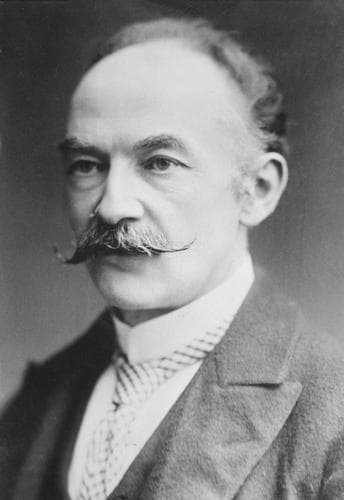
Thomas Hardy was an English novelist and poet. A Victorian realist in the tradition of George Eliot, he was influenced both in his novels and in his poetry by Romanticism, including the poetry of William Wordsworth. He was highly critical of much in Victorian society, especially on the declining status of rural people in Britain, such as those from his native South West England.
Similar books
- Tess of the D'Urbervilles
Thomas Hardy
3.8 (238k) average on GoodreadsHistorical FictionExplores similar themes of social injustice, tragic fate, and the suffering of individuals against a rigid moral society.
- Wuthering Heights
Emily Brontë
3.9 (1.3M) average on GoodreadsHistorical FictionFeatures an intense, unconventional, and ultimately destructive love story against a backdrop of societal constraints.
- Middlemarch
George Eliot
4.0 (136k) average on GoodreadsHistorical FictionExamines intellectual aspirations, societal expectations, and the complexities of marriage in Victorian England, though with a broader scope.
- Great Expectations
Charles Dickens
3.8 (652k) average on GoodreadsHistorical FictionBoth feature protagonists rising from humble beginnings. While Pip, despite his moral failings and early disappointments, achieves a form of redemption and stability, Jude is systematically stripped of everything he holds dear, ultimately dying a broken man. Hardy's novel offers a more direct and brutal indictment of Victorian social structures, with far less hope for its protagonist.
- To Kill a Mockingbird
Harper Lee
4.3 (4.5M) average on GoodreadsHistorical FictionIn the 1930s Jim Crow South, Harper Lee writes about racial injustice, moral growth, and the quiet courage of a lawyer father, Atticus Finch, as seen through his young daughter's eyes.
- The Great Gatsby
F. Scott Fitzgerald
3.9 (3.8M) average on GoodreadsHistorical FictionIn the opulent Roaring Twenties, a mysterious millionaire's lavish parties hide his desperate, tragic pursuit of a lost love, exposing the emptiness within the American Dream.



Enjoyed the summary?
A summary gives you the shape of the book. The book itself has the detail, the examples and the voice.
Find Jude the Obscure on AmazonAs an Amazon Associate, BookBrief earns from qualifying purchases. How we're funded