

Synopsis
Covers the whole plot, including the ending.
- Difficulty
- Hard
- Pacing
- Slow
- Mood
- Philosophical, Bleak, Poetic, Meditative, Profound
- Read it if
- You are interested in philosophical and existential literature, exploring themes of identity, humanity's essence, and the struggle for survival against overwhelming odds, with a keen appreciation for unique, poetic prose.
- Skip it if
- You prefer fast-paced plots, clear-cut resolutions, or narratives with strong individual character arcs and traditional dialogue.
Soul Plot Summary
Covers the whole plot, including the ending.
Return to the Auls
Nazar Chagataev, a young political economy student from Moscow, is sent to his Central Asian homeland to organize and educate his forgotten, nomadic people, the Dzhan (meaning 'soul'). He has been away for years, learning and adopting Soviet ideals, but now feels a deep pull to reconnect with his roots. He travels through vast, empty lands, meeting a few scattered, ghost-like people who seem to live on the very edge of human experience. His first hope is lessened by the harsh truth of their lives: extreme poverty, no basic needs, and a deep tiredness that has taken away their memory, speech, and almost all will to live, leaving them as 'empty souls'.
Encountering the Dzhan
When Chagataev reaches the Dzhan camps, he sees a heartbreaking sight. His people are not only starving and poorly dressed but seem to have lost their basic humanity. They wander aimlessly, speaking in broken phrases, their memories gone, and their emotions dulled by generations of hardship in the hot desert. They are a people almost extinct, kept alive only by a faint, almost unconscious survival instinct. Chagataev is deeply moved by their situation, seeing that their lack of material things is just a sign of a deeper spiritual emptiness, a 'soul-sickness' he believes he can heal.
The Burden of Responsibility
Chagataev feels a huge personal responsibility for the Dzhan, seeing them as his own 'soul.' He tries to give them food and water, but their indifference is so deep that they often refuse to eat or drink, lacking the will to stay alive. He tries to talk to them, to teach them about the Soviet future, but their minds are too cloudy from hunger and despair to understand his words. He struggles with his own identity, torn between the logical, educated man he has become and the raw, intuitive connection he feels to his suffering relatives. His efforts are met with a quiet, almost spiritual resistance, as if their very being has become too fragile to accept change.
Seeking a New Home
Realizing the desert is a main cause of their decline, Chagataev decides the only way to save the Dzhan is to lead them from their desolate home to a better environment. He imagines a fertile valley where they can settle, farm, and rebuild their lives. This decision comes from both practicality and a deep hope that a change of place will somehow reawaken their sleeping souls. He starts to gather the remaining people, tempting them with promises of a better future, though many are too weak or uncaring to fully grasp his plans. The journey itself becomes a test of endurance and faith, for both Chagataev and his fragile group.
The Perilous Journey
The journey is hard and dangerous. The Dzhan, already weak, suffer from hunger, thirst, and sickness. Many die along the way, their bodies left in the vast, uncaring land. Chagataev, despite his own tiredness and despair, pushes them forward, often carrying the weakest or encouraging them with stories of the promised land. He is a shepherd to a flock that barely understands its own need for rescue. The journey is a constant fight against both the harsh environment and the internal slowness of his people, who often lose hope and wish to just lie down and die. Chagataev's 'soul' is pushed to its limits as he fights to keep his people's 'soul' alive.
Arrival and Brief Hope
Against all odds, Chagataev successfully leads the remaining Dzhan to a new, fertile valley. Here, there is water, plants, and the promise of a more stable life. For a short time, Chagataev sees a spark of life return to his people. They start to eat, to move with a bit more purpose, and even to speak a few more clear words. He begins to teach them basic farming methods and the ideas of living together. This time offers a fragile hope that his mission might work, that the 'soul' he wanted to revive is not completely lost. He feels a deep, though temporary, sense of success, believing he has brought them back from the edge of disappearance.
The Call of the Old Ways
However, the deep-seated habits and spiritual conditioning of generations in the desert prove too strong. Despite the comfort and safety of their new home, the Dzhan begin to feel a strange, almost ancient longing for their old, nomadic life in the desolate villages. The open spaces, the harshness, and the very emptiness of the desert have become an inseparable part of who they are. They find the settled life restricting and strange, a burden rather than a gift. Chagataev watches with growing dread as they slowly, almost without notice, begin to move away from the settlement, drawn back to their familiar, though destructive, ancestral ways.
The Return to the Desert
One by one, or in small groups, the Dzhan begin to leave the fertile valley. They pack their few belongings and head back into the vast, uncaring desert, driven by an instinct Chagataev cannot fully understand or stop. Their leaving is not an act of meanness or ungratefulness, but a quiet, almost unconscious giving in to their deep nature. Chagataev watches helplessly as his people, his 'soul,' abandon the future he tried so hard to build for them. He is left alone in the valley, a sign of his failed mission, struggling with the deep understanding that he cannot force his people to accept a salvation they do not truly want, or perhaps are no longer able to want.
Chagataev's Solitude and Reflection
Abandoned by the Dzhan, Chagataev is left alone, dealing with the deep failure of his mission. He thinks about what 'soul' means and the limits of human help. He realizes that his people's connection to their empty homeland is deeper than just habit; it is a basic part of who they are, a spiritual place that defines them. He questions his own ideas of progress and civilization, admitting that perhaps he tried to force a future that was foreign to their very being. His 'soul,' which had been so deeply tied to theirs, now feels a deep emptiness, but also a strange, quiet understanding of their stubborn nature.
Departure and Lingering Hope
Finally, Chagataev decides to leave the valley. He does not return to Moscow as a defeated man, but as one who has gained a deep, though painful, understanding of the human spirit's strength and its deep connection to its origins. He carries the 'soul' of the Dzhan within him, not as a burden of failure, but as a sign of their unique existence. He understands that while he could not save them in the way he intended, he has seen a deep truth about humanity's ability to endure and its complex relationship with freedom and identity. He leaves, letting the Dzhan follow their chosen path, forever changed by his encounter with their elusive, untamable 'soul'.
Principal Figures
Nazar Chagataev
Protagonist
A Soviet-educated student who returns to his native Central Asian people to 'civilize' them.
Nazar Chagataev is a complex and deeply empathetic character, driven by a powerful sense of duty and love for his forgotten people, the Dzhan. He is an intellectual, educated in Moscow in political economy and Marxist ideals, yet he possesses an almost mystical connection to his roots and a profound emotional intelligence. He is idealistic and determined, believing he can bring progress and salvation to the Dzhan, but also deeply sensitive to their suffering. His journey is one of immense self-sacrifice and a gradual, painful realization of the limitations of his own will and understanding.
Relationships: The Dzhan (He views them as his 'soul' and feels immense responsibility for their survival and well-being, a mix of familial love and a messianic drive to save them.)
The Dzhan (collectively)
Collective Antagonist/Supporting
Chagataev's nomadic people, suffering from extreme deprivation and a loss of memory and will.
The Dzhan are not individual characters in the traditional sense, but a collective entity representing a people on the brink of extinction. They are depicted as 'empty souls,' stripped of memory, speech, and the will to live by generations of hardship in the desert. Their suffering is profound, manifesting as apathy, physical weakness, and a deep-seated spiritual weariness. They are passive recipients of Chagataev's efforts, often resisting his attempts to help them not out of malice, but out of a profound inertia and an almost unconscious attachment to their desolate, nomadic existence. They embody both the fragility and the mysterious resilience of the human spirit.
Relationships: Nazar Chagataev (They are his people, the object of his mission, and a source of both profound love and immense frustration for him.)
Vera
Supporting
Chagataev's lover in Moscow, representing his connection to the 'civilized' world.
Vera is Chagataev's lover and intellectual companion in Moscow. She represents the world he leaves behind: one of education, ideology, and a more conventional, settled existence. While not physically present in the desert for most of the story, her memory and his thoughts of her serve as a constant reminder of his past life and the ideals he is trying to implement. She embodies a certain kind of hopeful, rational future, contrasting with the ancient, almost pre-human state of the Dzhan. Her presence in his thoughts highlights the internal conflict Chagataev experiences between his intellectual ideals and the raw reality of his people.
Relationships: Nazar Chagataev (His lover; she represents his 'civilized' life and intellectual aspirations in Moscow.)
The Old Man (Various)
Mentioned/Symbolic
Elderly, almost spectral figures among the Dzhan, embodying their ancient wisdom and weariness.
Throughout the narrative, Chagataev encounters several unnamed old men among the Dzhan. These figures are often depicted as ancient, frail, and almost indistinguishable from the desert itself. They embody the deep-seated weariness and the fading memory of the Dzhan people. While they offer little in terms of active dialogue or plot progression, their silent presence and their profound apathy serve as powerful symbols of the Dzhan's spiritual state. They represent the living history and the deep-rooted traditions that Chagataev struggles to understand and overcome, embodying the 'soul' that is both ancient and weary.
Relationships: Nazar Chagataev (They are his ancestors and the most profound examples of the suffering he seeks to alleviate.)
Themes & Insights
The Nature of 'Soul' and Identity
The main theme is about the meaning of 'soul' (Dzhan) and how it shapes who a person or group is. Platonov explores if 'soul' is a natural, unchanging part of us, or something that can be grown, lost, or found again. For the Dzhan, their 'soul' is tied to their nomadic life and the harsh desert, even if it leads to their physical decline. Chagataev's goal is to revive their 'soul' by improving their material lives, but he learns that their identity is deeply rooted in their specific way of life, regardless of 'progress.' The book asks if a people's 'soul' can be separated from their traditions and environment, as seen when the Dzhan leave the fertile valley to return to the desert, choosing their ingrained identity over physical comfort.
“Chagataev felt the whole of his people as his own soul, as his own life, and he went to them.”
The Limits of Ideology and Progress
The novella looks critically at the Soviet idea of 'civilizing' nomadic peoples and how difficult it is to impose outside ideas on deeply rooted cultures. Chagataev, with Marxist ideas and a desire for progress, tries to change the Dzhan's lives through education and farming. However, his efforts fail because of the Dzhan's deep indifference and their unconscious connection to their ancient way of life. The story suggests that material progress and ideological systems, no matter how well-meaning, cannot overcome a people's basic identity and spiritual bond to their environment. Chagataev's failed mission highlights the arrogance of thinking one can simply 'fix' a culture without understanding its true nature.
“He understood that his people loved their own life, no matter how poor it was, and it was useless to try to turn them into something else.”
Suffering and Resilience
The deep suffering of the Dzhan, both physical and spiritual, is a constant theme. They face starvation, sickness, and a loss of memory and speech, yet they have a strange, almost unconscious strength that allows them to exist on the edge of life. Their suffering is not just a plot point but a state of being, shaping their 'soul.' Platonov explores how extreme hardship can strip away superficial parts of humanity, revealing a core, almost primal drive for survival, even if it appears as indifference. Chagataev's journey shows his own strength in the face of overwhelming despair, as he continues to fight for a people who seem to have lost the will to fight for themselves. The Dzhan's eventual return to the desert can be seen as a form of strength—a stubborn commitment to their own truth, however harsh.
“They were alive, but with a life that was almost extinguished, like embers beneath ashes.”
The Burden of Empathy and Responsibility
Chagataev feels a huge amount of empathy and responsibility for his people. He feels their suffering as his own, seeing their group 'soul' as part of his own inner self. This deep connection drives his endless efforts, even when faced with impossible obstacles and the Dzhan's passive resistance. The theme explores the psychological cost of such responsibility, as Chagataev deals with despair, loneliness, and the realization that his love and effort might not be enough. His journey highlights the difficulties of helping others when facing a reality that resists help, and the emotional price of putting one's entire self into saving others.
“He felt that his own heart was the heart of the whole people, beating weakly and without joy.”
Plot Devices & Literary Techniques
The Journey/Quest
Chagataev's physical and spiritual journey to find and save his people.
The entire novella is framed as a journey, both literal and metaphorical. Chagataev embarks on a physical quest across the Central Asian desert to locate the scattered Dzhan. This external journey mirrors his internal quest for understanding, purpose, and the meaning of 'soul.' The arduous nature of the travel, the desolate landscapes, and the encounters with the suffering Dzhan all contribute to Chagataev's transformation and the deepening of the narrative's themes. The journey is not just about reaching a destination but about the process of discovery and the forging of a profound, if ultimately tragic, connection.
Symbolism of the Desert
The desert represents both the harshness of life and the intrinsic identity of the Dzhan.
The desert is a powerful and multifaceted symbol in 'Soul.' On one hand, it represents the extreme hardship, deprivation, and spiritual emptiness that have afflicted the Dzhan, literally stripping them of life and memory. It is a place of death and decay. On the other hand, it is also intrinsically linked to the Dzhan's identity, their ancient way of life, and their 'soul.' Their eventual return to the desert, despite the promise of a better life elsewhere, symbolizes their unbreakable bond with their harsh homeland and the deep-seated nature of their identity. The desert is not just a setting; it is a character, an antagonist, and an inseparable part of the Dzhan's being.
The 'Empty Soul' (Dzhan)
The state of the Dzhan people, symbolizing profound spiritual and physical deprivation.
The concept of the 'empty soul' (Dzhan) is a central symbolic device. It refers to the Dzhan people's state of extreme deprivation, where hunger, illness, and generations of hardship have seemingly stripped them of their memories, their will to live, and even their ability to speak coherently. This 'emptiness' is not merely a lack but a profound spiritual wound, suggesting a humanity reduced to its most basic, almost pre-conscious state. Chagataev's mission is to refill these 'empty souls,' but he learns that their 'emptiness' is also a strange form of resilience and a unique, albeit tragic, form of existence. It challenges the conventional understanding of what it means to be human and to possess a 'soul.'
The Promise of the Fertile Valley
A symbol of hope and the potential for a new, 'civilized' life for the Dzhan.
The fertile valley represents the promise of a new beginning, a place where the Dzhan can escape their suffering and build a better, more 'civilized' life through agriculture and settlement. It symbolizes Chagataev's hopes and the Soviet ideals of progress and material well-being. For a brief period, it offers a glimmer of success for his mission. However, its ultimate rejection by the Dzhan transforms it into a symbol of the limitations of imposed salvation and the inability of external comfort to override deeply ingrained cultural identity. The valley becomes a poignant reminder of what could have been, and what was ultimately forsaken.
Soul Quotes
“He lived alone, but he felt the presence of all his people in him, and they were more real than his own body.”
“The soul is not a guest, but the owner of the body, and it must work.”
“They were all equally poor, equally naked, and equally alive.”
“His heart was full of a feeling that was both sorrow and joy, like the taste of bitter honey.”
“The world was full of silence, and in that silence, every small sound became a voice.”
“Man needs a future, even if it is only a small one, to live.”
“He loved his people, but he also feared them, for their suffering was so deep it could consume anything.”
“The earth was a living creature, breathing and groaning under the weight of human sorrow.”
“To forget was a kind of death, but to remember was a kind of endless pain.”
“They had nothing, but they had each other, and that was enough to make a world.”
“His mind was like a dry well, but his heart was still flowing with a secret spring.”
“The wind was their only music, and the dust their only bread.”
“He understood that the soul was not something to be saved, but something to be lived.”
“The future was not a straight road, but a winding path through the desert of time.”
Quiz
10 questions on the plot and the characters. Each answer comes with a short explanation.
Question 1
In 'The Return,' what is the primary reason for Aleksey Ivanov's initial difficulty in reconnecting with his family upon his return from the war?
- He has forgotten how to speak Russian after years abroad.
- His wife and children have moved to a different village and he cannot find them.
- He formed a romantic relationship with another woman during the war.
- He suffers from a severe physical injury that prevents him from working.
Show answer
C. He formed a romantic relationship with another woman during the war. Aleksey Ivanov's initial difficulty in 'The Return' stems from his affair with Masha during the war, which creates emotional distance and distrust with his wife, Lyuba, upon his homecoming.
Question 2
What is the central theme explored in 'The River Potudan' regarding the marriage of Nikita and Lyuba?
- The joy of immediate parenthood and family growth.
- The struggle for intimacy and understanding in a new relationship.
- The economic hardships faced by rural farmers in post-war Russia.
- The importance of communal living over individual happiness.
Show answer
B. The struggle for intimacy and understanding in a new relationship. 'The River Potudan' profoundly explores the theme of the struggle for intimacy and understanding between Nikita and Lyuba, who find themselves distant and unable to fully connect despite their love.
Question 3
In the novella 'Soul,' what is the name of the young man who returns to his Asian birthplace?
- Aleksey Ivanov
- Chagataev
- Nikita Firsov
- Semyon
Show answer
B. Chagataev The protagonist of the title novella 'Soul' is Chagataev, who returns to his ancestral land among the Dzhan people.
Question 4
What unique affliction or state characterizes the Dzhan people in the novella 'Soul'?
- They are all physically blind from birth.
- They are deprived of food, dwelling, memory, and speech.
- They suffer from a perpetual state of extreme happiness.
- They possess an advanced telepathic ability.
Show answer
B. They are deprived of food, dwelling, memory, and speech. The Dzhan people in 'Soul' are described as being deprived of fundamental human elements: food, dwelling, memory, and speech, highlighting their profound state of destitution and existential emptiness.
Question 5
In 'The Return,' how does Aleksey's young son, Petrushka, initially react to his father's presence?
- He immediately embraces him with joy.
- He is suspicious and questions his father's return.
- He ignores him completely, pretending he isn't there.
- He runs away from home, fearing his father's discipline.
Show answer
B. He is suspicious and questions his father's return. Petrushka's reaction in 'The Return' is one of suspicion and questioning, particularly regarding his father's prolonged absence and the implications of his return for the family dynamic.
Question 6
What is the metaphorical significance of the 'soul' in Platonov's title novella, especially in relation to the Dzhan people?
- It represents the literal physical organ necessary for life.
- It symbolizes the core human essence, memory, and capacity for connection that Chagataev tries to rekindle.
- It refers to a specific religious deity worshipped by the Dzhan.
- It is a term for the nomadic lifestyle adopted by the Dzhan.
Show answer
B. It symbolizes the core human essence, memory, and capacity for connection that Chagataev tries to rekindle. In 'Soul,' the 'soul' metaphorically represents the fundamental human essence, including memory, speech, and the capacity for connection, which Chagataev endeavors to restore in the deprived Dzhan people.
Question 7
In 'The River Potudan,' what significant action does Nikita undertake in an attempt to alleviate his and Lyuba's marital difficulties?
- He builds a new house for them by the river.
- He attempts suicide by drowning himself in the river.
- He travels to a distant city to seek advice from an elder.
- He demands a divorce, believing it will solve their issues.
Show answer
B. He attempts suicide by drowning himself in the river. Overwhelmed by their marital difficulties and his inability to connect with Lyuba, Nikita attempts suicide by drowning himself in the River Potudan, a desperate act reflecting his profound despair.
Question 8
What is the socio-political context that subtly underlies the struggles of the characters in many of Platonov's stories in this collection?
- The lingering effects of feudalism and serfdom.
- The utopian ideals of a burgeoning capitalist society.
- The aftermath of war and the challenges of building a new Soviet society.
- The collapse of a vast empire and the rise of independent states.
Show answer
C. The aftermath of war and the challenges of building a new Soviet society. Platonov's works, including those in this collection, are often imbued with the socio-political context of post-World War II Russia and the challenges of building a new Soviet society, which often led to personal and communal hardship.
Question 9
How does Chagataev attempt to 'save' the Dzhan people in 'Soul'?
- By leading them in a military uprising against their oppressors.
- By teaching them modern agricultural techniques to ensure food security.
- By bringing them to a collective farm and attempting to instill a sense of purpose and humanity.
- By documenting their plight and appealing to international humanitarian organizations.
Show answer
C. By bringing them to a collective farm and attempting to instill a sense of purpose and humanity. Chagataev's primary method to 'save' the Dzhan in 'Soul' is to lead them to a collective farm, hoping that work, community, and basic necessities will restore their lost humanity and 'soul.'
Question 10
What is the ultimate fate or outcome for Chagataev and the Dzhan people at the end of the novella 'Soul'?
- They successfully integrate into Soviet society and thrive.
- Chagataev completely abandons them, recognizing his efforts are futile.
- The Dzhan people slowly disperse, and Chagataev is left alone, reflecting on their 'soul.'
- They all perish during a severe winter storm.
Show answer
C. The Dzhan people slowly disperse, and Chagataev is left alone, reflecting on their 'soul.' At the end of 'Soul,' the Dzhan people gradually disperse and drift away, leaving Chagataev largely alone and contemplating the elusive nature of their 'soul' and his failed attempt to fully restore them.
Soul FAQ
What is the central premise of the title novella 'Soul'?
'Soul' follows Chagataev, a young man of 'Ainu' (a fictional Central Asian nomadic people) origin who has been educated in Moscow. He is sent back to his homeland to help his people, only to find them in a state of extreme destitution, both physical and spiritual, having lost their language, memory, and sense of self due to famine and displacement. Chagataev grapples with the immense challenge of reawakening their 'soul' and humanity.
Who is Chagataev, and what is his initial mission in 'Soul'?
Chagataev is the protagonist of 'Soul,' a young man of nomadic descent who has assimilated into Soviet society and received an education. His mission is to return to his ancestral land, the 'Anu' desert, and help his people, the 'Ainu,' integrate into the new Soviet collective farm system, providing them with modern guidance and aid. He hopes to bring them out of their forgotten state.
What significant transformation does Chagataev undergo during his time with the Ainu people?
Initially, Chagataev attempts to impose Soviet ideals and practical solutions on the Ainu. However, he gradually sheds his intellectualized approach and begins to deeply empathize with their profound suffering and silent existence. He starts to understand their 'soul' not through ideology, but through shared silence, instinct, and a renewed connection to his own forgotten heritage, becoming less a leader and more a part of their collective being.
What is the primary conflict in 'The River Potudan'?
'The River Potudan' explores the troubled marriage of Nikita Firsov and Lyuba. Their conflict stems from Nikita's profound emotional paralysis and inability to consummate their marriage, despite his deep love for Lyuba. This creates a chasm of misunderstanding and suffering, as Lyuba struggles to comprehend his silent anguish and he grapples with an internal block he cannot articulate.
How does 'The Return' depict the challenges faced by veterans after World War II?
'The Return' focuses on Captain Ivanov's difficult homecoming after the war. He finds his wife, Lyubov, and children have adapted to life without him, and his family structure has subtly shifted, with his wife forming a close bond with another man, Peter. Ivanov struggles to reintegrate, feeling like an outsider in his own home and battling with the emotional distance that has grown between him and his loved ones, highlighting the often-overlooked psychological scars of war.
Are there any symbolic connections between the silent, forgotten Ainu people in 'Soul' and the internal struggles of characters in other stories?
Yes, the Ainu's loss of memory and speech in 'Soul' can be seen as a macrocosm of the internal 'silence' or inarticulateness that afflicts characters like Nikita in 'The River Potudan' and even Ivanov in 'The Return.' These characters, despite different circumstances, struggle to express deep internal states, mirroring the Ainu's collective inability to articulate their suffering or reclaim their identity. This suggests a pervasive theme of profound, unarticulated human experience.
What is the significance of the 'soul' in the novella, beyond a spiritual sense?
In 'Soul,' the 'soul' represents not just a spiritual essence, but also the collective memory, language, identity, and capacity for human connection of the Ainu people. When Chagataev seeks to awaken their 'soul,' he is trying to restore their ability to speak, remember their past, feel emotion, and engage with the world, which have all been eroded by extreme hardship. It's a holistic concept encompassing their humanity.
Is there a subtle critique of Soviet ideology present in Chagataev's initial approach in 'Soul'?
Yes, Chagataev's initial attempts to 'organize' and 'educate' the Ainu using purely rational, ideological methods can be interpreted as a subtle critique. His failure to connect with them on this level, and his subsequent transformation, suggests that profound human suffering and existential emptiness cannot be solved by rigid doctrines or material provisions alone. It highlights the limitations of an ideology that might overlook the deeper emotional and spiritual needs of people.
How does Platonov use the landscape in 'Soul' to reflect the internal state of the characters?
The barren, desolate Anu desert in 'Soul' serves as a powerful metaphor for the internal emptiness and desolation of the Ainu people. Its vast, silent expanse mirrors their loss of memory and speech, and their almost non-existent existence. Chagataev's journey through this landscape is not just physical but also an internal one, as he confronts the stark reality of their being and his own evolving understanding of humanity within such a harsh environment.
Analyze Nikita's psychological state in 'The River Potudan.' What might be the root of his paralysis?
Nikita's paralysis in 'The River Potudan' is a complex psychological state, perhaps rooted in a profound trauma or an existential dread that renders him incapable of intimacy. He loves Lyuba deeply, yet his body and mind resist connection. This could stem from a sense of impurity, a fear of destroying what he loves, or a manifestation of his own deep-seated anxieties about existence and the fragility of life. His inner world is one of overwhelming, inexpressible anguish.
How does Lyuba's character in 'The River Potudan' represent a different psychological response to suffering compared to Nikita?
Lyuba, in 'The River Potudan,' represents a more active and outwardly expressive response to suffering. While Nikita retreats into a silent, almost catatonic state, Lyuba actively seeks to understand, to comfort, and to provoke a response from him. Her despair manifests as desperate attempts to break through his barrier, even resorting to extreme measures, showing a psychological need for connection and resolution, even if painful.
What psychological impact does the war have on Captain Ivanov in 'The Return'?
Captain Ivanov in 'The Return' suffers from a profound psychological dislocation. The war has hardened him and created a chasm between his wartime self and his pre-war identity. He struggles with emotional numbness, an inability to reconnect with the simple joys and routines of family life, and a sense of alienation. He feels like a stranger in his own home, burdened by unarticulated experiences that make him unable to fully engage with his family's new reality.
How does Platonov explore the theme of 'motherhood' or 'nurturing' in these stories?
Platonov often explores a deep, almost primal form of nurturing. In 'Soul,' the Ainu women, despite their destitution, cling to their children, embodying a fundamental will to protect and sustain life amidst hopelessness. In 'The Return,' Lyubov's care for her children and her capacity to maintain a semblance of family life, even in Ivanov's absence, highlights a resilient, life-affirming maternal instinct. This nurturing spirit often exists outside of, or in spite of, grand ideologies.
Is 'Soul' ultimately optimistic or pessimistic about the possibility of human redemption and collective revival?
'Soul' offers a complex, ambivalent view. While Chagataev does achieve a profound connection with the Ainu and witnesses flickerings of their 'soul' returning, the ending is not a clear triumph. The revival is fragile, uncertain, and deeply earned through suffering and empathy rather than imposed solutions. It suggests that while human spirit can endure and reawaken, the process is slow, arduous, and perhaps never fully complete, leaving the reader with a sense of cautious hope rather than outright optimism.
How does Platonov use the concept of 'silence' across these works, and what does it signify?
Silence in Platonov's works is multifaceted. In 'Soul,' it signifies the Ainu's profound loss of identity and voice, but also becomes a medium for Chagataev's deeper understanding. In 'The River Potudan,' Nikita's silence is a barrier of psychological paralysis, while Lyuba's despairing silence indicates her isolation. In 'The Return,' Ivanov's silence represents his inability to articulate his wartime trauma and reconnect. Across all, silence suggests both profound suffering and a space for unspoken truths or ultimate human connection beyond words.
What philosophical questions does 'The River Potudan' raise about love, intimacy, and human connection?
'The River Potudan' deeply questions the nature of love when physical intimacy is absent or impossible. It asks whether true love can exist purely in suffering, understanding, and mutual yearning, even without consummation. The story explores the profound loneliness that can exist within a marriage and the limits of human empathy when one partner's pain is utterly inexpressible, highlighting the often-unbridgeable gaps in human connection.
Can 'The Return' be read as a commentary on the Soviet post-war society, beyond just a personal family drama?
Yes, 'The Return' can be interpreted as a broader commentary on Soviet post-war society. Ivanov's struggle to reintegrate symbolizes the wider societal challenge of transitioning from wartime heroism to peacetime rebuilding, often involving neglected personal and emotional costs. The shifts in his family reflect the adaptations and silent sacrifices made by those on the home front, and the difficulty in reconciling individual experiences with the grand narratives of national victory and collective progress.
What role does the theme of 'memory' play in 'Soul' and other stories?
Memory is crucial in 'Soul,' where its loss signifies the Ainu's spiritual death and its potential return promises their revival. Forgetting their past and language leaves them devoid of identity. In 'The Return,' Ivanov's memories of war clash with his family's memories of his absence, creating dissonance. The struggle to remember, or to forget, is central to characters grappling with trauma and the search for meaning, illustrating how memory shapes identity and connection.
How does Platonov portray the relationship between individuals and larger societal or political forces in these works?
Platonov often portrays individuals as profoundly vulnerable to, and often overwhelmed by, larger societal and political forces, yet simultaneously possessing an enduring inner life. In 'Soul,' the Ainu are victims of historical forces (famine, forced collectivization) but Chagataev's journey shows individual empathy can foster revival. In 'The Return,' Ivanov is shaped by war (a political force), but his personal family drama takes precedence. Platonov highlights the resilience of the human spirit even when caught in the gears of history, often emphasizing the personal over the political.
About the author

Andrei Platonovich Klimentov, known by the pen name Andrei Platonov, was a Soviet Russian novelist, short story writer, philosopher, playwright, and poet. Although Platonov regarded himself as a communist, his principal works remained unpublished in his lifetime because of their skeptical attitude toward collectivization of agriculture (1929–1940) and other Stalinist policies, as well as for their experimental, avant-garde form infused with existentialism. His famous works include the novels Chevengur (1928) and The Foundation Pit (1930).
Similar books
- The Road
Cormac McCarthy
4.0 (716k) average on GoodreadsScience FictionExplores themes of survival, desolation, and the fundamental human spirit in a stark, poetic landscape.
- One Hundred Years of Solitude
Gabriel García Márquez
4.1 (753k) average on GoodreadsLiterary FictionFeatures a unique, almost mythical community and a sense of profound, cyclical time, though Platonov is far less magical-realist.
- The Master And Margarita
Mikhail Bulgakov
4.3 (243k) average on GoodreadsFantasyOffers a distinct, often surreal Russian literary voice, though Platonov's tone is more somber and less satirical.
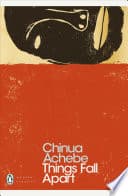
- Things Fall Apart
Chinua Achebe
3.7 (288k) average on GoodreadsHistorical FictionBoth novels explore the tragic clash between traditional indigenous cultures and external forces attempting to impose new ways of life. While Achebe focuses on colonialism's impact on Igbo society, Platonov examines the Soviet project of 'civilizing' nomadic peoples. Both protagonists (Okonkwo and Chagataev) struggle with their roles within these changing worlds, though Achebe offers a more detailed ethnographic portrayal of the traditional society before its collapse, whereas Platonov's Dzhan are already in a state of extreme marginalization.
- One Day in the Life of Ivan Denisovich
Aleksandr Solzhenitsyn
4.0 (93k) average on GoodreadsHistorical FictionBoth Platonov and Solzhenitsyn depict the brutal realities of Soviet life and the resilience of the human spirit under oppressive conditions. However, Solzhenitsyn's work focuses on the daily grind and survival within the Gulag system, highlighting the institutionalized cruelty and individual resistance. Platonov's 'Soul,' while also depicting hardship, delves more into the philosophical and spiritual dimensions of collective identity and the failures of ideology to truly transform human nature, rather than the specifics of state-sponsored repression.
- Nineteen Eighty-Four
George Orwell
4.2 (5.5M) average on GoodreadsFictionWinston Smith dreams of truth and rebellion in a world where Big Brother watches all, but he confronts the terrifying power of a regime that controls not just actions, but thoughts.





Enjoyed the summary?
A summary gives you the shape of the book. The book itself has the detail, the examples and the voice.
Find Soul on AmazonAs an Amazon Associate, BookBrief earns from qualifying purchases. How we're funded