

Synopsis
Covers the whole plot, including the ending.
- Difficulty
- Medium
- Pacing
- Slow
- Mood
- Melancholy, Elegant, Tragic, Reflective
- Read it if
- You enjoy classical Japanese literature, tragic romances, and explorations of honor, duty, and desire set against a backdrop of societal change.
- Skip it if
- You prefer fast-paced plots, clear moral lines, or stories with a definitively happy ending.
Spring Snow Plot Summary
Covers the whole plot, including the ending.
A Life of Privilege and Contradictions
The story begins in 1912 with Kiyoaki Matsugae, the handsome son of a newly rich marquis. Despite his family's new wealth, Kiyoaki grew up in the aristocratic Ayakura home, forming a strong bond with their daughter, Satoko. Kiyoaki is known for his sad beauty, his focus on dreams, and a fake indifference that hides his deep insecurities and wish to seem profound. His closest friend, Shigekuni Honda, a careful law student, watches Kiyoaki with admiration and analysis. Honda often shows logic and order against Kiyoaki's emotional and aesthetic leanings. Their lives involve high society, tennis, and talks about art and philosophy, all as Japan quickly modernizes in the Taisho era.
The Enigmatic Satoko and Kiyoaki's Indifference
Satoko Ayakura, a beautiful young woman, clearly has strong feelings for Kiyoaki. Everyone around them, including their families and Honda, sees this. But Kiyoaki, wanting to control and perhaps make her desire him more, always treats her with calculated indifference and even cruelty. He avoids her, makes excuses, and dismisses her feelings, often escaping into his own world of dreams. This behavior partly comes from his aristocratic pride and his belief that showing emotion is weak. Satoko, at first hurt, keeps subtly pursuing him, her love for him always present, even as Kiyoaki pushes her away.
The Royal Engagement
News of Satoko's engagement to Prince Toin, a member of the Imperial Family, shocks their social group and, most of all, Kiyoaki. This arranged engagement is a very prestigious match, putting Satoko forever out of Kiyoaki's reach. Only now, when Satoko is completely lost to him, does Kiyoaki's indifference break. He is suddenly overwhelmed by his deep love and desire for her. The upcoming marriage, which will make Satoko untouchable, sparks a desperate passion in Kiyoaki, changing his detached affection into a consuming obsession. He now sees how much he has lost.
A Desperate Pursuit
After the engagement is announced, Kiyoaki changes greatly. He starts to pursue Satoko relentlessly, sending letters, making secret visits, and demanding her attention. Satoko at first resists, torn between her duty to her family and the Imperial House, and her feelings for Kiyoaki. She tries to keep up appearances, knowing the severe results of any mistake. However, Kiyoaki's fervent declarations of love and his constant presence start to break down her resolve. His desperation is clear, sharply contrasting his earlier coldness, and it creates a dangerous tension between them.
The Secret Affair Begins
Despite the great risks, Satoko eventually gives in to Kiyoaki's pleas. Their affair begins, with secret meetings often helped by Satoko's maid, Takeda. These secret meetings are full of intense passion, forbidden excitement, and constant fear of discovery. Kiyoaki, now fully consumed by his love for Satoko, finds new purpose, leaving his earlier sadness. Satoko struggles with the guilt and thrill of defying society and her royal marriage. Their stolen moments are intensely desperate, as they both know their time is short and their actions have severe consequences.
A Trip to Nara and Growing Suspicions
The affair continues during a family trip to Nara, where the lovers find moments together, often during sightseeing. The old, peaceful setting of Nara contrasts with the turbulent emotions and forbidden nature of their relationship. But keeping it secret becomes harder. Subtle signs, unusual behaviors, and the heightened awareness of those around them, especially the Ayakura family and perhaps Prince Toin's group, start to raise suspicions. Pressure mounts on Satoko, who is constantly watched, and the risk of exposure grows with each secret meeting, threatening to ruin their lives and their families' reputations.
The Discovery and Its Aftermath
The affair is eventually discovered, likely from their carelessness and the vigilance of others. The revelation shocks both the Matsugae and Ayakura families, threatening to become a major scandal that could disgrace them and the Imperial Family. Satoko, found to be pregnant with Kiyoaki's child, must have a painful abortion to prevent further scandal and save her family's honor. This act is a devastating blow to Satoko, physically and emotionally. Kiyoaki, learning of the abortion and the destruction of his dream with Satoko, falls into deep despair, his world collapsing.
Satoko's Renunciation
After the scandal and abortion, Satoko makes a drastic decision: she leaves the world and enters a Buddhist nunnery in Nara. This act is a strong rejection of her former life, her aristocratic status, and the societal expectations that ruled her. It is also a way for her to find peace after her trauma. Kiyoaki, desperate to see her one last time and perhaps rekindle their love, travels to Nara. He tries several times to visit her at the monastery, but Satoko, now committed to her spiritual path, refuses to see him. Her rejection is absolute, showing her complete separation from her past and their shared history.
Kiyoaki's Decline and Death
Satoko's final rejection completely breaks Kiyoaki. His already fragile health, made worse by his emotional turmoil, travel, and perhaps an underlying illness, quickly declines. He becomes gravely ill with tuberculosis, a common and often fatal disease then. Despite Honda's devoted care, Kiyoaki's spirit is broken. He dies young, his last moments filled with longing for Satoko and a sense of great loss. His death marks the tragic end of a life consumed by unfulfilled passion and the clash between his idealized dreams and harsh reality.
Honda's Enduring Legacy
After Kiyoaki's death, Honda is left to deal with the loss of his friend and the complex story of Kiyoaki's life. Honda, always the rational observer, is deeply affected by the tragic romance and Kiyoaki's dramatic end. He carefully records Kiyoaki's last dream, a recurring image suggesting reincarnation, in his diary. Honda continues his own life, pursuing his legal career and keeping his detached perspective. But Kiyoaki's memory—his beauty, his flaws, and his passionate pursuit of an impossible love—stays in Honda's mind, shaping his understanding of life, death, and the fleeting nature of beauty and desire. Honda's journey continues, carrying Kiyoaki's story as a lasting lesson.
Spring Snow Characters
Kiyoaki Matsugae
Protagonist
A beautiful, melancholic young aristocrat whose repressed emotions lead to tragic love.
Kiyoaki is the central figure, a young man of striking beauty and a highly refined, almost effeminate, sensibility. Raised in the aristocratic Ayakura household, he cultivates an air of sophisticated indifference and detachment, believing it to be a mark of profundity. He is obsessed with dreams and the aesthetic, often using his coldness towards Satoko as a perverse means of control. Beneath his elegant exterior lies a deep insecurity and a fear of expressing genuine emotion. It is only when Satoko is betrothed to another that his true, passionate nature erupts, leading him down a path of reckless pursuit and ultimately, tragedy.
Relationships: Satoko Ayakura (Childhood friend, unrequited love turned passionate and tragic affair); Shigekuni Honda (Closest friend and detached observer); Marquis Matsugae (Father, with whom he has a distant but respectful relationship)
Satoko Ayakura
Protagonist/Love Interest
A spirited and beautiful aristocrat, torn between duty and forbidden love.
Satoko is Kiyoaki's childhood friend and the object of his belated affection. She is beautiful, intelligent, and initially spirited, openly showing her affection for Kiyoaki, which he cruelly rebuffs. When she is engaged to Prince Toin, she attempts to fulfill her duty but is eventually swayed by Kiyoaki's desperate pleas. Her decision to engage in a secret affair is a monumental act of defiance, leading to immense suffering and a forced abortion. Deeply scarred by the experience, she ultimately renounces the world to become a Buddhist nun, seeking peace and escape from her past. Her transformation is profound, from a vibrant young woman to a figure of serene, almost stoic, spiritual devotion.
Relationships: Kiyoaki Matsugae (Childhood friend, unrequited love turned passionate and tragic affair); Prince Toin (Fiancé, later abandoned); Count Ayakura (Father, whom she deeply respects and fears disappointing); Takeda (Loyal maid and confidante)
Shigekuni Honda
Supporting
Kiyoaki's intellectual and analytical best friend, a detached observer of his life.
Honda is Kiyoaki's closest friend and intellectual counterpart. A diligent law student, he is characterized by his rationality, meticulousness, and a detached, almost clinical, approach to observing human behavior. He admires Kiyoaki's aesthetic sensibility but often struggles to understand his friend's emotional complexities and self-destructive tendencies. Honda serves as the narrator's focal point for understanding Kiyoaki's character, providing an external, objective perspective. He is loyal to Kiyoaki, caring for him in his final illness, and carries the memory of his friend's tragic life into his own future, meticulously documenting Kiyoaki's dreams and experiences.
Relationships: Kiyoaki Matsugae (Closest friend and intellectual companion); Satoko Ayakura (Acquaintance, observed with detached interest)
Marquis Matsugae
Supporting
Kiyoaki's father, a newly ennobled aristocrat concerned with status and appearances.
The Marquis Matsugae is Kiyoaki's father, a figure representing the 'new money' aristocracy. He achieved his noble status through wealth and political maneuvering rather than ancient lineage, a fact that creates a subtle tension within the traditional aristocratic circles. He is ambitious, pragmatic, and deeply concerned with maintaining and elevating his family's social standing. He allows Kiyoaki to be raised in the Ayakura household, believing it will refine his son and integrate him into the old aristocracy. He is initially oblivious to Kiyoaki's emotional turmoil but becomes fiercely protective of his family's honor when the scandal breaks, acting decisively to contain the damage.
Relationships: Kiyoaki Matsugae (Son, whom he desires to see succeed in aristocratic society); Count Ayakura (Social associate and Kiyoaki's guardian)
Count Ayakura
Supporting
Satoko's father and a pillar of the old aristocracy, valuing tradition and honor.
Count Ayakura is Satoko's father and a member of the established, ancient aristocracy. He embodies the traditions, decorum, and strict moral codes of his class. He is a man of honor and duty, and his primary concern is the reputation and continuity of his family. He has a deep affection for Satoko but is ultimately bound by societal expectations, leading him to arrange her marriage to Prince Toin. The discovery of Satoko's affair with Kiyoaki is a profound blow to his honor and precipitates his stern and decisive actions to prevent a larger scandal, including facilitating Satoko's abortion and subsequent entry into the nunnery. He acts out of a sense of duty to his family and the Imperial House.
Relationships: Satoko Ayakura (Daughter, whom he loves but whose actions bring him great shame); Marquis Matsugae (Social associate and Kiyoaki's initial guardian)
Takeda
Supporting
Satoko's loyal maid and confidante, who facilitates her affair with Kiyoaki.
Takeda is Satoko's personal maid, a figure of unwavering loyalty and discretion. She is privy to Satoko's deepest secrets and, despite the immense risks involved, actively facilitates the clandestine meetings between Satoko and Kiyoaki. Her role is crucial in allowing the affair to unfold, acting as a messenger and a lookout. Takeda's devotion to Satoko transcends her position, and she exhibits a quiet strength and steadfastness in the face of danger. Her character highlights the intricate web of relationships within aristocratic households and the deep bonds that can form between mistress and servant.
Relationships: Satoko Ayakura (Mistress and close confidante)
Prince Toin
Mentioned
The Imperial Prince to whom Satoko is betrothed.
Prince Toin is a member of the Imperial Family and Satoko's intended husband. He represents the highest echelons of Japanese society and the ultimate symbol of duty and tradition. While he is not a developed character in the narrative, his existence and the arranged marriage are the catalyst for Kiyoaki's realization of his love for Satoko and the subsequent tragic events. His status makes Satoko's affair an even greater transgression, carrying implications for the Imperial House itself. He is a silent, yet powerful, force in the plot.
Relationships: Satoko Ayakura (Betrothed)
Baron Yoshinaga
Supporting
A friend of Kiyoaki and Honda, from an old aristocratic family.
Baron Yoshinaga is a friend within Kiyoaki and Honda's social circle. He comes from an old, established aristocratic family, representing the more traditional and perhaps less flamboyant aspects of their class. He is often present in social gatherings and discussions, providing another perspective within their group. While not central to the main romantic plot, his presence helps to flesh out the social landscape and the network of relationships among the young elite of the Taisho era. He is a more grounded figure compared to Kiyoaki.
Relationships: Kiyoaki Matsugae (Friend); Shigekuni Honda (Friend)
Kurozaki
Supporting
Kiyoaki's valet, who observes his master's affair.
Kurozaki is Kiyoaki's personal valet. Like Takeda, he is a servant who is privy to some of his master's secrets, though perhaps not to the full extent of the affair. His presence underscores the hierarchical structure of aristocratic households and the constant observation that noble individuals were under. While not directly involved in facilitating the affair, his awareness of Kiyoaki's movements and moods adds to the sense of impending discovery and the difficulty of maintaining secrecy in such an environment. He represents the silent, watchful eyes of the household staff.
Relationships: Kiyoaki Matsugae (Master)
Spring Snow Themes
Beauty, Decadence, and Decay
Mishima explores how beauty and decadence pass, often linking them to the decline of the old aristocracy. Kiyoaki's beauty is shown as fragile and self-destructive, reflecting his fading world. His pursuit of an impossible love is an aesthetic choice as much as an emotional one, leading to a beautiful but ultimately ruinous affair. The novel contrasts the refinement of their world with the decay that happens when passion defies order, ending in Kiyoaki's death and Satoko's spiritual renunciation, both acts that destroy their worldly beauty.
“For Kiyoaki, beauty was always accompanied by a presentiment of its destruction. He could not conceive of beauty without an awareness of its perishability.”
Unfulfilled Desire and Repression
A main theme is the destructive power of hidden or unfulfilled desire. Kiyoaki's initial coldness toward Satoko comes from deeply hidden feelings, a fear of being vulnerable, and an aristocratic dislike for open emotion. Only when Satoko is unreachable does his desire become a desperate passion. This repression, when finally broken, leads to reckless actions and tragedy. Satoko also hides her feelings for Kiyoaki, following duty, but her deep desire eventually overcomes her sense of propriety, leading her down a similar path.
“He knew that his love for Satoko was a beautiful, tragic thing, precisely because it was unattainable.”
The Clash of Tradition and Modernity
The novel is set in the Taisho era, a time of big social and political change in Japan. This setting provides an important context for the characters' struggles. The 'old money' aristocracy, like the Ayakuras, holds to strict traditions, while the 'new money' Matsugaes navigate this world with ambition and insecurity. Kiyoaki and Satoko's affair directly challenges these traditions, especially the sacred Imperial Family. The tragic results of their actions show the unforgiving nature of a society still largely bound by old rules, even as it takes on Western influences and modern ideas.
“The past was a dream, the present a nightmare, and the future a void.”
Dreams, Illusion, and Reality
Kiyoaki is deeply involved in his own world of dreams, often preferring them to reality. His initial indifference to Satoko partly comes from living in an idealized, internal world. He actively tries to make reality fit his romantic ideals, often not seeing the real consequences of his actions. Honda, in contrast, is grounded in reality, observing and analyzing. The novel questions perception and the line between subjective experience and objective truth, especially through Kiyoaki's prophetic dreams and his final, mysterious vision, which Honda carefully records.
“For Kiyoaki, reality was only a crude imitation of the dreams he inhabited.”
Fate and Reincarnation
The theme of fate and reincarnation is subtly woven throughout the story, especially through Kiyoaki's recurring dreams. These dreams, which Honda notes, suggest a cyclical nature to existence and a predetermined destiny for Kiyoaki. The novel suggests that Kiyoaki's intense connection to Satoko and his dramatic life are part of a larger, recurring pattern. This theme becomes clearer in the later novels of 'The Sea of Fertility' tetralogy, but in 'Spring Snow,' it gives a mystical layer to the tragic romance, hinting that their story is not just an isolated event but part of a grander, perhaps fated, design.
“He had a sense that he had lived this life before, and that he would live it again.”
Plot Devices & Literary Techniques
The Observer Narrator (Honda)
Honda's detached perspective shapes the reader's understanding of Kiyoaki's world.
Shigekuni Honda serves as a crucial narrative device, acting as an intellectual, rational, and somewhat detached observer of Kiyoaki's life. While the narrative is primarily third-person omniscient, much of our understanding of Kiyoaki's complex character, his motivations, and the unfolding events is filtered through Honda's analytical lens. Honda's role provides a contrast to Kiyoaki's emotional and aesthetic world, allowing the reader to both empathize with Kiyoaki's passions and critically evaluate his self-destructive tendencies. His meticulous record-keeping, especially of Kiyoaki's dreams, also sets the stage for the overarching theme of reincarnation in the larger tetralogy.
Dreams and Omens
Kiyoaki's vivid dreams foreshadow events and hint at deeper spiritual connections.
Kiyoaki's dreams are not merely psychological insights but act as powerful plot devices, often foreshadowing events, revealing his subconscious desires, and hinting at a mystical dimension to his life. His recurring dreams, particularly those of a tropical, sun-drenched landscape, carry symbolic weight and are meticulously recorded by Honda. These dreams lend an air of premonition and inevitability to the unfolding tragedy, suggesting that Kiyoaki's fate is perhaps predetermined. They also serve to deepen his character, portraying him as someone attuned to a reality beyond the mundane, living partly in an ethereal, symbolic world.
The Royal Engagement
A turning point that ignites Kiyoaki's passion and sets the tragic plot in motion.
The engagement of Satoko to Prince Toin is a pivotal plot device. It acts as the ultimate catalyst for Kiyoaki's transformation from a detached, indifferent youth to a desperately passionate lover. Before this announcement, Kiyoaki's feelings for Satoko were ambiguous and repressed. The sudden, irreversible loss of her to the Imperial Family makes her an object of intense, forbidden desire. This external event forces Kiyoaki to confront the true depth of his emotions and propels the narrative into the dangerous territory of the secret affair, directly leading to the scandal, Satoko's renunciation, and Kiyoaki's demise. It is the point of no return for both characters.
Symbolism of Snow
The 'spring snow' symbolizes fragile beauty, purity, and transient illusion.
The title itself, 'Spring Snow,' is a potent symbol. Snow in spring is beautiful but inherently transient, destined to melt quickly. It represents the fragile, fleeting nature of Kiyoaki and Satoko's love, their youthful innocence, and the dying world of the old aristocracy. It also evokes a sense of purity and beauty that is ultimately unsustainable in the face of harsh reality. The imagery of snow often appears in the novel, particularly in moments related to Kiyoaki's melancholic beauty or the delicate, almost ethereal quality of their forbidden romance, emphasizing its doomed and ephemeral nature.
Spring Snow Quotes
“Perhaps he was one of those people who are able to love only what they cannot have.”
“The world is an illusion, but it is an illusion that we must all take seriously.”
“Beauty is a short-lived tyranny.”
“He knew that the most dangerous thing in the world was to be too happy.”
“Every man has a right to his own death.”
“There are some women who are born to be loved, and others who are born to be used.”
“To be loved for oneself is a delusion. It is only for one's youth and beauty that one is loved.”
“The past is a foreign country; they do things differently there.”
“He had a sense of impending doom, as if all his happiness were merely a prelude to disaster.”
“What is love but a name for the feeling that one wishes to possess another?”
“It was as though the world, with all its solid reality, had suddenly been revealed as a fragile, shimmering illusion.”
“The truly beautiful things are those that do not last.”
“He felt a strange, cold joy, the kind that comes from knowing that one has chosen one's own destruction.”
“Youth is a dream, a glorious dream, but it is a dream that passes too quickly.”
Quiz
10 questions on the plot and the characters. Each answer comes with a short explanation.
Question 1
In what year does 'Spring Snow' primarily begin, setting the stage for Kiyoaki and Satoko's story?
- 1905
- 1912
- 1920
- 1898
Show answer
B. 1912 The book explicitly states that the story begins in Tokyo in 1912, a time of transition for the Japanese aristocracy.
Question 2
Which character serves as Kiyoaki's close, devoted friend and often observes his romantic entanglements from the sidelines?
- Ayakura
- Honda
- Matsugae
- Iinuma
Show answer
B. Honda Honda is described as Kiyoaki's 'devoted friend' who observes his relationship with Satoko, setting him up as a key observer and later participant in the larger 'Sea of Fertility' tetralogy.
Question 3
What is the primary social tension highlighted in the novel's setting?
- The conflict between urban and rural lifestyles.
- The struggle between different political factions within the government.
- The clash between the old aristocracy and new, powerful social elites.
- The influence of Western religion versus traditional Japanese beliefs.
Show answer
C. The clash between the old aristocracy and new, powerful social elites. The book's description explicitly states, 'The closed world of the ancient aristocracy is being breached for the first time by outsiders - rich provincial families, a new and powerful political and social elite,' which forms the core social tension.
Question 4
Kiyoaki is raised among the elegant Ayakura family. What is his specific relationship to them?
- He is their adopted son.
- He is a distant cousin who lives with them.
- He is a son of a rich provincial family, raised among the aristocracy but not truly one of them.
- He is a servant's son who was given special privileges.
Show answer
C. He is a son of a rich provincial family, raised among the aristocracy but not truly one of them. The description states Kiyoaki 'has been raised among the elegant Ayakura family... but he is not one of them,' indicating his outsider status despite his upbringing, stemming from his family's 'rich provincial' background.
Question 5
What significant event causes Kiyoaki to realize the depth of his passion for Satoko?
- Her decision to study abroad in Europe.
- Her engagement to a royal prince.
- A public scandal involving her family.
- His own arranged marriage proposal.
Show answer
B. Her engagement to a royal prince. The summary clearly states, 'When Satoko is engaged to a royal prince, Kiyoaki realises the magnitude of his passion,' indicating this engagement is the catalyst for his awakening.
Question 6
How is Satoko characterized in the book's description?
- Quiet and reserved.
- Ambitious and calculating.
- Exquisite and spirited.
- Naive and innocent.
Show answer
C. Exquisite and spirited. Satoko is described as 'the exquisite, spirited Satoko,' highlighting her beauty and lively personality.
Question 7
What is the emotional state Kiyoaki is often caught up in, related to the changing social landscape?
- Excitement for the future and new possibilities.
- A sense of peace and contentment.
- Tensions between old and new traditions/values.
- Indifference to societal changes.
Show answer
C. Tensions between old and new traditions/values. The text states Kiyoaki 'is caught up in the tensions between old and new,' which reflects his personal struggle within the broader societal shift.
Question 8
The novel is the first in a tetralogy. What is the overarching title of this series of novels by Yukio Mishima?
- The Tale of Genji
- The Sea of Fertility
- The Temple of the Golden Pavilion
- Confessions of a Mask
Show answer
B. The Sea of Fertility 'Spring Snow' is the first volume of Mishima's 'Sea of Fertility' tetralogy, a monumental work exploring themes of reincarnation and the changing face of Japan.
Question 9
A central theme of 'Spring Snow' is Kiyoaki's delayed understanding and pursuit of his own desires. How does this manifest most prominently regarding Satoko?
- He actively avoids her until she becomes engaged to another.
- He declares his love for her repeatedly, but she rejects him.
- He is too preoccupied with his studies to notice her.
- He arranges their marriage against his family's wishes.
Show answer
A. He actively avoids her until she becomes engaged to another. Kiyoaki often acts with a sort of 'contrarian' indifference towards Satoko, only realizing the true 'magnitude of his passion' when she is beyond his reach, specifically after her engagement to the prince.
Question 10
What aspect of Kiyoaki's background contributes to his feeling of being an 'outsider' despite his aristocratic upbringing?
- His family's history of political scandal.
- His rebellious nature and rejection of tradition.
- His family's wealth originated from provincial, non-aristocratic sources.
- He was educated abroad and struggled to fit back into Japanese society.
Show answer
C. His family's wealth originated from provincial, non-aristocratic sources. The text mentions Kiyoaki's family as one of the 'rich provincial families' that are new to the elite, distinguishing him from the 'ancient aristocracy' of the Ayakuras, even though he was raised among them.
Spring Snow FAQ
What is Spring Snow about?
Spring Snow is a tragic romance set in 1912 Tokyo, focusing on Kiyoaki Matsugae, a narcissistic young aristocrat, and his doomed love for the exquisite Satoko Ayakura. It explores the clash between traditional Japanese aristocracy and the encroaching modern world, as Kiyoaki only realizes the depth of his passion for Satoko after she becomes engaged to an Imperial Prince, leading to a desperate and ultimately destructive affair.
Why should I read Spring Snow?
You should read Spring Snow for its exquisite prose, deeply psychological character studies, and its poignant portrayal of a fading aristocratic era in Japan. Mishima masterfully weaves themes of beauty, death, unrequited love, and the tension between duty and desire, offering a compelling look into the human psyche and societal change.
What is the background/setting of Spring Snow?
The novel is set in Tokyo in 1912, during the Taishō era, a pivotal time when the ancient Japanese aristocracy, represented by families like the Ayakuras, was slowly giving way to new money and political power. The opulent world of imperial courts, elaborate rituals, and strict social codes forms the backdrop for Kiyoaki and Satoko's tragic romance, highlighting the conflict between tradition and individual desire.
What are the most memorable quotes?
Some memorable quotes include Kiyoaki's internal musings on beauty and death, Satoko's defiant declarations, and Honda's philosophical observations. Mishima's language often evokes a sense of transient beauty and the inevitability of decay, such as descriptions of cherry blossoms or the fleeting nature of Kiyoaki's affections.
What writing style does the author use?
Yukio Mishima employs a highly aesthetic, poetic, and often melancholic writing style in Spring Snow. His prose is rich with detailed descriptions of aristocratic life, nature, and the characters' inner turmoil. He uses a refined, formal tone, reflecting the era and social class depicted, while delving deeply into psychological analysis.
What minor details add significant meaning?
The recurring imagery of snow, dreams, and the moon often symbolizes the characters' internal states and the ephemeral nature of their love. For instance, the 'spring snow' itself represents something beautiful yet fleeting and ultimately destructive, mirroring Kiyoaki and Satoko's affair. The specific details of aristocratic etiquette also subtly highlight the rigid constraints that ultimately trap them.
What are some subtle foreshadowing moments?
Kiyoaki's early fascination with death and his detached observation of beauty subtly foreshadow his tragic end and the destructive path of his relationship with Satoko. Honda's analytical, detached nature and his role as an observer also foreshadow his future role in the larger 'Sea of Fertility' tetralogy, where he continues to witness the reincarnation of Kiyoaki's soul.
What unexpected character connections exist?
While not entirely unexpected given their upbringing, the deep, almost fraternal bond between Kiyoaki and Honda, despite their vastly different temperaments, is a central connection. Honda's role as Kiyoaki's confidant and observer, despite Kiyoaki's often dismissive attitude towards him, proves crucial to the narrative and Honda's own philosophical journey.
What are unspoken character motivations?
Kiyoaki's deep-seated insecurity and fear of genuine emotion, despite his aristocratic facade, often drive his actions. He only desires what he cannot have, making his pursuit of Satoko after her engagement a manifestation of his own narcissism and a subconscious longing for a dramatic, tragic end rather than true love.
What psychological complexities do characters exhibit?
Kiyoaki exhibits profound psychological complexities, including narcissism, a death drive, and an inability to recognize his feelings until they are forbidden. Satoko, initially strong and spirited, becomes increasingly desperate and psychologically scarred by Kiyoaki's neglect and their illicit affair, demonstrating how societal pressure and personal betrayal can break a spirit.
What are the major emotional turning points?
A major emotional turning point is Kiyoaki's realization of his love for Satoko only after her engagement to Prince Toin, which transforms his indifference into obsessive passion. Another is Satoko's decision to accept the Prince's proposal, driven by duty and a desire for stability, which sets the tragic events in motion and forces her to suppress her true feelings for Kiyoaki.
How do relationship dynamics evolve?
The relationship dynamics between Kiyoaki and Satoko evolve from a childhood friendship marked by Kiyoaki's indifference and Satoko's longing, to a passionate but doomed affair, and finally to a state of profound regret and destruction. Their dynamic is constantly influenced by societal expectations and Kiyoaki's inability to commit, leading to a tragic cycle of pursuit and rejection.
Which parts remain ambiguous or open-ended?
The true depth of Satoko's feelings for Kiyoaki, beyond her initial longing and later desperation, can sometimes feel ambiguous. While she clearly loves him, the extent to which her actions are driven by genuine passion versus a desire to escape her fate or a destructive impulse remains open to interpretation, particularly regarding her final, drastic decision.
What are controversial scenes or decisions?
One controversial decision is Satoko's choice to have an abortion after her affair with Kiyoaki is discovered, which leads to her renunciation of the world and entry into a convent. This act, while a consequence of her illicit relationship and societal shame, is a profound and irreversible choice that sparks debate about female agency and the harshness of societal judgment.
Spring Snow ending explained: how it ends & what it means
Spring Snow ends with Kiyoaki dying from pneumonia after a desperate journey to the Gesshu Temple to see Satoko, who has become a nun and refuses to see him. His death is a culmination of his self-destructive tendencies and his inability to reconcile his desires with reality. Satoko's renunciation of the world signifies a rejection of both her aristocratic past and her tragic love, embracing a spiritual path as an escape from worldly suffering, leaving Honda to reflect on the futility of Kiyoaki's life and the nature of beauty and illusion.
About the author
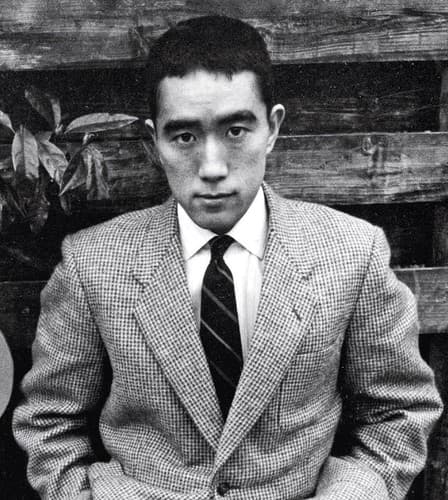
Kimitake Hiraoka , also known as Yukio Mishima , was a Japanese author, poet, playwright, actor, model, Shintoist, nationalist, and founder of the Tatenokai , an unarmed civilian militia. Mishima is considered one of the most important writers of the 20th century. He was considered for the Nobel Prize in Literature in 1968, but the award went to his countryman and benefactor Yasunari Kawabata. His works include the novels Confessions of a Mask and The Temple of the Golden Pavilion , and the autobiographical essay Sun and Steel . Mishima's work is characterized by "its luxurious vocabulary and decadent metaphors, its fusion of traditional Japanese and modern Western literary styles, and its obsessive assertions of the unity of beauty, eroticism and death", according to author Andrew Rankin.
Similar books
- The Tale of Genji
Murasaki Shikibu
4.0 (539) average on GoodreadsFantasyExplores aristocratic life, romance, and societal expectations in classical Japan.
- The Makioka Sisters
Jun'ichirō Tanizaki
4.0 (6k) average on GoodreadsHistorical FictionDepicts a traditional Japanese family navigating a changing society and the complexities of marriage.
- Atonement
Ian McEwan
4.4 (70) average on GoodreadsFeatures a tragic love story, class distinctions, and the devastating consequences of misunderstanding and impulsiveness.
- To Kill a Mockingbird
Harper Lee
4.3 (4.5M) average on GoodreadsHistorical FictionIn the 1930s Jim Crow South, Harper Lee writes about racial injustice, moral growth, and the quiet courage of a lawyer father, Atticus Finch, as seen through his young daughter's eyes.
- The Great Gatsby
F. Scott Fitzgerald
3.9 (3.8M) average on GoodreadsHistorical FictionIn the opulent Roaring Twenties, a mysterious millionaire's lavish parties hide his desperate, tragic pursuit of a lost love, exposing the emptiness within the American Dream.
- Pride and Prejudice
Jane Austen
4.3 (3M) average on GoodreadsHistorical FictionIn a society focused on status and money, Elizabeth Bennet navigates love and pride, challenging Mr. Darcy and social expectations to find true affection.





Enjoyed the summary?
A summary gives you the shape of the book. The book itself has the detail, the examples and the voice.
Find Spring Snow on AmazonAs an Amazon Associate, BookBrief earns from qualifying purchases. How we're funded