

Core Idea
- Difficulty
- Medium
- Read it if
- You are intrigued by philosophical musings on art, authenticity, and societal rebellion, and appreciate a stream-of-consciousness style that challenges conventional thinking.
- Skip it if
- You prefer structured arguments, a clear narrative, or are easily put off by unconventional language and a lack of traditional academic rigor.
Key Takeaways from Stand Still Like the Hummingbird
Embrace the Paradox of Stillness and Motion
True vitality emerges from a focused, contemplative engagement with the present moment.
Miller's title, 'Stand Still Like the Hummingbird,' explains a central idea: we gain deep insight and experience by combining intense focus (stillness) with subtle, constant movement (the hummingbird's wings). It is about mental and spiritual presence, not physical inactivity. In a world that demands constant action, Miller suggests we pause intentionally, sharpening our perception to absorb life's richness. This stillness is not passive; it is an active way to cultivate awareness, a meditative state that reveals beauty often missed in daily life. It is about finding calm within oneself, where clarity and wisdom reside.
“Stand still like the hummingbird. Then you can see everything.”
In the book: The very title and the recurring theme throughout the collection, suggesting a method for deeper perception and artistic creation, particularly in his observations of nature and human character.
Try this: Practice mindful observation daily. Dedicate specific time to simply 'be' – whether watching a bird, a cloud, or a bustling street – without judgment or the need to act. Cultivate an inner calm amidst external chaos to enhance creativity and understanding.
Related ideas: mindfulness, contemplation, present-moment-awareness
Money as a Spiritual Distraction
The pursuit of wealth distorts human values and stifles genuine artistic and personal expression.
In 'Money and How It Gets That Way,' Miller humorously criticizes economics and the obsession with money. He argues that constantly seeking financial gain is not just practical; it is a deep spiritual sickness. It diverts human energy and creativity from more meaningful pursuits, leading to a mechanical existence without real joy or connection. Miller sees money as an artificial idea that creates hierarchies, causes anxiety, and ultimately diminishes the human spirit, turning people into parts of a capitalist machine. His 'parody' is a serious philosophical statement disguised as comedy, showing the absurdity of a system that values accumulation over actual living.
“Money is a symbol of power, and power is a symbol of impotence.”
In the book: His essay 'Money and How It Gets That Way,' provoked by Ezra Pound's question, which uses satire to dismantle conventional economic thinking and expose its detrimental effects on the human soul.
Try this: Re-evaluate your relationship with money. Distinguish between genuine needs and societal pressures. Prioritize experiences, relationships, and creative pursuits over material acquisition. Challenge the notion that financial success equates to personal fulfillment.
Related ideas: anti-materialism, spiritual-economy, critique-of-capitalism
The Artist as a Societal Seer
Artists bear the crucial responsibility of revealing truth and challenging stagnation, often at personal cost.
Miller deeply values the artist's role, seeing them not just as creators but as important societal commentators and prophets. In 'An Open Letter to All and Sundry,' he states that artists are uniquely able to see and express the underlying currents of their time, exposing hypocrisy, revealing hidden truths, and offering new perspectives. This role often puts them in conflict with conventional society, leading to misunderstanding, censorship, and marginalization. Miller sees the artist's struggle as a necessary sacrifice for the common good, a continuous effort to awaken humanity and inspire a more authentic way of living. Their art is a mirror, sometimes harsh, always honest.
“The artist is the man who always has his antenna up, always receiving, always transmitting, always responding to the vibrations of the universe.”
In the book: His essays like 'An Open Letter to All and Sundry' and his defense of other artists like Patchen, where he champions the artist's unique vision and often confrontational role in society.
Try this: Support independent artists and creators. Engage with art that challenges your perspectives. If you are an artist, embrace your unique voice and don't shy away from uncomfortable truths. Recognize art's power beyond mere aesthetics.
Related ideas: artistic-responsibility, social-commentary, prophetic-art
The Immorality of Morality and Censorship
Rigid moral codes and censorship stifle truth and genuine human expression, ultimately harming society more than they protect it.
Miller's 'The Immorality of Morality' strongly criticizes censorship and the arbitrary imposition of moral standards. He argues that what society calls 'moral' is often an immoral suppression of human experience, thought, and artistic freedom. Censorship, driven by fear and a desire for control, stops people from facing uncomfortable truths, exploring human emotion, and achieving self-knowledge. Miller believes true morality comes from individual conscience and open inquiry, not from external rules. By limiting expression, censors create a society that is ignorant, fearful, and unable to grow, perpetuating a cycle of intellectual stagnation. His own battles with censorship add weight to this essay.
“The censor is a man who knows more than you about what you ought to read or see. He is a man who knows what is bad for you, and he knows what is good for you. He is a man who knows what is true and what is false.”
In the book: His essay 'The Immorality of Morality,' which directly addresses the issue of censorship, drawing from his own experiences with banned books like 'Tropic of Cancer,' and arguing for artistic freedom.
Try this: Question established moral norms and societal taboos. Advocate for freedom of expression and open dialogue, even on controversial topics. Resist intellectual conformity and seek out diverse, challenging perspectives in literature and art.
Related ideas: freedom-of-speech, anti-censorship, moral-relativism
Authenticity Through Self-Knowledge
True liberation comes from a fearless exploration of one's inner world, embracing all its facets, light and dark.
Miller's personal writings emphasize the crucial importance of self-knowledge and authenticity. He believes much human suffering comes from refusing to face one's true nature, driven by societal expectations or personal fears. By exploring his 'First Love' or his 'passionate love affair with painting' ('The Angel is My Watermark'), Miller shows a process of raw, honest introspection. This is not about self-promotion, but about accepting one's experiences, flaws, and desires. Only by understanding and embracing all of oneself—the 'angel' and the 'watermark' (imperfection)—can someone live a truly free and creative life, without pretense.
“The greatest joy is to be yourself.”
In the book: Autobiographical stories like 'First Love' and 'The Angel is My Watermark,' where he openly shares his personal experiences, passions, and struggles, demonstrating a commitment to self-exploration.
Try this: Engage in regular self-reflection through journaling or meditation. Be honest with yourself about your desires, fears, and motivations. Cultivate self-acceptance, recognizing that authenticity is a continuous process, not a destination.
Related ideas: introspection, radical-acceptance, personal-authenticity
The Power of Literary Kinship
Connecting with kindred spirits in literature transcends time and provides profound intellectual and spiritual nourishment.
Miller's essays on other writers, such as Walt Whitman, Thoreau, Sherwood Anderson, and Ionesco, show his appreciation for literary connection. He does not just analyze their works; he engages with them as fellow travelers in human experience. For Miller, reading is an act of communion, a way to connect with minds that challenge, inspire, and align with his own philosophy. These literary connections are not just academic; they are vital sources of validation and intellectual support, reinforcing his beliefs and broadening his understanding of the human condition. He sees these writers as expanding human thought, much as he sought to expand literature.
“There are books which are not read, but which read us.”
In the book: His specific essays on figures like Walt Whitman, Thoreau, Sherwood Anderson, and Ionesco, where he expresses profound admiration and intellectual connection, analyzing their work through a deeply personal lens.
Try this: Actively seek out authors and thinkers whose work resonates with your own worldview or challenges it constructively. Engage deeply with their ideas, allowing them to inform and shape your own understanding of the world. Build a personal library of 'kindred spirits.'
Related ideas: literary-influence, intellectual-dialogue, intertextuality
Life as a Continuous Revelation
Existence is an ongoing process of discovery, demanding an open mind and a willingness to embrace the unexpected.
Miller champions a childlike wonder and openness to life, suggesting that true living involves continuous discovery rather than strict adherence to old ideas. He rejects fixed beliefs and embraces reality's fluid, changing nature. This philosophy shows in the 'vitality and variety of interests' in his collected pieces. For Miller, every encounter, observation, and artistic effort is a chance for new understanding. To 'stand still' like the hummingbird means to be always receptive, allowing life to unfold and reveal its secrets without imposing one's own limited interpretations. This constant learning keeps the spirit alive.
“The moment one ceases to be a child, one is dead.”
In the book: The diverse range of topics and styles within the collection itself, from humorous critiques of economics to deep philosophical musings and personal anecdotes, illustrating a mind constantly exploring and adapting.
Try this: Cultivate a beginner's mind in all areas of life. Approach new experiences with curiosity and a willingness to learn. Challenge your assumptions and remain open to having your perspectives shifted by new information or encounters.
Related ideas: beginner's-mind, lifelong-learning, epistemological-openness
The Necessity of Unconventionality
Breaking free from societal norms is essential for genuine self-expression and the advancement of human consciousness.
Miller's work, especially this collection, highlights the value of being unconventional. He consistently challenges established norms in economics, morality, and artistic expression. He argues that conformity leads to spiritual death, stifling the unique voice and potential within each person. By daring to be different, to think creatively, and to live by one's own inner guide, one not only frees oneself but also makes it easier for others to do the same. This is not rebellion for its own sake, but a deep belief that human progress, both individual and collective, depends on the courage to defy expectations and create new paths, extending the 'frontiers of modern literature' and thought.
“One's destination is never a place, but a new way of seeing things.”
In the book: Miller's own reputation as a controversial writer who 'extended the frontiers of modern literature' and his embrace of figures like Patchen, 'Man of Anger and Light,' who also challenged conventions.
Try this: Identify areas in your life where you feel constrained by societal expectations. Experiment with small acts of unconventionality. Cultivate your unique style of thinking and living, even if it means standing apart from the crowd.
Related ideas: non-conformity, individualism, paradigm-shift
Art as a Love Affair
The creative process is a passionate, all-consuming devotion, akin to a deeply personal relationship.
In 'The Angel is My Watermark,' Miller describes his relationship with painting as a 'passionate love affair.' This comparison goes beyond simple enjoyment; it means total immersion, a surrender to the creative act that goes beyond rational thought. Like any intense love, it involves joy, frustration, obsession, and deep personal growth. For Miller, art is not a detached intellectual exercise but a visceral, emotional, and spiritual engagement that demands everything from the artist. This passionate devotion gives art its power and authenticity, making it a direct extension of the artist's soul. It is in this 'love affair' that the artist truly comes alive, finding purpose and deep meaning.
“When I am painting, I am not thinking of anything else. I am in love.”
In the book: His essay 'The Angel is My Watermark,' where he vividly describes his personal, intense connection to painting, using the language of love and passion to convey its significance to him.
Try this: Approach your creative pursuits (or even your work) with passion and dedication, allowing for deep immersion. Embrace the emotional highs and lows as part of the process. Find the 'love affair' in whatever you create.
Related ideas: creative-passion, artistic-devotion, flow-state
Stand Still Like the Hummingbird Quotes
“The aim of life is to live, and to live means to become aware, joyously, drunkenly, divinely aware.”
“To imagine is everything. To imagine is the divine. It is the creative act.”
“The world is not to be put in order; the world is order incarnate. It is we who are in disorder.”
“One’s destination is never a place but rather a new way of looking at things.”
“The moment one gives close attention to any thing, even a blade of grass, it becomes a mysterious, awesome, indescribably magnificent world in itself.”
“The story of my life is the story of the search for myself.”
“Every day we slaughter our finest impulses. That is why we get a heartache when we encounter generosity, integrity, and love in others.”
“The greatest joy of all is to be a creator.”
“Only when we are no longer afraid do we begin to live.”
“The world is a magnificent place, and there is no end to the wonder of it.”
“Art teaches nothing, except the significance of life.”
“The human race is a race of cowards, and I am the first among them.”
“To be free, to walk on the earth, to see the sky, to love, to be loved, to create, to destroy, to be reborn, to die, to live.”
“I have no money, no resources, no hopes. I am the happiest man alive.”
Quiz
10 questions on the main ideas. Each answer comes with a short explanation.
Question 1
The title essay, 'Stand Still Like the Hummingbird,' symbolizes what aspect of Henry Miller's personal philosophy?
- The importance of constant motion and productivity.
- A paradoxical call for stillness and observation amidst life's flux.
- The fleeting nature of beauty and art.
- The need to aggressively pursue one's desires.
Show answer
B. A paradoxical call for stillness and observation amidst life's flux. The title, 'Stand Still Like the Hummingbird,' represents a core paradox in Miller's philosophy: finding stillness and deep insight amidst the active, often chaotic, experience of life.
Question 2
Which essay in the collection is described as a 'tongue-in-cheek parody of economics' inspired by a postcard from Ezra Pound?
- The Immorality of Morality
- An Open Letter to All and Sundry
- Money and How It Gets That Way
- The Angel is My Watermark
Show answer
C. Money and How It Gets That Way 'Money and How It Gets That Way' is explicitly identified as the humorous take on economics, prompted by Ezra Pound's question about money.
Question 3
Henry Miller's deep concern for the role of the artist in society is explored in which two essays mentioned?
- First Love and The Immorality of Morality
- An Open Letter to All and Sundry and The Angel is My Watermark
- Patchen: Man of Anger and Light and Money and How It Gets That Way
- Walt Whitman and Thoreau
Show answer
B. An Open Letter to All and Sundry and The Angel is My Watermark The description states that Miller's 'deep concern for the role of the artist in society appears in 'An Open Letter to All and Sundry,' and in 'The Angel is My Watermark' he writes of his own passionate love affair with painting,' directly linking these to the artist's role.
Question 4
What is the primary subject of 'The Immorality of Morality'?
- A critique of financial systems.
- An eloquent discussion of censorship.
- An autobiographical account of Miller's youth.
- A portrait of a contemporary writer.
Show answer
B. An eloquent discussion of censorship. The synopsis explicitly states that 'The Immorality of Morality' is 'an eloquent discussion of censorship.'
Question 5
Which of the following writers is NOT mentioned as being the subject of an essay or portrait in this collection?
- Walt Whitman
- Ernest Hemingway
- Thoreau
- Ionesco
Show answer
B. Ernest Hemingway The text lists essays on Walt Whitman, Thoreau, Sherwood Anderson, and Ionesco, as well as a portrait of Patchen, but Ernest Hemingway is not mentioned.
Question 6
How does the collection's content, including essays like 'Money and How It Gets That Way' and 'The Immorality of Morality,' reflect Miller's 'incredible vitality and variety of interests'?
- By focusing exclusively on his early life experiences.
- By demonstrating his engagement with diverse topics from economics to censorship to art and personal relationships.
- By only including essays on other literary figures.
- By primarily discussing his contributions to modern literature like 'Tropic of Cancer'.
Show answer
B. By demonstrating his engagement with diverse topics from economics to censorship to art and personal relationships. The variety of topics covered—economics, censorship, the artist's role, autobiographical stories, and literary critiques—demonstrates the 'incredible vitality and variety of interests' attributed to Miller.
Question 7
What is the primary characteristic of some of the stories, such as 'First Love,' in this collection?
- They are purely fictional allegories.
- They are autobiographical.
- They are critical analyses of society.
- They are philosophical treatises.
Show answer
B. They are autobiographical. The description explicitly states, 'Some of the stories, such as 'First Love,' are autobiographical.'
Question 8
The collection includes pieces that had previously appeared in limited editions or foreign magazines. What does this suggest about the compilation?
- It is primarily a collection of his most widely published and famous works.
- It serves to make lesser-known or less accessible works by Miller available to a broader audience.
- It exclusively features his earliest, unpublished writings.
- It is a compilation of works that were initially rejected by publishers.
Show answer
B. It serves to make lesser-known or less accessible works by Miller available to a broader audience. The fact that many pieces 'have appeared only in foreign magazines while others were printed in small limited editions which have gone out of print' indicates that the collection aims to bring these less accessible works to a wider readership.
Question 9
How does Miller's 'passionate love affair with painting,' as described in 'The Angel is My Watermark,' connect to his broader artistic philosophy presented in the book?
- It demonstrates a departure from his literary focus, indicating a shift in his artistic medium.
- It highlights his belief that all forms of creative expression are interconnected and essential to the artist's identity.
- It suggests a preference for visual art over written prose as the superior form of expression.
- It serves as a purely autobiographical detail without broader philosophical implications.
Show answer
B. It highlights his belief that all forms of creative expression are interconnected and essential to the artist's identity. Given the description of Miller's 'incredible vitality and variety of interests' and his concern for 'the role of the artist in society,' his engagement with painting, alongside writing, underscores a holistic view of creative expression as central to his artistic and personal philosophy.
Question 10
The excerpt states that Miller 'extended the frontiers of modern literature with Tropic of Cancer and other great books.' How does 'Stand Still Like the Hummingbird' contribute to this legacy, beyond his more famous novels?
- By presenting a concise, fictional narrative that directly mirrors the themes of 'Tropic of Cancer'.
- By offering direct insights into his philosophical underpinnings and diverse intellectual engagements that informed his groundbreaking literary work.
- By showcasing his early, immature writing style before he developed his signature voice.
- By exclusively featuring academic critiques of his own work, rather than original content.
Show answer
B. By offering direct insights into his philosophical underpinnings and diverse intellectual engagements that informed his groundbreaking literary work. This collection, described as 'luminous statements of his personal philosophy' and reflecting his 'incredible vitality and variety of interests,' provides crucial context and depth to the philosophical and intellectual foundations of his more famous, frontier-extending novels.
Stand Still Like the Hummingbird FAQ
What is the core philosophy presented in 'Stand Still Like the Hummingbird'?
'Stand Still Like the Hummingbird' encapsulates Henry Miller's personal philosophy of life, advocating for a vibrant engagement with existence, artistic freedom, and a critical view of societal norms. It's a collection that reflects his diverse interests and his unique perspective on human experience.
Does Henry Miller discuss the role of the artist in society in this collection?
Yes, Miller deeply explores the role of the artist in society, notably in essays like 'An Open Letter to All and Sundry.' He advocates for artistic integrity and freedom from conventional constraints, seeing the artist as a vital, often rebellious, voice.
What is 'The Immorality of Morality' about?
'The Immorality of Morality' is Henry Miller's eloquent and provocative discussion of censorship. In this essay, he challenges conventional moral codes and argues against their restrictive impact on art, literature, and personal expression.
How does Henry Miller's view on economics differ from traditional perspectives?
Miller's essay 'Money and How It Gets That Way' is a satirical parody of economics, provoked by Ezra Pound. It's a tongue-in-cheek exploration that critiques conventional financial systems, reflecting Miller's unconventional and often humorous take on societal structures.
Are there autobiographical elements or personal stories included in the book?
Yes, the collection includes several autobiographical stories, such as 'First Love,' offering intimate glimpses into Miller's personal experiences. There are also portraits of friends and reflections on his own passions, like painting.
Does 'The Angel is My Watermark' focus on Miller's writing or painting?
'The Angel is My Watermark' specifically details Henry Miller's passionate love affair with painting. It provides insight into his artistic endeavors beyond writing and his deep connection to visual art.
How does 'Stand Still Like the Hummingbird' relate to Miller's earlier works like 'Tropic of Cancer'?
While 'Stand Still Like the Hummingbird' is a collection of essays and stories, it reflects the same incredible vitality and variety of interests that extended the frontiers of modern literature in 'Tropic of Cancer.' It offers a more direct insight into his philosophical underpinnings and less narrative fiction.
What kind of writers and artists does Miller discuss in this collection?
Miller discusses a range of writers and artists, including essays on figures like Walt Whitman, Thoreau, Sherwood Anderson, and Ionesco. He also provides portraits of friends, such as 'Patchen: Man of Anger and Light,' showcasing his wide literary and artistic appreciation.
Is 'Stand Still Like the Hummingbird' suitable for readers new to Henry Miller?
Yes, this collection is highly readable and provides an excellent entry point for new readers to Henry Miller's philosophy and diverse interests. It offers a comprehensive overview of his thoughts without requiring prior knowledge of his more controversial novels.
About the author

Henry Valentine Miller was an American novelist. He broke with existing literary forms and developed a new type of semi-autobiographical novel that blended character study, social criticism, philosophical reflection, stream of consciousness, explicit language, sex, surrealist free association, and mysticism. His most characteristic works of this kind are Tropic of Cancer, Black Spring, Tropic of Capricorn, and the trilogy The Rosy Crucifixion, which are based on his experiences in New York and Paris. He also wrote travel memoirs and literary criticism, and painted watercolors.
Similar books
- Leaves of Grass
Walt Whitman
4.1 (90k) average on GoodreadsPhilosophyCelebrates the individual, nature, and an unconventional, expansive view of life and art.
- On The Road
Jack Kerouac
3.6 (349k) average on GoodreadsLifestyleWhile both Miller and Kerouac explore themes of unconventionality, freedom, and the search for authentic experience, Miller's work in "Stand Still Like the Hummingbird" is more overtly philosophical and reflective. Kerouac's 'On the Road' captures the experience of the Beat generation's rebellion through narrative and immediate sensation, whereas Miller articulates the philosophy behind such a lifestyle, often directly addressing the reader with his insights. Miller's focus is less on external journey and more on internal revelation, making his work a more direct philosophical treatise on freedom and artistry.
- Thus Spoke Zarathustra
Friedrich Nietzsche
4.0 (111k) average on GoodreadsPsychologyMiller's themes of 'the artist as a societal seer' and 'the immorality of morality' bear a striking resemblance to Nietzsche's critique of conventional values and his concept of the Übermensch in "Thus Spoke Zarathustra". Both philosophers challenge existing moral frameworks and advocate for a radical revaluation of values. However, Nietzsche's work is presented as an epic poem/philosophical novel with a distinct narrative voice (Zarathustra), utilizing allegory and aphorism to a greater extent. Miller's approach in "Stand Still Like the Hummingbird" is more essayistic and direct, offering personal reflections and pronouncements rather than a complex narrative framework, though both share a similar vitalist and anti-establishment spirit.
- The Goldfinch
Donna Tartt
3.9 (720k) average on GoodreadsLiterary FictionHaunted by a tragic explosion and clutching a stolen Dutch masterpiece, a young orphan navigates the opulent drawing rooms of New York and the gritty underbelly of the art world, desperately seeking connection and redemption amidst a life spiraling into crime and obsession.
- Girl with a Pearl Earring
Tracy Chevalier
3.9 (627k) average on GoodreadsHistorical FictionA young servant in 17th-century Delft finds her quiet world intertwined with the painter Johannes Vermeer as she becomes his muse, blurring the lines of class, art, and forbidden desire.
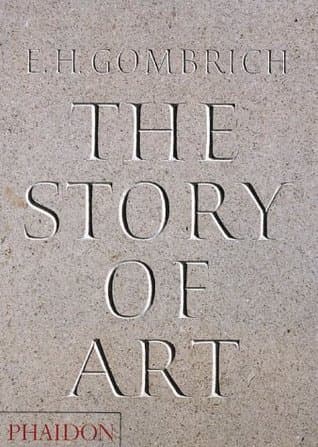
- The Story of Art
E.H. Gombrich
3.9 (311k) average on GoodreadsReferenceExplore thousands of years of human creativity, from ancient cave art to modern masterpieces, with Gombrich's classic account, updated with new insights into art's changing story.





Enjoyed the summary?
A summary gives you the shape of the book. The book itself has the detail, the examples and the voice.
Find Stand Still Like the Hummingbird on AmazonAs an Amazon Associate, BookBrief earns from qualifying purchases. How we're funded