

Core Idea
- Difficulty
- Hard
- Read it if
- You are prepared for a profoundly challenging and poetic philosophical journey that questions the foundations of Western morality and human existence, and are interested in concepts like self-overcoming, radical individualism, and the creation of new values.
- Skip it if
- You prefer straightforward, linear philosophical arguments, are easily offended by anti-religious or anti-moral stances, or are not interested in dense, allegorical prose.
Key Takeaways from Thus Spoke Zarathustra
The Death of God and the Dawn of Man
Humanity must create its own values in a post-religious world.
Nietzsche, through Zarathustra, famously says that 'God is dead.' This is not a literal event, but a description of the decline of belief in a divine power that gives universal meaning and morality. This is not a celebration but a major crisis, as it leaves humanity without direction. The death of God means the collapse of traditional religious and philosophical systems that once gave life purpose and defined good and evil. For Nietzsche, this emptiness is both frightening and freeing. It forces individuals to take on the responsibility of creating their own values and meaning without relying on outside, predetermined truths. It is a call to move beyond the comfort of old beliefs and embrace the freedom of self-creation.
“God is dead. God remains dead. And we have killed him. How shall we comfort ourselves, the murderers of all murderers?”
In the book: Zarathustra's initial descent from the mountains and his address to the people, particularly the 'madman' parable in *The Gay Science* (which predates *Zarathustra* but informs this core idea), vividly illustrates the societal impact and the terrifying implications of this pronouncement.
Try this: Reflect on the sources of your own moral compass. Are they inherited, or have you actively chosen and affirmed them? Identify areas where you've outsourced meaning and begin to reclaim that creative power for yourself, consciously defining what is valuable and good in your life.
Related ideas: nihilism, existentialism, god-is-dead
The Overcoming of Man: Becoming the Übermensch
Humanity is a bridge, not an end; striving for self-mastery and higher values.
The Übermensch (Overman or Superman) is Nietzsche's main idea for the ideal human who has gone beyond usual morality and made their own values. It is not a genetic or racial idea, but a psychological and spiritual goal of self-improvement. The Übermensch is someone who accepts life with all its suffering and joy, affirms their own will to power, and creates meaning in a world without inherent purpose. They rise above the 'last man'—the content, comfort-seeking person who fears risk and new ideas. This involves constant self-mastery, challenging one's own weaknesses, and striving for excellence, not out of duty, but from an abundance of energy and creative drive. The Übermensch is a goal, a standard for humanity to work toward, representing the full realization of human potential.
“Man is a rope, tied between beast and Overman – a rope over an abyss. A dangerous crossing, a dangerous on-the-way, a dangerous looking-back, a dangerous shuddering and stopping.”
In the book: Zarathustra's first discourse upon descending from the mountains, where he directly introduces the concept of the Overman as the meaning of the earth, contrasting it with the 'last man' who has made everything small and comfortable.
Try this: Identify a personal 'abyss' – a fear, a self-imposed limitation, or a comfortable habit that holds you back. Take a concrete step to cross that rope, embracing the discomfort of growth and striving for a higher version of yourself. This could be a creative project, a physical challenge, or a philosophical inquiry.
Related ideas: übermensch, will-to-power, self-overcoming
The Will to Power: The Driving Force of Life
Life's fundamental drive is not survival, but expansion and mastery.
Nietzsche suggests the 'Will to Power' is the basic psychological and universal drive behind all existence. It is not just a desire to dominate others, but a deeper, more complex urge for growth, overcoming, mastery, and self-fulfillment. Every living thing, from the smallest organism to the most complex human, tries to realize its potential, to expand, to use its influence, and to overcome challenges. This drive appears in many forms: creativity, intellectual curiosity, artistic expression, ambition, and even the self-improvement needed for moral growth. It challenges the common idea that survival or pleasure is the main motivator. Instead, it suggests that the will to power is a deeper, life-affirming force that embraces struggle and change.
“And do you know what 'the world' is to me? ... This world is the Will to Power – and nothing besides! And you yourselves are also this Will to Power – and nothing besides!”
In the book: Zarathustra's discourse 'Of Self-Overcoming,' where he explicates that even the seemingly altruistic acts or the desire for truth are ultimately expressions of the will to power, a drive to appropriate and integrate. He argues that 'wherever I found a living thing, there I found Will to Power.'
Try this: Reflect on your own motivations. Are you primarily driven by comfort and safety, or by a desire to grow, master new skills, and expand your capabilities? Identify a specific area where you can intentionally exert your 'will to power' – perhaps by mastering a difficult skill, leading a project, or challenging a limiting belief.
Related ideas: will-to-power, actualization, drive
Revaluation of All Values: Beyond Good and Evil
Traditional morality is a human construct that often stifles life.
Nietzsche argues for a 'revaluation of all values,' claiming that traditional morality, especially Christian morality, is a 'slave morality' that reverses natural noble values. He believes that 'good' and 'evil' are not inherent or divine. Instead, they are human creations, often born from the resentment of the weak against the strong. This slave morality, he suggests, praises humility, pity, and self-denial while condemning strength, pride, and passion. This suppresses the natural energy and creative potential of the human spirit. Zarathustra asks us to look past these inherited, life-denying values and create new values that affirm life, growth, and the individual's will to power, even if they are 'dangerous' or unusual. This is not a call for amorality, but for a morality that is self-chosen and life-affirming.
“Verily, I have often laughed at the weaklings who thought themselves good because they had no claws.”
In the book: Zarathustra's critique of the 'priests' and 'preachers of death' and his discourse 'Of the Pale Criminal,' where he dissects the societal condemnation of an individual act, highlighting how society's judgments are often based on fear and a desire for control rather than a genuine understanding of human nature.
Try this: Examine a moral conviction you hold. Where did it come from? Does it genuinely serve your growth and vitality, or does it feel like an inherited burden or a tool of self-denial? Experiment with challenging a minor self-imposed moral rule that you suspect might be limiting you.
Related ideas: slave-morality, master-morality, ressentiment
Eternal Recurrence: Embracing Life's Fullness
Live each moment as if you would relive it infinitely, demanding full affirmation.
The idea of Eternal Recurrence is a deep thought experiment, not necessarily a scientific theory. It is the ultimate test of how much one affirms life. If every moment, every joy, every suffering, every decision were to repeat itself infinitely, exactly as it is, would you embrace it? Would you say 'yes' to it, or would you be horrified? This idea demands that we live each moment with such intensity and affirmation that we would want its endless repetition. It forces individuals to consider the quality of their lives and choices, pushing them toward a radical acceptance of fate (amor fati) and a conscious creation of a life worth repeating. It is a call to overcome regret and resentment, and to give every action deep meaning, knowing it will echo forever.
“How, if some day or night a demon were to steal after you into your loneliest loneliness and say to you: 'This life as you now live it and have lived it, you will have to live once more and innumerable times more; and there will be nothing new in it, but every pain and every joy and every thought and sigh and everything unutterably small or great in your life will have to return to you, all in the same succession and sequence – even this spider and this moonlight between the trees, and even this moment and I myself.'”
In the book: The climactic sections of *Thus Spoke Zarathustra*, particularly 'The Convalescent,' where Zarathustra's animals present the doctrine of eternal recurrence to him, causing him profound anguish before his eventual embrace and affirmation of it.
Try this: Choose a recent decision or action you took. Now, imagine you have to relive that exact moment, with all its consequences, infinitely. Does this thought fill you with joy or dread? Use this as a guide to make future decisions more consciously, striving to create moments you would want to eternally recur.
Related ideas: eternal-recurrence, amor-fati, life-affirmation
The Three Metamorphoses: Camel, Lion, Child
The journey of the spirit from obedience to liberation and creation.
Nietzsche describes the spiritual journey of an individual through three stages: the camel, the lion, and the child. The 'camel' represents the spirit that takes on duties, traditions, and existing values, passively accepting the weight of societal expectations and moral commands ('Thou shalt'). It is a spirit of obedience and respect for authority. The 'lion' represents the spirit that rebels against these burdens, asserting its freedom and roaring 'I will!' against the 'Thou shalt.' It is a destructive force, breaking free from old values and making room for new ones. Finally, the 'child' represents the spirit of innocence, new beginnings, a game, a self-moving wheel, a first movement, a sacred 'Yes.' This is the creative spirit, able to create new values and affirm life without resentment or outside pressure. It is the spirit of the Übermensch, embracing playfulness and self-creation.
“Three metamorphoses of the spirit do I designate to you: how the spirit becomes a camel, and the camel a lion, and the lion at last a child.”
In the book: Zarathustra's discourse 'Of the Three Metamorphoses,' which serves as an allegory for the psychological development necessary to become an Übermensch, moving from dutiful acceptance to rebellious freedom, and finally to joyful creation.
Try this: Reflect on your own spiritual and personal development. Are you currently in a 'camel' phase, burdened by external expectations? A 'lion' phase, rebelling against old norms? Or are you approaching the 'child' phase of joyful creation? Identify one area where you can move from obedience to creative self-expression.
Related ideas: metamorphosis, self-liberation, creative-spirit
The Last Man: The Danger of Mediocrity
Beware of complacency and the pursuit of comfort above all else.
The 'last man' is Nietzsche's strong warning against the dangers of uninspired mediocrity and society's move towards comfort, safety, and conformity. These individuals avoid risk, seek superficial happiness, and lack ambition beyond keeping things as they are. They have eliminated suffering, struggle, and the need for self-improvement, thus removing the conditions that encourage greatness and creativity. The last man is the opposite of the Übermensch—a content, nihilistic end-point for humanity where all differences and passion have been removed. Zarathustra sees this as a terrible possibility, as it means the death of aspiration and the triumph of a shallow, comfortable existence without real meaning or challenge. It criticizes modern society's tendency to prioritize ease over excellence.
“We have invented happiness – say the last men, and they blink. They have left the regions where it was hard to live; for one needs warmth.”
In the book: Zarathustra's initial address to the crowd, where he introduces the 'last man' as a horrifying alternative to the Übermensch, describing their smallness, their blinking contentment, and their inability to understand higher values.
Try this: Assess areas in your life where you might be prioritizing comfort and ease over growth and challenge. Are there 'small happinesses' you're settling for that prevent you from pursuing more significant, albeit harder, goals? Identify one area to introduce productive discomfort or a new challenge.
Related ideas: last-man, mediocrity, conformity
Beyond Pity: The Value of Hardness and Distance
True love and strength require overcoming pity and maintaining spiritual independence.
Nietzsche, through Zarathustra, often criticizes widespread pity as a weakness that can harm both the person giving and receiving it. He sees excessive pity not as true compassion, but often as a form of self-abasement, a projection of one's own weakness, or a desire to dominate through 'help.' True strength and love, for Nietzsche, involve a certain 'hardness' and spiritual distance that allows for clear understanding and the affirmation of life, even in its suffering. This does not mean being heartless. Instead, it means avoiding the weakening effects of pity that can lead to a shared decline. Rather, one should inspire others to overcome their own suffering and to rise, instead of just sympathizing with their weakness. It is about encouraging growth, not fostering dependence, and keeping one's own strength to truly help others become strong.
“Thus did I learn this, ye higher men: that pity is shame, and pity is defilement. ... It is the will to pass away, the will to nothingness!”
In the book: Zarathustra's discourse 'Of Pity,' where he explicitly warns against the 'preachers of pity' and suggests that pity can be a path to nihilism, a 'will to nothingness.' His interactions with the 'ugliest man' and his own struggles with pity illustrate this complex stance.
Try this: When faced with someone's suffering, reflect on whether your impulse to pity is genuinely helpful or if it disempowers them (and yourself). Instead of merely feeling bad for someone, consider how you can inspire them to find strength and overcome their challenges, or how you can maintain your own strength to be a more effective support.
Related ideas: pity, compassion, strength
The Path of Solitude and Self-Creation
Greatness requires withdrawal from the herd to forge one's own path.
Zarathustra's journey starts and ends in solitude. This emphasizes that creating new values and developing the Übermensch requires separating from the 'herd'—the masses who follow conventional thinking and slave morality. Solitude is not just isolation. It is a necessary condition for self-reflection, self-improvement, and the independent shaping of one's spirit. In this 'loneliest loneliness,' one can truly hear one's own will, challenge old beliefs, and gather the strength to create. While Zarathustra eventually seeks to share his wisdom, his initial and repeated retreats show that true genius and individuality often come from separating from society's noise and demands. This path is difficult and often misunderstood, but it is essential for anyone seeking to go beyond the ordinary.
“Go into solitude, my brother, with your love and with your creation; and only much later will justice limp after you. Go into solitude with your tears.”
In the book: Zarathustra's repeated retreats to his mountain cave, his initial eleven years of solitude, and his return to solitude after his first attempts to teach the people, underscore the necessity of withdrawal for profound self-development and creation.
Try this: Schedule regular, intentional periods of solitude in your life, free from distractions and social demands. Use this time for deep reflection, creative work, or simply to reconnect with your inner voice, separate from external influences. Start with an hour a week and gradually increase.
Related ideas: solitude, individuality, self-reliance
The Dangers of the Spirit of Gravity
Overcome seriousness and resentment to embrace lightness and dance.
Nietzsche, through Zarathustra, often criticizes the 'spirit of gravity'—a metaphorical weight that burdens humanity with seriousness, resentment, guilt, and the denial of life's joyful parts. This spirit is seen in those who cling to old truths, moralize too much, and cannot laugh or dance in the face of existence. It is the opposite of the free, creative spirit of the child. Zarathustra advocates for a 'lightness' of being, a playful acceptance of life that embraces suffering and joy equally, without giving in to the weight of regret or the strictness of fixed beliefs. To overcome gravity is to shed the psychological chains that stop self-creation and to embrace a Dionysian love for life, shown by laughter, dance, and a joyful 'Yes' to existence.
“I would believe only in a God who understood how to dance. ... And he who cannot dance, he who cannot laugh, he who cannot sing – this one is no friend of mine.”
In the book: Zarathustra's many discourses on laughter and dancing, his contempt for the 'spirit of gravity' and 'camel' spirits, and his ultimate embrace of his own fate with a 'Yes' that is both joyful and profound.
Try this: Identify areas in your life where you feel overly serious, burdened by guilt, or stuck in resentment. Actively seek opportunities to introduce lightness: laugh more, dance, engage in playful activities, and consciously challenge the 'spirit of gravity' in your daily interactions and self-talk.
Related ideas: spirit-of-gravity, dionysian, lightness-of-being
Thus Spoke Zarathustra Quotes
“Man is a rope, tied between beast and overman—a rope over an abyss.”
“That which is falling, one should also push!”
“One must still have chaos in oneself to give birth to a dancing star.”
“And if you gaze long enough into an abyss, the abyss will gaze back into you.”
“Is life not a hundred times too short for us—to bore ourselves?”
“All gods are dead: now we want the Overman to live.”
“Verily, I say unto you: a man must have chaos in him to give birth to a dancing star.”
“What is great in man is that he is a bridge and not a goal.”
“The greatest thoughts are the greatest experiences.”
“And if you have no more tears to weep, then sing a terrible song!”
“He who cannot command himself should obey.”
“There are two kinds of people: those who want to have, and those who want to be.”
“The spirit of revenge, my friends, has hitherto been the subject of man's best reflection; and wherever there was suffering, there was always punishment.”
“But the worst enemy you can meet will always be yourself; you ambush yourself in deserts and caves.”
Quiz
10 questions on the main ideas. Each answer comes with a short explanation.
Question 1
Which of the following concepts is NOT a central teaching or idea presented by Zarathustra?
- The Übermensch (Superman)
- The Will to Power
- The Last Man
- The Categorical Imperative
Show answer
D. The Categorical Imperative The Categorical Imperative is a central concept in the ethics of Immanuel Kant, not Friedrich Nietzsche's 'Thus Spoke Zarathustra.' Zarathustra critiques traditional morality and proposes new values.
Question 2
What does Zarathustra mean when he proclaims, 'God is dead'?
- He is asserting a literal, physical death of a deity.
- He is declaring the end of traditional religious belief and its moral framework as a guiding force in modern society.
- He is suggesting that humanity has become inherently evil.
- He is advocating for the worship of nature instead of a divine being.
Show answer
B. He is declaring the end of traditional religious belief and its moral framework as a guiding force in modern society. 'God is dead' signifies the collapse of traditional religious and metaphysical foundations for meaning and morality, leading to a crisis but also an opportunity for humanity to create its own values.
Question 3
Zarathustra often descends from his mountain retreat to teach. What is the primary purpose of these descents?
- To escape the solitude and seek companionship.
- To gather provisions and supplies from the townspeople.
- To share his wisdom and challenge humanity to overcome itself.
- To observe human failings for his own amusement.
Show answer
C. To share his wisdom and challenge humanity to overcome itself. Zarathustra's descents symbolize his mission to share his teachings, particularly about the Übermensch and the Will to Power, with humanity, urging them towards self-overcoming.
Question 4
What concept does Zarathustra introduce to contrast with the Übermensch, representing the ultimate failure of humanity to create new values?
- The Ascetic Priest
- The Last Man
- The Free Spirit
- The Higher Man
Show answer
B. The Last Man The Last Man is Zarathustra's negative ideal, representing a complacent, comfort-seeking, and uncreative humanity that has lost the will to strive for anything beyond mere survival and superficial happiness.
Question 5
Nietzsche's 'Will to Power' as presented in 'Thus Spoke Zarathustra' is best described as:
- A desire for political domination and control over others.
- A universal drive in all living things to overcome, grow, and exert their force, not necessarily through violence but through self-mastery and creation.
- A psychological complex rooted in feelings of inferiority.
- The pursuit of pleasure and avoidance of pain as the ultimate goal of life.
Show answer
B. A universal drive in all living things to overcome, grow, and exert their force, not necessarily through violence but through self-mastery and creation. The Will to Power is a fundamental drive for self-overcoming, growth, and the creation of new values. It's not merely about domination, but about the affirmation of life and the exertion of one's creative capacities.
Question 6
Zarathustra's critique of traditional Christian morality primarily targets which aspect?
- Its emphasis on communal worship and rituals.
- Its valuation of humility, pity, and a 'slave morality' that denigrates strength and earthly life.
- Its historical inaccuracies regarding biblical events.
- Its lack of philosophical rigor compared to ancient Greek thought.
Show answer
B. Its valuation of humility, pity, and a 'slave morality' that denigrates strength and earthly life. Zarathustra criticizes Christian morality for promoting values like humility and pity, which he sees as a 'slave morality' that undermines the will to power and the flourishing of higher human types.
Question 7
In 'Thus Spoke Zarathustra,' what does the 'spirit of gravity' represent, and why must it be overcome?
- It represents the physical laws of the universe, which are immutable.
- It represents the burdens of traditional morality, resentment, and dogmatic thinking that weigh down the human spirit, hindering self-overcoming.
- It represents the inherent sadness and melancholy of human existence.
- It represents the responsibility of leadership, which is necessary for societal order.
Show answer
B. It represents the burdens of traditional morality, resentment, and dogmatic thinking that weigh down the human spirit, hindering self-overcoming. The 'spirit of gravity' symbolizes all the internal and external forces—such as resentment, guilt, traditional morality, and dogmatism—that prevent individuals from rising above themselves and creating new values. Overcoming it is essential for the Übermensch.
Question 8
The concept of the 'eternal recurrence of the same' is presented as a crucial test. What is its psychological implication for the individual?
- It suggests that all actions are ultimately meaningless, leading to nihilism.
- It implies that one should live each moment as if they would joyfully choose to relive it infinitely, thus affirming life to its fullest.
- It encourages a fatalistic acceptance of destiny, without attempting to change anything.
- It proposes a cyclical view of history where societies endlessly repeat the same mistakes.
Show answer
B. It implies that one should live each moment as if they would joyfully choose to relive it infinitely, thus affirming life to its fullest. The eternal recurrence is a thought experiment: if you had to relive your life an infinite number of times, would you affirm every moment? It serves as a test of one's life affirmation and a call to live with ultimate responsibility and joy.
Question 9
Zarathustra describes three metamorphoses of the spirit: the camel, the lion, and the child. What does the metamorphosis into the child represent?
- The innocent acceptance of traditional values.
- The stage of rebellion against existing values and authorities.
- The spirit of new creation, innocence, forgetting, and a new beginning, free from the burdens of the past.
- The burden of carrying heavy duties and responsibilities.
Show answer
C. The spirit of new creation, innocence, forgetting, and a new beginning, free from the burdens of the past. The child represents the final stage of spiritual metamorphosis: a state of innocence, forgetting, and new beginning, where the spirit is free to create its own values after having rebelled against old ones (the lion) and carried the burdens of duty (the camel).
Question 10
What is the primary significance of Zarathustra's solitude on the mountain for ten years before his descent?
- It symbolizes his rejection of all human interaction.
- It is a period of profound self-reflection, spiritual growth, and the formulation of his new philosophy, preparing him to teach.
- It represents a penance for past sins he committed.
- It is a literal retreat from a society he found too corrupt to engage with.
Show answer
B. It is a period of profound self-reflection, spiritual growth, and the formulation of his new philosophy, preparing him to teach. Zarathustra's ten years of solitude are crucial for his internal development, allowing him to mature his wisdom, overcome his own spirit, and gather the strength and insight necessary to descend and teach humanity about the Übermensch and new values.
Thus Spoke Zarathustra FAQ
What is the main theme of Thus Spoke Zarathustra?
The main theme revolves around Zarathustra's teachings on the Übermensch (Superman), the Will to Power, and the Eternal Recurrence, challenging traditional morality and advocating for self-overcoming and the creation of one's own values.
What does Nietzsche mean by 'God is dead' in Zarathustra?
The phrase 'God is dead' signifies the decline of traditional religious and metaphysical belief systems as the ultimate source of meaning and morality, leaving humanity to forge its own values in a world without divine guidance.
What is the Übermensch (Superman) concept in Thus Spoke Zarathustra?
The Übermensch represents an ideal human who overcomes conventional morality and herd mentality, creating their own values and living authentically with a powerful will to self-mastery and self-transcendence.
Does the 'Will to Power' discussed in the book advocate for domination over others?
No, Nietzsche's 'Will to Power' is primarily a psychological and cosmological concept describing the fundamental drive for growth, overcoming, and self-mastery, rather than a crude desire for political or physical domination over others.
How does Thus Spoke Zarathustra critique Christian morality?
Zarathustra critiques Christian morality for promoting a 'slave morality' that values humility, pity, and other-worldliness, which Nietzsche believed denigrated earthly life, human potential, and the strong individual in favor of weakness and conformity.
Is Thus Spoke Zarathustra a religious text?
While it adopts a prophetic and spiritual tone, 'Thus Spoke Zarathustra' is not a religious text in the traditional sense; rather, it is a philosophical work that critiques existing religious frameworks and proposes a new vision for human values and spirituality.
What is the 'Eternal Recurrence' in Zarathustra?
The Eternal Recurrence is a thought experiment suggesting that all events in the universe will infinitely recur in the same sequence. Nietzsche presents it as a test of one's affirmation of life, asking if one would willingly live their life over and over again.
How is Zarathustra different from typical philosophical treatises?
Unlike traditional philosophical treatises, 'Thus Spoke Zarathustra' is written in a poetic, aphoristic, and narrative style, using parables and allegories to convey complex ideas through the voice of a prophet-like figure, making it more literary than purely academic.
Is Thus Spoke Zarathustra suitable for beginners in philosophy?
Due to its complex symbolism, poetic language, and radical ideas, 'Thus Spoke Zarathustra' can be challenging for beginners. It's often recommended to have some prior familiarity with Nietzsche's broader philosophy or to read it with a good companion guide.
About the author
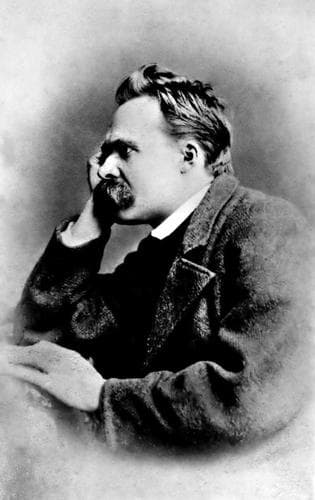
Friedrich Nietzsche was a German philosopher active in the late 19th century, known for his critiques of traditional moral values and religion. His notable works include "Thus Spoke Zarathustra," "Beyond Good and Evil," and "On the Genealogy of Morals," which explore themes of individualism, power, and the nature of existence. Nietzsche's writings have had a profound influence on modern philosophy and literature.
Similar books
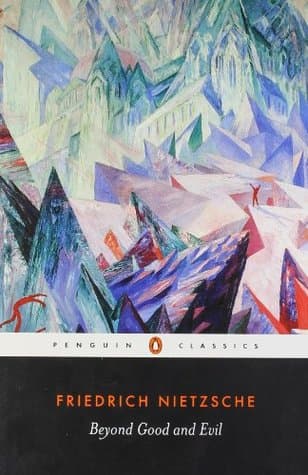
- Beyond Good and Evil
Friedrich Nietzsche
4.0 (67k) average on GoodreadsPsychologyExpands on many of the philosophical themes introduced in Zarathustra, offering a more systematic critique of morality.
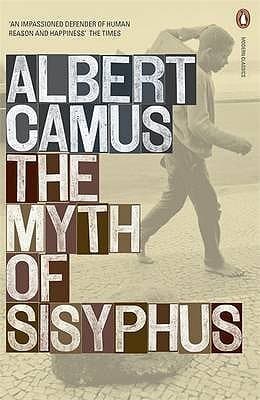
- The Myth of Sisyphus
Albert Camus
4.2 (25k) average on GoodreadsPhilosophyExplores themes of meaning in an absurd world and embracing life without inherent purpose, though from an existentialist rather than vitalist perspective.
- Man's Search for Meaning
Viktor E. Frankl
4.4 (401k) average on GoodreadsBiographyFocuses on finding meaning and purpose in suffering, though from a more therapeutic and humanistic viewpoint than Nietzsche's emphasis on self-creation.
- The Perks of Being a Wallflower
Stephen Chbosky
4.2 (1.3M) average on GoodreadsPsychologyThrough letters, a shy high school freshman learns to navigate first love, trauma, and self-discovery, stepping off the sidelines and into life.
- Eleanor Oliphant Is Completely Fine
Gail Honeyman
4.3 (708k) average on GoodreadsLiterary FictionA lonely woman's structured life changes when an IT guy and an elderly man help her learn to open her heart.
- One Flew Over the Cuckoo's Nest
Ken Kesey
4.2 (631k) average on GoodreadsPsychologyIn a mind-bending asylum, the boisterous Randle McMurphy wages a defiant war against the tyrannical Nurse Ratched, inspiring his fellow inmates, including the seemingly catatonic Chief Bromden, to reclaim their lost humanity.




Enjoyed the summary?
A summary gives you the shape of the book. The book itself has the detail, the examples and the voice.
Find Thus Spoke Zarathustra on AmazonAs an Amazon Associate, BookBrief earns from qualifying purchases. How we're funded