

Core Idea
- Difficulty
- Easy
- Read it if
- You are exploring Christianity, seeking a deeper understanding of fundamental Christian principles, or looking for guidance on how to cultivate a personal relationship with God. It's also suitable for those who appreciate visual aids in spiritual texts.
- Skip it if
- You are looking for an academic theological treatise, a critical analysis of Christian doctrine, or a book that delves into complex philosophical arguments about faith.
Key Takeaways from Steps to Christ
God's Love: Beyond Human Comprehension
The ultimate sacrifice demonstrates a boundless, unconditional love for humanity.
The book emphasizes that God's love is not merely a sentiment but an active, self-sacrificing force, most profoundly demonstrated through the gift of His Son, Jesus Christ, to atone for humanity's sins. This act of divine condescension and suffering on the cross is presented as the ultimate proof of God's desire for reconciliation, even with those who have rebelled against Him. It challenges the common misconception of a distant or vengeful deity, instead portraying a God who actively seeks to restore relationship, offering grace and forgiveness as a free gift. This love is not earned but freely given, inviting all to accept it and experience transformation.
“The cross of Christ testifies to the immutability of God's law, and to the fact that the wages of sin is death.”
In the book: The narrative of Christ's life, death, and resurrection, presented as the central act of divine love and justice.
Try this: Reflect daily on the magnitude of God's love by contemplating the sacrifice of Christ, fostering gratitude and a desire to live in alignment with His will.
Related ideas: divine-love, atonement, grace, reconciliation
Repentance: A Change of Heart and Action
True repentance involves both sorrow for sin and a decisive turning away from it.
The book defines repentance not merely as a feeling of regret, but as a holistic transformation encompassing intellectual assent, emotional sorrow, and volitional change. It highlights that genuine repentance involves recognizing the sinfulness of one's actions against a holy God, experiencing sincere remorse, and making a conscious decision to abandon sinful practices. This process is not self-initiated but enabled by divine grace, which convicts the heart and empowers the individual to turn from wrong to right. It's a continuous process, not a one-time event, leading to ongoing growth and sanctification.
“Repentance is a change of mind, a change of heart, and a change of direction.”
In the book: Biblical examples of individuals who genuinely repented and experienced transformation, such as the prodigal son.
Try this: When confronted with personal failings, confess specifically, seek forgiveness, and actively implement changes to avoid repeating the sin, relying on divine strength.
Related ideas: repentance, confession, conversion, sanctification
Confession: Essential for Forgiveness
Openly acknowledging sins to God is a prerequisite for receiving divine pardon.
Confession is presented as a vital step in the process of seeking and receiving forgiveness. It's not about informing an omniscient God of what He doesn't know, but rather about an act of humility and honesty on the part of the individual. Confession involves specifically naming one's transgressions, acknowledging them as offenses against God, and expressing a desire to be free from their power. The book clarifies that while confession to God is primary, in cases where sin has harmed another person, confession and restitution to that individual are also necessary. This open acknowledgement breaks the power of guilt and shame, opening the door to divine mercy.
“He who covers his sins will not prosper, but whoever confesses and forsakes them will have mercy.”
In the book: The emphasis on the necessity of confession throughout biblical narratives and teachings for receiving mercy.
Try this: Regularly engage in private prayer, confessing specific sins and seeking God's forgiveness, and when appropriate, apologize and make amends to those you've wronged.
Related ideas: confession, forgiveness, guilt, restitution
Faith: Trusting in God's Promises
Faith is not mere belief, but active reliance on God's character and word.
The book distinguishes faith from mere intellectual assent, portraying it as an active principle of trust and reliance. It's about believing in God's character—His goodness, wisdom, and power—and taking Him at His word, even when circumstances seem contradictory. This faith is not a blind leap but is grounded in the evidence of God's past actions and promises. It involves surrendering one's own will and plans to divine guidance, believing that God will fulfill His promises for salvation and transformation. This active faith is essential for receiving justification and for living a life of obedience and peace.
“Faith is trusting God—believing that He loves us and knows what is best for us.”
In the book: The biblical principle that 'without faith it is impossible to please God' and the numerous examples of individuals whose faith led to miraculous outcomes.
Try this: When facing uncertainty or fear, actively choose to trust God's promises by recalling specific scriptures and praying for the strength to rely on His wisdom and power.
Related ideas: faith, trust, reliance, justification
Growing in Christ: A Continuous Process
Spiritual growth is an ongoing journey of surrender, study, and service.
The book emphasizes that conversion is not the end goal, but the beginning of a lifelong journey of spiritual growth. This process, often called sanctification, involves continually surrendering one's will to God, studying His Word, engaging in prayer, and serving others. It's a partnership between divine grace and human effort, where God empowers the individual to overcome sin and develop a Christ-like character. Growth is not linear but involves periods of challenge and triumph, requiring patience, perseverance, and a constant reliance on divine strength. The goal is to reflect more and more the character of Christ in daily life.
“The Christian life is not merely a correction of old habits, but a transformation of the whole being.”
In the book: The analogy of the vine and branches, where continuous connection to Christ is necessary for bearing fruit.
Try this: Establish daily routines for Bible study and prayer, seek opportunities for service, and regularly evaluate personal growth areas, inviting divine guidance.
Related ideas: sanctification, spiritual-growth, discipleship, obedience
The Power of Prayer: Direct Communication with God
Prayer is a vital means of connecting with God, receiving guidance, and finding strength.
Prayer is presented not as a ritual or a monologue, but as an intimate, conversational dialogue with the Creator. The book stresses that God desires to hear from His children and is ready to respond to their requests, offer comfort, and provide guidance. It encourages believers to bring all their concerns, joys, and struggles to God in prayer, fostering a deeper relationship and reliance on Him. Consistent prayer is portrayed as essential for overcoming temptation, gaining wisdom, and experiencing divine peace. It's a source of spiritual power that transforms both the individual and their circumstances.
“Prayer is the opening of the heart to God as to a friend.”
In the book: Christ's own example of frequent prayer and His teachings on the power and importance of prayer.
Try this: Designate specific times each day for prayer, practicing gratitude, confession, intercession, and personal requests, listening for divine guidance.
Related ideas: prayer, communion, intercession, guidance
Overcoming Temptation: Reliance on Divine Strength
Victory over sin is achieved not by willpower alone, but through Christ's power.
The book acknowledges the reality and power of temptation but asserts that believers are not left to fight it alone. It emphasizes that true victory over sin comes not through human willpower or self-effort, but through a constant reliance on the power of Jesus Christ. By surrendering to Him, drawing strength from His Word, and seeking His help in prayer, individuals can resist and overcome temptations that once seemed insurmountable. This understanding shifts the focus from personal struggle to divine empowerment, offering hope and assurance that freedom from sin's dominion is possible through Christ.
“We cannot overcome temptation in our own strength; but Christ has conquered, and He offers us His victory.”
In the book: The biblical promise that God will not allow us to be tempted beyond what we can bear, and that He will provide a way of escape.
Try this: When tempted, immediately turn to prayer, quoting relevant scriptures, and actively choose to resist the temptation by focusing on Christ's strength rather than personal weakness.
Related ideas: temptation, victory-over-sin, divine-power, resistance
The Joy of Obedience: A Life of Freedom and Purpose
Obedience to God's law brings true freedom and profound joy, not burden.
Contrary to the perception of God's law as restrictive, the book presents obedience as a path to true freedom and deep joy. It argues that God's commandments are expressions of His love and wisdom, designed for human well-being and flourishing. Living in harmony with divine principles brings inner peace, purpose, and positive relationships. This obedience is not a legalistic burden but a joyful response to God's love and a natural outflow of a transformed heart. It is a life lived in alignment with the Creator's design, leading to a profound sense of fulfillment and genuine happiness.
“In keeping His commandments there is great reward.”
In the book: The biblical teaching that God's laws are 'not burdensome' and bring blessings to those who follow them.
Try this: View God's commandments as guidelines for a fulfilling life, actively seeking to understand and apply them, trusting that obedience leads to peace and joy.
Related ideas: obedience, freedom, joy, divine-law
Sharing Your Faith: A Natural Outflow of Experience
Personal experience with Christ naturally leads to a desire to share His love with others.
The book suggests that a genuine conversion and ongoing relationship with Christ naturally cultivates a desire to share that experience with others. It's not presented as a burdensome obligation but as an organic overflow of a heart filled with divine love and gratitude. Sharing one's faith can take many forms, from living a consistent, Christ-like life to offering words of encouragement and testimony. The emphasis is on sharing personal experience and the transforming power of God's love, rather than engaging in complex theological debates. This act of sharing is also a means of strengthening one's own faith and connection with God.
“No sooner does one come to Christ than there is born in the heart a desire to make known to others what a precious friend he has found in Jesus.”
In the book: The early Christian church's rapid growth due to believers sharing their personal testimonies and experiences with Christ.
Try this: Look for natural opportunities to share your personal testimony or express gratitude for God's work in your life, living consistently with your faith.
Related ideas: evangelism, witnessing, testimony, mission
Steps to Christ Quotes
“The greatest want of the world is the want of men—men who will not be bought or sold, men who in their inmost souls are true and honest, men who do not fear to call sin by its right name, men whose conscience is as true to duty as the compass to the pole, men who will stand for the right though the heavens fall.”
“There is nothing that the world needs so much as the exhibition of the love of Christ through humanity.”
“The only way to be prepared for the coming of Christ is to be like Him, to have His spirit, and to do His works.”
“The world is perishing for lack of the gospel.”
“True education is the harmonious development of the physical, the mental, and the spiritual powers.”
“The life of Christ was a life of unselfish service.”
“Every soul that believes in Christ is a chosen vessel to bear the light of truth to the world.”
“The love of God is broader than the measure of man's mind.”
“Our only safety is to cling to Jesus.”
“The cross of Christ is the great magnet that draws all men unto itself.”
“When we surrender ourselves wholly to God, He will work through us to accomplish His purposes.”
“It is in giving that we receive.”
“The true test of discipleship is obedience to God's commandments.”
“Prayer is the opening of the heart to God as to a friend.”
Quiz
10 questions on the main ideas. Each answer comes with a short explanation.
Question 1
According to 'Steps to Christ,' what is the primary reason for humanity's separation from God?
- Lack of knowledge about God's laws
- Humanity's inherent sinfulness and transgression of God's law
- God's arbitrary decision to distance Himself
- The influence of other religious beliefs
Show answer
B. Humanity's inherent sinfulness and transgression of God's law The book emphasizes that 'it is our sins that have separated us from God.' Our transgression of His law creates a chasm.
Question 2
What does 'Steps to Christ' identify as the 'first step' in coming to Christ?
- Reading the entire Bible
- Attending church regularly
- Conviction of sin by the Holy Spirit
- Performing good deeds for others
Show answer
C. Conviction of sin by the Holy Spirit The book states that 'the first step in coming to Christ is the conviction of sin.' This conviction is brought about by the Holy Spirit.
Question 3
How does 'Steps to Christ' describe the nature of God's love?
- Conditional and dependent on human perfection
- Unconditional, infinite, and seeking to save
- Primarily focused on judgment and punishment
- Only extended to a select few
Show answer
B. Unconditional, infinite, and seeking to save The book repeatedly highlights God's 'infinite love' and His 'unutterable love' for humanity, emphasizing that He seeks to save all who will come to Him.
Question 4
What role does repentance play in the process of coming to Christ?
- It is a feeling of regret without any change in behavior.
- It is a change of mind and purpose, turning from sin to God.
- It is a one-time act that guarantees salvation.
- It is only necessary for major transgressions.
Show answer
B. It is a change of mind and purpose, turning from sin to God. Repentance is described as 'sorrow for sin, and a turning away from it.' It involves a change of heart and life.
Question 5
According to the book, what is the source of true repentance?
- Human willpower and determination
- The law of God alone
- The goodness of God leading us to repentance
- Fear of punishment
Show answer
C. The goodness of God leading us to repentance The book teaches that 'it is the goodness of God that leadeth thee to repentance.' It is His love, not merely fear, that draws us.
Question 6
What is meant by 'confession' in 'Steps to Christ'?
- Publicly announcing one's sins to everyone.
- Acknowledging one's sins to God, and to those wronged.
- A formal declaration of faith in a church setting.
- Explaining away one's sins.
Show answer
B. Acknowledging one's sins to God, and to those wronged. Confession involves acknowledging our sins to God. If we have wronged another, confession must be made to them as well.
Question 7
How does 'Steps to Christ' describe justification by faith?
- It is earned through good works and obedience to the law.
- It is God's act of declaring a sinner righteous based on Christ's righteousness, received through faith.
- It means that God overlooks our sins without requiring repentance.
- It is a process that only begins after death.
Show answer
B. It is God's act of declaring a sinner righteous based on Christ's righteousness, received through faith. The book explains that 'by faith, we receive the righteousness of Christ.' Justification is a gift, not something earned, where God imputes Christ's righteousness to us.
Question 8
What is the significance of the Holy Spirit's work in the life of a believer, as presented in the book?
- To provide occasional comfort during trials.
- To empower for obedience, sanctification, and growth in grace.
- To reveal future events and prophecies only.
- To replace the need for personal study of the Bible.
Show answer
B. To empower for obedience, sanctification, and growth in grace. The Holy Spirit is essential for conviction of sin, enabling repentance, empowering for obedience, and transforming the character. He is the agent of sanctification.
Question 9
According to 'Steps to Christ,' how can one grow in Christ after conversion?
- By relying solely on past religious experiences.
- Through prayer, Bible study, fellowship, and witnessing.
- By isolating oneself from the world.
- By focusing on self-improvement through human effort.
Show answer
B. Through prayer, Bible study, fellowship, and witnessing. The book emphasizes the importance of 'feeding on the Word of God,' constant prayer, associating with believers, and sharing one's faith with others as vital for spiritual growth.
Question 10
What is the ultimate goal of the Christian life, as depicted in 'Steps to Christ'?
- Achieving worldly success and prosperity.
- Becoming like Christ in character and being restored to God's image.
- Gaining superior knowledge compared to others.
- Strict adherence to rituals and ceremonies.
Show answer
B. Becoming like Christ in character and being restored to God's image. The book's central theme is the restoration of God's image in humanity. It aims to guide individuals to 'become like Christ' in character and to live a life of loving obedience.
Steps to Christ FAQ
What is 'Steps to Christ—Illustrated' about?
'Steps to Christ—Illustrated' is a classic devotional book that outlines the fundamental principles of Christian faith and the journey to a closer relationship with Jesus Christ. It covers topics such as God's love, repentance, confession, faith, growth in Christ, and the privilege of prayer.
Who is the author of 'Steps to Christ'?
The original author of 'Steps to Christ' is Ellen G. White. While the specific 'Illustrated' edition might be attributed to 'Unknown' in some listings due to the illustrator or editor not being explicitly named, the core text remains her work.
What makes the 'Illustrated' version different from the standard 'Steps to Christ'?
The 'Illustrated' version includes visual elements such as drawings, paintings, or photographs that aim to enhance the reader's understanding and engagement with the spiritual concepts presented in the text. These illustrations often depict scenes, metaphors, or emotions related to the chapters' themes.
Is 'Steps to Christ—Illustrated' suitable for new believers?
Yes, 'Steps to Christ—Illustrated' is highly recommended for new believers, as it clearly and simply explains the foundational steps to developing a relationship with God. The added illustrations can also make the concepts more accessible and relatable for those new to Christian literature.
What are the main concepts explored in the book?
The book explores key concepts such as the character of God's love, the nature of sin, the necessity of repentance and confession, the power of faith in Christ, the process of spiritual growth, and the importance of prayer and Bible study in daily life.
How long does it typically take to read 'Steps to Christ—Illustrated'?
Given its concise nature, 'Steps to Christ—Illustrated' can typically be read in a few hours, perhaps over a day or two, depending on the reader's pace and how much they reflect on each chapter. Many prefer to read it slowly, meditating on its profound messages.
Where can I find 'Steps to Christ—Illustrated'?
This book is widely available in various formats. You can find it at Christian bookstores, online retailers like Amazon, or sometimes as a free download from religious organizations' websites. Libraries may also carry physical copies.
Is this book associated with a specific denomination?
While Ellen G. White was a co-founder of the Seventh-day Adventist Church, 'Steps to Christ' is widely regarded as a non-denominational book due to its focus on universal Christian principles. It is appreciated by believers from various backgrounds for its clear presentation of the path to salvation.
What is the overall message or purpose of 'Steps to Christ'?
The overarching message of 'Steps to Christ' is to guide individuals to a personal and transformative relationship with Jesus Christ. It aims to reveal God's immense love and mercy, encouraging readers to accept His grace and live a life of faith and obedience.
Similar books
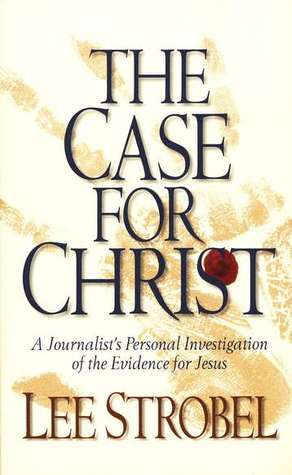
- The Case for Christ
Lee Strobel
4.2 (100k) average on GoodreadsHistoryWhile "The Case for Christ" focuses on evidence, both books aim to guide readers towards faith and understanding of Christ's role, with a focus on personal conviction.
- The Pilgrim's Progress
John Bunyan
4.0 (109k) average on GoodreadsFantasyAlthough allegorical, "Pilgrim's Progress" also charts a journey of faith, repentance, and spiritual growth, much like "Steps to Christ" outlines a pathway for the believer.
- The Diary of a Young Girl
Anne Frank
4.2 (2.7M) average on GoodreadsBiographyDuring the Nazi occupation, a teenage girl's diary, written from a secret annex, shares observations on humanity, hope, and the wait for freedom.
- Twisted 1. Twisted love
Ana Huang
3.7 (1.7M) average on GoodreadsA quiet billionaire with a difficult past finds his guarded heart opening to the woman he must protect, but their growing passion uncovers dangerous secrets and a shared, traumatic history.
- Eat, Pray, Love
Elizabeth Gilbert
3.6 (1.5M) average on GoodreadsLifestyleA heartbroken writer leaves her conventional life for a year-long global search for pleasure in Italy, spiritual devotion in India, and unexpected love and balance in Bali.
- Night
Elie Wiesel
4.3 (970k) average on GoodreadsBiographyIn the darkness of Auschwitz and Buchenwald, a teenage Elie Wiesel faces the extermination of his family, the loss of his faith, and the lasting scars of humanity's deepest cruelty.




Enjoyed the summary?
A summary gives you the shape of the book. The book itself has the detail, the examples and the voice.
Find Steps to Christ on AmazonAs an Amazon Associate, BookBrief earns from qualifying purchases. How we're funded