

Synopsis
Covers the whole plot, including the ending.
- Difficulty
- Hard
- Pacing
- Moderate
- Mood
- Philosophical, Dark, Challenging, Meditative
- Read it if
- You enjoy mind-bending, philosophical science fiction that explores the nature of reality, morality, and utopia, with a focus on a single, compelling character's dark motivations.
- Skip it if
- You prefer character-driven narratives with strong emotional arcs, fast-paced action, or clear-cut heroes and villains, as this book is very idea-driven and morally ambiguous.
Stone Plot Summary
Covers the whole plot, including the ending.
The Confession of a Murderer
The story opens with Kullervo, a member of a highly advanced, peaceful, and long-lived interstellar civilization, confessing to mass murder. For millennia, his society has eradicated violence and death, living in harmonious stasis. Kullervo, however, has systematically murdered dozens of individuals, not through conventional means, but by using his unique training as a 'stone' – a specialized individual capable of manipulating probability and causality. He details how he orchestrated the deaths to appear as natural accidents, exploiting the fabric of reality to achieve his goals without leaving any direct evidence. His confession is not one of remorse, but a calculated unveiling of his motives and methods to a society that struggles to comprehend such an atrocity.
The Nature of Stones
Kullervo elaborates on the nature of 'stones' – individuals born with an innate ability to perceive and subtly influence the probabilistic flow of the universe. This ability allows them to 'nudge' events, making improbable occurrences likely and vice versa. In their peaceful society, 'stones' are employed in specialized, often unseen, roles: ensuring the stability of complex systems, preventing accidents, and even subtly guiding cultural evolution. Kullervo himself was trained in a monastic-like order, honing his skills to an unparalleled degree. He describes the rigorous mental discipline and ethical frameworks instilled in them, making his deviation all the more shocking. His training allowed him to understand the 'grain' of reality, and how to work with it, or, in his case, against it, to achieve his murderous ends.
The Genesis of the Plan
Kullervo reveals the driving force behind his actions: a deep and unbearable boredom with the static perfection of his civilization. He perceived their long lives and lack of conflict as a form of stagnation, a universe without genuine challenge or meaning. He describes a philosophical crisis, a yearning for something 'real' – even if that reality was death and suffering. He decided that the only way to reintroduce genuine change, to 'break' the perfect stasis, was to commit an act that was utterly unthinkable. His murders were not born of malice in the traditional sense, but from a desperate attempt to reintroduce consequence and meaning into a universe he found sterile. He saw himself as a catalyst, forcing his society to confront the foundations of its existence.
The First 'Accidents'
Kullervo recounts the first instances of his murders, explaining the intricate methods he employed. He didn't directly kill anyone; instead, he used his 'stone' abilities to manipulate the probability of rare accidents. A person might slip on an unseen patch of ice, fall from a great height due to a sudden gust of wind, or suffer a fatal malfunction in their personal transport. Each event was individually improbable but, through Kullervo's subtle influence, became inevitable. He took immense care to ensure no two deaths were alike, no pattern emerged that could be easily detected by forensic analysis, which was rudimentary in a society unaccustomed to violent crime. His precision was chilling, demonstrating a mastery over his unique abilities and a deep understanding of human and mechanical frailties.
The Society's Reaction
As the 'accidental' deaths began to accumulate, Kullervo's society struggled to comprehend what was happening. Initially, each death was treated as an isolated, tragic incident. However, as the number grew, a subtle unease spread. Statisticians noted an unprecedented spike in 'random' fatalities, defying all previous models of societal safety. Psychologists grappled with the concept of a murderer, a phenomenon unheard of for millennia. The fabric of their peaceful existence was being subtly eroded by an unseen force. Kullervo observed this unfolding reaction with detached fascination, noting how the return of death was slowly but surely reintroducing fear, suspicion, and a search for answers into a world that had forgotten such emotions.
The Investigation and the 'Stone-Sense'
As the crisis deepened, the governing bodies turned to the 'stones' themselves for a solution. Other 'stones,' less powerful and less malicious than Kullervo, were tasked with investigating the anomalies. They could sense the subtle disturbances in the probabilistic field, the 'wrongness' of the accidents, but Kullervo's mastery was such that he could mask his interventions almost perfectly. The investigators found themselves chasing ghosts, detecting traces of manipulation but unable to pinpoint the source or even confirm malicious intent. Kullervo found this aspect of his plan satisfying, as he was using the very tools of his society's stability against them, forcing them to confront a threat that was fundamentally beyond their understanding and conventional detection methods.
The Revelation and the Purpose of Confession
Eventually, Kullervo, having achieved his desired number of victims and seeing the impact on his society, chooses to confess. His confession is not coerced; it is a deliberate act. He does not seek punishment, as the concept of punishment is alien to his culture. Instead, he intends his confession to be a final, undeniable shock to the system. He explains that his true goal was not merely to kill, but to shatter the complacency and existential void of his civilization. He wants them to remember death, to feel fear, to re-evaluate their values, and ultimately, to evolve beyond their current, stagnant state. He believes that only through confronting such an atrocity can they truly appreciate life and find new purpose.
The Trial and the Dilemma
Kullervo's confession plunges his society into an unprecedented crisis. The concept of a trial, of justice, or punishment, is foreign. They struggle with how to even classify his actions, let alone respond to them. The 'trial' becomes a philosophical debate, a public forum where the foundations of their peaceful existence are questioned. Some argue for his eradication, others for his rehabilitation, but all acknowledge the impact he has had. Kullervo remains calm and articulate, continuing to justify his actions as a necessary evil for the greater good of their species. He forces them to confront the possibility that their perfect, deathless existence might actually be a cage, and that he, the murderer, might be their reluctant liberator.
The Aftermath and Societal Transformation
The long-term consequences of Kullervo's actions are profound. His society, unable to simply 'forget' the murders, begins to undergo a fundamental transformation. The concept of death, once eradicated, is now a tangible reality, albeit one brought about by a 'stone.' This forces them to re-examine their values, to appreciate the fragility of life, and to seek new meanings beyond their previous stasis. They begin to explore concepts of risk, challenge, and even the possibility of genuine suffering as pathways to growth. Kullervo's act, though horrific, inadvertently sparks a renaissance of curiosity, innovation, and a renewed sense of purpose, exactly as he had intended. The 'stone' has indeed shattered the glass of their perfect, static world.
Kullervo's Fate
The society ultimately decides against any form of traditional punishment for Kullervo, as such a concept remains outside their ethical framework. Instead, they recognize the profound, albeit brutal, catalyst he represented. His fate is left somewhat ambiguous but implies a form of supervised isolation or a continued role as a living reminder of their past complacency and their future potential. He is neither a hero nor a villain in the conventional sense, but a necessary evil that has reshaped their destiny. Kullervo, having achieved his goal of awakening his civilization, seems content with whatever outcome they devise, knowing that he has irrevocably changed the course of their history, bringing back death to carve out new life.
Principal Figures
Kullervo
Protagonist/Antagonist
The universe's first mass murderer in millennia, a 'stone' who seeks to reintroduce meaning through death.
Kullervo is a highly skilled 'stone,' a master manipulator of probability and causality. He possesses immense intellect, philosophical depth, and an unnerving detachment. Driven by existential boredom with his society's stagnant perfection, he orchestrates a series of 'accidental' deaths to reintroduce meaning, consequence, and change. He is not motivated by malice or personal gain, but by a profound, almost messianic, belief that his civilization needs to be shocked out of its complacent immortality. His actions are meticulously planned and executed with cold precision, demonstrating a complete mastery of his unique abilities.
The Elders/Governing Council
Supporting
The collective leadership of Kullervo's civilization, grappling with an unprecedented crisis.
The Elders represent the collective wisdom and authority of Kullervo's society. They embody the civilization's millennia-long commitment to peace, stability, and the eradication of suffering. Initially, they are bewildered and then horrified by the inexplicable deaths. They struggle to comprehend Kullervo's motivations and methods, as his actions challenge every tenet of their existence. Their role is to try and understand, contain, and ultimately respond to the crisis, forcing them to confront the limitations of their perfect society and the very nature of their values.
Relationships: Kullervo (The accused/accuser; the challenge to their authority and beliefs)
The Other 'Stones'
Supporting
Fellow probability manipulators tasked with investigating the anomalous deaths.
These 'stones' are individuals with similar abilities to Kullervo, though none possess his malevolent intent or mastery. They are employed in various roles to maintain societal harmony and prevent accidents. When the anomalous deaths begin, they are the first to sense the subtle distortions in the probabilistic field. Their struggle to identify Kullervo highlights the precision of his methods and the inherent difficulty of detecting a 'stone' operating outside their ethical framework. They represent the established order of 'stone' usage, designed for good, and are forced to confront the perversion of their own kind's abilities.
Relationships: Kullervo (Former colleague/adversary)
The Society/Civilization
Mentioned/Collective
The highly advanced, peaceful, and immortal interstellar civilization that is Kullervo's victim and target.
This is the collective entity that Kullervo seeks to 'awaken.' For millennia, they have lived in a state of utopian peace, free from death, disease, conflict, and genuine suffering. Their long lives have led to a form of existential stagnation, a lack of purpose or challenge. They are initially naive and unprepared for the concept of murder. Kullervo's actions force them to confront the fragility of life, the nature of their own existence, and the potential for growth that lies beyond their perfected, static state. They are the ultimate beneficiaries (in Kullervo's view) of his horrific acts.
Relationships: Kullervo (Victim and unwilling recipient of his 'gift' of change)
Themes & Insights
The Stasis of Utopia
The novel explores the idea that a perfect, deathless, and conflict-free existence, while seemingly ideal, can lead to existential boredom and a loss of meaning. Kullervo's society has achieved everything, but in doing so, has lost the impetus for growth and evolution. The absence of death removes the appreciation for life, and the absence of struggle removes the drive for achievement. Kullervo's murders are a desperate attempt to shatter this stasis, to reintroduce the very elements that give life its urgency and value. This theme is central to Kullervo's motivation, as he views his actions as a brutal but necessary 'awakening' for his complacent civilization.
“What is life, if it cannot end? What is joy, if there is no sorrow to define it?”
The Nature of Meaning and Purpose
This theme explores how meaning is derived. In Kullervo's society, purpose has become diluted by endless life and effortless existence. Kullervo argues that true meaning arises from struggle, from the finite nature of existence, and from the choices made in the face of adversity. By reintroducing death, he forces his society to confront the value of their lives and the choices they make within a limited timeframe. The book suggests that without death, life itself can become meaningless, a prolonged, unchallenging existence. His actions, while horrific, are intended to provide a brutal re-education in the pursuit of meaning.
“I gave them back the one thing they had truly lost: the reason to live.”
The Ethics of Intervention and Free Will
The novel raises ethical questions about the right to intervene, even with seemingly benevolent intentions. Kullervo, in his attempt to 'save' his society from stagnation, commits mass murder, effectively overriding their collective free will to live in peace. His 'stone' abilities represent the ultimate form of subtle manipulation, blurring the lines between influence and coercion. The story forces readers to consider whether a 'greater good' can justify such extreme measures, and whether the imposition of meaning is truly beneficial if it comes at such a horrific cost. The society's struggle to 'judge' Kullervo highlights this ethical dilemma.
“They were free to choose stagnation. I chose for them, a harder path.”
The Paradox of Perfection
The narrative explores the paradox within the concept of a perfect society. While ostensibly achieving an ideal state, Kullervo's civilization demonstrates that perfection can be its own undoing. By eliminating all flaws, challenges, and sources of suffering, they inadvertently eliminate the very drivers of evolution, innovation, and appreciation. The 'perfect' society becomes brittle, unable to cope with the unexpected, and ultimately sterile. Kullervo's actions expose the fragility and the hidden costs of such absolute perfection, suggesting that true vitality might reside in imperfection and the capacity for change.
“A universe without edges is a universe without form.”
Plot Devices & Literary Techniques
'Stone' Abilities
The power to subtly manipulate probability and causality.
The 'stone' abilities are the central plot device. They allow Kullervo to orchestrate his murders without leaving direct evidence, making him virtually undetectable. This power is not magic, but a highly refined understanding and manipulation of the underlying probabilistic fabric of the universe. It serves to make Kullervo an almost omnipotent, yet unseen, force, highlighting the philosophical nature of his crime rather than a conventional physical conflict. It also creates a unique challenge for his society, as their usual methods of detection are useless against such a subtle and fundamental intervention.
The Confession Narrative
The story is told primarily through Kullervo's detailed, unrepentant confession.
The entire novel is structured as Kullervo's confession, providing direct access to his motivations, methods, and philosophical justifications. This narrative choice immediately establishes his character as complex and intelligent, rather than a simple villain. It allows for deep introspection into his worldview and the nature of his society. By presenting the story as a confession, the focus shifts from a 'whodunit' to a 'whydunit' and 'howdunit,' forcing the reader to engage with the profound ethical and philosophical questions Kullervo raises, rather than merely following a suspenseful plot.
Existential Boredom
The driving psychological force behind Kullervo's unprecedented actions.
Existential boredom acts as the primary psychological plot device. It is not mere idleness but a deep, philosophical ennui arising from a life without challenge, consequence, or genuine suffering. This boredom is the catalyst for Kullervo's decision to commit mass murder, framing his actions not as typical villainy but as a desperate attempt to reintroduce meaning and purpose into a universe he perceives as sterile. It drives the entire narrative, explaining why someone in a perfect society would commit such an atrocity and allowing for a deeper exploration of the philosophical implications of utopia.
Stone Quotes
“The greatest trick the Devil ever pulled was convincing the world he didn't exist. The greatest trick God ever pulled was convincing the world he did.”
“History is a set of lies agreed upon.”
“Even a stopped clock is right twice a day. And a broken clock might be right more often than you think, if you're willing to adjust your perception of time.”
“The universe doesn't care about your feelings. It just is.”
“We build our prisons out of the things we refuse to let go of.”
“Every lie we tell creates a debt to the truth.”
“The future is always a foreign country, even when you've already been there.”
“To truly know something, you must first forget everything you thought you knew.”
“The greatest weapon against chaos is understanding. The greatest weapon against understanding is fear.”
“We are all just echoes in the vast, empty halls of eternity.”
“There are no solutions, only trade-offs.”
“The only constant is change, and even that changes.”
“Memory is not a record, but a story we tell ourselves.”
“The greatest distances are not between stars, but between minds.”
Quiz
10 questions on the plot and the characters. Each answer comes with a short explanation.
Question 1
What is the name of the protagonist and narrator of 'Stone'?
- Alistair Stone
- Giles Stone
- Arthur Stone
- Felix Stone
Show answer
B. Giles Stone The protagonist and self-confessed mass murderer is Giles Stone.
Question 2
What is the primary method of interstellar travel in the universe of 'Stone'?
- Wormholes
- Hyperspace jumps
- Folds in spacetime
- Teleportation via 'doors'
Show answer
D. Teleportation via 'doors' Travel between star systems is achieved through 'doors' which allow for instantaneous teleportation.
Question 3
What is the initial crime Giles Stone confesses to committing?
- Destroying a planet
- Murdering an entire starship crew
- Crashing the interstellar communication network
- Stealing a valuable alien artifact
Show answer
B. Murdering an entire starship crew Giles Stone confesses to the murder of an entire starship crew, an unprecedented act in their peaceful society.
Question 4
What is the significance of the 'stone' in the title, beyond being the protagonist's surname?
- It refers to a petrified alien species.
- It symbolizes the unfeeling nature of the universe.
- It is a physical object that serves as a memory storage device.
- It represents the ancient, forgotten technology that Giles seeks.
Show answer
C. It is a physical object that serves as a memory storage device. The 'stone' refers to a physical, organic-like device that stores and plays back memories, crucial to Giles's plan.
Question 5
What is the primary reason Giles Stone gives for committing his initial murders?
- He was driven insane by an alien entity.
- He wanted to expose a conspiracy within the galactic government.
- He sought to reintroduce the concept of mortality and consequence to a stagnant society.
- He was paid by a shadowy organization to commit the acts.
Show answer
C. He sought to reintroduce the concept of mortality and consequence to a stagnant society. Giles argues that his actions were an attempt to 'wake up' humanity from its complacent, effectively immortal existence by reintroducing the concept of death and real consequence.
Question 6
What unique characteristic do the 'doors' for interstellar travel possess that becomes a plot point?
- They only open for specific genetic signatures.
- They can be used to travel through time as well as space.
- They create parallel universes with each use.
- They leave a 'ghost' or copy of the traveler at the origin point.
Show answer
D. They leave a 'ghost' or copy of the traveler at the origin point. A key reveal is that the 'doors' leave behind a 'ghost' or residual consciousness/copy of the person who uses them, essentially creating multiple versions of individuals.
Question 7
What is the ultimate goal of Giles Stone's elaborate plan, which involves his confession and subsequent journey?
- To escape the galaxy and start a new civilization.
- To eradicate all 'ghosts' left by the doors.
- To find the original 'architects' of the universe's order.
- To create a truly unique, singular version of himself by re-integrating all his 'ghosts'.
Show answer
D. To create a truly unique, singular version of himself by re-integrating all his 'ghosts'. Giles's ultimate aim is to collect and reintegrate all the 'ghosts' of himself left by the doors, to become a truly unified and singular individual, rather than a fragmented one.
Question 8
How does Giles Stone primarily record and transmit his confession and story?
- Through a direct neural interface with the authorities.
- By writing an autobiography on a traditional data slate.
- By speaking into a 'stone' device that records and externalizes his memories.
- Via a series of public broadcasts using stolen communication equipment.
Show answer
C. By speaking into a 'stone' device that records and externalizes his memories. Giles uses the 'stone' device to record his memories and thoughts, effectively narrating his story into it for playback.
Question 9
What philosophical concept does 'Stone' heavily explore regarding identity and individuality?
- The Ship of Theseus paradox.
- The Many-Worlds Interpretation of quantum mechanics.
- The implications of fragmented consciousness and multiple selves.
- The nature of free will versus determinism.
Show answer
C. The implications of fragmented consciousness and multiple selves. The existence of 'ghosts' left by the doors directly leads to a deep exploration of what constitutes a singular identity when multiple versions of a person exist, and how one can be 'whole'.
Question 10
What is the ultimate fate of Giles Stone at the very end of the novel?
- He is executed for his crimes.
- He successfully merges all his 'ghosts' and achieves a new form of existence.
- He escapes into an unknown galaxy, continuing his murders.
- He is imprisoned indefinitely, his plan having failed.
Show answer
B. He successfully merges all his 'ghosts' and achieves a new form of existence. At the conclusion, Giles successfully merges with all his 'ghosts', becoming a unified, unique entity, achieving his ultimate goal of true individuality.
Stone FAQ
What is the core premise of 'Stone' by Adam Roberts?
'Stone' revolves around the shocking confession of the universe's first mass murderer in thousands of years, a seemingly ordinary man named Stone. His crime shatters a long-held galactic peace and forces a re-evaluation of the nature of humanity, justice, and the advanced technologies that have shaped their civilization.
Who is Stone, and what drives his unprecedented act?
Stone is a seemingly unremarkable individual who, despite living in an era of advanced technology and societal harmony, commits an act of unimaginable violence. His motivations are complex and deeply explored, hinting at a profound disillusionment with the very fabric of his utopian society and a desire to force a confrontation with its underlying assumptions.
How does the novel explore the concept of a 'post-scarcity' or 'utopian' society?
The novel depicts a future where humanity has seemingly overcome scarcity, disease, and conflict through advanced technology like 'The Grid' and 'The Fold'. However, Stone's actions expose the potential for psychological emptiness or a loss of meaning within such a perfect existence, raising questions about what it truly means to be human without struggle.
What role does 'The Grid' play in the society depicted in 'Stone'?
'The Grid' is a pervasive, omnipresent information network that forms the backbone of society, linking all individuals and facilitating instant communication and access to knowledge. It represents both the pinnacle of technological advancement and a potential source of existential ennui, as it potentially removes much of the need for individual effort or original thought.
What is the significance of the 'Fold' technology mentioned in the book?
The 'Fold' is a method of instantaneous interstellar travel, allowing humans to traverse vast distances effortlessly and colonize numerous worlds. While enabling galactic civilization, it also contributes to the sense of an overly perfected, almost sterile existence that Stone ultimately rebels against, as it removes the challenge and danger of traditional exploration.
Are there any subtle clues about Stone's eventual breakdown or intentions early in the narrative?
While Stone appears unremarkable, subtle hints might be gleaned from his detachment or his seemingly mundane existence in a world of wonders. His very ordinariness in such an extraordinary setting could be interpreted as a precursor to his radical act, suggesting a deeper dissatisfaction brewing beneath the surface of societal perfection.
How does the book's narrative structure or perspective contribute to its themes?
The narrative often shifts perspectives or employs introspective passages, delving into Stone's own thoughts and the reactions of those around him. This fragmented or deeply internal approach allows the novel to explore the psychological impact of his crime on both the perpetrator and the wider society, emphasizing the internal rather than purely external consequences.
Is there a deeper meaning behind Stone's chosen method of murder, beyond simple violence?
Stone's method of murder is often depicted as brutal and visceral, a stark contrast to the sterile, advanced world he inhabits. This deliberate choice of primitive violence can be interpreted as a symbolic rejection of the clean, technological solutions of his society, a desperate attempt to reintroduce raw, unfiltered reality and consequence.
How does Stone's act challenge the psychological well-being of the 'perfect' society?
Stone's mass murder shatters the collective illusion of safety and harmony that has defined the galactic civilization for millennia. It forces individuals to confront the possibility of inherent evil or irrationality within themselves and their peers, leading to widespread psychological distress, fear, and a re-evaluation of their foundational beliefs about human nature.
What psychological theories or concepts might explain Stone's motivation?
Stone's actions could be analyzed through the lens of existential dread, a search for meaning in an overly comfortable existence, or a reaction against a perceived loss of authenticity. His crime might stem from a desire to feel 'real' or to force others to confront uncomfortable truths about their own humanity, even if through horrific means.
How do other characters react psychologically to Stone's confession and the implications of his crime?
The characters around Stone, from investigators to ordinary citizens, experience a spectrum of psychological responses including shock, disbelief, fear, anger, and profound existential crisis. Their reactions highlight the fragility of their peaceful society and the deep-seated human need for justice and understanding in the face of incomprehensible evil.
Does the novel suggest that humanity is inherently prone to violence, even in ideal conditions?
The novel strongly suggests that the capacity for violence, or at least destructive impulses, remains deeply embedded within human nature, even when external conditions are perfected. Stone's actions serve as a brutal reminder that technological advancement alone cannot eradicate the darker aspects of the human psyche, forcing a re-evaluation of what truly constitutes 'progress'.
Is Stone a villain, a tragic figure, or something more complex?
Stone defies easy categorization. While undoubtedly a perpetrator of horrific violence, the novel delves into his motivations with enough depth to portray him as a complex figure, possibly a tragic one. He could be seen as a desperate prophet, albeit a monstrous one, attempting to awaken a complacent society, or simply a deeply disturbed individual reacting to existential pressures.
What philosophical questions does 'Stone' ultimately pose about freedom and societal control?
'Stone' questions whether a society that eliminates all suffering and struggle also inadvertently stifles true freedom or meaning. It asks if a truly 'free' individual must have the capacity for both good and evil, and if the pursuit of absolute peace comes at the cost of authentic human experience or moral choice.
Does the ending offer any form of resolution or is it left open to interpretation?
The ending of 'Stone' is often described as thought-provoking and ambiguous, resisting a simple resolution. It leaves readers to ponder the long-term implications of Stone's actions on galactic society and the enduring questions about human nature that the novel raises, rather than providing neat answers or a clear sense of closure.
How does the book use the concept of 'memory' or 'history' to deepen its narrative?
The society in 'Stone' has a long history of peace, making Stone's crime an anomaly. The narrative explores how this history, or lack thereof concerning mass violence, shapes the reactions to his act. The collective memory of a harmonious past makes the present horror even more profound, forcing a re-examination of forgotten lessons.
What is the role of the trial or investigation process in understanding Stone's character?
The trial or investigation serves as a crucial framework for dissecting Stone's motives and the societal implications of his crime. It's not just about guilt, which is confessed, but about understanding 'why' and how such an act could occur in their advanced society, allowing for deep philosophical and psychological interrogation.
How does Roberts' writing style contribute to the unsettling atmosphere of the novel?
Roberts often employs a stark, intellectual, and sometimes detached writing style that contrasts sharply with the brutal subject matter. This stylistic choice enhances the unsettling atmosphere, forcing the reader to engage with the profound philosophical implications of the violence rather than simply experiencing it viscerally, making the horror more cerebral.
About the author
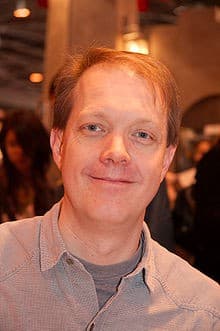
Adam Roberts is a British science fiction author known for his innovative and often philosophical works. His novel "Stone" explores themes of artificial intelligence and consciousness with a distinctive, thought-provoking style. Roberts has a background in literary criticism, which informs his intricate world-building and complex narratives.
Similar books
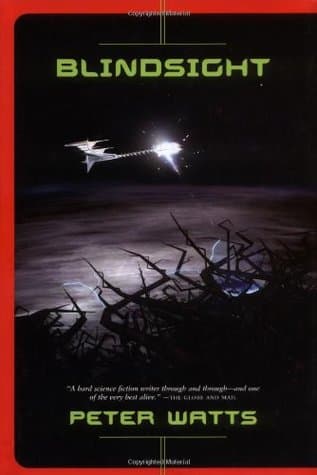
- Blindsight
Peter Watts
4.0 (27k) average on GoodreadsFantasyExplores profound philosophical and biological questions in a dark, intellectually demanding sci-fi setting.
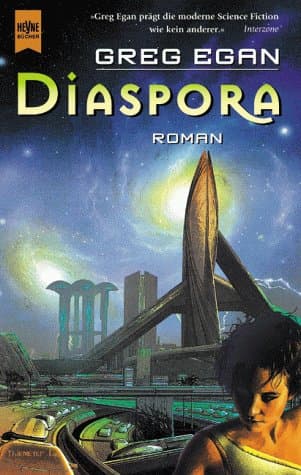
- Diaspora
Greg Egan
4.1 (7k) average on GoodreadsScience FictionDeeply explores post-human existence, consciousness, and the nature of reality with a strong hard science fiction bent.
- The Wasp Factory
Iain Banks
3.8 (83k) average on GoodreadsThrillerBoth Stone and The Wasp Factory feature first-person confessional narratives from murderers. However, Banks's novel focuses on psychological horror, the grotesque, and the disturbed mind of its protagonist, Frank, exploring themes of childhood trauma and perversion. Roberts, in contrast, uses the confession in Stone as a springboard for broader philosophical and societal critiques, examining the nature of guilt, the interconnectedness of existence, and the transformation of an entire civilization rather than just an individual's pathology.
- The Hunger Games
Suzanne Collins
4.3 (6.4M) average on GoodreadsFantasyIn a future where children fight to the death on live television, Katniss Everdeen volunteers for the arena, turning a death sentence into a fight for survival and a spark of rebellion.
- 1984
George Orwell
4.2 (3.1M) average on GoodreadsPoliticsIn a future where surveillance and thought control are absolute, a man's search for truth clashes with the Party, showing that hope can be a form of rebellion.
- Divergent
Veronica Roth
4.2 (2.9M) average on GoodreadsFantasyIn a society divided by virtues, a sixteen-year-old's difference from the norm starts a rebellion that threatens her world.




Enjoyed the summary?
A summary gives you the shape of the book. The book itself has the detail, the examples and the voice.
Find Stone on AmazonAs an Amazon Associate, BookBrief earns from qualifying purchases. How we're funded