
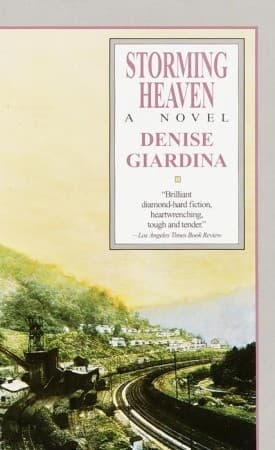
Synopsis
Covers the whole plot, including the ending.
- Difficulty
- Medium
- Pacing
- Moderate
- Mood
- Gritty, Tragic, Resilient, Historical
- Read it if
- You are interested in American labor history, particularly the struggles of coal miners, and enjoy multi-perspective narratives that bring historical events to life.
- Skip it if
- You prefer lighthearted stories or are not comfortable with detailed depictions of violence, exploitation, and systemic injustice.
Storming Heaven Plot Summary
Covers the whole plot, including the ending.
The Arrival of the Coal Company and Early Exploitation
The novel opens with the Red Ash Coal Company moving into the Mingo County area of West Virginia, particularly Annadel. Mayor C. J. Marcum, a local businessman and community leader, sees the company take land, often through questionable means like faulty deeds or threats, displacing farming families. The once-independent residents are forced into company towns, paid in scrip, and live under the company's rules. Rosa Angelelli, a Sicilian immigrant, arrives in the coalfields with her family, seeking a better life but quickly realizing the harsh realities of the mining industry. Her husband and sons face dangerous work and low wages.
The Seeds of Resistance and Union Organizing
As conditions worsen, with frequent mining accidents, low pay, company stores, and no basic rights, unionization begins to take hold among the miners. Rondal Lloyd, a young miner, becomes an early advocate for the United Mine Workers of America (UMWA). He is affected by the injustices and dangers faced by his fellow miners and wants to fight for change. Carrie Bishop, a nurse, arrives in the coal camps and sees the suffering caused by the company's neglect and the miners' poverty. This strengthens her commitment to caring for the community and later, supporting the union cause. Early organizing efforts meet strong resistance from company-hired Baldwin-Felts detectives.
The Paint Creek-Cabin Creek Strike and Escalating Violence
The Paint Creek-Cabin Creek strike begins, a key moment in the struggle. Miners, including Rondal, strike for better wages and union recognition. The coal companies respond with extreme violence, using Baldwin-Felts detectives to evict striking families, attack union organizers, and even use machine guns against tent colonies where displaced miners live. Carrie Bishop works to tend to the wounded and sick in the tent camps, seeing the cruel acts committed by the company forces. This period strengthens the miners' resolve but also shows the power and brutality of the coal operators, leaving many dead and injured, and deepening the divide between labor and capital.
The Matewan Massacre and Sid Hatfield's Stand
The conflict grows with the Matewan Massacre. In Matewan, a rare pro-union town, Mayor C. J. Marcum and Police Chief Sid Hatfield openly defy the coal company. When Baldwin-Felts detectives arrive to evict striking miners and their families, a confrontation happens between the detectives and the armed citizens of Matewan, led by Hatfield. The standoff turns into a deadly shootout, resulting in the deaths of several detectives and two townspeople. This event becomes a symbol of resistance and strengthens the miners' determination. It also draws national attention and increases animosity between the union and the coal operators, leading to more violent reactions.
The Assassination of Sid Hatfield and Miner Outrage
After the Matewan Massacre, Sid Hatfield and his deputy, Ed Chambers, are charged with murder, though they are later acquitted. However, the Baldwin-Felts Agency seeks revenge. Hatfield and Chambers are ambushed and killed on the steps of the McDowell County courthouse in Welch, West Virginia, by Baldwin-Felts agents. This assassination, seen by many, causes a furious response among the miners. The murder of their hero, Sid Hatfield, is seen as an act of war by the coal operators and causes a desire for justice and direct action, pushing the miners towards a larger, organized armed confrontation.
The March on Logan: An Army of Miners Forms
In response to Hatfield's murder and continued oppression, thousands of armed miners, led by figures like Frank Keeney and Bill Blizzard, gather and march towards Logan County. Their goal is to organize the non-unionized coalfields of Logan and Mingo Counties, which are controlled by the anti-union Sheriff Don Chafin and his private army. Rondal Lloyd is a figure among the marching miners, driven by a deep belief in justice. The march grows into an army of nearly 10,000 men, determined to break the company's hold and bring the union to the southern coalfields, an unprecedented display of collective worker power.
The Battle of Blair Mountain Begins
The armed miners confront Sheriff Chafin's forces, which are on Blair Mountain. Chafin's men, fortified with machine guns and protected by federal troops and privately hired gunmen, block the miners' path. The Battle of Blair Mountain begins, becoming the largest armed labor uprising in American history. Rondal Lloyd and his comrades fight fiercely, facing overwhelming firepower. Carrie Bishop, with other nurses, sets up makeshift hospitals behind the lines, tending to the wounded from both sides. Rosa Angelelli, having lost multiple sons to the mines and the conflict, follows the news with sadness, her personal tragedies reflecting the collective suffering.
Federal Intervention and Aerial Bombing
As the battle continues, the U.S. government, under President Harding, intervenes. Federal troops are sent, and U.S. Army airplanes are used against the miners. These planes bomb and machine-gun the miners' positions, the first time in American history that air power was used against its own citizens in a domestic conflict. The use of such military technology against the poorly equipped miners shows the vast power difference and the lengths the establishment would go to stop the union movement. The miners, despite their bravery, are no match for this aerial assault.
The Retreat and Surrender of the Miners
Facing the combined might of Sheriff Chafin's forces, federal troops, and aerial bombardment, the miners' resolve weakens. Although they fight bravely for several days, the overwhelming firepower and scale of the opposition are too much. Under pressure from union leadership and the federal government, and with many casualties, the miners are forced to surrender. Rondal Lloyd, heartbroken but defiant, is among those who lay down their arms. The dream of unionizing the southern coalfields through armed force is crushed, and many miners are arrested and face charges of treason and murder.
Aftermath: Trials, Disillusionment, and Lingering Hope
After Blair Mountain, many union leaders, including Bill Blizzard, are tried for treason, though most are acquitted. The union's efforts in southern West Virginia are set back, and the coal companies regain control, often with greater brutality. Mayor C. J. Marcum thinks about the cost of the conflict and the lasting power of the companies. Rosa Angelelli continues to mourn her lost sons, her personal grief a reflection of the wider tragedy. Despite the defeat, the spirit of resistance is not gone. Carrie Bishop continues her work, and Rondal, though disillusioned, remembers the struggle, knowing that the fight for workers' rights will continue in different ways in the years to come.
Storming Heaven Characters
Rondal Lloyd
Protagonist
Fiery, devoted union miner and leader in the armed uprising.
Rondal Lloyd is a central figure, a passionate and unyielding advocate for the United Mine Workers of America. He starts as a young miner deeply affected by the injustices and dangers of the coal camps. His experiences harden him, making him a fierce and often reckless fighter for the union cause. Rondal is driven by a profound sense of justice and loyalty to his fellow miners, willing to risk everything for their rights. He becomes a leader in the armed march on Logan, embodying the miners' collective anger and determination. Despite his harsh exterior, he carries deep emotional scars from the brutal world of the mines and the violence he witnesses and participates in.
Relationships: Carrie Bishop (complex, unrequited love interest, fellow union supporter); Bill Blizzard (fellow union leader and comrade in arms); Other Miners (fellow workers, his community, and his reason for fighting)
Carrie Bishop
Protagonist/Supporting
Compassionate nurse dedicated to caring for the miners and their families.
Carrie Bishop is a strong, independent nurse who comes to the coalfields to work. She quickly becomes an essential figure in the community, providing medical care and emotional support to the impoverished and often injured miners and their families. Carrie is deeply empathetic and resourceful, setting up makeshift clinics in tent camps and tending to the wounded during strikes and battles. She is a witness to the profound suffering and injustice, which solidifies her support for the union. Her love for Rondal Lloyd adds a personal dimension to her story, though it often remains unfulfilled amidst the chaos and violence.
Relationships: Rondal Lloyd (complex, unrequited love interest); Rosa Angelelli (acquaintance, shared sorrow over mining tragedies); The Miners (her patients and the community she serves)
Rosa Angelelli
Protagonist/Supporting
Sicilian immigrant mother who loses her family to the mines.
Rosa Angelelli is a Sicilian immigrant woman who arrives in Annadel with her family, hoping for a better life. Her narrative provides a poignant perspective on the human cost of the coal industry. She is a resilient, hardworking woman who endures immense personal tragedy, losing her husband and four sons to mining accidents and the violence of the labor struggle. Rosa's story highlights the vulnerability of immigrant families and the devastating impact of the company's exploitation on individual lives. Her grief is a powerful, recurring motif, symbolizing the collective suffering of the community and the sacrifices made in the fight for justice.
Relationships: Her Sons (deep maternal love, lost to the mines and conflict); Carrie Bishop (acquaintance, shared sorrow over mining tragedies)
C. J. Marcum
Protagonist/Supporting
Local businessman and pro-union mayor of Matewan.
C. J. Marcum is a local businessman and a respected figure in the community, serving as Mayor of Matewan. Unlike many, he stands firm against the encroaching power of the coal company, actively supporting the miners' right to unionize. He is a pragmatic yet principled leader who tries to navigate the complex political landscape, often clashing with company officials and their hired detectives. His narrative provides an insider's view of the political machinations and the efforts to resist corporate tyranny from a civic standpoint, culminating in his involvement in the Matewan Massacre and his unwavering support for Chief Sid Hatfield.
Relationships: Sid Hatfield (close ally and friend, fellow defender of Matewan); The Miners (the community he represents and defends)
Sid Hatfield
Supporting
Fearless pro-union Police Chief of Matewan.
Sid Hatfield is the iconic Police Chief of Matewan, known for his unwavering loyalty to the miners and his defiance of the coal company. He becomes a folk hero for standing up against the Baldwin-Felts detectives during the Matewan Massacre, a pivotal event where he leads the townspeople in a deadly shootout. His courage and commitment to justice inspire the miners and infuriate the coal operators. His subsequent assassination by Baldwin-Felts agents serves as a major catalyst for the armed march on Logan, transforming him into a martyr for the union cause and fueling the miners' desire for revenge and liberation.
Relationships: C. J. Marcum (close ally and friend); Rondal Lloyd (inspiration and symbol of defiance for miners)
Don Chafin
Antagonist
Anti-union Sheriff of Logan County and leader of company forces.
Don Chafin is the powerful and notoriously anti-union Sheriff of Logan County. He acts as a formidable antagonist, openly and violently suppressing union organizing efforts in his territory. Chafin commands a private army of deputies and gunmen, funded by the coal operators, and controls Logan County through intimidation and force. He is the primary military obstacle faced by the marching miners on Blair Mountain, representing the entrenched power structure and the brutal tactics used to maintain the status quo. His ruthlessness and absolute control make him a feared figure among the miners.
Relationships: Coal Operators (employer and ally); The Miners (his primary targets and enemies)
Bill Blizzard
Supporting
Prominent union organizer and leader of the marching miners.
Bill Blizzard is a key leader and organizer for the United Mine Workers of America. He plays a crucial role in rallying the miners and leading the armed march on Logan. Blizzard is depicted as a determined and strategic figure, attempting to unite the disparate groups of miners and guide their actions. He faces immense pressure from both the federal government and the coal operators, and ultimately has to make difficult decisions regarding the miners' surrender. His subsequent trial for treason highlights the legal repercussions faced by union leaders.
Relationships: Rondal Lloyd (fellow union leader, comrade); Frank Keeney (fellow union organizer)
Frank Keeney
Supporting
Charismatic union organizer and speaker.
Frank Keeney is another influential union organizer and leader, known for his powerful speeches and ability to motivate the miners. He is instrumental in mobilizing support for the union and encouraging the armed march. Keeney's presence adds to the historical authenticity of the narrative, representing the broader leadership of the UMWA in West Virginia during this tumultuous period. He works alongside Bill Blizzard to direct the miners' efforts, embodying the passion and rhetorical skill required to galvanize a desperate workforce.
Relationships: Bill Blizzard (fellow union leader); The Miners (his audience and constituents)
Baldwin-Felts Detectives
Antagonist
Private security agency hired by coal companies to suppress union activity.
The Baldwin-Felts Detectives are a private detective agency frequently employed by the coal companies to act as armed guards and strikebreakers. They are depicted as brutal, ruthless, and often corrupt agents who use violence, intimidation, and murder to suppress union organizing and evict striking miners from their homes. They are responsible for numerous atrocities, including the Matewan Massacre and the assassination of Sid Hatfield, making them a primary antagonist and symbol of corporate power and oppression in the novel. Their actions directly provoke much of the miners' armed resistance.
Relationships: Coal Operators (employers); The Miners (victims and enemies)
Storming Heaven Themes
Labor vs. Capital: The Struggle for Workers' Rights
This is the main theme, exploring the brutal conflict between exploited coal miners and powerful, wealthy coal companies. The novel shows the miners' desperate fight for fair wages, safe working conditions, and the right to unionize against a system designed to keep them poor and powerless. Events like the Paint Creek-Cabin Creek strike, the Matewan Massacre, and the Battle of Blair Mountain are direct results of this struggle, showing the extremes both sides would go to. The narrative explores economic exploitation, the use of private armies, and the suppression of basic human rights by the coal operators.
“They owned the land, they owned the houses, they owned the stores, and they owned the law. All we had was the coal in our hands and the dust in our lungs.”
Justice and Injustice
The theme of justice is in the narrative, especially the miners' search for it when facing overwhelming injustice. The violence of the Baldwin-Felts detectives, the company's fraudulent land dealings, and the lack of legal options for the miners show the deep injustice they face. The miners' armed uprising, though defeated, is a desperate attempt to regain justice when other options failed. Figures like Sid Hatfield become symbols of resistance against this injustice, and his assassination further fuels the miners' anger.
“When the law won't protect you, you gotta protect yourselves. That's all there is to it.”
Community and Solidarity
Despite harsh conditions and constant threats, the novel shows the strong community and unity among the miners and their families. This bond is essential for survival and forms the basis of the union movement. Characters like Carrie Bishop and C. J. Marcum dedicate themselves to their neighbors' well-being, while the collective action of the armed march on Logan shows the power of unity when facing oppression. The shared suffering and mutual support, even in defeat, show the strength of these close-knit communities.
“We was all in it together. Every man, woman, and child. You couldn't make it alone in the coalfields.”
Loss and Trauma
The theme of loss and trauma is explored through the characters' personal stories. Rosa Angelelli's repeated loss of her husband and sons to mining accidents and violence shows the human cost of the coal industry. The constant threat of death, injury, and poverty creates deep psychological scars for all characters, especially Rondal Lloyd, who is hardened by the brutality he sees and inflicts. The novel captures the collective trauma of a community under attack, where grief and sorrow are always present, shaping their lives and motivating their struggles.
“The mountain took them all, piece by piece. First their breath, then their hope, then their very lives.”
The American Dream Betrayed
The novel explores how the American Dream is betrayed for many, especially immigrant families like the Angelellis, who come seeking opportunity but find only exploitation and danger. The idea of self-sufficiency and land ownership, once central to the region, is dismantled by the coal companies. Instead of prosperity, miners face debt, company control, and a constant struggle for survival. This theme shows the hypocrisy of industrial capitalism, which promises progress but delivers hardship and inequality for the working class.
“They told us the streets were paved with gold. They didn't tell us the gold was buried under a thousand feet of rock, and we'd die digging for it.”
Plot Devices & Literary Techniques
Multiple Perspectives/First-Person Narration
The story is told through the alternating viewpoints of four distinct characters.
The novel employs a multiple-perspective narrative structure, with the story unfolding through the first-person accounts of Rondal Lloyd, Carrie Bishop, Rosa Angelelli, and C. J. Marcum. This device allows the reader to experience the events from different angles—the passionate miner, the empathetic nurse, the grieving immigrant mother, and the pragmatic local leader. Each perspective offers unique insights into the social, emotional, and political dimensions of the conflict, providing a comprehensive and deeply personal understanding of the West Virginia coal wars and preventing a monolithic interpretation of the historical events.
Foreshadowing through Personal Anecdotes
Early character experiences hint at future violence and tragedy.
Giardina uses personal anecdotes and early experiences of the characters to foreshadow the escalating violence and tragedy. For instance, the initial mining accidents and the early skirmishes with Baldwin-Felts detectives experienced by Rondal and witnessed by Carrie and Rosa hint at the larger, more devastating conflicts to come, such as the Matewan Massacre and the Battle of Blair Mountain. This device builds tension and a sense of impending doom, emphasizing the inevitability of the conflict given the entrenched power dynamics and the desperation of the miners. It also grounds the historical events in the personal fates of the characters.
Symbolism of the Mountain and Coal
The physical landscape represents both resource and entrapment.
The mountain and the coal itself serve as powerful symbols throughout the novel. The coal represents both the region's immense wealth and the source of its people's suffering and exploitation. It is a resource that promises prosperity but delivers death and servitude. The mountains, while beautiful, also symbolize entrapment for the miners, who are isolated in company towns and literally work within the earth. Blair Mountain, in particular, becomes a symbol of ultimate confrontation and sacrifice, a natural fortress transformed into a battleground for human dignity against corporate power. The landscape itself is an active character in the drama.
Historical Allusion and Authenticity
Integration of real historical figures and events for verisimilitude.
The novel meticulously integrates real historical figures, dates, and events, such as the Matewan Massacre, the assassination of Sid Hatfield, and the Battle of Blair Mountain, to lend profound authenticity to the narrative. Characters like Sid Hatfield, Bill Blizzard, Frank Keeney, and Don Chafin were real individuals who played significant roles in the West Virginia coal wars. This device blurs the line between fiction and non-fiction, immersing the reader in a meticulously researched historical period and allowing the fictional characters' experiences to resonate with the documented struggles of real people, enhancing the story's impact and educational value.
Storming Heaven Quotes
“The coal companies own the land, the houses, the stores, and the churches. They own the very air we breathe.”
“We are not slaves. We are men, and we will be treated as men.”
“The mountains are our home, but they are also our prison.”
“Every time a miner dies, the company calls it an accident. I call it murder.”
“You can't eat scenery, and you can't wear it either.”
“The union is the only thing that stands between us and starvation.”
“They think because we're poor, we're ignorant. But we know what's right.”
“In these hills, blood is thicker than water, and coal dust is thicker than blood.”
“Freedom isn't given; it's taken.”
“The earth gives us coal, and the coal takes our lives. It's a devil's bargain.”
“We fight not just for wages, but for respect.”
“When the company owns everything, even your soul is on lease.”
“In the darkness of the mine, we find the light of our solidarity.”
“They can kill us, but they can't kill the idea of a union.”
Quiz
10 questions on the plot and the characters. Each answer comes with a short explanation.
Question 1
What historical event serves as the climax of 'Storming Heaven'?
- The founding of Annadel, West Virginia
- The arrival of the coal company in Annadel
- The Battle of Blair Mountain
- The passage of the first union laws in West Virginia
Show answer
C. The Battle of Blair Mountain The book culminates in the Battle of Blair Mountain in 1921, where 10,000 pro-union coal miners clashed with U.S. Army forces, marking a tragic turning point in the labor struggle.
Question 2
Which character is described as a 'fierce, loveless union man' in the book's summary?
- C. J. Marcum
- Rondal Lloyd
- Carrie Bishop
- Rosa Angelelli
Show answer
B. Rondal Lloyd Rondal Lloyd is characterized as a dedicated but emotionally distant union activist, whose commitment to the labor cause overshadows personal relationships.
Question 3
What does the coal company do to the town of Annadel, according to the book's description?
- It builds new schools and hospitals for the community
- It steals land deeds and private homes without buying them
- It peacefully negotiates with the miners for better wages
- It transforms the town into a tourist destination
Show answer
B. It steals land deeds and private homes without buying them The coal company's exploitation includes seizing property through unethical means, symbolizing the broader theft of community resources and autonomy in Annadel.
Question 4
How many unemployed pro-union coal miners took up arms in 1921, as mentioned in the book?
- 1,000
- 5,000
- 10,000
- 20,000
Show answer
C. 10,000 The book highlights the scale of the uprising, with 10,000 miners mobilizing to challenge oppressive conditions, leading to the confrontation at Blair Mountain.
Question 5
Which character is a Sicilian immigrant who loses four sons to the mines?
- Carrie Bishop
- Rosa Angelelli
- C. J. Marcum
- Rondal Lloyd
Show answer
B. Rosa Angelelli Rosa Angelelli's story embodies the personal tragedies faced by immigrant families in the mining communities, highlighting the human cost of industrial exploitation.
Question 6
What military tactics were used against the miners during the uprising, as recounted in the book?
- Only ground troops with rifles
- U.S. Army airplanes, bombs, and poison gas
- Naval blockades along the rivers
- Diplomatic negotiations and treaties
Show answer
B. U.S. Army airplanes, bombs, and poison gas The use of advanced military force, including aerial bombardment and chemical weapons, underscores the severe repression faced by the miners and the government's extreme response.
Question 7
Which theme is central to 'Storming Heaven', as suggested by the destruction of Annadel's close-knit families?
- The joys of rural life in West Virginia
- The benefits of industrial progress
- The loss of community and soul due to corporate greed
- The success of unionization in improving worker conditions
Show answer
C. The loss of community and soul due to corporate greed The book explores how corporate exploitation erodes social bonds and spiritual well-being, depicting the coal company's actions as stealing not just land but the 'souls' of the people.
Question 8
What role does Carrie Bishop play in the story?
- She is a coal company executive who opposes the union
- She is a nurse who loves Rondal Lloyd
- She is a government official who negotiates with the miners
- She is a miner who leads the uprising
Show answer
B. She is a nurse who loves Rondal Lloyd As a nurse, Carrie provides medical care and emotional support, and her love for Rondal adds a personal dimension to the political struggles, highlighting the intersection of private and public lives.
Question 9
Why does the book describe the Battle of Blair Mountain as 'the first crucial battle of a war that has yet to be won'?
- Because it led to immediate victory for the miners and union recognition
- Because it was a minor skirmish with no long-term impact
- Because it symbolizes an ongoing struggle for labor rights and justice
- Because it resulted in the permanent closure of all coal mines in West Virginia
Show answer
C. Because it symbolizes an ongoing struggle for labor rights and justice The phrase reflects the book's theme that the fight against exploitation and for fair labor conditions continues beyond this historical event, making it a pivotal but unresolved conflict.
Question 10
How does the narrative structure of 'Storming Heaven' contribute to its impact?
- It is told from a single, omniscient narrator's perspective
- It uses four distinct first-person accounts to bear witness to the events
- It is presented as a series of official government documents
- It relies solely on fictional dialogue without narrative description
Show answer
B. It uses four distinct first-person accounts to bear witness to the events By weaving together the perspectives of C. J. Marcum, Rondal Lloyd, Carrie Bishop, and Rosa Angelelli, the book creates a multifaceted and deeply personal portrayal of the historical events, emphasizing collective memory and diverse experiences.
Storming Heaven FAQ
What is 'Storming Heaven' about?
'Storming Heaven' is a historical fiction novel about the 1921 West Virginia coal wars, told through four perspectives: activist mayor C.J. Marcum, union organizer Rondal Lloyd, nurse Carrie Bishop, and immigrant mother Rosa Angelelli. It chronicles how coal companies systematically destroyed the town of Annadel through land theft and exploitation, culminating in the Battle of Blair Mountain where 10,000 armed miners faced U.S. Army planes, bombs, and poison gas.
Why should I read 'Storming Heaven'?
You should read 'Storming Heaven' to experience a powerful, humanized account of a nearly forgotten chapter in American labor history. Giardina brings visceral emotional depth to the coal wars through her four distinct narrators, making the systemic violence and corporate greed feel immediate and personal while honoring the real people who fought and died in these struggles.
What is the background/setting of 'Storming Heaven'?
The novel is set primarily in Annadel, West Virginia, and surrounding coal country in the early 20th century, culminating in 1921. It depicts a close-knit Appalachian community of farms and families being systematically destroyed by coal companies that steal land deeds, homes, and lives through legal manipulation and brute force, creating the conditions for armed rebellion.
What are the most memorable quotes?
Key quotes include C.J. Marcum's observation about the coal company 'stealing everything it hadn't bothered to buy' and Rosa Angelelli's lament about losing 'four sons to the deadly mines.' Rondal Lloyd's union rallying cries about miners being 'treated worse than mules' and Carrie Bishop's description of the battle as 'the first crucial battle of a war that has yet to be won' also resonate powerfully.
What writing style does the author use?
Denise Giardina uses a multi-perspective first-person narrative style, rotating between four distinct voices that each represent different aspects of the community. Her prose is gritty and lyrical, blending historical detail with raw emotional intensity, and she incorporates actual events like the bombing of Blair Mountain with novelistic depth.
What minor details add significant meaning?
Small details like the coal company manipulating land deeds through obscure legal clauses, the specific mention of poison gas being used against American citizens, and Rosa Angelelli counting each son lost to the mines create cumulative power. The description of airplanes—a new technology—being used to bomb miners highlights the grotesque imbalance of power.
What are some subtle foreshadowing moments?
Early descriptions of the mountains being 'stripped bare' by mining foreshadow the community's destruction. Rondal Lloyd's increasing radicalization is hinted at through his growing impatience with peaceful protest. Rosa's constant anxiety about her sons' safety in the mines foreshadows her tragic losses long before the battle erupts.
What unexpected character connections exist?
While Rondal Lloyd and Carrie Bishop have a direct romantic relationship, more subtle connections emerge: C.J. Marcum's political activism indirectly enables Rondal's union work, and Rosa Angelelli's personal losses become symbolic of what all the miners are fighting for. Their narratives intersect during the Battle of Blair Mountain where all four become witnesses to history.
What are unspoken character motivations?
Rondal Lloyd's fierce union advocacy masks deep loneliness and a need for purpose beyond personal relationships. Carrie Bishop's dedication to nursing stems from unspoken guilt about her relative privilege. C.J. Marcum's activism is driven by unacknowledged shame over initially compromising with the coal companies. Rosa Angelelli's quiet endurance hides volcanic grief she cannot articulate.
What psychological complexities do characters exhibit?
Rondal Lloyd embodies the contradiction between ideological purity and human connection—he fights for collective dignity but struggles with personal intimacy. Carrie Bishop balances clinical detachment as a nurse with passionate political awakening. C.J. Marcum wrestles with the limits of lawful protest versus armed rebellion. Rosa represents how trauma can both paralyze and radicalize.
What are the major emotional turning points?
Key emotional turns include Rosa losing her fourth son in a mining accident, which shatters her remaining hope; Rondal witnessing company guards brutalizing miners, pushing him toward armed resistance; Carrie treating children poisoned by contaminated water from mining operations; and the collective horror when U.S. Army planes bomb the miners at Blair Mountain.
How do relationship dynamics evolve?
Rondal and Carrie's relationship evolves from casual attraction to strained partnership as his union radicalization conflicts with her pragmatic caregiving. C.J. Marcum's relationship with the community shifts from respected mayor to embattled leader as tensions escalate. Rosa becomes increasingly isolated as she loses her family, then finds unexpected solidarity with other grieving mothers.
Which parts remain ambiguous or open-ended?
The novel leaves ambiguous whether armed rebellion was ultimately justified or futile, mirroring historical debate about Blair Mountain. Rondal and Carrie's relationship future remains unresolved. Most significantly, the ending suggests the war 'has yet to be won,' leaving open whether the miners' sacrifice created lasting change or merely tragic memory.
What are controversial scenes or decisions?
The depiction of U.S. Army using poison gas against American citizens remains historically controversial. Rondal's decision to advocate armed rebellion divides characters and readers. C.J. Marcum's earlier compromises with coal companies are portrayed as both pragmatic and morally questionable. The novel doesn't shy from showing union violence alongside corporate violence.
'Storming Heaven' ending explained: how it ends & what it means
The novel ends with the defeat of the miners at the Battle of Blair Mountain, with the four narrators bearing witness to the devastation. Carrie Bishop's final reflection that this was 'the first crucial battle of a war that has yet to be won' suggests the struggle for dignity continues beyond military defeat. The ending honors both the tragedy and unfinished legacy of labor resistance.
What historical accuracy should readers know?
While characters are fictionalized, the core events are historically accurate: the systematic land theft by coal companies, the 1921 armed miners' march, and the Battle of Blair Mountain where the U.S. Army indeed used airplanes and chemical weapons. The novel amplifies real testimonies about poison gas use that remain contested in official histories.
How does the multi-perspective structure enhance the story?
The four perspectives—political (C.J.), radical (Rondal), caregiving (Carrie), and grieving (Rosa)—create a holistic portrait of the community's destruction. This structure prevents simplistic heroes/villains, showing how different personalities experience the same historical trauma, and makes the scale of the coal wars feel intimate through cumulative personal testimony.
Similar books
- The Grapes of Wrath
John Steinbeck
4.0 (750k) average on GoodreadsHistorical FictionExplores the struggles of working-class families against systemic exploitation and environmental hardship.
- The Jungle
Upton Sinclair
3.8 (129k) average on GoodreadsPoliticsExposes the harsh realities and brutal exploitation faced by industrial workers in early 20th-century America.
- To Kill a Mockingbird
Harper Lee
4.3 (4.5M) average on GoodreadsHistorical FictionIn the 1930s Jim Crow South, Harper Lee writes about racial injustice, moral growth, and the quiet courage of a lawyer father, Atticus Finch, as seen through his young daughter's eyes.
- The Great Gatsby
F. Scott Fitzgerald
3.9 (3.8M) average on GoodreadsHistorical FictionIn the opulent Roaring Twenties, a mysterious millionaire's lavish parties hide his desperate, tragic pursuit of a lost love, exposing the emptiness within the American Dream.
- Pride and Prejudice
Jane Austen
4.3 (3M) average on GoodreadsHistorical FictionIn a society focused on status and money, Elizabeth Bennet navigates love and pride, challenging Mr. Darcy and social expectations to find true affection.
- Angels & Demons
Dan Brown
3.9 (2.7M) average on GoodreadsThrillerA Harvard symbologist races through Rome's ancient sites, deciphering cryptic clues to unmask the Illuminati and stop a vengeful plot to destroy the Vatican with a stolen antimatter weapon.





Enjoyed the summary?
A summary gives you the shape of the book. The book itself has the detail, the examples and the voice.
Find Storming Heaven on AmazonAs an Amazon Associate, BookBrief earns from qualifying purchases. How we're funded