
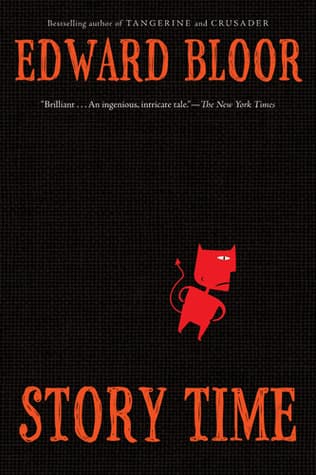
Synopsis
Covers the whole plot, including the ending.
- Difficulty
- Medium
- Pacing
- Moderate
- Mood
- Satirical, mysterious, dark, unsettling, critical
Story Time Plot Summary
Covers the whole plot, including the ending.
A New School, A Strange Start
Siblings George and Kate Anderson are nervous about their transfer to the Whittaker Magnet School, known for its academic excellence. Their father, a firm believer in the school's methods, insists they attend. When they arrive, the school feels sterile and almost dystopian. Classes are in windowless rooms, and the curriculum focuses heavily on test preparation. Students must drink a foul-tasting protein shake, supposedly for better performance, which George and Kate find suspicious. They quickly realize Whittaker is far from a normal school, and its pursuit of perfect test scores seems to have an unsettling cost.
The Whispers of the Demon
Soon after arriving, George and Kate hear whispers among students about strange events. Students disappear without explanation, and the faculty's responses are vague. The most common rumor involves a 'demon' or evil entity in the school, responsible for the disappearances. This demon supposedly preys on students who fail to meet the school's impossible academic standards. George and Kate are initially skeptical, but they become increasingly disturbed as more students vanish and fear grows among their peers. These stories seem to be more than just gossip.
Meeting the Outcasts
Feeling isolated by Whittaker's oppressive environment, George and Kate find comfort with a small group of rebellious students. This group includes the artistic Trixie and the insightful Miguel, who openly question the school's methods and the official explanations for the disappearances. They share suspicions about the protein shakes, locked doors, and constant surveillance. These friendships give George and Kate allies and a different view of the school, creating a sense of resistance against the institution's conformity and secrecy.
Uncovering the 'Story Time' Program
Through their investigations and talks with friends, George and Kate uncover a hidden program called 'Story Time.' This is not an elective but a punishment for students who perform poorly on tests or act non-conformist. Under the stern Ms. Perdue, students are forced to write stories, often on school-assigned themes. The process is grueling and mentally draining; students emerge withdrawn and changed, or sometimes do not emerge at all. The true purpose of 'Story Time' remains a mystery, increasing George and Kate's alarm.
The Role of Ms. Perdue
Ms. Perdue, a seemingly ordinary but intensely focused teacher, becomes a focus of George and Kate's suspicions. She supervises the 'Story Time' program, and her demeanor suggests a deep commitment to Whittaker's ideology. Students who have been through her program say she is unyielding and manipulative, seemingly draining them of their individuality. George and Kate suspect she is more than just a teacher; she seems to be a key enforcer of the school's agenda, possibly connected to the 'demon' and the disappearances. Her presence casts a long shadow over the school, embodying its oppressive atmosphere.
The Power of Narrative
As George and Kate look deeper into Whittaker's mysteries, they connect 'Story Time,' the disappearing students, and the 'demon.' They believe the demon is not a supernatural entity but a manifestation of the stories students are forced to create. The intense emotional and psychological energy put into these mandated narratives, especially those born of fear and conformity, seems to create a malevolent force. The school, through Ms. Perdue, is essentially harvesting students' creative output and emotional essence, turning it into something destructive.
A Glimpse into the Demon's Lair
Driven by their suspicions, George and Kate, often with their friends' help, infiltrate restricted areas of the school. They discover a hidden chamber or series of rooms connected to 'Story Time.' Here, they see unsettling evidence of the demon's presence: strange energy fluctuations, disturbing images that mirror the forced narratives, and perhaps remnants of the disappeared students. This discovery confirms their theory that the demon is tied to the school's creative process, a physical manifestation of suppressed imagination and forced narratives, solidifying the horror of Whittaker's methods.
The Confrontation and the Truth
George and Kate, with their discoveries, confront Ms. Perdue. Under pressure, she reveals the true, horrifying purpose of Whittaker Magnet School. The school's high test scores are a facade. The 'Story Time' program, fueled by protein shakes that dull critical thinking and enhance suggestibility, extracts and harnesses students' creative energy. This energy, channeled through their forced narratives, creates a powerful, malevolent entity—the 'demon'—which Ms. Perdue and the school's unseen masters intend to control for their own purposes, perhaps to manipulate society or gain power.
Fighting Back with Imagination
Understanding that the demon is a product of suppressed and manipulated creativity, George and Kate realize that fighting it with traditional methods will fail. Instead, they must combat it with the very source of its power: stories and imagination, used in a positive, freeing way. They rally their friends, encouraging them to reclaim their creative voices and write stories of their own choosing—stories of hope, defiance, and individuality. This collective act of uncoerced storytelling becomes their weapon, aiming to overwhelm and dismantle the demon's power, which thrives on fear and forced conformity.
The Climax: A Battle of Stories
In a dramatic showdown, George, Kate, and their allies unleash their collective, unchained creativity. They write and tell vibrant, diverse stories filled with personal meaning, directly opposing the drab, fear-driven narratives that power the demon. This torrent of genuine imagination creates a chaotic energy that destabilizes the demon. The entity, unable to withstand the influx of authentic, positive narrative power, begins to unravel. Ms. Perdue and the school's administrators, stripped of their control over the students' minds and creative output, find their entire system collapsing, exposed and defeated by the very forces they sought to exploit.
The Aftermath and Liberation
With the demon vanquished and 'Story Time' dismantled, Whittaker Magnet School's dark secrets are fully exposed. The oppressive atmosphere lifts, and the students, including those who had 'disappeared,' are freed, though scarred by their experience. The true nature of the school's 'academic excellence'—built on exploitation and suppressed individuality—is revealed to the wider world. George and Kate, having played a key role in this liberation, emerge as heroes, forever changed by their ordeal. The school is likely shut down, and the students begin the long process of healing and rediscovering their true selves and their love for learning.
Story Time Characters
George Anderson
Protagonist
The observant and analytical brother who questions authority.
George is initially a somewhat reluctant transfer student to Whittaker Magnet School, pushed by his father's academic aspirations. He is observant, analytical, and possesses a strong sense of right and wrong. Despite his initial discomfort, he quickly notices the school's unsettling atmosphere and the inconsistencies in its operations. George often takes a more logical and investigative approach to the mysteries, trying to piece together clues and understand the underlying mechanisms of the school's strange practices. He is protective of his sister, Kate, and grows increasingly courageous as he uncovers the truth.
Relationships: Kate Anderson (sibling); Trixie (friend/ally); Miguel (friend/ally); Ms. Perdue (antagonist)
Kate Anderson
Protagonist
The imaginative and empathetic sister who feels the school's emotional toll.
Kate is George's younger sister, more sensitive and emotionally attuned to the oppressive environment of Whittaker. She feels the psychological weight of the school's demands more acutely and is often the first to express her discomfort and fear. Kate possesses a vibrant imagination and a natural inclination towards storytelling, which makes her particularly vulnerable to the 'Story Time' program's manipulative nature, but also ultimately her greatest strength. Her empathy allows her to connect with other struggling students and understand the emotional core of the school's dark secrets.
Relationships: George Anderson (sibling); Trixie (friend/ally); Miguel (friend/ally); Ms. Perdue (antagonist)
Ms. Perdue
Antagonist
The stern, enigmatic teacher overseeing the 'Story Time' program.
Ms. Perdue is the primary antagonist, a cold and unyielding teacher who supervises the 'Story Time' program. She embodies the oppressive, joyless spirit of Whittaker Magnet School, meticulously enforcing its rules and manipulating students into producing the desired narratives. Her demeanor is severe, and she shows little to no empathy for the students under her charge. She is deeply committed to the school's nefarious agenda, believing in the power of controlled creativity. Her character represents the institutional corruption and the adult figures who willingly participate in the exploitation of children for a perceived greater, albeit twisted, good.
Relationships: George Anderson (adversary); Kate Anderson (adversary); The Demon (creator/controller)
Trixie
Supporting
An artistic and rebellious student who aids George and Kate.
Trixie is one of George and Kate's first allies at Whittaker. She is an artistic and independent-minded student who chafes under the school's rigid curriculum and focus on standardized tests. Trixie's non-conformist nature makes her a target for the 'Story Time' program, but it also gives her a unique perspective on the school's true nature. She is brave and often speaks her mind, providing valuable insights and a rebellious spirit to the group. Her artistic sensibility helps the protagonists understand the true nature of the 'demon' and the power of creative expression.
Relationships: George Anderson (friend/ally); Kate Anderson (friend/ally)
Miguel
Supporting
A cynical yet insightful student who helps uncover the school's secrets.
Miguel is another student who befriends George and Kate. He is initially cynical and wary, having been at Whittaker longer and witnessed its strange occurrences. Despite his pessimism, he is highly intelligent and observant, often piecing together clues and offering astute observations about the school's oppressive system. Miguel's skepticism is a protective mechanism, but underneath it, he yearns for truth and justice. He provides a grounded perspective to the group and is instrumental in helping them navigate the school's hidden pathways and understand its manipulative tactics.
Relationships: George Anderson (friend/ally); Kate Anderson (friend/ally)
Mr. Anderson
Supporting
George and Kate's father, a proponent of Whittaker's methods.
Mr. Anderson is George and Kate's father, a well-meaning but misguided parent who firmly believes in the Whittaker Magnet School's promise of academic excellence. He is swayed by its impressive test scores and reputation, pushing his children to conform to its demanding curriculum. He represents the parental pressure and societal value placed on standardized achievement, often dismissing his children's concerns as typical school anxieties. His initial blindness to the school's true nature highlights the insidious way such institutions can deceive even loving parents.
Relationships: George Anderson (father); Kate Anderson (father)
The Demon
Antagonist
A malevolent entity born from suppressed and manipulated creativity.
The Demon is the central, albeit abstract, antagonist of the story. It is not a traditional supernatural creature but a manifestation of the collective, forced narratives and suppressed creativity of the students in the 'Story Time' program. It feeds on fear, conformity, and the emotional energy extracted from the students' minds, growing stronger with each forced story. The demon represents the devastating consequences of an education system that stifles individuality and creativity in favor of rote memorization and standardized success. Its presence is both physical and psychological, creating an atmosphere of terror and dread within the school.
Relationships: Ms. Perdue (creator/controller); Whittaker Magnet School (product/instrument)
The Principal/School Administration
Antagonist
The unseen, overarching authority orchestrating Whittaker's sinister agenda.
The Principal and the broader school administration operate largely in the background, serving as the ultimate orchestrators of Whittaker's oppressive system. They are the architects of the 'Story Time' program and the ones who benefit from the demon's existence, though their ultimate goals beyond academic prestige and control remain somewhat vague. They represent the faceless, institutional power that manipulates students and teachers alike. Their anonymity makes them all the more sinister, embodying the bureaucratic evil that can thrive unchecked in pursuit of perceived excellence.
Relationships: Ms. Perdue (subordinate/collaborator); The Demon (instrument/creation)
Story Time Themes
The Dangers of Standardized Education
The novel examines the harmful effects of an education system focused only on standardized test scores and rote learning. Whittaker Magnet School, with its windowless classrooms, protein shakes, and 'Story Time' program, is a dystopian example of this issue. It shows how such a system can stifle creativity, individuality, and critical thinking, turning students into data points instead of fostering real intellectual growth. The 'demon' itself is a literal manifestation of the destructive power in suppressing authentic learning and personal expression for artificial metrics.
“The Whittaker Way. It's about efficiency, precision, and quantifiable results. We don't waste time on 'fluff' here. Every minute is optimized for success.”
The Power of Imagination and Storytelling
In contrast to the oppressive educational system, the novel celebrates the freeing power of imagination and authentic storytelling. While the school tries to control and weaponize creativity through forced narratives, George and Kate discover that genuine, uncoerced stories are the key to resistance and freedom. The demon, born from manipulated narratives, is ultimately defeated by the students' collective act of creating their own, heartfelt stories. This theme emphasizes that imagination is not trivial but a fundamental human need and a powerful force for change and self-expression.
“They want our stories, but not our own stories. They want to tell us what to write. But real stories, the ones that come from inside you, those are the ones that matter.”
Conformity vs. Individuality
A central conflict in 'Story Time' is the struggle between the school's demand for absolute conformity and the students' need for individuality. Whittaker actively suppresses unique personalities, creative impulses, and dissenting thoughts, aiming to mold every student into a compliant, high-scoring automaton. The 'disappearances' and the 'Story Time' program are extreme methods of enforcing this conformity. The protagonists and their allies, by daring to question, investigate, and ultimately express their true selves, fight for the right to be individual in a system that seeks to erase it, highlighting the importance of personal identity.
“They don't want us to think, George. They want us to be exactly the same, like little robots humming the same tune.”
Fear and Control
Fear is a constant element at Whittaker Magnet School, used by the administration as a primary tool for control. The rumors of the 'demon,' the unexplained disappearances, and the psychological pressure of the 'Story Time' program all create an atmosphere of dread that keeps students compliant. The school manipulates this fear to extract creative energy and maintain absolute authority. The novel explores how fear can paralyze individuals and entire communities, making them susceptible to manipulation, and conversely, how overcoming that fear through courage and solidarity is essential for reclaiming agency.
“The fear in this school... it's like another subject they teach. And we're all getting straight A's.”
Plot Devices & Literary Techniques
The Protein Shake
A mysterious beverage designed to suppress and enhance.
The daily protein shake served to all students at Whittaker is a crucial plot device. Initially presented as a health supplement for academic performance, it quickly becomes suspicious. It is implied to have properties that suppress critical thinking, dull emotions, and make students more suggestible, thus priming them for the 'Story Time' program and the extraction of their creative energy. It symbolizes the insidious ways an oppressive system can chemically and psychologically manipulate its subjects, blurring the lines between nourishment and control, and contributing to the overall sense of unease and dread within the school.
The 'Story Time' Program
A punitive, creativity-draining program.
The 'Story Time' program is the central plot device, serving as the engine of the school's true purpose. It is where students are sent for poor performance or non-conformity, forced to write specific narratives under duress. This program is not just a punishment but a mechanism for harvesting and manipulating student creativity, which in turn powers the 'demon.' It represents the perversion of education and the exploitation of children's minds. Its existence drives the mystery and provides the key to understanding the demon and the school's ultimate agenda, leading directly to the climax.
The Demon
A metaphorical and literal manifestation of suppressed creativity.
The 'demon' functions as both a literal entity and a powerful metaphor. Literally, it is a malevolent force born from the forced, fear-driven narratives of the 'Story Time' program, responsible for the disappearances and the oppressive atmosphere. Metaphorically, it represents the destructive consequences of an education system that stifles individuality and creativity, turning the very essence of human imagination into something harmful. Its ambiguous nature keeps the reader guessing, while its defeat signifies the triumph of authentic self-expression over institutional control.
The Windowless Classrooms
A symbol of isolation and lack of perspective.
The ubiquitous windowless classrooms at Whittaker Magnet School are a subtle yet effective plot device. They immediately establish the school's oppressive and isolated atmosphere. Symbolically, they represent the students' lack of connection to the outside world, their limited perspective, and the school's deliberate attempt to control their environment and information. This physical confinement mirrors the intellectual and emotional confinement imposed by the curriculum, emphasizing the theme of suppressed freedom and the absence of natural light and natural thought.
Quiz
10 questions on the plot and the characters. Each answer comes with a short explanation.
Question 1
What is the name of the school George and Kate transfer to?
- Whittaker Magnet School
- Magnet School for Excellence
- Whittaker Academy
- The Education Center
Show answer
A. Whittaker Magnet School The school George and Kate transfer to is explicitly named Whittaker Magnet School.
Question 2
What is the primary focus of the school's curriculum?
- Creative writing and arts
- Beating standardized tests
- Scientific research and innovation
- Physical education and sports
Show answer
B. Beating standardized tests The book states that the school's curriculum is focused on beating standardized tests.
Question 3
What is given to students to improve their test performance?
- Specialized tutoring
- Energy drinks
- Noxious protein shakes
- Advanced study materials
Show answer
C. Noxious protein shakes The students are force-fed noxious protein shakes to improve their test performance.
Question 4
What unsettling presence is mentioned to be loose in the building?
- A disgruntled former student
- A mischievous ghost
- A dangerous animal
- A demon
Show answer
D. A demon The book mentions that there seems to be a demon loose in the building.
Question 5
The book is described as a satire about what?
- The dangers of technology
- The state of modern education
- The pressures of social media
- The challenges of growing up
Show answer
B. The state of modern education The book is described as a 'bitterly funny satire about the state of modern education'.
Question 6
Which of the following is NOT a genre listed for this book?
- Mystery
- Science Fiction
- Young Adult
- Fantasy
Show answer
B. Science Fiction The genres listed are Fantasy, Children's, Mystery, and Young Adult. Science Fiction is not mentioned.
Question 7
What is the implication of the school's high test scores?
- They are a result of genuine academic excellence.
- They are achieved at a significant cost to student well-being and safety.
- They are inflated due to cheating by students.
- They are a product of advanced teaching technology.
Show answer
B. They are achieved at a significant cost to student well-being and safety. The description highlights the dreary rooms, forced shakes, and a murderous demon, all implying that the high test scores come at a high price.
Question 8
What does the phrase 'murderous work has only just begun' suggest about the demon's activities?
- The demon has been active for a long time and is now stopping.
- The demon's killing spree is recent and likely to continue.
- The demon's actions are not actually violent, but metaphorical.
- The demon is only capable of one murder.
Show answer
B. The demon's killing spree is recent and likely to continue. The phrase 'only just begun' clearly indicates that the demon's violent actions are recent and are expected to escalate.
Question 9
The description of the school's environment ('dreary, windowless rooms', 'noxious protein shakes') primarily serves to create a sense of:
- Nostalgia for old-fashioned schooling
- Excitement and adventure
- Oppression and toxicity
- Innovation and progress
Show answer
C. Oppression and toxicity The descriptions of dreary, windowless rooms and noxious shakes evoke a feeling of unpleasantness, control, and harm, contributing to an atmosphere of oppression and toxicity within the educational system.
Question 10
Considering the book's genres and the description, what is the likely overall tone of 'Story Time'?
- Lighthearted and whimsical
- Serious and academic
- Darkly humorous and critical
- Suspenseful and terrifying
Show answer
C. Darkly humorous and critical The mention of 'bitterly funny satire', combined with a 'demon loose in the building' and the critique of education, suggests a tone that is both darkly humorous and critical of the educational system.
Story Time FAQ
What is Story Time by Edward Bloor about?
"Story Time" follows George and Kate as they enroll in the prestigious Whittaker Magnet School, hoping for a top-tier education. However, they quickly discover the school's disturbing methods, including a curriculum solely focused on standardized tests, bleak learning environments, and experimental student enhancements, all while a sinister presence lurks within.
What genre is Story Time?
Story Time is a Young Adult novel that blends elements of fantasy, mystery, and satire. It's also considered a children's book due to its target audience and themes.
Who are the main characters in Story Time?
The main characters are George and Kate, two students who transfer to the Whittaker Magnet School seeking a better education.
What is the central conflict in Story Time?
The central conflict arises from the students' realization that the Whittaker Magnet School's pursuit of academic excellence comes at a terrible cost, including the presence of a dangerous, possibly supernatural entity.
What is the Whittaker Magnet School like?
The Whittaker Magnet School is presented as a highly-ranked institution focused obsessively on standardized testing. Its facilities are described as dreary and windowless, and it employs extreme measures, like force-feeding students protein shakes, to boost performance.
Is Story Time similar to Edward Bloor's other books like Tangerine?
Yes, "Story Time" shares Edward Bloor's signature darkly humorous and satirical style, similar to "Tangerine." Both novels critique societal issues, in this case, the pressures and potential downsides of modern education.
What is the satirical element in Story Time?
The book satirizes the overemphasis on standardized testing and the often dehumanizing aspects of modern educational systems, questioning whether the pursuit of high scores justifies extreme or unethical practices.
Does Story Time have a happy ending?
The book's ending is likely to be impactful and thought-provoking, fitting its satirical nature. While the immediate fate of the characters might be resolved, the broader commentary on education suggests a nuanced conclusion.
Who is the target audience for Story Time?
The book is aimed at young adults and older children who enjoy mystery, fantasy, and stories with a critical look at societal issues.
What is the 'demon' mentioned in the book's description?
The 'demon' in the book is a metaphorical and literal threat within the school, representing the dark side or destructive consequences of the extreme educational methods employed by Whittaker Magnet School.
About the author

Edward Bloor is an American author known for his works of fiction, particularly aimed at young readers. His notable books include "Tangerine," which explores themes of family and identity through the lens of a young boy's experiences in Florida, and "Story Time," a narrative that intertwines storytelling with real-life challenges.
Similar books
- Inkheart
Cornelia Funke
3.9 (369k) average on GoodreadsFantasyBoth "Story Time" and "Inkheart" explore the magical concept of characters literally emerging from books. However, Bloor's approach in "Story Time" focuses more on a collective 'Story World' where all tales reside and require tending, creating a broader, more allegorical commentary on the fate of stories. Funke's "Inkheart" is more intimate, centering on a single individual's ability to bring characters to life and the direct consequences of specific narrative intrusions. Bloor's world feels more systemic and abstract, while Funke's is deeply personal and focused on specific literary works.
- The Neverending Story
Michael Ende
4.2 (162k) average on GoodreadsFantasy"Story Time" shares a profound thematic kinship with "The Neverending Story" in its depiction of a fantastical realm sustained by human imagination and threatened by its absence. Both books feature protagonists who are drawn into these worlds to save them. However, Ende's narrative, particularly in its initial half, is a more direct meta-narrative, with the reader experiencing the story alongside Bastian. Bloor's Natalie enters the Story World more as a protagonist within a pre-existing conflict, making the reader a witness to her journey rather than a participant in the act of reading itself. Bloor's tone is also arguably more grounded, even within its fantasy, whereas Ende embraces a more philosophical and overtly allegorical style.
- Harry Potter and the Sorcerer's Stone
J.K. Rowling
4.5 (7M) average on GoodreadsFantasyRescued from a miserable life under the stairs, an orphaned boy discovers he's a wizard destined for a magical school, where he uncovers a dangerous secret tied to the dark wizard who murdered his parents.
- The Hunger Games
Suzanne Collins
4.3 (6.4M) average on GoodreadsFantasyIn a future where children fight to the death on live television, Katniss Everdeen volunteers for the arena, turning a death sentence into a fight for survival and a spark of rebellion.
- 1984
George Orwell
4.2 (3.1M) average on GoodreadsPoliticsIn a future where surveillance and thought control are absolute, a man's search for truth clashes with the Party, showing that hope can be a form of rebellion.
- Divergent
Veronica Roth
4.2 (2.9M) average on GoodreadsFantasyIn a society divided by virtues, a sixteen-year-old's difference from the norm starts a rebellion that threatens her world.




Enjoyed the summary?
A summary gives you the shape of the book. The book itself has the detail, the examples and the voice.
Find Story Time on AmazonAs an Amazon Associate, BookBrief earns from qualifying purchases. How we're funded