
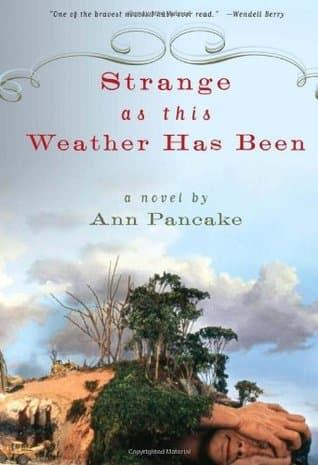
Synopsis
Covers the whole plot, including the ending.
- Difficulty
- Medium
- Pacing
- Moderate
- Mood
- Atmospheric, Gritty, Melancholy, Resilient
- Read it if
- You are interested in literary fiction with a strong sense of place, exploring environmental themes, economic hardship, and the resilience of a family in Appalachia.
- Skip it if
- You prefer fast-paced plots, lighthearted themes, or stories without significant environmental or social commentary.
Strange as This Weather Has Been Plot Summary
Covers the whole plot, including the ending.
The Hollow's Precarious Existence
The novel introduces the Feltner family – Lace, her husband Dane, and their four children, Bant, Corey, Jesco, and Sugar – living in a hollow in West Virginia. Their lives are tied to the land, but also threatened by nearby mountaintop removal (MTR) mining operations. The story opens with the children playing in the changed landscape, showing their adaptation to a world scarred by mining. Dane works for the mining company, which is both a source of income and conflict for the family. Lace, deeply connected to nature, feels the destruction strongly, while the children, especially Bant, start to notice the changes to their environment – the constant dust, the polluted water, and the disappearing mountains. Their home, though loved, feels vulnerable to the industry around them.
Bant's Growing Awareness and First Job
Fifteen-year-old Bant, observant and restless, takes a job cleaning rooms at a motel, a place used by out-of-state miners and contractors. This experience expands her view beyond the hollow, showing her the transient and sometimes harsh realities of the mining economy. She meets various people, including young miners, and begins to understand the complex system of dependency and exploitation in the industry. Her interactions there, particularly with a young miner named Spud, hint at budding romantic interests and a desire for independence. Meanwhile, conditions in the hollow continue to worsen, with more blasting, dust, and concerns about water quality from nearby impoundments, increasing Lace's quiet despair and anger.
Domestic Tensions and Environmental Decay
As mining operations intensify, so do family tensions within the Feltner household. Dane's work is inconsistent, subject to layoffs and company decisions, which stresses Lace. His occasional drinking worsens their conflicts. The children are increasingly exposed to environmental damage; Corey, in particular, has respiratory issues linked to the dust and pollution. Lace tries to keep things normal and protect her children from the harsh realities, but the constant noise, the brown water, and the threat of floods from the disturbed landscape make it almost impossible. Bant sees her parents' struggles and begins to feel the widespread sense of loss and helplessness.
The First Flood and Its Aftermath
Heavy rains cause a flood, a direct result of the changed landscape and clear-cut mountains that can no longer absorb water. The floodwaters rush through the hollow, damaging the Feltner home and washing away many of their belongings. This event shows the immediate dangers of MTR. The family must face how fragile their lives are and how little they can do against such forces. The children are traumatized, and Lace's resolve strengthens, fueling her belief that they must fight the mining companies. The community is left to rebuild, largely on their own, increasing their sense of isolation.
Lace's Awakening Activism
After the flood, Lace's quiet resentment turns into a desire for action. She starts attending community meetings, listening to other residents who have suffered from MTR, and learning about organized resistance efforts. Her deep connection to the land and her heritage, passed down through generations, makes her want to protect what remains. She deals with the fear of retaliation from the powerful mining companies and the potential strain on her already fragile family, especially given Dane's reliance on mining work. Despite her hesitation, the increasing destruction and her children's suffering push her closer to becoming active in the environmental movement, a decision that will have big consequences.
Jesco's Illness and Bant's Escape
The youngest child, Jesco, becomes seriously ill, with symptoms the family suspects are linked to the polluted water and air. His illness shows the human cost of the mining operations, making Lace more determined. Meanwhile, Bant, feeling stifled by the family's struggles and the bleakness of the hollow, finds a temporary escape in her relationship with Spud, the young miner. Their secret meetings offer her a sense of normalcy and a glimpse of a different future, even as she sees the contradictions of being involved with someone connected to the industry destroying her home. Her independence grows, but her loyalty is conflicted.
The Damaged Spring and Community Action
A turning point happens when the family's cherished spring, their source of clean water, becomes contaminated or dries up due to mining operations. This personal insult, along with Jesco's continued illness, energizes Lace. She joins a group of activists protesting the mining company, attending rallies and speaking out. This public stance creates conflict with Dane, who fears for his job and their safety. Lace's courage inspires some, but also shows the deep divisions in the community, where economic survival often conflicts with environmental protection. She speaks for those without a voice, risking much for her family and her heritage.
Bant's Discovery and the Mountain's Fate
Driven by curiosity and a deep connection to the land, Bant explores the devastated mountaintop removal sites. She sees the moonscape-like destruction, the vast pits, and the huge machinery, an experience that affects her deeply. She sees the scale of what has been lost and what continues to be lost, confirming her understanding of her mother's fight. Her journey into this forbidden zone is a coming-of-age moment, as she confronts the brutal reality of the industry that controls their lives. She brings back not just a sense of horror, but also a new appreciation for the remaining parts of nature and a resolve to protect them.
The Climax of Protest and Personal Reckoning
Lace participates in a major protest action, possibly a blockade or a sit-in, directly confronting the mining company's operations. This act of civil disobedience involves danger and strong emotions. While Lace is in the public battle, the family at home faces its own crises. Dane's frustration and fear peak, leading to a significant confrontation within the family. Bant, watching these struggles, understands the immense pressure on her mother and the sacrifices she is making. The climax shows the public and private battles coming together, illustrating the personal cost of the larger environmental struggle on individuals and families.
A Glimmer of Hope Amidst the Scars
After the protests and personal upheavals, the Feltner family, though scarred, finds a way to endure. Mining operations continue, but Lace's activism has raised awareness and perhaps given the community a sense of power. Bant, having seen the destruction and her mother's fight, begins to make her own way, carrying on the environmental awareness and a deep love for her home. While the mountains may never fully recover, the family's resilience and their connection to the land remain. The novel ends not with a clear victory, but with a powerful story of the human spirit's ability to find hope and continue fighting, even against great odds, preserving cultural memory and fighting for future generations.
Principal Figures
Lace Feltner
Protagonist
Mother and fierce protector of her family and the ravaged West Virginia land.
Lace is the matriarch of the Feltner family, deeply rooted in the traditions and natural rhythms of West Virginia. She possesses an innate, almost spiritual connection to the mountain and its hollows, which makes the mountaintop removal (MTR) particularly painful for her. Initially quiet and burdened by the daily struggles of poverty and her husband's fluctuating employment, Lace's protective instincts are awakened by the escalating environmental destruction and its impact on her children, especially Jesco's illness. She transforms from a passive observer into a determined activist, risking her family's stability to fight against the mining companies. Her strength lies in her deep love for her family and her unshakeable connection to her heritage.
Relationships: Dane Feltner (Husband, often strained by economic pressures and differing views on mining.); Bant Feltner (Eldest daughter, with whom she shares a deep, sometimes conflicted, understanding.); Corey, Jesco, Sugar Feltner (Children, whose well-being is her primary motivation.)
Bant Feltner
Protagonist
Fifteen-year-old daughter, navigating adolescence, environmental destruction, and burgeoning independence.
Bant is the eldest daughter, observant, restless, and intelligent. She is at an age where she is forming her own identity, caught between the traditions of her family and the desire for a life beyond the hollow. Her job at the motel exposes her to the broader world connected to the mining industry, and her relationship with Spud offers a taste of independence and romance. Bant is deeply affected by the environmental degradation, but also finds a strange beauty and adventure in the altered landscape. She is a keen observer, often internalizing the struggles of her parents and the land. Her journey is one of awakening to the full scope of the destruction and her own place within it.
Relationships: Lace Feltner (Mother, with whom she shares a deep, often unspoken, bond and similar temperament.); Dane Feltner (Father, whose struggles she observes with a mix of pity and frustration.); Spud (Young miner and romantic interest, representing a conflicted connection to the industry.); Corey, Jesco, Sugar Feltner (Younger siblings, for whom she feels a sense of responsibility.)
Dane Feltner
Supporting
Lace's husband, a coal miner torn between providing for his family and the destruction it causes.
Dane is Lace's husband and the father of their four children. He works for the mining company, a job that provides the family's income but also places him in a morally ambiguous position. He is a good man at heart, burdened by the responsibility of providing for his family in a region with limited economic opportunities. His character embodies the difficult choices many West Virginians face: working for the industry that harms their home or facing unemployment. He is often stressed, prone to occasional drinking, and fears the consequences of Lace's activism, preferring to keep his head down. His struggle highlights the economic entrapment of the community.
Relationships: Lace Feltner (Wife, with whom he shares a deep love but also significant tension over mining and activism.); Bant Feltner (Daughter, whom he loves but struggles to understand her growing independence and awareness.)
Corey Feltner
Supporting
One of the younger Feltner children, suffering from health issues linked to the mining.
Corey is one of the younger Feltner children, often depicted as more sensitive and prone to illness, particularly respiratory problems. His health issues serve as a stark reminder of the direct human cost of the environmental pollution caused by mountaintop removal. He spends much of his time playing in the altered landscape, adapting to the new normal, but his vulnerability underscores the dangers faced by the children in the hollow. Corey's suffering is a significant catalyst for Lace's activism, as she sees the immediate impact of the mining on her own flesh and blood.
Relationships: Lace Feltner (Mother, fiercely protective of his health.); Bant Feltner (Sister, who often cares for him.)
Jesco Feltner
Supporting
The youngest Feltner child, whose severe illness highlights the immediate dangers of pollution.
Jesco is the youngest of the Feltner children, and his severe illness is a critical plot point. His suffering, which the family attributes to the polluted water and air, is a visceral manifestation of the environmental catastrophe. Jesco's fragility and innocence make his illness particularly poignant, serving as a powerful emotional trigger for Lace's decision to become an activist. He represents the most vulnerable victims of the mining industry's disregard for human health and environmental safety. His presence underscores the urgency and personal stakes of the fight against MTR.
Relationships: Lace Feltner (Mother, whose love and fear for him drive her actions.); Bant Feltner (Sister, who helps care for him.)
Sugar Feltner
Supporting
Another of the younger Feltner children, adapting to the scarred landscape.
Sugar is one of the younger Feltner children, often seen playing alongside Corey and Jesco in the unique, altered landscape created by the mining. She represents the generation growing up with mountaintop removal as a normalized part of their environment. While her perspective is less developed than Bant's, her presence reinforces the theme of childhood resilience and adaptation in the face of profound environmental change. She embodies the future of the hollow, highlighting what is at stake for the next generation.
Relationships: Lace Feltner (Mother.); Bant Feltner (Sister.)
Spud
Supporting
A young miner who becomes Bant's romantic interest, representing the conflicted nature of the mining community.
Spud is a young miner whom Bant meets and develops a romantic relationship with while working at the motel. He represents the younger generation of workers drawn into the mining industry, often from outside the immediate community, seeking economic opportunity. His character highlights the complexity of the situation, as he is a part of the system that is destroying Bant's home, yet he is also a person with his own struggles and desires. His relationship with Bant allows her to explore independence and attraction, but also forces her to confront the contradictions inherent in her world.
Relationships: Bant Feltner (Romantic interest, a complex relationship given his profession.)
Aunt Mae
Supporting
Lace's relative, representing the older generation's connection to the land and traditional knowledge.
Aunt Mae is Lace's relative, an older woman who embodies the deep-rooted knowledge and connection to the land that is being lost with the mountaintop removal. She shares stories, traditions, and an understanding of the natural world that predates the industrialization of the mountains. Her presence serves as a reminder of the rich cultural heritage and ecological wisdom that is being eroded. She offers Lace emotional support and reinforces the importance of fighting for their land and history, connecting Lace's activism to a longer lineage of resistance and resilience.
Relationships: Lace Feltner (Aunt, a source of wisdom and support.)
Themes & Insights
Environmental Destruction and Its Human Cost
The main theme explores the impact of mountaintop removal mining on the West Virginia landscape and its people. The novel shows the physical destruction (blasted mountains, polluted water, floods, dust) and the resulting health problems (Corey's respiratory issues, Jesco's illness). It shows how this environmental damage reduces quality of life, cultural heritage, and future prospects for mountain communities, forcing families like the Feltners into a difficult life where their home is being destroyed. Lace's activism comes from this direct experience of loss and harm.
“The mountain was like a body, she thought, and they were tearing out its guts.”
Identity and Belonging
The novel explores how identity is tied to place, especially for West Virginia mountain people. The Feltner family's sense of self, heritage, and way of life are rooted in the hollow and the surrounding mountains. As the landscape is destroyed, so is part of their identity. Bant's self-discovery is linked to her growing understanding of her home's fate. The fight to preserve the land becomes a fight to preserve who they are, their history, and their future, showing the strong sense of belonging that comes from generations of living on the land.
“She felt the mountain in her bones, a part of her blood, and now it was bleeding.”
Economic Desperation vs. Environmental Preservation
This theme explores the difficult choice many Appalachian communities face: the need for jobs and economic survival often comes at the expense of environmental health and cultural heritage. Dane's reliance on mining work, despite its destructive nature, shows this conflict. The novel shows how the powerful mining industry creates a system of dependency, making it hard for residents to oppose the force that provides their livelihood. This creates deep divisions within families and communities, where the choice between 'jobs or health' feels impossible, showing the systemic issues involved.
“How could you fight the thing that fed your children, even if it was slowly killing them?”
Resilience and Resistance
Despite the challenges, the Feltner family and the community show resilience and a growing spirit of resistance. Lace's transformation into an activist, Bant's growing awareness, and the community's efforts to organize and protest show the human ability to fight for what they believe in. The novel celebrates strength of character, enduring spirit, and deep love for home that fuels this resistance, even when immediate victories are rare. It is about the enduring human spirit in the face of great difficulty.
“They could take the top off the mountains, but they couldn't take the mountain out of us.”
Childhood and Adaptation
The novel offers a look at childhood in a landscape shaped by industrial destruction. The Feltner children—Bant, Corey, Jesco, and Sugar—grow up in an environment where blasted mountains, polluted streams, and dust are normal. They find adventure and play in this changed world, adapting with an innocence that highlights the severity of their circumstances. Their experiences show how environmental damage affects the most vulnerable, but also how children can adapt, find joy, and understand their world, even when it is scarred. Their future, however, remains uncertain.
“The kids played in the slag heaps like they were just another kind of mountain.”
Plot Devices & Literary Techniques
Multiple Perspectives (Shifting POV)
Narrative shifts between various family members to provide a comprehensive view of the crisis.
The novel employs a shifting point of view, primarily focusing on Lace and Bant, but also occasionally dipping into the perspectives of Dane and the younger children. This allows for a multifaceted exploration of the mountaintop removal crisis, showing its impact from different angles: Lace's deep emotional and spiritual connection, Bant's awakening awareness, Dane's economic burden, and the children's adaptation. This technique builds a rich, empathetic understanding of the family's collective and individual struggles, ensuring no single viewpoint dominates the complex narrative.
Environmental Symbolism
The landscape itself acts as a character, reflecting the family's internal and external struggles.
The West Virginia landscape, particularly the mountains, hollows, and water, functions as a powerful symbol. Initially, it represents heritage, sustenance, and identity. As it undergoes mountaintop removal, it becomes a symbol of violation, loss, and the destructive power of industry. The polluted water, the dust, and the floods are not just plot points but also symbolic representations of the poisoning of their lives and culture. The mountain itself embodies the resilience of nature and the spirit of the people, even as it is systematically destroyed, mirroring the family's own struggle for survival and integrity.
The Motif of Water
Water, once a source of life, becomes a symbol of pollution and destruction.
Water serves as a recurring and evolving motif throughout the novel. Initially, the clean spring water represents purity, life, and the connection to the land and tradition. As the mining progresses, water becomes contaminated, turning brown, causing illness (Jesco), and eventually leading to devastating floods due to altered hydrology. This transformation of water from a life-giving force to a destructive and toxic element powerfully illustrates the profound and irreversible damage caused by mountaintop removal, directly impacting the family's health and safety.
Folkloric Elements and Oral Tradition
Incorporation of local dialect, stories, and historical memory to ground the narrative in Appalachian culture.
Pancake weaves in elements of Appalachian oral tradition, including local dialect, storytelling, and references to historical memory of the land. This device authenticates the setting and characters, grounding the narrative in the rich cultural fabric of West Virginia. It emphasizes the deep connection the characters have to their heritage and the land, highlighting what is being lost through the destruction. Aunt Mae's character, in particular, embodies this link to an older way of life and knowledge, reinforcing the cultural stakes of the environmental fight.
Strange as This Weather Has Been Quotes
“The land is a body, and we are its blood.”
“You can't love a place and not be afraid for it.”
“We're all just waiting for the mountain to fall on us.”
“The water don't lie. It tells you what's been done.”
“Memory is a kind of haunting.”
“They take the top off the world and call it progress.”
“Home is not a place you can leave behind.”
“The silence after the blast is the loudest thing I've ever heard.”
“We live in the cracks of what they've broken.”
“Grief is a mountain you carry inside.”
“The trees remember what we try to forget.”
“Sometimes holding on is the only rebellion left.”
“You can't bury a mountain and expect it to stay dead.”
Quiz
10 questions on the plot and the characters. Each answer comes with a short explanation.
Question 1
What is the primary environmental destruction method depicted in the novel that threatens the characters' mountain life?
- Underground coal mining
- Mountaintop removal and strip mining
- Oil fracking
- Deforestation for agriculture
Show answer
B. Mountaintop removal and strip mining The novel centers on mountaintop removal and strip mining, which devastate the landscape in West Virginia, turning mountains to slag and wastewater, directly impacting the family's environment and livelihood.
Question 2
Who is the fifteen-year-old protagonist that the novel focuses on, alongside her mother?
- Lace
- Bant
- A unnamed miner
- A company executive
Show answer
B. Bant Bant is the fifteen-year-old daughter who works at a 'scab' motel and becomes involved with a young miner, serving as a key perspective on the impacts of mining on youth and family dynamics.
Question 3
Where do the children in the family often find themselves playing as domestic conflicts escalate?
- In a local school playground
- At a community center
- Among junk from floods and felled trees in the hollows
- In the safety of their home
Show answer
C. Among junk from floods and felled trees in the hollows As tensions rise at home, the children are pushed outside to play in the degraded environment, among flood debris and fallen trees, highlighting how the mining destruction permeates their daily lives.
Question 4
What job does Bant take that leads to her involvement with a young miner?
- Working at a coal mine
- Teaching at a local school
- Working at a 'scab' motel
- Farming on family land
Show answer
C. Working at a 'scab' motel Bant works at a 'scab' motel, which refers to a motel that houses strikebreakers or non-union workers, and this setting introduces her to the mining community and her romantic interest.
Question 5
What internal conflict does Lace, Bant's mother, grapple with throughout the novel?
- Whether to move the family to a city
- Whether to join the fight against the mining companies
- Whether to start her own business
- Whether to homeschool her children
Show answer
B. Whether to join the fight against the mining companies Lace contemplates activism against the mining companies, reflecting the novel's theme of resistance and the personal stakes involved in environmental and social justice struggles.
Question 6
How does the novel describe the transformed landscape resulting from mining activities?
- As a lush, renewed forest
- As a blasted moonscape craters
- As a thriving industrial park
- As a peaceful rural farmland
Show answer
B. As a blasted moonscape craters The mining turns the mountains into 'blasted moonscape craters,' a vivid metaphor for the ecological devastation and loss of natural beauty that characters like the children explore.
Question 7
What broader theme does the novel explore through the juxtaposition of domestic conflicts and environmental destruction?
- The benefits of industrial progress
- The threat of destruction in both landscape and home life
- The simplicity of rural living
- The joys of childhood adventure
Show answer
B. The threat of destruction in both landscape and home life The novel intertwines personal and environmental crises, showing how mining's physical destruction mirrors and exacerbates familial tensions, emphasizing interconnected threats to community and nature.
Question 8
What does Bant discover that represents a 'very real threat of destruction' beyond her home life?
- A hidden treasure in the mountains
- The looming destruction in the landscape from mining
- A secret family history
- A new economic opportunity in mining
Show answer
B. The looming destruction in the landscape from mining Bant's curiosity and strength lead her to recognize the extensive environmental damage from mining, symbolizing the broader societal and ecological crises that challenge her community.
Question 9
In what way does the novel characterize the children's relationship with nature, given the mining impacts?
- They are completely disconnected from nature
- They experience nature only as the degraded environment they know
- They actively restore the natural landscape
- They prefer indoor activities to avoid the ruined outdoors
Show answer
B. They experience nature only as the degraded environment they know The children play among flood junk and felled trees, showing that their only experience of 'nature' is the damaged landscape, underscoring the loss of pristine environments and its impact on youth.
Question 10
What historical and social context does the novel's setting in present-day West Virginia primarily critique?
- The decline of manufacturing jobs
- The latest coal mining boom and its socio-environmental costs
- The urbanization of rural areas
- The benefits of renewable energy transitions
Show answer
B. The latest coal mining boom and its socio-environmental costs Set against a coal mining boom, the novel critiques mountaintop removal and strip mining, highlighting worker struggles, environmental ruin, and the erosion of mountain life, reflecting real issues in Appalachian communities.
Strange as This Weather Has Been FAQ
What is 'Strange as This Weather Has Been' about?
The novel follows a West Virginia coal mining family—parents Lace and Jimmy Make, and their four children—as they navigate the devastating impacts of mountaintop removal mining on their community and environment. Through alternating perspectives, particularly focusing on fifteen-year-old Bant and her mother Lace, it explores how the destruction of the landscape parallels domestic tensions, economic struggles, and the family's fraying connection to their mountain home.
Why should I read 'Strange as This Weather Has Been'?
This book offers a poignant, ground-level view of environmental and social issues in Appalachia, blending lyrical prose with stark realism. It humanizes the complex tensions between economic survival and ecological preservation through deeply drawn characters like Bant, who embodies both youthful rebellion and inherited resilience, making the impacts of industrial mining feel immediate and personal.
What is the background/setting of 'Strange as This Weather Has Been'?
Set in present-day West Virginia, the story unfolds in a rural mining community where mountaintop removal and strip mining have scarred the landscape. The family's hollow—once lush—is now littered with flood debris and felled trees, while the mines create 'moonscape craters' that the children explore, reflecting the erosion of both land and traditional mountain life.
What are the most memorable quotes?
While specific quotes vary, recurring themes include Lace's reflections on loss ('The mountains aren't just being mined; they're being unmade') and Bant's observations of change ('We played in the ruins like they were our inheritance'). The title itself, drawn from a folk song, echoes the characters' sense of dislocation in a rapidly transforming world.
What writing style does the author use?
Ann Pancake employs a lyrical, stream-of-consciousness style rich with Appalachian dialect and sensory detail. The narrative shifts between characters—especially Bant and Lace—using fragmented, poetic prose to mirror the disrupted landscape and the characters' internal turmoil, blending historical context with intimate personal struggles.
What minor details add significant meaning?
Details like the 'scab' motel where Bant works—a temporary housing for replacement miners—highlight economic divisions within the community. The children's play among flood junk and stripped trees symbolizes how environmental degradation has become normalized, turning destruction into their only experience of 'nature.'
What are some subtle foreshadowing moments?
Early descriptions of the hollow's increasing floods and landslides hint at the looming environmental collapse. Bant's attraction to the young miner subtly foreshadows her conflicted pull toward the very industry destroying her home, while Lace's quiet observations of activist meetings prefigure her potential involvement in resistance.
What unexpected character connections exist?
Bant's relationship with the young miner creates a tense link between her family's opposition to mining and her personal desires. Similarly, Jimmy Make's layoffs connect the family to broader economic precarity, while Lace's contemplation of activism ties their domestic struggles to community-wide organizing against the mining companies.
What are unspoken character motivations?
Lace's hesitation to join the fight stems from fear of destabilizing her family further, while Bant's rebellion is driven by a need to assert independence in a world offering few options. Jimmy Make's resignation to mining work—despite its harms—reflects a deep-seated pragmatism born from generations of reliance on the industry.
What psychological complexities do characters exhibit?
Bant embodies a clash of curiosity and trauma, seeking adventure in the blasted landscapes while mourning what's been lost. Lace grapples with maternal duty versus moral outrage, her internal conflict mirroring the community's divided loyalties. The children's adaptation to ruin reveals a haunting normalization of environmental decay.
What are the major emotional turning points?
Key moments include Bant's realization that the mining threat is as pervasive at home as in the landscape, Lace's decision to consider activism after witnessing another flood's devastation, and the family's escalating arguments that push the children deeper into the damaged outdoors, severing their last ties to safety.
How do relationship dynamics evolve?
Parent-child tensions heighten as Bant's involvement with the miner strains her bond with Lace, who is increasingly distracted by the mining crisis. The marriage between Lace and Jimmy Make frays under economic stress and ideological divides, while the children's reliance on each other grows as the adult world fails them.
Which parts remain ambiguous or open-ended?
The novel leaves unresolved whether Lace will fully commit to activism or if the family can reconcile their differences. The ending doesn't offer clear solutions to the environmental crisis, instead emphasizing the ongoing, cyclical nature of loss and adaptation in the hollow, leaving the characters' futures uncertain.
What are controversial scenes or decisions?
Bant's relationship with the miner sparks debate about complicity and desire in a community torn by the industry. Lace's potential activism raises questions about the risks of resistance versus passive endurance, while the children's hazardous play in mining sites highlights ethical dilemmas around innocence and danger in a degraded world.
'Strange as This Weather Has Been' ending explained: how it ends & what it means
The novel concludes with the family still grappling with the mining's impacts, emphasizing resilience amidst unresolved crisis. Bant's heightened awareness of destruction—both environmental and domestic—suggests a generational awakening, while the open-endedness reflects the real-life ongoing struggle in Appalachia, where solutions remain elusive and survival is daily negotiated.
Similar books
- Prodigal Summer
Barbara Kingsolver
4.0 (98k) average on GoodreadsLiterary FictionExplores environmental themes and the interconnectedness of nature and human life in Appalachia.
- The Glass Castle
Jeannette Walls
4.3 (903k) average on GoodreadsBiographyDepicts a family's struggle with poverty and unconventional living in West Virginia, though with a different focus.
- The Poisonwood Bible
Barbara Kingsolver
4.1 (659k) average on GoodreadsLiterary FictionBoth novels use multiple perspectives, but Pancake's is more tightly focused on a single catastrophic event and its immediate aftermath, delving deeper into the psychological impact within a specific community, whereas Kingsolver's has a broader scope spanning continents and decades.
- Suttree
Cormac McCarthy
4.2 (18k) average on GoodreadsLiterary FictionWhile both explore hardship and poverty in the American South, Pancake's novel offers a more empathetic and less nihilistic view of human suffering, emphasizing resilience and communal spirit, in contrast to McCarthy's often bleak and deterministic portrayal.
- The Old Man and the Sea
Ernest Hemingway
3.8 (831k) average on GoodreadsLiterary FictionA Cuban fisherman's long struggle with a giant marlin becomes a story of endurance and dignity, now retold for young adults with illustrations, phonetic guides, and writing prompts in Traditional Chinese.
- One Hundred Years of Solitude
Gabriel García Márquez
4.1 (753k) average on GoodreadsLiterary FictionThrough the multi-generational story of the Buendía family, a mythical town deals with the repeating patterns of time, love, and solitude, as the extraordinary mixes with the ordinary.





Enjoyed the summary?
A summary gives you the shape of the book. The book itself has the detail, the examples and the voice.
Find Strange as This Weather Has Been on AmazonAs an Amazon Associate, BookBrief earns from qualifying purchases. How we're funded