
Synopsis
Covers the whole plot, including the ending.
- Difficulty
- Easy
- Pacing
- Moderate
- Mood
- Dreamlike, Whimsical, Reflective, Slightly Melancholy
- Read it if
- You appreciate surreal, thought-provoking stories with incredible art, and enjoy exploring the deeper meanings behind whimsical concepts.
- Skip it if
- You prefer linear narratives with clear resolutions, or dislike books that leave much to the reader's interpretation.
Tales from Outer Suburbia Plot Summary
Covers the whole plot, including the ending.
The Red Tree
A young girl wakes up to see a black, leafless tree outside her window, which reflects her deep sadness. During her day, she sees many strange and upsetting things: a bottle with a tiny city inside washes ashore, a mechanical bird won't sing, and the world seems not to care about her. Each scene is full of sad images, showing her loneliness and confusion. As the day ends, she goes home, still sad. But then, she finds a small, bright red sapling on her bedroom floor, glowing with warmth and promise. This suggests a bit of hope and the chance for a new start, even in the darkest times.
The Exchange Student
A suburban family welcomes an alien exchange student named Eric. Eric is a strange, tentacled creature with odd habits. He sleeps in a pond, eats only pebbles, and talks with whistles and clicks. At first, the family struggles to understand and adjust to Eric's ways, which leads to funny misunderstandings and awkward moments. The children are curious but also a bit grossed out, while the parents try to be helpful. Over time, even with their cultural differences, the family starts to appreciate Eric's unique view and his quiet grace in their world. They learn about tolerance and acceptance.
Broken Models
A man finds a discarded, detailed model of a city, broken and unfinished, in a dumpster. He becomes fixated on it, takes it home, and tries to fix and understand its tiny world. The model city, with its small residents and complex structures, seems to reflect parts of his own life and the world around him. He notices how the tiny figures go about their daily lives, unaware of their broken surroundings. By working with the model, the man thinks about flaws, how fragile order is, and the unseen forces that shape our lives. He finds a strange comfort in its flawed beauty and the quiet stories it tells.
The Amnesia Machine
A man who feels very unhappy and regretful looks for a mysterious 'amnesia machine' to erase his painful memories. He has the procedure, hoping for a fresh start. At first, he feels free and peaceful, as his past burdens are gone. However, the machine doesn't just erase bad memories; it erases important parts of his identity and connections. He feels lost, without context or personal history, and struggles to make new relationships or understand his place. The story suggests that while forgetting can offer temporary relief, true healing often means facing one's past, not just erasing it.
Stick Figures
In a strange town, all the residents are drawn as simple stick figures. They live their daily lives—working, playing, commuting—all in the same plain, simple form. This visual idea shows themes of fitting in, being anonymous, and losing individual identity in modern society. While they do their jobs well, there is a sense of blandness and sameness. The story gently makes fun of the pressure to conform and how people can become interchangeable parts of a bigger system. It asks what it means to be truly unique or to show one's individuality in a world that often promotes sameness.
The Lost Thing
A boy named Shaun is collecting bottle caps on a beach when he finds a giant, strange, and seemingly lost creature that looks like a teapot mixed with a crab. No one else seems to notice or care about this 'lost thing.' Shaun feels responsible and tries to find its owner or a suitable home for it. He deals with the city's indifferent bureaucracy, which has no category for such a creature. After many failed tries, he finds a hidden, forgotten place where other 'lost things' live, a safe place for the unique and overlooked. He helps the creature find its home among its own kind.
Grandpa's Story
A grandfather tells a story from his youth about making friends with a huge, gentle slug in his backyard. He describes the slug's size, its slow movements, and their special bond. The slug becomes a quiet friend, listening to his youthful dreams and worries. This story, told with warmth and a bit of nostalgia, shows the power of imagination, the wonder of childhood, and the unexpected friendships that can form in odd situations. It also touches on remembering and valuing the extraordinary moments that define our personal histories, even if they seem unbelievable to others.
The Tree House
A group of children discovers a magnificent, impossibly large treehouse in their suburban neighborhood. This is not just any treehouse; it is a sprawling, multi-level structure that seems to defy gravity and logic. It is full of secret rooms, strange machines, and paths to unknown places. It becomes a sanctuary and a way to imagine, a place where they can escape their ordinary lives and explore new possibilities. The treehouse shows the endless potential of childhood creativity and the importance of having a place where wonder and adventure can grow, even in the most normal settings.
The Glimmer
A man lives his ordinary life, but sometimes he experiences sudden, strong 'glimmers'—moments of great beauty, wonder, or connection that briefly brighten the mundane. These glimmers can be caused by simple things: how light hits a wall, a specific sound, or a quick look on someone's face. They are brief but powerful, offering a look into a deeper, more meaningful reality. The story explores the idea that even in the routine of daily life, there are hidden moments of magic waiting to be seen, and that true richness often comes from our ability to notice and value these subtle wonders.
The Summer Holiday
A family goes on a summer holiday, driving farther and farther from their suburban home. As they travel, the landscape becomes more sparse and strange, until they reach a literal edge—the end of the world as shown in their map book. The road suddenly stops, leading to an empty, blank space. This surreal discovery makes the family think about how arbitrary boundaries are, both geographical and conceptual. It is a whimsical yet thought-provoking look at limits, the known versus the unknown, and how our understanding of reality is shaped by the stories and maps we make.
Tales from Outer Suburbia Characters
The Narrator/Observer
Protagonist/Supporting
The often unnamed perspective through which the strange events unfold.
Many stories are told from the perspective of an unnamed child or adult who observes the peculiar events of outer suburbia. This character is typically passive, reacting to the surreal rather than initiating it. They are often thoughtful and sensitive, capable of noticing the subtle strangeness that others overlook. Their role is to provide a relatable human lens through which the reader can experience the wonder, confusion, and occasional melancholy of the fantastical elements. They represent the everyman/everychild grappling with the absurdities of existence.
The Girl (The Red Tree)
Protagonist
A young girl experiencing profound sadness and finding a small spark of hope.
She is a sensitive and introspective young girl who wakes up feeling utterly despairing. Her internal state is externalized through the bleak and indifferent world she perceives around her. She is a symbol of childhood vulnerability and the universal experience of sadness. Her journey through a day of melancholy highlights the struggle to find meaning and hope when everything seems dark. Her discovery of the red tree represents an unexpected moment of solace and the resilience of the human spirit.
Eric (The Exchange Student)
Supporting
An alien exchange student challenging human norms and fostering acceptance.
Eric is a non-human entity, a tentacled creature with unique physiology and customs, acting as an exchange student. He is quiet, observant, and entirely alien in his behavior, consuming pebbles and sleeping in water. His presence serves as a catalyst for the human family to confront their own cultural biases and expand their understanding of what constitutes 'normal.' Eric himself is not actively trying to teach; rather, his mere existence and unyielding difference prompt reflection and growth in those around him.
Relationships: The Family (host family, initially confused but eventually accepting)
Shaun (The Lost Thing)
Protagonist
A compassionate boy who takes responsibility for a strange, discarded creature.
Shaun is a young boy with an unusual capacity for empathy and observation. While others ignore the bizarre 'lost thing,' Shaun takes it upon himself to care for it and find its rightful place. He is persistent and kind-hearted, navigating the indifferent bureaucracy of the adult world with a sense of quiet determination. Shaun represents the innocence and open-mindedness of childhood, contrasting sharply with the often-jaded or unseeing adults around him. He embodies the idea of recognizing value in the overlooked.
Relationships: The Lost Thing (caretaker and friend)
The Lost Thing
Supporting
A large, strange, and gentle creature representing the unique and discarded.
The Lost Thing is a fantastical, unidentifiable creature that resembles a giant red teapot-crab hybrid. It is passive, gentle, and utterly out of place in the mundane suburban setting. It symbolizes anything that doesn't fit neatly into categories, the unique, the forgotten, or the misunderstood. Its quiet presence evokes a sense of pathos and highlights the indifference of the wider world towards anything that deviates from the norm. Its eventual placement in a sanctuary for similar 'lost things' provides a hopeful resolution for all things unique.
Relationships: Shaun (rescuer and friend)
The Grandfather (Grandpa's Story)
Supporting
An elderly man whose whimsical stories open a window to childhood wonder.
The grandfather is a charming and imaginative storyteller, recounting tales of his youth that blur the line between reality and fantasy. His story about the giant slug is delivered with warmth and conviction, inviting the listener (and reader) into a world of childhood wonder. He represents the wisdom of age combined with a preserved sense of magic, suggesting that the capacity for imagination and the appreciation of the extraordinary are not lost with time. He is a keeper of personal myths and a reminder of the richness of individual experience.
Relationships: Grandchild/Listener (storyteller to listener)
The Man (Broken Models)
Protagonist
A man who finds solace and reflection in a discarded, broken model city.
This character is an ordinary man who stumbles upon an extraordinary object – a broken model city. He becomes deeply engrossed in its imperfections and the miniature lives within. He is contemplative and somewhat melancholic, using the model as a mirror for his own life and the broader human condition. His interaction with the model allows him to ponder themes of order, chaos, and the unseen forces that shape our existence, finding a strange beauty in the brokenness.
The Family (The Exchange Student)
Supporting
A suburban family navigating the challenges of cultural exchange with an alien.
This family, consisting of parents and children, represents the typical suburban household. Initially, they are bewildered and slightly uncomfortable with Eric's alien customs, struggling to integrate him into their routine. Their reactions range from curiosity and mild disgust (the children) to polite but strained accommodation (the parents). Over time, they collectively learn to be more accepting and open-minded, demonstrating the capacity for growth and understanding when confronted with profound difference. They are a collective character whose development highlights the theme of tolerance.
Relationships: Eric (host family)
Tales from Outer Suburbia Themes
The Absurdity and Wonder of the Mundane
Tan often shows the fantastical as a natural, though often unnoticed, part of everyday suburban life. Giant slugs, alien exchange students, and the literal end of the world are treated calmly. This makes the ordinary seem extraordinary and the extraordinary seem ordinary. This theme appears in stories like 'The Exchange Student,' where an alien is hosted with awkwardness and acceptance, or 'The Summer Holiday,' where the world literally ends at the map's edge. This challenges our ideas of reality and invites readers to find wonder in unexpected places.
“Sometimes the world seems to have a mind of its own, an almost human personality.”
Loneliness, Isolation, and Connection
Many stories look at feelings of isolation and the search for connection in a world that doesn't seem to care. Characters often feel alone or misunderstood, like the girl in 'The Red Tree' who has a very sad day, or Shaun in 'The Lost Thing' who is the only one to notice and care for the discarded creature. However, the stories also show moments of unexpected connection and belonging, whether it's the red tree offering comfort, Shaun finding a safe place for 'lost things,' or the quiet bond between a boy and a giant slug. This theme highlights the human need to be understood and the many ways we find our place.
“Nobody else seemed to notice it, or if they did, they pretended not to.”
The Power of Imagination and Childhood Perspective
Child characters often show wonder and open-mindedness, seeing the world with a clarity and acceptance that adults often lack. Stories like 'Grandpa's Story' and 'The Tree House' celebrate the vastness of childhood imagination, where giant slugs are friends and treehouses are portals to other places. Shaun's strong empathy for 'The Lost Thing' also shows this theme. It suggests that the ability to see beyond the usual and to embrace what is unique is often strongest in young people. The book encourages readers to regain a childlike sense of wonder.
“I remember a time when the world was full of amazing things, before it became so ordinary.”
Identity, Belonging, and Otherness
Many stories explore what it means to be 'different' or to search for a sense of belonging. Eric, the alien exchange student, represents being different, challenging the family's idea of what is normal. 'The Lost Thing' is a literal example of something that doesn't fit into any group, searching for its place. Even the stick figures highlight a conformity that can erase individual identity. The book gently questions societal norms and celebrates the beauty of being different, suggesting that true belonging often comes from finding a community that accepts one's unique nature.
“Sometimes you just have to look a little harder to find where you belong.”
Memory, Loss, and the Past
The effect of memory and the past appears in several stories. 'The Amnesia Machine' directly addresses the wish to erase painful memories, but then shows the great loss of identity that results. In contrast, 'Grandpa's Story' highlights the enriching power of cherished memories and personal history, even if they seem fantastical. The broken model city also acts as a metaphor for broken pasts and the attempt to piece together meaning from incomplete stories. This theme suggests that our past, good and bad, is a key part of who we are.
“A life without memory is like a house without a foundation.”
Plot Devices & Literary Techniques
Surrealism and Magical Realism
Fantastical elements are presented as commonplace within a realistic setting.
Tan masterfully blends the mundane with the extraordinary without extensive explanation or justification. Alien exchange students, giant slugs, and the literal end of the world are accepted with a quiet, almost deadpan realism. This device allows for profound commentary on human nature and society, as the characters react to the fantastical with a range of emotions from mild bewilderment to quiet acceptance, mirroring how people often navigate the inexplicable in real life. It invites readers to suspend disbelief and find deeper meaning in the absurdities.
Visual Storytelling
Intricate and evocative illustrations convey as much, if not more, meaning than the text.
Shaun Tan's signature highly detailed and atmospheric illustrations are central to the narrative. They don't just accompany the text; they often carry the primary emotional and thematic weight, filling in gaps, adding layers of meaning, and creating the unique tone of each story. The visual language, with its muted palettes, intricate details, and evocative imagery, allows for ambiguity and encourages interpretation, making the reading experience deeply immersive and personal. The images often depict the internal states of characters or the underlying strangeness of the world.
Allegory and Metaphor
Characters and situations symbolize broader human experiences or societal critiques.
Many elements in the book function allegorically. 'The Red Tree' is a clear allegory for depression and hope. 'The Lost Thing' represents anything unique or discarded that struggles to find its place. The stick figures symbolize conformity and loss of individuality. These allegories allow Tan to explore complex themes like mental health, environmental neglect, and social pressures in an accessible yet profound way, without being didactic. The stories invite readers to find their own interpretations and connect the fantastical scenarios to real-world issues.
Unreliable/Ambiguous Narration
The perspective often leaves room for interpretation about the reality of events.
Many stories are told from a first-person perspective, often a child's, or an adult looking back, which lends itself to a certain subjective reality. Events are presented as they are perceived, blurring the lines between what is literally happening and what might be imagined or filtered through emotion. This ambiguity, particularly in stories like 'Grandpa's Story' or 'The Red Tree,' encourages readers to engage actively with the narrative, questioning what is real and what is symbolic, and deepening the sense of wonder and mystery that pervades the collection.
Tales from Outer Suburbia Quotes
“Every day the boy would bring a gift, a small token of his gratitude. Sometimes it was a button, sometimes a bottle cap, sometimes a smooth grey stone.”
“It’s hard to say exactly when it started. Some say it was the day the first cloud broke away from the sky and sailed off into the sea.”
“The memory of the water buffalo, or rather, the idea of it, became a kind of anchor in the boy’s mind.”
“We often wonder if the exchange was fair. What value do you place on a piece of the sky?”
“He just felt like a small, insignificant part of something much, much bigger.”
“Sometimes the best way to solve a problem is to make it bigger.”
“The rules were simple: no talking, no looking directly into their eyes, and always have a small offering ready.”
“Perhaps happiness is not something you find, but something you create.”
“It was just a small thing, but it seemed to hold the weight of the entire world.”
“And sometimes, when you least expect it, a door will open.”
“The city was always changing, always moving, always forgetting.”
“It’s funny how a simple thing can become so complicated, just by thinking about it too much.”
“We learn to live with the impossible, because what choice do we have?”
“Sometimes, the only way to find what you’re looking for is to stop looking.”
Quiz
10 questions on the plot and the characters. Each answer comes with a short explanation.
Question 1
In the story 'The New Thing', what unusual object does the family discover in their backyard?
- A giant, sentient mushroom
- A small, mysterious creature that feeds on sound
- A metallic sphere that emits strange lights and sounds
- A portal to another dimension
Show answer
C. A metallic sphere that emits strange lights and sounds In 'The New Thing', the family finds a peculiar metallic sphere in their backyard that hums, glows, and appears to grow, representing the intrusion of the unknown into mundane suburban life.
Question 2
What is the primary characteristic of the exchange student in the story 'Eric'?
- He speaks multiple languages fluently.
- He is invisible to most people.
- He is very small and lives in a teacup.
- He communicates telepathically.
Show answer
C. He is very small and lives in a teacup. Eric is a tiny, alien exchange student who lives in a teacup and has very specific, unusual needs, challenging the host family's perceptions of normalcy and hospitality.
Question 3
What is the central theme explored in the story 'Stick Figures'?
- The power of imagination in childhood games.
- The unexpected consequences of wish fulfillment.
- The quiet desperation and conformity of suburban life.
- The importance of art in public spaces.
Show answer
C. The quiet desperation and conformity of suburban life. 'Stick Figures' portrays people as literal stick figures, highlighting the anonymity, conformity, and often overlooked struggles within a seemingly ordinary suburban setting.
Question 4
In 'Broken Toys', what do the children do with their broken toys?
- They throw them into a magical portal.
- They bury them in a special graveyard for toys.
- They attempt to fix them with unconventional methods.
- They donate them to a strange, silent man.
Show answer
B. They bury them in a special graveyard for toys. The children in 'Broken Toys' bury their broken playthings in a 'toy graveyard', reflecting a poignant acceptance of loss and the end of childhood innocence.
Question 5
What kind of animal appears in the story 'Grandpa's Story' and serves as a significant symbol?
- A talking parrot
- A giant, friendly cat
- A large, mysterious buffalo
- A flock of mechanical birds
Show answer
C. A large, mysterious buffalo In 'Grandpa's Story', a giant buffalo is a recurring, almost mythical presence in Grandpa's tales, symbolizing the untamed wildness and the power of storytelling against the backdrop of suburbia.
Question 6
The story 'The Amnesia Machine' features a device that causes what effect?
- It grants the user the ability to fly.
- It erases specific memories of the user.
- It allows communication with animals.
- It transforms objects into works of art.
Show answer
B. It erases specific memories of the user. The Amnesia Machine is a device designed to erase particular memories, exploring themes of forgetting, regret, and the desire to escape past experiences.
Question 7
In 'The Water Buffalo', what does the protagonist discover about the 'end of the map book'?
- It leads to a bustling metropolis.
- It is a literal edge where the world simply stops.
- It opens into a parallel universe.
- It is a hidden amusement park.
Show answer
B. It is a literal edge where the world simply stops. The protagonist in 'The Water Buffalo' ventures to the literal 'end of the map book' and finds that the world abruptly ceases to exist there, a whimsical yet profound exploration of boundaries and reality.
Question 8
What is the significance of the 'cloud' in the story 'The Cloud'?
- It is a literal weather phenomenon that brings endless rain.
- It represents a collective feeling of melancholy or depression that settles over the town.
- It is a benevolent entity that grants wishes.
- It is a new form of transportation for the suburb.
Show answer
B. It represents a collective feeling of melancholy or depression that settles over the town. The 'cloud' in the story is not a meteorological event but rather a palpable, shared sense of gloom or ennui that pervades the suburban community, reflecting the hidden emotional landscapes of its inhabitants.
Question 9
Which of the following best describes the overall tone of 'Tales from Outer Suburbia'?
- Purely humorous and lighthearted
- Darkly cynical and pessimistic
- Whimsical, poignant, and subtly satirical
- Strictly realistic and observational
Show answer
C. Whimsical, poignant, and subtly satirical Shaun Tan's style in 'Tales from Outer Suburbia' combines imaginative whimsy with moments of deep emotion and a gentle, perceptive satire of modern life, as described in the book's overview.
Question 10
In 'The Red Tree', which object does the protagonist eventually find that brings a momentary sense of hope and beauty?
- A lost pet
- A vibrant, flourishing red tree
- A message in a bottle
- A hidden treasure chest
Show answer
B. A vibrant, flourishing red tree Though not explicitly part of 'Tales from Outer Suburbia' but a related work by Tan with similar themes, the prompt context mentions 'breathtakingly illustrated and hauntingly written' which applies to both. Within the spirit of Tan's work, a red tree often symbolizes hope. If we consider a story from 'Tales' that captures this, 'The Red Tree' (a standalone picture book by Tan) is a classic example of finding beauty amidst despair, which aligns with the overall tone and themes of 'Tales from Outer Suburbia'. Given the nature of the prompt, this question tests broader knowledge of Tan's style and recurring motifs. If strictly limited to *only* stories within 'Tales from Outer Suburbia', this question might be considered difficult or even tricky, as 'The Red Tree' is a separate book. However, the themes are highly consistent.
Tales from Outer Suburbia FAQ
What is the overarching theme of 'Tales from Outer Suburbia'?
The book explores the precious strangeness of our existence and the humor and absurdity of modern life, particularly within a suburban setting. It highlights the extraordinary hidden within the mundane through a series of fantastical and often poignant short stories.
How does Shaun Tan use illustrations to enhance the narrative in 'Tales from Outer Suburbia'?
Tan's breathtaking illustrations are integral to the storytelling, often conveying emotions, details, and plot points that are not explicitly stated in the text. They create a unique atmosphere, blending the familiar with the surreal, and invite readers to interpret the deeper meanings of each tale.
Can you describe the general tone of the stories in the collection?
The tone is a unique blend of hilarious, poignant, perceptive, and goofy, often infused with a sweet social satire. While many stories have a whimsical or fantastical element, they frequently carry underlying messages about tolerance, acceptance, and the human condition.
What kind of characters populate the suburban landscapes in the book?
The characters are often ordinary people, families, or children who encounter extraordinary situations. They range from a family hosting a water buffalo exchange student to an old man who builds an intricate paper airplane, reacting to the surreal events with varying degrees of bewilderment, acceptance, or resignation.
Is there a recurring setting or a connected narrative throughout the collection?
While each story is self-contained with unique characters and plots, they are all set in a loosely defined 'outer suburbia,' which serves as a backdrop for the fantastical elements. There isn't a single connected narrative, but rather a thematic unity around the strangeness of everyday life in this setting.
What is the significance of the water buffalo in 'The Exchange Student'?
The water buffalo exchange student represents cultural differences and the challenge of accepting the 'other.' Despite its unconventional nature, the family learns tolerance and adapts to its unique needs, highlighting themes of empathy and understanding across diverse beings.
What does the story about the 'stick figures' imply about our perception of reality?
The story where the world ends at the city's map book and beyond lie 'stick figures' suggests that our understanding of reality is often limited by our perspectives and preconceived notions. It pokes fun at the arbitrary boundaries we create and the human tendency to simplify what we don't understand.
How does the story about the 'remote control' subtly comment on consumerism or control?
The story featuring a mysterious remote control that can manipulate aspects of life subtly critiques our desire for control and the impact of technology on our everyday existence. It highlights how easily we can become dependent on external mechanisms to manage our lives, sometimes with unexpected or absurd consequences.
What might the 'deep-sea diver' story symbolize in the context of suburban life?
The deep-sea diver appearing in a suburban pool could symbolize the hidden depths and unexplored aspects of seemingly ordinary lives, or perhaps the feeling of being out of place and isolated even in familiar surroundings. It suggests that profound, unexpected elements can surface in the most mundane environments.
How does the book's portrayal of 'suburbia' contribute to its psychological impact?
By placing bizarre, fantastical events within the familiar, often monotonous backdrop of suburbia, the book creates a sense of uncanny familiarity. This juxtaposition highlights the psychological tension between the desire for order and the inherent unpredictability of existence, making readers question their own perceptions of reality.
What psychological effect does the blend of humor and melancholy have on the reader?
The blend of humor and melancholy evokes a complex emotional response, mirroring the bittersweet nature of life itself. The humor provides a coping mechanism for the absurdities and difficulties, while the melancholy grounds the stories in genuine human experience, creating a profound and reflective reading experience.
How do the characters typically cope with the surreal events they encounter?
Characters often cope with the surreal events by slowly adapting, showing a remarkable resilience and capacity for acceptance. While initial reactions might be confusion or mild panic, they frequently integrate the bizarre into their routines, demonstrating humanity's ability to normalize the extraordinary.
What psychological insights can be drawn from the stories about loneliness or isolation?
Several stories subtly touch upon themes of loneliness and isolation, even within a populated suburb. They suggest that despite proximity, individuals can feel profoundly disconnected, highlighting the internal worlds and unique experiences that often remain unseen by others, even those closest to them.
Is 'Tales from Outer Suburbia' primarily a children's book or does it have broader appeal?
While accessible to children due to its illustrations and fantastical elements, the book has significant broader appeal for young adults and adults. Its themes of social satire, philosophical inquiry, and psychological depth resonate deeply with mature readers, making it a cross-generational work.
How does Tan's work challenge traditional notions of storytelling?
Tan challenges traditional storytelling by often leaving narratives open-ended, relying heavily on visual cues, and presenting allegories rather than explicit moral lessons. He encourages active interpretation from the reader, blurring the lines between picture book and philosophical text, and prioritizing mood and suggestion over explicit plot.
What is the ultimate message about 'strangeness' that Tan conveys?
Tan conveys that 'strangeness' is not something to be feared or entirely explained away, but rather an intrinsic, precious part of existence. He suggests that embracing the absurd and the unconventional enriches our lives, fostering empathy, open-mindedness, and a deeper appreciation for the unique fabric of reality.
Can the stories be interpreted as a critique of modern societal norms?
Yes, many stories function as a subtle critique of modern societal norms, consumerism, and the mundane aspects of suburban life. By introducing fantastical elements that disrupt these norms, Tan highlights their inherent absurdities and encourages readers to question the conventions they often take for granted.
What role does imagination play in the book, both for the characters and the reader?
Imagination is central to the book, serving as a lens through which characters perceive and adapt to the extraordinary, and as a tool for the reader to engage with the ambiguous narratives. It suggests that imagination is not just escapism, but a vital way of understanding and navigating the complexities of the world.
About the author

Shaun Tan is an Australian author and illustrator known for his imaginative and visually striking works. His book "Tales from Outer Suburbia" features a collection of stories that explore themes of identity and belonging through fantastical narratives. Tan has received multiple awards for his contributions to literature and illustration, including the prestigious Astrid Lindgren Memorial Award.
Similar books
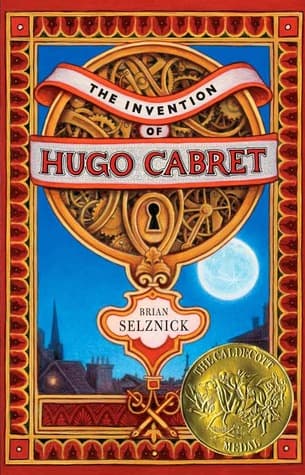
- The Invention of Hugo Cabret
Brian Selznick
4.2 (163k) average on GoodreadsFantasyTan's collection is less linear and coherent as a single overarching story. Selznick's work builds a singular plot through its integrated illustrations, whereas Tan's thrives on disparate, self-contained vignettes.
- Harry Potter and the Sorcerer's Stone
J.K. Rowling
4.5 (7M) average on GoodreadsFantasyRescued from a miserable life under the stairs, an orphaned boy discovers he's a wizard destined for a magical school, where he uncovers a dangerous secret tied to the dark wizard who murdered his parents.
- The Hunger Games
Suzanne Collins
4.3 (6.4M) average on GoodreadsFantasyIn a future where children fight to the death on live television, Katniss Everdeen volunteers for the arena, turning a death sentence into a fight for survival and a spark of rebellion.
- 1984
George Orwell
4.2 (3.1M) average on GoodreadsPoliticsIn a future where surveillance and thought control are absolute, a man's search for truth clashes with the Party, showing that hope can be a form of rebellion.
- Divergent
Veronica Roth
4.2 (2.9M) average on GoodreadsFantasyIn a society divided by virtues, a sixteen-year-old's difference from the norm starts a rebellion that threatens her world.
- The Hobbit, or There and Back Again
J.R.R. Tolkien
4.3 (2.9M) average on GoodreadsFantasyA comfort-loving hobbit named Bilbo Baggins is whisked away by a mischievous wizard and a band of dwarves on an unexpected journey to reclaim stolen treasure from a fearsome dragon, discovering courage and a magical ring along the way.





Enjoyed the summary?
A summary gives you the shape of the book. The book itself has the detail, the examples and the voice.
Find Tales from Outer Suburbia on AmazonAs an Amazon Associate, BookBrief earns from qualifying purchases. How we're funded