
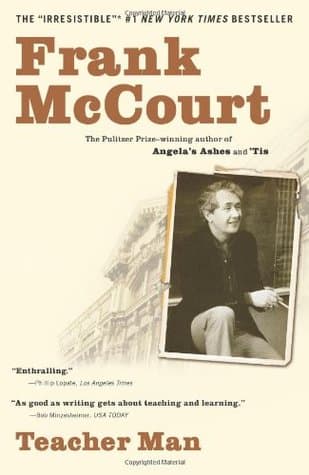
Core Idea
- Difficulty
- Easy
- Read it if
- You are an educator, considering a career in teaching, or interested in the realities of public education and the power of personal narrative and humor in overcoming challenges.
- Skip it if
- You prefer highly structured pedagogical theory over personal anecdotes and reflections on the messy, human side of teaching.
Key Takeaways from Teacher Man
The Classroom as Crucible
Teaching's transformative power on the teacher, not just the taught.
McCourt's memoir shows that teaching is a two-way street. While he aimed to educate his students, the classroom taught him the most. For three decades, he improved his storytelling, empathy, and ability to connect with different people—skills he later used in his writing career. His daily struggle to engage adolescents, manage their chaos, and inspire their creativity helped him develop his unique voice and perspective. This shows that the most meaningful education often comes from unexpected places, shaping the educator as much as the student.
“I was a teacher, but I was also a student of my students, learning how to tell a story, how to hold an audience, how to make them laugh and cry.”
In the book: McCourt's constant experimentation with unconventional assignments, like asking students to write an 'Excuse Note from Adam or Eve to God,' directly reflects his efforts to find his own voice and develop compelling narratives that would later define his writing style. His daily need to capture and hold the attention of 'unruly, hormonally charged or indifferent adolescents' was a constant workshop for his future literary career.
Try this: Embrace challenges in your professional life as opportunities for personal growth and skill development. View every interaction, especially difficult ones, as a chance to refine your communication, empathy, and problem-solving abilities. Recognize that the 'struggle' is often the most fertile ground for unexpected personal and professional transformation.
Related ideas: pedagogy-as-personal-growth, experiential-learning, teacher-development
Unconventional Wisdom
Breaking rules and challenging norms can forge deeper connections and learning.
McCourt's teaching style was very different from traditional methods. He avoided strict curricula and memorization, preferring imaginative, often playful, assignments and activities. This was not just for fun; it was a deliberate way to meet students where they were, spark their interest, and confirm their experiences. His willingness to bend rules, whether by taking students on unusual trips or using singalongs with recipes, shows that true engagement often means thinking differently. This approach created a lively learning environment where students felt seen, heard, and able to express themselves authentically, proving that sometimes, an unconventional approach works best.
“My methods anything but conventional... I created lasting impact on my students through imaginative assignments.”
In the book: Examples like instructing a class to write 'An Excuse Note from Adam or Eve to God,' using recipe ingredients as lyrics for singalongs, or taking 'twenty-nine rowdy girls to a movie in Times Square' are concrete instances of McCourt's unconventional methods.
Try this: Don't be afraid to challenge established norms if you believe a different approach will yield better results. In any leadership or teaching role, prioritize engagement and connection over strict adherence to protocol. Experiment with creative solutions to common problems, and be open to the idea that unconventional methods can lead to profound impact.
Related ideas: creative-pedagogy, student-engagement, classroom-innovation
The Power of Doggedness
Persistence, not glamour, is the unsung hero of long-term success.
McCourt's path to becoming a famous author was not easy; it included many setbacks, professional frustrations, and personal struggles. His 'persistence'—a steady, unglamorous determination—was key to his survival and eventual success. This was not about natural talent or charm, but a tough will to keep showing up, keep trying, and keep believing in his story. His career, from being fired multiple times to finding his place at Stuyvesant High School, shows that steady effort, even when facing problems, is often more important than natural brilliance. It reminds us that success often comes from many small, persistent efforts.
“Doggedness... not as glamorous as ambition or talent or intellect or charm, but still the one thing that got me through the days and nights.”
In the book: McCourt's 'rocky marriage, his failed attempt to get a Ph.D. at Trinity College, Dublin, and his repeated firings due to his propensity to talk back to his superiors' all highlight the numerous obstacles he faced. Yet, he continued teaching and dreaming of writing, eventually landing at Stuyvesant.
Try this: Cultivate resilience and persistence in your own endeavors. Recognize that setbacks are inevitable, but the ability to keep going, even when uninspired or facing criticism, is a crucial ingredient for achieving long-term goals. Prioritize consistent effort over sporadic bursts of brilliance.
Related ideas: resilience, perseverance, grit
Storytelling as Salvation
Narrative isn't just entertainment; it's a fundamental human need for meaning and connection.
McCourt's life, both in and out of the classroom, shows how storytelling can transform. For him, stories were not just literature but a way to understand his own difficult past, connect with students, and find his voice. He knew that people need stories to understand themselves and the world. By encouraging students to share their stories, and by constantly improving his own, he turned ordinary moments into meaningful ones. This idea suggests that creating and sharing stories is a basic human need that can offer comfort, build connections, and reveal paths to self-discovery and purpose.
“For McCourt, storytelling itself is the source of salvation, and in Teacher Man the journey to redemption -- and literary fame -- is an exhilarating adventure.”
In the book: The description of McCourt 'developing his unparalleled ability to tell a great story as, five days a week, five periods per day, he works to gain the attention and respect of unruly... adolescents' directly links his teaching practice to his development as a storyteller. His motivation to put 'his own story to paper' further emphasizes this.
Try this: Actively seek out opportunities to tell your own stories and listen to others'. Practice articulating your experiences and insights in narrative form, whether through writing, speaking, or creative expression. Understand that sharing stories is a powerful tool for connection, empathy, and personal healing.
Related ideas: narrative-therapy, personal-narrative, empathy-through-story
The Teacher's Unseen Labor
Teaching is a demanding, often thankless, yet profoundly impactful profession.
McCourt's memoir is a strong reminder of the great effort and emotional cost involved in teaching, especially in challenging public schools. He openly shares the 'trials, triumphs and surprises' he faced, pointing out the constant need for flexibility, patience, and strong dedication. Beyond the curriculum, teachers must handle different personalities, manage teenage problems, and often act as impromptu therapists or mentors. The book shows that teaching is not just a job, but a calling that needs a mix of intelligence, empathy, and sheer willpower, often without enough recognition. It calls for appreciation of the deep, often unseen, work of educators.
“Teacher Man is also an urgent tribute to teachers everywhere.”
In the book: The summary mentions McCourt's 'struggle to find his way in the classroom,' his dealing with 'unruly, hormonally charged or indifferent adolescents,' and the book being an 'urgent tribute to teachers everywhere,' all pointing to the demanding nature of the profession.
Try this: Actively recognize and appreciate the educators in your life and community. If you are an educator, acknowledge the profound impact you have and seek out support systems. If you're not, advocate for policies and resources that support teachers, understanding the critical role they play in society.
Related ideas: teacher-appreciation, educational-labor, pedagogical-challenges
Finding Your Voice Takes Time
Authenticity and clarity emerge through sustained effort and self-reflection.
McCourt's journey to becoming a celebrated writer and finding his 'voice' was not quick. It was a slow process, built over three decades of teaching and dealing with personal and professional challenges. His early struggles, including academic failures and job losses, were not detours but important parts of his growth. Each challenge, each student interaction, each frustration with authority, gradually shaped his perspective and refined his unique writing style. This idea emphasizes that finding one's true voice—in writing, leadership, or personal expression—is often a long, winding road that requires patience, resilience, and a willingness to learn from every experience, good or bad.
“McCourt's rocky marriage, his failed attempt to get a Ph.D. at Trinity College, Dublin, and his repeated firings... ironically lead him to New York's most prestigious school, Stuyvesant High School, where he finally finds a place and a voice.”
In the book: The explicit mention of 'McCourt's rocky marriage, his failed attempt to get a Ph.D. at Trinity College, Dublin, and his repeated firings' as events that 'ironically lead him... where he finally finds a place and a voice' underscores the lengthy and complex process of self-discovery.
Try this: Be patient with yourself in your journey to find your authentic voice or purpose. Don't view setbacks as failures, but as opportunities for learning and refinement. Embrace the process of trial and error, understanding that true clarity and authenticity often emerge from sustained effort over time.
Related ideas: self-discovery, authentic-voice, personal-development
Humor as a Survival Mechanism
Wit and irreverence can diffuse tension and foster connection in difficult environments.
McCourt's 'irreverent wit' was not just a style choice; it was a vital tool for surviving the demands of public school teaching. Facing unruly adolescents, bureaucratic bosses, and personal frustrations, humor helped him calm tense situations, connect with students, and stay sane. His ability to find the absurd in daily life, to joke even about serious matters, created an atmosphere where students felt more comfortable engaging and expressing themselves. This idea highlights how useful humor is as a coping mechanism, a teaching method, and a powerful way to build connections in tough environments, showing its role in both personal resilience and good communication.
“In bold and spirited prose featuring his irreverent wit and heartbreaking honesty, McCourt records the trials, triumphs and surprises he faces.”
In the book: The description of his 'irreverent wit' in the summary, coupled with his unconventional assignments and ability to engage 'rowdy girls,' suggests that humor was central to his teaching style and his ability to navigate classroom dynamics.
Try this: Cultivate a sense of humor, especially in stressful situations. Learn to use wit and lightheartedness to diffuse tension, build rapport, and make difficult conversations more approachable. Understand that appropriate humor can be a powerful tool for leadership, teaching, and personal well-being.
Related ideas: coping-mechanisms, classroom-management, interpersonal-communication
The Everyday Is Extraordinary
Profound stories and insights are often hidden in the seemingly mundane.
Before his literary fame, McCourt spent thirty years in the seemingly ordinary world of high school teaching. 'Teacher Man' shows that these daily interactions—the struggles of adolescents, the bureaucratic absurdities, and the small victories—were far from mundane. They were the basis for his later masterpieces. He had a sharp ability to observe and extract deep human experiences from everyday life, turning classroom stories into compelling narratives. This idea suggests that extraordinary stories and deep insights are not found in grand adventures, but often hidden in routine, needing only a sharp eye and an empathetic heart to discover and share them.
“McCourt records the trials, triumphs and surprises he faces in public high schools around New York City.”
In the book: McCourt's entire memoir is built upon the 'trials, triumphs and surprises' of his daily teaching life, demonstrating that his experiences in public high schools were the very source material for his storytelling.
Try this: Practice mindful observation in your daily life. Pay attention to the small details, the nuanced interactions, and the seemingly insignificant events around you. Cultivate a habit of reflection to uncover the deeper meanings and stories embedded in your everyday experiences, as these can be sources of profound insight and creativity.
Related ideas: mindfulness, observation-skills, everyday-epic
Teacher Man Quotes
“The great thing about being a teacher is that you are constantly learning.”
“There are no bad students, only bad teachers.”
“I teach because I have to. It's in my blood, like the rain in Ireland.”
“Humor is a great weapon, a great defense, a great way of getting through a day.”
“Every day is a performance. You step on that stage and you give it your all.”
“The trick is to make them think they’re learning something new when really you’re just making them think.”
“You can't be afraid to make a fool of yourself. That's how you connect with kids.”
“The best lessons are the ones where you don't even realize you're being taught.”
“Teaching is like being a conductor. You have to bring out the best in every instrument.”
“I learned more from my students than they ever learned from me.”
“The past is a foreign country; they do things differently there.”
“Don't just teach the book, teach the child.”
“If you can make them laugh, you can make them listen.”
“School is a place where you go to learn how to live.”
Quiz
10 questions on the main ideas. Each answer comes with a short explanation.
Question 1
Which of the following best describes the core theme of 'Teacher Man'?
- The challenges of immigrant life in New York City.
- How Frank McCourt's teaching career influenced his later writing.
- A detailed account of the Irish education system.
- The pursuit of a Ph.D. at Trinity College, Dublin.
Show answer
B. How Frank McCourt's teaching career influenced his later writing. 'Teacher Man' is explicitly described as McCourt's book about 'how his thirty-year teaching career shaped his second act as a writer,' making this the central theme.
Question 2
At what age did Frank McCourt achieve literary fame with 'Angela's Ashes'?
- Fifty-six
- Sixty-six
- Seventy-six
- Forty-six
Show answer
B. Sixty-six The text states that McCourt 'burst onto the literary scene with Angela's Ashes, at the age of sixty-six.'
Question 3
Which school did Frank McCourt eventually find a place and a voice at, despite his previous firings?
- Limerick High School
- Trinity College, Dublin
- Stuyvesant High School
- New York City Public School 101
Show answer
C. Stuyvesant High School The passage explicitly states that his 'repeated firings... ironically lead him to New York's most prestigious school, Stuyvesant High School, where he finally finds a place and a voice.'
Question 4
What unconventional assignment did McCourt give one of his classes?
- A detailed analysis of Shakespearean sonnets.
- To write 'An Excuse Note from Adam or Eve to God'.
- A research paper on the history of New York City.
- A dramatic reenactment of a historical event.
Show answer
B. To write 'An Excuse Note from Adam or Eve to God'. The text highlights his 'imaginative assignments' and specifically mentions he 'instructs one class to write 'An Excuse Note from Adam or Eve to God'.'
Question 5
What term does McCourt use to describe the quality that 'got him through the days and nights'?
- Ambition
- Talent
- Doggedness
- Intellect
Show answer
C. Doggedness McCourt states, ''Doggedness,' he says, is 'not as glamorous as ambition or talent or intellect or charm, but still the one thing that got me through the days and nights.'
Question 6
What was one of the reasons for McCourt's repeated firings from teaching positions?
- Lack of classroom control.
- His propensity to talk back to his superiors.
- Failure to complete lesson plans.
- Frequent absences from school.
Show answer
B. His propensity to talk back to his superiors. The text mentions his 'repeated firings due to his propensity to talk back to his superiors.'
Question 7
How did McCourt incorporate music into his unconventional teaching methods?
- By playing classical music during exams.
- Through singalongs featuring recipe ingredients as lyrics.
- By organizing school talent shows.
- He taught students how to play musical instruments.
Show answer
B. Through singalongs featuring recipe ingredients as lyrics. His methods included 'singalongs (featuring recipe ingredients as lyrics),' demonstrating a unique approach to engaging students.
Question 8
What aspect of McCourt's personal life is mentioned as a struggle during his teaching career?
- His financial stability.
- His rocky marriage.
- His relationship with his parents.
- His struggle with writing fiction.
Show answer
B. His rocky marriage. The passage notes, 'McCourt's rocky marriage, his failed attempt to get a Ph.D. at Trinity College, Dublin, and his repeated firings...' as personal struggles.
Question 9
According to the description, what is the source of salvation for McCourt?
- His teaching career.
- His pursuit of higher education.
- Storytelling itself.
- His interactions with fellow writers.
Show answer
C. Storytelling itself. The text explicitly states, 'For McCourt, storytelling itself is the source of salvation, and in Teacher Man the journey to redemption -- and literary fame -- is an exhilarating adventure.'
Question 10
How did McCourt spend his evenings while struggling to find his way in the classroom?
- Grading papers and preparing lesson plans.
- Drinking with writers and dreaming of putting his own story to paper.
- Studying for his Ph.D. at Trinity College.
- Attending parent-teacher conferences.
Show answer
B. Drinking with writers and dreaming of putting his own story to paper. The passage notes, 'McCourt struggles to find his way in the classroom and spends his evenings drinking with writers and dreaming of one day putting his own story to paper.'
Teacher Man FAQ
What is 'Teacher Man' by Frank McCourt about?
'Teacher Man' is Frank McCourt's memoir detailing his thirty-year career as a high school teacher in New York City, exploring how these experiences ultimately shaped him into the Pulitzer Prize-winning writer he became with 'Angela's Ashes'. It's also a tribute to the teaching profession.
Does 'Teacher Man' provide insights into Frank McCourt's writing process?
Yes, the book illustrates how McCourt's daily struggle to engage and connect with his students in the classroom honed his storytelling abilities and observation skills, which were crucial for his later literary success. It shows him developing his unique voice.
How does 'Teacher Man' differ from McCourt's previous memoirs, 'Angela's Ashes' and 'Tis'?
While 'Angela's Ashes' covers his impoverished childhood in Ireland and 'Tis' his early years in New York, 'Teacher Man' focuses on his adult life and extensive career as a teacher, linking these experiences directly to his eventual emergence as a celebrated author.
What kind of teaching methods did Frank McCourt use?
McCourt employed unconventional and imaginative methods, including creative writing assignments like 'An Excuse Note from Adam or Eve to God,' singalongs with unusual lyrics, and memorable field trips, all aimed at captivating his often unruly or indifferent students.
Does 'Teacher Man' offer advice for aspiring teachers?
While not a how-to guide, the book offers an honest, often humorous, and deeply personal account of the challenges and rewards of teaching. It highlights the importance of doggedness, creativity, and finding one's own voice in the classroom.
What challenges did Frank McCourt face as a teacher?
McCourt grappled with gaining student attention and respect, navigating difficult school administrations, and dealing with personal struggles like a rocky marriage and failed academic pursuits, often leading to firings before he found his place at Stuyvesant High School.
Is 'Teacher Man' suitable for readers who haven't read 'Angela's Ashes' or 'Tis'?
Yes, 'Teacher Man' can be enjoyed independently. While it is part of his larger life story, it stands alone as a compelling memoir about his teaching career and its profound impact on his development as a storyteller.
What role does storytelling play in 'Teacher Man'?
Storytelling is central to the book, both as McCourt's means of engaging his students and as his personal path to redemption and literary fame. He views it as a source of salvation and a fundamental skill developed throughout his teaching career.
Where did Frank McCourt teach during his career?
Frank McCourt taught in various public high schools around New York City, eventually finding a long-term and impactful position at the prestigious Stuyvesant High School, despite numerous earlier firings.
About the author
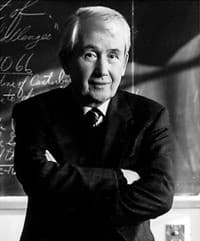
Frank McCourt was an Irish-American author known for his memoirs that explore themes of poverty and education. His notable works include "Angela's Ashes," which recounts his childhood in Limerick, Ireland, and "Teacher Man," reflecting on his experiences as a teacher in New York City. McCourt received the Pulitzer Prize for Biography or Autobiography for "Angela's Ashes."
Similar books
- Educated
Tara Westover
4.5 (796k) average on GoodreadsBiographyA powerful memoir about overcoming adversity through education, emphasizing personal transformation.
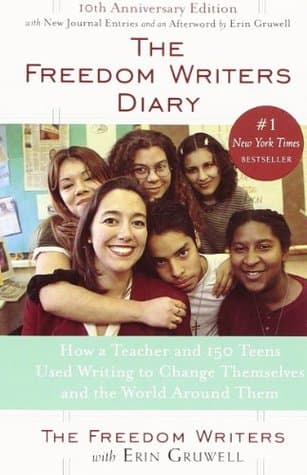
- The Freedom Writers Diary
Erin Gruwell
4.1 (15k) average on GoodreadsBiographyBoth books celebrate the impact of dedicated teachers on challenging student populations. Teacher Man is a singular narrative from one teacher's perspective, reflecting on his long career and personal philosophy. The Freedom Writers Diary, however, presents a polyvocal account through the students' own journal entries, curated by their teacher, Erin Gruwell. This collective perspective offers a more direct and diverse insight into the students' experiences and the transformative power of a teacher's empathy. While McCourt's book is about his story as a teacher, The Freedom Writers Diary is about the collective story of a classroom transformed by one teacher, giving more agency to student voices and demonstrating a different model of 'unconventional wisdom' through collaborative storytelling and empathy-driven pedagogy.
- The Diary of a Young Girl
Anne Frank
4.2 (2.7M) average on GoodreadsBiographyDuring the Nazi occupation, a teenage girl's diary, written from a secret annex, shares observations on humanity, hope, and the wait for freedom.
- Eat, Pray, Love
Elizabeth Gilbert
3.6 (1.5M) average on GoodreadsLifestyleA heartbroken writer leaves her conventional life for a year-long global search for pleasure in Italy, spiritual devotion in India, and unexpected love and balance in Bali.
- Night
Elie Wiesel
4.3 (970k) average on GoodreadsBiographyIn the darkness of Auschwitz and Buchenwald, a teenage Elie Wiesel faces the extermination of his family, the loss of his faith, and the lasting scars of humanity's deepest cruelty.
- Steve Jobs
Walter Isaacson
4.1 (957k) average on GoodreadsBusinessSteve Jobs was a visionary who fused creativity and technology to revolutionize six industries and shape our digital world.





Enjoyed the summary?
A summary gives you the shape of the book. The book itself has the detail, the examples and the voice.
Find Teacher Man on AmazonAs an Amazon Associate, BookBrief earns from qualifying purchases. How we're funded