
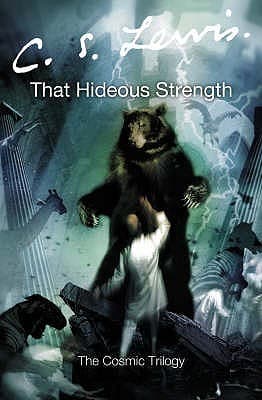
Synopsis
Covers the whole plot, including the ending.
- Difficulty
- Medium
- Pacing
- Variable
- Mood
- Philosophical, Suspenseful, Allegorical, Dark, Hopeful
- Read it if
- You enjoy allegorical tales of good vs. evil, blending fantasy, science fiction, and spiritual themes with a strong moral message. Ideal for fans of C.S. Lewis's Narnia series looking for a more adult, philosophical narrative.
- Skip it if
- You prefer hard science fiction, shy away from overt Christian allegory, or dislike stories with a significant focus on spiritual warfare and theological discussions.
That Hideous Strength Plot Summary
Covers the whole plot, including the ending.
Mark's Ambition and Jane's Disturbing Dreams
Mark Studdock, a young sociologist, wants to join the National Institute of Co-ordinated Experiments (N.I.C.E.), an ambitious scientific organization that promises prestige and influence. He sees it as his path to intellectual recognition, despite his wife Jane's concerns. Jane, a postgraduate student, is increasingly bothered by vivid, recurring dreams. These dreams show a decapitated head, ancient figures, and a feeling of coming disaster. She feels alone and misunderstood by Mark, who dismisses her dreams as indigestion or neurosis. Their new marriage at the modest university of Bracton is already stressed by their different ambitions and Mark's growing interest in N.I.C.E. The novel begins with N.I.C.E. trying to buy Bragdon Wood, a piece of university land, which causes initial conflict among the faculty.
Jane Seeks Counsel at St Anne's
Bothered by her dreams and feeling more separated from Mark, Jane Studdock seeks help. Her friend Camilla Denniston sends her to a community at St Anne's-on-the-Hill, where she meets Mrs. Dimble and later Dr. Ransom. Dr. Ransom, a former Cambridge academic and the main character of the previous two Space Trilogy novels, is the Pendragon, the rightful heir to Arthurian kingship, and has been to other planets. He recognizes Jane's dreams are prophetic and explains that she is a 'Seer' chosen by the benevolent celestial powers (the 'Oyarsa') to witness important events. He offers her protection and guidance, though Jane is at first doubtful and overwhelmed by the claims, especially the idea of ancient, pre-Christian powers working.
Mark's Ascent into the N.I.C.E.'s Inner Circle
Mark Studdock, eager to advance his career, slowly becomes more involved with N.I.C.E. He is first assigned to write propaganda and public relations material, but his ambition and willingness to conform make him a good candidate for further training. He meets various high-ranking members, including the mysterious Frost, the chilling Wither, and the sadistic Fairy Hardcastle. Mark is manipulated, isolated, and his moral compass slowly wears down. He is encouraged to betray former colleagues and to adopt a new, detached, and 'objective' way of thinking, without traditional ethics. His initial excitement turns into a growing unease and confusion as he sees N.I.C.E.'s true, totalitarian aims.
The Head of Alcasan and the N.I.C.E.'s True Nature
Mark's involvement with N.I.C.E. becomes horrifying when he sees the 'Head' – the literally decapitated, yet living, head of the famous scientist Alcasan. This grotesque exhibit is kept alive through a complex system of machinery and regular blood transfusions, acting as a communication channel for the 'Macrobes' or 'Dark Eldils' – demonic, non-human intelligences that are the true controllers behind N.I.C.E. This discovery confirms the reality of Jane's dreams and shows N.I.C.E.'s ultimate goal: not just social control, but the removal of humanity's spiritual and natural essence, making way for a post-human, purely mechanical existence dictated by these infernal powers. Mark is appalled but too deeply involved to escape easily.
Jane's Training and the Prophecy of Merlin
At St Anne's, Jane slowly accepts her prophetic gift and the cosmic struggle happening. Dr. Ransom, with help from his companions like the Dimbles and MacPhee, begins to train her, helping her interpret her dreams and understand her role. She learns about the 'Oyarsa' (angelic beings) and the 'Macrobes' (demonic forces) battling for Earth's fate. A key part of their plan involves awakening Merlin, the ancient wizard from Arthurian legend, believed to be sleeping under Bragdon Wood. Jane's dreams provide clues to Merlin's location and the urgency of finding him, as he is prophesied to be important in confronting N.I.C.E. and its dark masters.
Merlin Awakens and the Battle Lines Are Drawn
Guided by Jane's dreams and historical research, the St Anne's community finds and awakens Merlin from his centuries-long sleep under Bragdon Wood. Merlin, at first confused by the modern world, quickly understands the spiritual battle. He pledges his loyalty to Dr. Ransom, recognizing him as the Pendragon, and prepares to use his ancient magic against N.I.C.E.'s technological and demonic forces. His presence means ancient, supernatural power directly enters the modern world, changing the balance of the conflict. N.I.C.E., unaware of Merlin's awakening, continues its plans, not knowing the strong opposition now against them.
Mark's Imprisonment and Escape Attempts
As Mark becomes more disappointed with N.I.C.E., he tries to escape. He is increasingly isolated, questioned, and psychologically tortured by Frost and Hardcastle, who see him as a potential traitor. His attempts to flee fail, and he finds himself a prisoner within N.I.C.E.'s headquarters at Belbury. He is moved between various cells and questioned about his loyalty and his knowledge of the outside world, especially regarding Jane. Mark's initial ambition has disappeared, replaced by fear and a desperate desire for freedom, but his captors are determined to break his will and get information.
The Feast of the Planets and Divine Intervention
At St Anne's, Dr. Ransom prepares for the final confrontation by calling upon the 'Oyarsa' – the angelic intelligences associated with the planets. In a ceremony, the Oyarsa of Mars, Venus, Jupiter, Saturn, and Mercury descend, each bringing their unique celestial influence and power. Ransom is physically changed and given immense authority and spiritual strength. This 'Feast of the Planets' is an important moment, showing direct divine intervention into the human realm. The atmosphere at St Anne's becomes full of supernatural energy, as the forces of good gather their strength for the ultimate battle against the infernal powers controlling N.I.C.E. and their human followers.
Merlin's Infiltration and the Belbury Siege
Empowered by the Oyarsa and guided by Ransom, Merlin enters N.I.C.E. headquarters at Belbury. Using his ancient magical abilities, he creates confusion among the N.I.C.E. staff. He manipulates their minds, causing them to turn on each other, see illusions, and act on their darkest impulses. Animals are released, machinery breaks down, and Belbury's carefully built order falls into chaos. Merlin's actions are precise and devastating, using the inherent evil and selfishness of N.I.C.E. members. This internal collapse is a key part of the strategy to dismantle the organization from within, preparing for the final direct confrontation.
The Judgment of Belbury and the Tower of Babel
As Merlin's chaos spreads through Belbury, Dr. Ransom, now showing divine authority, appears before the N.I.C.E. leaders. He announces judgment upon them, speaking with the power of the Oyarsa. The 'Macrobes' controlling N.I.C.E. are directly confronted. The climax shows a re-enactment of the Tower of Babel, where N.I.C.E. members suddenly speak in different, incomprehensible tongues, leading to confusion, violence, and self-destruction. The building itself begins to crumble, and the sinister figures of N.I.C.E. meet gruesome, fitting ends – Frost, Wither, Hardcastle, and others are consumed by the very forces they tried to use. The 'Head' of Alcasan is finally destroyed, cutting the last direct link to the Macrobes.
Mark's Redemption and Rejoining Jane
Amidst Belbury's chaos and destruction, Mark Studdock, who had been imprisoned, escapes. He sees the collapse of N.I.C.E. and the divine judgment firsthand, which shatters his previous worldview and superficial ambitions. Members of the St Anne's community find him. He was spared due to his inherent, though hidden, decency and his lack of full involvement in N.I.C.E.'s ultimate evil. He is brought to St Anne's, where he is finally reunited with Jane. Their reunion is not immediately joyful but marked by relief, understanding, and the beginning of a difficult, yet hopeful, reconciliation as they both process the extraordinary events they have endured.
The Restoration of Order and the Future of St Anne's
With N.I.C.E. destroyed and the Macrobes repelled, the immediate threat to humanity is gone. The community at St Anne's begins healing and rebuilding. Dr. Ransom, having fulfilled his role as Pendragon in this cosmic battle, prepares for his departure to Venus, his body now radiating light and his earthly mission complete. Merlin, having finished his task, returns to a state of peace, his role as an ancient protector reaffirmed. Mark and Jane, deeply changed by their experiences, commit to rebuilding their marriage on a foundation of truth and mutual understanding. The novel ends with a sense of restored order, though the world remains forever altered by the brief, terrifying glimpse into the battle between heaven and hell.
Principal Figures
Mark Studdock
Protagonist
An ambitious sociologist drawn into the N.I.C.E.
Mark is a young, somewhat naive, and ambitious sociologist primarily concerned with intellectual prestige and fitting into academic circles. He initially views the N.I.C.E. as a pathway to status and 'being on the inside.' He is prone to rationalizing his actions and suppressing his moral instincts, making him susceptible to the N.I.C.E.'s manipulative tactics. His journey is one of disillusionment and forced self-reflection as he witnesses the organization's true horror. He represents the danger of unchecked intellectualism and the erosion of common human decency.
Relationships: Jane Studdock (wife, strained by his ambition and her visions); Lord Feverstone (introducer to the N.I.C.E., manipulative); Professor Frost (interrogator, psychological torturer)
Jane Studdock
Protagonist
A postgraduate student with prophetic dreams, drawn to St Anne's.
Jane is Mark's wife, a postgraduate student whose independent spirit is initially at odds with her domestic role and Mark's dismissiveness. She possesses the gift of true prophecy, experiencing vivid and unsettling dreams that become central to the plot. She is initially reluctant to accept the fantastical explanations at St Anne's but grows in courage and faith as she understands her vital role in the cosmic struggle. She represents intuition, natural human goodness, and the spiritual awakening necessary to combat evil.
Relationships: Mark Studdock (husband, initially distant but later reconciled); Dr. Ransom (mentor and spiritual guide); Mrs. Dimble (confidante and friend at St Anne's)
Dr. Ransom
Supporting (central figure)
The Pendragon, leader of St Anne's and the champion against the N.I.C.E.
Ransom is the protagonist of the previous Space Trilogy novels, now serving as the Pendragon, the rightful heir to Arthurian kingship, living at St Anne's. He has been transformed by his experiences on other planets and is now a figure of immense spiritual authority, though humble in demeanor. He guides Jane, understands the true nature of the N.I.C.E.'s demonic influence, and orchestrates the defense of humanity. He embodies wisdom, faith, and the direct intervention of benevolent celestial powers.
Relationships: Jane Studdock (disciple, protege); Merlin (ancient ally, recognizes Ransom's authority); Oyarsa (communicates with and is empowered by the angelic beings)
Merlin
Supporting
The legendary wizard, reawakened to fight the N.I.C.E.
Merlin is the ancient British wizard, reawakened from centuries of magical sleep beneath Bragdon Wood. He is a figure of immense power, representing an older, natural magic directly connected to the benevolent forces of the universe. Initially disoriented by the modern world, he quickly understands the spiritual battle and pledges his service to Ransom. His role is to infiltrate Belbury and use his unique abilities to sow chaos among the N.I.C.E., ultimately turning their own evil against them. He symbolizes the enduring power of ancient wisdom and natural order.
Relationships: Dr. Ransom (master, recognized as the Pendragon); Jane Studdock (indirectly aided by her prophetic dreams)
Professor Frost
Antagonist
The chilling Head of the N.I.C.E.'s Experimental College.
Frost is a high-ranking member of the N.I.C.E., head of the Experimental College, and a proponent of 'Objectivity' – a philosophy that advocates the complete suppression of all human emotion, instinct, and traditional morality. He is cold, calculating, and utterly devoid of empathy, embodying the N.I.C.E.'s goal of a purely mechanistic, dehumanized future. He is a key figure in Mark's indoctrination and psychological torture, representing the intellectual face of evil and the ultimate corruption of reason.
Relationships: Mark Studdock (manipulator, interrogator); Wither (colleague within the N.I.C.E. leadership)
Wither
Antagonist
The Deputy Director of the N.I.C.E., a figure of unsettling ambiguity.
Wither is the Deputy Director of the N.I.C.E., a character defined by his extreme vagueness, indecision, and ability to speak in endless, meaningless platitudes. He appears to be a puppet of the more sinister forces within the organization, perpetually confused and unable to make a clear statement or decision. His character symbolizes the bureaucratic, dehumanizing, and ultimately meaningless nature of the N.I.C.E. at its core, suggesting a leadership that is either utterly incompetent or deliberately obtuse to obscure their true intentions.
Relationships: Professor Frost (colleague, though seemingly at cross-purposes); Lord Feverstone (superior)
Fairy Hardcastle
Antagonist
A sadistic female agent of the N.I.C.E.
Fairy Hardcastle is a former chief of women police and a sadistic member of the N.I.C.E.'s security apparatus. She takes particular pleasure in psychological torture and physical abuse, especially towards Mark. Her character embodies the raw, brutal, and dehumanizing power of the N.I.C.E.'s enforcement arm, revealing the dark side of unchecked authority and the perversion of human nature. She is a stark contrast to the intellectual evil of Frost, representing a more visceral, animalistic cruelty.
Relationships: Mark Studdock (tormentor, interrogator); Jules (colleague in the security detail)
Lord Feverstone (Dick Devine)
Supporting Antagonist
A former university colleague of Mark, now a N.I.C.E. insider.
Lord Feverstone, formerly Dick Devine from 'Out of the Silent Planet', is a cynical and opportunistic physicist who introduces Mark to the N.I.C.E. He is driven by self-interest and a desire for power, embracing the N.I.C.E.'s vision for a 'scientific' future without moral constraints. He is one of the more overtly villainous characters, lacking the intellectual pretense of Frost but sharing a similar disdain for traditional values. He represents the corrupting influence of ambition and the betrayal of academic integrity.
Relationships: Mark Studdock (initial contact and recruiter for the N.I.C.E.); Wither (superior)
The Head of Alcasan
Mentioned (Plot Device)
The living, decapitated head of a scientist used by the N.I.C.E.
Alcasan's head is the physical manifestation of the N.I.C.E.'s horrific scientific experiments and its connection to the demonic 'Macrobes.' Kept alive through grotesque means, it serves as a communication channel for the infernal powers, embodying the ultimate desecration of humanity and nature. Its existence confirms Jane's prophetic dreams and reveals the true, unholy nature of the N.I.C.E.'s ambitions.
Mrs. Dimble
Supporting
A kind and wise member of the St Anne's community.
Mrs. Dimble is a warm and compassionate woman, married to Cecil Dimble, a former colleague of Ransom. She acts as a maternal figure and confidante to Jane at St Anne's, helping her to adjust to the strange realities and providing emotional support. She embodies traditional English goodness, common sense, and unwavering faith, serving as a grounding force amidst the cosmic battle.
Relationships: Jane Studdock (friend, mentor); Dr. Ransom (loyal supporter)
Themes & Insights
The Peril of Scientism and Unchecked Reason
The novel critiques the dangerous idea of scientism, where scientific method and reason are placed above all other forms of knowledge, morality, and spirituality. N.I.C.E. shows this theme, trying to control and 'improve' humanity through purely scientific means, ignoring ethics and the natural order. Professor Frost's philosophy of 'Objectivity' and the grotesque experiment of keeping Alcasan's head alive show the dehumanizing results of science without wisdom and moral guidance. This theme warns against the arrogance of modern intellectualism that tries to re-engineer existence without acknowledging spiritual or natural limits.
“What they want to do is to eliminate the human race: or if not to eliminate it, at least to make it what they call 'conditioned'.”
The Battle Between Good and Evil (Cosmic Warfare)
At its core, 'That Hideous Strength' is a story about a cosmic battle between divine, benevolent forces (the Oyarsa/Eldils) and demonic, malevolent entities (the Macrobes/Dark Eldils). N.I.C.E. is the earthly tool of these dark powers, while St Anne's, led by Ransom, represents the forces aligned with heaven. This theme makes the conflict more than just a political or scientific struggle, framing it as a spiritual war for humanity's soul and the planet. Merlin's awakening and the Feast of the Planets show the direct involvement of supernatural powers in human affairs.
“The Enemy would not have needed to be a spirit, if it had not been for the spirits who helped us.”
The Nature of True Authority and Kingship
The novel explores true, divinely given authority versus false, tyrannical power. Dr. Ransom, as the Pendragon, represents legitimate kingship, based on humility, service, and connection to benevolent celestial powers. His authority is spiritual and moral, not forced. In contrast, N.I.C.E. shows a corrupted authority, trying to impose control through manipulation, fear, and suppressing individual liberty. The contrast shows that true leadership is about stewardship and following natural and divine law, while false power leads to destruction and dehumanization.
“The true king is the man who has the deepest reverence for the law, not the man who is above it.”
The Importance of Natural Order and Tradition
Lewis emphasizes the importance of the natural world, traditional wisdom, and creation's inherent order. Bragdon Wood, with its ancient trees and sleeping Merlin, symbolizes this natural, spiritual heritage. N.I.C.E., conversely, tries to dismantle and re-engineer nature, from its plans for Bragdon Wood to its goal to control weather and human biology. This theme celebrates the wisdom in the past, in folklore, and in the natural environment, contrasting it with the destructive impulse of modern 'progress' that disrespects inherent forms and patterns.
“The N.I.C.E. wants to cut down Bragdon Wood. They want to cut down all woods. They want to make the whole world a machine.”
Marriage and Reconciliation
The strained relationship between Mark and Jane Studdock is an important subplot, showing the larger battle between conflicting values. Their initial marital problems come from Mark's ambition and Jane's prophetic gifts, which he dismisses. Their journey towards reconciliation reflects the larger theme of bringing different parts (reason and intuition, masculine and feminine, modern and ancient) into harmony. Their eventual understanding and commitment to each other, formed through shared trauma and spiritual awakening, suggest redemption and the restoration of natural human relationships even after deep separation.
“The thing that mattered was not to be a woman or a man, but to be a person, with a soul.”
Plot Devices & Literary Techniques
Prophetic Dreams
Jane's dreams reveal the N.I.C.E.'s sinister plot and guide the forces of good.
Jane Studdock's recurring, vivid dreams serve as a crucial plot device. They are not merely symbolic but directly prophetic, revealing specific details about Alcasan's head, the sleeping Merlin, and the malevolent forces at play. These dreams provide the initial impetus for Jane to seek help at St Anne's and continue to guide Dr. Ransom and his allies in their strategy. They establish the supernatural element early on and underscore Jane's unique role as a 'Seer,' making her an indispensable, if initially unwilling, participant in the cosmic battle. They also highlight the validity of intuitive and spiritual knowledge against Mark's purely rationalist perspective.
The Pendragon/Arthurian Legend
The re-contextualization of Arthurian myth provides a framework for the cosmic battle.
The integration of Arthurian legend, particularly the figure of Merlin and the concept of the Pendragon (embodied by Dr. Ransom), serves as a powerful plot device. It grounds the fantastical elements in a recognizable cultural mythology, suggesting that the ancient legends are not mere stories but echoes of enduring spiritual truths. Merlin's awakening brings ancient magic into the modern conflict, while Ransom's role as Pendragon legitimizes his authority and frames the battle against the N.I.C.E. as a defense of traditional, sacred order against destructive modernism. This device connects the present struggle to a timeless, heroic past.
The Head of Alcasan
A grotesque symbol of the N.I.C.E.'s dehumanizing science and link to demonic forces.
The preserved, living head of Alcasan is a central and deeply disturbing plot device. It functions as tangible proof of the N.I.C.E.'s horrific experiments and their complete disregard for human life and dignity. More importantly, it acts as a direct communication channel for the 'Macrobes' or 'Dark Eldils,' the demonic intelligences controlling the N.I.C.E. This device makes the abstract concept of evil concrete and terrifying, validating Jane's dreams and shocking Mark into realizing the true nature of the organization. Its existence underscores the theme of scientism's ultimate corruption.
Tower of Babel Reversal
A linguistic curse that causes the N.I.C.E.'s self-destruction during the climax.
During the climax at Belbury, Merlin's magic, empowered by the Oyarsa, inflicts a 'Tower of Babel' curse upon the N.I.C.E. members. They suddenly begin speaking in various incomprehensible languages, leading to utter confusion, miscommunication, and violent internal strife. This device is a powerful biblical allusion, symbolizing divine judgment against human hubris and the attempt to usurp God's authority. It directly causes the N.I.C.E.'s downfall, demonstrating that their attempts to 'coordinate' and control humanity ultimately lead to chaos and self-destruction, particularly when divorced from a common moral or spiritual language.
The Feast of the Planets
A mystical ceremony where angelic beings empower Dr. Ransom and St Anne's.
The 'Feast of the Planets' is a pivotal ritual at St Anne's where the Oyarsa (angelic intelligences) associated with the planets descend and imbue Dr. Ransom and the community with their power. This device serves to visibly manifest the benevolent supernatural forces at work, providing a direct counterpoint to the demonic influences of the N.I.C.E. It transforms Ransom, granting him the authority and strength needed for the final confrontation, and signifies a direct, undeniable intervention of divine grace and power into the earthly battle. It elevates the conflict to a cosmic scale and prepares the reader for the ultimate triumph of good.
That Hideous Strength Quotes
“What you see and hear depends a good deal on where you are standing; it also depends on what sort of person you are.”
“The great thing about the N.I.C.E. is that it is going to be Scientific. You needn't bother about what anything IS. We shall be interested only in what it DOES.”
“Is it not a terrible thing for a man to find out suddenly that all his life he has been a mere parrot, an echo, a shadow of something else?”
“The poison was not in the wine, but in the man.”
“Every fresh atrocity of the N.I.C.E. increased her sense of isolation from the human race, and her longing for a human race that should be different.”
“The demon is a cold, dry, self-sufficient thing.”
“And the man who is not afraid of the devil is a fool.”
“You can't make men good by Act of Parliament.”
“The gods are not a religion. They are a science. They are facts.”
“He had wanted to be inside the magic circle, and now he was inside it.”
“There are no neutral things. Every act, every thought, every feeling, is either for the light or for the darkness.”
“When you are fed up with the world, and all the nonsense that goes on in it, you will find that there is a good deal to be said for simply doing your job.”
“The thing itself is good; it is the perversion of the thing that is bad.”
“To be ignorant of the past is to remain a child.”
Quiz
10 questions on the plot and the characters. Each answer comes with a short explanation.
Question 1
What is the name of the organization that entices Mark Studdock to join, which aims to control all human life?
- The Institute for Coordinated Living
- The National Institute of Co-ordinated Experiments (N.I.C.E.)
- The Global Human Enhancement Project
- The Academy of Applied Sociology
Show answer
B. The National Institute of Co-ordinated Experiments (N.I.C.E.) N.I.C.E., the National Institute of Co-ordinated Experiments, is the organization that Mark Studdock joins, which is revealed to have sinister intentions of controlling humanity.
Question 2
What kind of unusual ability does Jane Studdock possess that connects her to the unfolding conspiracy?
- She can communicate with animals.
- She has prophetic dreams.
- She can read minds.
- She can see auras.
Show answer
B. She has prophetic dreams. Jane Studdock experiences bizarre prophetic dreams, particularly about a decapitated scientist named Alcasan, which foreshadows the dark truths of N.I.C.E.
Question 3
Who is Dr. Ransom in the context of 'That Hideous Strength'?
- A high-ranking member of N.I.C.E.
- The decapitated scientist Alcasan.
- The leader of the St Anne's community and protagonist of the previous books.
- Mark Studdock's academic mentor.
Show answer
C. The leader of the St Anne's community and protagonist of the previous books. Dr. Ransom is the leader of the St Anne's community, where Jane seeks help, and he is also the main character from the previous two novels in C.S. Lewis's science-fiction trilogy.
Question 4
What is the shocking truth Mark Studdock discovers about the scientist Alcasan?
- Alcasan faked his own death.
- Alcasan is being kept alive as a literal disembodied head by N.I.C.E.
- Alcasan was a spy for St Anne's within N.I.C.E.
- Alcasan developed a serum for immortality.
Show answer
B. Alcasan is being kept alive as a literal disembodied head by N.I.C.E. Mark discovers that the decapitated scientist, Alcasan, is literally a living head being sustained by infusions of blood within the N.I.C.E. headquarters, confirming Jane's prophetic dreams.
Question 5
Where does Jane Studdock seek help regarding her disturbing dreams?
- A local police station.
- A university psychological department.
- A community called St Anne's.
- A private detective agency.
Show answer
C. A community called St Anne's. Jane seeks assistance at St Anne's, a community led by Dr. Ransom, after experiencing increasingly unsettling prophetic dreams.
Question 6
What is the primary theme explored through N.I.C.E.'s ambition to 'control all human life'?
- The benefits of scientific progress.
- The dangers of unchecked power and the dehumanizing aspects of totalitarianism.
- The importance of individual freedom in academic pursuits.
- The necessity of global cooperation for peace.
Show answer
B. The dangers of unchecked power and the dehumanizing aspects of totalitarianism. 'That Hideous Strength' deeply explores the theme of humanity's misuse of scientific and organizational power, leading to totalitarian control and the suppression of the human spirit, often depicted as a form of rebellion against divine order.
Question 7
What significant supernatural figure appears at the climax of the story to confront the powers of Hell?
- King Arthur.
- Gandalf.
- Merlin.
- Saint Michael.
Show answer
C. Merlin. In a spectacular final scene at the N.I.C.E. headquarters, the legendary figure of Merlin appears to confront the demonic forces at play, signifying a clash between ancient good and modern evil.
Question 8
How does Mark Studdock's initial motivation to join N.I.C.E. reflect a key theme of the novel?
- His desire for financial stability represents the corrupting influence of wealth.
- His ambition for academic prestige and intellectual validation makes him susceptible to manipulation.
- His belief in scientific utopia illustrates the novel's optimistic view of progress.
- His desire to help humanity shows the inherent goodness of scientific endeavors.
Show answer
B. His ambition for academic prestige and intellectual validation makes him susceptible to manipulation. Mark's ambition for academic recognition and his intellectual pride make him vulnerable to N.I.C.E.'s allure, highlighting the theme of how intellectual arrogance and the pursuit of power can lead individuals astray and open doors to evil.
Question 9
The conflict in 'That Hideous Strength' can be broadly characterized as a struggle between which two opposing forces?
- Capitalism versus Communism.
- Science versus Religion.
- Ancient wisdom and spiritual order versus materialistic scientism and demonic influence.
- Individual freedom versus governmental oversight.
Show answer
C. Ancient wisdom and spiritual order versus materialistic scientism and demonic influence. The novel pits the spiritual wisdom and natural order represented by St Anne's and figures like Merlin against the mechanistic, dehumanizing, and ultimately demonic forces embodied by N.I.C.E. and its pursuit of total control through corrupted science.
Question 10
What is the significance of the novel being the 'final story' set on Earth in the trilogy?
- It implies humanity successfully colonizes other planets afterward.
- It signifies the culmination of the cosmic battle between good and evil specifically for Earth's fate, bringing the saga to a resolution on its home world.
- It suggests the series shifts to entirely new characters and settings in future installments.
- It means the characters from Earth are permanently exiled to other planets.
Show answer
B. It signifies the culmination of the cosmic battle between good and evil specifically for Earth's fate, bringing the saga to a resolution on its home world. Being the final story set on Earth, 'That Hideous Strength' brings the overarching cosmic conflict of the trilogy to a head on humanity's home planet, resolving the immediate threat and determining Earth's spiritual and physical future within the larger divine order.
That Hideous Strength FAQ
What is That Hideous Strength about?
That Hideous Strength is the final book in C.S. Lewis's Space Trilogy, set on Earth, depicting a terrifying conspiracy by the National Institute of Co-ordinated Experiments (N.I.C.E.) to control all human life. The story follows Mark Studdock, a sociologist drawn into N.I.C.E.'s sinister plans, and his wife Jane, who has prophetic dreams that lead her to seek help from Dr. Ransom at St Anne's, ultimately revealing the true, supernatural battle between good and evil.
Why should I read That Hideous Strength?
You should read That Hideous Strength for its profound exploration of scientific hubris, the nature of good and evil, and the spiritual battle for humanity's soul. It offers a unique blend of fantasy, science fiction, and spiritual allegory, featuring memorable characters like the naive Mark Studdock, the prophetic Jane, and the wise Dr. Ransom, culminating in a spectacular confrontation between ancient magic and demonic forces.
What is the background/setting of That Hideous Strength?
The story is set in a fictional English university town called Edgestow and the nearby community of St Anne's. It takes place in a contemporary (for the time of writing) England, but quickly delves into deep mythological and spiritual realms, contrasting the mundane academic and scientific world with ancient, supernatural forces and the re-emergence of Arthurian legends.
What are the most memorable quotes?
One memorable quote is, 'The first thing that strikes you about the N.I.C.E. is its name.' This highlights the organization's deceptive facade. Another is, 'What you see and hear depends a good deal on where you are standing: it also depends on what sort of person you are.' This speaks to the subjective nature of perception and moral alignment, particularly relevant to Mark's journey.
What writing style does the author use?
C.S. Lewis employs a rich, intellectual, and often allegorical writing style. He blends detailed character introspection with philosophical discourse and vivid descriptions of both the mundane and the supernatural. His prose is often formal yet accessible, capable of conveying complex theological and ethical ideas within a compelling narrative, marked by a distinctive blend of realism and high fantasy.
What minor details add significant meaning?
The condition of Jane's dreams, initially dismissed as mere neuroses, quickly becomes the central prophetic mechanism driving the plot, revealing the literal truth behind the seemingly impossible. Also, the seemingly innocuous discussions about language and meaning within N.I.C.E. subtly foreshadow their ultimate goal of destroying genuine communication and thought.
What are some subtle foreshadowing moments?
Early descriptions of the N.I.C.E. building's soulless architecture and the cold, detached demeanor of its members subtly hint at the organization's true, dehumanizing nature. Jane's recurring, unsettling dreams of Alcasan's decapitated head are direct foreshadowing of the horrific scientific experiments she later uncovers, linking her subconscious to a greater, hidden reality.
What unexpected character connections exist?
The most significant unexpected connection is the re-emergence of Merlin, a figure from Arthurian legend, who is awakened to confront the demonic powers influencing N.I.C.E. This links the modern scientific conspiracy directly to ancient magic and a long-standing cosmic battle, placing Dr. Ransom and his companions in the lineage of legendary heroes.
What are unspoken character motivations?
Mark Studdock's unspoken motivation is a deep-seated desire for belonging and intellectual recognition, which makes him vulnerable to N.I.C.E.'s manipulative promises of status and influence, despite his initial misgivings. Many N.I.C.E. members are driven by a thirst for power and control masked by the rhetoric of scientific progress, often stemming from a void of meaning in their own lives.
What psychological complexities do characters exhibit?
Mark Studdock exhibits profound psychological complexity through his gradual moral degradation and self-deception as he tries to rationalize N.I.C.E.'s atrocities to maintain his position. Jane struggles with the conflict between her intellectual skepticism and the undeniable reality of her prophetic visions, forcing her to confront the limitations of pure reason and embrace a spiritual truth.
What are the major emotional turning points?
A major emotional turning point for Jane is when she fully accepts the reality of her prophetic dreams and the spiritual guidance offered at St Anne's, moving from fear and disbelief to a sense of purpose. For Mark, a key turning point is his growing disillusionment and terror within N.I.C.E., as he realizes the true horror of their aims and his own complicity, leading to a desperate search for escape and redemption.
How do relationship dynamics evolve?
The relationship between Mark and Jane Studdock undergoes immense strain and transformation. Initially distant and intellectually mismatched, their marriage nearly collapses under the pressure of Mark's involvement with N.I.C.E. and Jane's spiritual awakening. By the end, they must confront their individual journeys and decide if there's any foundation left for their relationship, having both experienced profound personal changes.
Which parts remain ambiguous or open-ended?
While the immediate conflict is resolved, the long-term societal implications of the N.I.C.E. conspiracy and its aftermath are left somewhat open-ended, suggesting that the battle against such 'hideous strength' is an ongoing one for humanity. The exact nature and future role of the 'eldils' and their influence on Earth are also not fully detailed, leaving room for continued spiritual engagement.
What are controversial scenes or decisions?
One controversial aspect is the portrayal of N.I.C.E.'s scientific endeavors as inherently evil, which some might interpret as an anti-science stance, despite Lewis's focus on the misuse of science for control. The direct intervention of supernatural and mythical figures like Merlin and the 'eldils' might also be seen as a heavy-handed theological resolution rather than a purely organic plot development by some readers.
That Hideous Strength ending explained: how it ends & what it means
The story culminates in a spectacular confrontation at N.I.C.E. headquarters where Merlin, empowered by the 'eldils' (angels from the previous books), unleashes ancient magic against the demonic forces that have possessed N.I.C.E.'s leadership. The N.I.C.E. facility is destroyed, its members are driven to madness or consumed by animals, and the Head of Alcasan is finally destroyed. Mark and Jane are reunited, their marriage healed by their separate trials and shared understanding of the spiritual reality. The ending signifies the triumph of divine order and natural law over scientific hubris and demonic manipulation, restoring balance to the world and emphasizing the importance of humility and spiritual truth.
About the author
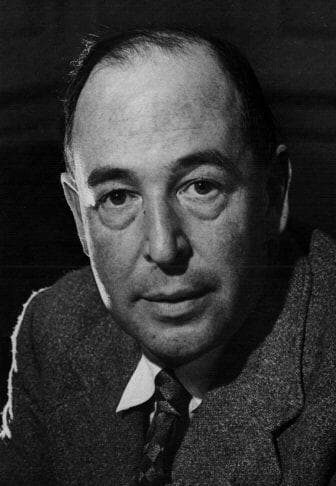
Clive Staples Lewis was a British writer, literary scholar, and Anglican lay theologian. He held academic positions in English literature at both Oxford University and Cambridge University. He is best known as the author of The Chronicles of Narnia, but he is also noted for his other works of fiction, such as The Screwtape Letters and The Space Trilogy, and for his non-fiction Christian apologetics, including Mere Christianity, Miracles, and The Problem of Pain.
Similar books
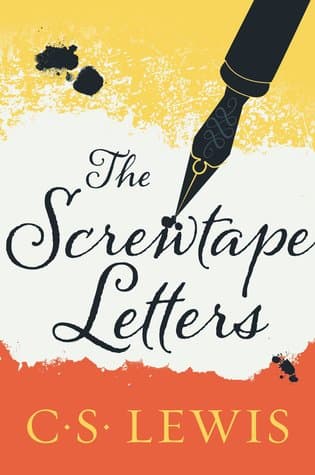
- The Screwtape Letters
C.S. Lewis
4.2 (332k) average on GoodreadsFantasyExplores the nature of evil and temptation from a unique, allegorical perspective.
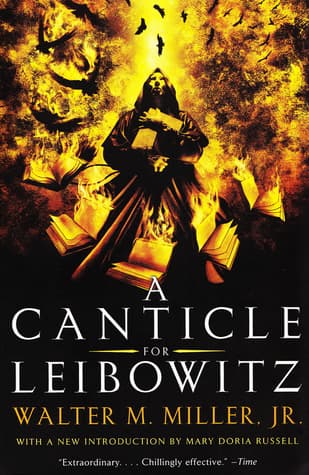
- A Canticle for Leibowitz
Walter M. Miller Jr.
4.0 (93k) average on GoodreadsFantasyPost-apocalyptic science fiction with strong religious and philosophical undertones about humanity's cyclical nature.
- Brave New World
Aldous Huxley
4.0 (1.4M) average on GoodreadsFantasyBoth are dystopian critiques of futures shaped by scientific control and social engineering. However, Lewis's novel introduces a supernatural and theological dimension, positing demonic forces behind the dystopian regime and offering a spiritual solution, whereas Huxley's critique is purely secular, warning against technological complacency and the erosion of humanistic values.
- Harry Potter and the Sorcerer's Stone
J.K. Rowling
4.5 (7M) average on GoodreadsFantasyRescued from a miserable life under the stairs, an orphaned boy discovers he's a wizard destined for a magical school, where he uncovers a dangerous secret tied to the dark wizard who murdered his parents.
- The Hunger Games
Suzanne Collins
4.3 (6.4M) average on GoodreadsFantasyIn a future where children fight to the death on live television, Katniss Everdeen volunteers for the arena, turning a death sentence into a fight for survival and a spark of rebellion.
- 1984
George Orwell
4.2 (3.1M) average on GoodreadsPoliticsIn a future where surveillance and thought control are absolute, a man's search for truth clashes with the Party, showing that hope can be a form of rebellion.




Enjoyed the summary?
A summary gives you the shape of the book. The book itself has the detail, the examples and the voice.
Find That Hideous Strength on AmazonAs an Amazon Associate, BookBrief earns from qualifying purchases. How we're funded