
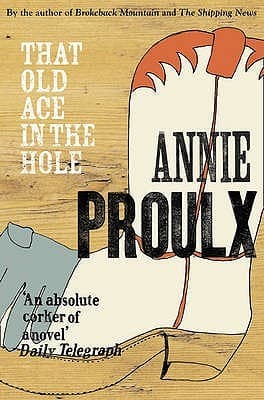
Synopsis
Covers the whole plot, including the ending.
- Difficulty
- Medium
- Pacing
- Slow
- Mood
- Atmospheric, Wry, Observational, Critical, Rural
- Read it if
- You enjoy richly detailed literary fiction with a strong sense of place, quirky characters, and a critical look at modern industry versus traditional ways of life.
- Skip it if
- You prefer fast-paced plots, clear-cut heroes and villains, or straightforward narratives without extensive regional dialect and character studies.
That Old Ace in the Hole Plot Summary
Covers the whole plot, including the ending.
The Arrival of Bob Dollar
Bob Dollar, a young man from Denver with a vague past, arrives in the Texas Panhandle, specifically the area around the fictional town of Woolybucket. He has been hired by the large agricultural corporation, Global Pork Rind, as a 'hog site scout' – his job is to identify suitable, isolated land parcels for the construction of immense industrial hog farms. Bob is initially optimistic, viewing this as a legitimate career opportunity. He drives his beat-up car through the desolate, wind-swept landscape, encountering the vast, empty plains and the occasional, often eccentric, local resident who eyes him with suspicion. His first task is to establish a base and begin his secretive reconnaissance.
Settling into Woolybucket
Bob secures a room in a boarding house run by the formidable and opinionated LaVon Fronk, a central figure in Woolybucket. LaVon quickly becomes a source of local gossip, history, and a subtle monitor of Bob's activities. Through LaVon, Bob begins to meet other inhabitants: the taciturn rancher Ace Krider, the philosophical mechanic Fred Raab, and various other colorful characters who populate the small, tight-knit community. Bob struggles to keep his true purpose under wraps, inventing a cover story about being a 'range management specialist.' He quickly learns that newcomers, especially those asking too many questions, are met with deep-seated skepticism and a strong sense of territoriality by the locals.
The Ace in the Hole
Bob hears whispers and legends about the 'Ace in the Hole' ranch, a vast and historically significant property owned by Ace Krider's family. This ranch is not just land; it is a symbol of the Panhandle's past, its independence, and the rugged spirit of its inhabitants. The phrase 'Ace in the Hole' also refers to a specific, legendary maneuver or strategy used by old-time ranchers to outwit competitors or overcome adversity. Bob, initially focused on his corporate mission, begins to understand that this ranch, and the ethos it represents, is deeply ingrained in the local psyche. He realizes that any attempt to acquire or disrupt such a place would be met with fierce resistance.
Scouting and Suspicions
Bob's job proves more difficult than anticipated. The land he's looking for – remote, cheap, with good water access, and large enough for a hog farm – is hard to come by without attracting undue attention. He spends his days driving dusty roads, examining maps, and making discreet inquiries. However, his presence and his unusual questions do not go unnoticed. The locals, particularly Ace Krider and Fred Raab, observe him closely. Rumors begin to circulate about his true intentions, fueled by the community's ingrained distrust of outsiders and large corporations. Bob feels increasingly isolated and under scrutiny, making his task of finding suitable sites nearly impossible.
Learning the Local Ways
Despite his corporate mission, Bob starts to immerse himself, albeit reluctantly, in the local culture. He attends community events, listens to the stories of the old-timers, and observes the social dynamics. He learns about the region's harsh history, the struggles of ranching, and the deep-seated pride of its people. Fred Raab, in particular, becomes a sort of reluctant mentor, sharing local lore, historical anecdotes, and philosophical musings. Bob begins to appreciate the resilience and resourcefulness of the Panhandle residents, even as he knows his job threatens their way of life. This exposure starts to chip away at his corporate loyalty.
The Cowboy Poets and the Past
Bob attends a cowboy poetry gathering, an important cultural event in the Panhandle. Here, he witnesses the power of storytelling and the deep connection the locals have to their land and heritage through verse. The poems often recount tales of hardship, humor, and the values of the cowboy life, implicitly contrasting it with modern industry. This experience, along with conversations with characters like Fred Raab and LaVon Fronk, deepens Bob's understanding of the region's past. He learns about the legendary figures, the land grabs, the droughts, and the continuous fight for survival that has shaped the Panhandle and its people.
Growing Conflict of Interest
As Bob learns more about the lives and histories of the Woolybucket community, his initial corporate zeal wanes. He sees the beauty and harshness of the land, the integrity of its people, and the impact a hog farm would have on their environment and way of life. He begins to question the ethics of Global Pork Rind's business model and his role in it. The financial incentives from his company start to feel hollow compared to the genuine connections he's forming, however tentative, with the locals. This internal conflict creates moral distress for Bob, making his work increasingly difficult and his conscience troubled.
The Threat of Global Pork Rind
Despite Bob's efforts at secrecy, the truth about his employment with Global Pork Rind eventually leaks out, or is pieced together by the astute locals. The community reacts with anger, fear, and determination. They understand the environmental devastation and social disruption that industrial hog farms bring. Ace Krider, Fred Raab, and LaVon Fronk become vocal proponents of resistance. The threat of Global Pork Rind galvanizes the community, uniting them against the common enemy. Bob finds himself in a precarious position, caught between his employer and the people he has come to know.
The 'Ace in the Hole' Strategy Revealed
Through his interactions, particularly with Ace Krider and Fred Raab, Bob finally understands the full significance of the 'Ace in the Hole' strategy. It is not just about a specific ranch; it is a philosophy of resourcefulness, resilience, and knowing when and how to play one's hidden advantage. He learns that the old-timers developed intricate, often unconventional, methods to protect their land and way of life from external threats, be they cattle barons or corporations. This understanding provides Bob with a new perspective on the community's quiet strength and their potential for resistance, suggesting they have their own hidden 'ace' to play.
Bob's Decision and Departure
Faced with the stark choice between his corporate job and the integrity of the Woolybucket community, Bob makes a decision. He realizes he cannot continue to work for Global Pork Rind, knowing the harm it would inflict. He informs his superiors of his inability to find suitable sites, effectively resigning. While his departure is not a grand heroic stand, it is a quiet act of defiance and a sign of his changed loyalties. He leaves Woolybucket, no longer the naive scout, but a man affected by his experiences and with a newfound understanding of integrity and home. His future is uncertain, but he has chosen a path away from corporate exploitation.
The Aftermath for Woolybucket
Following Bob's departure and the heightened awareness of Global Pork Rind's intentions, the community of Woolybucket mobilizes. While the specific outcome of their fight against the corporation is left somewhat ambiguous, the narrative implies that their collective resilience and the 'Ace in the Hole' spirit will prevail. The town, with its idiosyncratic characters and deep-rooted traditions, continues to exist as a bastion against the homogenizing forces of industrial agriculture. The relationships Bob formed, however briefly, with characters like LaVon, Fred, and Ace, leave a lasting impression, suggesting that even a small, seemingly insignificant community can stand its ground.
Principal Figures
Bob Dollar
Protagonist
A young, impressionable man seeking purpose as a hog site scout.
Bob Dollar is a young man in his early twenties, somewhat rootless and adrift, with a vague past involving various odd jobs and a desire to make something of himself. He is initially naive and eager to please his corporate employer, Global Pork Rind. He sees his job as a hog site scout as a legitimate career path, a chance to prove his worth. Bob is observant, though initially unperceptive of the deeper currents of the Panhandle. He is driven by a need for stability and belonging, which ironically leads him into a job that threatens the stability and belonging of others.
Relationships: Global Pork Rind (Employer, initially seen as a path to success, later as an antagonist.); LaVon Fronk (Landlady and local confidante, a source of information and subtle judgment.); Fred Raab (Philosophical mechanic, a mentor figure who shares local history and wisdom.); Ace Krider (Taciturn rancher, a symbol of the old ways and a figure of quiet resistance.)
LaVon Fronk
Supporting
Bob's sharp-tongued landlady and a central figure in Woolybucket.
LaVon Fronk is a formidable, opinionated, and highly observant woman who runs the boarding house where Bob stays. She is a fount of local gossip, history, and sharp commentary. LaVon is deeply rooted in the community, fiercely protective of its traditions and values, and highly suspicious of outsiders, especially those with hidden agendas. She represents the practical, no-nonsense spirit of the Panhandle women, and her seemingly casual remarks often carry profound insights or subtle warnings. She is a keeper of the community's collective memory and a moral compass.
Relationships: Bob Dollar (Landlady to tenant, a mentor/monitor figure.); Fred Raab (Community member, likely a long-standing acquaintance.)
Fred Raab
Supporting
The philosophical mechanic who shares local wisdom and history.
Fred Raab is the town mechanic, a man of quiet wisdom and deep historical knowledge. He is a philosopher by nature, often speaking in parables and offering profound insights into the land, its people, and the nature of existence. Fred serves as a reluctant mentor to Bob, sharing stories of the Panhandle's past, explaining the intricate local customs, and subtly guiding Bob's understanding of the region. He represents the intellectual and spiritual depth hidden beneath the rugged exterior of the Panhandle. He is a voice of reason and tradition.
Relationships: Bob Dollar (Mentor/advisor, sharing local knowledge.); Ace Krider (Long-standing friend and fellow community member.)
Ace Krider
Supporting
A taciturn rancher whose family owns the legendary 'Ace in the Hole' ranch.
Ace Krider is a quintessential Panhandle rancher – quiet, stoic, and deeply connected to his land and heritage. His family owns the legendary 'Ace in the Hole' ranch, a symbol of the region's history and independence. Ace embodies the resilience and quiet defiance of the old ways, representing the enduring spirit of the ranching community. He is a man of few words, but his presence and actions speak volumes about his commitment to preserving his way of life. He is suspicious of outsiders but possesses an innate integrity that Bob comes to respect.
Relationships: Bob Dollar (An object of suspicion, later a figure of respect.); Fred Raab (Long-standing friend and fellow community member.)
Global Pork Rind
Antagonist
The faceless corporation seeking to establish industrial hog farms.
Global Pork Rind is the monolithic, impersonal corporation that employs Bob Dollar. It represents the forces of industrial agriculture, driven solely by profit and efficiency, with little regard for local communities, environmental impact, or traditional ways of life. It is a faceless entity, its representatives appearing briefly and impersonally, embodying the distant, exploitative nature of modern agribusiness. Its goals are antithetical to the values of the Panhandle, making it the primary antagonist in the story's conflict over land and values.
Relationships: Bob Dollar (Employer, later the entity Bob rejects.); Woolybucket Community (Antagonistic, seeking to exploit their land.)
The Woolybucket Community
Supporting
The collective residents of the fictional Texas Panhandle town.
The Woolybucket community is a vibrant, idiosyncratic collection of characters who embody the spirit, resilience, and unique culture of the Texas Panhandle. They are deeply rooted in their land, fiercely independent, and suspicious of outsiders and corporate encroachment. Through their stories, customs, and interactions, they provide the rich tapestry against which Bob's journey unfolds. They represent a way of life that is threatened by modernization but is determined to endure. Their collective identity is as much a character as any individual within the story.
Relationships: Bob Dollar (Initially suspicious of him, later a source of his moral awakening.); Global Pork Rind (Antagonistic, a threat to their way of life.)
Old Man Poteet
Mentioned
A legendary figure representing the old Panhandle ways.
Old Man Poteet is a legendary figure frequently referenced by the older residents of Woolybucket. He embodies the ingenuity, toughness, and unconventional wisdom of the early Panhandle settlers and ranchers. His stories and anecdotes serve to illustrate the 'Ace in the Hole' philosophy and the historical context of the community's resilience. Though never directly appearing in the present narrative, his influence is profound, shaping the values and strategies of the current generation.
Relationships: Fred Raab (Source of many of Fred's stories and wisdom.); Ace Krider (Represents the lineage of Panhandle ranchers and their strategies.)
Themes & Insights
The Clash of Modernity and Tradition
This theme is central to the novel, appearing as the conflict between Global Pork Rind's industrial agriculture and the traditional ranching/small-town life of Woolybucket. Bob Dollar is caught directly in this clash. The corporation represents efficiency, profit, and a disregard for local ecosystems and culture, while the community embodies resilience, deep connection to the land, and a rich oral history. The novel highlights the struggle to preserve unique regional identities against homogenizing corporate forces, showing how modern 'progress' often comes at the cost of heritage and environment, as seen when Bob tries to scout land for the invasive hog farms.
“That old ace in the hole, it wasn't just a place. It was a way of thinkin'.”
The Meaning of 'Home' and Belonging
Bob Dollar, initially rootless and searching for a place to belong, questions his own definitions of home and loyalty. He arrives seeking a career to establish himself, a form of belonging to the corporate world. However, his immersion in Woolybucket, a community with a strong, almost tribal sense of home, challenges his preconceptions. He witnesses the deep-seated connection the locals have to their land, their history, and each other. This contrast forces Bob to re-evaluate what truly constitutes 'home' – is it a job, a place, or a community one chooses to protect? His eventual decision to leave Global Pork Rind signifies his shift in understanding.
“A man without a place, he ain't got no anchor.”
Environmentalism and Land Stewardship
The novel explores themes of environmentalism and responsible land stewardship versus exploitation. The industrial hog farms proposed by Global Pork Rind represent a destructive force that would pollute the land and water, irrevocably altering the delicate ecosystem of the Panhandle. In contrast, the ranchers and locals, despite their own struggles, exhibit a deep, ancestral respect for the land. They understand its fragility and its power, viewing themselves as stewards rather than owners. This theme is evident in the community's collective resistance to the hog farms and their understanding of the long-term consequences of such developments.
“You mess with this land, son, it'll mess with you back. And it's got a long memory.”
The Power of Storytelling and Oral History
Storytelling is a vital element of the Panhandle culture depicted in the novel. Characters like Fred Raab and LaVon Fronk constantly recount tales of the past, local legends, and personal anecdotes. These stories serve not only to entertain but also to preserve history, transmit values, and reinforce the community's identity. The 'Ace in the Hole' legend itself is a powerful oral tradition that guides the characters. Through these narratives, Bob learns about the region's resilience, its struggles, and the strategies its people have employed to survive and thrive. This oral tradition acts as a counter-narrative to the corporate, profit-driven logic.
“The past ain't never gone. It just gets told different ways.”
Integrity and Moral Choice
Bob Dollar's journey is one of moral awakening and choosing integrity. Initially, he is driven by a desire for a 'real job' and corporate success, seemingly blind to the ethical implications of his work. As he becomes more embedded in the Woolybucket community and understands the devastating impact of industrial hog farms, his conscience is pricked. He is forced to confront the conflict between his personal gain and the well-being of others. His ultimate decision to abandon his corporate mission, despite the uncertainty it brings, is a powerful statement about the importance of personal integrity and making choices aligned with one's values, even at a cost.
“Some things, a man just can't do, no matter what they pay him.”
Plot Devices & Literary Techniques
The 'Ace in the Hole' Metaphor
A central metaphor representing hidden strength, resilience, and local wisdom.
The 'Ace in the Hole' functions both as a literal place (Ace Krider's ranch) and a powerful, multi-layered metaphor. It symbolizes the hidden advantages, resourcefulness, and deep-seated resilience of the Panhandle community. It refers to the historical strategies used by locals to outwit powerful external forces, implying that the community possesses an inherent strength and wisdom that outsiders underestimate. For Bob, understanding this metaphor is key to comprehending the region's spirit and his own complicity in a potentially destructive plan. It's a symbol of defiance and the enduring power of local knowledge.
The Outsider Protagonist (Bob Dollar)
A character from outside the community who provides an objective lens and undergoes personal transformation.
Bob Dollar serves as the classic outsider protagonist. His initial unfamiliarity with the Panhandle allows the reader to experience the region and its unique culture through fresh eyes. As an outsider, he can observe the community's eccentricities and strengths without inherent bias, making his eventual transformation more impactful. His role as a corporate scout places him directly in conflict with the community, forcing him to confront ethical dilemmas. His journey from detachment to empathy allows the narrative to explore themes of belonging, environmentalism, and the clash of cultures from a personal perspective.
Local Color and Regional Dialect
The use of specific language, customs, and eccentric characters to define a strong sense of place.
Proulx masterfully employs local color and regional dialect to immerse the reader in the unique world of the Texas Panhandle. The distinct speech patterns, idioms, and colorful expressions of characters like LaVon Fronk and Fred Raab not only provide authenticity but also reveal their personalities and deep connection to the land. The descriptions of the harsh landscape, the idiosyncratic customs (like cowboy poetry gatherings), and the detailed portrayals of minor characters all contribute to a vivid sense of place. This device highlights the cultural richness that is threatened by the impersonal forces of corporate expansion.
Oral History and Anecdote
The frequent recounting of past events and personal stories to establish context and theme.
The narrative is rich with oral histories and anecdotes, often shared by the older characters like Fred Raab and LaVon Fronk. These stories about legendary figures (like Old Man Poteet), past struggles, and historical events serve several functions. They provide crucial background about the Panhandle's resilience, its harsh past, and the origins of its unique culture. They also subtly foreshadow the community's potential resistance to Global Pork Rind, demonstrating that they have faced and overcome threats before. This device emphasizes the importance of tradition and collective memory in shaping identity and informing present actions.
That Old Ace in the Hole Quotes
“He knew it, he just knew it: the world was full of people who were not thinking of him.”
“The wind was a raw, red thing, scouring the landscape of anything that wasn't rooted deep.”
“There was a loneliness so profound it made the silence sing.”
“History was not a thing of dates and kings, but of smells and dirt and the slow grind of the seasons.”
“Every man carried his own particular brand of foolishness, like a birthmark.”
“The past was not dead, it was not even past; it was a living, breathing thing that shaped the present moment.”
“You can't eat a landscape, but it can eat you.”
“He had come to understand that the truth was rarely a single, shining thing, but a collection of shadows and half-lights.”
“The world was full of hard-won knowledge and easily lost dreams.”
“There was a certain dignity in enduring, even when the enduring seemed to be for nothing.”
“The future was a thing you built with your hands, not something that simply arrived.”
“He felt like a man who had stumbled into a story already half-told, and was trying to catch up.”
“The land kept its secrets, but it also told its stories to those who knew how to listen.”
“Money was a kind of weather, changing the landscape of lives with its coming and going.”
Quiz
10 questions on the plot and the characters. Each answer comes with a short explanation.
Question 1
What is Bob Dollar's primary job in Woolybucket, Texas?
- Ranch hand for the local cattle operations
- Site scout for a hog farm corporation
- Manager of the local general store
- Journalist researching the panhandle's history
Show answer
B. Site scout for a hog farm corporation Bob Dollar is hired by Global Pork Rind to scout for suitable hog farm locations in the Texas panhandle, which is the central conflict of the story.
Question 2
What is the name of the town where Bob Dollar spends most of his time?
- Dry Creek
- Dust Devil
- Woolybucket
- Cactus Flats
Show answer
C. Woolybucket The story explicitly mentions that Bob Dollar is forced to face the idiosyncratic inhabitants of Woolybucket, which is the main setting.
Question 3
Which company does Bob Dollar work for?
- Panhandle Beef Inc.
- Global Pork Rind
- Texas Agri-Ventures
- Midwest Meat Packers
Show answer
B. Global Pork Rind Bob Dollar's new job is explicitly stated as being a hog site scout for Global Pork Rind.
Question 4
What is the general attitude of the Texas panhandle residents towards hog farms?
- They are generally supportive, seeing them as economic boosters.
- They are indifferent, as long as the farms are not too close to their properties.
- They strongly dislike them due to environmental and lifestyle concerns.
- They are open to them if strict regulations are in place.
Show answer
C. They strongly dislike them due to environmental and lifestyle concerns. The book description clearly states, 'Folks in the Texas panhandle do not like hog farms,' setting up the main conflict Bob Dollar faces.
Question 5
What internal conflict does Bob Dollar face throughout the novel?
- His desire to become a rancher versus his lack of experience.
- His commitment to his job versus his growing understanding and questioning of loyalty and home.
- His struggle to choose between two romantic interests in Woolybucket.
- His ambition to move to a big city versus his attachment to rural life.
Show answer
B. His commitment to his job versus his growing understanding and questioning of loyalty and home. The description highlights that Bob Dollar is 'forced to face... to question his own notions of loyalty and home,' indicating a significant internal struggle related to his job and the community.
Question 6
What literary element is Annie Proulx particularly praised for in 'That Old Ace in the Hole'?
- Her use of magical realism
- Her ability to craft intricate, suspenseful plots
- Her razor-sharp wit and masterly sense of place
- Her minimalist prose style
Show answer
C. Her razor-sharp wit and masterly sense of place The description explicitly states the novel is 'told with razor-sharp wit and a masterly sense of place,' highlighting key aspects of Proulx's writing style.
Question 7
What does Bob Dollar's journey in the Texas panhandle ultimately lead him to question?
- The profitability of the hog farming industry.
- His own notions of loyalty and home.
- The efficacy of his scouting methods.
- The existence of an 'ace in the hole.'
Show answer
B. His own notions of loyalty and home. The book description states that Bob Dollar is 'forced... to question his own notions of loyalty and home,' indicating a significant thematic development.
Question 8
How do the 'idiosyncratic inhabitants of Woolybucket' contribute to Bob Dollar's experience?
- They provide him with crucial information that helps him succeed in his job quickly.
- Their unique perspectives and resistance challenge his corporate mission and make him rethink his values.
- They mostly ignore him, allowing him to conduct his business without interference.
- They are largely irrelevant to his personal growth, serving only as background characters.
Show answer
B. Their unique perspectives and resistance challenge his corporate mission and make him rethink his values. Bob is 'forced to face the idiosyncratic inhabitants of Woolybucket and to question his own notions of loyalty and home,' implying their unique nature directly impacts his perspective and challenges his initial purpose.
Question 9
What does the phrase 'inhospitable ranch country of the Texas panhandle' suggest about the setting's role in the novel?
- The setting is merely a backdrop and has little influence on the plot or characters.
- The physical environment and local culture present significant challenges to Bob Dollar's mission and personal well-being.
- The 'inhospitable' nature refers only to the weather, not the people or land itself.
- It implies a setting rich in untapped resources that are easily exploitable.
Show answer
B. The physical environment and local culture present significant challenges to Bob Dollar's mission and personal well-being. The description highlights 'one man's struggle to make good in the inhospitable ranch country,' indicating the setting is a formidable antagonist that influences the plot and Bob's challenges, both physically and culturally.
Question 10
Given Proulx's previous works like 'The Shipping News' and 'Brokeback Mountain,' what might a reader anticipate about the novel's thematic approach?
- A focus on urban life and fast-paced adventure.
- An exploration of complex human relationships and the impact of harsh, distinct geographical settings.
- A lighthearted comedy with minimal character development.
- A historical drama set in a bygone era, unrelated to contemporary issues.
Show answer
B. An exploration of complex human relationships and the impact of harsh, distinct geographical settings. Proulx is known for her vivid portrayal of characters struggling within specific, often harsh, landscapes and cultures, as seen in 'The Shipping News' (Newfoundland) and 'Brokeback Mountain' (Wyoming). This suggests a similar thematic approach for 'That Old Ace in the Hole' in the Texas panhandle.
That Old Ace in the Hole FAQ
What is Bob Dollar's primary objective when he arrives in the Texas Panhandle?
Bob Dollar is sent to the Texas Panhandle by Global Pork Rind to scout and secure land suitable for large-scale industrial hog farms. His job involves identifying properties that meet the company's criteria and negotiating with landowners, often facing strong local opposition to the proposed operations.
Who are some of the key eccentric characters Bob encounters in Woolybucket?
Bob encounters a colorful cast of characters, including Ace Krump, the aging and philosophical rancher who takes Bob under his wing; LaVon Fronk, the sharp-witted and independent owner of the local café; and a variety of other ranchers, drifters, and small-town residents who embody the unique spirit of the Panhandle.
What is the central conflict Bob faces regarding his job and the community?
Bob's central conflict stems from his corporate mission to establish hog farms, which directly clashes with the deeply held values and way of life of the Woolybucket residents. They view the hog farms as an environmental threat and an invasion of their traditional ranching culture, forcing Bob to confront his own ethics.
How does Ace Krump influence Bob Dollar's perspective throughout the novel?
Ace Krump serves as a mentor figure, imparting a deep appreciation for the land, its history, and the self-sufficient ranching lifestyle. His wisdom and stories gradually erode Bob's corporate-driven mindset, making him question the true cost and value of his work for Global Pork Rind.
What role does the historical context of the Texas Panhandle play in the story?
The novel is steeped in the history of the Texas Panhandle, particularly the harsh realities of ranching, the Dust Bowl era, and the resilient spirit of its inhabitants. This historical backdrop highlights the stark contrast between traditional land use and the modern industrial agriculture Bob represents.
Are there any subtle indications early on that Bob might not be fully committed to Global Pork Rind's agenda?
While initially appearing dedicated, Bob's internal monologues occasionally reveal a nascent discomfort with the environmental implications of hog farms and the company's detached corporate culture. His curiosity about the local way of life, even before meeting Ace, hints at his susceptibility to alternative perspectives.
What is the significance of the 'ace in the hole' phrase in the title beyond Ace Krump's name?
The 'ace in the hole' metaphor extends beyond Ace Krump to represent the hidden strengths, resilience, and unexpected solutions found within the community and the land itself. It suggests that the Panhandle has its own unrevealed advantages and a deep-seated resistance to external pressures, much like a trump card.
Are there any recurring symbols or motifs that subtly underscore the themes of the novel?
The wind, the vast, unforgiving landscape, and the distinct smell of the land (both natural and industrial) are recurring motifs. The wind symbolizes the uncontrollable forces of nature and change, while the smells highlight the clash between the natural environment and the encroaching industrial 'stench' of the hog farms.
How does Bob Dollar's initial naiveté contribute to his character arc?
Bob's initial naiveté about rural life and corporate ethics allows for a significant transformation. His lack of preconceived notions about the Panhandle, beyond his company's directives, makes him more open to learning from Ace and the community, leading to a more profound questioning of his values.
What psychological impact does the isolation of the Panhandle have on its residents, as depicted in the book?
The isolation of the Panhandle fosters a fierce independence, self-reliance, and a strong sense of community among its residents. Psychologically, it creates individuals who are resilient, sometimes eccentric, and deeply rooted in their land and traditions, viewing outsiders with a healthy skepticism.
How does Bob's relationship with LaVon Fronk reflect his evolving understanding of human connection?
Bob's interactions with LaVon Fronk, initially a professional contact, evolve into a relationship marked by respect and a hint of affection. LaVon's intelligence and strong will challenge Bob's assumptions about women and rural life, pushing him to value genuine human connection over transactional corporate relationships.
In what ways does Bob Dollar's identity shift from a corporate drone to someone more rooted?
Bob's identity shifts from a detached corporate scout, focused solely on profit margins, to an individual who values community, environmental stewardship, and a sense of belonging. This transformation is driven by his prolonged exposure to the Panhandle's culture and Ace Krump's mentorship, leading him to prioritize different forms of 'wealth.'
Is Bob Dollar's ultimate decision a triumph of personal ethics over corporate greed, or a more nuanced compromise?
While Bob's decision leans towards personal ethics, it's a nuanced compromise rather than a complete rejection of his past. He doesn't entirely abandon his corporate skills but chooses to apply them in a way that aligns with his newfound values, suggesting a more integrated understanding of 'making good' in the world.
Does the novel offer a definitive solution to the conflict between industrial development and traditional ways of life?
The novel does not offer a definitive solution, but rather highlights the complexities and inherent tensions of this conflict. It suggests that while resistance is possible and individual choices matter, the forces of industrial development are persistent, leaving the long-term future of places like Woolybucket uncertain.
How does Proulx use humor to address the serious themes of environmental degradation and cultural clash?
Proulx employs sharp, often dark humor through the eccentricities of her characters and their dry wit to make the serious themes more palatable and impactful. This humor underscores the absurdity of the corporate world's invasion and provides a uniquely human lens through which to view the environmental and cultural struggles.
What is the broader message Proulx conveys about the concept of 'home' in the modern world?
Proulx suggests that 'home' is not merely a physical location but a deeply personal connection to a place, its history, and its community, built on shared values and mutual respect. In the modern world, this concept of home is constantly threatened by transient corporate interests and the homogenization of culture.
Could Ace Krump be seen as a symbolic representation of the dying traditional American West?
Ace Krump certainly embodies many aspects of the traditional American West: self-reliance, deep connection to the land, storytelling, and a certain rugged individualism. His age and the encroaching industrialization suggest he represents a way of life that is rapidly fading, making him a poignant symbol of the vanishing frontier.
Is there an argument to be made that Bob Dollar's transformation is less about heroism and more about self-preservation or finding a better fit?
One could argue Bob's transformation is partly self-preservation, as he finds more personal fulfillment and a sense of belonging in Woolybucket than in his corporate life. It's less about a grand heroic gesture and more about a gradual realization that a different path offers a more authentic and satisfying existence for him.
About the author
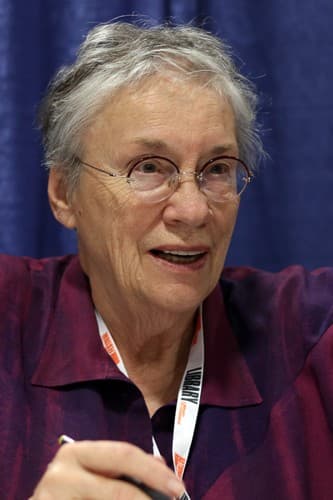
Edna Ann Proulx is an American novelist, short story writer, and journalist. She has written most frequently as Annie Proulx but has also used the names E. Annie Proulx and E.A. Proulx.
Similar books
- The Shipping News
Annie Proulx
3.9 (130k) average on GoodreadsLiterary FictionShares Proulx's distinctive prose, focus on isolated communities, and character-driven narrative.
- Lonesome Dove
Larry McMurtry
4.5 (149k) average on GoodreadsHistorical FictionOffers a deep dive into Texas culture, albeit historical, with a strong sense of place and memorable characters.
- Gilead (Oprah's Book Club)
Marilynne Robinson
3.9 (126k) average on GoodreadsFictionFeatures an introspective narrative set in a distinct American landscape, exploring themes of belonging and legacy.
- A Thousand Acres
Jane Smiley
3.8 (61k) average on GoodreadsLiterary FictionSmiley's A Thousand Acres also explores the decline of family farming and the tensions within rural communities, but it does so through the lens of a Shakespearean tragedy ('King Lear') and focuses heavily on intrafamily conflict and generational trauma. That Old Ace in the Hole, in contrast, frames the rural decline more broadly as an external corporate threat, using a more picaresque and less overtly tragic narrative structure, with Bob Dollar as an outsider observer rather than an embedded family member.
- The Grapes of Wrath
John Steinbeck
4.0 (750k) average on GoodreadsHistorical FictionBoth novels powerfully depict the plight of rural communities facing economic devastation and displacement. Steinbeck's work focuses on the human cost of the Dust Bowl and the systemic failures leading to mass migration, emphasizing collective struggle and social injustice. Proulx's novel, while sharing a similar thematic core of land loss and economic exploitation, is more concerned with the specific, often absurd, manifestations of corporate maneuvering and the unique eccentricities of a particular Texan community, rather than a broad sociological movement.
- The Old Man and the Sea
Ernest Hemingway
3.8 (831k) average on GoodreadsLiterary FictionA Cuban fisherman's long struggle with a giant marlin becomes a story of endurance and dignity, now retold for young adults with illustrations, phonetic guides, and writing prompts in Traditional Chinese.




Enjoyed the summary?
A summary gives you the shape of the book. The book itself has the detail, the examples and the voice.
Find That Old Ace in the Hole on AmazonAs an Amazon Associate, BookBrief earns from qualifying purchases. How we're funded