

Synopsis
Covers the whole plot, including the ending.
- Difficulty
- Easy
- Pacing
- Moderate
- Mood
- Whimsical, Humorous, Slightly Absurd
- Read it if
- You enjoy classic Dr. Seuss stories with a touch of fantasy and a message about unfairness.
- Skip it if
- You prefer modern children's books with complex plots or deeply developed characters.
The 500 Hats of Bartholomew Cubbins Plot Summary
Covers the whole plot, including the ending.
A Royal Decree and a Peculiar Problem
One morning, while walking through the Kingdom of Didd, young Bartholomew Cubbins hears a royal decree. King Derwin of Didd is passing, and everyone must remove their hats to show respect. Bartholomew, a simple peasant boy, removes his plain, red-feathered hat. To his surprise, another identical hat immediately appears. He tries again and again, each time a new hat materializing. The King, seeing this unusual behavior, is first amused but quickly grows impatient when Bartholomew explains his problem. The King's guards are called, and Bartholomew is brought before the monarch for questioning, to his confusion and the King's growing frustration.
The King's Growing Impatience
King Derwin, finding Bartholomew's story unbelievable, orders him to remove his hat. Bartholomew demonstrates, removing one hat only for another to instantly replace it. The King's Royal Hat-Remover is called, a man whose only job is to remove hats, but even he is confused. He pulls off hat after hat, but they just keep appearing. The King's temper begins to fray as the pile of discarded hats grows. He tries to understand the magical event, but his patience wears thin with each new hat, convinced Bartholomew is somehow playing a trick on him rather than genuinely being unable to stop the hats from appearing.
The Royal Counsel's Advice
Frustrated, King Derwin calls his Royal Counsel, a group of wise men, to solve the mystery of Bartholomew's hats. The First Wise Man suggests Bartholomew is a magician and should be banished. The Second Wise Man thinks Bartholomew is a jester and should be put in the dungeon. The Third Wise Man, older and supposedly wiser, simply falls asleep. None of their advice is helpful, and the hats continue to appear on Bartholomew's head, further irritating the King. The King feels increasingly foolish and powerless against such a simple, yet persistent, problem.
The Royal Executioner's Attempt
Desperate, King Derwin calls for the Royal Executioner, Sir Alaric. Sir Alaric, a burly man, is ordered to chop off Bartholomew's head, believing this extreme measure will solve the hat problem. However, as Bartholomew is led to the chopping block, he continues to remove hats, and new ones replace them just as quickly. Sir Alaric hesitates, realizing that even if he were to chop off Bartholomew's head, a hat might simply appear on the severed head or even on the block itself. The absurdity of the situation becomes clear even to the executioner, and he refuses to proceed, leaving the King in an even greater state of confusion and anger.
The Royal Bowman's Aim
Still determined, King Derwin then calls upon the Royal Bowman, a skilled archer. The King orders the Bowman to shoot the hats off Bartholomew's head, one by one. The Bowman aims and shoots, and a hat is knocked off. But, as before, another hat instantly takes its place. The Bowman shoots again and again, and the hats continue to appear. The air fills with flying hats, and the ground around Bartholomew becomes littered with discarded headwear. The King watches in disbelief as his attempts to physically remove the hats only seem to make them appear faster, making the situation even more uncontrollable.
The Royal Magicians' Failure
In a final effort to solve the problem through mystical means, King Derwin summons his Royal Magicians. These magicians, known for their spells and enchantments, try various incantations and magical gestures to stop the hats. They chant ancient words and wave their wands, but nothing works. Each spell is met with the appearance of yet another hat on Bartholomew's head. The magicians, frustrated and embarrassed, admit their defeat. They have never encountered such a persistent and baffling magical event, confirming to the King that this is no ordinary trick, but a true enigma, deepening his humiliation.
The King's Despair and a New Approach
King Derwin, having used all his royal resources and advisors, slumps onto his throne in despair. The pile of hats around Bartholomew is now enormous, almost reaching the ceiling. The King feels defeated and foolish, unable to solve such a simple problem. He considers giving up and letting Bartholomew live with his hats, or perhaps even banishing him. He's on the verge of tears, feeling utterly powerless and ridiculous. At this point, seeing the sheer number and variety of hats, a subtle shift in his perspective begins, though he doesn't realize it yet.
The Hats Grow More Elaborate
As the situation continues, a remarkable change begins with the hats. They are no longer simple red-feathered hats. Instead, each new hat that appears is more elaborate and fantastical than the last. Some are adorned with jewels, others with exotic feathers, some are shaped like castles, and one even has a live fish swimming in a bowl on top. Bartholomew, though still confused, continues to remove them patiently. The King, first too frustrated to notice, slowly starts to observe the increasing artistry and complexity of the hats, his anger subtly giving way to a strange fascination.
The 500th Hat
The hats continue to appear, each more astonishing than the last, until Bartholomew removes what he believes is the 499th hat. Then, the 500th hat appears on his head. This hat is unlike any of the others. It is a breathtaking masterpiece, adorned with a rainbow of jewels, shimmering silks, and a magnificent plume of rare feathers, sparkling in the light. It is exquisitely beautiful and unique. Both Bartholomew and King Derwin are captivated by its splendor. The artistry and uniqueness of this final hat command their full attention, marking a turning point in the absurd ordeal.
A Royal Offer and a Simple Resolution
Struck by the beauty of the 500th hat, King Derwin's frustration completely vanishes. He is no longer angry or confused, but filled with admiration. He offers Bartholomew Cubbins 500 pieces of gold for the magnificent hat. Bartholomew, a humble boy, readily agrees. As he carefully removes the 500th hat and hands it to the King, something remarkable happens: no new hat appears. The magic is broken. Bartholomew's head is finally bare. The King, delighted with his new hat, and Bartholomew, rich beyond his wildest dreams, both walk away content, the strange ordeal finally over.
Principal Figures
Bartholomew Cubbins
Protagonist
A humble and patient peasant boy.
Bartholomew is a simple, good-natured, and remarkably patient young boy from the Kingdom of Didd. He is respectful of authority, always trying to comply with King Derwin's demands, despite the increasingly absurd and unjust predicament he finds himself in. He never loses his composure or temper, even when faced with threats of banishment or execution. His innocence and calm demeanor highlight the King's irrationality.
Relationships: King Derwin (Subject of the King's arbitrary authority and frustration)
King Derwin
Antagonist
The short-tempered and absolute ruler of the Kingdom of Didd.
King Derwin is a proud, impatient, and ultimately arbitrary ruler. He expects absolute obedience and becomes quickly frustrated when things don't go his way. His initial amusement at Bartholomew's predicament quickly turns to anger and bewilderment, leading him to resort to increasingly drastic and illogical solutions. He is prone to fits of temper and relies on his advisors and royal staff without much critical thought, until the sheer beauty of the 500th hat breaks through his stubbornness.
Relationships: Bartholomew Cubbins (Ruler to subject, initially a source of frustration, later an object of admiration); Royal Hat-Remover (Employer to employee); Royal Counsel (Ruler seeking advice from advisors); Sir Alaric (Royal Executioner) (Ruler giving commands to executioner); Royal Bowman (Ruler giving commands to archer); Royal Magicians (Ruler seeking magical solutions)
Royal Hat-Remover
Supporting
A specialist whose skills are rendered useless.
The Royal Hat-Remover is a man whose entire profession revolves around removing hats. He is initially confident in his abilities but quickly becomes baffled and defeated by Bartholomew's endless hats. His failure underscores the magical nature of the problem and the futility of ordinary solutions, highlighting the extraordinary circumstances facing Bartholomew. He represents the mundane order that is disrupted by the fantastic.
Relationships: King Derwin (Employee of the King); Bartholomew Cubbins (Attempted to remove his hats)
Royal Counsel
Supporting
A group of supposedly wise but unhelpful advisors.
The Royal Counsel consists of three wise men, summoned by King Derwin to solve the hat problem. They offer impractical or even cruel advice, such as banishment or imprisonment, or simply fall asleep. Their inability to provide a sensible solution further emphasizes the King's poor judgment and the extraordinary nature of Bartholomew's hats. They symbolize the failure of conventional wisdom in the face of the truly unusual.
Relationships: King Derwin (Advisors to the King)
Sir Alaric (Royal Executioner)
Supporting
The King's executioner, who refuses an absurd command.
Sir Alaric is the Royal Executioner, a formidable figure whose role is to carry out the King's gravest commands. However, even he finds the King's order to chop off Bartholomew's head for wearing a hat too absurd. His refusal to proceed, realizing the futility and ridiculousness of such an act, marks a turning point where even the most severe instruments of royal power are rendered powerless by the peculiar magic.
Relationships: King Derwin (Employee of the King); Bartholomew Cubbins (Ordered to execute him)
Royal Bowman
Supporting
A skilled archer whose efforts are in vain.
The Royal Bowman is a highly skilled archer, called upon by King Derwin to shoot the hats off Bartholomew's head. Despite his precision and repeated attempts, the hats keep appearing. His failure, like that of the Hat-Remover, highlights the magical and unstoppable nature of Bartholomew's hats, demonstrating that even physical force cannot resolve the problem. He represents another failed attempt by the King to impose his will.
Relationships: King Derwin (Employee of the King); Bartholomew Cubbins (Attempted to shoot his hats off)
Royal Magicians
Supporting
Enchanters who are powerless against the hat phenomenon.
The Royal Magicians are the kingdom's experts in spells and enchantments, called upon as a last resort by King Derwin. Despite their various incantations and magical attempts, they are completely unable to stop the hats from appearing. Their failure underscores that the problem is beyond even mystical solutions within the King's control, further emphasizing the unique and unpredictable nature of the magic affecting Bartholomew.
Relationships: King Derwin (Employees of the King)
Themes & Insights
Abuse of Power and Injustice
King Derwin's treatment of Bartholomew shows the abuse of power. The King, simply because he is King, feels entitled to demand that Bartholomew stop wearing hats, even when it's clear the boy has no control. He escalates his demands from simple requests to threats of banishment and execution, showing a complete disregard for Bartholomew's rights or the absurdity of his own actions. This theme is central to the entire story, with Bartholomew's calm endurance highlighting the King's petty tyranny, as seen when the King orders the executioner to chop off Bartholomew's head for a magical hat problem.
“Take off your hat!" roared the King. "I command you to take off your hat!”
Patience and Endurance
Bartholomew Cubbins's patience and endurance are remarkable. Despite facing increasingly severe threats and the endless, frustrating appearance of hats, he remains calm and compliant. He never complains or fights back, simply doing his best to obey the King's commands. This quiet resilience in the face of overwhelming and unjust pressure is a core aspect of his character and a significant theme, contrasting sharply with the King's volatile temper. His continued hat-removing, even as the executioner stands by, shows this endurance.
“Bartholomew Cubbins was a boy who minded his own business.”
The Absurdity of Authority
The story shows the absurdity that can arise when authority is used without reason or understanding. King Derwin's escalating attempts to solve the hat problem—from a Royal Hat-Remover to an executioner and magicians—become increasingly ridiculous, exposing the limits and foolishness of absolute power when faced with the unexplainable. The King's advisors, too, offer absurd or unhelpful solutions. This theme is shown by the image of the Royal Bowman shooting hats off, only for new ones to immediately appear, turning a serious command into a comical and useless exercise.
“The King's face grew redder and redder. He stamped his foot. "I can't stand it!" he shouted. "Fifty hats!"”
Appreciation of Beauty and Artistry
Initially, the King is blind to anything but his own frustration and Bartholomew's perceived insolence. However, as the hats become increasingly elaborate and beautiful, ending with the magnificent 500th hat, the King's perspective shifts. His anger gives way to admiration, and he is willing to pay a fortune for the final, most artistic hat. This change suggests that beauty and artistry can soften even the most rigid and tyrannical hearts, leading to a peaceful resolution. The King's decision to buy the 500th hat is the ultimate expression of this theme.
“The King's eyes popped out! He had never seen a hat like this before. It was the most beautiful hat that had ever been seen in the Kingdom of Didd.”
Plot Devices & Literary Techniques
Magical Realism
An ordinary boy experiences an extraordinary, unexplainable phenomenon.
The central plot device is the magical appearance of hats on Bartholomew's head. This phenomenon is presented matter-of-factly within an otherwise ordinary setting, creating a sense of magical realism. The magic is never explained, nor does it follow any logical rules, serving instead as an external force that challenges the established order and the King's authority. It's the catalyst for all the conflict and the ultimate resolution, pushing characters to their limits and forcing a change in perspective, particularly for King Derwin.
Repetition with Variation
The recurring appearance of hats, each slightly different.
The plot heavily relies on the repetition of Bartholomew removing a hat, only for another to appear. This device not only builds suspense and comedic effect but also highlights the escalating futility of the King's efforts. The variation comes in the hats themselves, which gradually transform from simple to increasingly elaborate and fantastical designs. This progression is crucial for the King's eventual change of heart, as the sheer artistry of the later hats captures his attention and admiration, leading to the story's resolution.
Escalation
The increasing severity of the King's attempts to solve the problem.
The King's methods for dealing with Bartholomew's hats continually escalate, from simple commands to calling specialists, then advisors, and finally resorting to threats of violence (execution, archery) and magic. This escalating series of increasingly absurd and severe measures underscores the King's growing frustration and the limitations of his power. It also serves to heighten the tension and highlight the injustice Bartholomew faces, making the eventual peaceful resolution more impactful.
Symbolism of the Hats
The hats symbolize individuality, persistence, and the unexpected.
The hats themselves serve as a potent symbol. Initially, they represent an inexplicable challenge to authority and conformity, as Bartholomew cannot simply 'be normal' by removing his hat. As they become more elaborate, they symbolize the burgeoning creativity, individuality, and unexpected beauty that can emerge even from a frustrating situation. The final, most magnificent hat symbolizes ultimate uniqueness and worth, capable of changing the King's entire outlook and bringing about a peaceful, mutually beneficial conclusion.
The 500 Hats of Bartholomew Cubbins Quotes
“Bartholomew Cubbins lived in a plain little house on the edge of a plain little town on a plain little hill.”
“Every time Bartholomew took off his hat, another one was on his head!”
“He pulled off hat after hat after hat after hat, until there was a great pile of hats on the ground beside him.”
“But the King was getting impatient. He was getting angrier and angrier.”
“This is a plot! A plot to make me look ridiculous!”
“I'll give you one last chance. Take off your hat or off with your head!”
“The hats were becoming fancier and fancier, more and more beautiful.”
“There were hats with feathers and hats with jewels, hats with ribbons and hats with bells.”
“The people of the town came running to see the amazing sight.”
“Each hat was finer than the hat that had come before.”
“And then, with a gulp, Bartholomew Cubbins pulled off hat number 500.”
“It was the most beautiful hat that had ever been seen in the Kingdom of Didd.”
“And it was gone. And the King's anger was gone. And Bartholomew Cubbins was free.”
“The King bought the 500th hat from Bartholomew Cubbins for 500 pieces of gold.”
“And Bartholomew Cubbins went home, no hats on his head, and 500 pieces of gold in his pocket.”
Quiz
10 questions on the plot and the characters. Each answer comes with a short explanation.
Question 1
What is the primary problem Bartholomew Cubbins faces when he takes off his hat for King Derwin?
- His hat changes color every time he removes it.
- A new hat immediately appears on his head.
- The hat he removes instantly disappears forever.
- The hat floats away and cannot be retrieved.
Show answer
B. A new hat immediately appears on his head. Bartholomew's central predicament is that every time he removes a hat, a new one magically appears in its place on his head.
Question 2
Who is the ruler that demands Bartholomew remove his hat?
- King Norbert
- King Derwin
- King Arthur
- King Ferdinand
Show answer
B. King Derwin The story explicitly states that Bartholomew faces unjust treatment at the hands of King Derwin.
Question 3
What is the initial reason King Derwin demands Bartholomew remove his hat?
- Bartholomew is blocking his view of the parade.
- It is against the law for a peasant to wear a hat in the king's presence.
- The King believes Bartholomew is being disrespectful by not removing his hat.
- Bartholomew's hat is too flamboyant for the occasion.
Show answer
C. The King believes Bartholomew is being disrespectful by not removing his hat. King Derwin initially demands Bartholomew remove his hat because he believes it is a sign of disrespect that Bartholomew remains covered in the king's presence.
Question 4
What is the ultimate fate of the hats that Bartholomew removes?
- They are burned in a large bonfire.
- They are thrown into the castle dungeon.
- They are piled up around Bartholomew as new ones appear.
- They are given to the poor villagers.
Show answer
C. They are piled up around Bartholomew as new ones appear. As Bartholomew continues to remove hats, they accumulate around him, forming a large pile, demonstrating the futility of King Derwin's demands.
Question 5
Which of the following characters is NOT consulted by King Derwin to solve Bartholomew's hat problem?
- The Royal Magicians
- The Royal Executioner
- The Royal Tailor
- The Royal Bowman
Show answer
C. The Royal Tailor King Derwin consults various royal advisors, including the magicians, executioner, and bowman, but not the Royal Tailor, in his attempts to solve the hat problem.
Question 6
What distinct feature does the 500th hat possess that makes it different from the previous hats?
- It is made of solid gold and studded with jewels.
- It is invisible to everyone but Bartholomew.
- It is a simple, plain brown hat, unlike the others.
- It is so large it covers Bartholomew's entire body.
Show answer
A. It is made of solid gold and studded with jewels. The 500th hat is uniquely elaborate, being made of gold and adorned with jewels, which ultimately captivates the King.
Question 7
What theme is most prominently addressed through King Derwin's actions towards Bartholomew?
- The importance of friendship and loyalty.
- The abuse of power by those in authority.
- The struggle between good and evil.
- The beauty of nature and the environment.
Show answer
B. The abuse of power by those in authority. The provided description explicitly states the book addresses 'the abuse of power' through Bartholomew's unjust treatment by King Derwin.
Question 8
How does King Derwin finally resolve Bartholomew's hat dilemma?
- He banishes Bartholomew from the kingdom.
- He offers Bartholomew a large sum of money for the 500th hat.
- He uses a magic spell to make the hats disappear.
- He declares Bartholomew a hero for his patience.
Show answer
B. He offers Bartholomew a large sum of money for the 500th hat. King Derwin, captivated by the magnificent 500th hat, offers Bartholomew 500 pieces of gold for it, which finally causes the hats to stop appearing.
Question 9
What is the implied consequence of King Derwin's eventual purchase of the 500th hat?
- Bartholomew becomes a rich and powerful noble.
- The magical appearance of hats finally stops.
- King Derwin begins to wear 500 hats himself.
- The kingdom falls into chaos due to the magic.
Show answer
B. The magical appearance of hats finally stops. When King Derwin finally buys the 500th hat, the magical cycle is broken, and no more hats appear on Bartholomew's head.
Question 10
What is the significance of the phrase 'totally Seussian' in the context of this book?
- It means the book features rhyming couplets and nonsensical words.
- It implies the book shares common themes and a distinctive style with Dr. Seuss's other works.
- It refers specifically to the use of bright, primary colors in the illustrations.
- It indicates the book is a sequel to 'The Cat in the Hat'.
Show answer
B. It implies the book shares common themes and a distinctive style with Dr. Seuss's other works. The text explains 'totally Seussian' by listing common themes (abuse of power, rivalry, zany good humor) and style found in his other works like 'Yertle the Turtle' and 'The Cat in the Hat'.
The 500 Hats of Bartholomew Cubbins FAQ
What is the central conflict in 'The 500 Hats of Bartholomew Cubbins'?
The central conflict revolves around Bartholomew Cubbins, a young peasant boy, who is commanded by King Derwin to remove his hat as the King passes. However, every time Bartholomew removes one hat, another magically appears on his head, leading to an escalating and increasingly absurd predicament.
Who are the main characters in the story?
The main characters are Bartholomew Cubbins, a humble and obedient peasant boy, and King Derwin, a powerful but increasingly frustrated monarch. Various court officials, such as the Grand Duke, the Lord High Keeper of the Royal Rules, and the Royal Magicians, also play supporting roles in trying to solve Bartholomew's hat problem.
How does King Derwin initially react to Bartholomew's inability to remove his hat?
King Derwin initially reacts with annoyance and disbelief, believing Bartholomew is defying him deliberately. He becomes increasingly angry and impatient, viewing Bartholomew's predicament as a personal affront to his authority and a challenge to the established rules of his kingdom.
What are some of the increasingly extreme measures taken to remove Bartholomew's hats?
The court tries various methods, from the Royal Magicians attempting spells to the Royal Archer shooting hats off, and even the executioner preparing to behead Bartholomew. Each attempt proves futile as a new hat instantly replaces the one removed, escalating the tension and absurdity.
How is the problem of the hats ultimately resolved?
The problem is resolved when Bartholomew's 500th hat appears, which is uniquely adorned with feathers and jewels. King Derwin, captivated by its beauty, offers to buy it for 500 pieces of gold. Bartholomew accepts, and once he takes the payment, all the hats magically vanish, leaving his head bare.
Are there any subtle clues about the hats' origin or purpose?
The story never explicitly states the origin or purpose of the hats, leaving it a magical mystery. However, the hats only appear when King Derwin demands Bartholomew remove his headwear, suggesting they are a magical manifestation directly tied to the King's arbitrary exercise of power against an innocent subject.
What is the significance of the 500th hat being different from the others?
The 500th hat's unique beauty, with its feathers and jewels, serves as a catalyst for the resolution. Its aesthetic appeal distracts King Derwin from his anger and allows him to see a solution that benefits both parties, highlighting how a change in perspective can break a cycle of conflict.
Does the story suggest any deeper meaning behind the hats themselves?
The hats can be interpreted as a symbol of individual identity or an unyielding spirit in the face of oppression, or perhaps even the relentless nature of injustice. They represent something that cannot be easily removed or suppressed by external force, particularly when that force is unjust.
How does Bartholomew's psychology evolve throughout his ordeal?
Bartholomew initially displays confusion and fear, but as the situation escalates, he maintains a remarkable sense of calm and passive resistance. He never actively defies the King but simply states his inability to comply, embodying a quiet resilience despite the dire threats he faces.
What psychological traits does King Derwin exhibit?
King Derwin exhibits traits of authoritarianism, impatience, and a profound lack of empathy. His initial reaction is annoyance, which quickly escalates to anger and a desire for absolute control, demonstrating a ruler who prioritizes his own will over reason or justice.
How does the crowd's reaction to Bartholomew's predicament change over time?
Initially, the crowd is likely curious or amused, but as Bartholomew faces increasingly severe threats, their mood shifts to concern and fear. They become silent witnesses to the King's escalating tyranny, reflecting the common person's helplessness in the face of unchecked power.
How does the story comment on the nature of power and authority?
The story strongly critiques the abuse of power and arbitrary authority, personified by King Derwin. It shows how unchecked power can lead to irrational decisions and cruelty, highlighting the absurdity that arises when a ruler's ego dictates justice rather than reason.
Is 'The 500 Hats' a commentary on conformity versus individuality?
Yes, the story can be interpreted as a commentary on conformity. King Derwin demands Bartholomew conform to a simple rule, but Bartholomew's hats represent an uncontrollable individuality that resists forced suppression. The hats' persistence symbolizes the difficulty of extinguishing one's unique essence.
How does the ending, with King Derwin buying the hat, resolve the themes of the story?
The ending provides a nuanced resolution. While Bartholomew is freed, King Derwin doesn't explicitly apologize or acknowledge his wrongdoings; he merely finds a profitable solution. This suggests that while individual crises can be resolved, systemic issues of power might persist, though a moment of beauty can offer a temporary truce.
What message does the book convey about standing up to bullying or injustice?
The book conveys that quiet, persistent resistance can eventually wear down an aggressor, even if not through direct confrontation. Bartholomew's unwavering, albeit passive, presence and the escalating absurdity of the hats ultimately force King Derwin to find a different path, illustrating the power of simply existing and refusing to be broken.
How does 'The 500 Hats' compare to Dr. Seuss's later works like 'Yertle the Turtle' in its anti-authoritarian message?
'The 500 Hats' shares a similar anti-authoritarian message with 'Yertle the Turtle,' both critiquing leaders who abuse their power. However, '500 Hats' features a more passive form of resistance from Bartholomew, whereas 'Yertle the Turtle' includes a more active, albeit accidental, defiance from Mack, the bottom turtle.
What role does humor play in addressing the serious themes of the book?
Humor, particularly through the escalating absurdity of the hats and the increasingly outlandish solutions proposed by the court, serves to lighten the tone while simultaneously highlighting the ridiculousness of King Derwin's tyranny. This zany humor makes the critique of power accessible and memorable for younger readers.
About the author
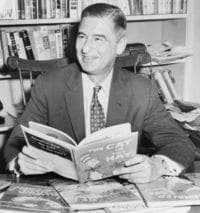
Dr. Seuss, born Theodor Seuss Geisel, was a beloved American children's author and illustrator. He is renowned for his imaginative tales and whimsical rhymes, including iconic works like 'The Cat in the Hat,' 'Green Eggs and Ham,' and 'Oh, the Places You'll Go!'. His unique style and memorable characters have made him a staple in children's literature for generations.
Similar books
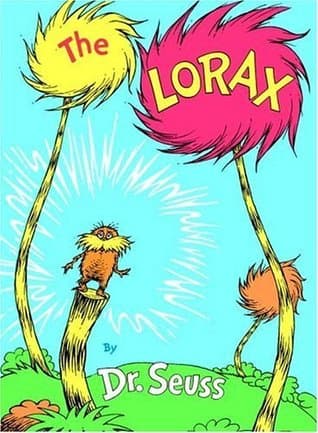
- The Lorax
Dr. Seuss
4.3 (283k) average on GoodreadsFantasyA classic Dr. Seuss tale with a strong moral message.
- Harold and the Purple Crayon
Crockett Johnson
4.3 (127k) average on GoodreadsFantasyFeatures a child protagonist in a whimsical, imaginative scenario.
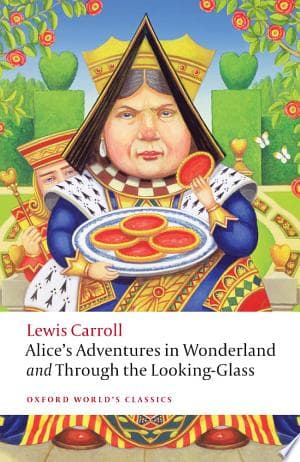
- Alice's Adventures in Wonderland
Lewis Carroll
4.0 (245k) average on GoodreadsFantasyBoth The 500 Hats and Alice's Adventures in Wonderland (1865) plunge their protagonists into a world governed by illogical rules and arbitrary authority figures. Carroll's Wonderland is a more chaotic and dreamlike realm, with a broader cast of eccentric characters and a less structured plot than Seuss's narrative. While Alice actively tries to understand and navigate the nonsensical rules, Bartholomew is a passive recipient of the peculiar problem, with the narrative focus shifting to the king's increasingly absurd attempts to solve it. Both critiques of authority, but Carroll's is more about the inherent absurdity of language and logic, whereas Seuss's is a more pointed commentary on governmental incompetence and the abuse of power. Peter Hunt's An Introduction to Children's Literature (1994) would categorize both as fantasy that challenges conventional reality, but with distinct narrative approaches and thematic emphases.
- Harry Potter and the Sorcerer's Stone
J.K. Rowling
4.5 (7M) average on GoodreadsFantasyRescued from a miserable life under the stairs, an orphaned boy discovers he's a wizard destined for a magical school, where he uncovers a dangerous secret tied to the dark wizard who murdered his parents.
- The Hunger Games
Suzanne Collins
4.3 (6.4M) average on GoodreadsFantasyIn a future where children fight to the death on live television, Katniss Everdeen volunteers for the arena, turning a death sentence into a fight for survival and a spark of rebellion.
- 1984
George Orwell
4.2 (3.1M) average on GoodreadsPoliticsIn a future where surveillance and thought control are absolute, a man's search for truth clashes with the Party, showing that hope can be a form of rebellion.




Enjoyed the summary?
A summary gives you the shape of the book. The book itself has the detail, the examples and the voice.
Find The 500 Hats of Bartholomew Cubbins on AmazonAs an Amazon Associate, BookBrief earns from qualifying purchases. How we're funded