

Core Idea
- Difficulty
- Hard
- Read it if
- You are deeply interested in the psychological and philosophical roots of human evil, want to understand the spectrum of aggression beyond simplistic explanations, and are prepared for a rigorous, interdisciplinary examination of destructive character types.
- Skip it if
- You are looking for a quick self-help guide, prefer light reading, or are unwilling to engage with complex psychoanalytic and philosophical concepts regarding human nature and societal pathology.
Key Takeaways from The Anatomy of Human Destructiveness
Beyond Instinct vs. Environment
Human destructiveness is not purely innate nor solely learned, but a complex interplay of biology and societal factors.
Fromm breaks down the simple divide between instinct theories (like Lorenz's 'aggression instinct') and radical behaviorism (like Skinner's environmental determinism). He argues that human aggression and destructiveness are not just an inherited drive, nor are they simply learned. Instead, he offers a complex view where humans have various potentials, and social, economic, and cultural structures largely determine which ones develop. This 'existential situation' of humanity—our need for connection, meaning, and freedom—can, under certain unhealthy conditions, become destructive impulses when these basic needs are blocked or corrupted by alienating social structures. It is a dynamic relationship, not a fixed one, showing the importance of understanding the social context.
“Man's destructiveness is not an instinct but a potential rooted in his existential situation and activated by specific social and cultural conditions.”
In the book: Fromm's extensive analysis of various forms of destructiveness, from 'benign' (defensive, reactive) to 'malignant' (sadism, necrophilia), and his historical and anthropological examples demonstrating how different societies either foster or inhibit these potentials. He critiques Lorenz's ethological studies for oversimplifying human aggression by equating it directly with animal instincts, ignoring the uniquely human capacity for reasoning and symbolic thought.
Try this: When analyzing conflict or violent behavior, look beyond simplistic explanations of 'bad people' or 'inherent evil.' Instead, investigate the underlying social, economic, and psychological conditions that might be frustrating human needs for relatedness, identity, and transcendence, thereby fostering destructive tendencies. Consider how societal structures either promote or hinder genuine human flourishing.
Related ideas: benign-vs-malignant-aggression, existential-needs, social-character
The Spectrum of Aggression
Not all aggression is destructive; Fromm distinguishes between benign (defensive) and malignant (character-rooted) forms.
Fromm makes a key distinction between 'benign' and 'malignant' aggression. Benign aggression is a natural, reactive response to threats, serving self-preservation. It is defensive, often rational, and stops once the threat is gone. This type of aggression is in both animals and humans and helps survival. Malignant aggression, however, is uniquely human, not instinctual, and deeply rooted in character. It is unnecessary, irrational, and finds pleasure in destruction for its own sake. This includes sadism (the desire to control and cause suffering) and necrophilia (the attraction to death, decay, and mechanical things over life and growth). Understanding this difference is important because it prevents us from grouping all aggressive acts together and helps identify truly pathological forms.
“Benign aggression is phylogenetically programmed and serves the survival of the individual and the species. Malignant aggression, on the other hand, is not phylogenetically programmed; it is a specifically human potential and has no aim other than satisfaction from destruction itself.”
In the book: Fromm provides examples of benign aggression, such as a mother defending her child, or a person fighting for freedom. For malignant aggression, he delves into historical figures like Hitler and Himmler, analyzing their psychological profiles to illustrate necrophilic and sadistic tendencies, drawing on their writings and actions to demonstrate their attraction to death and control.
Try this: When observing aggressive behavior, ask whether it is a reactive defense against a perceived threat (benign) or if it appears to be an end in itself, driven by a desire for control, suffering, or destruction (malignant). This distinction helps in diagnosing the root causes and in developing more targeted interventions, rather than treating all aggression as a uniform problem.
Related ideas: benign-vs-malignant-aggression, sadism, necrophilia
Necrophilia: The Love of Death
A profound attraction to death, decay, and mechanical objects over life, growth, and the organic.
Necrophilia, in Fromm's view, is not mainly about sexual attraction to dead bodies, but a basic orientation towards death, decay, and the inorganic. It is a deep character trait where a person is drawn to what is dead, mechanical, and rigid, and repelled by life, growth, and the organic. Necrophilic individuals often prefer order, control, and certainty over the unpredictable nature of life. They might be fascinated by violence, destruction, and the past (especially its dead aspects), rather than the future and new creation. This orientation can show up in different ways, from an interest in war and destruction to a preference for bureaucratic systems over living communities, or even a personal taste that favors the sterile and artificial over the natural. It is a deep separation from life's biological and emotional processes.
“The necrophilous person is attracted to all that is not alive; he prefers to talk about sickness, death, burials, and to look at corpses. He is attracted to dirt, decay, putrefaction.”
In the book: Fromm extensively analyzes Adolf Hitler as a prime example of a necrophilous personality. He cites Hitler's fascination with destruction, his preference for rigid order, his contempt for life (especially human life), and his ultimate desire for the total annihilation of Germany once defeat was inevitable. Fromm also points to literary examples and historical figures who exhibit similar traits, contrasting them with biophilous individuals.
Try this: Recognize that a preoccupation with death, decay, rigidity, and control, especially when coupled with a disdain for life, growth, and spontaneity, can indicate a necrophilous orientation. This isn't just about individual pathology; it can also manifest in societal structures (e.g., overly bureaucratic systems that stifle creativity). Cultivate environments that favor biophilia—love of life—by promoting creativity, growth, spontaneity, and genuine human connection.
Related ideas: biophilia, malignant-aggression, character-orientation
Biophilia: The Love of Life
The innate human tendency to be attracted to all that is alive and growing, contrasting with necrophilia.
Opposite to necrophilia, Fromm suggests 'biophilia' as a basic human orientation towards life and growth. Biophilia is the strong love of all that is alive—people, animals, plants, ideas, and cultures. It appears as a desire to promote growth, nurture development, and help life flourish in all its forms. A biophilous person is drawn to creation, connection, and the dynamic processes of living. They find joy in building, learning, and evolving, embracing life's uncertainties and complexities. This concept is important because Fromm believes that while humans have the potential for both, a healthy society and individual character support biophilia, allowing us to achieve our full human potential rather than giving in to destructive impulses. It is the ultimate counter to the forces of death and decay.
“Biophilia is the passionate love of life and of all that is alive; it is the desire to further growth, whether in a person, a plant, an idea, or a social group.”
In the book: Fromm draws on philosophical traditions that emphasize life affirmation, and psychological observations of individuals who are genuinely creative, loving, and engaged with the world. He contrasts the 'life-affirming' societies with those that are 'death-oriented,' using historical examples to illustrate how different cultures cultivate either biophilia or necrophilia. He discusses how biophilia is expressed through productive work, love, and reason.
Try this: Actively cultivate biophilia in your own life and in your community. This means prioritizing relationships, engaging in creative endeavors, nurturing plants or pets, seeking knowledge, and supporting social structures that promote growth, freedom, and well-being. Challenge systems and attitudes that stifle life, promote rigidity, or encourage destruction. Focus on what helps things grow and thrive, rather than what controls or destroys.
Related ideas: necrophilia, character-orientation, existential-needs
The Syndrome of Decay
A pathological combination of necrophilia, malignant narcissism, and incestuous symbiosis that fuels extreme destructiveness.
Fromm identifies the 'syndrome of decay' as the most extreme and dangerous form of human destructiveness. This is not just a collection of traits but a combined pathology where three distinct character orientations lead to terrible results. Necrophilia (the love of death and decay) provides the destructive urge. Malignant narcissism, marked by excessive self-love and a complete lack of empathy, lets the person justify any act of cruelty or destruction as serving their own perceived greatness or destiny. Finally, incestuous symbiosis, an unhealthy attachment to a primary group (family, nation, ideology) that demands absolute loyalty, provides the psychological basis for unquestioning obedience and the dehumanization of outsiders. Together, these elements create a personality type capable of unspeakable acts, seeing others as mere objects to be used or destroyed for their own grand purposes.
“The most malignant and dangerous form of destructiveness is the 'syndrome of decay,' consisting of necrophilia, malignant narcissism, and incestuous symbiosis.”
In the book: Fromm meticulously analyzes historical figures like Hitler and Stalin as prime examples embodying the syndrome of decay. He details how Hitler's necrophilia (fascination with war, destruction, and the 'purity' of death) combined with his malignant narcissism (belief in his own divine mission, inability to tolerate criticism) and incestuous symbiosis (absolute identification with the 'Aryan race' and the Nazi party) to unleash unprecedented destruction.
Try this: Be vigilant for the convergence of these three traits in individuals or groups. When you see a leader or ideology that exhibits a fascination with destruction, an extreme sense of self-importance that overrides all empathy, and demands unquestioning loyalty to a closed group while demonizing outsiders, recognize the potential for extreme danger. Challenge these elements actively by fostering critical thinking, empathy, and universal human connection.
Related ideas: necrophilia, malignant-narcissism, incestuous-symbiosis
Malignant Narcissism
An extreme form of self-love that leads to an inflated sense of self and an inability to experience empathy.
Fromm differentiates malignant narcissism from normal self-love or healthy self-esteem. Malignant narcissism is an unhealthy state where a person's self-perception is greatly inflated, believing themselves superior, unique, and deserving of special treatment. This grandiosity is often fragile and needs constant external approval, leading to extreme sensitivity to criticism and a strong need to dominate others. Importantly, malignant narcissism involves a profound lack of empathy, seeing others not as independent beings but as extensions of oneself or as objects to be used, admired, or discarded. This lack of empathy allows the malignant narcissist to cause suffering without regret, as the pain of others holds no reality for them outside of its effect on their own ego. It is a key part of destructive individuals' ability to commit atrocities.
“Malignant narcissism is a state where everything outside the self is real only in so far as it is an object of one's own interest or gratification.”
In the book: Fromm references clinical observations of individuals with severe narcissistic personality disorders and applies these insights to historical figures known for their cruelty and indifference to human suffering. He discusses how leaders like Hitler possessed an unshakeable belief in their own infallibility and destiny, allowing them to sacrifice millions without a second thought, viewing them as mere obstacles or tools.
Try this: Beware of leaders or individuals who exhibit extreme grandiosity, demand constant adoration, are hypersensitive to criticism, and show a consistent lack of empathy for the suffering of others. Understand that such individuals are not merely 'confident' but possess a dangerous psychological orientation that can lead to exploitation and abuse. Foster environments that value humility, empathy, and mutual respect, rather than unquestioning admiration for powerful figures.
Related ideas: syndrome-of-decay, necrophilia, empathy-deficit
Incestuous Symbiosis
An unhealthy, regressive attachment to a primary group, stifling individuality and fostering conformity.
Fromm's concept of incestuous symbiosis goes beyond its literal sexual meaning to describe a deep, regressive, and often unhealthy attachment to a primary group or figure. This can be family, clan, nation, or an ideological party. People in an incestuous symbiotic relationship give up their individuality, critical thinking, and independence for the security and identity the group offers. They become an undifferentiated part of the collective, unable to stand alone or question the group's norms, values, or actions. This attachment is 'incestuous' because it shows a refusal to fully develop as an individual and engage with the wider world, instead staying psychologically merged with a small, protective unit. This orientation is very dangerous because it encourages unquestioning loyalty, dehumanization of outsiders, and a willingness to commit violence for the group, precisely because the individual's sense of self depends entirely on it.
“Incestuous symbiosis is the passionate craving for complete fusion with mother or her symbolic equivalents: clan, nation, religion, party.”
In the book: Fromm refers to various totalitarian regimes and cults where individuals sacrifice their personal conscience and judgment for the group identity. He discusses how Nazi Germany fostered such a symbiosis with the 'Aryan race' and the Nazi party, demanding absolute loyalty and dehumanizing anyone outside this closed circle. He also references tribal societies where individual identity is completely subsumed by the collective.
Try this: Cultivate critical thinking, individual autonomy, and a universal sense of human solidarity that transcends narrow group loyalties. Be wary of groups or ideologies that demand absolute conformity, demonize outsiders, and discourage independent thought. Recognize that a healthy sense of belonging should not come at the cost of one's individual conscience or the ability to empathize with those outside the immediate group.
Related ideas: syndrome-of-decay, authoritarianism, groupthink
Escaping Freedom's Burden
Destructiveness can be a pathological response to the burden of freedom and the anxiety of individuation.
Building on his earlier work, Fromm restates that humans are unique in their ability for self-awareness, reason, and freedom. However, this freedom comes with a burden: the responsibility to make choices, create meaning, and face our own isolation and mortality. For many, this burden is too much, leading to a desire to 'escape from freedom.' Destructiveness, in this context, becomes one such escape. By destroying others, or even oneself, the individual asserts a perverse form of power and control, temporarily easing the anxiety of powerlessness and insignificance. It is a desperate attempt to feel alive and impactful, even if through negative means, when the more challenging path of productive, creative living feels too daunting. This is particularly relevant in modern alienated societies where people often feel like cogs in a machine.
“The more the individual is alienated from himself, the more he seeks to escape from himself, from the burden of freedom, into destructiveness.”
In the book: Fromm draws connections to his previous work, 'Escape from Freedom,' and applies its insights to the roots of destructiveness. He discusses how individuals in atomized, alienated societies, lacking genuine connection and meaning, might turn to destructive ideologies or acts to feel a sense of belonging, power, or purpose. The rise of fascism, for example, offered a false sense of belonging and power to individuals feeling lost and powerless.
Try this: Foster environments that empower individuals to embrace their freedom constructively, providing opportunities for meaningful work, genuine connection, and creative expression. Address societal conditions that foster alienation and powerlessness, as these can drive individuals towards destructive escapes. Encourage self-reflection and personal responsibility, but also provide supportive structures that help mitigate the anxieties of freedom, rather than exacerbating them.
Related ideas: alienation, freedom-anxiety, meaning-seeking
Societal Pathologies
Destructiveness is often a symptom of a sick society that thwarts human needs for growth and connection.
Fromm argues that while individual psychology is important, it often reflects broader societal problems. A 'sick society' is one that, through its economic, political, and cultural structures, thwarts basic human needs for relatedness, transcendence, rootedness, identity, and a frame of orientation. When these existential needs are regularly frustrated, individuals become alienated, anxious, and likely to develop destructive character orientations (like necrophilia or malignant narcissism) as a way of coping or asserting a perverse sense of agency. Capitalism, with its focus on production, consumption, and the commodification of human relationships, is often criticized by Fromm for creating these exact conditions of alienation and powerlessness, making way for destructive impulses to grow. The problem, therefore, is not just with individuals, but with the very way we organize our collective lives.
“A society can be sick if it creates conditions which are inimical to the full development of man's potentials.”
In the book: Fromm contrasts different historical and societal structures, arguing that societies that promote genuine human connection, creative labor, and democratic participation tend to foster biophilia, while those that emphasize authoritarian control, alienation, and instrumental rationality tend to foster destructiveness. He critiques modern industrial society for turning humans into cogs in a machine, leading to widespread feelings of powerlessness and meaninglessness.
Try this: Advocate for and work towards societal structures that prioritize human flourishing over mere economic growth. This includes promoting meaningful work, fostering genuine community, ensuring access to education and culture, and encouraging democratic participation. Recognize that addressing individual destructiveness often requires systemic change to create conditions where biophilia can thrive, rather than being stifled by alienating forces.
Related ideas: social-character, alienation, human-needs, authoritarianism
Hope for Change
While human destructiveness is profound, our capacity for reason and biophilia offers a path to a more life-affirming future.
Despite the dark analysis of human destructiveness, Fromm still has hope. He believes that humans are not doomed by an unchangeable 'killer instinct.' Instead, he sees humanity as a dynamic process, constantly seeking self-realization and able to choose between the path of destruction (necrophilia) and the path of life (biophilia). Our unique ability for reason and self-awareness allows us to understand the forces that drive us, both destructive and creative, and to consciously choose to build a society that supports our life-affirming potentials. The solution lies in creating social structures that truly meet our existential needs, promote critical thought, encourage genuine connection, and allow for the full, productive expression of our creative energies. It requires a conscious effort to move away from alienation and towards a truly humanistic society where love of life wins.
“Man is not a fixed quantity; he is a process. He is not a thing but a dynamic system of forces striving for self-realization.”
In the book: Fromm's entire work is an argument for human agency and the possibility of change. He contrasts the destructive potentials with the creative, loving, and reasoning aspects of human nature, suggesting that the latter can be cultivated. He points to moments in history and different cultural practices where more biophilous ways of living have been demonstrated, even if imperfectly.
Try this: Maintain a critical, yet hopeful, perspective. Understand that while destructive forces are powerful, they are not inevitable. Actively work to cultivate your own biophilia through creative expression, meaningful relationships, and engagement with life. Advocate for societal changes that empower individuals, promote genuine human connection, and challenge systems that foster alienation or destructiveness. Believe in the human capacity for reason and love, and strive to build a world that reflects these potentials.
Related ideas: biophilia, self-realization, human-potential
The Anatomy of Human Destructiveness Quotes
“Man's destructiveness, as well as his creativeness, is a part of his nature, and the problem is how to organize society in such a way that it will strengthen the creative and diminish the destructive aspects.”
“The most important insight of psychoanalysis is the recognition that man is driven by passions of which he is not aware.”
“Man has a choice: to create or to destroy, to love or to hate.”
“Destructiveness is not an instinct but a character trait, the outcome of certain characterological developments.”
“The 'death instinct' is a concept that has been widely misunderstood and misused.”
“Benign aggression is a defense against threat, not a desire to destroy.”
“Malignant aggression, rooted in character, aims at the destruction of life for its own sake.”
“The most dangerous phenomenon today is the technological man who has lost his connection to life.”
“Narcissism is the most serious psychopathology, leading to a lack of empathy and a willingness to destroy others.”
“History is not a blind fate but the outcome of human choices and passions.”
“Sadism is the passion to have absolute and undisputed control over another living being.”
“Necrophilia is the passion to transform that which is alive into something unalive; to destroy for the sake of destruction.”
“The alternative to necrophilia is biophilia, the passionate love of life and all that is alive.”
“The understanding of human destructiveness is a precondition for its mastery.”
Quiz
10 questions on the main ideas. Each answer comes with a short explanation.
Question 1
Erich Fromm argues that human destructiveness is primarily a product of which of the following?
- An innate, unchangeable instinct shared with animals.
- Social, cultural, and existential factors unique to humans.
- Early childhood trauma exclusively.
- A purely learned behavior without any biological predisposition.
Show answer
B. Social, cultural, and existential factors unique to humans. Fromm's central thesis is a rejection of both pure instinctivism and pure behaviorism, proposing that human destructiveness arises from the unique human condition and socio-cultural factors, not merely an animalistic instinct.
Question 2
Fromm distinguishes between 'benign aggression' and 'malignant aggression.' Which of the following is an example of benign aggression?
- Sadism, where pleasure is derived from inflicting pain.
- Necrophilia, an attraction to death and decay.
- Defensive aggression in response to a direct threat to life.
- Cruelty, the desire to inflict suffering for its own sake.
Show answer
C. Defensive aggression in response to a direct threat to life. Benign aggression, according to Fromm, is rooted in self-preservation and is reactive, such as defensive aggression. Malignant aggression, conversely, is destructive and cruel, unique to humans.
Question 3
Which prominent instinctivist did Fromm directly challenge with his arguments in 'The Anatomy of Human Destructiveness'?
- B.F. Skinner
- Sigmund Freud
- Konrad Lorenz
- Carl Rogers
Show answer
C. Konrad Lorenz The book explicitly aims to 'break the deadlock in the struggle between the instinctivism of Konrad Lorenz and behavior psychologist B.F. Skinner,' with Lorenz representing the instinctivist view Fromm critiques.
Question 4
Fromm introduces the concept of 'necrophilia' as a form of malignant aggression. How does he primarily define it?
- A sexual attraction to dead bodies.
- A passionate attraction to all that is dead, decaying, and mechanical; a desire to transform life into non-life.
- A fear of death and dying.
- The psychological state of being overwhelmed by grief.
Show answer
B. A passionate attraction to all that is dead, decaying, and mechanical; a desire to transform life into non-life. Fromm defines necrophilia far more broadly than just sexual attraction, extending it to a profound psychological orientation towards death, decay, and the transformation of the living into the non-living.
Question 5
According to Fromm, what is the core psychological difference between sadism and necrophilia?
- Sadism is about inflicting physical pain, while necrophilia is about emotional manipulation.
- Sadism seeks to control and dominate a living being, while necrophilia seeks to destroy and transform life into dead matter.
- Sadism is a male phenomenon, and necrophilia is a female phenomenon.
- Sadism is always conscious, while necrophilia is always unconscious.
Show answer
B. Sadism seeks to control and dominate a living being, while necrophilia seeks to destroy and transform life into dead matter. Fromm distinguishes sadism as the desire to have absolute control over another living being, reducing them to an object. Necrophilia, in contrast, goes further, being an attraction to all that is dead, decaying, and ultimately aiming at the destruction of life itself.
Question 6
Fromm discusses various non-instinctivist theories of aggression. Which of the following best represents his critique of B.F. Skinner's behaviorist approach to understanding destructiveness?
- Skinner overemphasizes the role of unconscious drives.
- Skinner fails to account for the biological basis of aggression.
- Skinner reduces complex human phenomena to mere responses to external stimuli, ignoring inner human experience and motivation.
- Skinner incorrectly links aggression to early childhood development.
Show answer
C. Skinner reduces complex human phenomena to mere responses to external stimuli, ignoring inner human experience and motivation. Fromm critiques Skinner's behaviorism for its reductionist approach, arguing that it overlooks the unique human capacity for reason, self-awareness, and the internal existential struggles that contribute to destructiveness, reducing humans to mere stimulus-response machines.
Question 7
Fromm uses historical examples to support his theories on destructiveness. Which historical figure does he analyze as a prime example of a 'necrophilous character'?
- Abraham Lincoln
- Adolf Hitler
- Mahatma Gandhi
- Winston Churchill
Show answer
B. Adolf Hitler Fromm dedicates a significant portion of the book to a psychobiographical analysis of Adolf Hitler, presenting him as the quintessential example of a necrophilous character, demonstrating an attraction to death, destruction, and the transformation of life into dead matter.
Question 8
What role does 'freedom' play in Fromm's understanding of human destructiveness?
- Freedom is irrelevant to destructiveness, which is purely instinctual.
- The burden of freedom and the existential anxieties it creates can lead individuals to destructive forms of escape.
- Greater freedom always leads to less destructiveness.
- Freedom is solely a political concept and has no psychological implications.
Show answer
B. The burden of freedom and the existential anxieties it creates can lead individuals to destructive forms of escape. Fromm, drawing on his earlier work, emphasizes that the human capacity for freedom, along with the isolation and responsibility it entails, can generate anxiety and a desire to escape, sometimes leading to destructive impulses and submission to authoritarian figures.
Question 9
Fromm argues against the notion that humans are inherently aggressive due to an 'animal' instinct. What is a key piece of evidence or argument he uses to differentiate human aggression from animal aggression?
- Animals engage in warfare, just like humans.
- Animals primarily use aggression for self-preservation and species survival, whereas humans exhibit malignant aggression (e.g., torture, cruelty) that serves no biological purpose.
- Animals have no capacity for empathy, unlike humans.
- Human brains are structurally identical to those of aggressive animals.
Show answer
B. Animals primarily use aggression for self-preservation and species survival, whereas humans exhibit malignant aggression (e.g., torture, cruelty) that serves no biological purpose. A core argument in the book is that while animals exhibit benign, defensive aggression, only humans possess the capacity for malignant aggression – cruelty, torture, and widespread destruction – which is not rooted in biological survival but in psychological and existential factors.
Question 10
Which of the following would Fromm consider the most effective approach to mitigating human destructiveness, based on his theories?
- Implementing stricter laws and harsher punishments for aggressive acts.
- Encouraging a societal shift towards greater personal growth, reason, love of life (biophilia), and meaningful social connection.
- Genetically modifying humans to remove aggressive instincts.
- Training individuals from birth using strict behaviorist conditioning techniques.
Show answer
B. Encouraging a societal shift towards greater personal growth, reason, love of life (biophilia), and meaningful social connection. Fromm's emphasis on human nature, existential needs, and the distinction between biophilia and necrophilia suggests that fostering conditions for personal growth, reason, love of life, and authentic human connection is the path to reducing destructiveness, rather than purely punitive or mechanistic approaches.
The Anatomy of Human Destructiveness FAQ
What is the main argument of 'The Anatomy of Human Destructiveness'?
Erich Fromm argues against both purely instinctivist and purely behaviorist views of aggression. He proposes that human destructiveness is not a simple instinct but rather a complex phenomenon stemming from various psychological, social, and existential factors, distinguishing between benign and malignant forms of aggression.
Does Fromm believe human destructiveness is innate?
Fromm distinguishes between different types of aggression. While he acknowledges some forms of benign aggression (like defensive anger) can be innate, he asserts that malignant forms of destructiveness (like sadism or necrophilia) are not instinctual but are acquired character traits developed through specific societal and individual experiences.
What is 'necrophilia' in Fromm's context?
In Fromm's work, necrophilia is a character orientation, not a sexual perversion in the common sense. It refers to an attraction to all that is dead, decaying, and mechanical, a desire to transform life into non-life, and a preference for order over growth, often manifesting as a love of force and destruction.
How does Fromm's view differ from Konrad Lorenz's instinctivism?
Fromm fundamentally disagrees with Lorenz's view that aggression is a phylogenetically programmed, unchangeable instinct shared by humans and animals. Fromm argues that human destructiveness is primarily a product of socio-cultural conditions and individual character development, not a biological drive that needs periodic discharge.
How is Fromm's approach different from B.F. Skinner's behaviorism regarding aggression?
Fromm critiques Skinner's behaviorism for reducing human action, including aggression, to mere responses to external stimuli, thereby neglecting inner psychological dynamics and character. Fromm emphasizes the importance of understanding underlying motivations, character structure, and societal influences rather than just observable behaviors and their reinforcement.
What are the 'benign' and 'malignant' forms of aggression according to Fromm?
Benign aggression is reactive, defensive, and aims at the preservation of life, such as self-defense or instrumental aggression for survival. Malignant aggression, conversely, is non-defensive, destructive for its own sake, and includes phenomena like sadism and necrophilia, which are rooted in character pathology.
Does 'The Anatomy of Human Destructiveness' offer solutions to human aggression?
While primarily an analysis, Fromm's work implicitly suggests that understanding the roots of malignant destructiveness is the first step toward mitigating it. He advocates for societal changes that foster growth, reason, and love, rather than conditions that cultivate necrophilic and sadistic character orientations.
What role does society play in Fromm's theory of destructiveness?
Fromm posits that societal structures, cultural values, and child-rearing practices significantly shape an individual's character and potential for destructiveness. He argues that certain social conditions can either foster healthy development or promote the emergence of malignant aggressive traits.
Is Fromm's book still relevant today?
Yes, Fromm's insights remain highly relevant, particularly in understanding contemporary issues like war, political violence, and the appeal of authoritarianism. His nuanced psychological and sociological analysis provides a framework for examining the enduring presence of human destructiveness in various forms.
About the author
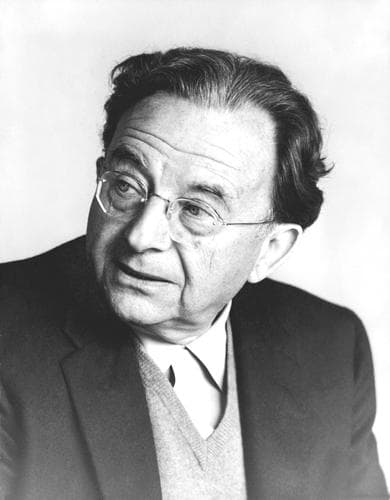
Erich Fromm was a German social psychologist and philosopher known for his exploration of the intersection between psychology and society. His notable works include "Escape from Freedom," which examines the psychological implications of freedom, "The Anatomy of Human Destructiveness," where he analyzes the roots of violence, and "The Sane Society," which critiques modern capitalist society.
Similar books
- Man's Search for Meaning
Viktor E. Frankl
4.4 (401k) average on GoodreadsBiographyExplores human resilience and the search for meaning in extreme suffering, offering a counterpoint to destructiveness.
- Escape from Freedom
Erich Fromm
4.3 (10k) average on GoodreadsPoliticsAnother foundational work by Fromm that explores the psychological mechanisms behind submission to authoritarianism, closely related to the roots of destructiveness.
- 1984
George Orwell
4.2 (3.1M) average on GoodreadsPoliticsIn a future where surveillance and thought control are absolute, a man's search for truth clashes with the Party, showing that hope can be a form of rebellion.
- Animal Farm
George Orwell
4.0 (2.7M) average on GoodreadsPoliticsA farm animals' rebellion against humans turns into a pig-led dictatorship, showing how power corrupts and revolutionary ideals are betrayed.
- Freakonomics: A Rogue Economist Explores the Hidden Side of Everything
Steven D. Levitt
4.0 (709k) average on GoodreadsBusinessThis book uses economic principles to reveal the surprising incentives behind everything from drug dealing and real estate to cheating teachers and the decline of crime.
- I Am Malala: The Story of the Girl Who Stood Up for Education and Was Shot by the Taliban
Malala Yousafzai
4.1 (419k) average on GoodreadsPoliticsA teenage girl from a Taliban-controlled valley refuses to give up her books, becoming a global voice for education even after an assassination attempt.






Enjoyed the summary?
A summary gives you the shape of the book. The book itself has the detail, the examples and the voice.
Find The Anatomy of Human Destructiveness on AmazonAs an Amazon Associate, BookBrief earns from qualifying purchases. How we're funded