

Synopsis
Covers the whole plot, including the ending.
- Difficulty
- Easy
- Pacing
- Moderate
- Mood
- Reflective, Gentle, Humorous, Melancholy, Hopeful
- Read it if
- You enjoy character-driven stories about self-discovery and the clash between individual desires and societal expectations in a distinct cultural setting.
- Skip it if
- You prefer fast-paced plots with high stakes and dramatic action over introspective character studies.
The Bachelor of Arts Plot Summary
Covers the whole plot, including the ending.
The End of College and Early Disillusionment
Chandran, a sensitive and thoughtful young man, has just completed his Bachelor of Arts degree from Albert Mission College in Malgudi. Despite his academic success, he feels empty and unsure about his future. He spends his days lounging, reading poetry, and talking philosophy with his friend, Ramu, often annoying his father, who expects him to find a respectable job. Chandran struggles with the pressure to fit in with social expectations, especially regarding work and marriage, feeling a growing gap between his inner world and outer demands. His first attempts at job searching are half-hearted and fail, making his boredom worse.
A Glimpse of Love: Malathi
One evening, by the Sarayu River, Chandran sees a beautiful young woman named Malathi. He is immediately drawn to her, feeling an intense connection. He learns her name through his friend, Ramu, and starts arranging chance encounters, eventually leading to a formal introduction. Their courtship is chaste, filled with longing glances and shared moments, growing into deep affection. Chandran becomes consumed by thoughts of Malathi; his earlier aimlessness is replaced by a strong desire to marry her. He tells his parents, who, after some hesitation, agree to pursue a marriage proposal through traditional channels.
Astrological Obstacles and Parental Disapproval
Chandran's parents begin talks with Malathi's family about the marriage. However, the proposal faces a problem: Chandran and Malathi's horoscopes do not match according to the family astrologer. Despite Chandran's pleas and his parents' attempts to reason with Malathi's conservative family, the decision is final. Malathi's father, a strong believer in astrological compatibility, refuses to proceed. This rejection devastates Chandran, pushing him into deep despair. He feels betrayed by fate and rigid customs, unable to understand how something as random as planetary positions could control his happiness.
Rebellion and Renunciation
Overwhelmed by grief and a sense of injustice, Chandran makes a drastic decision. He shaves his head, puts on the ochre robes of a sanyasi (ascetic), and leaves Malgudi without telling his family. His departure is an act of rebellion against the social norms that denied him his love, and a desperate attempt to escape his pain. He wanders aimlessly, traveling by train and on foot, seeking peace in detachment and solitude. His journey takes him through various towns and villages, where he meets different people, seeing life from a new, detached view. He tries to embrace the ascetic life, hoping to find spiritual understanding and forget Malathi.
The Life of an Ascetic
During his travels as a sanyasi, Chandran experiences both reverence and hardship. People often treat him with respect, offering food and shelter, believing him to be a holy man. He learns to live on alms and endures the discomforts of travel. However, the spiritual peace he sought remains out of reach. He often thinks of Malathi and his home, realizing that physical distance does not mean emotional freedom. He meets other ascetics, some real, some fake, and begins to question the true meaning and effectiveness of giving things up. The strict discipline and constant self-reflection are challenging, and he starts to feel drawn to his former life.
A Change of Heart and a Return to Malgudi
After eight months of wandering, Chandran reaches Madras. Here, he has an important talk with a fellow traveler who challenges his idea of giving things up, suggesting that true detachment comes from within, not from outer appearances. This conversation, along with his constant longing for his family and the comfort of home, leads him to a realization. He decides to take off his sanyasi robes, cuts his hair, and buys a ticket back to Malgudi. His return is driven by a renewed desire to embrace life, rather than escape it, and to reconnect with the people he left behind. He arrives home to a mix of relief and concern from his parents.
Reintegration and a New Path
Chandran's return to Malgudi is met with both joy and worry. His parents are happy but also concerned about his future. He finds it hard to adjust to his old life, feeling disconnected from his past self and social expectations. The memory of Malathi still bothers him. However, he is determined to find a new purpose. Through his friend, Ramu, he gets a job as a subscription agent for 'The Daily Messenger,' a Madras-based newspaper. This work requires him to travel around Malgudi, meeting people and doing practical tasks, which helps him slowly rebuild his life and regain a sense of normalcy.
The Journalist's Life and Renewed Independence
Chandran dedicates himself to his work as a newspaper agent, finding satisfaction in his new role. He enjoys the challenge of convincing people to subscribe and the independence that comes with earning his own living. His interactions with various people in Malgudi broaden his perspective and help him overcome his earlier sadness and detachment. He becomes successful, proving to himself and his family that he can contribute to society. This period marks a shift in his character, as he moves from a thoughtful, somewhat passive young man to an active and engaged individual, though still with his characteristic sensitivity.
The Second Matchmaking Attempt
After Chandran has settled into his new profession and regained his balance, his parents resume their efforts to find him a suitable bride. This time, Chandran approaches the process with a more mature and practical outlook, having learned from his past heartbreak. He no longer seeks the intense, romantic ideal he once held for Malathi. His parents arrange for him to meet several prospective brides. The process is less about passionate love and more about compatibility, family background, and practical considerations. This reflects a social expectation to marry and settle down, which Chandran now seems more willing to accept.
Susila: A New Beginning
Among the prospective brides, Chandran meets Susila, a quiet and gentle young woman. Their first interactions are modest and respectful, lacking the fiery passion he felt for Malathi, but having a quiet understanding and mutual regard. Chandran finds himself drawn to Susila's simplicity, kindness, and practical nature. He realizes that love can appear in different forms, and a stable, affectionate partnership can be as fulfilling as an idealized romance. Their horoscopes are found to be compatible, and after a period of courtship, Chandran and Susila become engaged, marking a new chapter in his life, built on acceptance and a more grounded understanding of happiness.
The Bachelor of Arts Characters
Chandran
Protagonist
A sensitive and introspective young man who grapples with love, loss, and societal expectations.
Chandran is a recent Bachelor of Arts graduate from Malgudi. He is highly intelligent, sensitive, and prone to introspection and philosophical musings. Initially, he struggles with aimlessness and a romanticized view of life and love, often feeling alienated from the practical demands of his family and society. His deep emotional capacity makes him vulnerable to heartbreak, leading him to extreme actions like renunciation. He is characterized by his yearning for meaning and connection, and his journey is one of self-discovery and coming to terms with the realities of the world around him.
Relationships: Ramu (Best friend and confidant); Malathi (First love, ultimately unrequited due to astrological incompatibility); Susila (Future wife, a relationship built on quiet affection and understanding); Chandran's Father (Often critical but ultimately supportive, pushing Chandran towards responsibility); Chandran's Mother (Nurturing and concerned, trying to guide Chandran through life's challenges)
Malathi
Supporting
The beautiful young woman who captures Chandran's heart, but whose family's traditions prevent their union.
Malathi is the object of Chandran's intense first love. She is depicted as graceful and beautiful, embodying the ideal of feminine charm for Chandran. While her feelings for Chandran are implied to be reciprocal, she is ultimately bound by the customs and decisions of her conservative family. She represents the romantic ideal that Chandran initially pursues, and her unavailability due to astrological incompatibility becomes the catalyst for his period of renunciation. She remains a poignant memory for Chandran, representing lost love and the harsh realities of societal constraints.
Relationships: Chandran (Object of his first, intense love); Malathi's Father (Strictly adheres to tradition, particularly astrological compatibility for marriage)
Susila
Supporting
Chandran's eventual wife, a gentle and practical woman who offers him a different kind of love.
Susila is introduced later in the novel as the woman Chandran's parents arrange for him to meet after his return from renunciation. She is portrayed as quiet, gentle, and practical, possessing a quiet dignity. Unlike Malathi, who represents idealized romance, Susila embodies a more grounded and mature form of affection and companionship. Her presence signifies Chandran's acceptance of a more conventional and stable life. She is understanding and kind, offering Chandran the prospect of a peaceful and fulfilling domestic life after his turbulent emotional journey.
Relationships: Chandran (Future wife, a relationship based on mutual respect and quiet affection)
Ramu
Supporting
Chandran's best friend and confidant, offering practical advice and companionship.
Ramu is Chandran's loyal and pragmatic best friend. He is more grounded and less prone to philosophical brooding than Chandran, often providing a voice of reason and practical advice. Ramu serves as a sounding board for Chandran's romantic and existential crises, offering support and attempting to guide him through his emotional turmoil. He plays a crucial role in Chandran's life, helping him navigate social situations, and later, assisting him in finding employment, embodying the steadying force of friendship amidst Chandran's personal upheavals.
Relationships: Chandran (Best friend and confidant)
Chandran's Father
Supporting
A traditional Indian father who pushes Chandran towards responsibility and a conventional life.
Chandran's father is a well-meaning but often exasperated parent. He represents the traditional expectations of Indian society, particularly regarding education, employment, and marriage for his son. He is pragmatic and concerned about Chandran's future, frequently urging him to find a job and settle down. While he can be critical of Chandran's aimlessness and philosophical leanings, his actions are ultimately driven by love and a desire for his son's well-being. He navigates the complexities of tradition, attempting to find a suitable match for Chandran after his heartbreak.
Relationships: Chandran (Father, often critical but loving and concerned); Chandran's Mother (Wife, partner in raising Chandran)
Chandran's Mother
Supporting
A nurturing and concerned mother who worries about her son's happiness and well-being.
Chandran's mother is a loving and supportive figure, often mediating between Chandran and his more pragmatic father. She worries deeply about Chandran's emotional state, especially after his heartbreak and renunciation. She embodies the traditional Indian mother figure, offering comfort, understanding, and persistent efforts to ensure her son's happiness and eventual marriage. Her concern is palpable, and she actively participates in the matchmaking process, seeking a suitable and compatible partner for Chandran, highlighting her role in upholding family and social norms.
Relationships: Chandran (Mother, nurturing and supportive); Chandran's Father (Husband, partner in raising Chandran)
Astrologer
Mentioned
The unnamed figure whose astrological predictions determine the fate of Chandran and Malathi's marriage.
The astrologer, though never appearing as a character, plays a pivotal role in Chandran's life. His pronouncement of astrological incompatibility between Chandran and Malathi is the direct cause of their separation and Chandran's subsequent period of renunciation. This character embodies the powerful influence of tradition, superstition, and fate in Indian society, demonstrating how deeply ingrained beliefs can dictate personal destinies, even against the wishes of individuals. The astrologer's judgment is absolute and unchallengeable, serving as a force beyond Chandran's control.
Relationships: Malathi's Father (His pronouncements are upheld by Malathi's father)
The Sanyasi (Fellow Traveler in Madras)
Supporting
A fellow traveler who challenges Chandran's understanding of renunciation.
This unnamed character is a crucial figure Chandran encounters in Madras during his period as a sanyasi. This individual, who appears to be a more experienced or enlightened ascetic, engages Chandran in a profound conversation about the true nature of renunciation. He suggests that true detachment comes from within and does not require abandoning worldly life or donning specific robes. This encounter serves as a catalyst for Chandran's decision to return home, providing him with a new perspective on spirituality and personal fulfillment.
Relationships: Chandran (Offers philosophical guidance and a new perspective)
The Bachelor of Arts Themes
The Conflict Between Idealism and Reality
Chandran, as a young graduate, holds romantic and idealistic ideas of love and life, shaped by poetry and philosophy. His initial attraction to Malathi is highly romanticized, a search for an ideal. However, this idealism clashes with the realities of traditional Indian society, especially the strong influence of astrological compatibility in marriage. His later attempt to become an ascetic is another idealistic escape, which also proves unsustainable. The novel shows his painful journey from youthful idealism to a more practical acceptance of life's limits and imperfections, as seen in his later, more grounded relationship with Susila.
“What a fool he had been to think that life was a grand romance, a continuous poem!”
The Search for Identity and Purpose
Chandran's post-college aimlessness shows the common struggle of young adults to find their place. He deals with social expectations to find a job and marry, feeling a deep disconnect from these usual paths. His heartbreak over Malathi and subsequent renunciation are desperate attempts to create a new identity, though one of escape. His eventual return to Malgudi and his successful career as a newspaper agent, followed by his engagement to Susila, represent his gradual discovery of a more authentic purpose and identity, one that balances personal desires with social roles.
“He felt that he was an extraordinary person, and that his life was going to be an extraordinary life.”
The Influence of Tradition and Fate
The novel clearly shows tradition's strong hold, especially astrological beliefs, on individual lives in Malgudi. The rejection of Chandran and Malathi's marriage due to incompatible horoscopes highlights how deep-seated cultural customs can override personal feelings. This event is seen by Chandran as an arbitrary act of fate, making him feel powerless. Even his time as an ascetic is a traditional response to deep sorrow. Ultimately, Chandran learns to navigate these traditions, finding a partner (Susila) whose horoscope is compatible, suggesting he comes to terms with the mix of personal choice and predetermined fate.
“The stars were against him. It was all a question of fate.”
Love in Different Forms
The novel explores two different kinds of love. Chandran's first love for Malathi is intense, passionate, and highly romanticized, almost obsessive. It is an idealized love that, when stopped, leads to deep despair. In contrast, his later relationship with Susila is marked by quiet affection, mutual understanding, and practicality. It is a more mature and grounded love, born from acceptance and a realistic appreciation for companionship. This contrast suggests that while idealized love can be captivating, a more stable and practical affection may offer greater long-term fulfillment.
“He found that love could exist without the feverish intensity he had known before.”
Plot Devices & Literary Techniques
The Journey/Wanderer Motif
Chandran's physical and spiritual journey away from home as an ascetic.
After his heartbreak, Chandran embarks on a journey as a sanyasi, wandering across different regions. This physical journey mirrors his internal quest for meaning, detachment, and escape from suffering. The act of leaving Malgudi and adopting the robes of an ascetic is a traditional Indian response to profound disillusionment. His encounters during this period, particularly in Madras, provide him with new perspectives that ultimately lead him back home, signifying a completed cycle of self-discovery and a readiness to re-engage with life.
Astrological Incompatibility
The use of horoscopes to prevent the marriage between Chandran and Malathi.
This plot device serves as the primary external conflict that drives Chandran's initial despair and subsequent actions. The astrologer's pronouncement, based on traditional beliefs, highlights the unyielding power of fate and societal customs over individual desires. It acts as an insurmountable barrier, forcing Chandran to confront the limitations of his idealism and the realities of his cultural context. This device effectively demonstrates how traditional beliefs can profoundly impact personal destinies, shaping the course of love and life for characters like Chandran and Malathi.
Malgudi as a Microcosm
The fictional South Indian town representing universal human experiences.
Malgudi, a recurring setting in R.K. Narayan's works, functions as more than just a backdrop. It is a microcosm of Indian society, reflecting its traditions, social structures, and everyday life, while also embodying universal human experiences. Through Chandran's interactions within Malgudi – with his family, friends, and later as a newspaper agent – the town becomes a character itself, influencing his development and providing the context for his struggles and eventual acceptance of life. The familiarity and routine of Malgudi ultimately offer Chandran solace and a place to rebuild his life.
The Bachelor of Arts Quotes
“If you are worried about money, I will raise a loan for you, and we will get married. I will get you a job in Madras. We will get on somehow.”
“I am a Bachelor of Arts, and what’s the good of it? I am fit for nothing.”
“The mind was a mere tool, an instrument for achieving certain results, and when those results were achieved, it ceased to be of any further interest.”
“He felt a sudden yearning for the old days, for the familiar faces, the familiar routine, the familiar comfort of home.”
“Renunciation is not an easy path. It is for those who are strong enough to bear the burden of their own freedom.”
“He realized that the world was not just a stage for his own personal drama, but a complex, independent entity with its own laws and rhythms.”
“It is better to marry than to burn.”
“The greatest tragedy of life was not death, but unfulfilled desire.”
“He began to understand that life was a series of adjustments, a constant balancing act between desire and reality.”
“A man must have a profession, even if it is only to keep him out of mischief.”
“The world was full of women, and he was sure to find another, perhaps even a better one.”
“He was a bachelor of arts, and now he was a bachelor in fact, too.”
“What good is knowledge if it doesn't lead to peace of mind?”
“Life, he realized, was not meant to be a grand, romantic gesture, but a series of small, practical steps.”
Quiz
10 questions on the plot and the characters. Each answer comes with a short explanation.
Question 1
What is Chandran's primary academic pursuit during his time at college?
- Science
- Commerce
- Arts (History and Economics)
- Law
Show answer
C. Arts (History and Economics) Chandran is explicitly studying for his B.A. degree, focusing on subjects like History and Economics, which are part of the Arts curriculum.
Question 2
Who is the young woman Chandran falls deeply in love with and wishes to marry?
- Savitri
- Susila
- Prema
- Lalita
Show answer
B. Susila Chandran's first major love interest, whom he meets by the river and pursues through traditional means, is Susila.
Question 3
What is the main obstacle to Chandran's initial marriage proposal to Susila?
- Susila's family demands an exorbitant dowry.
- Chandran's horoscope does not match Susila's.
- Susila is already engaged to someone else.
- Chandran's parents disapprove of Susila's social status.
Show answer
B. Chandran's horoscope does not match Susila's. The primary reason the marriage cannot proceed, according to the families, is the mismatch in their horoscopes, a significant cultural barrier in traditional Indian marriages.
Question 4
After his heartbreak, what drastic decision does Chandran make, leaving Malgudi?
- He decides to pursue higher education abroad.
- He becomes a traveling salesman.
- He becomes a sanyasi (ascetic/renouncer).
- He joins the military.
Show answer
C. He becomes a sanyasi (ascetic/renouncer). Overwhelmed by grief and disillusionment, Chandran shaves his head and wanders as a sanyasi for several months before returning home.
Question 5
What is the profession Chandran initially takes up after returning to Malgudi from his period of wandering?
- A teacher at a local school.
- An insurance agent.
- A newspaper agent for 'The Daily Messenger'.
- A clerk in his father's office.
Show answer
C. A newspaper agent for 'The Daily Messenger'. Upon his return and recovery, Chandran secures a job as an agent for 'The Daily Messenger' newspaper, selling subscriptions.
Question 6
What does Chandran's friend, Ramu, try to convince him to do during their college days?
- Join a political movement.
- Focus more on sports than studies.
- Attend a spiritual retreat.
- Start a literary magazine.
Show answer
D. Start a literary magazine. Ramu, Chandran's close college friend, is full of ambitious ideas, including starting a literary magazine, which Chandran initially dismisses.
Question 7
Which recurring theme is most prominent in Chandran's journey through love, heartbreak, and eventual acceptance?
- The triumph of individual ambition over societal norms.
- The conflict between tradition and modernity in India.
- The corrupting influence of wealth and power.
- The importance of Western education for progress.
Show answer
B. The conflict between tradition and modernity in India. Chandran's struggle with arranged marriage expectations, his rebellious phase, and his eventual return to a more traditional path highlight the tension between personal desires and entrenched societal customs in pre-partition India.
Question 8
What is the name of the girl Chandran eventually agrees to marry through an arranged match?
- Lakshmi
- Mala
- Shanti
- Indira
Show answer
B. Mala After his emotional recovery and period of working, Chandran's parents arrange a match for him with a girl named Mala, whom he eventually accepts.
Question 9
What does the 'Bachelor of Arts' title signify beyond Chandran's academic degree?
- His lifelong dedication to scholarly pursuits.
- His complete rejection of traditional Indian life.
- His journey through various 'arts' of life—love, loss, and self-discovery.
- His aspiration to become a successful artist.
Show answer
C. His journey through various 'arts' of life—love, loss, and self-discovery. The title metaphorically represents Chandran's 'education' in the 'arts' of living, navigating emotional challenges, societal expectations, and ultimately finding his place within his cultural context.
Question 10
What is the symbolic significance of Chandran's eventual acceptance of an arranged marriage?
- It shows his complete surrender to fate without personal agency.
- It represents his maturity and reconciliation with societal expectations and cultural tradition.
- It highlights the failure of modern education to foster independent thought.
- It implies that he never truly loved Susila.
Show answer
B. It represents his maturity and reconciliation with societal expectations and cultural tradition. Chandran's journey concludes with him accepting an arranged marriage, signifying his growth, his coming to terms with his culture's traditions, and finding peace within his community, rather than fighting against it.
The Bachelor of Arts FAQ
What is the central premise of 'The Bachelor of Arts'?
The novel follows Chandran, a young man in Malgudi, through his final year of college, his first experience with love and heartbreak, and his subsequent spiritual crisis and eventual return to a more conventional life. It explores the journey from youthful idealism to the acceptance of societal expectations in pre-partition India.
Who is Chandran and what is his initial ambition?
Chandran is the protagonist, a sensitive and educated young man from a middle-class family. Initially, he dreams of a life free from the constraints of a traditional career, perhaps as a journalist, and is more focused on intellectual pursuits and romantic ideals than immediate employment.
Describe Chandran's relationship with Malathi.
Chandran falls deeply in love with Malathi after seeing her by the river, a love that becomes the central focus of his life. Their relationship is characterized by traditional courtship rituals, where parental approval is paramount, and it ultimately ends in heartbreak when their horoscopes do not match, preventing their marriage.
How does Chandran react to the failure of his marriage plans with Malathi?
Devastated by the rejection and the inability to marry Malathi, Chandran undergoes a profound spiritual and existential crisis. He leaves Malgudi, renounces worldly life, and becomes an ascetic, wandering aimlessly and living on alms, believing he can escape his sorrow through detachment.
What prompts Chandran's return to Malgudi and a more conventional life?
After several months as an ascetic, Chandran encounters a fellow wanderer who advises him that true renunciation comes from within, not from external circumstances. This, combined with his growing weariness of the ascetic life and a longing for his family, compels him to return home and eventually accept an arranged marriage.
What is the significance of the horoscope matching in Chandran and Malathi's story?
The horoscope matching serves as a crucial plot device and a symbol of the deeply ingrained traditional and superstitious beliefs in Indian society. Its unfavorable outcome, despite Chandran and Malathi's mutual affection, highlights the insurmountable power of societal and familial expectations over individual desires.
How does the character of Susila compare to Malathi in Chandran's life?
Susila is Chandran's eventual arranged wife, a woman he comes to love and appreciate, though their relationship lacks the initial intense, idealized passion he felt for Malathi. Susila represents the acceptance of practical reality and the quiet contentment of a conventional marriage, contrasting with the unattainable romantic ideal Malathi embodied.
What role does Chandran's father play in his decisions?
Chandran's father represents the voice of tradition and practicality, consistently urging Chandran towards education, a stable career, and an arranged marriage. While Chandran initially rebels against these expectations, his father's steady influence and concern ultimately guide him back to societal norms after his spiritual crisis.
What does Chandran's brief period as an ascetic reveal about his character?
His ascetic phase demonstrates Chandran's idealism, his emotional depth, and his initial inability to cope with profound disappointment. It also reveals a certain naiveté, as he believes he can simply 'opt out' of worldly suffering, before realizing that true peace must be found within his given circumstances.
How does Chandran's journey reflect the psychological conflict between individualism and tradition in India?
Chandran's story embodies the struggle of an educated young man, exposed to modern ideas, who yearns for individual choice in love and career, yet is ultimately drawn back into the powerful currents of tradition, family duty, and societal expectations concerning marriage and stability. His initial rebellion and eventual conformity highlight this pervasive societal tension.
Discuss Chandran's psychological transformation from a romantic idealist to a pragmatic householder.
Initially, Chandran is consumed by romantic ideals and a desire for personal freedom. His heartbreak and subsequent asceticism strip away this idealism, forcing him to confront reality. He emerges as a more grounded, pragmatic individual, accepting the responsibilities of marriage and family life, finding contentment in societal norms rather than rebelling against them.
How does Narayan use humor to temper the seriousness of Chandran's existential crisis?
Narayan often employs gentle irony and understated humor, even during Chandran's most dramatic moments. For instance, Chandran's sometimes awkward attempts at asceticism or the mundane details of his wandering life provide a lighthearted counterpoint to his profound emotional turmoil, preventing the narrative from becoming overly melancholic and highlighting the human absurdity of his situation.
Is Chandran's eventual acceptance of an arranged marriage a sign of maturity or resignation?
This is open to interpretation. While some might view it as resignation to societal pressures, Narayan presents it more as a sign of maturity. Chandran has learned that happiness can be found within the framework of tradition and that idealized love isn't the only path to contentment. He finds genuine affection and stability with Susila, suggesting a pragmatic acceptance rather than bitter surrender.
How does 'The Bachelor of Arts' provide a 'universal vision of childhood, early love and grief' despite its specific Indian setting?
The novel captures universal human experiences: the idealism of youth, the intensity of first love, the pain of heartbreak, and the search for meaning and identity. While the cultural context is distinctly Indian, Chandran's emotional journey resonates with anyone who has navigated the transition from youth to adulthood and confronted life's inevitable disappointments.
What is the novel's stance on traditional Indian values versus modern individualism?
The novel does not overtly condemn or endorse either. Instead, it subtly suggests a path of reconciliation. Chandran initially champions individualism but ultimately finds peace by integrating into traditional structures. Narayan seems to propose that while individual desires are valid, societal harmony and personal contentment can often be found by adapting to, rather than entirely rejecting, one's cultural heritage.
How does Narayan's portrayal of Malgudi contribute to the novel's themes?
Malgudi acts as more than just a setting; it's a microcosm of traditional Indian society. Its familiar routines, close-knit community, and pervasive customs (like horoscope matching) constantly exert pressure on Chandran, shaping his experiences and ultimately drawing him back into its fold. Malgudi represents the enduring power of tradition and community.
In what ways does the novel explore the concept of freedom?
Chandran initially equates freedom with escaping societal expectations and pursuing romantic love or an unconventional life. His ascetic phase is an extreme attempt at freedom from attachment. However, he ultimately discovers a different kind of freedom: the freedom found in acceptance, responsibility, and finding peace within his given circumstances, rather than constantly striving to escape them.
Why is the title 'The Bachelor of Arts' significant beyond Chandran's academic degree?
The title subtly reflects Chandran's journey not just through academia but through the 'arts' of life itself – the art of love, the art of coping with loss, and eventually, the art of living a conventional, responsible life. It signifies his 'graduation' from youthful idealism to a more mature understanding of the world and his place in it.
About the author

R.K. Narayan was an Indian author known for his works set in the fictional town of Malgudi. His notable books include "Malgudi Days," "Swami and Friends," "The Guide," "The English Teacher," "The Bachelor of Arts," and "A Tiger for Malgudi," which explore themes of everyday life and human relationships. Narayan's writing is characterized by its simplicity and humor, reflecting Indian culture and society.
Similar books
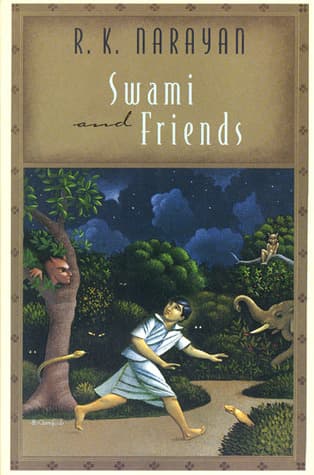
- Swami and Friends
R.K. Narayan
4.2 (12k) average on GoodreadsChildren'sExplores youth and early life in Malgudi with similar gentle humor and cultural insights.
- A House for Mr Biswas
V. S. Naipaul
3.8 (18k) average on GoodreadsLiterary FictionFollows a character's life journey and struggles within a specific cultural context, blending humor and pathos.
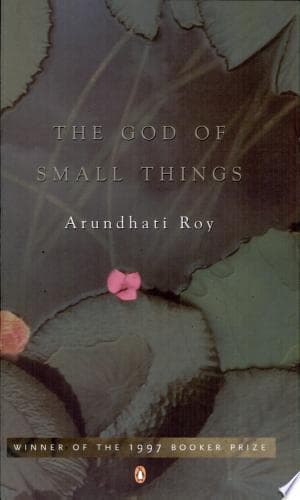
- The God of Small Things
Arundhati Roy
3.9 (244k) average on GoodreadsLiterary FictionOffers a deep dive into Indian family life and societal norms, though with a darker tone.
- Coolie
Mulk Raj Anand
3.8 (701) average on GoodreadsLiterary FictionWhile both The Bachelor of Arts and Anand's Coolie (1936) are historical fiction set in British India and published around the same time, they diverge significantly in focus. Narayan's novel delves into the existential dilemmas of an educated, middle-class individual, exploring his inner world and societal pressures. Anand, conversely, provides a stark, naturalistic portrayal of the exploited working class, focusing on systemic injustices and economic hardship through the life of Munoo. The Bachelor of Arts offers a more introspective, character-driven narrative, whereas Coolie is a powerful social commentary on class struggle and colonial oppression, with a broader socio-political canvas. Narayan's tone is often gently ironic; Anand's is fiercely denunciatory.
- The Guide
R.K. Narayan
3.9 (9k) average on GoodreadsLiterary FictionComparing The Bachelor of Arts to Narayan's own later work, The Guide (1958), reveals the author's evolution. Both novels feature protagonists undergoing significant transformations and grappling with societal roles. However, Raju's journey in The Guide from a tourist guide to a reluctant saint is far more complex, morally ambiguous, and deeply ironic than Chandran's path. The Guide employs a more sophisticated narrative structure, alternating between first and third-person perspectives, and delves into deeper philosophical questions about authenticity, performance, and spiritual awakening. While The Bachelor of Arts presents a relatively straightforward coming-of-age story with a clear resolution, The Guide offers a more nuanced and open-ended exploration of destiny and human nature, demonstrating Narayan's increased narrative sophistication and thematic depth.
- To Kill a Mockingbird
Harper Lee
4.3 (4.5M) average on GoodreadsHistorical FictionIn the 1930s Jim Crow South, Harper Lee writes about racial injustice, moral growth, and the quiet courage of a lawyer father, Atticus Finch, as seen through his young daughter's eyes.




Enjoyed the summary?
A summary gives you the shape of the book. The book itself has the detail, the examples and the voice.
Find The Bachelor of Arts on AmazonAs an Amazon Associate, BookBrief earns from qualifying purchases. How we're funded