

Synopsis
Covers the whole plot, including the ending.
- Difficulty
- Medium
- Pacing
- Moderate
- Mood
- Bleak, Poignant, Realistic, Tragic, Socially Critical
- Read it if
- You are interested in the harsh realities of colonial India, social realism, and the struggles of the working class, particularly the story of an individual caught in systemic injustice.
- Skip it if
- You prefer light-hearted stories, happy endings, or narratives with strong protagonists who overcome their circumstances rather than being consumed by them.
Coolie Plot Summary
Covers the whole plot, including the ending.
Munoo's Forced Departure from Bilaspur
Munoo, a fourteen-year-old orphan from the village of Bilaspur in the Kangra Hills, lives with his uncle and aunt who struggle with poverty. His aunt, greedy and resentful of his presence, constantly reminds him of his orphaned status. One day, his uncle, Gujri, informs him that he must leave the village to work for a Babu, a distant relative named Babu Nathoo Ram, in the town of Sham Nagar. Despite his initial reluctance and fear of the unknown, Munoo is packed off with a few belongings, leaving behind the familiar mountains and the only home he has ever known. This begins his journey into the harsh realities of colonial India.
Life as a Servant in Sham Nagar
In Sham Nagar, Munoo becomes a domestic servant for Babu Nathoo Ram and his family. He is subjected to constant work, from cleaning and cooking to running errands, often with little food or rest. Mrs. Nathoo Ram, a cruel and demanding mistress, constantly abuses him physically and verbally, calling him a 'coolie' and accusing him of theft. He is often beaten with a shoe or a stick for minor infractions. The children of the house also mock and torment him. Munoo's attempts to find comfort or understanding are met with indifference, and he realizes the immense social gap between himself and his employers. Eventually, after a particularly severe beating and being framed for a theft, Munoo decides to run away.
The Kind Baker and the Journey to Daulatpur
After escaping the Nathoo Ram household, Munoo wanders through Sham Nagar, hungry and afraid. He is found by a kind old baker, Prabha, who takes him in, feeds him, and offers him a place to stay. Prabha treats Munoo with compassion, a stark contrast to his previous employers. Munoo works in the bakery for a short period, experiencing a brief rest from hardship. However, Prabha's business partner, Ganpat, is manipulative and greedy. When Ganpat cheats Prabha out of his share of the business, Prabha is ruined. With no work left for him, Munoo is forced to leave Sham Nagar again, this time boarding a train to the bustling city of Daulatpur, hoping for better prospects.
Working in the Daulatpur Pickles and Jams Factory
In Daulatpur, Munoo finds work in a pickles and jams factory owned by a wealthy Seth, Sir Todar Mal. He works long hours in a hot, unsanitary environment, alongside other impoverished laborers. The conditions are bad, with minimal wages, no safety measures, and constant supervision by an exploitative foreman. Munoo befriends other workers, including a young boy named Hari, and witnesses the injustices faced by the working class. He observes the stark contrast between the factory owners' opulent lifestyle and the workers' miserable existence. A strike is organized to demand better wages and conditions, but it is brutally suppressed by the police and management, leaving Munoo disillusioned and further stuck in poverty.
The Riot and Munoo's Escape to Bombay
Following the failed strike, tensions escalate in Daulatpur, made worse by communal propaganda. A Hindu-Muslim riot erupts, fueled by economic desperation and religious manipulation. Munoo, caught in the chaos, witnesses horrific violence and destruction. He is accidentally separated from his friends and, fearing for his life, scrambles onto a train leaving the city. On the train, he encounters an elephant driver, who, in a moment of unexpected kindness, allows him to travel with him without a ticket. Munoo is heading towards Bombay, a city he has heard whispers about, believing it to be a place of opportunity and escape from the unending cycle of poverty and violence.
Life in Bombay as a Mill Worker
Upon arrival in Bombay, Munoo is overwhelmed by the sheer size and squalor of the city. He finds lodging in a chawl, a crowded tenement building, and secures a job in a cotton mill. The work is hard and dangerous, with machinery constantly threatening injury and the air thick with cotton dust. He works under a cruel foreman and experiences the dehumanizing routine of factory life, where workers are mere cogs in a capitalist machine. Munoo befriends a fellow worker, Ratan, who introduces him to the harsh realities of the city's underside and the working class's struggles. He witnesses the exploitation of labor and the stark divide between the wealthy mill owners and the impoverished workers.
Munoo's Growing Illness and Despair in Bombay
The relentless physical labor, poor nutrition, and unsanitary living conditions in Bombay begin to severely impact Munoo's health. He develops a persistent cough and feels a growing weakness in his body. The constant noise and pollution of the city, combined with the emotional toll of his solitary existence, deepen his despair. He longs for the simple life of his village and the clean air of the mountains. Despite his deteriorating health, he continues to work, driven by the desperate need to survive. He witnesses the death of a fellow worker, further emphasizing the precariousness of life for the poor in the city.
Accident and Encounter with Mrs. Mainwaring
One day, while working in the mill, Munoo is involved in an accident, sustaining an injury to his leg. Weakened and unable to continue working, he is left vulnerable. He is found by Mrs. Mainwaring, a wealthy Anglo-Indian woman who is a friend of the mill owner. Mrs. Mainwaring, often portrayed as eccentric and somewhat flighty, takes pity on Munoo and decides to employ him as her personal servant. She is a peculiar character, with a superficial interest in 'native' culture and a desire to appear philanthropic. This unexpected turn of events offers Munoo a temporary escape from the mill, but also introduces him to a different kind of exploitation.
Life as a Rickshaw Puller in Simla
Mrs. Mainwaring takes Munoo with her to Simla, the British summer capital, where she plans to spend the season. In Simla, she decides that Munoo should work as a rickshaw puller for her. This is the most physically demanding and degrading work Munoo has yet encountered. He is forced to pull heavy loads, often uphill, in all weather conditions, competing with other desperate coolies. The high altitude and strenuous labor further worsen his already fragile health, particularly his persistent cough. He experiences the contempt of the colonial elite and the fierce competition among the coolies, creating a sense of utter hopelessness.
Munoo's Deteriorating Health and Final Days
The relentless strain of pulling a rickshaw in Simla, coupled with inadequate food and rest, rapidly worsens Munoo's health. His cough gets worse, and he shows clear signs of tuberculosis. Despite his failing body, he is forced to continue working to earn enough to survive. He dreams of returning to his village, but the dream remains distant and unattainable. One day, while pulling Mrs. Mainwaring's rickshaw up a steep hill, he collapses. He is taken to a small, unsanitary room and left to die. Isolated and without any family or friends to care for him, Munoo passes away, a victim of the brutal social and economic forces that defined his short, tragic life. His death goes largely unnoticed, showing how expendable the 'coolie' was in pre-Partition India.
Coolie Characters
Munoo
Protagonist
An orphaned village boy forced into a life of labor and suffering.
Munoo is a young, innocent, and ultimately tragic figure. Orphaned at a young age, he is forced to leave his village and embarks on a picaresque journey through various forms of exploitation across colonial India. He is sensitive, observant, and possesses an inherent desire for dignity and belonging, often dreaming of his mountain home. Despite his suffering, he maintains a certain resilience and curiosity about the world around him. His journey highlights the immense class and caste disparities of the time, as he moves from domestic servant to factory worker to rickshaw puller, always at the bottom of the social hierarchy.
Relationships: Gujri (uncle) (distant, economically strained guardian); Prabha (kind, temporary benefactor); Ratan (fellow mill worker, friend and mentor in Bombay); Mrs. Mainwaring (eccentric, exploitative employer in Simla)
Babu Nathoo Ram
Supporting/Antagonist
Munoo's first employer, a petty clerk representing the lower-middle class.
Babu Nathoo Ram is a minor government clerk in Sham Nagar, who embodies the aspirations and frustrations of the lower-middle class. He is concerned with maintaining his social status and projecting an image of respectability, often at the expense of those beneath him. While not as overtly cruel as his wife, he is complicit in Munoo's mistreatment, turning a blind eye to the abuse and exploitation. His character illustrates how even those slightly above the lowest rung of society participate in the oppressive system, perpetuating the cycle of servitude.
Relationships: Mrs. Nathoo Ram (wife, co-employer of Munoo); Munoo (exploited domestic servant)
Mrs. Nathoo Ram
Antagonist
Munoo's first, cruel mistress in Sham Nagar.
Mrs. Nathoo Ram is Munoo's first and arguably most cruel employer. She is a quintessential representation of the abusive mistress, constantly berating, beating, and starving Munoo. Her character embodies the worst aspects of the domestic service system, where servants are treated as property rather than human beings. Her cruelty stems from a combination of her own frustrations, social conditioning, and a desire to assert her authority over someone she considers inferior. She is driven by a sense of entitlement and a lack of empathy, seeing Munoo as nothing more than a 'coolie' to be exploited.
Relationships: Babu Nathoo Ram (husband, co-employer of Munoo); Munoo (victim of her abuse)
Prabha
Supporting
A kind-hearted baker who offers Munoo temporary respite.
Prabha is a compassionate and generous baker in Sham Nagar who offers Munoo a brief period of kindness and stability after his escape from the Nathoo Ram household. He treats Munoo with respect and provides him with food and shelter, seeing him as a fellow human being rather than a mere servant. His character represents a rare beacon of humanity and solidarity in Munoo's otherwise harsh journey. However, his own vulnerability to exploitation by his business partner, Ganpat, highlights the pervasive nature of economic hardship and shows that even good intentions can be undone by systemic greed.
Relationships: Munoo (temporary employer and benefactor); Ganpat (treacherous business partner)
Ganpat
Antagonist
Prabha's deceitful business partner.
Ganpat is Prabha's manipulative and greedy business partner. He cheats Prabha out of his share of the bakery, leading to Prabha's ruin and Munoo's subsequent departure from Sham Nagar. Ganpat represents the opportunistic and selfish individuals who prey on the vulnerable, even within their own communities. His actions demonstrate how economic desperation can lead to betrayal and further exacerbate the struggles of the poor, forcing Munoo back onto the road.
Relationships: Prabha (business partner whom he betrays)
Sir Todar Mal
Mentioned/Antagonist
The wealthy owner of the Daulatpur factory.
Sir Todar Mal is the unseen but powerful owner of the pickles and jams factory in Daulatpur where Munoo works. He represents the wealthy industrialist class, benefiting immensely from the exploitation of cheap labor. His character, though largely in the background, symbolizes the capitalist system that thrives on the misery of the working class. He is responsible for the deplorable working conditions and low wages that drive the workers to strike, and ultimately for the brutal suppression of their demands.
Relationships: Munoo (exploited employee); Workers (exploited labor force)
Ratan
Supporting
A fellow mill worker and friend to Munoo in Bombay.
Ratan is an older, experienced mill worker in Bombay who befriends Munoo. He acts as a mentor figure, helping Munoo navigate the harsh realities of factory life and urban poverty. Ratan is cynical and hardened by his experiences but also possesses a sense of camaraderie with his fellow workers. He introduces Munoo to the idea of class struggle and the collective power of the workers, even as he recognizes the futility of their efforts against the powerful mill owners. His friendship provides Munoo with a brief sense of belonging and solidarity amidst the dehumanizing conditions.
Relationships: Munoo (friend and fellow worker)
Mrs. Mainwaring
Supporting/Antagonist
An eccentric Anglo-Indian woman who employs Munoo in Simla.
Mrs. Mainwaring is a wealthy, somewhat eccentric Anglo-Indian woman who takes Munoo in after his mill accident in Bombay. She is a complex character, embodying both a superficial benevolence and a deep-seated colonial superiority. She sees Munoo as a 'curiosity' or a pet project rather than a human being, often expressing a detached interest in 'native' culture while simultaneously exploiting his labor. She takes him to Simla and forces him into the grueling work of a rickshaw puller, ultimately contributing to his demise. Her character highlights the unconscious cruelty and privilege of the colonial elite.
Relationships: Munoo (employer, contributing to his exploitation)
Hari
Supporting
A young fellow worker in the Daulatpur factory.
Hari is a young boy who works alongside Munoo in the pickles and jams factory in Daulatpur. He becomes a friend to Munoo, sharing in the misery and small joys of their harsh existence. Hari's presence emphasizes the widespread child labor and the sheer number of young lives caught in the cycle of poverty. His interactions with Munoo highlight their shared vulnerability and the fleeting nature of childhood in such circumstances. He is a minor character but serves to underscore the universality of Munoo's plight among the impoverished youth.
Relationships: Munoo (fellow worker and friend)
Coolie Themes
Exploitation and Social Injustice
The novel clearly shows the constant exploitation of the poor by various social classes in pre-Partition India. Munoo is exploited first by his own relatives, then by the lower-middle-class Nathoo Ram family, the wealthy factory owners in Daulatpur and Bombay, and finally by the colonial elite through Mrs. Mainwaring. Each employer takes advantage of his vulnerability, offering meager wages, bad working conditions, and physical abuse. The theme highlights the systemic nature of injustice, where the 'coolie' is seen as expendable labor, without rights or dignity, serving the interests of those above him in the social hierarchy.
“For Munoo, the world was a series of closed doors, each slamming shut in his face the moment he dared to hope.”
Class and Caste Divide
Anand carefully details the rigid class and caste structures in India, showing how Munoo, as an orphan and low-caste 'coolie,' is always at the bottom. His journey reveals the stark contrast between the lives of the wealthy (like Sir Todar Mal and Mrs. Mainwaring) and the impoverished masses. Even within the working class, subtle hierarchies exist. The novel shows how social status dictates access to basic necessities, respect, and opportunities, with Munoo constantly reminded of his inferiority through verbal abuse ('sweeper,' 'coolie') and physical mistreatment. This divide is a main reason for his suffering and ultimate death.
“He was a coolie, a burden, a useless mouth, a mere nothing in the vast, indifferent world.”
Loss of Innocence and Dehumanization
Munoo begins as a naive village boy, full of dreams and a yearning for connection. However, each successive experience of exploitation strips away his innocence and wears down his humanity. He is subjected to physical and emotional abuse, forced into degrading labor, and witnesses violence and despair. The constant labeling as 'coolie' and 'sweeper' reduces him to a functional object, denying his individuality and dignity. By the end, he is a broken shell, his spirit crushed by the constant struggle for survival, symbolizing the dehumanizing impact of extreme poverty and societal indifference.
“The child in him died, and a new self, hard and bitter, began to grow.”
The Brutality of Urbanization and Industrialization
The novel criticizes the dark side of India's early industrialization and quick urbanization under British rule. Munoo's experiences in the factories of Daulatpur and Bombay expose the bad working conditions, long hours, low wages, and lack of safety that characterized early industrial labor. The overcrowded, unsanitary chawls of Bombay and the grueling work of rickshaw pulling in Simla further show how urban centers, while promising opportunity, often trap the poor in new forms of misery and exploitation. The polluted air, noise, and anonymity of the city contrast sharply with Munoo's memories of his peaceful village, showing the destructive impact on human health and spirit.
“The city was a monster, swallowing up the innocent and spitting out their bones.”
Survival and Resilience
Despite the overwhelming odds and constant suffering, Munoo shows an extraordinary will to survive. He repeatedly runs away from abusive situations, seeks new employment, and adapts to unfamiliar environments. Even when ill and despairing, he continues to push his body to its limits to earn a living. His resilience shows in his ability to form temporary bonds of friendship (with Prabha, Ratan, Hari) and his persistent hope for a better future, even if it is often dashed. This theme shows the human drive to live, even when facing great difficulty, though ultimately, for Munoo, survival is a losing battle.
“He survived, not because he was strong, but because the will to live was a fire in his belly.”
Plot Devices & Literary Techniques
Picaresque Narrative Structure
Munoo's episodic journey through various social strata and locations.
The novel employs a picaresque structure, following Munoo, a 'picaro' figure, through a series of loosely connected episodes and encounters as he travels across India. Each new location (Bilaspur, Sham Nagar, Daulatpur, Bombay, Simla) and each new employer introduces him to a different facet of Indian society and a new form of exploitation. This structure allows Anand to present a panoramic view of colonial India's social injustices, rather than focusing on a single, tightly knit plot. It emphasizes Munoo's constant displacement and his role as an observer of the world's harsh realities.
Social Realism
Detailed and unflinching depiction of poverty and exploitation.
Anand's use of social realism is central to 'Coolie.' The novel provides a stark, unromanticized portrayal of the lives of the impoverished masses in pre-Partition India. It meticulously details the squalid living conditions, meager diets, grueling labor, and physical abuse endured by characters like Munoo. Anand uses vivid, often visceral descriptions to immerse the reader in the harsh realities, aiming to expose the systemic injustices and evoke empathy for the marginalized. This device is crucial for fulfilling the novel's purpose as a critique of colonial and capitalist exploitation.
Symbolism of the 'Coolie'
The term 'coolie' as a symbol of dehumanization and disposability.
The term 'coolie' itself functions as a powerful symbol throughout the novel. Initially a derogatory term used by Mrs. Nathoo Ram, it comes to represent Munoo's entire identity as an exploited, disposable laborer. It strips him of his individuality, reducing him to a mere cog in the economic machine. The word symbolizes the social and economic forces that categorize and dehumanize the working class, highlighting their lack of agency and their expendability in the eyes of the dominant classes. Munoo's journey is a gradual embodiment of this very term, culminating in his death as an anonymous 'coolie' in Simla.
Juxtaposition
Contrasting wealth and poverty, kindness and cruelty.
Anand frequently uses juxtaposition to highlight the stark inequalities and moral complexities of the world Munoo inhabits. This is evident in the contrast between the opulence of the mill owners' bungalows or Mrs. Mainwaring's lifestyle and the squalor of the chawls and factories. Similarly, the brief kindness offered by Prabha is juxtaposed with the pervasive cruelty of the Nathoo Ram family or the mill foremen. These contrasts serve to emphasize the injustice of Munoo's suffering and the vast chasm between different social strata, making the societal critique more potent.
Munoo's Internal Monologue/Stream of Consciousness
Providing insight into Munoo's thoughts, feelings, and evolving understanding.
While primarily written in third-person, the narrative frequently delves into Munoo's internal thoughts, fears, and observations, often bordering on stream of consciousness. This device allows the reader to experience the world through Munoo's innocent yet increasingly disillusioned eyes. It reveals his yearning for home, his confusion about the injustices he faces, his fleeting hopes, and his growing understanding of class struggle. This intimate perspective fosters empathy for Munoo and underscores his individual suffering amidst the broader societal critique, preventing him from becoming a mere symbolic figure.
Coolie Quotes
“The world is a vast prison, and we are all prisoners in it.”
“I am a coolie, a beast of burden, not a man.”
“The rich live on the sweat of the poor.”
“Hunger is a fire that burns the belly and the soul.”
“In this world, only the strong survive; the weak are crushed.”
“The city is a monster that devours the innocent.”
“My body is not my own; it belongs to my master.”
“Hope is a cruel joke played on the poor.”
“The British sahibs rule with whips and laws.”
“Even animals are treated better than coolies.”
“My dreams are all I have left, and they are fading.”
“The factory machines have no heart; they grind us down.”
“We are born to suffer and die unknown.”
“The monsoon rains wash away the dirt but not our sorrows.”
Quiz
10 questions on the plot and the characters. Each answer comes with a short explanation.
Question 1
What is the primary reason Munoo leaves his hill village at the beginning of the novel?
- He is recruited by a British colonial officer for factory work
- He is orphaned and has no family left to care for him
- He is forced to leave to fend for himself due to poverty and circumstances
- He runs away to join a traveling circus for adventure
Show answer
C. He is forced to leave to fend for himself due to poverty and circumstances Munoo's departure is driven by economic necessity and the harsh realities of poverty in his village, setting the stage for his picaresque journey of survival in pre-Partition India.
Question 2
Which of the following jobs does Munoo NOT hold during his journey in the novel?
- Servant in a household
- Factory worker in Bombay
- Rickshaw driver in Simla
- Schoolteacher in a village
Show answer
D. Schoolteacher in a village Munoo works as a servant, factory worker, and rickshaw driver, but he never becomes a schoolteacher; his experiences are centered on manual labor and exploitation.
Question 3
What major historical context frames the events of 'Coolie'?
- The Indian Rebellion of 1857
- Pre-Partition India under British colonial rule
- Post-independence economic reforms in India
- The Mughal Empire's decline in the 18th century
Show answer
B. Pre-Partition India under British colonial rule The novel is set in pre-Partition India, highlighting the grim social and economic conditions under British colonialism that affected the masses, as seen through Munoo's struggles.
Question 4
How does Munoo's journey from his village to cities like Bombay and Simla reflect the novel's picaresque style?
- It follows a linear, heroic quest with a clear moral resolution
- It involves a series of episodic adventures that expose societal injustices
- It focuses on Munoo's internal psychological development in isolation
- It is a romanticized travelogue celebrating Indian culture
Show answer
B. It involves a series of episodic adventures that expose societal injustices As a picaresque novel, 'Coolie' uses Munoo's episodic adventures in different settings to critique social issues like exploitation and poverty, rather than a structured plot.
Question 5
What role does the setting of Simla play in Munoo's experiences?
- It is where he finds permanent employment and settles down happily
- It serves as a hill station where he works as a rickshaw driver, facing further exploitation
- It is his hometown where he returns to live with family
- It is a factory town where he leads a worker's revolt
Show answer
B. It serves as a hill station where he works as a rickshaw driver, facing further exploitation In Simla, Munoo works as a rickshaw driver, illustrating the continuous cycle of labor and hardship even in seemingly scenic locations, reinforcing the novel's themes of survival.
Question 6
Which theme is most directly illuminated through Munoo's various jobs as a servant, factory worker, and rickshaw driver?
- The importance of education for social mobility
- The grim fate and exploitation of the masses in colonial India
- The spiritual journey towards self-enlightenment
- The romantic ideals of rural life versus urban corruption
Show answer
B. The grim fate and exploitation of the masses in colonial India Munoo's labor experiences highlight the systemic exploitation and harsh realities faced by the lower classes, central to Anand's critique of pre-Partition Indian society.
Question 7
In what way does 'Coolie' compare to Mulk Raj Anand's other notable novel, 'Untouchable'?
- Both novels are set in post-independence India and focus on political leaders
- Both use protagonists from marginalized groups to expose social injustices
- Both are love stories that critique British colonialism indirectly
- Both feature Munoo as the main character in different phases of life
Show answer
B. Both use protagonists from marginalized groups to expose social injustices 'Coolie' and 'Untouchable' both center on protagonists from oppressed backgrounds (a coolie and an untouchable) to critique caste and class inequalities, establishing Anand as a key social realist novelist.
Question 8
What literary technique does Anand use to give 'Coolie' its 'raw immediacy' in depicting Munoo's struggles?
- Extensive use of poetic metaphors and symbolism
- A detached, omniscient narrator analyzing historical events
- Vivid, realistic descriptions and a focus on sensory details of hardship
- Incorporation of magical realism to exaggerate Munoo's adventures
Show answer
C. Vivid, realistic descriptions and a focus on sensory details of hardship Anand employs realistic and sensory prose to immerse readers in Munoo's daily hardships, enhancing the emotional impact and social critique of the novel.
Question 9
How does Munoo's character development throughout the novel reflect the broader social commentary in 'Coolie'?
- He evolves from a naive villager to a successful entrepreneur, symbolizing hope
- He remains largely powerless and exploited, underscoring the systemic nature of oppression
- He becomes a political activist leading revolts against the British
- He achieves spiritual redemption through his sufferings
Show answer
B. He remains largely powerless and exploited, underscoring the systemic nature of oppression Munoo's lack of significant upward mobility highlights how individual effort is often insufficient against entrenched social and economic systems, reinforcing the novel's critique of pre-Partition India.
Question 10
Which aspect of Munoo's journey is most critical to understanding the novel's title and central focus?
- His romantic relationships in different cities
- His intellectual growth through reading and education
- His continuous exploitation as an unskilled laborer or 'coolie'
- His adventures as a traveler exploring Indian landscapes
Show answer
C. His continuous exploitation as an unskilled laborer or 'coolie' The title 'Coolie' refers to Munoo's identity as an exploited manual laborer, central to the novel's exploration of class, survival, and the dehumanizing conditions of the poor in colonial India.
Coolie FAQ
What is 'Coolie' by Mulk Raj Anand about?
'Coolie' follows the journey of Munoo, a young boy from a hill village who is forced into the harsh world of labor in pre-Partition India. His picaresque adventures take him through various roles as a servant, factory worker, and rickshaw driver in towns, Bombay, and Simla, highlighting the brutal struggle for survival among the masses. The novel exposes the grim realities of colonial India's socio-economic system through Munoo's eyes.
Why should I read 'Coolie'?
You should read 'Coolie' for its raw, unflinching portrayal of India's working class in the early 20th century, offering a powerful critique of colonialism and exploitation. Mulk Raj Anand's vivid storytelling immerses readers in Munoo's world, making it a seminal work in Indian English literature that resonates with themes of resilience and social injustice. It's often paired with 'Untouchable' as essential reading for understanding Anand's contribution to historical fiction.
What is the background/setting of 'Coolie'?
The novel is set in pre-Partition India during the British colonial era, spanning rural hill villages, industrial towns, and major cities like Bombay and Simla. This backdrop reflects the socio-economic disparities and harsh labor conditions faced by the masses, with Munoo's journey illustrating the migration and exploitation common in that period. The setting underscores the systemic oppression and the fight for survival in a rapidly changing society.
What are the most memorable quotes from 'Coolie'?
While specific quotes vary, memorable lines often capture Munoo's innocence and the novel's social critique, such as reflections on labor and freedom. Anand's prose highlights moments like Munoo's realization of his plight in the factory or his longing for home, emphasizing the human cost of industrialization. These quotes resonate for their emotional depth and commentary on the dehumanizing effects of colonial capitalism.
What writing style does Mulk Raj Anand use in 'Coolie'?
Anand employs a realistic and immersive writing style with raw immediacy, blending picaresque elements to chronicle Munoo's episodic adventures. His prose is direct and vivid, often using sensory details to depict the harsh environments and emotional struggles, which enhances the novel's social critique. This style places 'Coolie' within the tradition of literary fiction that prioritizes character-driven narratives and historical authenticity.
What minor details add significant meaning in 'Coolie'?
Minor details like Munoo's interactions with animals or his fleeting moments of joy in nature contrast sharply with his laborious life, symbolizing lost innocence and the human need for connection. Descriptions of the factory machinery or the rickshaw's wear-and-tear subtly emphasize the physical toll and dehumanization of work. These elements enrich the narrative by highlighting the small, often overlooked aspects of survival in a oppressive system.
What are some subtle foreshadowing moments in 'Coolie'?
Early scenes of Munoo's departure from his village foreshadow his lifelong displacement and the cyclical nature of his struggles, hinting at the inevitability of his hardships. His initial encounters with authority figures, such as employers or colonial officials, subtly predict the systemic exploitation he will face throughout his journey. These moments build tension and underscore the novel's themes of fate and resilience.
What unexpected character connections exist in 'Coolie'?
Unexpected connections arise as Munoo crosses paths with various figures, such as fellow laborers or sympathetic strangers, who briefly offer hope or camaraderie before circumstances pull them apart. These fleeting relationships highlight the transient nature of human bonds in a mobile, industrializing society and reflect the broader social fragmentation. They add depth to Munoo's journey by showing how even minor interactions shape his understanding of the world.
What are unspoken character motivations in 'Coolie'?
Munoo's unspoken motivation is a deep-seated desire for belonging and stability, driven by his orphaned status and displacement, which compels him to seek surrogate families in each new setting. Other characters, like employers or colonial enforcers, often have hidden motivations rooted in greed or social climbing, unspokenly perpetuating the exploitation system. These motivations reveal the psychological underpinnings of the novel's social dynamics.
What psychological complexities do characters exhibit in 'Coolie'?
Munoo exhibits psychological complexity through his resilience mixed with vulnerability, as he navigates trauma and adaptation without losing his innate curiosity. Supporting characters, such as factory owners or fellow coolies, show complexities like internal conflict between compassion and self-interest, reflecting the moral ambiguities of their roles. These traits illustrate the human impact of systemic oppression and the struggle for dignity.
What are the major emotional turning points in 'Coolie'?
Major emotional turning points include Munoo's initial departure from his village, which marks his loss of innocence and entry into a harsh world, and his experiences in the Bombay factory, where the brutality of labor deepens his despair. Another key moment is his time as a rickshaw driver in Simla, where fleeting glimpses of a better life contrast with his reality, leading to a poignant climax. These turning points chart his emotional descent and fleeting hopes.
How do relationship dynamics evolve in 'Coolie'?
Relationship dynamics evolve from Munoo's initial dependence on family and village ties to transient, often exploitative connections with employers and fellow workers in urban settings. As he moves through roles like servant and factory-worker, these dynamics shift from paternalistic control to outright oppression, reflecting his growing isolation. Ultimately, his journey highlights how socio-economic forces erode meaningful relationships, leaving him in a state of perpetual displacement.
Which parts of 'Coolie' remain ambiguous or open-ended?
The novel's ending is ambiguous regarding Munoo's ultimate fate, leaving readers to ponder whether he finds redemption or succumbs to the system, reflecting the unresolved struggles of the masses. Certain character motivations, such as the intentions of minor figures who aid or hinder Munoo, are left open to interpretation, adding layers to the social critique. These ambiguities invite debate on themes of hope and despair in colonial India.
What are controversial scenes or decisions in 'Coolie'?
Controversial scenes include depictions of brutal labor conditions and physical abuse in the factory, which sparked debate for their raw portrayal of exploitation and dehumanization. Munoo's passive acceptance of his fate at times has been criticized as potentially reinforcing stereotypes, though others see it as a realistic reflection of systemic oppression. These elements highlight the novel's unflinching approach to social issues.
'Coolie' ending explained: how it ends & what it means
The novel ends with Munoo's journey unresolved, often interpreted as him continuing his struggle or facing an uncertain future, symbolizing the cyclical nature of poverty and displacement for coolies. This open-ended conclusion emphasizes the grim fate of the masses in pre-Partition India, suggesting that systemic change is needed for true liberation. It leaves readers with a poignant reflection on resilience and the human cost of industrialization.
About the author

Mulk Raj Anand was an Indian author known for his contributions to English literature, particularly in the early to mid-20th century. His notable work, "Coolie," explores themes of poverty and social injustice in colonial India. Anand's fiction often reflects his deep concern for the marginalized and his commitment to social reform.
Similar books
- The God of Small Things
Arundhati Roy
3.9 (244k) average on GoodreadsLiterary FictionOffers a critical look at the social structures and class divisions in India, though set in a later period and with a different narrative style.
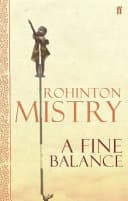
- A Fine Balance
Rohinton Mistry
4.3 (129k) average on GoodreadsLiterary FictionDepicts the lives of ordinary people in India facing immense hardship and the impact of political and social forces on their existence.
- Nectar In A Sieve
Kamala Markandaya
3.6 (9k) average on GoodreadsHistorical FictionKamala Markandaya's Nectar in a Sieve (1954) also explores the struggles of poverty-stricken villagers in India, focusing on the protagonist Rukmani's resilience in the face of famine, displacement, and industrialization. While both novels depict the impact of modernization and economic hardship on rural lives, Coolie presents a more direct and often brutal indictment of exploitative systems through Munoo's continuous victimhood. Nectar in a Sieve, though tragic, emphasizes Rukmani's enduring spirit and her personal struggle for survival and dignity, often within the confines of family and community. Anand's Coolie is arguably more overtly political and confrontational in its critique of class structures and colonial capitalism, whereas Markandaya's narrative, while equally poignant, often highlights the human spirit's capacity to endure amidst suffering, making it perhaps less overtly didactic but equally powerful in its emotional resonance.
- The Old Man and the Sea
Ernest Hemingway
3.8 (831k) average on GoodreadsLiterary FictionA Cuban fisherman's long struggle with a giant marlin becomes a story of endurance and dignity, now retold for young adults with illustrations, phonetic guides, and writing prompts in Traditional Chinese.
- One Hundred Years of Solitude
Gabriel García Márquez
4.1 (753k) average on GoodreadsLiterary FictionThrough the multi-generational story of the Buendía family, a mythical town deals with the repeating patterns of time, love, and solitude, as the extraordinary mixes with the ordinary.
- The Goldfinch
Donna Tartt
3.9 (720k) average on GoodreadsLiterary FictionHaunted by a tragic explosion and clutching a stolen Dutch masterpiece, a young orphan navigates the opulent drawing rooms of New York and the gritty underbelly of the art world, desperately seeking connection and redemption amidst a life spiraling into crime and obsession.




Enjoyed the summary?
A summary gives you the shape of the book. The book itself has the detail, the examples and the voice.
Find Coolie on AmazonAs an Amazon Associate, BookBrief earns from qualifying purchases. How we're funded