
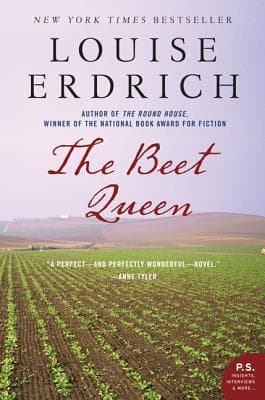
Synopsis
Covers the whole plot, including the ending.
- Difficulty
- Medium
- Pacing
- Moderate
- Mood
- Atmospheric, Melancholy, Poignant, Humorous, Complex
- Read it if
- You enjoy rich, character-driven literary fiction with a strong sense of place and intricate family dynamics spanning decades, reminiscent of Faulkner or Marquez.
- Skip it if
- You prefer fast-paced plots with clear resolutions and a straightforward narrative style, or are sensitive to themes of abandonment, mental illness, and complex sexual identities.
The Beet Queen Plot Summary
Covers the whole plot, including the ending.
Arrival in Argus
In 1932, ten-year-old Mary Adare and her younger brother Karl are left by their mother, Adelaide, at a carnival in Minnesota after she falls in love with a pilot. Adelaide flies off, promising to return but never does. The children, clever but desperate, hitch a ride on a boxcar, eventually reaching Argus, North Dakota, where their mother's sister, Fritzie, lives. They find Fritzie, a strict but practical woman, running a butcher shop with her husband, Pete. Their arrival greatly changes the quiet lives of Fritzie and Pete, who have no children, and brings a new, unpredictable element to the small town of Argus.
Life at the Butcher Shop
Mary, practical and strong, quickly adjusts to the butcher shop, finding a strange comfort in the order and the physical work. She develops a quiet strength and a deep, often unsaid, love for her brother. Karl, however, struggles more. He is more sensitive and artistic, often feeling out of place. Fritzie, though providing for them, is emotionally distant, and Pete is equally reserved. The children see the raw parts of life and death through the butchery, which shapes how they understand the world. Mary's early experiences establish her role as a caretaker and observer, while Karl's sensitivity makes him more open to the harshness around him.
Sita's Jealousy and Obsession
Fritzie and Pete have a daughter, Sita, who is at first excited by her cousins' arrival. However, Sita quickly becomes very jealous, especially of Mary, whom she sees as plain but surprisingly strong and capable. Sita is beautiful, but also very insecure and manipulative. She becomes obsessed with Karl, who has a charm and beauty that captivates her. This obsession fuels her dislike of Mary, whom she sees as a problem. Sita's internal struggles and her need for attention and love appear in increasingly destructive behaviors, creating a tense dynamic among the cousins that lasts for decades.
Karl's Wanderlust and Return
As he grows into a teenager, Karl, restless and wanting a life beyond Argus, leaves town. He travels widely, seeing a different world, and is rumored to have various relationships and experiences. His absence leaves a gap for Mary and a lasting bitterness in Sita. When Karl eventually returns to Argus years later, he is a changed man, more worldly but also carrying hidden burdens. His return restarts the complex emotional dynamics within the family, especially between him, Mary, and Sita, and brings new problems to Mary's stable, though ordinary, life. His presence causes many of the later events in the story.
Mary's Unconventional Life
Mary, while Karl is away, continues her life in Argus, working at the butcher shop and becoming close friends with Celestine James, a half-Native American woman who works for the Kozkas. Mary is not conventionally beautiful or outwardly charming, but she has a deep inner strength and a unique way of seeing the world. She has an unusual but lasting relationship with a local man, and later, a deeper, unspoken bond with Celestine. Mary's life is marked by quiet acts of love and loyalty, and her ability to find meaning and purpose in the ordinary, even as she witnesses the extraordinary and often sad events around her. She becomes a steady support for those she loves.
Sita's Decline and Isolation
Sita's beauty and her desperate need for love lead her to increasing unhappiness. Her obsession with Karl, combined with her deep insecurities, stops her from forming healthy relationships. She marries a rich man, but her marriage is unsatisfying, and she becomes more isolated and mentally unwell. Her jealousy of Mary grows, leading to a series of destructive acts and a tragic accident involving a bee swarm. Sita's story is one of wasted potential and the destructive power of envy, ultimately leading to deep loneliness and a sad end, showing a clear contrast to Mary's strong spirit.
The Miracle of the Bees
One of the most important and mysterious events in Mary's life involves a swarm of bees. During a very cold winter, when the bees are in danger of freezing, Mary, guided by instinct, opens the beehive to let them escape into the warmth of the butcher shop. Against all odds, the bees survive, buzzing around the shop throughout the winter. Some see this event as a miracle, confirming Mary's special connection to nature and her often-unseen power. It highlights her quiet, almost magical presence and her ability to help life grow in unexpected ways, making her seem like an unusual, almost saintly, figure.
Karl's Struggles and Secrets
Karl's life is marked by choices and circumstances that lead him to a life of quiet despair. His charm and good looks often hide a deep insecurity and a struggle with who he is. He has a complicated, often difficult, relationship with Dot, Celestine's daughter, and a lasting, unspoken bond with Mary. Karl carries secrets and regrets from his travels and past romantic relationships. His character shows the theme of searching for belonging and identity, often in self-destructive ways, and his struggles highlight the strong effect of being abandoned and the longing for unconditional love that he never fully receives.
Dot's Journey and the Beet Queen Title
Dot Adare, Celestine's daughter, grows up in Argus, a lively and independent young woman. She is very loyal, especially to Karl, with whom she has a complex, passionate relationship. Dot eventually becomes a truck driver, showing a sense of freedom and rebellion. Her journey is about finding herself and seeking independence, often clashing with what her small town expects. In a surprising turn, Dot, who has a distinct and often rebellious personality, is crowned the 'Beet Queen' at the annual Argus festival, a title that brings both honor and a hint of irony, showing her unique place within the community.
The Weight of the Past
Throughout their lives, the characters in Argus are always shaped by their past. Mary and Karl being abandoned, Sita's jealousy, and the choices made by Fritzie and Pete all have long-lasting effects. Unspoken desires, resentments, and loyalties continue to affect their current relationships. The story often returns to past events through memory and reflection, showing how deeply ingrained these experiences are. The characters, despite trying to move forward, are often pulled back by their history, highlighting the lasting impact of family ties and the sometimes unavoidable nature of one's origins.
Mary's Enduring Love and Loss
Mary's life is marked by deep, often unreturned or unusual, loves. Her steady devotion to Karl, despite his flaws and absences, is a main part of the story. She also experiences deep loss, including the sad events surrounding Sita and the eventual decline of those around her. Despite these difficulties, Mary's spirit remains strong. She continues to observe, to care, and to find quiet meaning in her life. Her ability for lasting love and her resilience in the face of repeated loss define her character, showing her as a steady presence in a world often full of disorder and sadness.
The Cycle Continues
As decades pass, the story introduces new generations, especially through Dot, who has children of her own. These younger characters inherit the complex legacy of their parents and grandparents, dealing with the same themes of identity, belonging, and love. The novel suggests a repeating pattern to certain family behaviors and emotional struggles, while also hinting at the chance to break free. The ending brings a sense of continuation, showing how the characters' lives, though marked by individual successes and tragedies, are woven into the fabric of Argus, with their stories continuing to unfold and influence those who follow.
Principal Figures
Mary Adare
Protagonist
The quiet, resilient orphan who finds her place in Argus and possesses a unique connection to nature.
Mary is the central protagonist, abandoned as a child and raised in her aunt's butcher shop. She is observant, pragmatic, and possesses an inner strength that belies her outwardly plain appearance. Mary is not conventionally beautiful or charismatic, but she is deeply loyal and capable of profound, unwavering love, particularly for her brother, Karl. She has a unique, almost mystical, connection to the natural world, symbolized by her interaction with the bees. Mary represents resilience, quiet endurance, and the capacity to find meaning and purpose in an ordinary life, even amidst extraordinary circumstances.
Relationships: Karl Adare (Devoted sister, caretaker); Fritzie Kozka (Aunt, stern guardian); Sita Kozka (Cousin, object of jealousy); Celestine James (Best friend, confidante); Dot Adare (Aunt to Dot, close familial bond)
Karl Adare
Major Supporting Character
Mary's charming but troubled younger brother, whose wanderlust and beauty lead to a complicated life.
Karl is Mary's younger brother, beautiful, charming, and artistic, but also restless and deeply insecure. Abandoned alongside Mary, he struggles more profoundly with the trauma of their past. He seeks escape and validation through travel and various relationships, often leaving a trail of broken hearts. Karl embodies a struggle with identity and belonging, constantly searching for something he can't quite grasp. His beauty is both a gift and a curse, attracting others but also making him vulnerable to manipulation and his own self-destructive tendencies. He remains a beloved but elusive figure for Mary.
Relationships: Mary Adare (Beloved brother, object of Mary's devotion); Sita Kozka (Object of Sita's obsession); Dot Adare (Lover, father of her children); Fritzie Kozka (Aunt, distant guardian)
Sita Kozka
Antagonist/Major Supporting Character
Mary and Karl's beautiful but deeply insecure and jealous cousin.
Sita is the daughter of Fritzie and Pete, and Mary and Karl's cousin. She is beautiful and initially seems to have a privileged life compared to the orphans. However, Sita is plagued by deep insecurities, a desperate need for attention, and an intense jealousy, particularly towards Mary, whom she perceives as a rival for affection and attention, and an obsession with Karl. Her actions are often driven by envy and a manipulative desire to control those around her. Sita's character arc is a tragic one, illustrating the destructive power of unresolved psychological issues and unfulfilled desires, leading to her isolation and eventual decline.
Relationships: Mary Adare (Cousin, object of intense jealousy); Karl Adare (Cousin, object of romantic obsession); Fritzie Kozka (Mother, often critical); Pete Kozka (Father, somewhat distant)
Celestine James
Supporting Character
Mary's loyal best friend and confidante, a half-Native American woman.
Celestine James is a half-Native American woman who works for the Kozka family and becomes Mary's closest friend and confidante. She is practical, grounded, and possesses a quiet wisdom. Celestine provides a stable and loving presence in Mary's life, offering support and understanding. She represents resilience and the strength found in female friendships. Her perspective as an outsider (due to her heritage) also offers a different lens through which to view the community of Argus. She is also the mother of Dot, and her connection to Karl through Dot further intertwines her life with the Adare/Kozka family.
Relationships: Mary Adare (Best friend, confidante); Dot Adare (Mother); Karl Adare (Mother of his child)
Fritzie Kozka
Supporting Character
Mary and Karl's stern but ultimately responsible aunt, who runs the butcher shop.
Fritzie is Mary and Karl's aunt, Adelaide's sister, and Sita's mother. She is a practical, hardworking woman who runs the family butcher shop with her husband, Pete. Though she takes in Mary and Karl, Fritzie is emotionally reserved and often stern, struggling to express affection. She represents the stoic, resilient spirit of those who endure hardship through sheer will and hard work. While not overtly warm, she provides a stable, if unloving, home for the orphaned siblings, ensuring their physical needs are met. Her pragmatism often clashes with the more emotional or artistic sensibilities of other characters.
Relationships: Mary Adare (Aunt, guardian); Karl Adare (Aunt, guardian); Sita Kozka (Mother); Pete Kozka (Husband)
Pete Kozka
Supporting Character
Fritzie's quiet husband and co-owner of the butcher shop.
Pete Kozka is Fritzie's husband and Sita's father. He is a quiet, hardworking man, deeply involved in the day-to-day operations of the butcher shop. Like Fritzie, he is not overtly expressive, but he is a steady and dependable presence. Pete embodies the traditional male role in the small-town setting, focused on providing and maintaining order. His interactions are often brief but carry a weight of unspoken understanding or disapproval. He represents the grounded, practical side of life in Argus, providing a contrast to the more volatile emotions and dramatic events unfolding around him.
Relationships: Fritzie Kozka (Husband); Sita Kozka (Father); Mary Adare (Uncle, employer); Karl Adare (Uncle, employer)
Dot Adare
Supporting Character
Celestine's spirited daughter and Karl's lover, who becomes the Beet Queen.
Dot Adare is Celestine's daughter and Karl's lover, and later, the mother of his children. She is a vibrant, independent, and strong-willed young woman who defies societal expectations. Dot is fiercely loyal and passionate, often expressing her emotions openly, in contrast to the more reserved characters. Her journey involves navigating her complex relationship with Karl and forging her own path, eventually becoming a truck driver. Her crowning as the 'Beet Queen' is a symbolic moment, highlighting her unique and sometimes rebellious spirit within the community. Dot represents the younger generation's search for identity and freedom.
Relationships: Celestine James (Mother); Karl Adare (Lover, father of her children); Mary Adare (Aunt, close family member)
Adelaide Adare
Mentioned Character
Mary and Karl's mother, who abandons them in the opening of the novel.
Adelaide Adare is Mary and Karl's mother, whose impulsive act of abandonment sets the entire story in motion. She is depicted as beautiful, restless, and seeking freedom, leaving her children for a barnstorming pilot. Though she only appears briefly at the beginning, her actions cast a long shadow over her children's lives, shaping their personalities and destinies. She represents the theme of abandonment and the profound impact of parental choices on subsequent generations.
Relationships: Mary Adare (Mother); Karl Adare (Mother); Fritzie Kozka (Sister)
Themes & Insights
Abandonment and its Aftermath
The novel begins with Mary and Karl being deeply abandoned by their mother, Adelaide. This early trauma shapes their lives, affecting their relationships, choices, and self-worth. Karl's restless travels and his struggle for belonging can be directly linked to this early experience, as can Mary's quiet strength and her deep loyalty to those she loves. The theme explores how people deal with such a primary wound, some becoming self-destructive, others finding strength and forming new, unusual families. The lasting effects of abandonment are felt across generations, affecting even those not directly abandoned, like Sita, who feels emotionally abandoned by her parents' focus on the orphans.
“We were like two small stones thrown into a pond, the ripples of our arrival spreading out to touch everyone in Argus.”
The Nature of Love and Obsession
The book explores different kinds of love: the steady, almost maternal love Mary has for Karl; the passionate, often destructive obsession Sita has for Karl; the quiet, lasting friendship between Mary and Celestine; and the complex, sometimes difficult romantic relationships. Love is often unreturned, complicated, or shown in unusual ways. Sita's obsession with Karl, fueled by jealousy and insecurity, eventually leads to her sad end. Mary's love, though often unsaid, is a powerful, steadying force, showing that love can be quiet devotion and strong loyalty rather than grand gestures. The novel looks at how love can both support and destroy.
“Love was not a thing to be understood or explained, but a force that simply was, sometimes gentle, sometimes brutal, always true in its own way.”
Resilience and Survival
Many characters, especially Mary, show great strength when facing hardship, loss, and the often-difficult realities of life in rural North Dakota. Mary's ability to adjust to the butcher shop, her steadiness, and her quiet strength show this theme. Even after repeated personal tragedies and emotional wounds, she continues to endure and find purpose. The theme also applies to the community of Argus itself, a small town that survives through tough economic times and personal dramas. Survival is not always about big wins, but about the quiet, daily acts of getting by, finding meaning, and keeping one's spirit.
“We learned early on that the world was a cold place, and if you didn't learn to keep your own fire going, you would freeze.”
Identity and Belonging
The search for who you are and where you belong is central for many characters. Mary and Karl, as orphans, constantly struggle with where they belong and who they are without their original family. Karl's desire to travel is a sign of his search for a place and identity. Sita's desperate need for attention and her envy come from her own insecurities about her place in the family. Even Celestine, as a half-Native American woman, deals with identity issues in a mostly white community. The novel explores how one's origins, family, and community shape, or sometimes limit, the development of personal identity.
“We were always looking for a place to put ourselves, a place where we fit, but sometimes you just had to make your own space.”
The Mystical in the Mundane
Erdrich includes elements of the mystical and unusual into the seemingly ordinary lives of her characters. Mary's special connection to the bees, ending in their miraculous survival in the butcher shop, is a clear example. These moments suggest a deeper, unseen force at work in the world, hinting at magic or spiritual meaning in everyday events. This theme lifts the story beyond simple realism, filling it with a sense of wonder and suggesting that even in the most ordinary places, there are unexplainable occurrences and deep connections to nature that cannot be logically explained. It adds richness and depth to the characters' experiences.
“Sometimes the world showed you its true face, a face of such bewildering beauty and strangeness that you knew you were only a small part of something vast and unknowable.”
Plot Devices & Literary Techniques
Non-linear Narrative
The story jumps between different time periods and character perspectives.
The novel does not follow a strict chronological order. Instead, it frequently shifts in time, moving back and forth between different decades, often triggered by a character's memory or a thematic connection. This non-linear structure allows Erdrich to reveal character motivations and the long-term consequences of past events gradually, building a rich, layered understanding of the characters' lives and the intricate web of their relationships. It also reflects the way memory works, emphasizing the enduring presence of the past in the present.
Multiple Perspectives
The story is told through the viewpoints of several main characters.
The narrative voice shifts between different characters, primarily Mary Adare, but also including Karl, Celestine, and others. This allows the reader to gain a multifaceted understanding of events and character motivations, as each character interprets and experiences the same events differently. For example, Sita's jealousy is understood through her own internal monologues, while Mary's quiet observations offer a contrasting viewpoint. This device creates a richer, more complex psychological landscape and prevents any single character's truth from dominating the narrative.
Symbolism of Bees
Bees symbolize community, resilience, and Mary's unique connection to life.
Bees are a recurring and potent symbol in the novel, particularly associated with Mary. They represent community, industry, and the fragile tenacity of life. Mary's intuitive act of saving the bees from freezing, allowing them to survive the winter in the butcher shop, is a pivotal moment that highlights her unique connection to the natural world and her nurturing spirit. The bees also symbolize the interconnectedness of life and the hidden magic within the mundane, serving as a quiet, miraculous counterpoint to the human dramas unfolding around them.
The Butcher Shop as a Microcosm
The butcher shop serves as a central setting and a symbol of life, death, and survival.
The Kozka butcher shop is more than just a setting; it functions as a microcosm of life in Argus and a symbol for the novel's themes. It is a place of hard work, sustenance, and the stark realities of life and death. The daily routines of butchering animals reflect the cycle of life and the necessity of survival. It's also a place where family dramas unfold, where secrets are kept, and where unexpected miracles (like the bees) occur. The butcher shop represents the grounded, visceral reality against which the characters' emotional and spiritual journeys play out.
The Beet Queen Quotes
“Perhaps there are those who believe that we should go back to the old days when women weren't allowed to vote. I don't know about you, but I'm not going back.”
“Love, too, is a form of eating, and is, in the end, much like it.”
“The past is a country from which we are all exiles, and it is a place we can never fully return to, though we carry its dust in our pockets.”
“There are some people who come into your life and make you glad they did, even if they leave you with nothing but a hole.”
“Sometimes the greatest love is a silent one, a love that watches from a distance, content to know the other is happy.”
“We are all haunted by the things we don't say, the chances we don't take, the lives we don't live.”
“The land remembers what we forget, and it whispers to us in our dreams.”
“It was a time when women were still supposed to be beautiful and quiet, and men were supposed to be strong and silent. It was a time of many lies.”
“The world keeps turning, and we keep trying to catch up, but sometimes it feels like we're always a step behind.”
“Grief is a house with many rooms, and we wander through them all, some more often than others, some we never leave.”
“There's a kind of peace that comes from knowing you've done your best, even if your best wasn't good enough.”
“Every family has its secrets, and ours was no different, only perhaps a little more tangled, a little more bitter.”
“Sometimes the greatest kindness you can show someone is to let them go, even if it breaks your own heart.”
“The wind carries the stories of the dead, if you only listen close enough.”
“You can't outrun your own blood, no matter how far you travel or how many names you change.”
Quiz
10 questions on the plot and the characters. Each answer comes with a short explanation.
Question 1
In what unique way are Karl and Mary Adare orphaned before arriving in Argus, North Dakota?
- Their parents die in a house fire.
- Their mother abandons them after dropping their father off a bridge.
- They are left at an orphanage after their parents disappear.
- Their parents are killed in a train accident.
Show answer
B. Their mother abandons them after dropping their father off a bridge. Mary and Karl's mother drops their father off a bridge, then abandons them shortly after, leaving them orphaned.
Question 2
What kind of business do Karl and Mary's aunt and her husband own in Argus, North Dakota, where they initially seek refuge?
- A general store
- A bakery
- A butcher shop
- A hotel
Show answer
C. A butcher shop Upon arriving in Argus, Karl and Mary go to live with their aunt and her husband, who run a butcher shop.
Question 3
Which character is described as 'ordinary' but will later cause a 'miracle'?
- Sita
- Karl Adare
- Mary Adare
- Celestine James
Show answer
C. Mary Adare The book description explicitly states that 'ordinary Mary, who will cause a miracle' is one of the central characters.
Question 4
What is the ethnic background of Celestine James, who becomes Mary Adare's best friend?
- Irish-American
- German-American
- Half-Native American
- Scandinavian-American
Show answer
C. Half-Native American The book description identifies Celestine James as 'half-Native American'.
Question 5
What key theme is highlighted by Karl Adare's character, who 'lacks his sister's gift for survival'?
- The importance of education
- The challenges of artistic expression
- The contrasting resilience and vulnerability of individuals
- The pursuit of wealth
Show answer
C. The contrasting resilience and vulnerability of individuals Karl's description as lacking 'his sister's gift for survival' directly points to the theme of contrasting resilience and vulnerability among the characters.
Question 6
The forty-year saga of 'The Beet Queen' begins in what specific year?
- 1929
- 1932
- 1935
- 1940
Show answer
B. 1932 The story explicitly states that 'On a spring morning in 1932, young Karl and Mary Adare arrive by boxcar in Argus, North Dakota.'
Question 7
Which of the following is NOT listed as a central theme or element explored in 'The Beet Queen'?
- Abandonment
- Sexual obsession
- Political activism
- Unstinting love
Show answer
C. Political activism The description lists 'abandonment and sexual obsession, jealousy and unstinting love' as themes, but not political activism.
Question 8
What mode of transportation do Karl and Mary Adare use to arrive in Argus, North Dakota?
- Automobile
- Bus
- Boxcar
- On foot
Show answer
C. Boxcar The opening sentence specifies that 'young Karl and Mary Adare arrive by boxcar in Argus, North Dakota.'
Question 9
The story of 'The Beet Queen' is described as being 'grounded in' what primary aspects, indicating its core thematic focus?
- Economic struggles, technological advancements, and industrial growth
- The tenacity of relationships, the extraordinary magic of natural events, and the unending mystery of the human condition
- Political power, social hierarchy, and military conflicts
- Religious dogma, spiritual awakenings, and philosophical debates
Show answer
B. The tenacity of relationships, the extraordinary magic of natural events, and the unending mystery of the human condition The summary states, 'Theirs is a story grounded in the tenacity of relationships, the extraordinary magic of natural events, and the unending mystery of the human condition.'
Question 10
Sita, Karl and Mary's cousin, is characterized by what specific trait?
- Exceptional intelligence
- A strong sense of independence
- Being lovely but disturbed
- A talent for music
Show answer
C. Being lovely but disturbed The description introduces Sita as 'their lovely but disturbed cousin'.
The Beet Queen FAQ
What pivotal event leads to Karl and Mary Adare's arrival in Argus, North Dakota?
Karl and Mary Adare become orphaned when their mother, Adelaide, abandons them by literally floating away in a hot air balloon during a carnival in Minneapolis. This peculiar and sudden departure forces them to seek refuge with their Aunt Fritzie and Uncle Pete in Argus, marking the beginning of their new lives.
How does Mary Adare's early life in Argus contrast with Karl's?
Mary quickly adapts to life in the butcher shop, finding a sense of belonging and purpose, even if she feels plain. Karl, however, struggles with the mundane reality of Argus, feeling stifled and longing for the freedom and excitement he associates with their mother, leading him to frequently run away.
Who is Celestine James, and what is her significance to Mary?
Celestine James is a half-Native American woman who works for the Adare family and becomes Mary's closest and most enduring friend. Their bond provides Mary with unconditional love and stability, contrasting with the more tumultuous relationships in her family and offering a crucial anchor throughout her life.
What is the 'miracle' Mary Adare is said to cause?
Mary Adare's 'miracle' occurs when she falls through the ice of a frozen lake, is presumed drowned, but later resurfaces alive and seemingly unharmed. This event is perceived by some as a divine intervention or a testament to her quiet resilience, solidifying her almost mythical status in the community.
How does Sita Kozka, Karl and Mary's cousin, contribute to the family drama?
Sita Kozka is their beautiful but deeply disturbed cousin, prone to dramatic outbursts and self-harm. Her jealousy, particularly towards Mary, and her tumultuous relationship with Karl, whom she obsessively loves, fuel much of the family's internal conflict and psychological tension.
What is the significance of the beet processing plant in Argus?
The beet processing plant is the main industry in Argus, providing employment and shaping the town's economy and identity. It symbolizes the gritty, working-class reality of the town, a stark contrast to the more fantastical elements of the characters' inner lives and pasts, and is where many characters, including Celestine, find work.
How does the recurring motif of flight, like Adelaide's hot air balloon, manifest throughout the novel?
The motif of flight appears repeatedly, not just with Adelaide's departure, but also in Karl's frequent disappearances and his longing for escape. It symbolizes abandonment, freedom, and the characters' desires to transcend their circumstances, often contrasting with Mary's grounded nature.
What is the symbolic meaning behind the butcher shop setting?
The butcher shop, with its stark realities of life and death, blood and sustenance, serves as a grounding force for Mary and a place of raw survival. It symbolizes the practical, visceral aspects of life in Argus, contrasting with the more ethereal or escapist tendencies of other characters, and represents Fritzie and Pete's practical, albeit sometimes harsh, love.
How does Mary Adare's perceived 'ordinariness' mask her profound strength?
Mary's quiet demeanor and lack of outward glamour lead others to underestimate her, but her resilience, unwavering loyalty, and capacity for enduring love are her true strengths. She survives abandonment, betrayal, and hardship with an understated tenacity that ultimately makes her the emotional core of the family.
Analyze Karl Adare's psychological struggle with identity and belonging.
Karl constantly grapples with a sense of displacement and a yearning for a glamorous, undefined future, feeling he doesn't belong in Argus. His search for identity is tied to his mother's abandonment and his seductive charm, leading him to pursue fleeting relationships and avoid genuine commitment, often leaving him isolated and unfulfilled.
How does Sita Kozka's mental state reflect the consequences of unaddressed trauma and obsession?
Sita's severe mental instability, marked by self-harm, paranoia, and obsessive love for Karl, highlights the destructive power of unresolved psychological issues and intense emotional attachments. Her actions are often a desperate cry for attention and love, tragically driving away the very people she desires.
Explore the complex nature of love and friendship as depicted between Mary and Celestine.
The relationship between Mary and Celestine transcends conventional definitions, offering a profound bond built on mutual understanding, loyalty, and quiet devotion. Their friendship provides Mary with an unwavering source of emotional support and acceptance, contrasting sharply with the more volatile and conditional love she experiences from her family.
Is 'The Beet Queen' primarily a story about familial love or the search for individual identity?
While individual characters certainly search for identity, the novel is arguably more deeply rooted in the complexities of familial love—its enduring, often dysfunctional, and sometimes destructive nature. The characters are inextricably linked by blood and shared history, constantly impacting each other's paths and defining their sense of self within the family unit.
How does the novel challenge traditional notions of heroism or success?
The novel subverts traditional heroism by focusing on ordinary individuals like Mary, whose quiet resilience and capacity for love are portrayed as profoundly heroic, rather than grand achievements. Success is measured not by external status, but by the ability to survive, connect, and endure the human condition, often amidst hardship and without conventional triumphs.
What role does the setting of Argus, North Dakota, play in shaping the characters' destinies?
Argus, a small, isolated town, acts as both a refuge and a trap for its inhabitants. Its stark landscape and limited opportunities shape the characters' choices, fostering a sense of rootedness for some, like Mary, while fueling a desperate desire for escape in others, like Karl. The town's insular nature also intensifies the family dramas.
How does Louise Erdrich use magical realism in 'The Beet Queen'?
Erdrich subtly weaves magical realism into the narrative through events like Mary's miraculous survival after falling through the ice and the peculiar circumstances of Adelaide's departure by hot air balloon. These elements blur the line between the mundane and the extraordinary, suggesting a deeper, more mystical layer to the characters' lives and the natural world.
Discuss the theme of abandonment as it permeates the lives of the Adare siblings.
Abandonment is a foundational trauma for both Karl and Mary, starting with their mother Adelaide's dramatic departure. This event profoundly shapes their personalities and relationships; Karl perpetually seeks to escape or be found, while Mary, fearing further abandonment, clings to stability and forms deep, enduring bonds, particularly with Celestine.
In what ways does sexual obsession manifest and impact relationships within the novel?
Sexual obsession is a potent and often destructive force, most notably in Sita's consuming desire for Karl, which borders on madness and leads to self-harm and jealousy. Karl himself is often driven by a seductive charm that draws others in, but his inability to commit or truly love creates a cycle of unfulfilled desires and emotional wreckage for himself and those around him.
About the author

Karen Louise Erdrich is an American author of novels, poetry, and children's books featuring Native American characters and settings. She is an enrolled member of the Turtle Mountain Band of Chippewa Indians, a federally recognized tribe of Ojibwe people.
Similar books
- One Hundred Years of Solitude
Gabriel García Márquez
4.1 (753k) average on GoodreadsLiterary FictionMulti-generational saga with magical realism elements and complex family ties in a distinct setting.
- Housekeeping
Marilynne Robinson
3.8 (44k) average on GoodreadsLiterary FictionFocus on orphaned sisters, unconventional lives, and a strong sense of place and atmosphere.
- Love Medicine
Louise Erdrich
4.0 (22k) average on GoodreadsLiterary FictionShares the same author's intricate narrative style, interconnected characters, and exploration of Native American themes and family sagas.
- Olive Kitteridge
Elizabeth Strout
3.8 (172k) average on GoodreadsLiterary FictionBoth novels excel at revealing the hidden complexities of ordinary lives in small towns. However, Strout's narrative is typically more grounded in realism and focuses on a single protagonist's perspective through linked stories, offering a different kind of intimacy than Erdrich's intricate, multi-generational saga and genealogical approach to storytelling.
- The Old Man and the Sea
Ernest Hemingway
3.8 (831k) average on GoodreadsLiterary FictionA Cuban fisherman's long struggle with a giant marlin becomes a story of endurance and dignity, now retold for young adults with illustrations, phonetic guides, and writing prompts in Traditional Chinese.
- The Goldfinch
Donna Tartt
3.9 (720k) average on GoodreadsLiterary FictionHaunted by a tragic explosion and clutching a stolen Dutch masterpiece, a young orphan navigates the opulent drawing rooms of New York and the gritty underbelly of the art world, desperately seeking connection and redemption amidst a life spiraling into crime and obsession.





Enjoyed the summary?
A summary gives you the shape of the book. The book itself has the detail, the examples and the voice.
Find The Beet Queen on AmazonAs an Amazon Associate, BookBrief earns from qualifying purchases. How we're funded