
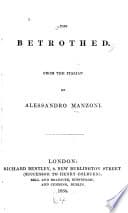
Synopsis
Covers the whole plot, including the ending.
- Difficulty
- Medium
- Pacing
- Variable
- Mood
- Epic, Moralistic, Historical, Romantic, Somber, Hopeful
- Read it if
- You enjoy classic historical romances with a strong moral and religious undertone, set against a backdrop of significant historical events like the plague and famine.
- Skip it if
- You prefer fast-paced narratives with modern prose, or are averse to detailed historical descriptions and digressions.
The Betrothed Plot Summary
Covers the whole plot, including the ending.
The Interrupted Wedding
In a small Lombard village near Lake Como in 1628, Renzo Tramaglino, an honest silk weaver, and Lucia Mondella, a virtuous spinner, prepare for their wedding. On the morning of the ceremony, Father Abbondio, the timid priest, is stopped by two of Don Rodrigo's thugs. They warn him that Don Rodrigo, a local nobleman who fancies Lucia, forbids the marriage and threatens him if it goes forward. Terrified, Father Abbondio invents excuses to delay and cancel the wedding, leaving Renzo and Lucia heartbroken. Lucia's mother, Agnese, suspects something is wrong, and soon the truth about Don Rodrigo is known.
Seeking Counsel and Escape
Distraught, Renzo, Lucia, and Agnese turn to Fra Cristoforo, a brave and good Capuchin friar known for his strong morals and willingness to fight injustice. Fra Cristoforo confronts Don Rodrigo, scolding him for his bad intentions, but Don Rodrigo remains unrepentant and dismisses the friar's pleas. Realizing Lucia's danger, Fra Cristoforo advises the three to leave the village and find refuge separately. He arranges for Lucia and Agnese to go to a convent in Monza under the care of the 'Nun of Monza,' while Renzo is sent to Milan, where he has relatives.
Renzo in Milan's Tumult
Renzo arrives in Milan during a famine and growing unrest. He quickly gets caught in the bread riots, a violent uprising by starving people against corrupt authorities and high bread prices. Naively, Renzo speaks out against the injustices, drawing unwanted attention. His passionate criticisms are misunderstood by a police spy, who identifies him as a riot leader. Renzo, drunk and confused by the chaos, is arrested. He narrowly escapes prison thanks to his quick thinking and the crowd's help.
Flight to Bergamo
After his escape from Milanese authorities, Renzo is a fugitive. He flees the city, pursued by police who have a warrant for his arrest based on false accusations from the riots. He travels dangerously through unfamiliar lands, fearing capture. With help from a kind ferryman, he crosses the Adda River into the Venetian Republic. He finds safety and work as a silk weaver in Bergamo, far from Milan and Don Rodrigo, but also far from Lucia.
The Nun of Monza and Lucia's Peril
Lucia and Agnese find safety in the Monza convent, protected by Sister Gertrude, the 'Nun of Monza.' However, Gertrude is a troubled woman, forced into monastic life and involved in an affair with Egidio, a local nobleman. Don Rodrigo, still wanting Lucia, gets Egidio to help. Egidio manipulates Gertrude into betraying Lucia. Gertrude, under Egidio's influence, lures Lucia out of the convent, where Don Rodrigo's thugs ambush and kidnap her. She is then taken to the Innominato, a powerful and feared bandit lord.
The Innominato's Conversion
Lucia is held captive in the Innominato's castle. Despite her fear, she keeps her faith, praying and vowing chastity to the Virgin Mary if freed. Her innocence deeply affects the Innominato, who is already struggling with dread and weariness of his sinful life. A meeting with Cardinal Federigo Borromeo, a revered archbishop visiting a nearby village, further sparks a spiritual crisis in the Innominato. Moved by Lucia's situation and the Cardinal's words, the Innominato has a dramatic conversion, repenting his past crimes and deciding to live a good life.
Lucia's Release and Continued Separation
After his conversion, the Innominato immediately arranges Lucia's release and safe passage to a new refuge. She goes to the home of Donna Prassede, a kind Milanese noblewoman, and her husband, Don Ferrante, who protect her. While safe, Lucia's vow of chastity, made in extreme danger, now prevents her marriage to Renzo. She feels bound by this sacred promise, believing breaking it would offend God, even though it was made under duress. This creates a new, spiritual barrier to her reunion with Renzo.
The Plague Descends
The story then describes the terrifying arrival and spread of the bubonic plague in Lombardy. Authorities' incompetence and denial initially stop effective measures, letting the disease devastate the population. Milan becomes a scene of death, with countless victims and 'monatti' collecting bodies. The Lazaretto, a large isolation hospital, houses the sick. This historical setting tests the characters, forcing them to face death, faith, and suffering, while also giving some a chance for redemption or selflessness.
Renzo's Return to Milan
Renzo, having recovered from a mild case of the plague and now immune, hears rumors that Lucia might be in Milan. Driven by a strong desire to find her, he bravely returns to the plague-ridden city, a dangerous and despairing place. He walks the desolate streets, a haunting place filled with death, fear, and desperate acts. His search is full of danger and emotional strain, as he sees the epidemic's horrors and its impact on society and people. He eventually learns that many sick people are in the Lazaretto.
Reunion in the Lazaretto
Renzo enters the vast, chaotic Lazaretto, a place full of the dying and the dead. Amidst the suffering, he frantically searches for Lucia. He meets Fra Cristoforo, who is tirelessly helping the sick, offering comfort and spiritual guidance. Fra Cristoforo, now frail but firm, confirms that Lucia is in the Lazaretto, recovering from the plague. He also reveals that Don Rodrigo is dying there from the disease. Fra Cristoforo releases Lucia from her vow, explaining that vows made under duress are not binding and that God wants love and marriage.
Don Rodrigo's End and Fra Cristoforo's Sacrifice
Fra Cristoforo leads Renzo to Don Rodrigo's deathbed in the Lazaretto. Don Rodrigo is ravaged by the plague, a shadow of his arrogant self. Seeing his tormentor in this state, Renzo initially feels vengeance but is gently reminded by Fra Cristoforo about Christian forgiveness. Don Rodrigo dies soon after, a victim of the plague. Fra Cristoforo, having exhausted himself helping plague victims and reuniting Renzo and Lucia, also dies from the plague shortly after, completing his mission.
The Wedding and New Life
With the plague ending and obstacles removed, Renzo and Lucia, with Agnese, return to their village. The village has been devastated by the plague, but a sense of renewal begins. Father Abbondio, relieved Don Rodrigo is gone, finally performs their long-delayed wedding. They settle down, have children, and live a simple, happy life. The novel ends with Renzo reflecting on their experiences, realizing they learned patience, perseverance, and trust in divine help, even through great trials. They find happiness in their humble life and strong faith.
Principal Figures
Renzo Tramaglino
Protagonist
An honest, passionate, and sometimes impulsive silk weaver.
Renzo is a young, good-hearted, and hardworking silk weaver from a small Lombard village. He is deeply in love with Lucia and possesses a strong sense of justice, often leading him into trouble due to his impulsive nature and lack of sophistication. While initially naive and prone to emotional outbursts, his experiences with injustice, flight, and the plague mature him significantly. He represents the common man struggling against oppression and fate.
Relationships: Lucia Mondella (Fiancé, deeply in love, eventual husband); Agnese (Lucia's mother, supportive future mother-in-law); Fra Cristoforo (Spiritual guide and protector); Don Rodrigo (Antagonist, rival for Lucia's affection)
Lucia Mondella
Protagonist
A virtuous, pious, and beautiful young woman.
Lucia is a devout, modest, and beautiful young woman, deeply committed to her faith and family. She embodies purity and resilience, facing immense trials with quiet strength and unwavering trust in God. While often passive in her suffering, her inner fortitude and piety profoundly impact those around her, particularly the Innominato. She represents innocent virtue persecuted by worldly power.
Relationships: Renzo Tramaglino (Fiancée, deeply in love, eventual wife); Agnese (Mother, close bond); Fra Cristoforo (Spiritual advisor and protector); Don Rodrigo (Antagonist, lusts after her); The Innominato (Captor, then repentant protector)
Fra Cristoforo
Supporting
A courageous and righteous Capuchin friar.
Fra Cristoforo is a wise, compassionate, and courageous Capuchin friar. Formerly a nobleman named Lodovico, he became a friar after killing a man in a duel, dedicating his life to penance and serving the poor and oppressed. He acts as a spiritual guide and protector for Renzo and Lucia, fearlessly confronting injustice even at personal risk. He embodies true Christian charity and humility.
Relationships: Renzo Tramaglino (Spiritual mentor and protector); Lucia Mondella (Spiritual mentor and protector); Agnese (Confidante and helper); Don Rodrigo (Moral adversary)
Don Rodrigo
Antagonist
A proud and malicious Spanish nobleman.
Don Rodrigo is the primary antagonist, a powerful and arrogant Spanish nobleman who, fueled by pride and a wager, becomes obsessed with possessing Lucia. He abuses his power, using his bravos to intimidate and manipulate, and represents the corrupt, oppressive aristocratic class of 17th-century Lombardy. His actions drive much of the plot's conflict and suffering for the protagonists.
Relationships: Renzo Tramaglino (Rival, persecutor); Lucia Mondella (Object of his lust and persecution); Fra Cristoforo (Moral adversary); The Innominato (Powerful ally whom he later relies on)
The Innominato
Supporting
A feared and powerful bandit lord who undergoes a profound conversion.
The Innominato (the Unnamed) is a notorious and immensely powerful bandit lord, feared throughout Lombardy for his ruthlessness and influence. His castle serves as a haven for criminals and a symbol of unchecked power. Despite his hardened exterior, he harbors deep existential unease and a growing weariness of his sinful life. His dramatic conversion, sparked by Lucia's piety and Cardinal Borromeo's influence, is a pivotal moment in the novel, showcasing the power of redemption.
Relationships: Lucia Mondella (Captor, then protector after his conversion); Don Rodrigo (Associate, who seeks his help in kidnapping Lucia); Cardinal Federigo Borromeo (Spiritual catalyst for his conversion)
Cardinal Federigo Borromeo
Supporting
A revered and saintly Archbishop of Milan.
Cardinal Federigo Borromeo is presented as a truly virtuous, learned, and compassionate figure, embodying the ideal of Christian leadership. He is deeply committed to his flock, tirelessly working for their spiritual and temporal well-being. His wisdom, humility, and unwavering faith serve as a moral compass in a corrupt world, inspiring the Innominato's conversion and offering guidance to others. He represents divine grace and the potential for good within the Church.
Relationships: The Innominato (Spiritual guide, catalyst for his conversion); Father Abbondio (Superior, who rebukes him for his timidity)
Father Abbondio
Supporting
A timid and self-serving parish priest.
Father Abbondio is the parish priest, a cowardly and self-serving man who prioritizes his own safety above his pastoral duties. He is easily intimidated by powerful figures like Don Rodrigo and consistently avoids conflict, often at the expense of justice and his parishioners' well-being. He represents the moral failings and weaknesses within the Church, serving as a foil to the courageous Fra Cristoforo and Cardinal Borromeo.
Relationships: Renzo Tramaglino (Parishioner, whose wedding he refuses to perform); Lucia Mondella (Parishioner, whose wedding he refuses to perform); Don Rodrigo (Intimidator, whom he fears greatly); Cardinal Federigo Borromeo (Superior, who admonishes him)
Agnese
Supporting
Lucia's shrewd and loving mother.
Agnese is Lucia's mother, a well-meaning but sometimes overly pragmatic woman. She loves her daughter dearly and tries to protect her, often offering advice that is a mixture of folk wisdom and cunning, such as the 'marriage by surprise' scheme. While not as pious as Lucia, she possesses a strong maternal instinct and a practical understanding of the world, often serving as a grounding force.
Relationships: Lucia Mondella (Daughter, close bond); Renzo Tramaglino (Future son-in-law, supportive); Fra Cristoforo (Relies on his help)
Sister Gertrude (The Nun of Monza)
Supporting
A tragic and morally compromised nun.
Sister Gertrude, known as the Nun of Monza, is a complex and tragic character. Forced into monastic life against her will by her aristocratic family, she lives a life of resentment, rebellion, and moral transgression, including a scandalous affair. Her bitterness and guilt make her vulnerable to manipulation, leading her to betray Lucia. She embodies the corrupting influence of forced vocations and worldly sin within the Church.
Relationships: Lucia Mondella (Initially a protector, then betrays her); Egidio (Lover and accomplice in crime)
Themes & Insights
Divine Providence vs. Human Free Will
The novel explores how God's guidance and individual choices interact. Characters like Fra Cristoforo and Lucia trust in fate, and even the Innominato's conversion, seemingly sudden, is shown as divinely inspired. The suffering Renzo and Lucia endure, though caused by human malice, strengthens their faith and leads them to a deeper understanding of life. Manzoni suggests that even in chaos, a higher order is at work, guiding events toward a just end. He also shows that human actions, good or bad, have consequences. This is clear in Renzo's final thoughts on 'troubles that come from without and troubles that we bring upon ourselves.'
“One learns not to despair of God, and not to trust too much in men; or rather, to trust in God only, and to despair of men, unless God helps them.”
Justice and Injustice
A main theme is the widespread injustice common people face from corrupt nobility and weak authorities. Don Rodrigo's power abuse, Renzo's wrongful arrest, and systemic failures that worsen famine and plague all show a lack of justice. However, the novel also shows that true justice, often divine, eventually wins. Don Rodrigo dies from the plague, and the Innominato, after his change, corrects his past wrongs. The characters' endurance against these injustices and their search for a just outcome highlight this theme, especially when Fra Cristoforo confronts Don Rodrigo, asserting a moral law above worldly power.
“There is a judge above you, Don Rodrigo, and a day of reckoning.”
Faith and Redemption
Faith is a foundation for many characters, especially Lucia and Fra Cristoforo, who find strength and comfort in their belief in God's plan. Lucia's strong piety even inspires the Innominato's dramatic redemption, showing faith's power to change. The novel explores different types of faith: Lucia's quiet, lasting trust; Fra Cristoforo's active, charitable service; and the Innominato's sudden, deep conversion. Even Father Abbondio, despite his cowardice, is a man of the cloth, though flawed. The plague, while a disaster, also leads to spiritual reflection and selfless charity, reinforcing the idea of redemption through suffering and faith.
“God does not make mistakes; He knows what He is doing, and He will make everything clear in His own good time.”
Love and Marriage
At its heart, the novel is a love story about Renzo and Lucia's lasting love through huge challenges. Their wish to marry starts the plot, and their eventual union symbolizes love's triumph over malice and worldly interference. The theme goes beyond romantic love to include family love (Agnese's devotion to Lucia) and brotherly love (Fra Cristoforo's care for the couple). The sanctity of marriage, repeatedly threatened, is ultimately affirmed as a divinely approved bond, contrasting with Don Rodrigo's illicit desires and the Nun of Monza's tragic, forced celibacy.
“The heart of man is so made that it cannot love unless it feels it is loved back.”
The Role of the Church
Manzoni presents a balanced view of the Church. On one hand, it is a source of strong moral guidance and selfless action, seen in the heroic Fra Cristoforo and the saintly Cardinal Borromeo, who show true Christian charity and courage. On the other hand, the Church also has flaws and corruption, seen in the cowardly Father Abbondio and the tragic, morally compromised Nun of Monza, who was forced into a religious life. This dual view highlights human imperfections within a divine institution, acknowledging both its capacity for good and its vulnerability to worldly pressures and personal failings, especially with political interference.
“The poor man, who cannot give, has nothing but his patience, and his faith in God.”
Plot Devices & Literary Techniques
Historical Setting
The novel is set against the meticulously researched backdrop of 17th-century Lombardy.
Manzoni's choice of 17th-century Lombardy, under Spanish rule, is crucial. It provides a vivid, detailed, and historically accurate context of famine, plague, and political corruption. This setting isn't just a backdrop; it actively shapes the characters' fates and the plot's trajectory. The historical events, such as the bread riots and the plague, are woven into the narrative, creating obstacles and opportunities that feel authentic and add gravitas to the personal struggles of Renzo and Lucia. The specific social hierarchy, with its oppressive noblemen and timid clergy, directly fuels the central conflict.
The Plague
A devastating historical epidemic that serves as a powerful catalyst for change and divine judgment.
The plague of 1630 is more than a historical event; it functions as a major plot device. It acts as a powerful equalizer, striking down both the innocent and the guilty (like Don Rodrigo), and forcing profound moral choices upon the survivors. It facilitates Renzo and Lucia's reunion in the Lazaretto, removes the primary antagonist (Don Rodrigo), and allows for Fra Cristoforo's final, selfless act. It also serves as a crucible for character development, testing faith and resilience, and emphasizing themes of mortality, redemption, and divine providence. The plague clears the path for the protagonists' eventual happiness, but only after immense suffering.
The Vow of Chastity
Lucia's promise to the Virgin Mary, made under duress, creates a spiritual obstacle to her marriage.
Lucia's vow of chastity, made while she is held captive by the Innominato, is a significant plot device. It introduces a new, internal conflict that prolongs the separation between Renzo and Lucia even after her physical freedom. This spiritual obstacle tests their faith, particularly Lucia's, and requires divine intervention (through Fra Cristoforo's interpretation of canon law) to be resolved. It highlights the theme of divine providence and the nature of vows, emphasizing that God's will is ultimately for love and life within marriage, rather than a vow made under extreme duress and fear.
The Innominato's Conversion
A dramatic spiritual transformation that resolves a major plot conflict and demonstrates the power of redemption.
The Innominato's sudden and profound conversion is a pivotal plot device. It dramatically shifts the narrative, immediately resolving Lucia's immediate peril and transforming a formidable antagonist into a powerful ally. This event is not merely a convenient plot twist; it serves to underscore the novel's central themes of faith, redemption, and divine intervention. It demonstrates that even the most hardened sinner can find grace, and that God's plan can work through unexpected channels. His change of heart directly leads to Lucia's liberation and provides a safe haven for her, propelling the story forward towards its resolution.
The Betrothed Quotes
“That branch of history which might be called the everyday history of the people is, for the most part, neglected by writers, or touched upon only incidentally.”
“The greatest evil of our time is not the wickedness of the wicked, but the indifference of the good.”
“One day, when he was in the height of his power, he found himself, as it were, at the height of a precipice.”
“A man who is determined to do evil is more dangerous than a wild beast.”
“Providence, which never fails to bring its designs to completion, even through the most crooked paths...”
“The people, always ready to take sides, and always more ready to take the side of the stronger, or of him who appears so.”
“It is not the habit of the Church to do things in a hurry.”
“The thread of our life is in the hands of God; but we are free to tie knots in it, or to let it run smooth.”
“All human wisdom and foresight are but a breath against the will of Heaven.”
“The world is like a forest, where one hears many voices, and few are those that speak truly.”
“To be able to wait is the great secret of all success.”
“The strongest reason for the common man to do a thing is that it is the custom.”
“And after all this, Renzo and Lucia concluded that troubles often come to those who seek them, but that even when they are not sought, they serve to teach us to do better.”
“What does it matter if a little of the bread of life is given to those who are dying of hunger?”
Quiz
10 questions on the plot and the characters. Each answer comes with a short explanation.
Question 1
What is the primary reason Don Abbondio refuses to marry Renzo and Lucia?
- He believes Renzo is not worthy of Lucia.
- He is threatened by Don Rodrigo.
- Lucia has not yet received her dowry.
- The wedding date was not properly set.
Show answer
B. He is threatened by Don Rodrigo. Don Abbondio, a timid and self-serving priest, is explicitly threatened by Don Rodrigo's bravi, who warn him not to perform the marriage between Renzo and Lucia.
Question 2
What is the name of the powerful, unnamed nobleman who holds Lucia captive in his castle?
- The Count of Attilia
- The Duke of Milan
- The Unnamed
- The Innominato
Show answer
D. The Innominato The powerful nobleman who initially holds Lucia captive at the behest of Don Rodrigo, and later undergoes a profound conversion, is known only as 'The Innominato' (The Unnamed) in the novel.
Question 3
Which historical event significantly impacts Renzo's experiences in Milan?
- The War of the Spanish Succession
- The Bread Riots of San Martino
- The Battle of Pavia
- The Milanese Plague of 1630
Show answer
B. The Bread Riots of San Martino Renzo gets caught up in the violent bread riots in Milan, where he is mistaken for a revolutionary and forced to flee, leading to his journey to Bergamo.
Question 4
What is Friar Cristoforo's personal history before becoming a friar?
- He was a wealthy merchant who lost his fortune.
- He was a nobleman named Lodovico who killed another nobleman in a duel.
- He was a scholar who renounced worldly knowledge.
- He was a farmer who suffered greatly during a famine.
Show answer
B. He was a nobleman named Lodovico who killed another nobleman in a duel. Friar Cristoforo's backstory reveals he was once a nobleman named Lodovico who, after killing a man in a duel, sought atonement by becoming a Capuchin friar.
Question 5
What is the purpose of the 'vote of chastity' Lucia makes while imprisoned by the Innominato?
- To become a nun and abandon Renzo.
- To ensure her immediate safety from the Innominato.
- To offer herself to the Virgin Mary in exchange for liberation and protection.
- To avoid marrying Don Rodrigo at all costs.
Show answer
C. To offer herself to the Virgin Mary in exchange for liberation and protection. In her moment of greatest despair while held captive, Lucia makes a solemn vow of chastity to the Virgin Mary, promising to remain a virgin if she is saved from her predicament.
Question 6
How does the plague ultimately affect Don Rodrigo?
- He converts to a religious life after witnessing its devastation.
- He is arrested by the authorities for his crimes.
- He escapes Milan and lives a long life in exile.
- He contracts the plague and dies.
Show answer
D. He contracts the plague and dies. Don Rodrigo, despite his efforts to avoid it, eventually contracts the plague and dies a miserable death, which Renzo witnesses in the lazaretto.
Question 7
What is the significance of the character of Cardinal Federigo Borromeo?
- He represents the corrupt power of the church.
- He is a symbol of moral rectitude, charity, and spiritual guidance.
- He is the main antagonist working against Renzo and Lucia.
- He is a historical figure, but his portrayal is purely fictional.
Show answer
B. He is a symbol of moral rectitude, charity, and spiritual guidance. Cardinal Federigo Borromeo is a historical figure portrayed in the novel as a paragon of virtue, humility, and wisdom, instrumental in the Innominato's conversion and offering spiritual comfort and practical aid to many characters, including Lucia.
Question 8
How is the problem of Lucia's 'vote of chastity' ultimately resolved?
- Lucia decides to become a nun, and Renzo marries another woman.
- Friar Cristoforo, with the authority of the Church, dissolves the vow.
- The Innominato forces Lucia to renounce her vow.
- Renzo convinces Lucia that the vow is invalid.
Show answer
B. Friar Cristoforo, with the authority of the Church, dissolves the vow. Lucia's vow of chastity is a significant obstacle to her marriage with Renzo. It is Friar Cristoforo, understanding the circumstances under which the vow was made and Lucia's true desires, who obtains the necessary ecclesiastical dispensation to annul it.
Question 9
What is the primary thematic message conveyed by the recurring motif of 'providence' in the novel?
- That human beings are solely responsible for their own destiny.
- That political power always triumphs over individual will.
- That a divine plan guides events, often through suffering, towards a just outcome.
- That chaos and randomness govern the world, making human effort futile.
Show answer
C. That a divine plan guides events, often through suffering, towards a just outcome. The concept of divine providence is central to 'The Betrothed.' Manzoni frequently emphasizes how seemingly random or tragic events are ultimately part of a larger, benevolent divine plan, guiding the characters through suffering towards a virtuous and often just resolution.
Question 10
What is the name of the woman who shelters Lucia after her escape from Don Rodrigo's men and who later becomes a key figure in her protection?
- Agnes
- Perpetua
- Sister Gertrude
- Donna Prassede
Show answer
D. Donna Prassede After Lucia's initial escape from Don Rodrigo's men and the failed 'surprise wedding,' she is taken to the Convent of Monza, and later, for a period, placed under the care of the well-meaning but often misguided noblewoman, Donna Prassede.
The Betrothed FAQ
What is the core conflict that prevents Renzo and Lucia from marrying?
The core conflict stems from Don Rodrigo, a local Spanish bravo, who takes a liking to Lucia and threatens the parish priest, Don Abbondio, to prevent the marriage of Renzo and Lucia. Don Rodrigo's arrogant and possessive desire for Lucia sets off a chain of events, forcing the young couple to flee their village and endure numerous hardships.
Who is Fra Cristoforo and what role does he play in the early plot?
Fra Cristoforo is a Capuchin friar, formerly a nobleman named Ludovico, who renounced his past after killing a man in a duel. He acts as a moral compass and protector for Lucia, confronting Don Rodrigo on her behalf and ultimately advising Lucia and Renzo to flee their village to escape Don Rodrigo's persecution, demonstrating his unwavering commitment to justice and the innocent.
How do Renzo and Lucia become separated, and what are their individual journeys?
Renzo and Lucia are separated when Lucia, accompanied by her mother Agnese and Fra Cristoforo, seeks refuge in a convent, while Renzo travels to Milan. Renzo becomes entangled in a bread riot and is mistaken for a revolutionary, leading to his escape from Milan, while Lucia is abducted from the convent by the 'Unnamed' (L'Innominato) at Don Rodrigo's behest.
What significant historical events are depicted in the novel?
The novel vividly depicts the Milanese bread riot of 1628, a period of widespread famine and social unrest, which Renzo inadvertently becomes part of. It also portrays the devastating plague of 1630, which sweeps through Lombardy, claiming countless lives, including many key characters, and serves as a powerful backdrop for the characters' suffering and resilience.
How does the 'Unnamed' (L'Innominato) character undergo a transformation?
The 'Unnamed' is a powerful and feared brigand who initially abducts Lucia for Don Rodrigo. However, Lucia's innocence, faith, and pleas for his soul profoundly affect him, leading to a night of intense introspection and a dramatic conversion experience. He subsequently repents, seeks forgiveness from Cardinal Borromeo, and dedicates his life to good deeds, becoming a protector for Lucia.
What is the significance of the 'Unnamed's' castle and its location?
The 'Unnamed's' castle, perched high on a mountain, symbolizes his isolation, power, and the dark dominion he holds over the surrounding region. Its remote and imposing nature reflects his formidable reputation and the fear he inspires. The contrast between its initial function as a prison for Lucia and its later role as a place of refuge after his conversion highlights his profound transformation.
Are there any subtle allusions to political or religious figures of Manzoni's time within the historical setting?
While Manzoni meticulously researches the 17th century, his portrayal of the ineffective Spanish government and the powerful yet flawed Church hierarchy can be seen as veiled critiques of contemporary Italian political and religious institutions. The detailed historical backdrop allows him to comment on enduring issues of governance, justice, and spiritual authority without directly referencing his own time.
What is the deeper meaning behind the 'vow' Lucia makes to the Madonna?
Lucia, in her moment of extreme distress during her abduction by the 'Unnamed,' vows eternal chastity to the Madonna in exchange for her deliverance. This vow, while seemingly a desperate act of faith, creates a new obstacle to her marriage with Renzo, revealing the complex interplay of piety, human desire, and divine intervention. It also highlights the theme of sacrifice and the sanctity of promises.
How does the plague serve as more than just a historical event in the narrative?
The plague acts as a great equalizer, stripping away social distinctions and revealing the true nature of humanity, both good and evil. It becomes a crucible through which characters' faith, resilience, and compassion are tested, ultimately leading to a purification of society and a resolution of many conflicts, including Don Rodrigo's demise, allowing Renzo and Lucia to finally reunite.
Analyze Don Abbondio's psychological state throughout the novel.
Don Abbondio is characterized by his profound cowardice and self-preservation, stemming from a deep-seated fear of authority and violence. He constantly seeks to avoid conflict, rationalizing his inaction by prioritizing his own safety above his moral duties. His internal struggles reveal the psychological toll of living under oppressive power and the compromises one makes to survive.
How does Lucia's piety influence her decision-making and character development?
Lucia's unwavering piety is central to her character, providing her with strength, resilience, and a moral compass amidst her trials. Her faith guides her decisions, such as her vow to the Madonna, and allows her to maintain her integrity and hope even in the darkest moments. She embodies a quiet, enduring spiritual fortitude that inspires others, including the 'Unnamed'.
Explore Renzo's transformation from an impulsive young man to a more mature individual.
Renzo begins as an impulsive, hot-headed young man, prone to emotional outbursts and easily manipulated, as seen during the Milanese riot. Through his experiences of injustice, flight, and separation from Lucia, he learns patience, prudence, and a deeper understanding of the world's complexities. His journey tempers his youthful impetuosity, forging him into a more resilient and thoughtful character.
What is the psychological impact of the bread riot on Renzo, and how does he recover?
The bread riot profoundly impacts Renzo, exposing him to the chaos of mob mentality and the dangers of political unrest, leading to his wrongful accusation and flight. This experience shatters his naive worldview and forces him to confront the harsh realities of society and justice. He recovers by learning to be more cautious and discerning, relying on his own resourcefulness to navigate a dangerous world.
Is 'The Betrothed' primarily a religious novel, a historical novel, or both?
'The Betrothed' is profoundly both. While meticulously grounded in historical events and settings of 17th-century Lombardy, it is deeply imbued with Catholic moral and theological themes, exploring divine providence, sin, repentance, and the power of faith. Manzoni masterfully weaves historical realism with a strong spiritual message, making it a pivotal work in both categories.
What is Manzoni's underlying message about the nature of justice and authority?
Manzoni critically examines the flaws of human justice and authority, particularly through the ineffective Spanish government and the corrupt local powers like Don Rodrigo. He suggests that true justice often comes from a higher divine providence or from individuals acting with moral courage, rather than from human institutions, which are prone to corruption and self-interest. The novel advocates for a justice rooted in Christian charity and empathy.
How does the ending of the novel, particularly Renzo and Lucia's 'discovery,' contribute to its overall philosophical message?
At the end, Renzo and Lucia reflect that their suffering taught them 'not to go looking for trouble, but to know how to get out of it when it comes.' This 'discovery' is not a grand philosophical revelation, but a practical, humble wisdom born of experience and faith. It underscores Manzoni's message that while life is full of trials, resilience, patience, and trust in God's providence are essential for navigating them.
Could the character of Don Rodrigo be seen as a symbol, and if so, of what?
Don Rodrigo can be interpreted as a symbol of aristocratic arrogance, unchecked power, and moral corruption prevalent in the 17th-century Spanish-dominated Lombardy. He represents the abuse of authority and the destructive consequences of selfish desire and pride, contrasting sharply with the Christian humility and resilience embodied by characters like Lucia and Fra Cristoforo. His eventual demise by the plague serves as a symbolic judgment.
Discuss the significance of the narrator's voice and its ironic tone throughout the novel.
The narrator's voice is distinct and omnipresent, often interjecting with wry commentary, historical asides, and moral judgments. This ironic, sometimes didactic, tone allows Manzoni to guide the reader's interpretation, highlight the absurdities of human behavior and societal structures, and inject a sense of wisdom and perspective. The narrator's presence is a key element in shaping the novel's philosophical and moral dimensions.
About the author
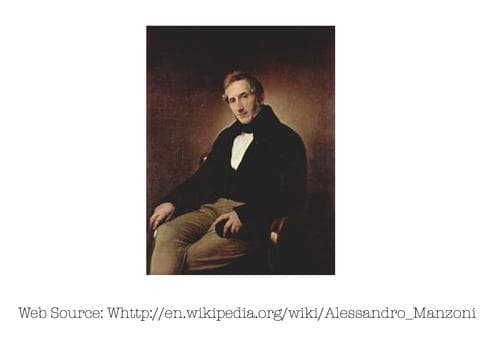
Alessandro Francesco Tommaso Antonio Manzoni was an Italian poet, novelist and philosopher. He is famous for the novel The Betrothed (1827), generally ranked among the masterpieces of world literature. The novel is also a symbol of the Italian Risorgimento, both for its patriotic message and because it was a fundamental milestone in the development of the modern, unified Italian language. Manzoni also contributed to the stabilization of the modern Italian language and helped to ensure linguistic unity throughout Italy. He was an influential proponent of Liberal Catholicism in Italy. His work and thinking has often been contrasted with that of his younger contemporary Giacomo Leopardi by critics.
Similar books
- Les Misérables
Victor Hugo
4.2 (683k) average on GoodreadsHistorical FictionBoth are expansive historical novels exploring social injustice, human suffering, redemption, and love against a backdrop of national turmoil.
- War and Peace
Leo Tolstoy
4.1 (265k) average on GoodreadsHistorical FictionBoth are long, classic historical novels that weave personal stories with major historical events (Napoleonic Wars, Italian plague) and philosophical reflections.
- The Name of the Rose
Umberto Eco
4.1 (301k) average on GoodreadsHistorical FictionBoth are set in historical Italy, dealing with religious themes and a detailed, immersive historical setting, though Manzoni is more straightforwardly romantic.
- Ivanhoe
Walter Scott
3.8 (87k) average on GoodreadsHistorical FictionLike Scott's Ivanhoe (1819), The Betrothed is a foundational historical novel that influenced the genre significantly. Both novels immerse readers in a specific historical period (medieval England for Ivanhoe, 17th-century Italy for Manzoni), feature a central romance complicated by external forces, and explore themes of justice, power, and social order. However, Manzoni's work is arguably more deeply philosophical and overtly moralistic, with a stronger emphasis on divine intervention and the moral education of its characters, whereas Scott often prioritizes adventure and the romanticized depiction of historical events and chivalry.
- To Kill a Mockingbird
Harper Lee
4.3 (4.5M) average on GoodreadsHistorical FictionIn the 1930s Jim Crow South, Harper Lee writes about racial injustice, moral growth, and the quiet courage of a lawyer father, Atticus Finch, as seen through his young daughter's eyes.
- The Great Gatsby
F. Scott Fitzgerald
3.9 (3.8M) average on GoodreadsHistorical FictionIn the opulent Roaring Twenties, a mysterious millionaire's lavish parties hide his desperate, tragic pursuit of a lost love, exposing the emptiness within the American Dream.



Enjoyed the summary?
A summary gives you the shape of the book. The book itself has the detail, the examples and the voice.
Find The Betrothed on AmazonAs an Amazon Associate, BookBrief earns from qualifying purchases. How we're funded