
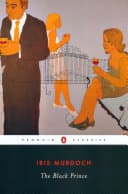
Synopsis
Covers the whole plot, including the ending.
- Difficulty
- Hard
- Pacing
- Slow
- Mood
- Introspective, Philosophical, Intense, Darkly Humorous
- Read it if
- You enjoy complex character studies, philosophical novels, and narratives with unreliable narrators.
- Skip it if
- You prefer straightforward plots, fast-paced action, or morally unambiguous characters.
The Black Prince Plot Summary
Covers the whole plot, including the ending.
A Sudden Retreat
Bradley Pearson, a 58-year-old unsuccessful novelist, plans to leave London and his stifling life to pursue his art alone. He prepares carefully, even writing a farewell note. However, his sister, Priscilla, calls him distressed, saying she has left her husband, Roger Cavandish, and is suicidal. Reluctantly, Bradley returns to London, canceling his escape. He finds Priscilla in a desperate state, requiring his immediate help. This initial interruption sets the stage for his carefully constructed world to fall apart, forcing him back into the very emotional entanglements he wanted to avoid, particularly his difficult relationship with his former brother-in-law and closest friend, Arnold Baffin.
The Baffins' Household
Upon returning to London, Bradley stays at the home of his successful novelist friend, Arnold Baffin, and Arnold's wife, Christian. He quickly becomes involved in their complex household. Christian, with whom Bradley has a long and complicated history, is flirtatious and manipulative. Their daughter, Julian Baffin, a young art student, is also present and soon catches Bradley's attention. The Baffin home, meant as a temporary refuge, quickly becomes a new source of emotional and intellectual trouble for Bradley, as he observes and participates in the power dynamics and unspoken desires that run through their relationships, especially his own unresolved feelings for Christian and his growing interest in Julian.
Julian's Plea
Julian Baffin approaches Bradley, expressing her deep frustration with her art and her desire to improve. She asks him to critique her work and offer guidance, seeing him as a true artist despite his lack of commercial success. Bradley, flattered by her sincerity and captivated by her youthful intensity, agrees to help. This interaction deepens their connection, moving beyond that of a family friend and his goddaughter. Bradley feels increasingly drawn to Julian's innocence, vulnerability, and artistic passion, seeing in her a reflection of his own youthful ideals. Their shared intellectual and artistic pursuits begin to create an intense, unspoken attraction that will soon become central to the unfolding drama.
Sexual Awakening
The intellectual and emotional closeness between Bradley and Julian grows quickly. During a private tutoring session for her art, their conversations become deeply personal, revealing their mutual admiration and affection. Julian confesses her love for Bradley, and he, despite his age and the scandalous implications, returns her feelings. They begin a secret affair, marked by intense passion and intellectual connection. Bradley sees Julian as his muse and his salvation, a chance for genuine love and artistic renewal. This secret relationship, however, is dangerous and ethically complex, threatening to shatter the already fragile relationships within their intertwined families and the wider literary circle.
Roger Cavandish's Return
While Bradley is involved with Julian, his estranged brother-in-law, Roger Cavandish, reappears. Roger, a literary critic and a former lover of Bradley, confesses his lasting love and desire for Bradley. This revelation adds another layer of emotional complexity to Bradley's already chaotic life. Bradley is repulsed by Roger's advances, yet the confession forces him to confront his past and the nature of his own sexuality. Roger's presence also complicates the already strained family dynamics surrounding Priscilla, further entangling Bradley in a web of personal obligations he desperately wants to escape, while also showing the many sides of love and desire.
Christian's Jealousy and Revelation
Christian Baffin, Arnold's wife and Julian's mother, becomes suspicious of Bradley and Julian's close relationship. Her possessive nature and long-standing emotional ties to Bradley lead her to investigate. She eventually discovers their affair, leading to a furious confrontation with Bradley. During this heated exchange, Christian not only expresses her outrage but also reveals her own persistent and unrequited love for Bradley, confessing that she has always desired him. This revelation further complicates Bradley's emotional state, exposing the deep web of unspoken desires and jealousies that have permeated their interconnected lives for years, and solidifying the destructive potential of his affair with Julian.
Arnold's Discovery and Rage
The truth about Bradley and Julian's affair inevitably reaches Arnold Baffin, Julian's father and Bradley's closest friend. Arnold, a man who prides himself on his moral integrity and his seemingly stable family life, is devastated and enraged by the betrayal. He confronts Bradley in a violent outburst, feeling both personally betrayed by his friend and deeply hurt by the violation of his family. The confrontation is a turning point, destroying the illusion of their long friendship and exposing the raw pain and anger beneath their literary and personal rivalry. This event marks the irreversible breakdown of their relationship and the start of the tragic climax.
The Murder
Following the intense confrontation and the revelation of the affair, Arnold Baffin is found dead. The circumstances surrounding his death are initially unclear, but Bradley Pearson is immediately suspected due to his recent argument with Arnold and his illicit relationship with Julian. The police investigation begins, putting Bradley under intense scrutiny. This event plunges Bradley into a nightmare of legal and moral consequences, forcing him to face the ultimate results of his actions and desires. The murder is the tragic culmination of the emotional turmoil and betrayals that have plagued his life, turning his personal drama into a public scandal and a criminal investigation.
Trial and Imprisonment
Despite Bradley's claims of innocence and his complex attempts to explain Arnold's death, he is eventually tried and convicted of Arnold Baffin's murder. The evidence, though perhaps circumstantial, points strongly against him, especially considering his motive and the volatile nature of their last encounter. Bradley is sentenced to prison, a harsh end to his aspirations for artistic freedom and personal fulfillment. His imprisonment marks a major shift in his life, forcing him into a solitary existence where he can only reflect on the events that led him there, and where he writes the narrative that makes up 'The Black Prince'.
Post-Scriptum and the Truth
After Bradley's main narrative ends, the novel includes a series of postscripts from other characters involved in the story: Christian, Julian, Roger, and a psychiatrist, P. Loxias. Each provides their own view of the events, particularly Arnold's death and Bradley's character. These different accounts contradict Bradley's version of events in important ways, challenging his reliability as a narrator and creating ambiguity about the true murderer and the motivations of all characters. The postscripts highlight how subjective truth and memory are, leaving the reader to question what truly happened and who, if anyone, is telling the complete story.
The Black Prince Characters
Bradley Pearson
Protagonist
An aging, unsuccessful novelist obsessed with art and self-deception.
Bradley Pearson is a 58-year-old man who sees himself as a profound, if unrecognized, artist. He is deeply introspective, prone to self-analysis, and articulate, yet also highly self-deceptive. He views the world through a philosophical lens, often justifying his morally questionable actions with elaborate intellectual arguments about art and love. He is critical of others, particularly his successful friend Arnold, yet blind to his own flaws. Bradley is driven by a desperate desire for artistic purity and a final, transcendent love that he believes will validate his existence. He is a man perpetually on the brink of escape, both physically and emotionally, from the mundane realities of his life.
Relationships: Arnold Baffin (Best friend and literary rival); Christian Baffin (Old flame and object of complex desire); Julian Baffin (Young lover and muse); Priscilla Pearson (Troubled sister); Roger Cavandish (Former lover and brother-in-law)
Julian Baffin
Supporting
A young, artistic woman who becomes Bradley's lover and muse.
Julian Baffin is Arnold and Christian's twenty-year-old daughter, an earnest and talented art student. She possesses a youthful idealism and a passionate desire to create, but struggles with self-doubt regarding her artistic abilities. Julian is drawn to Bradley's intellectual intensity and his perception of her as a serious artist, seeing in him a mentor and a kindred spirit. She is vulnerable, sensitive, and emotionally intense, falling deeply in love with Bradley despite the age difference and the scandal it entails. Her artistic aspirations are deeply intertwined with her emotional life, and she seeks validation and inspiration from those she admires.
Relationships: Bradley Pearson (Lover and mentor); Arnold Baffin (Father); Christian Baffin (Mother)
Arnold Baffin
Supporting
A successful novelist, Bradley's best friend and literary rival.
Arnold Baffin is a commercially successful novelist, younger than Bradley, and considered by many (including himself) to be morally upright and well-adjusted. He represents the kind of literary success and conventional domestic happiness that Bradley both disdains and secretly envies. Arnold is seemingly generous and supportive of Bradley, but beneath the surface, there is a subtle competitiveness and a certain self-satisfaction. He values order, reputation, and family, making his eventual discovery of Bradley's affair with his daughter, Julian, a catastrophic blow to his carefully constructed world. He is ultimately a tragic figure, a victim of the complex emotional entanglements of those around him.
Relationships: Bradley Pearson (Best friend and literary rival); Christian Baffin (Wife); Julian Baffin (Daughter)
Christian Baffin
Supporting
Arnold's wife, a manipulative and emotionally complex woman with a history with Bradley.
Christian Baffin is Arnold's wife and Julian's mother. She is a beautiful, intelligent, and deeply manipulative woman with a long, complicated history with Bradley Pearson, having been his lover years prior. Christian is possessive, prone to emotional outbursts, and harbors a deep-seated desire for Bradley, even while married to Arnold. She is acutely aware of the emotional undercurrents within her family and often uses them to her advantage. Christian represents a more conventional, albeit turbulent, form of love and desire compared to Bradley's idealized notions, and her jealousy and revelations play a crucial role in the unfolding drama.
Relationships: Bradley Pearson (Former lover and object of persistent desire); Arnold Baffin (Husband); Julian Baffin (Daughter)
Priscilla Pearson
Supporting
Bradley's emotionally fragile and suicidal sister.
Priscilla Pearson is Bradley's sister, a deeply troubled and emotionally unstable woman. She is prone to dramatic breakdowns and suicidal ideations, often relying heavily on Bradley for emotional support. Priscilla's marital problems with Roger Cavandish are a constant source of distress for her and a significant burden for Bradley, pulling him back into family obligations he seeks to avoid. She represents the messy, inescapable realities of family life that Bradley finds so stifling to his artistic pursuits. Her fragility and dependence serve as a catalyst for Bradley's initial decision to postpone his escape.
Relationships: Bradley Pearson (Brother); Roger Cavandish (Estranged husband and former lover of Bradley)
Roger Cavandish
Supporting
Priscilla's estranged husband, a literary critic and former lover of Bradley.
Roger Cavandish is Priscilla's estranged husband, a literary critic, and a former lover of Bradley Pearson. He is a homosexual man who still harbors deep feelings for Bradley. Roger is intelligent and perceptive, but also somewhat pathetic in his unrequited longing for Bradley. His reappearance and confession of love further complicate Bradley's life and expose another layer of his past relationships. Roger's perspective, later presented in a postscript, offers a critical and somewhat detached view of Bradley's character and the events, adding to the novel's thematic exploration of truth and subjectivity.
Relationships: Bradley Pearson (Former lover); Priscilla Pearson (Estranged wife)
P. Loxias
Mentioned
A psychiatrist who offers an analytical perspective on Bradley.
P. Loxias is a psychiatrist whose 'post-script' appears at the end of the novel. Loxias provides a clinical, detached analysis of Bradley Pearson's character and motivations, particularly in the context of the murder. His perspective aims to offer a psychological explanation for Bradley's actions and his unreliable narration, often reducing Bradley's grand artistic and philosophical claims to psychological complexes. Loxias represents an external, 'objective' voice, though even his objectivity is subtly questioned by the preceding narratives, adding to the novel's layered exploration of truth and interpretation.
The Black Prince Themes
The Nature of Love and Desire
The novel carefully explores the many and often conflicting aspects of love and desire. Bradley's 'love' for Julian is presented as an idealized, purifying force, a 'black prince' that elevates him, yet it is also deeply selfish and ultimately harmful. Conversely, Christian's persistent desire for Bradley is possessive and jealous, while Roger's love for Bradley is unrequited and pathetic. The novel asks whether love is a spiritual experience or simply a complex mix of ego, power, and physical attraction. The affair between Bradley and Julian, meant to be an artistic and spiritual union, ultimately leads to betrayal and tragedy, showing love's capacity for both inspiration and destruction.
“Love is the extremely difficult realisation that something other than oneself is real.”
The Illusion of Art and Reality
Murdoch skillfully blurs the lines between artistic creation and real life. Bradley, as a novelist, constantly frames his life as a story, seeing himself as an artist suffering for his work. He intellectualizes his desires and justifies his actions through an artistic lens, believing his affair with Julian is a necessary artistic awakening. The novel itself is presented as Bradley's prison memoir, a work of art created from his suffering. However, the conflicting postscripts from other characters challenge Bradley's 'artistic' truth, suggesting that his reality is a highly subjective, self-serving construction. This theme questions whether art can truly capture reality, or if it merely serves as a sophisticated form of self-deception.
“Art is a lonely thing. It is not always possible to be a good artist and a good man.”
Truth and Subjectivity
A main concern of 'The Black Prince' is how hard it is to find truth. Bradley's narrative, presented as his definitive account, is systematically undermined by the postscripts of Christian, Julian, Roger, and P. Loxias. Each character offers a different interpretation of events, motives, and even the murder itself, showing that 'truth' is deeply subjective and depends on individual perspective and self-interest. The reader is left without a clear, objective understanding of what 'really' happened, particularly concerning Arnold's death. This structural device forces the reader to confront the impossibility of a single, authoritative truth, highlighting how personal biases and desires shape our understanding of reality.
“There are no facts, only interpretations.”
Ego and Self-Deception
Bradley Pearson is a clear example of deep ego and self-deception. He sees himself as a misunderstood genius, a 'black prince' of art, despite his lack of success. He rationalizes his illicit affair with Julian as a quest for artistic purity and true love, rather than acknowledging it as a manifestation of his own desires and insecurities. His elaborate philosophical thoughts often serve to justify his morally questionable behavior. The novel shows how the ego can build complex stories to protect itself from uncomfortable truths, leading to a skewed perception of oneself and others. Bradley's journey, even in prison, is largely a battle to maintain his self-image against the harsh realities of his actions.
“I am a man of honour, a man of truth, a man of love. I am an artist.”
The Artist's Struggle and Vocation
The novel looks at the challenges of the artistic life, contrasting Bradley's perceived artistic purity with Arnold's commercial success. Bradley believes in the sacred, solitary nature of art, viewing his own failures as a sign of his integrity. He constantly struggles with the demands of his 'vocation,' which he feels is constantly threatened by the messy realities of human relationships. His affair with Julian is presented as an artistic necessity, a source of inspiration. The book questions what it truly means to be an artist, whether it requires isolation, suffering, or a willingness to disregard conventional morality in pursuit of a higher truth. The tragic outcome suggests the severe costs of such a single-minded artistic pursuit.
“The artist is a sort of priest. He has a vocation. He is chosen.”
Plot Devices & Literary Techniques
Unreliable Narrator
Bradley Pearson's first-person account is highly biased and self-serving.
The entire novel is presented as Bradley Pearson's memoir, written from prison. His narrative is deeply subjective, filled with philosophical digressions and justifications for his actions. He idealizes himself and his motivations, often presenting others in a negative light. The unreliability of his narration is explicitly highlighted by the subsequent 'postscripts' from other characters, which contradict his version of events and offer alternative interpretations. This device forces the reader to critically evaluate Bradley's account and question the very nature of truth in storytelling.
Epistolary Structure (Postscripts)
Multiple character accounts appended to the main narrative.
Following Bradley's extensive first-person narrative, the novel includes a series of short, distinct postscripts written by Christian, Julian, Roger, and P. Loxias. These additional accounts offer alternative perspectives on the events, character motivations, and especially the circumstances of Arnold Baffin's death. This device fragments the narrative truth, challenging Bradley's authority and forcing the reader to synthesize conflicting information. It serves to underscore the novel's themes of subjectivity and the elusive nature of truth, making the reader an active participant in discerning what might have truly occurred.
Dramatic Irony
The reader perceives truths and motivations that Bradley Pearson is blind to.
Dramatic irony is prevalent throughout the novel, often stemming from Bradley Pearson's self-deception. The reader is frequently aware of Bradley's flaws, his manipulative tendencies, and the true nature of his relationships, even as Bradley himself remains oblivious or rationalizes his behavior. For example, Bradley views his affair with Julian as a pure, artistic union, while the reader can see the inherent selfishness and destructive potential. This device creates tension and adds layers of meaning, allowing the reader to observe the tragic trajectory of events with a clearer understanding than the protagonist himself possesses.
Symbolism of 'The Black Prince'
A multifaceted symbol representing an idealized, dark, or destructive love/artistic force.
The title 'The Black Prince' is a central and ambiguous symbol. For Bradley, it represents an idealized, dark, and powerful form of love or artistic inspiration – a transcendent force that elevates him and justifies his actions. It can also be interpreted as a symbol of the destructive, amoral aspect of passion or art, a 'dark' force that leads to chaos and tragedy. The symbol is open to multiple interpretations, reflecting the novel's exploration of good and evil, creation and destruction, within the context of intense human relationships and artistic ambition. It encapsulates the complex, often contradictory, nature of Bradley's inner world and his pursuits.
The Black Prince Quotes
“Art is a way of creating a world in the face of the world.”
“Love is the extremely difficult realisation that something other than oneself is real.”
“The artist is a sort of God, and like God is invisible, and remains, if he is a good artist, in his work, like the paring of a fingernail.”
“Freedom is the recognition of necessity.”
“We are all in the art of living, and the art of living is love.”
“To be good is to be a part of the world, to be real, to be able to see what is real.”
“The only thing one can do with love is to be in it.”
“Reality is a system of interlocking forms.”
“One must be careful with one's freedom, it is a very dangerous thing.”
“The greatest difficulty is to see the human being as a human being.”
“All art is the struggle to make the accidental seem necessary.”
“The only thing one can learn from experience is that one learns nothing from experience.”
“We are all condemned to be free.”
“Truth is a mobile and various thing.”
Quiz
10 questions on the plot and the characters. Each answer comes with a short explanation.
Question 1
What is Bradley Pearson's primary profession at the beginning of the novel?
- A university professor
- An art critic
- An unsuccessful novelist
- A publisher's editor
Show answer
C. An unsuccessful novelist Bradley Pearson is repeatedly described as an unsuccessful novelist in his late fifties, a central aspect of his character and struggles.
Question 2
Who is Christian, the young woman Bradley becomes infatuated with?
- The daughter of his former wife, Francis
- The daughter of his literary rival, Arnold Baffin
- His niece, daughter of his sister Priscilla
- His long-lost daughter from a previous affair
Show answer
B. The daughter of his literary rival, Arnold Baffin Christian is the daughter of Arnold Baffin, Bradley's friend and literary rival, whose talent Bradley both admires and resents.
Question 3
What significant event occurs early in the novel that forces Bradley to confront his past and present relationships?
- He receives a prestigious literary award.
- His sister, Priscilla, attempts suicide.
- He is offered a lucrative publishing deal.
- He decides to move abroad.
Show answer
B. His sister, Priscilla, attempts suicide. Priscilla's suicide attempt is a catalyst that draws Bradley into a web of family obligations and emotional turmoil, setting many of the novel's events in motion.
Question 4
What is the metaphorical significance of 'The Black Prince' in the novel's title, as interpreted by Bradley?
- It represents the publishing industry's harsh realities.
- It symbolizes Eros, the dark, destructive, and transformative power of love and art.
- It refers to a historical figure he admires.
- It is the title of the novel he wishes he could write.
Show answer
B. It symbolizes Eros, the dark, destructive, and transformative power of love and art. Bradley explicitly associates 'The Black Prince' with Eros, a force that is both divine and demonic, capable of inspiring profound love and destructive obsession, particularly in relation to art and his passion for Christian.
Question 5
Who is Julian Baffin?
- Arnold Baffin's wife and Christian's mother
- Bradley's former wife
- Priscilla's therapist
- A young aspiring writer mentored by Bradley
Show answer
A. Arnold Baffin's wife and Christian's mother Julian Baffin is Arnold's wife and Christian's mother, and she also has a complex relationship with Bradley, having been his lover in the past.
Question 6
What is the primary narrative device used in 'The Black Prince'?
- A series of letters between characters
- Multiple third-person perspectives
- A first-person narrative by Bradley Pearson, framed by postscripts from other characters
- An omniscient narrator's account
Show answer
C. A first-person narrative by Bradley Pearson, framed by postscripts from other characters The novel is presented as Bradley Pearson's memoir, with subsequent 'postscripts' from other characters offering alternative, often contradictory, perspectives on the events he describes.
Question 7
What is Bradley Pearson's view on the nature of art and writing, particularly his own?
- He believes art should be purely for entertainment and commercial success.
- He sees art as a rigorous, almost religious pursuit of truth and beauty, distinct from the messy realities of life.
- He views writing as a therapeutic process to resolve personal issues.
- He thinks art is a collaborative effort, best created with others.
Show answer
B. He sees art as a rigorous, almost religious pursuit of truth and beauty, distinct from the messy realities of life. Bradley holds a highly idealistic, almost puritanical, view of art, believing it demands absolute dedication and a striving for perfection, often at odds with his own life's imperfections and failures.
Question 8
What is the ultimate fate of Arnold Baffin?
- He achieves international literary fame.
- He reconciles with Bradley and they collaborate on a novel.
- He is murdered, and Bradley is implicated in his death.
- He abandons his family and moves to America.
Show answer
C. He is murdered, and Bradley is implicated in his death. Arnold Baffin is found dead, and the circumstances lead to Bradley being accused and eventually imprisoned for his murder, a major plot twist and source of ambiguity.
Question 9
How does Bradley Pearson's sister, Priscilla, typically react to his attempts to help or advise her?
- She gratefully accepts his guidance and support.
- She resents his interference, often becoming hysterical and accusing him of selfishness.
- She ignores him completely, preferring to rely on others.
- She seeks his financial assistance but rejects his emotional input.
Show answer
B. She resents his interference, often becoming hysterical and accusing him of selfishness. Priscilla's relationship with Bradley is fraught with conflict; she often lashes out at him, accusing him of being self-centered and uncaring, despite his efforts.
Question 10
What does the ending, with its multiple postscripts from other characters, primarily achieve?
- It confirms Bradley's version of events as the absolute truth.
- It provides a clear resolution to all the plot's mysteries.
- It undermines Bradley's reliability as a narrator and highlights the subjective nature of truth and memory.
- It introduces entirely new characters and plotlines for a potential sequel.
Show answer
C. It undermines Bradley's reliability as a narrator and highlights the subjective nature of truth and memory. The postscripts from Francis, Christian, Julian, and Arnold's publisher critically challenge Bradley's narrative, revealing his self-deception and presenting alternative interpretations of the events and his character, emphasizing the novel's philosophical exploration of truth.
The Black Prince FAQ
What is the central premise of 'The Black Prince'?
The novel is presented as an autobiographical account by Bradley Pearson, a failed novelist in his late fifties, detailing the events leading up to and immediately following the murder of his brother-in-law, Arnold Baffin. Bradley's narrative is framed by prefaces and postscripts from various other characters, each offering their own conflicting interpretations of the events and Bradley's character.
Who is Bradley Pearson and what are his primary struggles?
Bradley Pearson is the protagonist and narrator, an aging, unsuccessful writer obsessed with the purity of art and his own artistic integrity. His primary struggles involve profound loneliness, a lifelong battle with writer's block, a deep-seated contempt for his more successful brother-in-law Arnold Baffin, and a desperate yearning for recognition and love, particularly from the much younger Julian Baffin.
What role does Arnold Baffin play in Bradley's life?
Arnold Baffin is Bradley's brother-in-law and a highly successful, prolific novelist, a stark contrast to Bradley's own artistic failures. He represents everything Bradley resents and envies in the literary world, yet he also provides Bradley with a complex mix of friendship, rivalry, and a frustrating sense of obligation, deeply influencing Bradley's self-perception.
Describe the central romantic entanglement in the book.
The central romantic entanglement involves Bradley's intense, almost obsessive love for Julian Baffin, Arnold's 20-year-old daughter, whom he attempts to 'rescue' from her parents. This affair is complicated by Bradley's past relationship with Julian's mother, Christian, and the simultaneous affections of Francis Marloe and other characters, creating a chaotic web of desire and betrayal.
What is the significance of the 'Black Prince' title?
The title 'The Black Prince' refers to Hamlet, whom Bradley explicitly identifies with, seeing himself as a tragic, misunderstood figure struggling with moral dilemmas and the corrupting influences around him. It also alludes to the dark, destructive, and often morally ambiguous forces that drive human relationships and artistic creation, which Bradley believes he embodies.
How do the various prefaces and postscripts contribute to the narrative?
The prefaces and postscripts, written by characters like Christian Baffin, Francis Marloe, and Julian Baffin, serve to destabilize Bradley's narrative, offering contradictory perspectives and revealing his unreliability as a narrator. They highlight the subjective nature of truth and memory, suggesting that Bradley's version of events is just one of many possible interpretations, leaving the reader to question the true facts.
Is the murder of Arnold Baffin ever definitively solved or explained?
No, the murder of Arnold Baffin remains ambiguous throughout the novel, with Bradley ultimately imprisoned for it but maintaining his innocence. The various accounts from other characters offer different theories or hints, but a definitive, universally accepted explanation is never provided, reinforcing the novel's themes of subjective truth and the unknowability of others' motives.
What is the implied fate of Bradley Pearson after the events of the book?
Bradley Pearson is imprisoned for Arnold's murder and writes his account from jail. The postscripts indicate he eventually dies in prison, possibly by suicide or natural causes, maintaining his artistic integrity and his love for Julian to the end. His final fate underscores his isolation and the tragic consequences of his life's choices.
How does Bradley's narcissism manifest throughout the story?
Bradley's narcissism is evident in his constant self-aggrandizement, his belief in his own artistic superiority despite his lack of output, and his tendency to interpret all events through the lens of how they affect him. He sees others primarily as foils or instruments for his own self-realization, rarely acknowledging their independent existence or feelings with genuine empathy.
Discuss Bradley's concept of 'pure art' and how it contrasts with his actions.
Bradley idealizes 'pure art' as something detached from the messy realities of life, a transcendent truth achieved through intense suffering and isolation. Ironically, his pursuit of this ideal is deeply intertwined with his chaotic personal life, his manipulative relationships, and his inability to actually produce substantial work, highlighting a profound disconnect between his artistic philosophy and his lived experience.
What psychological need does Julian Baffin fulfill for Bradley?
For Bradley, Julian Baffin represents a final chance at redemption, inspiration, and youth. She becomes a muse, a symbol of pure, uncorrupted beauty and potential, and a projection of his own artistic aspirations. His 'love' for her is deeply intertwined with his psychological need to escape his own aging, failures, and the suffocating reality of his life.
How does Bradley's relationship with Christian Baffin reflect his broader psychological patterns?
Bradley's on-again, off-again relationship with Christian, marked by his disdain and her persistent affection, reveals his pattern of pushing away intimacy while secretly craving it. He views her as a burden and a symbol of his past failures, yet he allows her back into his life, suggesting a deep-seated ambivalence about connection and a need for someone to validate his existence, even if he despises them.
Is Bradley Pearson a reliable narrator? Why or why not?
Bradley Pearson is highly unreliable. His narrative is deeply subjective, colored by his biases, self-pity, and artistic pretensions. The conflicting accounts in the prefaces and postscripts directly challenge his version of events, exposing his manipulations, selective memory, and self-deception, forcing the reader to constantly question the 'truth' of his story.
To what extent is 'The Black Prince' a critique of the literary world?
'The Black Prince' offers a sharp, satirical critique of the literary world through the contrasting figures of Bradley and Arnold. It exposes the vanity, jealousy, and intellectual snobbery that can plague writers, the arbitrary nature of success, and the often-tenuous connection between artistic theory and actual creative output, questioning the very definition of literary merit.
What is the novel's stance on the nature of love and obsession?
The novel portrays love as often indistinguishable from obsession, ego, and projection. Bradley's 'love' for Julian is more about his own needs and fantasies than about her as an individual. It suggests that human connection is frequently tainted by self-interest, power dynamics, and a profound inability to truly see or understand another person, making genuine, selfless love a rare and perhaps impossible ideal.
How does the novel explore the theme of truth versus illusion?
The novel constantly blurs the lines between truth and illusion, primarily through Bradley's unreliable narration and the conflicting testimonies of other characters. It suggests that 'truth' is often a subjective construct, shaped by individual desires, memories, and self-deceptions, making objective reality elusive and perhaps ultimately unknowable, especially in matters of human emotion and motive.
Could Bradley's pursuit of Julian be interpreted as a form of artistic inspiration rather than purely romantic love?
Yes, Bradley's 'love' for Julian is heavily intertwined with his artistic aspirations. He sees her as a muse, a catalyst for his long-delayed masterpiece, and a symbol of the beauty and purity he seeks in his art. His desire for her is arguably more about reigniting his creative spark and validating his artistic identity than it is about a conventional romantic relationship.
What is the significance of the Hamlet parallels beyond the title?
Beyond the title, Bradley frequently sees himself in Hamlet's position: a deeply intellectual, brooding figure surrounded by moral corruption, contemplating profound philosophical questions while struggling with inaction and the betrayal of those around him. The parallels highlight his self-perception as a tragic hero, albeit one whose grand pronouncements often mask petty jealousies and manipulative behavior.
About the author
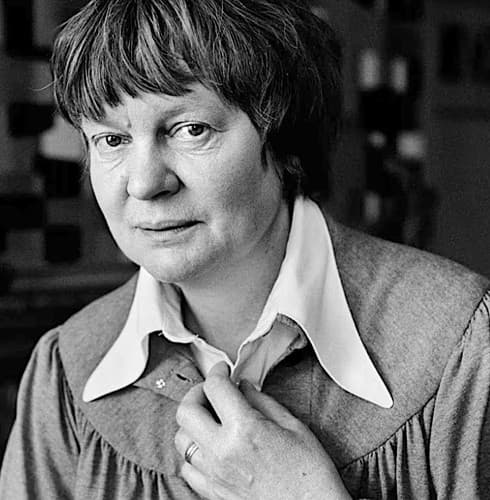
Dame Jean Iris Murdoch was an Irish and British novelist and philosopher. Murdoch is best known for her novels about good and evil, sexual relationships, morality, and the power of the unconscious. Her first published novel, Under the Net (1954), was selected in 1998 as one of Modern Library's 100 best English-language novels of the 20th century. Her 1978 novel The Sea, the Sea won the Booker Prize. In 1987, she was made a Dame by Queen Elizabeth II for services to literature. In 2008, The Times ranked Murdoch twelfth on a list of "The 50 greatest British writers since 1945".
Similar books
- A Severed Head
Iris Murdoch
3.8 (7k) average on GoodreadsFictionExplores complex, often absurd, interpersonal relationships and philosophical themes.
- Pale Fire
Vladimir Nabokov
4.1 (43k) average on GoodreadsLiterary FictionFeatures an unreliable narrator and a meta-fictional structure that questions the nature of truth.
- The Magus
John Fowles
4.0 (48k) average on GoodreadsLiterary FictionDeals with manipulation, illusion, and philosophical games played between characters.
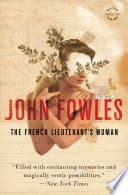
- The French Lieutenant's Woman
John Fowles
3.9 (47k) average on GoodreadsLiterary FictionBoth "The Black Prince" and John Fowles' "The French Lieutenant's Woman" are notable examples of postmodern fiction employing metafiction and challenging traditional narrative structures. Fowles uses multiple endings and authorial intrusion to highlight the constructed nature of fiction and Victorian societal constraints. Murdoch, however, takes this a step further in "The Black Prince" by having the conflicting 'truths' emerge from within the characters' own narratives, rather than directly from an omniscient authorial voice. While Fowles' novel critiques historical realism, Murdoch's work in "The Black Prince" more intensely scrutinizes the subjective nature of perception and the philosophical impossibility of objective truth, particularly in personal relationships and artistic interpretation.
- Nineteen Eighty-Four
George Orwell
4.2 (5.5M) average on GoodreadsFictionWinston Smith dreams of truth and rebellion in a world where Big Brother watches all, but he confronts the terrifying power of a regime that controls not just actions, but thoughts.
- The Frozen River
Ariel Lawhon
4.4 (600k) average on GoodreadsFictionIn 1789 Maine, a heroic midwife's diary helps her expose a murder and get justice in a town that wants to silence her.



Enjoyed the summary?
A summary gives you the shape of the book. The book itself has the detail, the examples and the voice.
Find The Black Prince on AmazonAs an Amazon Associate, BookBrief earns from qualifying purchases. How we're funded