
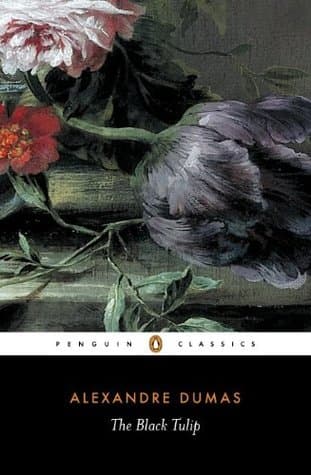
Synopsis
Covers the whole plot, including the ending.
- Difficulty
- Medium
- Pacing
- Moderate
- Mood
- Romantic, Suspenseful, Historical, Obsessive
- Read it if
- You enjoy classic historical fiction with a strong romantic subplot, political intrigue, and a focus on unique historical phenomena like tulipomania.
- Skip it if
- You dislike older prose styles or prefer fast-paced thrillers over more character-driven historical narratives.
The Black Tulip Plot Summary
Covers the whole plot, including the ending.
The Obsession with the Black Tulip and a Political Storm
In 1672, the 'Year of Disaster' in Holland, the rich tulip-grower Cornelius van Baerle lives in Dordrecht, focused on floriculture. He wants to grow the black tulip, which offers a prize of 100,000 guilders from the Haarlem Horticultural Society. His godfather, Cornelius de Witt, and his brother, Johan de Witt, are involved in a political storm. The Orange party, led by William of Orange, is getting stronger, threatening the de Witts. Isaac Boxtel, van Baerle's jealous neighbor and rival, spies on Cornelius, envious of his gardening skills and resources, especially his pursuit of the black tulip.
The Fall of the De Witts and Cornelius's Arrest
The political trouble ends tragically when Johan de Witt is killed by a mob in The Hague. His brother, Cornelius de Witt, imprisoned on false treason charges and tortured, is released but also killed by the same mob. Before his death, Cornelius de Witt gives secret papers to his godson, Cornelius van Baerle, telling him to burn them without reading. Van Baerle, more interested in tulips than politics, delays. This, along with Boxtel's report to authorities, leads to van Baerle's arrest for treason, based on the letters he was supposed to destroy.
Imprisonment in Loevestein and a Budding Romance
Cornelius van Baerle is tried and, despite saying he is innocent and not political, is sentenced to death for treason. Just before his execution, William of Orange changes his sentence to life imprisonment. This decision might have been influenced by the de Witts' papers or a wish to seem merciful. He is sent to Loevestein fortress. There, he meets Rosa, the kind daughter of Gryphus, the harsh jailer. Rosa is not educated but is smart and soon feels sympathy for the refined prisoner, who seems out of place in the grim prison.
The Black Tulip's Secret Journey
Before his arrest, Cornelius had secured three tulip bulbs, the result of years of breeding, which he believes will produce the black tulip. In prison, he realizes his work is at risk. He carefully hides the bulbs. He eventually tells Rosa his secret, explaining his scientific effort and his dream. Rosa, interested by his passion and the idea of such a beautiful flower, agrees to help him. She becomes his helper, promising to plant and care for the bulbs secretly in the prison grounds, away from her father and the guards.
Boxtel's Pursuit and Rosa's Education
Isaac Boxtel, still jealous and aware of Cornelius's efforts, moves to Loevestein, living in a house near the prison. From his window, he uses mirrors to spy on Cornelius and Rosa, determined to steal the black tulip if it blooms. Meanwhile, Cornelius starts teaching Rosa to read and write, using the Bible. This exchange brings them closer. Rosa learns quickly, finding joy in words and ideas, a contrast to her previous uneducated life.
The First Two Bulbs and Growing Affection
Rosa plants the first bulb. They watch for growth. The first bulb produces a beautiful tulip, but it is dark purple, not black. The second bulb is planted with hope, but it also does not yield the black color. Despite these failures, their shared secret and purpose strengthen their connection. Their daily interactions, the secret gardening, and the quiet lessons bring about a deep love that goes beyond the prison walls and their different social positions. They find comfort and hope in each other in their bleak surroundings.
The Third Bulb and Boxtel's Scheme
With only one bulb left, Cornelius and Rosa put all their hopes on it. This time, the plant that grows shows promise, its stem and bud having an unusual, deep color that suggests it might be the black tulip. Boxtel, watching through his mirrors, becomes frantic. He sends a letter to Gryphus, falsely accusing Rosa of talking to Cornelius, hoping to separate them and get the tulip. Gryphus, always suspicious and cruel, takes the budding plant, to the despair of Cornelius and Rosa, and locks it in a cupboard.
Rosa's Courage and the Journey to Haarlem
Desperate, Rosa confronts her father, Gryphus, and despite his anger, she gets the black tulip from the cupboard. Knowing the Haarlem Horticultural Society's deadline for the prize is near, and fearing Boxtel will try to steal or destroy it, Rosa makes a decision. She decides to travel to Haarlem herself, alone, to present the black tulip and claim the prize in Cornelius's name. It is a dangerous trip for a young, uneducated woman, but her love for Cornelius and her determination to see his dream come true drive her.
The Unveiling and Boxtel's Downfall
Rosa arrives in Haarlem just in time for the exhibition. With the black tulip protected, she presents it to the surprised and happy members of the Horticultural Society. The black tulip is magnificent. However, just as the prize is about to be given, Isaac Boxtel appears, claiming the tulip as his own, having followed Rosa. He tries to discredit Rosa and steal the glory. His frantic claims, along with Rosa's clear story and Cornelius's research (which Rosa had learned to read), show Boxtel as a fraud. In his anger, Boxtel has a fatal stroke.
Justice and Union
News of the black tulip and its story reaches William of Orange. Interested by the story and wanting to correct the wrong done to Cornelius, William orders Cornelius's release from Loevestein. He also sees the love between Cornelius and Rosa. At a public ceremony, William of Orange gives the 100,000 guilder prize to Cornelius van Baerle and publicly approves the marriage of Cornelius and Rosa. The lovers are free to marry, and the prize money ensures their future happiness, allowing them to live a life devoted to their love and their shared interest in tulips.
The Black Tulip Characters
Cornelius van Baerle
Protagonist
A gentle and brilliant tulip-grower, falsely imprisoned for political reasons.
Cornelius van Baerle is a kind, intelligent, and somewhat naive gentleman from Dordrecht, whose sole passion in life is the cultivation of tulips. He is a man of science and art, deeply dedicated to the pursuit of the black tulip, oblivious to the political machinations around him. Despite his imprisonment and the threat of execution, he maintains his gentle nature and his intellectual curiosity. His innocence and unwavering focus on his floricultural dream make him a sympathetic figure, driven by a pure, almost childlike, obsession.
Relationships: Rosa (love interest, intellectual companion, rescuer); Cornelius de Witt (godfather, mentor); Isaac Boxtel (rival, antagonist)
Rosa Gryphus
Protagonist/Love Interest
The jailer's beautiful and courageous daughter, who helps Cornelius.
Rosa is the beautiful, compassionate, and initially illiterate daughter of Gryphus, the harsh jailer of Loevestein. Despite her rough upbringing, she possesses a keen intelligence, a strong moral compass, and an innate sense of justice. She is fiercely loyal and brave, demonstrating immense courage by helping Cornelius cultivate the black tulip and eventually traveling to Haarlem to claim the prize for him. Her love for Cornelius inspires her to learn to read and write, broadening her world and proving her worth.
Relationships: Cornelius van Baerle (love interest, student to his teacher, accomplice); Gryphus (father, antagonist in her efforts to help Cornelius)
Isaac Boxtel
Antagonist
Cornelius's envious neighbor and bitter rival in tulip cultivation.
Isaac Boxtel is the primary antagonist, driven by overwhelming jealousy and malice towards Cornelius van Baerle. A mediocre tulip grower himself, he resents Cornelius's wealth, talent, and success. His entire existence becomes consumed by spying on and attempting to sabotage Cornelius's efforts to grow the black tulip. He is a bitter, petty, and ultimately self-destructive character whose envy leads him to commit acts of denunciation, theft, and deceit, culminating in his tragic demise.
Relationships: Cornelius van Baerle (bitter rival, object of his envy)
Gryphus
Supporting
Rosa's harsh and cruel father, the jailer of Loevestein.
Gryphus is the crude, suspicious, and often cruel jailer of Loevestein. He is Rosa's father but shows little warmth or understanding towards her, often treating her more like a servant. His harsh nature is typical of his profession in a grim prison. He is easily manipulated by Boxtel's false accusations and is an obstacle to Cornelius and Rosa's plans, though ultimately, he is outwitted by his daughter's resourcefulness.
Relationships: Rosa (father, strict overseer); Cornelius van Baerle (jailer to his prisoner)
William of Orange
Supporting
The powerful Stadtholder of Holland, who ultimately brings justice.
William of Orange is a historical figure, the Stadtholder of Holland, portrayed as a powerful and astute political leader. He is initially responsible for the de Witts' downfall and Cornelius's imprisonment, but he is also capable of mercy and justice. His character represents the ultimate authority and the force that can both condemn and liberate. He is intrigued by the story of the black tulip and the love between Cornelius and Rosa, ultimately using his power to right a wrong.
Relationships: Cornelius van Baerle (ultimate judge, pardoner); Johan de Witt (political rival)
Johan de Witt
Supporting/Mentioned
Grand Pensionary of Holland, a republican leader.
Johan de Witt is a historical figure, the Grand Pensionary of Holland and a staunch republican. He is a powerful and respected statesman, but his political faction is losing ground to the Orange party. His brutal assassination, along with his brother Cornelius, sets the stage for the political turmoil that ensnares Cornelius van Baerle. He represents the tragic fate of those caught in intense political strife.
Relationships: Cornelius de Witt (brother); Cornelius van Baerle (godfather's brother, political victim)
Cornelius de Witt
Supporting/Mentioned
Godfather to Cornelius van Baerle, a republican statesman.
Cornelius de Witt is the brother of Johan de Witt and godfather to Cornelius van Baerle. He is a respected republican statesman who is falsely accused of treason and brutally murdered by the mob alongside his brother. Before his death, he entrusts important political papers to his godson, an act that inadvertently leads to van Baerle's arrest. He represents the innocent victim caught in the crossfire of political upheaval.
Relationships: Johan de Witt (brother); Cornelius van Baerle (godfather, mentor)
The Haarlem Horticultural Society
Mentioned
The organization offering the prize for the black tulip.
This society represents the ultimate authority in the world of tulip cultivation, offering the substantial prize of 100,000 guilders for the first person to produce a truly black tulip. Their existence and the prize money fuel the ambitions of growers like Cornelius and Boxtel, providing the central motivation for the floricultural plot.
The Black Tulip Themes
Obsession and Passion
The novel explores obsession through Cornelius van Baerle's pursuit of the black tulip. His dedication to floriculture continues through political trouble, imprisonment, and hardship, showing how passion can sustain someone in hard times. This obsession is compared to Boxtel's destructive jealousy, showing the difference between a creative passion and a negative one. The 100,000 guilder prize means not just money, but recognition of this passion.
“To have discovered the black tulip, to have seen it for a moment...then to lose it, to lose it forever!”
Love and Redemption
The romantic relationship between Cornelius and Rosa is the emotional center of the novel. Their love grows in a prison cell and becomes a source of strength. Rosa's love changes her from an uneducated jailer's daughter into a brave, educated woman, while her devotion gives Cornelius hope and purpose in prison. Their shared goal of growing the black tulip means their lasting affection and their ability to overcome trouble together.
“He had a beautiful soul, and she had a beautiful heart; they were worthy of each other.”
Justice and Injustice
The novel is set against a background of political injustice, with the de Witt brothers killed and Cornelius van Baerle wrongly imprisoned for treason. This shows how power can be arbitrary and how people are vulnerable to political desires and mob rule. However, the story ends with justice through William of Orange, who, learning the truth, corrects the wrong done to Cornelius. The black tulip, when shown, means not just botanical success but also the win of truth and innocence over lies and political schemes.
“Injustice, like crime, is always followed by its punishment.”
Social Class and Education
The difference between Cornelius, an educated gentleman, and Rosa, an uneducated jailer's daughter, shows the theme of social class. However, the novel shows that true worth is not about social standing. Cornelius teaching Rosa to read and write shows how education can change someone, improving her mind and allowing her to help save him. Rosa's quick learning and intelligence prove that character and ability are not limited by birth, and her journey from not reading to reading means her personal growth.
“What a strange position! a prisoner teaching his jailer's daughter to read!”
Plot Devices & Literary Techniques
The Black Tulip
A central MacGuffin and symbol of purity, ambition, and hope.
The elusive black tulip serves as the primary MacGuffin, driving the plot and motivating Cornelius's actions. It represents the pinnacle of floricultural achievement and a substantial prize. Beyond its plot function, it symbolizes purity and singularity, an ideal pursued by an innocent man. It also embodies hope in the darkest of times, as its cultivation becomes a shared secret and a beacon for Cornelius and Rosa's future, ultimately becoming a symbol of justice and their union.
Letters and Secret Documents
A catalyst for Cornelius's arrest and a means of revealing truth.
The packet of secret political papers entrusted to Cornelius by his godfather, Cornelius de Witt, acts as a crucial plot device. His failure to immediately burn them, combined with Boxtel's denunciation, directly leads to his false imprisonment. Later, Rosa's ability to read these documents (after Cornelius teaches her) helps to clarify the political machinations and establish Cornelius's innocence, serving as a means of both initial injustice and eventual exoneration.
The Spy System (Mirrors)
A visual representation of Boxtel's envy and a source of dramatic tension.
Isaac Boxtel's elaborate system of mirrors, which he uses to spy on Cornelius's garden in Dordrecht and later on Rosa and Cornelius in Loevestein, is a key plot device. It physically embodies his obsessive jealousy and villainy, allowing him to track Cornelius's progress with the black tulip. This visual spying creates dramatic tension and propels Boxtel's desperate actions, highlighting his inability to achieve success through his own merit.
The Prison of Loevestein
A setting that both confines and fosters love and growth.
The fortress of Loevestein is more than just a setting; it's a symbolic plot device. Initially representing confinement, injustice, and despair for Cornelius, it paradoxically becomes the crucible where his love for Rosa blossoms. The isolation of the prison forces Cornelius and Rosa to rely solely on each other, fostering their intellectual and romantic bond. It is within its walls that the black tulip is nurtured, symbolizing how hope and beauty can emerge from the bleakest environments.
The Black Tulip Quotes
“There is no happiness for people at the expense of other people.”
“To cultivate a flower is a silent and delicious employment which fills up the vacant hours without ennui, and gives to the mind the satisfaction of having done something useful.”
“Hope is the last thing that dies in man.”
“Love is the only thing that doubles our strength, because it gives us the strength of two.”
“A prison is a grave for the living.”
“The black tulip will be the eighth wonder of the world.”
“Envy is a more terrible thing than hunger, for hunger passes, but envy remains.”
“One must have patience; time brings everything to those who know how to wait.”
“The greatest crimes are committed not from necessity, but from superfluity.”
“A true friend is the greatest of all blessings.”
“Beauty is a flower, but fame is a tree.”
“In politics, as in religion, there are martyrs.”
“The heart has its reasons which reason knows nothing of.”
“To see is to believe, but to feel is to know.”
Quiz
10 questions on the plot and the characters. Each answer comes with a short explanation.
Question 1
What is the name of Cornelius von Baerle's bitter rival who falsely accuses him of treason?
- Isaac Boxtel
- William of Orange
- John de Witt
- Cornelius de Witt
Show answer
A. Isaac Boxtel Isaac Boxtel is Cornelius's envious neighbor and tulip-growing rival who frames him for treason to eliminate competition for the black tulip prize.
Question 2
What historical event serves as the political backdrop for Cornelius's imprisonment?
- The French Revolution
- The assassination of two Dutch statesmen in 1672
- The Thirty Years' War
- The Glorious Revolution
Show answer
B. The assassination of two Dutch statesmen in 1672 The novel intertwines with the historical murders of Dutch statesmen John and Cornelius de Witt in 1672, which leads to Cornelius von Baerle's false implication.
Question 3
What is the name of the jailer's daughter who helps Cornelius grow the black tulip in prison?
- Rosa
- Anna
- Maria
- Clara
Show answer
A. Rosa Rosa is the jailer Gryphus's daughter who falls in love with Cornelius and assists him in secretly cultivating the black tulip while he is imprisoned.
Question 4
Why does Cornelius initially become a target for political persecution?
- He publicly criticizes the government
- He is the godson of the assassinated Cornelius de Witt
- He refuses to pay taxes on his tulips
- He is caught smuggling tulip bulbs
Show answer
B. He is the godson of the assassinated Cornelius de Witt Cornelius von Baerle is the godson of Cornelius de Witt, one of the murdered statesmen, making him a suspect in the political turmoil despite his apolitical nature.
Question 5
What prize is offered for the creation of the black tulip?
- 100,000 guilders and a golden tulip
- A noble title and land
- Freedom from prison
- A position in the Dutch government
Show answer
A. 100,000 guilders and a golden tulip The Horticultural Society of Haarlem offers a prize of 100,000 guilders and a golden tulip to whoever can grow a truly black tulip, driving the competition in the story.
Question 6
How does Isaac Boxtel attempt to steal the black tulip from Cornelius and Rosa?
- He bribes the jailer to let him into the cell
- He disguises himself and kidnaps Rosa
- He breaks into the garden and takes the bulb
- He forges documents claiming ownership
Show answer
C. He breaks into the garden and takes the bulb Boxtel sneaks into the garden where Rosa and Cornelius are growing the tulip and steals the bulb, intending to claim the prize for himself.
Question 7
What theme is most prominently explored through Cornelius's obsession with the black tulip?
- The corrupting influence of power
- The conflict between art and science
- The destructive nature of jealousy and obsession
- The inevitability of fate
Show answer
C. The destructive nature of jealousy and obsession The novel delves into how obsession (Cornelius's for the tulip, Boxtel's for winning) and jealousy (Boxtel's towards Cornelius) drive the characters to extreme actions, leading to both creation and destruction.
Question 8
What role does William of Orange play in the resolution of the story?
- He pardons Cornelius and restores his honor
- He awards the black tulip prize to Boxtel
- He marries Rosa to secure an alliance
- He confiscates all tulip bulbs in Holland
Show answer
A. He pardons Cornelius and restores his honor William of Orange, as the Stadtholder, intervenes at the end, pardoning Cornelius after the truth is revealed and recognizing his achievement with the black tulip.
Question 9
How does the phenomenon of 'tulipomania' influence the plot of the novel?
- It causes a financial crisis that imprisons Cornelius for debt
- It provides the historical context for the characters' obsession with tulip breeding
- It leads to a war between Holland and France
- It results in the banning of tulip cultivation
Show answer
B. It provides the historical context for the characters' obsession with tulip breeding Tulipomania refers to the period in 17th-century Holland when tulip bulbs were highly coveted and traded at exorbitant prices, setting the stage for the intense competition and prize in the story.
Question 10
What symbolic significance does the black tulip hold beyond being a horticultural achievement?
- It represents the darkness of political intrigue in Holland
- It symbolizes the triumph of love and innocence over envy and corruption
- It signifies the economic collapse of the Dutch Republic
- It marks the end of the Dutch Golden Age
Show answer
B. It symbolizes the triumph of love and innocence over envy and corruption The black tulip, cultivated through Cornelius and Rosa's love and perseverance, ultimately brings about justice and happiness, contrasting with the jealousy and deceit of characters like Boxtel.
The Black Tulip FAQ
What is 'The Black Tulip' about?
The novel follows Cornelius van Baerle, a Dutch tulip grower obsessed with cultivating the elusive black tulip to win a 100,000-guilder prize. After his godfather Johan de Witt is assassinated, Cornelius is falsely accused of treason by his jealous rival Isaac Boxtel and imprisoned. In prison, he falls in love with Rosa, the jailer's daughter, and together they secretly attempt to grow the black tulip while navigating political turmoil during the 1672 Dutch political crisis.
Why should I read 'The Black Tulip'?
It combines historical drama with a compelling romance and botanical obsession, set against the vivid backdrop of 17th-century Holland's tulip mania and political violence. Dumas masterfully weaves themes of love, jealousy, and perseverance through the story of Cornelius and Rosa's struggle against injustice, making it both an engaging adventure and a poignant human drama.
What is the background/setting of 'The Black Tulip'?
The story is set in 1672 Holland during the 'Year of Disaster,' when the Dutch Republic faced invasion and political upheaval. It incorporates real historical events like the lynching of statesmen Johan and Cornelis de Witt, against the backdrop of 'tulipomania'—a period when tulip bulbs were traded at exorbitant prices and botanical achievements were highly prized.
What are the most memorable quotes?
Key quotes include Cornelius's lament, 'To have discovered the black tulip, to have seen it for a moment...then to lose it, to lose it forever!' and Rosa's declaration, 'I love you more than the black tulip.' These lines capture the central themes of obsession and love that drive the narrative.
What writing style does Alexandre Dumas use?
Dumas employs a fast-paced, adventure-driven narrative with rich historical detail and dramatic dialogue. His style blends suspense and romance, using vivid descriptions of tulip cultivation and prison life to heighten emotional stakes, characteristic of his later historical novels.
What minor details add significant meaning?
The three bulbs Cornelius hides in his cell symbolize hope, resilience, and the fragility of his dreams. The detailed descriptions of tulip cultivation techniques reflect the era's botanical fervor, while the contrast between the prison's darkness and the tulip's beauty underscores themes of light in despair.
What are some subtle foreshadowing moments?
Early mentions of Cornelius's innocence and Boxtel's envy foreshadow the false accusation and rivalry. Rosa's initial curiosity about the tulip hints at her future role in its cultivation, and references to political unrest prefigure the dangers Cornelius faces from the de Witt assassinations.
What unexpected character connections exist?
Cornelius's godfather is Johan de Witt, a key historical figure whose murder triggers the plot. Rosa, seemingly just a jailer's daughter, becomes instrumental in both the tulip's growth and Cornelius's redemption, while Boxtel's obsession mirrors Cornelius's but twisted by malice.
What are unspoken character motivations?
Boxtel's hatred stems from envy of Cornelius's talent and social standing, driving his deceit. Cornelius's tulip obsession masks a deeper desire for legacy and beauty, while Rosa's initial help is motivated by compassion but grows into genuine love and a quest for justice.
What psychological complexities do characters exhibit?
Cornelius shows resilience and idealism, clinging to his tulip dream as a mental escape from imprisonment. Rosa evolves from naive innocence to determined activism, balancing loyalty to her father with moral courage. Boxtel embodies destructive jealousy, his fixation on the tulip revealing a petty and vindictive psyche.
What are the major emotional turning points?
Cornelius's imprisonment and loss of freedom, his first meeting with Rosa that sparks hope, the theft of the black tulip bulb by Boxtel, and the climax where Rosa defends Cornelius's innocence before the tulip society, leading to his pardon and their union.
How do relationship dynamics evolve?
Cornelius and Rosa's relationship grows from guarded interactions to deep trust and love, fueled by their shared secret of the tulip. Boxtel's rivalry with Cornelius escalates from professional jealousy to criminal sabotage, while the political backdrop strains alliances like that between Cornelius and the de Witts.
Which parts remain ambiguous or open-ended?
The exact fate of Boxtel after his exposure is left unclear, and the long-term impact of the tulip's success on Cornelius and Rosa's life is not detailed. The novel also leaves some historical consequences of the de Witt murders implied rather than explicit.
What are controversial scenes or decisions?
The brutal lynching of the de Witt brothers, based on real events, is graphically depicted, highlighting political violence. Cornelius's initial prioritization of the tulip over his freedom can be seen as naive, and Rosa's deception of her father raises ethical questions about loyalty versus justice.
'The Black Tulip' ending explained: how it ends & what it means
Cornelius is pardoned after Rosa proves his innocence and the black tulip is authenticated, winning the prize. He marries Rosa, and they name the tulip 'Rosa Baerleensis,' symbolizing love triumphing over obsession. The ending suggests that true value lies in human connections, not just material achievements, with the tulip becoming a metaphor for their shared struggle and redemption.
About the author
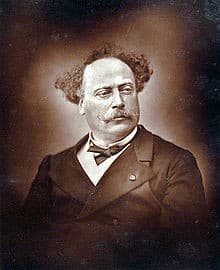
Alexandre Dumas, also known as Alexandre Dumas père, was a French novelist and playwright.
Similar books
- The Count of Monte Cristo
Alexandre Dumas
4.3 (746k) average on GoodreadsHistorical FictionFeatures themes of false imprisonment, revenge, and intricate plots, with a similar historical setting and dramatic flair.
- Girl with a Pearl Earring
Tracy Chevalier
3.9 (627k) average on GoodreadsHistorical FictionOffers a detailed look into 17th-century Dutch life, art, and social structures, with a focus on a specific historical context.
- Tulip Fever
Deborah Moggach
3.5 (10k) average on GoodreadsLiterary FictionDirectly explores the tulipomania phenomenon in 17th-century Amsterdam, involving passion, deception, and ambition.
- Ivanhoe
Walter Scott
3.8 (87k) average on GoodreadsHistorical FictionWhile both The Black Tulip and Ivanhoe are historical fiction, Dumas's novel focuses on a more specific and unusual historical phenomenon (tulip mania) rather than the broad medieval conflicts seen in Scott's work. Dumas also tends to prioritize a more direct, adventurous plot over Scott's more detailed historical exposition.
- To Kill a Mockingbird
Harper Lee
4.3 (4.5M) average on GoodreadsHistorical FictionIn the 1930s Jim Crow South, Harper Lee writes about racial injustice, moral growth, and the quiet courage of a lawyer father, Atticus Finch, as seen through his young daughter's eyes.
- The Great Gatsby
F. Scott Fitzgerald
3.9 (3.8M) average on GoodreadsHistorical FictionIn the opulent Roaring Twenties, a mysterious millionaire's lavish parties hide his desperate, tragic pursuit of a lost love, exposing the emptiness within the American Dream.



Enjoyed the summary?
A summary gives you the shape of the book. The book itself has the detail, the examples and the voice.
Find The Black Tulip on AmazonAs an Amazon Associate, BookBrief earns from qualifying purchases. How we're funded