

Synopsis
Covers the whole plot, including the ending.
- Difficulty
- Medium
- Pacing
- Moderate
- Mood
- Atmospheric, Romantic, Melancholy, Deceptive
- Read it if
- You enjoy historical romances with a strong sense of place and intricate plots involving deception and desire.
- Skip it if
- You prefer fast-paced thrillers or stories with unequivocally happy endings.
Tulip Fever Plot Summary
Covers the whole plot, including the ending.
A Commission for Immortality
In 1636 Amsterdam, 'tulip fever' grips the city, with fortunes made and lost in the flower market. Cornelis Sandvoort, a wealthy merchant, loves his younger wife, Sophia, an orphan he rescued. Despite their comfortable life, Cornelis wants an heir, a wish Sophia has not met. To secure their legacy, Cornelis commissions a grand portrait of himself and Sophia. He hires Jan van Loos, a talented but poor young painter, bringing him into their home on the Herengracht canal.
The Artist and the Muse
Jan van Loos begins painting the portrait. As he spends hours with Sophia, a strong and risky attraction grows between them. Sophia, feeling trapped by her rich life and the pressure to have a child, is drawn to Jan's artistic passion and youth. Their glances linger, their hands touch, and unspoken desires fill the studio. Maria, the Sandvoorts' maid, observes their growing closeness without understanding it, harboring her own secret feelings and frustrations.
Maria's Secret
While Sophia and Jan's romance grows, Maria, the maid, discovers she is pregnant. The father is Willem, a fishmonger, but Maria keeps her condition secret, fearing his reaction. Her pregnancy creates problems for her job and future. She notices Sophia and Jan's increasing closeness, and a desperate idea begins to form in her mind, driven by her own difficult situation and a wish to secure her child's future.
A Desperate Plan
Driven by their passion, Sophia and Jan plan to run away together. They need a lot of money to start a new life. Jan, caught in the tulip market craze, believes he can get rich by investing in a rare tulip bulb. Sophia, meanwhile, plans a risky scheme. Knowing Cornelis's strong desire for an heir, she will fake a pregnancy and then, after a false 'birth,' swap Maria's baby for her own, allowing her to escape with Jan while Cornelis believes he has an heir.
The Swap
The deception begins. Sophia fakes pregnancy, enduring morning sickness and padding her belly. As her 'due date' nears, Maria goes into labor. In a secret operation, Maria gives birth, aided by a midwife. The healthy baby girl is then secretly swapped for Sophia's supposed 'stillborn' infant. Cornelis is thrilled by his 'daughter's' arrival, believing his prayers are answered. Sophia prepares to escape, leaving Maria to grieve her child and think about her future.
Sophia's Escape and Jan's Folly
With the baby swap done, Sophia leaves the Sandvoort house at night, expecting to meet Jan and start their new life. However, Jan's plans for wealth have failed. The tulip market crashes, wiping out his fortune and leaving him with nothing. He cannot meet Sophia as planned, leaving her stranded and vulnerable, her escape plan collapsing into chaos and despair.
Maria's New Life
After Sophia's disappearance, Cornelis is heartbroken but finds comfort in the baby, whom he believes is his and Sophia's daughter. Maria, recovering from childbirth, becomes the baby's wet nurse, unknowingly nursing her own child. Through caring for the infant, a tender bond forms between Maria and Cornelis. Maria, initially desperate, grows attached to the child and, unexpectedly, to the kind, sad merchant.
Sophia's Desperation
Sophia, without money or a place to go after Jan's failure, faces hardship. Her dreams of escape shattered, she becomes a prostitute to survive in Amsterdam's harsh underworld. She lives in poverty, a stark contrast to her luxurious life as Cornelis Sandvoort's wife. Her journey shows the harsh results of her choices and society's unforgiving nature for women without protection or resources.
Jan's Regret and Redemption
Jan van Loos, ruined by the tulip crash and feeling guilty about Sophia, tries to rebuild his life. He attempts to paint again, but his artistic spirit is dimmed by his failures. He often visits the house where Sophia's portrait still hangs, a reminder of their forbidden love and his broken promises. He eventually finds some peace through his art, creating new works, but Sophia's memory and his past mistakes still follow him.
A New Family
Years pass. Cornelis, still unaware of the lie, grows fond of Maria and the child. Maria, having found stability and a unique love with Cornelis, raises her daughter, whom she now sees as part of their new, unconventional family. The secret of the child's true parents remains hidden, forming the base of their life together. They create a loving home, built on a lie, but filled with genuine affection and quiet understanding that goes beyond the initial deception.
Sophia's Return
Decades later, an older, changed Sophia returns to Amsterdam. Her life has been difficult and full of regret. She sometimes sees Cornelis and Maria, now a couple, raising the child she left behind. She watches from afar, recognizing her daughter but unable to reveal herself or reclaim her past. Her return is not for reconciliation, but perhaps for a final, silent acknowledgment of the life she chose and its results.
The Enduring Portrait
The portrait of Sophia, commissioned by Cornelis years ago, still hangs in the Sandvoort home. It observes the lives that unfolded around it. It shows Sophia at her most beautiful, a moment frozen in time just before her life changed forever. The painting is a strong symbol of ambition, deception, and the lasting power of art, holding the secrets and desires that shaped the destinies of Cornelis, Sophia, Jan, and Maria.
Tulip Fever Characters
Sophia Sandvoort
Protagonist
A beautiful, young wife trapped in a gilded cage, yearning for freedom and passion.
Sophia is a young woman of striking beauty, rescued from an orphanage by the wealthy Cornelis Sandvoort. She is initially grateful but soon feels stifled by her comfortable yet unfulfilling life and the pressure to produce an heir. She is impulsive and romantic, easily swayed by the attentions of Jan van Loos, leading her to make a series of desperate and morally compromising decisions. Her desire for passion and freedom ultimately leads to her downfall.
Relationships: Cornelis Sandvoort (Husband; initially loving and grateful, later feels trapped and ultimately betrays him.); Jan van Loos (Lover; intense, passionate affair that leads to her ruin.); Maria (Maid; uses her and her baby as a means to escape.)
Cornelis Sandvoort
Supporting
An aging, wealthy merchant deeply in love with his young wife and desperate for an heir.
Cornelis is a kind, generous, and somewhat naive man, devoted to Sophia. His wealth provides him with comfort, but his greatest desire is for a child to carry on his legacy. He is deeply hurt by Sophia's betrayal but finds solace and eventually a new kind of family with Maria and the child he believes to be his daughter. He represents the established order and the emotional vulnerability beneath a facade of prosperity.
Relationships: Sophia Sandvoort (Wife; deeply in love with her, but ultimately betrayed.); Maria (Maid/Wet Nurse/Later Partner; forms an unexpected bond and family with her.); The Baby (Believes to be his daughter; dotes on her.)
Jan van Loos
Supporting
A talented but struggling young painter, seduced by Sophia and the allure of wealth.
Jan is an ambitious and passionate artist, whose talent is undeniable but whose judgment is often clouded by emotion and the promise of quick riches. He falls deeply in love with Sophia, leading him to abandon his artistic integrity for a desperate plan. His involvement in the tulip market reflects his desire for instant wealth to secure his future with Sophia, ultimately leading to his ruin and the collapse of their plans. He is a romantic idealist who is ill-equipped for the harsh realities of life.
Relationships: Sophia Sandvoort (Lover; intense, illicit affair that ends in disaster.); Cornelis Sandvoort (Patron; unknowingly betrays his trust.)
Maria
Supporting
The Sandvoorts' maid, whose desperate situation leads her to become complicit in a grand deception.
Maria is a pragmatic and resilient young woman, burdened by her social status and an unplanned pregnancy. She is intelligent and observant, witnessing the illicit affair between Sophia and Jan. Her vulnerability and desire to protect her child lead her to participate in Sophia's scheme, but she ultimately finds an unexpected path to security and love with Cornelis. She is resourceful and adaptable, making the best of her difficult circumstances.
Relationships: Sophia Sandvoort (Mistress; used by Sophia in her deception.); Cornelis Sandvoort (Employer/Later Partner; forms a deep, unexpected bond and family.); Willem (Father of her child; briefly involved, but he is largely absent.); The Baby (Her biological daughter; raises her as her own.)
Willem
Mentioned
A fishmonger and the father of Maria's baby.
Willem is a minor character, a local fishmonger who has a brief affair with Maria, resulting in her pregnancy. He is largely absent from the main narrative, representing the social challenges faced by women like Maria in that era. His role is primarily to initiate Maria's pregnancy, which acts as a crucial catalyst for the plot's central deception.
Relationships: Maria (Lover; father of her child.)
The Midwife
Supporting
A practical and discreet woman who assists in the secret baby swap.
The midwife is a practical and somewhat cynical woman who is brought into Sophia and Maria's deception. She is motivated by money and the need to survive, making her complicit in the elaborate scheme to switch the babies. Her presence highlights the dark underbelly of society and the lengths to which people would go for personal gain or desperation. She is a crucial facilitator of the plot's central event.
Relationships: Sophia Sandvoort (Client; assists in her deception.); Maria (Client; assists in her secret birth.)
Tulip Fever Themes
Deception and Its Consequences
The novel centers on a key act of deception – Sophia's fake pregnancy and the baby swap – which affects everyone involved. Sophia's initial lie, born from a wish for freedom and love, leads to a life of prostitution and regret. Cornelis lives a happy life, unknowingly built on a lie, while Maria finds security through her part in the lie. This theme explores how lies, even small ones, can change destinies and create new realities, some tragic, some surprising.
“A lie, once told, becomes a life lived.”
The Illusion of Love vs. True Affection
The novel contrasts the intense, brief love between Sophia and Jan with the quieter, more lasting affection that grows between Maria and Cornelis. Sophia and Jan's love is based on physical attraction and a romantic ideal, eventually failing under pressure. In contrast, Maria and Cornelis's relationship, though starting with a lie, becomes a real bond of care, respect, and shared parenthood. This shows that true affection can come from unexpected places and often lasts longer than intense, but shallow, passion.
“He had wanted a child, and now he had one, and a woman who truly cared for him, in her own quiet way.”
Art, Beauty, and Desire
The portrait of Sophia is a main symbol, embodying themes of art, beauty, and desire. It is commissioned because Cornelis wants to immortalize his love and Sophia's beauty, but it starts Jan's desire for Sophia. The act of painting itself fuels their forbidden passion. The finished portrait, a frozen image of a woman about to make a life-changing decision, outlives the characters' ambitions and silently witnesses the truths and lies. It represents art's lasting power to capture human desires.
“The canvas glowed with her youth, her beauty, and the secret longing that only he could see.”
Social Class and Opportunity
The novel clearly shows 17th-century Amsterdam's strict social structures and how they shape opportunity and survival. Sophia, despite her beauty, is an orphan, dependent on Cornelis. Maria, as a maid, faces severe problems for an unplanned pregnancy, forcing her into a desperate act. Jan, though talented, struggles without support. The story shows how wealth and status offer protection and choices, while their absence forces people into desperate actions and limits their futures, highlighting the era's deep inequalities.
“In this city, a woman without a husband or a dowry was a leaf in the wind.”
The Fleeting Nature of Fortune (Tulip Fever)
The 'tulip fever' is a strong background and plot element, showing how quickly fortunes change and how greedy people can be. The speculative bubble, where a single tulip bulb could cost as much as a house, represents the irrationality of desire and how quickly wealth can be gained and lost. Jan van Loos's ruin in the tulip crash directly impacts Sophia's fate, showing how outside, unpredictable forces can destroy personal plans and dreams, leading to tragic results.
“The madness had swept through the city, and left ruin in its wake, like a plague.”
Plot Devices & Literary Techniques
The Portrait
A commissioned painting that acts as a catalyst for forbidden love and a silent witness to deception.
The portrait of Cornelis and Sophia, painted by Jan van Loos, is the central plot device. It brings Jan and Sophia together, sparking their illicit affair. The sittings provide the intimate space for their forbidden romance to flourish. Once completed, the portrait remains in the Sandvoort home, symbolically capturing Sophia at the moment of her decision and serving as a constant, silent reminder of the past and the secrets it holds. It represents the intersection of art, beauty, and human desire, and how art can both reflect and influence reality.
Tulip Mania (Tulip Fever)
A historical economic bubble that serves as both backdrop and direct cause of character's fortunes and misfortunes.
The historical phenomenon of 'tulip mania' in 17th-century Amsterdam is more than just a setting; it directly impacts the plot. Jan van Loos's decision to invest his and Sophia's potential escape money in tulip bulbs, hoping for a quick fortune, leads directly to his financial ruin when the market crashes. This event strands Sophia and shatters their plans, fundamentally altering the trajectory of their lives. It symbolizes the fleeting nature of wealth, human greed, and the unpredictable forces that can derail even the most carefully laid plans.
The Baby Swap
A central act of deception where Maria's newborn is exchanged for Sophia's 'stillborn' child.
The baby swap is the pivotal plot device that drives the entire narrative. It allows Sophia to escape her marriage, provides Cornelis with the heir he desperately desires, and gives Maria a path to security and a future for her child. This act of deception creates a new, unconventional family unit and sets into motion the long-term consequences for all characters. It is the ultimate manifestation of the theme of deception and illustrates the lengths to which individuals will go to achieve their desires or escape their circumstances.
The Orphanage Background
Sophia's and Maria's shared past in an orphanage, highlighting their vulnerability and lack of social standing.
Both Sophia and Maria come from orphanage backgrounds, a detail that subtly but significantly informs their characters and motivations. For Sophia, it underscores her initial gratitude towards Cornelis but also her underlying insecurity and desperation for a better life. For Maria, it highlights her precarious social position and the dire consequences of an unplanned pregnancy, making her willing to participate in the baby swap to secure her child's future. This shared past emphasizes their vulnerability in a society where status and family connections were paramount.
Tulip Fever Quotes
“It was as if the world was a great stage, and they were but players upon it, each with their entrances and exits, their moments of glory and their quiet disappearances.”
“Love, she thought, was like a tulip: beautiful, fleeting, and capable of driving men to madness.”
“Money was a phantom, a whisper on the wind, here one moment and gone the next, just like the scent of a rare bloom.”
“The greatest art, he believed, was not merely to copy life, but to imbue it with a spirit, a truth that transcended the visible.”
“To be truly free, one had to shed the expectations of others, and embrace the wild, untamed garden of one's own desires.”
“A secret shared was a burden halved, but a secret kept was a seed of poison in the heart.”
“Beauty was a dangerous thing, especially when it promised more than it could ever deliver.”
“The city itself was a masterpiece, a canvas of canals and gabled houses, each brick telling a story of ambition and trade.”
“Hope was a fragile thing, easily crushed, but also incredibly resilient, like a tulip bulb waiting for spring.”
“Every lie, no matter how small, created a ripple, distorting the truth until it was unrecognizable.”
“Marriage, she had learned, was often a performance, a delicate dance of expectations and veiled disappointments.”
“The future was an unpainted canvas, full of possibilities, but also terrifying in its blankness.”
“Passion, when unleashed, could burn down everything in its path, leaving only ashes and regret.”
“To truly see someone, he realized, was not just to look at their outward form, but to peer into the turbulent waters of their soul.”
Quiz
10 questions on the plot and the characters. Each answer comes with a short explanation.
Question 1
What commodity has seized the populace of Amsterdam in the 1630s, as described in the book?
- Spices
- Silk
- Tulips
- Diamonds
Show answer
C. Tulips The book is titled 'Tulip Fever' and explicitly states 'tulipomania has seized the populace.'
Question 2
What is the wealthy merchant Cornelis Sandvoort's primary desire from his young wife, Sophia?
- To inherit her family's fortune
- To secure a political alliance
- To produce an heir
- To gain social standing
Show answer
C. To produce an heir The description states, 'Cornelis yearns for an heir, but so far he and Sophia have failed to produce one.'
Question 3
Who is the talented young painter commissioned by Cornelis Sandvoort to paint a portrait of him and Sophia?
- Rembrandt van Rijn
- Jan van Loos
- Johannes Vermeer
- Frans Hals
Show answer
B. Jan van Loos The text specifies, 'he commissions a portrait of them both by the talented young painter Jan van Loos.'
Question 4
What develops between Sophia and Jan van Loos during the painting of the portrait?
- A professional rivalry
- A deep friendship
- A slow passion
- An artistic collaboration
Show answer
C. A slow passion The summary explicitly states, 'a slow passion begins to burn between the beautiful young wife and the talented artist.'
Question 5
What is Cornelis Sandvoort's motivation for commissioning the portrait, besides capturing Sophia's beauty?
- To flaunt his wealth to his peers
- To create a lasting legacy for his family name
- As a bid for immortality
- To encourage Sophia's interest in art
Show answer
C. As a bid for immortality The text states, 'In a bid for immortality, he commissions a portrait of them both.'
Question 6
The unfolding of the portrait is paralleled with what other development among the household's inhabitants?
- The discovery of new tulip varieties
- A slow dance of ambitions, desires, and dreams leading to deception
- The planning of a grand social event
- The creation of new culinary delights
Show answer
B. A slow dance of ambitions, desires, and dreams leading to deception The description notes, 'As the portrait unfolds, so a slow dance is begun among the household's inhabitants. Ambitions, desires, and dreams breed a grand deception.'
Question 7
Which of the following themes is NOT explicitly mentioned as being central to the story?
- Lust
- Vengeance
- Greed
- Deception
Show answer
B. Vengeance The introduction lists 'art, beauty, lust, greed, deception and retribution' as central themes. Vengeance is not specifically mentioned, though retribution is, which is a related but distinct concept.
Question 8
What is the ultimate consequence of the multiplying lies and grand deception within the household?
- A quiet resolution and forgiveness
- A thrilling and tragic climax
- The dissolution of the tulip market
- A new artistic movement
Show answer
B. A thrilling and tragic climax The summary concludes, 'as the lies multiply, events move toward a thrilling and tragic climax.'
Question 9
How does Cornelis Sandvoort view Sophia, according to the description?
- As a business partner
- As a prize he desires, the woman who stirs his soul
- As a necessary arrangement for social standing
- As an artistic muse
Show answer
B. As a prize he desires, the woman who stirs his soul The text states, 'But for wealthy merchant Cornelis Sandvoort, it is his young and beautiful wife, Sophia, who stirs his soul. She is the prize he desires.'
Question 10
What kind of setting is 'Tulip Fever' primarily known for vividly evoking?
- Ancient Rome and its empires
- 1630s Amsterdam and its passions
- Victorian London's industrial era
- Renaissance Florence's artistic boom
Show answer
B. 1630s Amsterdam and its passions The final sentence highlights this: 'Seldom has a novel so vividly evoked a time, a place, and a passion,' referring to '1630s Amsterdam' mentioned earlier.
Tulip Fever FAQ
What is the central conflict in 'Tulip Fever'?
The central conflict revolves around the forbidden romance between Sophia, the young wife of wealthy merchant Cornelis Sandvoort, and Jan van Loos, the artist commissioned to paint their portrait. This secret affair is set against the backdrop of the 'tulipomania' craze in 1630s Amsterdam, which fuels many of the characters' desperate schemes and desires.
Who are the main characters and what are their primary motivations?
Sophia is motivated by a desire for passion and escape from her sterile marriage to Cornelis. Jan van Loos seeks artistic recognition and is captivated by Sophia's beauty. Cornelis yearns for an heir and a legacy, valuing Sophia as a beautiful possession. Maria, the maid, is driven by love for her deceased fiancé and a desperate need for money to secure her future.
How does the 'tulipomania' influence the plot?
The tulipomania creates an atmosphere of frenzied speculation and risk-taking, making characters susceptible to grand deceptions. It provides the financial mechanism for Cornelis's initial wealth and, more importantly, becomes the vehicle for Sophia and Jan's plan to escape, as they intend to sell a valuable tulip bulb to fund their new life. It also fuels Maria's desperate gamble.
What is the significance of the portrait being painted by Jan van Loos?
The portrait is the catalyst for the entire affair, bringing Jan and Sophia into intimate proximity. It becomes a symbol of Cornelis's desire for immortality and possession, but ironically, it also captures the burgeoning passion between the artist and his subject, ultimately serving as a silent witness to their betrayal.
What is the 'grand deception' mentioned in the synopsis?
The grand deception involves Sophia faking her own death and swapping places with the maid, Maria, who pretends to be Sophia. This elaborate scheme is orchestrated so that Sophia can escape with Jan van Loos, while Maria, who is pregnant, can provide Cornelis with the heir he desperately desires and secure a comfortable life for herself.
What became of the valuable 'Admiral van Eyck' tulip bulb?
The 'Admiral van Eyck' tulip bulb, which was intended to fund Sophia and Jan's escape, is ultimately lost in a chaotic street brawl and never recovered. This loss thwarts their plans, leaving them without the means to build a new life together and forcing them to confront the consequences of their actions.
How does the character of Maria, the maid, contribute to the plot twist?
Maria, who is secretly pregnant by her deceased fiancé, plays a pivotal role by agreeing to impersonate Sophia after Sophia fakes her death. This allows Maria to provide Cornelis with an heir, fulfilling his deepest desire, while securing a future for herself and her child, thus enabling the central deception to unfold.
Are there any subtle clues about Sophia's true feelings for Cornelis early in the story?
Early in the story, Sophia's interactions with Cornelis, though polite, often lack genuine warmth or intimacy. Her responses to his affectionate gestures can seem somewhat detached, hinting at an underlying dissatisfaction or emotional void that makes her susceptible to Jan's passionate advances. Her longing for something more is subtly conveyed.
What is the significance of the parrot in Cornelis's household?
The parrot, a gift from Cornelis to Sophia, symbolizes Sophia's caged existence within her gilded cage. It mimics phrases, reflecting the superficiality of their household and the lack of genuine communication. Its eventual escape or disappearance could symbolize Sophia's own yearning for freedom, even if she doesn't achieve it.
How does Sophia's background as an orphan influence her choices and vulnerabilities?
Sophia's orphan background makes her deeply vulnerable and reliant on others for security, initially leading her to marry Cornelis for stability. This past also contributes to her longing for genuine connection and passion, as she may have felt emotionally unfulfilled, making her susceptible to Jan's romantic overtures and the promise of a different life.
Analyze Jan van Loos's artistic ambition and its relation to his romantic pursuit.
Jan's artistic ambition is deeply intertwined with his romantic pursuit of Sophia. He sees her as a muse, a source of inspiration that could elevate his art beyond mere portraiture. His desire for her beauty and passion fuels his creativity, but also blurs the lines between professional duty and personal yearning, leading him to make reckless choices.
How does Cornelis's desire for an heir shape his perception of Sophia and his reactions to events?
Cornelis's overwhelming desire for an heir reduces Sophia, in his mind, to a vessel for reproduction, rather than a partner. This singular focus makes him blind to her unhappiness and ultimately leads him to accept Maria's child as his own, demonstrating how his deep-seated need for legacy overrides his perception of truth and reality.
Explore the psychological impact of deception on the characters involved.
The deception creates immense psychological strain. Sophia experiences guilt and fear of exposure, while Jan struggles with the moral implications of their actions. Maria lives in constant anxiety of her secret being revealed. Cornelis, though initially deceived, eventually faces a profound betrayal, leading to a complex mix of grief, rage, and eventual acceptance of his 'new' reality.
Is the ending of 'Tulip Fever' ultimately tragic or does it offer a form of redemption for any character?
The ending is arguably tragic for Sophia and Jan, as their grand plan fails, and they are left without the means to be together, forced to live separate, unfulfilled lives. However, for Maria, it offers a form of redemption and security, as she successfully secures a stable future for herself and her child, becoming the 'lady of the house' in Sophia's place.
How does the novel critique societal expectations for women in 17th-century Amsterdam?
The novel critiques how women like Sophia were often treated as possessions or commodities, valued for their beauty, social status, or ability to bear heirs. Sophia's rebellion against her arranged marriage and her yearning for passion highlight the restrictive roles imposed on women, who had limited agency to pursue their own desires or destinies.
Could Cornelis be seen as a sympathetic character despite being deceived?
While Cornelis is deceived, the novel invites some sympathy for him. His deep longing for an heir and his genuine, if possessive, love for Sophia make him vulnerable. His eventual acceptance of Maria's child, believing it to be his own, reveals a profound need for family and legacy, making his character more complex than a simple villain.
What is the symbolic meaning of the 'tulip fever' itself, beyond the literal plot device?
Beyond a literal plot device, 'tulip fever' symbolizes the irrationality and intoxicating power of desire, whether for wealth, beauty, or love. It represents the human tendency to gamble everything for fleeting passions or perceived gains, often leading to chaos and ruin, mirroring the characters' own reckless pursuits.
Does the novel suggest that true love can overcome all obstacles, or does it present a more cynical view?
The novel presents a more cynical view. While Sophia and Jan's love is passionate, it ultimately fails to overcome practical obstacles like financial ruin and societal judgment. Their grand deception unravels, leaving them separated and unfulfilled, suggesting that romantic idealism can be crushed by the harsh realities of life and the consequences of one's actions.
About the author

Deborah Moggach is a British author known for her witty and insightful novels that often explore themes of relationships and societal change. Her most famous works include the bestselling "The Best Exotic Marigold Hotel," which inspired the successful film, and the historical novel "Tulip Fever." Moggach's writing is characterized by its sharp dialogue and keen observation of human nature.
Similar books
- Girl with a Pearl Earring
Tracy Chevalier
3.9 (627k) average on GoodreadsHistorical FictionExplores the relationship between an artist and his muse in historical Holland, focusing on art, desire, and social constraints.
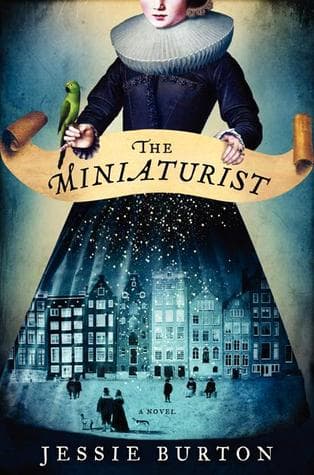
- The Miniaturist
Jessie Burton
3.6 (115k) average on GoodreadsFantasySet in 17th-century Amsterdam, features a young woman navigating a complex and secretive household amidst societal expectations.
- The Goldfinch
Donna Tartt
3.9 (720k) average on GoodreadsLiterary FictionFeatures art as a central theme, exploring its power, beauty, and the complex lives intertwined with it.
- The Old Man and the Sea
Ernest Hemingway
3.8 (831k) average on GoodreadsLiterary FictionA Cuban fisherman's long struggle with a giant marlin becomes a story of endurance and dignity, now retold for young adults with illustrations, phonetic guides, and writing prompts in Traditional Chinese.
- One Hundred Years of Solitude
Gabriel García Márquez
4.1 (753k) average on GoodreadsLiterary FictionThrough the multi-generational story of the Buendía family, a mythical town deals with the repeating patterns of time, love, and solitude, as the extraordinary mixes with the ordinary.
- Little Fires Everywhere
Celeste Ng
4.1 (713k) average on GoodreadsLiterary FictionIn Shaker Heights, an artist and her daughter move in, and their free-spirited lives clash with a rule-bound matriarch, revealing hidden conflicts beneath a perfect surface.





Enjoyed the summary?
A summary gives you the shape of the book. The book itself has the detail, the examples and the voice.
Find Tulip Fever on AmazonAs an Amazon Associate, BookBrief earns from qualifying purchases. How we're funded