
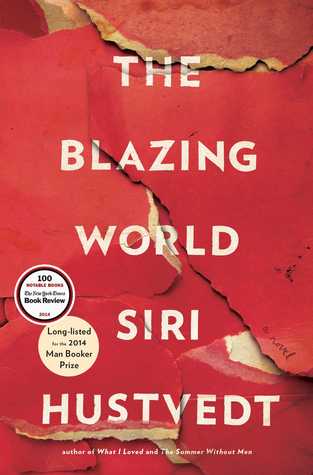
Synopsis
Covers the whole plot, including the ending.
- Difficulty
- Hard
- Pacing
- Moderate
- Mood
- Intellectual, Provocative, Philosophical, Introspective, Mysterious
- Read it if
- You enjoy intellectually stimulating literary fiction that explores themes of gender, art, identity, and philosophy through a complex, multi-voiced narrative.
- Skip it if
- You prefer straightforward plots and narratives, or are looking for a light, easy read.
The Blazing World Plot Summary
Covers the whole plot, including the ending.
The Editor's Introduction: Harriet Burden's Legacy
Professor I.V. Hess, an art historian and editor, introduces Harriet Burden, a controversial and largely unrecognized artist who died in 2007. Hess explains that this book compiles Burden's notebooks, interviews, and documents to explain her artistic experiment, 'The Blazing World.' Burden, frustrated by gender bias in the art world, created three male artist personas to present her work. Hess describes the project as an exploration of identity, perception, and how art is validated, setting up the complex story. The introduction establishes the book's structure, where the reader will piece together Burden's story from many, often conflicting, views.
Anton Tish: The First Mask
Harriet Burden's first male persona is Anton Tish, a reclusive artist making grotesque sculptures from found objects, often using organic materials. Burden's notebooks detail her careful creation of Tish's background and art style, designed to be 'masculine' and confrontational. Tish's exhibition, 'The Suffocation Rooms,' receives critical acclaim, praised for its raw power and intellectual depth – recognition Burden herself never got. Various commentators, including critics and gallerists, discuss Tish's work, often projecting their own biases onto the 'artist.' Burden observes, documenting the difference in reception between her own work and Tish's, confirming her idea about gendered perception in art.
Phineas Q. Eldridge: The Philosopher Artist
Harriet's second persona is Phineas Q. Eldridge, a conceptual artist whose work is rooted in philosophy, language, and semiotics. Eldridge's exhibition, 'The Museum of Modern Enigmas,' features installations that challenge viewers to engage with complex ideas, often through text and abstract forms. Unlike Tish, Eldridge is an intellectual, a detached observer. Again, the art world embraces Eldridge, attributing deep meaning and innovation to his creations, which are, in fact, Harriet's. Burden's notebooks show her frustration and amusement as critics analyze Eldridge's 'mind,' often missing the subtle critiques in the art. This experiment further confirms Burden's belief that the perceived gender of the artist greatly influences how art is interpreted and valued.
Bruno Kleinfeld: The Charismatic Performer
The third and most performative persona is Bruno Kleinfeld, an enigmatic and charismatic artist whose work focuses on the male gaze and the vulnerability of the female body, often through performance and photography. Kleinfeld's exhibition, 'The Mirror of Ligeia,' features unsettling, often erotic, self-portraits of a fictional female model, implicitly critiquing objectification in art history. This persona allows Harriet to explore themes of desire and power dynamics more directly. Burden's journals document her complex emotional connection to this persona, as well as the reactions of critics who are captivated by Kleinfeld's 'daring' and 'provocative' approach. Kleinfeld's success further shows the art world's readiness to embrace controversial themes when presented through a male artist.
The Unmasking: Harriet's Revelation
After the success of all three male personas, Harriet Burden decides to unmask herself. She publicly reveals that Anton Tish, Phineas Q. Eldridge, and Bruno Kleinfeld were all her creations, part of her experiment, 'The Blazing World.' The art world reacts with shock, outrage, and reluctant admiration. Many critics feel tricked, some dismiss her work, while others, particularly women, see her as a genius. Burden's notebooks capture her satisfaction at exposing the biases, but also her disappointment that many still refuse to acknowledge her initial point. The unmasking becomes a moment that forces a re-evaluation of her work and the structures of artistic judgment.
The Rune Connection: A New Collaboration
After her unmasking, Harriet Burden's life changes when she becomes involved with the artist, Rune. Rune, initially skeptical of her experiment, becomes fascinated by Harriet and her intellect. Their relationship quickly becomes an intense intellectual and emotional partnership, blurring the lines between collaboration, rivalry, and obsession. Harriet's journals detail their shared artistic vision, particularly a project involving a 'mirror house' or 'mirror box' concept. However, a darker side appears as Rune's personality becomes increasingly manipulative and possessive. The collaboration becomes a psychological battleground, with Harriet struggling to maintain her artistic independence and personal boundaries against Rune's domineering influence.
The Fourth Man: Rune's Exhibition
The result of Harriet and Rune's collaboration is an exhibition credited only to Rune, featuring installations that resemble Harriet's themes and aesthetic, particularly her 'mirror box' concept. This exhibition, often called 'The Fourth Man' or 'The Mirror Box,' causes new controversy. While some critics praise Rune's genius, others, especially those aware of Harriet's earlier work and her relationship with Rune, suspect intellectual theft. Harriet's notebooks express her deep betrayal and anger, as she believes Rune has taken her ideas and presented them as his own, further erasing her artistic contributions even after her unmasking. This event echoes the gender bias she tried to expose.
Rune's Bizarre Death
The already strained relationship between Harriet Burden and Rune takes a tragic and strange turn with Rune's sudden death. The circumstances of his death are unusual and immediately raise questions, though no cause is publicly established. Harriet's accounts, often fragmented and emotional, hint at a final, intense confrontation or a psychological game pushed to its limits. Rune's death casts a long shadow over Harriet, fueling speculation and suspicion. Some whisper that she was responsible, directly or indirectly, while others see her as a victim of Rune's manipulative nature. This event complicates the story, adding mystery and potential criminality to Harriet's complex legacy.
Posthumous Reflections and Doubts
Years after Harriet Burden's death, the debate about her work, her experiment, and her relationship with Rune continues. Professor Hess includes interviews and essays from various people – critics, friends, family members, and medical professionals – each offering their own interpretation of Harriet's motives, her sanity, and the truth behind Rune's death. Some defend Harriet as a brilliant, misunderstood artist who bravely exposed systemic biases. Others dismiss her as narcissistic, delusional, or even dangerous. The conflicting accounts show how subjective truth and memory are, especially when filtered through personal agendas and societal prejudices. The novel leaves many questions unanswered, making the reader grapple with the ambiguities.
Harriet's Philosophical Musings
Throughout the book, Harriet Burden's personal notebooks provide the most intimate insights into her mind. These entries are philosophical meditations on art, identity, gender, perception, and the nature of reality. Harriet grapples with questions of authorship, the male gaze, the body, and the subjective experience of consciousness. Her writings show her intellectual skill, vulnerability, anger, and deep sense of isolation as an artist. These sections are important for understanding her motivations behind 'The Blazing World' experiment and her internal struggles, offering a contrast to the external opinions and interpretations presented by others.
The Blazing World Characters
Harriet Burden
Protagonist
An ambitious and brilliant artist who challenges gender bias in the art world.
Harriet Burden is the central figure of 'The Blazing World,' a highly intelligent and fiercely independent artist in her late fifties. Frustrated by decades of being overlooked and undervalued due to her gender, she devises 'The Blazing World' experiment: creating three male artist personas to present her work. She is deeply philosophical, intensely analytical, and driven by a need to expose societal biases. Harriet is complex, capable of both profound insight and intense emotional vulnerability, particularly in her relationship with Rune. She is a meticulous planner, a keen observer of human behavior, and ultimately, a tragic figure whose brilliance is only fully recognized posthumously, and even then, debated.
Relationships: I.V. Hess (Posthumous editor and interpreter of her work); Maisie Burden (Daughter, often critical but also protective); Felix Lord (Loyal gallerist and friend); Bruno Kleinfeld (Harriet's final male persona, with whom she has a complex, almost possessive, relationship); Rune (Intense, manipulative artistic collaborator and lover)
I.V. Hess
Supporting
The editor and art historian compiling Harriet Burden's legacy.
Professor I.V. Hess is the fictional editor of the collected texts that comprise 'The Blazing World.' He acts as the primary narrator, introducing Harriet Burden and her experiment, and providing contextual information. Hess is presented as a scholarly, somewhat detached figure, striving for objectivity while acknowledging his own fascination with Burden. He compiles and juxtaposes various accounts—Harriet's notebooks, interviews, and essays—allowing the reader to piece together the narrative. His role is crucial in shaping how Harriet's story is presented and interpreted, though he often highlights the ambiguities rather than resolving them, embodying the novel's metafictional approach.
Relationships: Harriet Burden (Posthumous editor and interpreter of her work)
Rune
Antagonist/Supporting
An acclaimed, enigmatic artist who becomes Harriet's lover and rival.
Rune is a celebrated, charismatic, and deeply manipulative artist who enters Harriet's life after her unmasking. Initially intrigued by her experiment, he develops an intense and often destructive relationship with Harriet, blurring the lines between collaboration, rivalry, and psychological warfare. Rune is portrayed as both brilliant and predatory, a master of intellectual games and emotional manipulation. He becomes central to the controversy surrounding Harriet's 'Fourth Man' project and his own mysterious death. His presence in Harriet's life represents the ultimate challenge to her artistic autonomy and personal boundaries, embodying the very power dynamics she sought to expose.
Relationships: Harriet Burden (Intense, manipulative artistic collaborator and lover)
Maisie Burden
Supporting
Harriet's daughter, who offers a critical but loving perspective.
Maisie Burden is Harriet's daughter, whose contributions to Hess's compilation offer a more personal, often critical, but ultimately loving perspective on her mother. Maisie experienced Harriet's artistic journey and personal struggles firsthand, giving her a unique insight into her mother's motivations and eccentricities. She is candid about Harriet's flaws and the impact of her single-minded artistic pursuit on their family life. Her accounts provide a vital counterpoint to the more academic or artistic interpretations, grounding Harriet's grand experiment in the realities of human relationships and personal sacrifice. Maisie represents the collateral emotional impact of Harriet's ambition.
Relationships: Harriet Burden (Daughter, often critical but also protective)
Felix Lord
Supporting
Harriet's loyal gallerist and long-time friend.
Felix Lord is Harriet Burden's long-time gallerist and one of her most steadfast supporters. Despite Harriet's initial lack of commercial success, Felix believes in her artistic vision and remains loyal throughout her career, including her 'Blazing World' experiment. He provides practical support and a consistent, albeit sometimes exasperated, friendship. His perspective in Hess's compilation offers an insider's view of the art world's reactions to Harriet's various personas and her eventual unmasking. Felix represents a rare voice of genuine appreciation for Harriet's talent, unclouded by the biases she sought to expose.
Relationships: Harriet Burden (Loyal gallerist and friend)
Anton Tish
Mentioned
Harriet's first male artistic persona, known for visceral sculptures.
Anton Tish is the first of Harriet Burden's three male artist personas. Presented as a reclusive, troubled sculptor, Tish creates raw, grotesque works from found objects, often incorporating organic materials. His art is designed to be perceived as undeniably 'masculine' and confrontational. Tish's exhibition, 'The Suffocation Rooms,' garners significant critical acclaim, proving Harriet's hypothesis about gendered perception in the art world. Though not a 'real' character, his creation and reception are central to the novel's exploration of identity and artistic validation.
Relationships: Harriet Burden (Creator and manipulator of this persona)
Phineas Q. Eldridge
Mentioned
Harriet's second male persona, a conceptual artist focused on language.
Phineas Q. Eldridge is Harriet Burden's second male artistic persona. He is conceived as a highly intellectual, conceptual artist whose work explores philosophy, language, and semiotics. Eldridge's exhibition, 'The Museum of Modern Enigmas,' challenges viewers with complex theoretical ideas, often through text-based installations. His perceived intellectual depth and detached approach are praised by critics, further reinforcing Harriet's observations about the art world's biases. Like Tish, Eldridge is a construct, a tool for Harriet to demonstrate how perception of an artist's gender influences the interpretation and value assigned to their work.
Relationships: Harriet Burden (Creator and manipulator of this persona)
Bruno Kleinfeld
Supporting
Harriet's third and most performative male persona, exploring the male gaze.
Bruno Kleinfeld is Harriet Burden's third and most complex male artistic persona. He is presented as a charismatic performance artist and photographer, whose work often focuses on the male gaze, female objectification, and the body. Kleinfeld's exhibition, 'The Mirror of Ligeia,' features unsettling self-portraits of a fictional female model. This persona allows Harriet to delve into themes of desire, power, and vulnerability more directly. Unlike the others, Harriet admits to a deeper, almost intimate connection with Kleinfeld, suggesting a blurring of lines between creator and creation. He is crucial in demonstrating how even provocative work gains different traction when attributed to a man.
Relationships: Harriet Burden (Creator and manipulator of this persona, with a complex, almost possessive, relationship)
Osvaldo
Mentioned
Harriet's late husband, a renowned art dealer.
Osvaldo was Harriet Burden's late husband, a highly successful and respected art dealer. His shadow looms large over Harriet's life and career. While he provided her with financial security and access to the art world, his own prominence may have inadvertently contributed to Harriet being overlooked as an artist in her own right. His death marks a turning point for Harriet, freeing her to embark on 'The Blazing World' experiment without his potential influence or judgment. References to Osvaldo often highlight the privileges and constraints of Harriet's life within the art establishment.
Relationships: Harriet Burden (Late husband)
The Blazing World Themes
Gender Bias and Artistic Recognition
The novel's central theme, explored through Harriet Burden's 'Blazing World' experiment, is gender bias in the art world. Harriet shows how an artist's perceived gender greatly influences how their work is received, interpreted, and valued. Her three male personas—Anton Tish, Phineas Q. Eldridge, and Bruno Kleinfeld—receive critical acclaim and intellectual validation that Harriet, despite creating the same works, never did. This theme is clear in the contrasting reviews of the 'male' exhibitions versus the initial dismissal of Harriet's own art, and the backlash and re-evaluation after her unmasking. The novel argues that the 'male gaze' affects not only visual representation but also the structures of artistic judgment.
“What is seen and what is invisible in a work of art depends on the sex of the beholder.”
Identity and Authenticity
The novel questions the nature of identity, both personal and artistic. Harriet's creation of three male personas makes one consider whether art is an extension of the artist's true self or a performance. The conflicting accounts from various characters about Harriet herself—is she a genius, a madwoman, a manipulator, a victim?—further complicate the idea of a single, authentic identity. The blending of Harriet and her personas, especially with Bruno Kleinfeld, and her complex involvement with Rune, challenge the idea of individual authorship and a fixed self. The book suggests that identity is fluid, constructed, and heavily influenced by external perception.
“I was not one man, but three. And I was not a man at all.”
The Nature of Perception and Reality
Siri Hustvedt explores how individual and collective perception shapes reality, especially in art. The novel presents a story with many voices, where multiple, often contradictory, viewpoints on Harriet, her art, and Rune's death are offered. The reader must piece together a 'truth' that remains unclear, showing how unreliable memory and testimony are. The success of Harriet's male personas demonstrates how a simple change in attribution can drastically alter perception. The 'mirror box' concept, central to Harriet and Rune's collaboration, symbolizes the reflective and often distorting nature of perception, where what we see is often a projection of ourselves.
“There are no facts, only interpretations. And some interpretations are more powerful than others.”
Power Dynamics in Art and Relationships
The novel exposes the power dynamics in the art world and in personal relationships. Harriet's experiment challenges the patriarchal power structures that dictate artistic recognition. Her struggle against being 'invisible' as a female artist, and her eventual unmasking, highlight the power of attribution and reputation. The intense, often toxic, relationship between Harriet and Rune exemplifies power struggles, as Rune tries to control and even take Harriet's intellectual and emotional space. The novel shows how power, whether institutional or personal, can silence, distort, and erase individual voices.
“He didn't want a collaborator. He wanted a mirror that would reflect him back as a god.”
Art as a Psychological Experiment
Harriet Burden's 'Blazing World' project is a psychological experiment, not just an artistic one. She carefully designs her personas and observes the reactions of the art world, treating it as a study of gender bias and perception. Her notebooks are filled with analyses of how critics and viewers respond to her 'male' works versus her 'female' works. This theme extends to her relationship with Rune, which becomes a dangerous psychological game, pushing her to her mental and emotional limits. The novel suggests that art can be a powerful tool for exploring human psychology and societal constructs.
“My experiment was not just about art; it was about the mind, about how we see and fail to see.”
Plot Devices & Literary Techniques
Polyphonic Narrative
The story is told through multiple, often conflicting, voices and documents.
The novel's structure is a collection of texts, including Harriet Burden's notebooks, interviews, essays, and critical reviews, compiled by Professor I.V. Hess. This polyphonic approach means there is no single, omniscient narrator, but rather a mosaic of perspectives. This device serves to highlight the subjective nature of truth and memory, forcing the reader to actively interpret and synthesize information. It also mirrors the theme of fragmented identity, as Harriet's character is pieced together from various, often contradictory, accounts, creating a complex and ambiguous portrait that resists easy categorization.
Metafiction
The novel self-consciously draws attention to its own fictionality and construction.
The entire premise of 'The Blazing World' is metafictional: a fictional scholar (I.V. Hess) compiles a fictional artist's (Harriet Burden's) fictional writings and interviews about her fictional art experiment. This device blurs the lines between reality and fiction, prompting the reader to question the authenticity of the narrative and the very act of storytelling. It also allows Hustvedt to comment on the mechanisms of literary and artistic creation, criticism, and the construction of posthumous legacies. The novel frequently references real-world philosophers and artists, further grounding its fictional world in intellectual discourse.
The Unreliable Narrator (and Multiple Unreliable Narrators)
Characters' accounts are colored by their biases, agendas, and limited perspectives.
While Professor Hess attempts objectivity, every voice in the novel—Harriet herself, her daughter Maisie, Felix Lord, various critics, and even Rune—offers an inherently subjective and often self-serving account. Harriet's notebooks, while intimate, are filtered through her own emotional states and artistic agenda. Other characters' recollections are shaped by their relationships with Harriet, their professional standing, or their personal biases. This device creates ambiguity around key events, particularly Rune's death, and challenges the reader to discern 'truth' from a cacophony of subjective interpretations, reinforcing the novel's themes of perception and the construction of reality.
The Art-as-Experiment Motif
Harriet's artistic endeavor is framed as a scientific or psychological study.
Harriet Burden's 'Blazing World' project is explicitly presented as an experiment, complete with a hypothesis (gender bias in the art world), methodology (creating male personas), and observed results (disparate critical reception). Her notebooks often read like scientific observations, documenting reactions and analyzing data. This motif elevates art beyond mere aesthetics, positioning it as a tool for intellectual inquiry and social critique. It also underscores Harriet's intellectual rigor and her desire to prove her point with empirical evidence, even if the 'evidence' is subjective artistic reception, making her a unique figure in the art world.
The Blazing World Quotes
“The world is not as solid as you think it is. It's more like a dream, a painting, a story.”
“Art is a way of understanding the world, not just reflecting it.”
“Every act of creation is also an act of destruction.”
“To be seen is to be judged, and to be judged is to be diminished.”
“The meaning of a work of art is not in the work itself, but in the eye of the beholder.”
“Memory is not a camera; it’s a storyteller.”
“The self is a fiction, but a necessary one.”
“We are all made of stories, and we tell ourselves stories to live.”
“The greatest freedom is the freedom to be nobody.”
“To be an artist is to live with doubt, to wrestle with it every day.”
“The world is full of ghosts, the ghosts of our own making.”
“The space between people is where all the interesting things happen.”
“Madness is often just a different way of seeing.”
“The body remembers what the mind forgets.”
Quiz
10 questions on the plot and the characters. Each answer comes with a short explanation.
Question 1
What is the primary artistic experiment Harriet Burden undertakes to challenge the art world?
- She creates art using only found objects from the street.
- She publishes an anonymous manifesto criticizing art critics.
- She conceals her female identity behind three male artists.
- She establishes a new art gallery solely for female artists.
Show answer
C. She conceals her female identity behind three male artists. Harriet Burden's central experiment involves presenting her art under the guise of three distinct male artists to see how it's received differently.
Question 2
How is 'The Blazing World' primarily presented to the reader?
- As a straightforward chronological biography of Harriet Burden.
- As a collection of texts, including Burden's notebooks and conflicting accounts from others, edited by a scholar.
- As a fictionalized interview series with Harriet Burden's contemporaries.
- As a single, continuous narrative told from Harriet's first-person perspective.
Show answer
B. As a collection of texts, including Burden's notebooks and conflicting accounts from others, edited by a scholar. The novel's structure is polyphonic, presented as an edited collection of various documents, giving multiple perspectives on Harriet's life and work.
Question 3
What is the ultimate fate of the acclaimed artist Rune, who was involved with Harriet Burden?
- He moves to another country and continues his art career.
- He disappears without a trace, leaving his work unfinished.
- He dies under bizarre circumstances following a psychological game with Harriet.
- He has a public falling out with Harriet and denounces her work.
Show answer
C. He dies under bizarre circumstances following a psychological game with Harriet. According to Burden's journals, her charged psychological game with Rune ended with his 'bizarre death.'
Question 4
What is a central theme explored through Harriet Burden's experiment with male fronts?
- The inherent superiority of male artistic expression.
- The impact of gender prejudice, money, and fame on artistic reception.
- The importance of artistic anonymity for true creative freedom.
- The inevitable decline of traditional art forms in the modern era.
Show answer
B. The impact of gender prejudice, money, and fame on artistic reception. The novel explicitly addresses 'the shaping influences of prejudice, money, fame, and desire on what we see in one another,' particularly in the context of art and gender.
Question 5
Even after Harriet reveals herself as the artist behind the male fronts, what specific exhibition do some still doubt she is responsible for?
- The first exhibition, 'The Suffragette's Scream.'
- The exhibition initially credited to the acclaimed artist Rune.
- The retrospective of her own officially recognized work.
- The group show featuring all three male fronts together.
Show answer
B. The exhibition initially credited to the acclaimed artist Rune. The text states that 'there are those who doubt she is responsible for the last exhibition, initially credited to the acclaimed artist Rune.'
Question 6
Who introduces and edits the collection of texts that comprise 'The Blazing World'?
- Harriet Burden herself, posthumously.
- One of the three male artists Harriet created.
- A scholar, years after Harriet Burden's death.
- Rune, before his bizarre death.
Show answer
C. A scholar, years after Harriet Burden's death. The book is 'edited and introduced by a scholar years after the artist's death,' providing a framing device for the narrative.
Question 7
What kind of game do Harriet Burden and Rune become locked in, according to Burden's journals?
- A collaborative artistic competition.
- A charged and dangerous psychological game.
- A rivalry over gallery representation.
- A debate about the future of abstract art.
Show answer
B. A charged and dangerous psychological game. Burden's journals describe her and Rune being 'locked in a charged and dangerous psychological game' that led to his death.
Question 8
The novel's title, 'The Blazing World,' likely alludes to a 17th-century utopian prose work by Margaret Cavendish. How does this intertextual reference deepen the novel's themes?
- It directly suggests Harriet Burden creates her own literal utopian society.
- It highlights the novel's focus on scientific discovery rather than art.
- It reinforces themes of female intellectual ambition, identity, and the creation of alternative realities or perspectives, mirroring Cavendish's own pioneering work.
- It implies that Harriet Burden is seeking a physical 'blazing world' to escape the art establishment.
Show answer
C. It reinforces themes of female intellectual ambition, identity, and the creation of alternative realities or perspectives, mirroring Cavendish's own pioneering work. Margaret Cavendish's 'The Blazing World' is a groundbreaking work by a woman exploring philosophical, scientific, and societal ideas, reflecting Hustvedt's themes of female creativity, identity, and challenging established norms.
Question 9
The novel is described as a 'polyphonic tour de force.' What does 'polyphonic' specifically refer to in the context of this book?
- The use of multiple languages within the text.
- The combination of different artistic mediums within Harriet's work.
- The presentation of multiple, distinct voices and conflicting perspectives to tell the story.
- The musical quality of the prose, emphasizing rhythm and sound.
Show answer
C. The presentation of multiple, distinct voices and conflicting perspectives to tell the story. Polyphony in literature refers to the use of multiple independent voices or viewpoints. 'The Blazing World' achieves this through Burden's notebooks and 'conflicting accounts from others.'
Question 10
Considering the novel's intricate structure and themes, what is a key challenge presented to the reader in understanding Harriet Burden's true intentions and reality?
- Deciphering a hidden code embedded within her artworks.
- Reconciling the numerous conflicting accounts and subjective interpretations of her life and work.
- Translating ancient texts that provide context for her motivations.
- Understanding highly specialized art theory without prior knowledge.
Show answer
B. Reconciling the numerous conflicting accounts and subjective interpretations of her life and work. The novel's polyphonic nature and 'conflicting accounts from others' create a 'diabolical puzzle' for the reader, challenging them to piece together the truth from subjective viewpoints.
The Blazing World FAQ
What is the central premise of 'The Blazing World'?
The novel revolves around Harriet 'Harry' Burden, an aging female artist who, frustrated by the art world's dismissal of her work, devises an elaborate experiment. She creates three distinct male artist personae – Anton Tish, Phineas Q. Eldridge, and Rune – to exhibit her art, aiming to expose gender bias and challenge perceptions of authorship and genius.
How is the story of Harry Burden presented to the reader?
The narrative is presented posthumously through a fragmented, polyphonic structure. It is edited and introduced by a fictional scholar, I.V. Hess, and comprises excerpts from Harry's personal notebooks, interviews, critical essays, and fictionalized accounts from various characters who knew or interacted with her, creating a complex, often contradictory portrait.
Who are the three male artists Harry Burden invents, and what characterizes their work?
Harry invents Anton Tish, known for disturbing, often grotesque sculptures; Phineas Q. Eldridge, a conceptual artist focusing on sensory deprivation and the 'unseen'; and Rune, a performance artist whose work blurs lines between art and life, culminating in a controversial exhibition involving his own body. Each persona allows Harry to explore different facets of her artistic vision.
What is the significance of the character Rune in Harry's experiment?
Rune becomes the most complex and ultimately dangerous of Harry's fronts. He is an actual person Harry 'hires' to embody the persona, and their collaboration evolves into a charged psychological game. His exhibition, 'The Suffocation Rooms,' and his subsequent bizarre death, are central to the novel's climax and its thematic exploration of identity, power, and artistic ownership.
What is the primary motivation behind Harry Burden's elaborate artistic deception?
Harry's primary motivation is to expose and challenge the inherent gender bias within the art world. She believes her work is ignored because she is a woman, and by presenting it under male guises, she seeks to prove that the reception and valuation of art are heavily influenced by the perceived gender of the artist, rather than purely by artistic merit.
Is there a definitive answer to who killed Rune, or is his death ambiguous?
Rune's death remains largely ambiguous, a central puzzle within the novel. While Harry's journals suggest a dangerous psychological game and her involvement, the fragmented narrative and conflicting accounts from others prevent a clear, definitive conclusion. The ambiguity highlights the subjective nature of truth and the unreliability of memory and testimony.
How does the novel subtly critique the role of the art critic and the art market?
The novel critiques the art world by showcasing how critics and gallerists readily embrace the male personas – Anton, Phineas, and Rune – while Harry's own work was dismissed. It highlights the influence of money, fame, and pre-existing biases in shaping critical reception and market value, often prioritizing narrative and artist persona over the art itself.
What is the significance of the recurring motif of masks and mirrors throughout the novel?
Masks and mirrors are central metaphors for identity, deception, and self-perception. Harry literally uses masks to conceal her identity, while mirrors reflect fragmented truths. They symbolize the multiple personas Harry creates, the way people project their own biases onto others, and the elusive nature of 'true' selfhood, both for Harry and for the reader attempting to understand her.
What role does Harry's grief for her deceased husband, Felix, play in her artistic experiment?
Harry's profound grief for Felix, a renowned art historian, is a significant catalyst for her experiment. His death leaves her feeling invisible and dispossessed, fueling her desire to reclaim her artistic voice and challenge the world that overlooked her. Her art also becomes a way to process and channel her intense sorrow and rage.
How does Harry Burden's psychological state evolve throughout her experiment, particularly concerning her relationship with Rune?
Initially, Harry feels empowered and invigorated by her deception, but as her experiment progresses, particularly with Rune, her psychological state becomes increasingly precarious. She experiences a blurring of boundaries between her self and her creations, grappling with obsession, paranoia, and a dangerous power dynamic that pushes her to her emotional and ethical limits.
How does the novel explore the concept of 'madness' or psychological instability in relation to creativity?
The novel frequently raises questions about Harry's sanity, particularly through the conflicting accounts of others and the intensity of her journals. It suggests that profound creativity, especially when challenging societal norms, can border on what is perceived as madness. Harry's extreme experiment and her intense internal world blur the lines between genius, obsession, and psychological fragility.
What is the 'blazing world' referred to in the title, and how does it relate to Harry's inner life?
The 'blazing world' is an allusion to Margaret Cavendish's 17th-century proto-feminist utopian novel. For Harry, it represents her rich, complex, and often turbulent inner landscape—a world of ideas, emotions, and artistic visions that she feels is unseen and undervalued by the external world. It is her private realm of creativity and intellectual intensity.
Does the novel ultimately confirm or deny Harry Burden's artistic genius?
The novel doesn't offer a simple confirmation or denial but rather invites the reader to critically evaluate Harry's work and the reception it receives. By showing how her art is celebrated under male names but ignored under her own, it strongly implies her genius was present all along, obscured by prejudice, thereby challenging the reader to form their own judgment independent of external validation.
How does the polyphonic structure contribute to the novel's themes of truth and perception?
The polyphonic structure, with its multiple, often contradictory voices and perspectives, powerfully underscores the novel's themes of subjective truth and the unreliability of perception. It demonstrates how no single narrative can fully capture reality, forcing the reader to piece together a fragmented understanding and highlighting how personal biases shape what we believe to be true about Harry and her art.
What is the broader commentary on gender and identity that 'The Blazing World' offers?
'The Blazing World' offers a profound commentary on how gender profoundly shapes identity, perception, and opportunity. It argues that societal expectations and biases dictate how art, and artists, are valued. Harry's experiment reveals the constructed nature of identity and the persistent struggle for women to achieve recognition and authority in a male-dominated world.
About the author
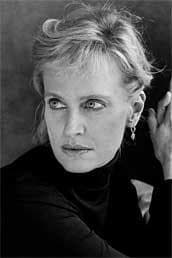
Siri Hustvedt is an American novelist and essayist. Hustvedt is the author of a book of poetry, seven novels, two books of essays, and several works of non-fiction. Her books include The Blindfold (1992), The Enchantment of Lily Dahl (1996), What I Loved (2003), for which she is best known, A Plea for Eros (2006), The Sorrows of an American (2008), The Shaking Woman or A History of My Nerves (2010), The Summer Without Men (2011), Living, Thinking, Looking (2012), The Blazing World (2014), and Memories of the Future (2019). What I Loved and The Summer Without Men were international bestsellers. Her work has been translated into over thirty languages.
Similar books
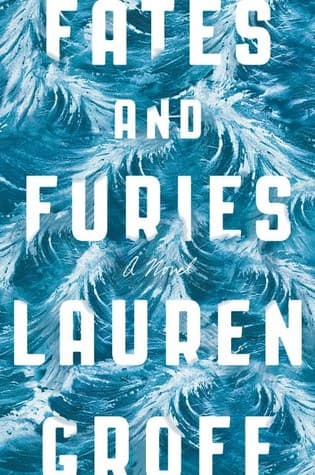
- Fates and Furies
Lauren Groff
3.6 (114k) average on GoodreadsLiterary FictionExplores the complexities of an artist's life and marriage, revealing hidden truths through differing perspectives.
- The Goldfinch
Donna Tartt
3.9 (720k) average on GoodreadsLiterary FictionFeatures a deep dive into the art world, art theft, and the psychological impact of art.
- The Story of a New Name
Elena Ferrante
4.4 (108k) average on GoodreadsLiterary FictionFerrante's novel, while also exploring female ambition and creativity, uses a more traditional, emotionally driven narrative, focusing on the internal lives and relationships of its characters. Hustvedt's approach is more overtly intellectual and experimental, using a philosophical conceit to drive the narrative rather than interpersonal drama.
- The Old Man and the Sea
Ernest Hemingway
3.8 (831k) average on GoodreadsLiterary FictionA Cuban fisherman's long struggle with a giant marlin becomes a story of endurance and dignity, now retold for young adults with illustrations, phonetic guides, and writing prompts in Traditional Chinese.
- One Hundred Years of Solitude
Gabriel García Márquez
4.1 (753k) average on GoodreadsLiterary FictionThrough the multi-generational story of the Buendía family, a mythical town deals with the repeating patterns of time, love, and solitude, as the extraordinary mixes with the ordinary.
- Little Fires Everywhere
Celeste Ng
4.1 (713k) average on GoodreadsLiterary FictionIn Shaker Heights, an artist and her daughter move in, and their free-spirited lives clash with a rule-bound matriarch, revealing hidden conflicts beneath a perfect surface.




Enjoyed the summary?
A summary gives you the shape of the book. The book itself has the detail, the examples and the voice.
Find The Blazing World on AmazonAs an Amazon Associate, BookBrief earns from qualifying purchases. How we're funded