

Synopsis
Covers the whole plot, including the ending.
- Difficulty
- Medium
- Pacing
- Slow
- Mood
- Melancholic, Reflective, Philosophical, Tragic, Observational
- Read it if
- You enjoy classic American literature with deep psychological insight, moral dilemmas, and a critique of utopian ideals. Perfect for those who appreciate detailed character studies and a melancholic, reflective tone.
- Skip it if
- You prefer fast-paced plots, clear-cut resolutions, or modern, direct prose. Those averse to lengthy philosophical digressions or tragic romance may find it challenging.
The Blithedale Romance Plot Summary
Covers the whole plot, including the ending.
Hollingsworth's Vision and Coverdale's Arrival
Miles Coverdale, a poet, arrives at the Blithedale community, a utopian socialist experiment based on communal living and equality. He is initially excited, but his skepticism and observational nature soon appear. He meets Hollingsworth, a strong-willed man who leads the community's farming efforts. Hollingsworth's main goal, however, is to create a charitable institution for reforming criminals, a project that increasingly takes over Blithedale's communal ideals. Coverdale admires Hollingsworth's seriousness but is more interested in the relationships and hidden motives among the residents than in manual labor.
Zenobia's Allure and Priscilla's Mystery
Coverdale's attention turns to two women: Zenobia, a wealthy, independent, and beautiful woman known for the exotic flower in her hair and her progressive views on women's rights, and Priscilla, a frail, shy seamstress who appears at Blithedale. Zenobia, with her dramatic presence and intelligence, quickly becomes important in the community, admired by both Coverdale and Hollingsworth. Priscilla is quiet and unassuming, at first seeming like a waif who needs protection. Coverdale observes a strange, almost family-like bond between Priscilla and Zenobia, as well as a growing, unspoken tension between Zenobia and Hollingsworth, whom Priscilla seems to adore with childlike devotion.
Hollingsworth's Obsession and Zenobia's Jealousy
As spring turns to summer, Hollingsworth's commitment to Blithedale lessens, replaced by an increasing focus on his plan for a penal reform institution. He tries to get financial and moral support from his fellow communitarians, especially Zenobia, but his rigid, unyielding nature and demands for complete devotion to his cause start to alienate them. Zenobia, who at first seemed drawn to Hollingsworth's intensity, becomes frustrated and jealous as she realizes his heart is taken by his project, not by her. Coverdale, recovering from an illness, watches these interactions from a distance, feeling like an outsider and a mere observer of the unfolding drama, often guessing about the true nature of the relationships.
Coverdale's Retreat and Urban Observations
Feeling isolated and disappointed by Blithedale's failure to meet its utopian ideals, and especially by Hollingsworth's self-centered ambition, Coverdale decides to leave the community. He rents rooms in a city boarding house, planning to return to his former life as a poet. However, he finds he cannot escape the pull of Blithedale's inhabitants. Through his window, he often sees Zenobia and Priscilla, and later Hollingsworth, in various city settings, often with a mysterious, veiled gentleman. These chance meetings and his constant eavesdropping fuel his guesses about their true connections and hidden secrets, blurring the lines between observer and participant.
Westervelt's Appearance and Priscilla's Past
During his time in the city, Coverdale repeatedly encounters Professor Westervelt, a sinister and dramatic figure with a piercing gaze and an artificial smile. Westervelt seems to have a strange influence over Priscilla, further deepening the mystery of her origins. Coverdale sees Westervelt performing a mesmerist's act with Priscilla, where she appears in a trance-like state, suggesting she has been a public performer or medium. This revelation, along with Westervelt's unsettling presence, leads Coverdale to suspect that Priscilla is not just a simple seamstress but is involved in a complex and possibly exploitative relationship, perhaps with Westervelt himself, and that Zenobia also knows more than she lets on.
The Veiled Lady and the Revelation of Frank
Coverdale's observations eventually help him piece together the truth. He learns that Zenobia is married to Westervelt, though they live separately, and that Priscilla is Zenobia's half-sister, from their shared father's later, poorer marriage. The veiled lady, a character from Zenobia's popular short story, is Priscilla, whom Westervelt has used as a mesmerist's subject, exploiting her innocent nature for public show. Also, Hollingsworth's wealthy patron, who is supposed to fund his reformatory, is Zenobia's estranged husband. This tangled web of relationships and hidden identities exposes the hypocrisy and moral compromises beneath Blithedale's seemingly ideal surface.
The Confrontation and Hollingsworth's Choice
The emotional drama reaches its peak when Zenobia, Hollingsworth, and Priscilla meet in a secluded spot near Blithedale. Zenobia, having lost her fortune and her husband (Westervelt) because of her pursuit of Hollingsworth, desperately pleads for his love and commitment. She expresses her deep affection and willingness to sacrifice everything for him. However, Hollingsworth, focused on his reform project and perhaps truly drawn to Priscilla's gentle, self-sacrificing nature, coldly rejects Zenobia. He says he will marry Priscilla, whom he believes will be a more suitable, submissive partner for his life's work. This devastating rejection crushes Zenobia, leading to her despair.
Zenobia's Tragic End
After Hollingsworth's cruel rejection, Zenobia, in deep despair and humiliation, wanders off into the night. Coverdale and Hollingsworth, along with Silas Foster, find her body drowned in the river. Her death is clearly a suicide, a tragic end to her passionate, and ultimately unfulfilled life. The discovery and retrieval of her body are described in grim detail, showing the reality of her death. This event greatly affects the remaining characters, especially Hollingsworth and Priscilla, and concludes the romantic entanglements and ideological conflicts that defined Blithedale.
The Aftermath and Hollingsworth's Penance
Zenobia's death ends the Blithedale experiment. The remaining members leave, and the utopian dream collapses. Hollingsworth, burdened by guilt for his part in Zenobia's tragedy, lives out his days in sorrow with Priscilla. His grand plan for a penal reformatory never happens, and he becomes a broken man, dependent on Priscilla's devotion. Priscilla marries Hollingsworth and dedicates her life to caring for him, her innocence and selflessness a contrast to the ambition and passion that destroyed Zenobia. Coverdale observes this outcome with a mix of pity and detached interest.
Coverdale's Confession and Enduring Mystery
Years later, Coverdale thinks about the events at Blithedale, still affected by the tragedy and the unresolved human emotions. He remains a solitary, observational figure, having failed to find his own place or achieve much literary success. In the novel's final lines, he makes a surprising confession: 'I—I myself—was in love with—Priscilla!' This revelation, almost an afterthought, sheds new light on his motivations and his role as a narrator, suggesting his detached observation was perhaps a defense for his own unrequited feelings and his inability to truly engage with life. The confession makes the reader re-evaluate his entire story.
The Blithedale Romance Characters
Miles Coverdale
Protagonist/Narrator
A skeptical poet and observer of human nature at Blithedale
Coverdale is the novel's narrator, a self-proclaimed poet and intellectual who joins the Blithedale community more out of curiosity and a desire for new experiences than genuine ideological commitment. He is highly introspective, prone to analysis and observation, often to the point of detachment. He sees himself as a spectator, a 'hermit' in the midst of social experiment, constantly dissecting the motives and relationships of those around him. His skepticism and inability to fully commit to any cause, including love, contribute to his ultimate isolation. He is physically weak, recovering from an illness early in the story, which further emphasizes his passive role.
Relationships: Hollingsworth (Admiration mixed with critical skepticism); Zenobia (Fascination and intellectual sparring partner); Priscilla (Pity, protectiveness, and unacknowledged love)
Hollingsworth
Antagonist/Supporting
A charismatic but rigidly self-centered philanthropist obsessed with criminal reform
Hollingsworth is a powerful, imposing figure, both physically and morally. He is the most active and physically strong member of Blithedale, initially seen as a pillar of the community. However, his true passion lies in establishing a philanthropic institution for the reform of criminals, a project that becomes an all-consuming obsession. He is a man of singular purpose, demanding absolute devotion from those around him and showing little empathy for anything that does not serve his cause. His self-righteousness and inability to compromise ultimately lead to the tragic downfall of Zenobia and his own subsequent despair, as his grand plans never materialize.
Relationships: Zenobia (Object of her affection, but he rejects her for his cause); Priscilla (Object of his protective affection, later his wife and caregiver); Coverdale (Initially a friend, later an object of Coverdale's critical observation)
Zenobia
Supporting/Tragic Figure
A beautiful, independent, and passionate woman with a mysterious past
Zenobia is a striking and complex character, representing the 'new woman' of her era. She is wealthy, independent, and fiercely intelligent, known for her progressive views on women's rights and her exotic flower in her hair. Her dramatic flair and passionate nature make her the most captivating figure at Blithedale. She possesses a mysterious past, having been married to Westervelt, and has a close, though sometimes strained, relationship with her half-sister, Priscilla. Zenobia falls deeply in love with Hollingsworth, but her strong will and intellectual independence clash with his rigid demands. Her unrequited love and subsequent loss of fortune lead to her tragic suicide.
Relationships: Hollingsworth (Unrequited love, passionate devotion); Priscilla (Half-sister, initially protective, later resentful); Professor Westervelt (Estranged husband, source of her past entanglements)
Priscilla
Supporting/Ingenue
A timid, innocent seamstress with a hidden past as a mesmerist's subject
Priscilla is introduced as a frail, quiet, and childlike seamstress who arrives mysteriously at Blithedale. She is the embodiment of innocence and purity, often depicted as a delicate figure easily influenced by others. Despite her apparent simplicity, she is entangled in a complex past, revealed to be Zenobia's half-sister and a former subject of Professor Westervelt's mesmerist performances, where she was known as the 'Veiled Lady'. She develops a deep, almost worshipful affection for Hollingsworth, which he eventually reciprocates, marrying her. She becomes his devoted caregiver in his broken later years, her selfless nature contrasting sharply with Zenobia's passion.
Relationships: Hollingsworth (Object of her devotion, later her husband); Zenobia (Half-sister, initially dependent on her, later a rival for Hollingsworth's affection); Professor Westervelt (Exploitative former master)
Professor Westervelt
Supporting/Antagonist
A sinister, theatrical mesmerist and Zenobia's estranged husband
Professor Westervelt is a mysterious and sinister figure, characterized by his artificial smile, piercing eyes, and an air of theatricality. He represents the corrupting forces of the outside world, particularly the exploitation of human innocence. He is revealed to be Zenobia's estranged husband and the individual who exploited Priscilla as a mesmerist's subject, the 'Veiled Lady'. Westervelt's presence consistently brings an element of manipulation and moral ambiguity to the narrative, serving as a foil to the utopian ideals of Blithedale. He embodies intellectual coldness and a lack of genuine human connection, valuing control and spectacle over authentic emotion.
Relationships: Zenobia (Estranged husband, source of her past wealth and entanglements); Priscilla (Exploitative master, using her for mesmerism)
Silas Foster
Supporting
The practical, down-to-earth farmer and manager of Blithedale's manual labor
Silas Foster is the most practical and grounded member of the Blithedale community. He is a sturdy, no-nonsense farmer who oversees the manual labor and agricultural aspects of the experiment. He embodies common sense and traditional values, often providing a stark contrast to the more intellectual and idealistic pursuits of the other communitarians. Foster is skeptical of utopian theories and more concerned with the tangible results of their labor. He is a reliable and steady presence, particularly during moments of crisis, such as the search for Zenobia's body, providing a practical anchor in the midst of emotional turmoil.
Relationships: Blithedale community (Practical manager and laborer)
Old Moodie
Mentioned
Priscilla's father and a mysterious figure from Zenobia's past
Old Moodie is a shadowy figure who appears briefly in the city, often observing Priscilla. He is revealed to be the father of both Zenobia and Priscilla, though from different marriages. Once a wealthy and prominent man named Fauntleroy, he lost his fortune through scandalous means and now lives in impoverished obscurity. His appearance connects the disparate pasts of Zenobia and Priscilla, establishing their sisterly bond and linking them to a history of social decline and hidden identities. His story underscores themes of social class, hidden shame, and the consequences of past actions.
The Blithedale Romance Themes
Idealism vs. Reality
The novel examines the difference between utopian ideals and the realities of human nature. The Blithedale experiment, based on communal living and equality, eventually fails because of individual ambition (Hollingsworth's reform project), personal jealousies (Zenobia's love for Hollingsworth), and hidden pasts (Zenobia and Priscilla's connection to Westervelt). Coverdale's skeptical narration constantly shows the communitarians' inability to shed their individualistic tendencies and ego, demonstrating how the 'perfect' society is undermined by inherent human flaws and desires, rather than external forces.
“'It is not, I apprehend, a healthy symptom of society, that, in the midst of its happiest prosperity, a portion of its members should feel themselves constrained to flee from it, and attempt to establish an insulated community, upon a plan of greater perfection than is to be found in the world at large.”
Observation and Detachment
Miles Coverdale's role as a narrator is central to this theme. He is an observer, a 'hermit' who watches the lives of others unfold, often from a physical distance (e.g., from his city window). His detachment allows for critical analysis but also prevents him from fully participating in life or forming genuine connections. He constantly speculates on the inner lives and motives of Zenobia, Hollingsworth, and Priscilla, yet his own emotional life remains largely unacknowledged until the very end. This theme explores the moral implications of observation without intervention and the isolating nature of intellectual analysis when separated from active engagement.
“'It is a pity, in some respects, that a poet cannot likewise be a man of action. I have been a spectator, as my nature is, throughout all the scene.”
The Role of Women in Society
The novel explores the changing roles and expectations for women in the 19th century, especially through Zenobia and Priscilla. Zenobia represents the independent, intellectual woman who advocates for women's rights and challenges traditional gender roles. Her tragic end, however, suggests the social difficulties faced by women who defied convention, particularly when their passions clashed with patriarchal expectations (Hollingsworth's rejection). Priscilla, in contrast, embodies traditional feminine virtues of submission, innocence, and domesticity. The contrast between them highlights the social pressures and limited choices available to women, and how even in a 'utopian' community, traditional gender dynamics persist.
“'I am weary of this world,' said Zenobia. 'I have tried it in all its phases, and there is no truth in any of them.”
Selfishness and Philanthropy
Hollingsworth shows this central conflict. While seemingly dedicated to a charitable cause—the reform of criminals—his methods are self-serving and authoritarian. He demands absolute devotion to his project, sacrificing personal relationships and the communal good of Blithedale for his singular vision. His 'benevolence' is a form of egoism, where others are simply tools for his plan. This theme questions the true nature of charity and whether genuine good can come from such rigid self-absorption, concluding that such 'philanthropy' can be destructive, as seen in Zenobia's fate and Hollingsworth's own brokenness.
“'He was a man, I think, of whom it was impossible to be an indifferent spectator. He had an iron will, a sternly principled conscience, and a heart which, if it could have been softened, would have been a treasure.”
Plot Devices & Literary Techniques
First-Person Unreliable Narrator
Coverdale's perspective shapes and biases the entire story
The entire story is filtered through the consciousness of Miles Coverdale, a self-admitted observer and intellectual. His narration is subjective, colored by his skepticism, his personal biases, and his own unacknowledged desires. He often speculates about others' motives and actions, and his final confession of love for Priscilla casts doubt on his earlier 'objective' observations. This device forces the reader to question the truth of the events and characters as presented, highlighting the subjective nature of perception and memory, and emphasizing Coverdale's own self-deception and emotional detachment.
Symbolism of the Veiled Lady
Represents hidden truth, innocence, and exploitation
The 'Veiled Lady' is a recurring symbol, first appearing as a character in Zenobia's story, then as Priscilla's mesmerized stage persona, and finally representing the innocent, exploited aspect of Priscilla. The veil itself symbolizes hidden truths, mystery, and the way individuals can be obscured or manipulated. It highlights Priscilla's vulnerability and her past as a spectacle, linking her to a world of illusion and exploitation orchestrated by Westervelt. The symbol also underscores Zenobia's own hidden past and the contrast between her public persona and her private struggles.
The Blithedale Community Itself
A microcosm for societal ideals and human flaws
The Blithedale community functions as a symbolic setting, a utopian experiment designed to represent an ideal society. However, it quickly becomes a microcosm of the larger world's flaws, reflecting individual ego, jealousy, and the inability to escape personal entanglements. It serves as a stage upon which the characters' inherent natures are revealed, demonstrating that even in a controlled environment, human passions and ambitions ultimately prevail over abstract ideals. The failure of Blithedale signifies the impossibility of achieving perfect social harmony when individual desires remain unchecked.
Zenobia's Flower
A symbol of Zenobia's passion, independence, and exotic nature
Zenobia's exotic flower, which she always wears in her hair, is a powerful symbol of her character. It represents her vibrant passion, her independence, her unconventional spirit, and her connection to a more exotic, less puritanical world. It highlights her beauty and her dramatic flair. The absence or presence of the flower often reflects her emotional state or her relationship with Hollingsworth. When she is found drowned, the flower is gone, symbolizing the extinguishing of her life, passion, and unique identity.
The Blithedale Romance Quotes
“The greatest obstacle to being heroic is the doubt whether one may not be going to prove one's self a fool; the truest heroism is to resist the doubt; and the profoundest wisdom to know when it ought to be resisted, and when to be obeyed.”
“It is a curious subject of observation and inquiry, whether hatred and love be not the same thing at bottom.”
“In the depths of every heart, there is a tomb and a dungeon, though the lights, the music, and revelry above may cause us to forget their existence, and the buried ones, or prisoners whom they hide.”
“She had a rich, though varying color; it was, most of the while, a flame, and anon a sudden paleness.”
“The world owes all its onward impulses to men ill at ease. The happy man inevitably confines himself within ancient limits.”
“It is my belief that, however changed, my poetry will be recognized as essentially the same, the identical perfume from the same flower, but distilled.”
“A veil may be needful, but never a mask.”
“Let us acknowledge it, my friends; we are all a little mad here.”
“There is no such thing as a stationary love; it must increase or diminish.”
“The only true wisdom is to know that you know nothing.”
“I am half persuaded that the enemy is not in the heart, but in the head.”
“What other dungeon is so dark as one's own heart! What jailer so inexorable as one's self!”
“She had nothing, in short, but her beauty and her pride.”
“The past is but a coarse and sensual prophecy of the present and the future.”
Quiz
10 questions on the plot and the characters. Each answer comes with a short explanation.
Question 1
What is the name of the utopian community where the narrator, Miles Coverdale, goes to live at the beginning of the novel?
- Brook Farm
- Blithedale
- New Harmony
- Fruitlands
Show answer
B. Blithedale The community is called Blithedale, which is the fictional utopian settlement based on Hawthorne's own experiences at Brook Farm. The novel's title directly references this setting.
Question 2
Who is the mysterious veiled lady who arrives at Blithedale and later reveals herself to be Priscilla?
- Zenobia's long-lost sister
- A spiritual medium controlled by Westervelt
- Coverdale's childhood friend
- Hollingsworth's former wife
Show answer
B. A spiritual medium controlled by Westervelt Priscilla is introduced as the Veiled Lady, a spiritual medium manipulated by Professor Westervelt. Her mysterious arrival and subsequent unveiling drive much of the plot's intrigue.
Question 3
What tragic event befalls Zenobia towards the end of the novel?
- She is murdered by Westervelt
- She dies in a fire at Blithedale
- She drowns herself in the river
- She succumbs to a sudden illness
Show answer
C. She drowns herself in the river After Hollingsworth rejects her love and she faces public humiliation, Zenobia commits suicide by drowning in the river, a pivotal and tragic climax in the story.
Question 4
What is Hollingsworth's primary obsession that ultimately alienates him from others at Blithedale?
- Creating a perfect agricultural system
- Reforming criminals through philanthropy
- Writing a great American novel
- Achieving spiritual enlightenment
Show answer
B. Reforming criminals through philanthropy Hollingsworth is single-mindedly dedicated to his project of reforming criminals, which causes him to manipulate others and neglect personal relationships, leading to conflict.
Question 5
Which theme is most prominently explored through the failure of the Blithedale community?
- The inevitability of technological progress
- The conflict between idealism and human nature
- The superiority of rural over urban life
- The importance of religious faith in society
Show answer
B. The conflict between idealism and human nature The novel critically examines utopian ideals, showing how human flaws like ego, jealousy, and impracticality undermine the community's goals, highlighting the tension between idealism and reality.
Question 6
What symbolic object does Zenobia wear in her hair that becomes a point of contention?
- A silver locket
- A diamond brooch
- A hothouse flower
- A golden tiara
Show answer
C. A hothouse flower Zenobia often wears a hothouse flower in her hair, symbolizing her artificiality and detachment from the natural, simple life idealized at Blithedale. It sparks debate about her authenticity.
Question 7
How does Miles Coverdale primarily observe and interact with the events at Blithedale?
- As an active leader and decision-maker
- As a detached poet and spectator
- As a secret agent reporting to outsiders
- As a devoted laborer focused on farming
Show answer
B. As a detached poet and spectator Coverdale is a poet who often remains aloof, observing the community's dynamics from a distance. His narrative perspective emphasizes themes of isolation and the role of the artist.
Question 8
What is the relationship between Zenobia and Priscilla revealed to be?
- Mother and daughter
- Half-sisters
- Cousins raised apart
- Former classmates
Show answer
B. Half-sisters It is later disclosed that Zenobia and Priscilla are half-sisters, sharing the same father. This revelation adds complexity to their interactions and the love triangle with Hollingsworth.
Question 9
Which character represents the corrupting influence of mesmerism and false spirituality in the novel?
- Miles Coverdale
- Professor Westervelt
- Old Moodie
- Silas Foster
Show answer
B. Professor Westervelt Professor Westervelt is a manipulative figure who uses mesmerism to control Priscilla as the Veiled Lady, symbolizing deception and the exploitation of spiritual beliefs for personal gain.
Question 10
In the novel's conclusion, what happens to Hollingsworth and Priscilla after Zenobia's death?
- They leave Blithedale and never see each other again
- They marry and live a quiet, penitent life together
- They become leaders of a new utopian community
- Hollingsworth is imprisoned for Zenobia's death
Show answer
B. They marry and live a quiet, penitent life together Hollingsworth, burdened by guilt over Zenobia's suicide, abandons his reform project. He and Priscilla marry and live in seclusion, with Priscilla caring for him in his remorseful state.
The Blithedale Romance FAQ
What is 'The Blithedale Romance' about?
The novel follows narrator Miles Coverdale as he joins the utopian Blithedale community in 1840s Massachusetts, where he becomes entangled in the complex relationships among the idealistic Zenobia, the mysterious Priscilla, and the charismatic reformer Hollingsworth. It explores the clash between utopian dreams and human nature, culminating in tragedy and disillusionment.
Why should I read 'The Blithedale Romance'?
It offers a profound critique of 19th-century utopian movements like Brook Farm (which Hawthorne participated in), blending psychological depth with Gothic elements. The novel's exploration of idealism, gender roles, and the tension between public reform and private desire remains strikingly relevant.
What is the background/setting of 'The Blithedale Romance'?
Set in the 1840s, the story is loosely based on Hawthorne's experiences at the Brook Farm transcendentalist commune in West Roxbury, Massachusetts. The Blithedale community is portrayed as an isolated rural experiment where members seek to escape industrial society and create a perfect egalitarian world.
What are the most memorable quotes?
Key quotes include Zenobia's declaration, 'It is my belief—yes, and my prophecy, should I die before it happens—that, when my sex shall achieve its rights, there will be ten eloquent women where there is now one eloquent man,' and Coverdale's reflection, 'In the midst of cheerful society, I had often a feeling of loneliness.'
What writing style does the author use?
Hawthorne employs a first-person narrative from Coverdale's perspective, blending realism with allegorical and Gothic touches. The prose is richly descriptive and introspective, often using symbolism (like Zenobia's exotic flower) to explore themes of illusion versus reality.
What minor details add significant meaning?
Zenobia's exotic flower, which she wears daily, symbolizes her vibrant but artificial persona—when she discards it after Hollingsworth rejects her, it foreshadows her despair. Similarly, Priscilla's ethereal sewing, which produces the 'Veiled Lady' performances, hints at her hidden strength and connection to spiritualism.
What are some subtle foreshadowing moments?
Early scenes where Coverdale observes Zenobia and Priscilla through a window foreshadow his role as a detached spectator rather than participant. Hollingsworth's single-minded obsession with reforming criminals subtly predicts his emotional manipulation and the community's collapse.
What unexpected character connections exist?
Priscilla is revealed to be Zenobia's half-sister, both fathered by the wealthy Professor Westervelt, who exploits Priscilla as the 'Veiled Lady' in his spiritualist shows. This hidden kinship drives Zenobia's protective yet resentful behavior and underscores themes of hidden familial bonds.
What are unspoken character motivations?
Coverdale's narration masks his own romantic longing for Zenobia and envy of Hollingsworth, which he rationalizes as philosophical observation. Hollingsworth's reformist zeal hides a desire for control and dominance, using others like Zenobia and Priscilla to fund his prison project.
What psychological complexities do characters exhibit?
Zenobia embodies the conflict between feminist ideals and emotional dependency, her proud exterior crumbling when rejected. Priscilla shifts from fragile victim to resilient survivor, her passivity masking a deep intuitive understanding of others' motives.
What are the major emotional turning points?
The climax occurs when Hollingsworth chooses Priscilla over Zenobia, leading to Zenobia's dramatic confrontation and subsequent suicide by drowning. Coverdale's final confession of love for Priscilla, years later, reveals his lifelong emotional paralysis and regret.
How do relationship dynamics evolve?
Initially, Zenobia mentors Priscilla, but this becomes rivalry over Hollingsworth. Hollingsworth and Priscilla's relationship evolves from rescuer-victim to a mutually dependent union, while Coverdale remains perpetually on the sidelines, his friendships dissolving into alienation.
Which parts remain ambiguous or open-ended?
The exact nature of Zenobia's death is ambiguous—whether it was intentional suicide or a tragic accident is debated. Coverdale's reliability as a narrator is also questionable, leaving it unclear how much his account is shaped by his own biases and regrets.
What are controversial scenes or decisions?
Hollingsworth's manipulation of Zenobia's wealth and affections for his reform project is often criticized as emotional exploitation. Zenobia's suicide has sparked debate over whether it represents feminist defiance or a surrender to patriarchal pressures.
'The Blithedale Romance' ending explained: how it ends & what it means
The novel ends years later with Coverdale visiting a broken Hollingsworth, cared for by Priscilla, and confessing he loved Priscilla all along. This underscores the failure of utopian dreams, suggesting that human flaws like jealousy and ambition inevitably corrupt idealism, leaving only quiet, compromised lives.
About the author
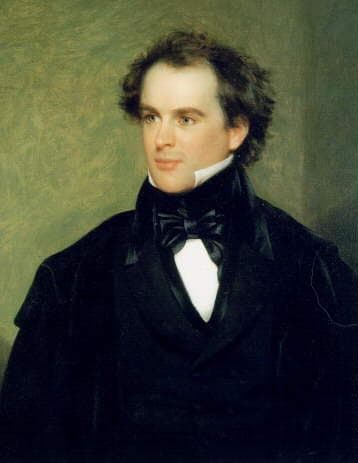
Nathaniel Hawthorne was an American novelist and short story writer. His works often focus on history, morality, and religion.
Similar books
- Walden
Henry David Thoreau
3.8 (158k) average on GoodreadsBiographyExplores themes of communal living, societal withdrawal, and the search for ideal existence, though 'Walden' is non-fiction.
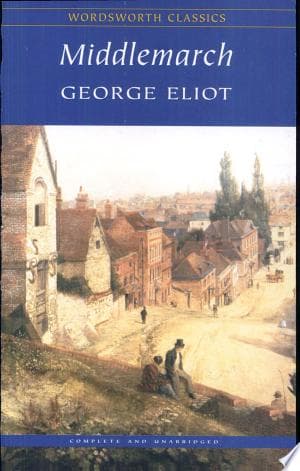
- Middlemarch
George Eliot
4.0 (136k) average on GoodreadsHistorical FictionFeatures a wide cast of characters, social commentary, and a detailed examination of human relationships and ideals within a specific community.
- To Kill a Mockingbird
Harper Lee
4.3 (4.5M) average on GoodreadsHistorical FictionIn the 1930s Jim Crow South, Harper Lee writes about racial injustice, moral growth, and the quiet courage of a lawyer father, Atticus Finch, as seen through his young daughter's eyes.
- The Great Gatsby
F. Scott Fitzgerald
3.9 (3.8M) average on GoodreadsHistorical FictionIn the opulent Roaring Twenties, a mysterious millionaire's lavish parties hide his desperate, tragic pursuit of a lost love, exposing the emptiness within the American Dream.
- Pride and Prejudice
Jane Austen
4.3 (3M) average on GoodreadsHistorical FictionIn a society focused on status and money, Elizabeth Bennet navigates love and pride, challenging Mr. Darcy and social expectations to find true affection.
- Angels & Demons
Dan Brown
3.9 (2.7M) average on GoodreadsThrillerA Harvard symbologist races through Rome's ancient sites, deciphering cryptic clues to unmask the Illuminati and stop a vengeful plot to destroy the Vatican with a stolen antimatter weapon.





Enjoyed the summary?
A summary gives you the shape of the book. The book itself has the detail, the examples and the voice.
Find The Blithedale Romance on AmazonAs an Amazon Associate, BookBrief earns from qualifying purchases. How we're funded