

Synopsis
Covers the whole plot, including the ending.
- Difficulty
- Easy
- Pacing
- Slow
- Mood
- Heartwarming, Gentle, Nostalgic, Quaint
- Read it if
- You enjoy heartwarming children's stories with simple prose and a focus on village life and moral lessons.
- Skip it if
- You prefer complex plots, fast-paced action, or stories with mature themes.
The Blue Umbrella Plot Summary
Covers the whole plot, including the ending.
Binya's Chance Encounter and the Blue Umbrella
Binya, a young girl in a Garhwal village, grazes her cows and goats in the mountains. She enjoys the freedom of the hills. One day, she sees a group of picnickers. Among their things, a bright blue Japanese silk umbrella catches her eye. Its color stands out against the natural landscape. A woman from the picnic party sees Binya looking at the umbrella. Amused by Binya's quiet wanting, the woman offers to trade the umbrella for Binya's leopard's claw necklace, which Binya wears for luck. Binya agrees to the trade at once, happy to have the umbrella.
The Village's Envy and Binya's Pride
Binya goes back to her village, carrying her new blue umbrella. Its color and design immediately get everyone's attention. The villagers, used to simple things, have never seen such a beautiful umbrella. Children follow her, looking at it, and adults show their awe. Binya likes her umbrella, carrying it everywhere, even when it is not raining. She is proud of her special item, and it becomes a part of her, showing her uniqueness and a bit of luxury in her simple life. Her brother, Bijju, also likes it, though he secretly wishes he had something as special.
Ram Bharosa's Growing Obsession
Ram Bharosa, the grumpy old shopkeeper, really likes Binya's blue umbrella. From the moment he sees it, he wants to own it. He often sits outside his small shop, watching Binya walk by with her umbrella, wanting it. He tries different ways to get it, offering Binya sweets or small items, hoping she might give it up. But Binya protects her umbrella and politely says no to all his tries. Ram Bharosa's wanting grows, making him think about it constantly and feel a bit bitter, as he cannot accept that such a beautiful item belongs to a child while he, a shopkeeper, cannot have it.
A Near Loss and Bijju's Help
One windy afternoon, while Binya is on the hillside, a strong wind takes the blue umbrella from her hand. It tumbles down the slope, bouncing towards a deep ravine. Binya, scared of losing her umbrella, tries to get it, but the ground is hard. Her older brother, Bijju, who is nearby, sees what happens. With his quickness, Bijju runs ahead, catching the umbrella just before it falls. He gives it back to a relieved Binya, who is very thankful. This event makes the umbrella even more important to Binya and strengthens her bond with it, and it also shows Bijju's protective side for his sister and her things.
The Shopkeeper's Scheme and Confession
Ram Bharosa's desire for the umbrella gets very strong, leading him to a desperate act. One day, he sees a chance when Binya leaves her umbrella outside a tea shop. He quietly takes the umbrella, planning to hide it and then say he found it, or just keep it. But a young boy named Rajaram, who works for the tea shop, sees Ram Bharosa take the umbrella. Rajaram, a simple but honest boy, tells the other villagers. When faced by the community, Ram Bharosa has to admit he stole it. He is shamed, his name hurt, and he gives the umbrella back to Binya.
Binya's Act of Kindness
Even though her umbrella is back, Binya's feelings about it have changed. The event with Ram Bharosa, and daily use, seem to have lessened its specialness for her. The bright blue has faded a bit, and the first excitement is gone. She sees Ram Bharosa's continued longing look, now with regret and sadness. One evening, Binya, moved by sudden kindness, goes to Ram Bharosa's shop. Without a word, she hands him the blue umbrella, surprising the old man. She tells him he can keep it, a very generous act of forgiveness.
Ram Bharosa's Redemption and a New Umbrella
Ram Bharosa is surprised and touched by Binya's unexpected gift. His face, usually grumpy, softens with thanks and a bit of shame for what he did. He takes the umbrella, valuing it as a sign of Binya's kindness and his own change. He starts to treat Binya and Bijju with more warmth, often giving them sweets or tea for free. The blue umbrella, now his, becomes a quiet source of joy for him. Later, Ram Bharosa, wanting to show his thanks, gives Binya a new, small, bright red umbrella. This finishes the cycle of giving and starts a new friendship between the old shopkeeper and the young girl.
The Blue Umbrella Characters
Binya
Protagonist
A carefree, independent girl who values beauty and eventually, compassion.
Binya is a young, spirited girl from a small Garhwal village. She is observant, independent, and deeply connected to nature, spending her days grazing her family's livestock in the hills. Initially, she is driven by a desire for beauty and a unique possession, exemplified by her fierce attachment to the blue umbrella. She is not easily swayed by others' opinions or desires. Her character evolves from innocent pride to profound generosity, demonstrating a maturity beyond her years when she gives the umbrella to Ram Bharosa. She values experiences and emotions more than material possessions in the end.
Relationships: Bijju (Younger brother, supportive and protective); Ram Bharosa (Initially an antagonist due to his envy, later becomes a recipient of her kindness and a friend)
Ram Bharosa
Antagonist/Supporting
The grumpy village shopkeeper, initially consumed by envy, later redeemed by kindness.
Ram Bharosa is the elderly, somewhat reclusive shopkeeper in Binya's village. He is known for his gruff demeanor and his solitary life. His character is initially defined by his intense covetousness for Binya's blue umbrella, which leads him to petty attempts at acquisition and eventually, theft. His desire for the umbrella stems from a longing for something beautiful and perhaps a touch of status. After being caught and shamed, he experiences deep remorse. Binya's act of giving him the umbrella profoundly impacts him, leading to his redemption and a transformation into a kinder, more generous individual.
Relationships: Binya (Object of his envy, later his benefactor and a catalyst for his redemption); Bijju (Binya's brother, whom he later treats with kindness)
Bijju
Supporting
Binya's younger brother, protective and practical.
Bijju is Binya's younger brother, a sturdy and practical boy who shares Binya's life in the hills. While he admires Binya's blue umbrella, he doesn't share her intense, almost spiritual, attachment to it. He is more grounded and responsible, often looking out for his sister. He demonstrates his protective nature when he bravely rescues the umbrella from falling into a ravine, highlighting his loyalty and quick thinking. He represents a stable, supportive presence in Binya's life, and his admiration for her, though quieter, is evident.
Relationships: Binya (Elder sister, whom he protects and admires)
The Picnicking Woman
Mentioned/Catalyst
The original owner of the blue umbrella, who trades it with Binya.
This unnamed woman is a tourist or picnicker visiting the Garhwal hills. She is the original owner of the blue Japanese silk umbrella. Her role is brief but pivotal, as she initiates the entire plot by trading the umbrella for Binya's leopard's claw necklace. She is portrayed as observant and generous, noticing Binya's silent longing and fulfilling it. Her transient presence introduces an exotic, beautiful object into Binya's simple village life, setting the stage for the story's events.
Relationships: Binya (The person she trades the umbrella with)
Rajaram
Supporting
A young, honest boy who exposes Ram Bharosa's theft.
Rajaram is a young boy who works at the local tea shop. He is honest and observant, and his integrity plays a crucial role in the story. He witnesses Ram Bharosa stealing Binya's umbrella and, without hesitation, reports the theft to the villagers. His action brings Ram Bharosa's wrongdoing to light, leading to the shopkeeper's public shaming and the return of the umbrella to Binya. Rajaram represents the simple, uncorrupted honesty found within the village community.
Relationships: Ram Bharosa (The person he exposes for theft); Binya (The victim of the theft he witnesses)
The Blue Umbrella Themes
Desire and Materialism vs. Contentment
The blue umbrella shows the desire for something beautiful and special. Binya first shows this desire, trading her lucky charm for it and valuing it greatly. Ram Bharosa's strong wanting for the umbrella shows the darker side of wanting things and envy, leading him to steal. The story contrasts Binya's later happiness and willingness to give up the umbrella when its 'magic' lessens, with Ram Bharosa's first unhappiness caused by his desire. In the end, Binya finds more joy in giving, and Ram Bharosa finds peace not in owning, but in getting a gift and giving kindness back.
“The umbrella was like a flower, a great blue flower that had sprung up on the dry brown hillside.”
Generosity and Redemption
This theme is key to how the story ends. Ram Bharosa's first actions come from selfishness and envy, leading to his public shame. But Binya's unexpected act of giving him the umbrella offers him a way to change. Her generosity changes him, helping him get past his bitterness and become a kinder part of the community. His later gift of a red umbrella to Binya completes this cycle, showing how kind acts can heal and build good relationships, helping people find a way to moral recovery.
“It was no longer the same umbrella. It was just an umbrella. Binya knew that she would never love it as much as she had loved it at first.”
The Beauty of Simple Life and Nature
The story is set in the Garhwal hills, showing the beauty and simplicity of rural life. Binya spends her days freely in nature, with goats and cows, which contrasts with the sudden appearance of the blue umbrella. The umbrella's first appeal is how it stands out against the natural browns and greens of the land. Ruskin Bond often shows the charm of ordinary village life, where small events have big meaning and human feelings happen in a simple, natural setting. Simple pleasures, like wild berries or the wind, are quietly valued.
“Binya loved the hills, the smell of the pines, the sight of the wild flowers, the feel of the wind.”
Childhood Innocence and Wisdom
Binya shows childhood innocence through her first pure joy in a beautiful item and her honest nature. Her choice to trade her leopard's claw, a symbol of luck, for the umbrella shows a child's immediate reaction to beauty. But her character also shows a deep, almost natural wisdom. Her ability to forgive Ram Bharosa and give away her most valued item, not because she lost it but from empathy and a changed view of its worth, shows a growth beyond just innocence. She understands that real happiness is not about owning things, but about human connection and care.
“She did not regret the loss of the leopard's claw. She had the umbrella, and that was enough.”
Plot Devices & Literary Techniques
The Blue Umbrella (Symbol)
A central symbol representing desire, beauty, and the transient nature of material possessions.
The blue umbrella is the most prominent symbol in the story. Initially, it symbolizes exotic beauty, uniqueness, and Binya's pride and individuality. For Ram Bharosa, it represents a deep, almost irrational desire and the longing for something beyond his simple existence. As the story progresses, its fading color and Binya's changing feelings about it symbolize the transient nature of material desires and the eventual realization that true happiness lies not in possession, but in acts of kindness and human connection. It becomes a catalyst for character development and thematic exploration, driving the entire narrative.
The Leopard's Claw Necklace (Symbol)
A symbol of luck, tradition, and personal value, traded for a new desire.
The leopard's claw necklace is Binya's initial prized possession, inherited and believed to bring good luck. It represents her connection to tradition, her family, and a more rustic, intrinsic value system. Her willingness to trade it for the blue umbrella signifies her immediate, strong desire for something new and beautiful, highlighting a shift in her priorities. The trade itself is a pivotal moment, setting the entire plot in motion and establishing Binya's character as one who follows her heart, even if it means parting with something traditionally valuable for something aesthetically pleasing.
Rural Setting (Atmosphere/Context)
The Garhwal hills provide a backdrop emphasizing simplicity, community, and natural beauty.
The setting of the Garhwal hills is more than just a location; it's a crucial element that establishes the atmosphere and context of the story. The simple, close-knit village life, far removed from urban complexities, highlights the significance of small possessions and the impact of individual actions within the community. The natural beauty of the hills contrasts with and accentuates the striking color of the blue umbrella, making it stand out more prominently. This setting reinforces themes of contentment with simplicity and the strong communal bonds that ultimately facilitate both conflict and redemption among the characters.
The Blue Umbrella Quotes
“It was a small blue umbrella, and it was a very fine umbrella too.”
“She took it everywhere with her, even when there was no sign of rain.”
“The umbrella was her companion, her friend, her protector.”
“Sometimes she lent it to her friends, but always with a warning to be careful.”
“The other children in the village admired it, and some were a little envious.”
“Binya was a happy girl, and the umbrella seemed to add to her happiness.”
“She wouldn't have exchanged it for anything in the world.”
“The wind tried to snatch it away, but Binya held on tight.”
“The shopkeeper, Ram Bharosa, coveted the umbrella.”
“He offered her money, then sweets, but Binya refused.”
“It was just an old, faded umbrella now, but it was still special to her.”
“Binya felt sorry for him, for his loneliness, for his desire.”
“And so, the blue umbrella, having brought so much joy, was given away.”
“Ram Bharosa never really smiled, but a slight tremor at the corners of his mouth indicated pleasure.”
“The world was full of other umbrellas, but none could be quite like the blue one.”
Quiz
10 questions on the plot and the characters. Each answer comes with a short explanation.
Question 1
What item does Binya exchange to acquire the beautiful blue umbrella?
- A silver anklet
- Her lucky leopard's claw pendant
- A basket of fresh fruit
- Her only doll
Show answer
B. Her lucky leopard's claw pendant Binya trades her cherished lucky leopard's claw pendant to a woman for the striking blue umbrella, a significant sacrifice for her.
Question 2
Which character in the village is particularly envious of Binya's blue umbrella?
- Bijju, her brother
- The school teacher
- Ram Bharosa, the shopkeeper
- The village headman
Show answer
C. Ram Bharosa, the shopkeeper Ram Bharosa, the shopkeeper, is described as being particularly envious of the blue umbrella, often staring at it longingly.
Question 3
How does the author describe the umbrella's appearance in the opening line?
- Like a bright red poppy on a green field
- Like a great blue flower that had sprung up on the dry brown hillside
- Like a shimmering blue bird in the sky
- Like a small blue cloud caught on a tree branch
Show answer
B. Like a great blue flower that had sprung up on the dry brown hillside The book explicitly states, 'The umbrella was like a flower, a great blue flower that had sprung up on the dry brown hillside,' highlighting its striking beauty against the natural landscape.
Question 4
What is Binya's initial reaction to acquiring the blue umbrella?
- She immediately tries to sell it for a profit.
- She hides it away so no one else can see it.
- She carries it everywhere she goes, showing it off proudly.
- She is disappointed because it is not the color she wanted.
Show answer
C. She carries it everywhere she goes, showing it off proudly. Binya is immensely proud of her new possession and carries it with her constantly, making it a prominent feature of her daily life.
Question 5
What type of setting is the novella primarily set in?
- A bustling city market
- A coastal fishing village
- The hills of Garhwal
- A vast, flat plain
Show answer
C. The hills of Garhwal The synopsis clearly states that 'The Blue Umbrella is a short and humorous novella set in the hills of Garhwal,' indicating its rural, mountainous setting.
Question 6
What is a central theme explored in 'The Blue Umbrella' regarding possessions?
- The importance of material wealth for happiness.
- How a simple possession can bring joy and also become an object of desire and envy.
- The dangers of owning unique or valuable items.
- That possessions are ultimately meaningless and should be discarded.
Show answer
B. How a simple possession can bring joy and also become an object of desire and envy. The story centers on Binya's joy from the umbrella, the envy it sparks in others like Ram Bharosa, and the eventual lessons learned about attachment and generosity.
Question 7
How does the novella suggest that characters can find opportunities to 'redeem themselves'?
- By accumulating more wealth than others.
- Through acts of kindness, selflessness, or overcoming envy.
- By leaving the village and starting a new life elsewhere.
- By successfully stealing what they desire.
Show answer
B. Through acts of kindness, selflessness, or overcoming envy. The synopsis mentions that 'others find opportunities to redeem themselves,' which in the context of the story often involves characters like Ram Bharosa overcoming their initial negative feelings (like envy) or making amends.
Question 8
What distinguishes the blue umbrella from other umbrellas in the village?
- It has special magical properties.
- It is stated to be 'the prettiest umbrella in the whole village.'
- It was imported from a faraway country.
- It belongs to the wealthiest family.
Show answer
B. It is stated to be 'the prettiest umbrella in the whole village.' The text explicitly states, 'It is the prettiest umbrella in the whole village,' emphasizing its unique beauty and desirability.
Question 9
Why is Binya's leopard's claw pendant considered 'lucky'?
- It was given to her by a wise old sage.
- It brought her good fortune in games and contests.
- It is a family heirloom passed down for generations.
- The text doesn't explicitly state why, but implies it's a personal belief and a valued possession.
Show answer
D. The text doesn't explicitly state why, but implies it's a personal belief and a valued possession. While the story calls it her 'lucky' pendant, it doesn't detail specific instances of luck. Its 'luck' is more of a personal belief or a characteristic attributed to a cherished item, making its exchange a significant sacrifice.
Question 10
What kind of language style is used in 'The Blue Umbrella'?
- Formal and highly descriptive with complex vocabulary.
- Simple yet witty language.
- Poetic and abstract, relying heavily on metaphors.
- Direct and factual, like a news report.
Show answer
B. Simple yet witty language. The synopsis describes the language as 'simple yet witty language,' which is characteristic of Ruskin Bond's writing style, especially for children's literature.
The Blue Umbrella FAQ
What is 'The Blue Umbrella' about?
'The Blue Umbrella' is a charming novella about a young girl named Binya in a small Himalayan village who trades her lucky leopard's claw pendant for a beautiful, bright blue umbrella. The umbrella becomes her most prized possession and the envy of the entire village, particularly the shopkeeper Ram Bharosa, leading to a series of events that test Binya's generosity and Ram Bharosa's character.
Why should I read 'The Blue Umbrella'?
You should read 'The Blue Umbrella' for its simple yet profound storytelling, its vivid portrayal of rural Indian life, and its heartwarming message about generosity and contentment. It's a delightful read that explores themes of desire, envy, and the joy of giving, all through the innocent eyes of a child.
What is the background/setting of 'The Blue Umbrella'?
The story is set in the picturesque, humble hills of Garhwal, a region in the Himalayas. Ruskin Bond beautifully describes the natural surroundings, the small village life, the simple routines, and the close-knit community, making the setting an integral part of Binya's world and her attachment to the umbrella.
What are the most memorable quotes?
One of the most memorable quotes is, 'The umbrella was like a flower, a great blue flower that had sprung up on the dry brown hillside,' which beautifully captures the umbrella's striking appearance and its impact on the drab landscape. Another is Binya's simple joy: 'She walked along with the umbrella held high over her head, feeling as though she were a queen.'
What writing style does the author use?
Ruskin Bond employs a simple, evocative, and witty writing style that is accessible to both children and adults. His language is straightforward yet rich in imagery, allowing readers to easily visualize the Garhwal hills and connect with the characters' emotions and daily lives.
What minor details add significant meaning?
The initial trade of Binya's lucky leopard's claw pendant for the umbrella is a minor detail that carries significant meaning. It highlights her impulsive nature and the immense value she places on the umbrella, suggesting a sacrifice that makes her possession even more cherished.
What are some subtle foreshadowing moments?
Ram Bharosa's initial covetous glances and persistent attempts to buy the umbrella from Binya subtly foreshadow his eventual desperate act of having it stolen. His growing obsession, despite Binya's repeated refusals, hints at the lengths he might go to acquire it.
What unexpected character connections exist?
An unexpected connection forms between Binya and Ram Bharosa towards the end. Despite his envy and his role in the umbrella's theft, Binya ultimately shows him compassion by giving him her most cherished possession, leading to a profound shift in his character and their relationship.
What are unspoken character motivations?
Ram Bharosa's unspoken motivation for wanting the blue umbrella goes beyond mere possession; it seems to stem from a deeper sense of lack or perhaps a desire for something beautiful and admired in his otherwise mundane, solitary life. The umbrella represents a spark of joy he feels is missing.
What psychological complexities do characters exhibit?
Ram Bharosa exhibits psychological complexity through his struggle with envy and guilt. His initial desire for the umbrella escalates to a point where he orchestrates its theft, but the subsequent guilt and the village's disdain weigh heavily on him, revealing a conscience beneath his greed.
What are the major emotional turning points?
A major emotional turning point is when the umbrella is stolen, causing Binya immense sadness and a sense of loss. Another crucial moment is when she discovers Ram Bharosa's involvement, followed by her decision to freely give him the umbrella, which marks a significant shift from personal attachment to selfless generosity.
How do relationship dynamics evolve?
The relationship dynamics between Binya and Ram Bharosa evolve from initial friendly interactions, to one of tension and envy on his part, and finally to a surprising resolution of forgiveness and mutual respect. Binya's act of giving transforms their dynamic from one of covetousness to one of genuine connection.
Which parts remain ambiguous or open-ended?
The story leaves the long-term impact of Ram Bharosa's redeemed character somewhat open-ended. While he is deeply touched by Binya's gift and becomes more generous, the full extent of his transformation and how it permanently alters his life and standing in the village is left for the reader to ponder.
What are controversial scenes or decisions?
Ram Bharosa's decision to have the umbrella stolen is the most controversial scene. It's a morally questionable act that starkly contrasts with the generally innocent tone of the story, making his redemption all the more significant.
'The Blue Umbrella' ending explained: how it ends & what it means
The book ends with Binya, having outgrown her attachment to the umbrella, giving it to Ram Bharosa. He is deeply moved by her generosity, and his character is redeemed as he begins to treat children more kindly and share sweets freely. The ending signifies that true happiness comes not from possession, but from the joy of giving and the freedom from material attachment.
About the author
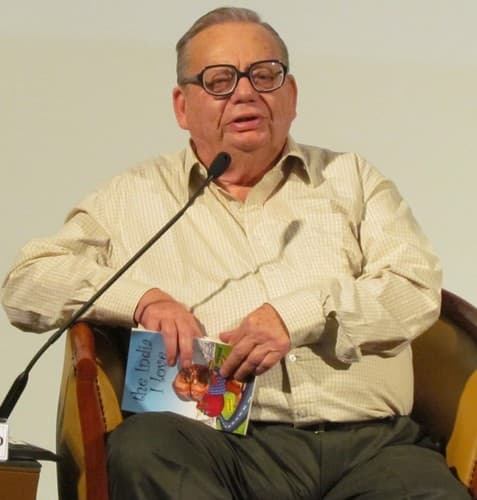
Ruskin Bond is an Indian author known for his contributions to English literature, particularly in the genre of fiction. His notable works include "The Blue Umbrella," a story about a young girl and her prized possession, "Delhi Is Not Far," which explores life in the Indian capital, and "Tales From My Heart," a collection of personal reflections. Bond's writing often reflects the beauty of nature and the simplicity of life in India.
Similar books
- A Little Princess
Frances Hodgson Burnett
4.2 (4k) average on GoodreadsFantasyFeatures a kind-hearted protagonist facing challenges and demonstrating generosity.
- The Adventures of Tom Sawyer
Mark Twain
3.9 (758k) average on GoodreadsChildren'sCaptures the essence of childhood adventures and village life with a touch of humor.
- Harry Potter and the Sorcerer's Stone
J.K. Rowling
4.5 (7M) average on GoodreadsFantasyRescued from a miserable life under the stairs, an orphaned boy discovers he's a wizard destined for a magical school, where he uncovers a dangerous secret tied to the dark wizard who murdered his parents.
- The Hobbit, or There and Back Again
J.R.R. Tolkien
4.3 (2.9M) average on GoodreadsFantasyA comfort-loving hobbit named Bilbo Baggins is whisked away by a mischievous wizard and a band of dwarves on an unexpected journey to reclaim stolen treasure from a fearsome dragon, discovering courage and a magical ring along the way.
- Harry Potter and the Goblet of Fire
J.K. Rowling
4.6 (2.6M) average on GoodreadsFantasyA bewildered Harry Potter, underage and thrust into a deadly Triwizard Tournament, must brave dragons, mermaids, and a resurgent dark magic to survive a year that will forever alter the wizarding world.
- Harry Potter and the Order of the Phoenix
J.K. Rowling
4.5 (2.5M) average on GoodreadsFantasyIn a year of oppressive secrets and the threat of Voldemort, Harry Potter and Dumbledore's Army secretly train for war, shown through Jim Kay and Neil Packer's dark illustrations.






Enjoyed the summary?
A summary gives you the shape of the book. The book itself has the detail, the examples and the voice.
Find The Blue Umbrella on AmazonAs an Amazon Associate, BookBrief earns from qualifying purchases. How we're funded