
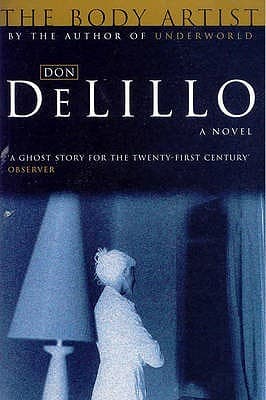
Synopsis
Covers the whole plot, including the ending.
- Difficulty
- Medium
- Pacing
- Slow
- Mood
- Melancholy, Ethereal, Meditative, Unsettling
- Read it if
- You appreciate minimalist prose, deep psychological exploration of grief, and a blurring of reality and the supernatural.
- Skip it if
- You prefer clear narratives, fast-paced plots, or explicit explanations for strange occurrences.
The Body Artist Plot Summary
Covers the whole plot, including the ending.
The Breakfast Table
The novella begins with Lauren Hartke, a performance artist, and her older, thrice-married film director husband, Rey Robles, at breakfast in their rented, isolated New England coastal house. Their conversation is a stream of consciousness, touching on everyday observations, Rey's past marriages, the nature of time, and watching a woman sleep. Rey talks about a disturbing dream of a figure watching him. The dialogue shows their deep, almost symbiotic connection, marked by playful intellectual intimacy and a shared sense of their unique existence, separate from the conventional world. The scene sets up their unusual dynamic and the isolated setting.
Rey's Departure and Death
After their morning together, Rey Robles leaves for New York City, supposedly to visit his daughter and handle business. Lauren stays in the rented house, continuing her solitary routine. The story then shifts, informing the reader that Rey has died. The details are few but imply suicide, leaving Lauren in shock and isolation. His death is a sudden event, changing Lauren's life and the story's tone, plunging her into deep, silent grief in the now empty house.
Solitary Grief and Time's Distortion
After Rey's death, Lauren stays in the house, experiencing time in a disorienting, fluid way. Days blend into nights, and past memories mix with the present. She revisits places they shared, like the bed and the breakfast table, trying to reconstruct Rey's presence through memory and sensory details. Her grief is personal and internal, showing as a deep emptiness. She struggles to accept his sudden absence with the vividness of their shared past, feeling lost in a world where the ordinary has become extraordinary and painful.
The Unseen Presence
As Lauren deals with her grief, she starts to sense an unexplained presence in the house. This is not a typical ghost, but a subtle, almost imperceptible shift in the atmosphere. She hears faint sounds, notices objects slightly out of place, and feels an undeniable awareness of another being. At first, she dismisses these occurrences as products of her sorrow and isolation, but their persistence suggests something more tangible. This growing awareness marks the beginning of the story's supernatural element, challenging her perceptions of reality.
The Man in the Bedroom
One day, Lauren enters her bedroom and finds a man sitting on the bed. He is small, thin, and childlike, speaking in a disjointed, non-linear stream of consciousness. He seems to be a manifestation of memory, repeating phrases and observations that Rey and Lauren had exchanged, especially from their breakfast conversation. The man, whom Lauren calls 'Mr. Tuttle' or 'Mr. Vede' (from a Russian word meaning 'he knows'), is an uncanny echo of Rey's past and Lauren's memories, but separate. His presence is both disturbing and strangely comforting, filling the void left by Rey.
Mr. Vede's Origin and Nature
Lauren tries to understand who Mr. Vede is and where he came from. He speaks in fragmented sentences, often repeating Rey's exact words, or describing events from Rey's past, sometimes from his childhood. He seems to exist outside of conventional time and space, a living embodiment of memory and consciousness. Lauren thinks he might be a manifestation of Rey's past self, or a temporal echo. His presence affects her deeply, drawing her into a deeper exploration of memory, identity, and the boundaries between life and death. She watches him, fascinated by his unusual existence.
Sharing Space
Despite his enigmatic nature, Lauren begins to share the house with Mr. Vede. She gives him food, and they live in a strange, silent cohabitation. She observes him constantly, trying to understand his words and the logic of his existence. Their interactions are minimal, mostly Lauren listening to his fragmented speech, which often mirrors her own thoughts or recalls their shared past with Rey. This period is marked by introspection for Lauren, as Mr. Vede becomes a catalyst for her processing of grief and her understanding of memory and consciousness.
The Performance of Memory
Lauren, as a performance artist, begins to use Mr. Vede's presence and her grief in her art. She records his voice, studies his movements, and reflects on the ephemeral nature of memory and identity. Her art becomes a direct response to her experience, a way of showing her inner world and dealing with the questions raised by Rey's death and Mr. Vede's appearance. The house becomes her studio, and her life, her art, blurring the lines between the two as she explores the body as a vessel for memory and time.
A Friend's Visit and Mr. Vede's Disappearance
A friend, likely from her artistic community, visits Lauren, interrupting her isolated existence with Mr. Vede. During the visit, Mr. Vede is nowhere to be found, suggesting his presence is linked to Lauren's solitary state or her mind. After her friend leaves, Lauren searches for him, but Mr. Vede has vanished as mysteriously as he appeared. This disappearance leaves Lauren alone again, but with a changed perspective. The encounter with Mr. Vede has altered her understanding of reality, memory, and the self, preparing her for a new phase of her art and life.
The Body Artist's New Work
Lauren creates a new performance piece, directly inspired by her experiences with Rey's death and Mr. Vede. Her art explores time, memory, and the human body as a repository for these experiences. She focuses on the physical manifestation of memory, how the body holds and expresses the past. Her performance is a solitary, internal act, a blending of her physical self with the echoes of others, showing that we are all made of the voices and experiences of those who came before us. It is the culmination of her journey through grief and discovery.
The Body Artist Characters
Lauren Hartke
Protagonist
A performance artist grappling with loss and the nature of time and memory.
Lauren is a dedicated performance artist, meticulous and deeply introspective. She is characterized by her intense sensitivity and her ability to observe the world with an artist's eye, finding meaning in the mundane. Her relationship with Rey is one of profound intellectual and emotional intimacy, making his sudden death a shattering blow. She is resilient, channeling her grief and the inexplicable events into her art, using her body as a medium to explore complex philosophical questions about existence, memory, and the self. She is an observer, a seeker of truth in the ephemeral.
Relationships: Rey Robles (Husband, intellectual and emotional soulmate); Mr. Vede (Enigmatic presence, a manifestation of memory and consciousness, catalyst for artistic exploration)
Rey Robles
Supporting/Catalyst
Lauren's older, film director husband whose death initiates the story's central conflict.
Rey is a charismatic, intelligent, and much older film director, thrice-married before Lauren. He possesses a philosophical and introspective mind, evident in his meandering breakfast conversations with Lauren. He is deeply connected to Lauren, sharing a unique intellectual intimacy. His past, including his previous marriages and childhood memories, often surfaces in his dialogue. His sudden death by suicide serves as the primary catalyst for Lauren's journey into grief, memory, and the uncanny, though he is only present in the opening chapter and through Lauren's memories and Mr. Vede's echoes.
Relationships: Lauren Hartke (Wife, intellectual and emotional soulmate)
Mr. Vede
Antagonist/Supernatural Presence
A mysterious, childlike man who speaks in fragmented echoes of Rey's past.
Mr. Vede is an enigmatic, small, and childlike man who appears in Lauren's house after Rey's death. He speaks in a disjointed, non-linear fashion, often repeating phrases verbatim that Rey had spoken or recalling details from Rey's past, even his childhood. He seems to exist outside the normal flow of time, a living embodiment of memory, consciousness, or perhaps a temporal echo of Rey himself. His presence is both unsettling and strangely comforting to Lauren, serving as a physical manifestation of her grief and a catalyst for her artistic and philosophical explorations. He challenges the boundaries of reality.
Relationships: Lauren Hartke (Enigmatic cohabitant, object of study and inspiration); Rey Robles (Manifestation or echo of Rey's past and consciousness)
The Body Artist Themes
Grief and Loss
The novel explores the nature of grief, especially the disorienting impact of sudden, unexpected loss. Lauren's experience after Rey's death is not just sadness, but a complete disruption of her perception of time and reality. She revisits shared spaces, trying to bring back his presence, and finds herself lost in a world where the familiar has become alien. This theme is central to the entire narrative, driving Lauren's introspection and her eventual artistic response. The emptiness of the house after Rey's departure (plot_summary section 3) shows this emptiness.
“She felt the house around her, a body, an entity, alive with his absence.”
Time and Memory
DeLillo looks at the fluid, non-linear nature of time and how memory shapes our perception of reality. Lauren's experience of time after Rey's death is fractured, with past and present mixing. Mr. Vede, who speaks in echoes of Rey's past and seems to exist outside linear time, embodies this theme (plot_summary section 6). The novel suggests that memory is not a static record but a living entity that can show up in unexpected ways, blurring the lines between what is real and what is remembered. The breakfast scene itself explores time and consciousness.
“Time is a thing you make. It's a structure. It's a thing you build.”
Art and Performance
As a performance artist, Lauren uses her body and her life experiences as the canvas for her art. The novel explores how art can process trauma, understand complex philosophical concepts, and create meaning from chaos. Her grief and Mr. Vede's appearance directly inform her artistic practice (plot_summary section 8), turning her personal tragedy into an exploration of identity and existence. Her final performance piece is the culmination of her journey, making her body a vessel for memory and the echoes of others.
“She was learning to be the body and the artist, to be the art itself.”
The Nature of Consciousness and Identity
Mr. Vede, who seems to channel Rey's memories and thoughts, raises questions about the nature of individual consciousness and where it resides. Is consciousness only a product of the brain, or can it exist independently, perhaps as an echo in time? The novel suggests that our identities are not singular but are made of layers of past experiences, shared connections, and the voices of those who have influenced us. Mr. Vede's existence challenges the traditional boundaries of self and other, life and death, making Lauren question what defines a person.
“He was everyone's forgotten self, the self that drifts in the stream of time.”
Plot Devices & Literary Techniques
Stream of Consciousness Dialogue
Dialogue that mimics unfiltered thought, revealing character and theme.
The initial breakfast conversation between Lauren and Rey is a prime example. Their dialogue is meandering, philosophical, and jumps between topics, reflecting their intimate connection and intellectual nature. This device allows DeLillo to explore themes of time, memory, and the nature of consciousness through their unfiltered thoughts, establishing their unique world before Rey's death. It also serves to immediately immerse the reader in their complex relationship and the book's distinctive tone.
The Unreliable Narrator (Subtle)
Lauren's perception of reality is influenced by grief, blurring objective truth.
While not overtly unreliable, Lauren's deep grief and isolation after Rey's death significantly color her perception of events. The appearance of Mr. Vede could be interpreted as a supernatural phenomenon, a psychological manifestation of her sorrow, or a combination of both. The narrative maintains an ambiguity, allowing the reader to question the objective reality of Mr. Vede's existence and forcing them to confront the subjective nature of truth, particularly when filtered through intense emotional states. This device deepens the mystery and encourages reader engagement with the themes.
The Isolated Setting
A remote house on the coast amplifies themes of grief and introspection.
The rented house on the New England coast serves as more than just a backdrop; it's a character in itself. Its isolation amplifies Lauren's grief and introspection after Rey's death, creating a contained world where the extraordinary can manifest without external interference. The house becomes a symbolic space for memory, a vessel for the past, and a stage for Lauren's internal and external transformations. It fosters the intimacy between Lauren and Rey, and later, the uncanny cohabitation with Mr. Vede.
The Ghost Figure
Mr. Vede acts as a non-traditional ghost, embodying memory and consciousness.
Mr. Vede functions as a modern, literary interpretation of a ghost. He is not a spectral apparition in the traditional sense, but a physical presence that embodies the echoes of Rey's past and Lauren's memories. He challenges conventional notions of the afterlife and haunting, suggesting that 'ghosts' can be manifestations of consciousness, memory, and the profound impact of those we've lost. This device allows DeLillo to explore philosophical questions about existence and identity without resorting to genre clichés.
The Body Artist Quotes
“Time is a storm in which we are all lost.”
“The past is a ghost, the future a dream, and all we ever have is now.”
“She wanted to be a body, not a mind. She wanted to be a thing, not a thought.”
“Memory is a form of art. The mind is a canvas.”
“There was a truth in the silence, a truth that words could only obscure.”
“She felt the weight of her own name, a thing that had once belonged to someone else.”
“The world was full of people who knew how to live and people who didn't. She was one of the latter.”
“Art was a way of making sense of the senseless.”
“He lived in her memory, a constant, vivid presence.”
“The house was a body, breathing, listening, remembering.”
“She was learning to be alone, to inhabit the silence, to find a rhythm in the emptiness.”
“The smallest gestures carried the most profound meanings.”
“Language was a net thrown over the world, trying to catch what could not be held.”
Quiz
10 questions on the plot and the characters. Each answer comes with a short explanation.
Question 1
Which specific meal are Lauren Hartke and Rey Robles sharing when the novel opens?
- Lunch
- Breakfast
- Dinner
- Brunch
Show answer
B. Breakfast The novel famously opens with Lauren and Rey having breakfast together in their rented house.
Question 2
What is Lauren Hartke's profession, as indicated by her moniker?
- Sculptor
- Painter
- Body Artist
- Filmmaker
Show answer
C. Body Artist Lauren Hartke is known as the 'Body Artist' due to her unique performance art that involves her own body.
Question 3
What is the primary setting of the initial scenes of 'The Body Artist'?
- A bustling city apartment
- A remote cabin in the mountains
- A rambling rented house on the New England coast
- A modern art gallery in New York
Show answer
C. A rambling rented house on the New England coast The story begins in a rambling rented house located somewhere on the New England coast.
Question 4
What is Rey Robles's profession?
- Novelist
- Film-director
- Musician
- Architect
Show answer
B. Film-director Rey Robles is introduced as a much older, thrice-married film-director.
Question 5
What is the significant age difference between Lauren Hartke and Rey Robles?
- They are roughly the same age.
- Rey is slightly older than Lauren.
- Rey is much older than Lauren.
- Lauren is much older than Rey.
Show answer
C. Rey is much older than Lauren. The description explicitly states Rey Robles is 'a much older' man compared to Lauren.
Question 6
What specific sound does Lauren Hartke begin to hear after Rey's death?
- Whispers from the walls
- The exact words Rey spoke during their last breakfast
- A child crying in another room
- Unidentifiable ambient noises
Show answer
B. The exact words Rey spoke during their last breakfast After Rey's death, Lauren starts hearing echoes of Rey's voice, specifically repeating the very words and intonations from their last breakfast together.
Question 7
What is the name of the mysterious, childlike man Lauren discovers living in her house?
- Mr. Bones
- Mr. Tuttle
- Mr. Smith
- Mr. Ghost
Show answer
B. Mr. Tuttle Lauren discovers a strange, childlike man named Mr. Tuttle hiding in her house after Rey's death.
Question 8
How does Lauren's understanding of Mr. Tuttle evolve regarding his ability to imitate Rey's voice?
- She believes he is consciously mocking Rey.
- She realizes he is channeling Rey's voice without conscious intent, acting as a vessel.
- She thinks he learned the lines by listening to recordings.
- She eventually dismisses his abilities as mere coincidence.
Show answer
B. She realizes he is channeling Rey's voice without conscious intent, acting as a vessel. Lauren comes to understand that Mr. Tuttle is not consciously imitating Rey but rather 'channeling' or echoing Rey's past words and intonations, almost as a medium.
Question 9
What is a central theme explored through Lauren's body art and her experiences with grief?
- The fleeting nature of fame and recognition.
- The intersection of the body, memory, and the self, particularly in the face of loss.
- The economic struggles of performance artists.
- The generational conflict between artists.
Show answer
B. The intersection of the body, memory, and the self, particularly in the face of loss. The novel deeply explores how the body processes and embodies memory and grief, especially through Lauren's art, which uses her physical self to explore these profound internal states.
Question 10
How does DeLillo's narrative style contribute to the 'ghost story' aspect of the novel?
- By explicitly stating the presence of Rey's ghost throughout the house.
- Through ambiguous, internal monologues and the uncanny repetition of Rey's words, blurring the line between grief, memory, and the supernatural.
- By introducing other spectral figures who interact with Lauren.
- By relying on traditional horror tropes like flickering lights and cold spots.
Show answer
B. Through ambiguous, internal monologues and the uncanny repetition of Rey's words, blurring the line between grief, memory, and the supernatural. DeLillo crafts the 'ghost story' through Lauren's subjective experience, using the uncanny repetition of Rey's past conversations and her internal processing of grief to create an atmosphere where the presence of the deceased is felt without being overtly supernatural in a conventional sense.
The Body Artist FAQ
What is the central premise of 'The Body Artist' by Don DeLillo?
'The Body Artist' centers on Lauren Hartke, a performance artist, as she grapples with the sudden death of her much older husband, film director Rey Robles. The narrative explores her immediate grief, isolation in their rented New England house, and her subsequent encounter with a mysterious, childlike man who seems to possess uncanny knowledge.
Who are the main characters introduced at the beginning of the novel?
The novel introduces Lauren Hartke, a young performance artist known for her 'body art,' and her husband, Rey Robles, an acclaimed and significantly older film director. Their morning routine, including breakfast and a trip to the post office, sets the initial domestic scene before Rey's abrupt departure and death.
Where does the majority of the story take place?
The primary setting is a rambling, rented house on the New England coast, described with specific details like its many rooms, windows overlooking the sea, and a 'widow's walk.' This isolated location emphasizes Lauren's solitude and provides the backdrop for her grief and the subsequent appearance of the mysterious figure.
What significant event triggers Lauren's journey in the book?
The pivotal event is the sudden and unexplained death of her husband, Rey Robles, who leaves the house after breakfast and later takes his own life. This traumatic loss plunges Lauren into profound grief and solitude, fundamentally altering her existence and setting the stage for the book's supernatural elements.
Who is Mr. Tuttle, and how does he impact Lauren's life?
Mr. Tuttle is a mysterious, childlike man whom Lauren discovers living in an upstairs room of her house after Rey's death. He speaks in fragments, repeats phrases, and seems to replay past conversations, particularly those between Lauren and Rey, becoming a profound and unsettling presence in her isolated world.
What is the significance of the breakfast scene between Lauren and Rey?
The breakfast scene is crucial as it's the last interaction between Lauren and Rey, filled with mundane details and their unique, intimate banter. It establishes their relationship dynamic, Rey's introspective nature, and the quiet rhythm of their life before its abrupt disruption, making his subsequent death more impactful.
How does the 'widow's walk' contribute to the novel's atmosphere and themes?
The 'widow's walk' atop the house is a literal and symbolic architectural feature, evoking themes of waiting, loss, and observation. It underscores Lauren's isolation and her solitary vigil, echoing the traditional image of women watching for lost sailors, and hinting at the ghost story elements of the narrative.
Are there any subtle clues about Rey's impending death before it occurs?
While not explicit, Rey's contemplative dialogue about time, memory, and the nature of existence during breakfast, coupled with his mention of needing to 'go' and the description of his solitary drive, can be retrospectively seen as subtle foreshadowing of his departure and ultimate suicide. His general melancholic demeanor also hints at an inner turmoil.
How does Lauren's profession as a 'body artist' relate to her grief?
Lauren's body art, which involves manipulating her physical form and voice, becomes an extended metaphor for her processing of grief. She physically embodies her sorrow, stretching and distorting her body to express the internal disfigurement of loss, turning her personal suffering into a form of performance and survival.
What psychological impact does Mr. Tuttle's presence have on Lauren?
Mr. Tuttle's ability to perfectly mimic Rey's voice and repeat past conversations deeply unsettles Lauren, blurring the lines between memory, reality, and hallucination. Psychologically, he forces her to confront her grief in a visceral way, acting as a living echo chamber for her lost love, and potentially pushing her towards a breakdown or a new form of understanding.
How does the novel explore themes of time and memory through Lauren's experience?
The novel profoundly explores time as fluid and non-linear, especially through Lauren's grief and Mr. Tuttle's presence. Past conversations with Rey are replayed in the present, making memory a tangible, almost physical entity. Lauren herself experiences time as distorted, with moments stretching or collapsing under the weight of her loss.
What is the psychological significance of Lauren's isolation in the house?
Lauren's extreme isolation in the large, empty house intensifies her grief and creates a psychological crucible. It strips away external distractions, forcing her inwards to confront her profound loss, and making her vulnerable to the unsettling experience with Mr. Tuttle, who thrives in this environment of solitude and introspection.
Is Mr. Tuttle a literal ghost, a hallucination, or something else entirely?
The novel deliberately leaves Mr. Tuttle's nature ambiguous. He could be interpreted as a literal ghost, a manifestation of Lauren's grief and subconscious, a symbolic representation of memory, or a unique individual with an extraordinary ability. DeLillo invites readers to debate his reality, emphasizing the subjective nature of experience.
How does 'The Body Artist' challenge traditional notions of grief and mourning?
DeLillo challenges traditional mourning by presenting Lauren's grief not as a linear process, but as a fragmented, performative, and deeply surreal experience. Her engagement with Mr. Tuttle, her body art, and her distorted perception of time suggest that grief can involve a radical reordering of reality and self, rather than simple acceptance.
What is the role of language and silence in the novel?
Language is central, especially through Mr. Tuttle's exact repetition of Lauren and Rey's past dialogues, highlighting its power to preserve and haunt. Conversely, the pervasive silence of the house after Rey's death underscores Lauren's isolation and the inadequacy of words to express profound loss, making both spoken and unspoken communication equally significant.
How does the ending of 'The Body Artist' resolve or deepen the mysteries presented?
The ending offers no definitive resolution to Mr. Tuttle's identity or the precise nature of Lauren's experience. Instead, it deepens the mystery, suggesting that Lauren has integrated this surreal encounter into her being, transforming her art and perception of reality. She seems to accept the inexplicable, moving forward with a broadened understanding of time and connection.
What commentary does the book offer on the nature of art and creativity?
The book suggests that art, particularly Lauren's body art, is not merely an aesthetic pursuit but a vital means of processing trauma, expressing the inexpressible, and engaging with profound existential questions. Her creative acts become a form of survival and a way to bridge the gap between life and death, memory and presence.
Could 'The Body Artist' be considered a ghost story, and if so, how does it subvert typical tropes?
Yes, it can be read as a ghost story, but it subverts typical tropes by making the 'ghost' (Mr. Tuttle) less about jump scares and more about psychological resonance and the haunting power of memory. The 'ghost' isn't explicitly Rey, but rather an echo of him and Lauren's shared past, making the horror more internal and existential.
About the author
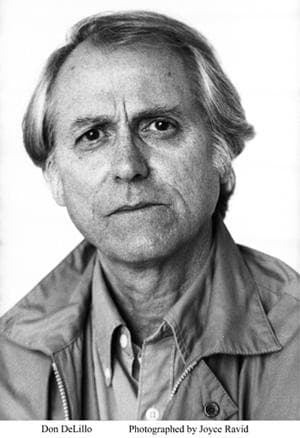
Donald Richard DeLillo is an American novelist, short story writer, playwright, screenwriter and essayist. His works have covered subjects as diverse as television, nuclear war, the complexities of language, art, mathematics, politics, economics, and baseball.
Similar books
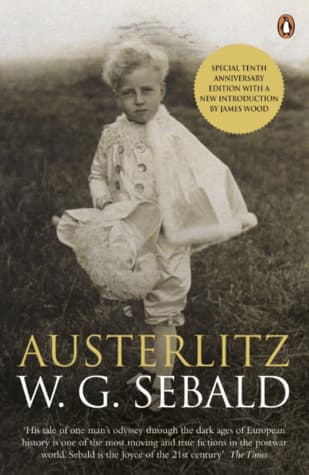
- Austerlitz
W.G. Sebald
4.0 (14k) average on GoodreadsHistorical FictionExplores memory, loss, and the nature of time through a meditative, fragmented narrative.
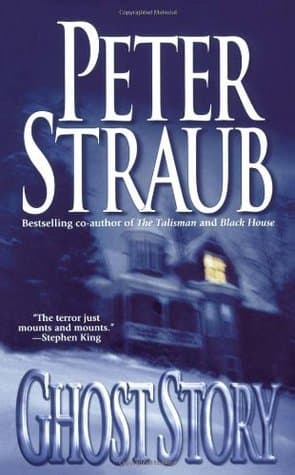
- Ghost Story
Peter Straub
4.3 (83k) average on GoodreadsFantasyDeals with the lingering presence of the dead and the psychological impact of past events, albeit in a more genre-specific way.
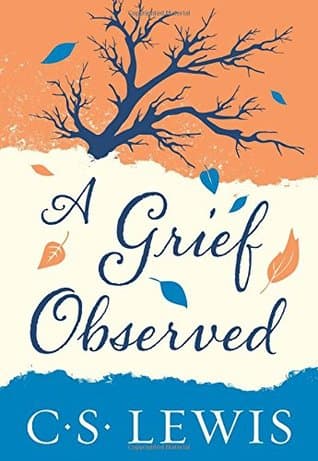
- A Grief Observed
C.S. Lewis
4.2 (58k) average on GoodreadsBiographyWhile both The Body Artist and A Grief Observed delve into the profound experience of loss, Lewis's work is a direct, non-fictional memoir, a raw and intellectualized theological grappling with grief after his wife's death. DeLillo, conversely, uses fiction and magical realism to explore the psychological fragmentation and the artist's unique response to loss. Lewis's approach is more analytical and philosophical, whereas DeLillo's is visceral, sensory, and art-centric.
- The Old Man and the Sea
Ernest Hemingway
3.8 (831k) average on GoodreadsLiterary FictionA Cuban fisherman's long struggle with a giant marlin becomes a story of endurance and dignity, now retold for young adults with illustrations, phonetic guides, and writing prompts in Traditional Chinese.
- One Hundred Years of Solitude
Gabriel García Márquez
4.1 (753k) average on GoodreadsLiterary FictionThrough the multi-generational story of the Buendía family, a mythical town deals with the repeating patterns of time, love, and solitude, as the extraordinary mixes with the ordinary.
- The Goldfinch
Donna Tartt
3.9 (720k) average on GoodreadsLiterary FictionHaunted by a tragic explosion and clutching a stolen Dutch masterpiece, a young orphan navigates the opulent drawing rooms of New York and the gritty underbelly of the art world, desperately seeking connection and redemption amidst a life spiraling into crime and obsession.



Enjoyed the summary?
A summary gives you the shape of the book. The book itself has the detail, the examples and the voice.
Find The Body Artist on AmazonAs an Amazon Associate, BookBrief earns from qualifying purchases. How we're funded