
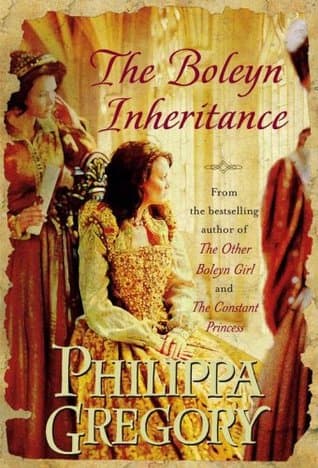
Synopsis
Covers the whole plot, including the ending.
- Difficulty
- Medium
- Pacing
- Moderate
- Mood
- Atmospheric, Suspenseful, Dramatic, Melancholy
- Read it if
- You enjoy detailed historical fiction with multiple female perspectives and court intrigue during the Tudor period.
- Skip it if
- You prefer fast-paced thrillers or are looking for a strictly historically accurate account without fictional embellishments.
The Boleyn Inheritance Plot Summary
Covers the whole plot, including the ending.
Anne of Cleves Arrives
Anne of Cleves, a German princess, arrives in England full of apprehension. She has been chosen as King Henry VIII's fourth wife. She is a plain woman, unfamiliar with the sophisticated ways of the English court, and speaks little English. Henry, disguised, tries to surprise her in Rochester, expecting a passionate welcome. But Anne, not recognizing him and startled by his rough manner, rejects him. This first meeting sets a bad tone. Henry is immediately repulsed by her appearance and lack of courtly charm, calling her a 'Flanders mare' and vowing never to consummate their marriage, despite the political need for the union.
A Marriage Unconsummated
After the disastrous first meeting, Anne of Cleves finds herself in a difficult position. The marriage ceremony goes ahead, but Henry VIII refuses to consummate it. He claims Anne is not a virgin and that he cannot perform his husbandly duties. Anne is isolated, unable to communicate well with those around her. Jane Rochford advises her to remain silent and obedient. Anne tries to learn English and understand court customs, but her inexperience and Henry's dislike make her situation increasingly desperate. The court, led by Henry's chief minister, Thomas Cromwell, seeks an annulment to please the King.
Jane Rochford's Schemes
Jane Rochford, still affected by her role in the downfall of her husband George Boleyn and sister-in-law Anne Boleyn, is desperate to regain her standing and wealth. She serves as a lady-in-waiting to Anne of Cleves, while also spying for her uncle, the Duke of Norfolk. Jane manipulates situations, giving Anne advice that often serves her own goals. She quickly sees young, lively Katherine Howard as a possible replacement for Anne. She subtly encourages Katherine to catch the King's eye, seeing a chance to rise again through her family's new influence.
Katherine Howard's Ascent
Katherine Howard, a young and beautiful cousin of Anne Boleyn, arrives at court and soon captures the attention of the aging and increasingly unwell King Henry VIII. She is lively, charming, and eager for attention, a sharp contrast to the reserved Anne of Cleves. Henry, infatuated, showers Katherine with gifts and affection. With Cromwell's influence fading and the King's desire for Katherine growing, the annulment of Henry's marriage to Anne of Cleves is quickly arranged. Anne, fearing for her life, wisely agrees to the annulment, accepting a generous settlement and the title of 'The King's Sister.'
Katherine's Reign and Secrets
Katherine Howard marries King Henry VIII and becomes Queen, enjoying the luxuries and power of her new position. However, her past is full of indiscretions, particularly her relationships with Francis Dereham and Thomas Culpeper before her marriage. She is young and naive, believing her past can stay hidden. Jane Rochford, now a close confidante and Lady of the Bedchamber to Katherine, knows some of these secrets. She uses her position to both protect and subtly manipulate Katherine, always focused on her own survival and advancement within the Norfolk faction.
The Culpeper Affair
Despite being Queen, Katherine Howard feels restricted by Henry VIII's age and illness, and she longs for true affection. She begins a passionate affair with the handsome courtier Thomas Culpeper, a man she had known before her marriage. Jane Rochford facilitates this dangerous liaison, covering it up. She warns Katherine of the risks but also creates opportunities for the lovers to meet, believing it will secure her own position with the powerful Norfolk family. The affair becomes an open secret among a few, increasing the danger for everyone involved.
Rumors and Investigations
As Katherine's affair with Culpeper continues, and her past relationships with Dereham and others surface through anonymous letters and court gossip, Archbishop Cranmer and other members of Henry's council begin an investigation. Evidence grows, including testimonies from those who knew Katherine before her marriage. The King initially disbelieves it, but the overwhelming proof of her pre-marital sexual history and her current infidelity with Culpeper shatters his trust and pride. Jane Rochford, caught in the web of lies, faces intense scrutiny.
Confessions and Arrests
Francis Dereham and Thomas Culpeper are arrested and interrogated, confessing under torture to their relationships with Katherine Howard. These confessions seal Katherine's fate. Katherine herself is confined and questioned, at first denying everything, but eventually admitting to her pre-marital indiscretions. She maintains her innocence regarding the affair with Culpeper after becoming Queen, but the evidence against her is overwhelming. Jane Rochford is also arrested, accused of facilitating the affair, and severely interrogated, leading to a mental breakdown.
Jane Rochford's Madness
Under the immense pressure of interrogation and fear of execution, Jane Rochford suffers a complete mental collapse. She becomes incoherent, babbling and raving, making her unable to give legally sound testimony. However, her knowledge of Katherine's affairs is vital for the prosecution. To get around the legal problem of her madness, Parliament passes a special act allowing for the execution of those deemed insane, specifically targeting Jane. This ensures her testimony can still be used, or at least her silence can be permanently ensured.
Executions on Tower Hill
Despite her youth and pleas for mercy, Katherine Howard is condemned for treason for her unchaste conduct before and during her marriage to the King. Jane Rochford, despite her mental state, is also condemned for treason for her role in facilitating Katherine's affair. Both women are executed on Tower Hill. Katherine meets her end with some composure, while Jane, though lucid enough to give a final speech, is still clearly affected by her recent breakdown. Their deaths serve as a brutal reminder of how uncertain life was at Henry VIII's court and the severe consequences of his displeasure.
Anne of Cleves's Survival
Having wisely agreed to the annulment and maintained a respectful, if distant, relationship with King Henry VIII as 'The King's Sister,' Anne of Cleves watches the tragedy of Katherine Howard from a position of relative safety and comfort. She reflects on her own narrow escape and the dangerous nature of the English court. Her survival, in contrast to the fates of Anne Boleyn and Katherine Howard, shows her quiet intelligence and adaptability, as well as the luck that saved her from Henry's wrath. She learns to appreciate her new life of independence.
The Boleyn Inheritance Characters
Anne of Cleves
Protagonist
The fourth wife of King Henry VIII, who navigates a dangerous court to secure her survival.
Anne is a German princess, initially naive and unsophisticated, thrust into the dangerous English court. She is plain in appearance and struggles with the English language and customs, which immediately alienates King Henry VIII. Despite this, she possesses a quiet strength, an observant nature, and a surprising capacity for adaptability. She learns to play the court's game just enough to secure her safety, primarily through a strategic retreat rather than direct confrontation. Her primary drive is survival and finding a measure of peace and independence.
Relationships: King Henry VIII (Husband, then 'King's Sister'; he is repulsed by her, but she earns his grudging respect for her compliance.); Jane Rochford (Lady-in-waiting; Jane initially advises Anne, but often with ulterior motives, though Anne remains oblivious to her true machinations.); Katherine Howard (Successor; Anne observes Katherine's rise and fall from a distance, understanding the peril of her own past position.)
Katherine Howard
Protagonist/Tragic Figure
The vivacious fifth wife of King Henry VIII, whose past and present affairs lead to her downfall.
Katherine is a beautiful, youthful, and frivolous woman, eager for attention and affection. She is naive about the ruthless politics of the court and easily falls prey to her desires. Driven by a longing for love and a fear of being overlooked, she repeats past mistakes, engaging in dangerous liaisons while Queen. She lacks the foresight and political acumen to navigate her perilous position, ultimately succumbing to her own indiscretions and the unforgiving nature of Henry VIII's wrath. Her immaturity and lack of self-control are her undoing.
Relationships: King Henry VIII (Husband; she initially captivates him, but he becomes enraged by her infidelity.); Jane Rochford (Lady-in-waiting and confidante; Jane facilitates Katherine's affair with Culpeper, knowing the danger.); Thomas Culpeper (Lover; their passionate affair as Queen leads to their mutual destruction.); Francis Dereham (Former lover; his reappearance at court exposes Katherine's past.)
Jane Rochford
Protagonist/Antagonist
Lady-in-waiting and spy, haunted by her past, who schemes for survival and advancement.
Jane is a complex, manipulative, and deeply scarred woman. She is the widow of George Boleyn and the sister-in-law of Anne Boleyn, having provided testimony that led to their executions. Driven by a desperate need for financial security, social standing, and a desire to escape her notorious past, she becomes a spy for her uncle, the Duke of Norfolk. She is cunning and ruthless, willing to manipulate those around her, including the Queens she serves, to secure her own position. Her guilt and fear contribute to her eventual mental collapse.
Relationships: Anne of Cleves (Lady-in-waiting; she advises Anne, but often with ulterior motives, seeing her as a stepping stone.); Katherine Howard (Lady-in-waiting and confidante; she facilitates Katherine's affair, hoping to benefit from the Norfolk faction's rise, but ultimately seals her own fate.); Duke of Norfolk (Uncle; she acts as his spy, seeking his protection and patronage.); George Boleyn (Deceased husband; her betrayal of him and Anne Boleyn haunts her and defines her reputation.)
King Henry VIII
Antagonist
The aging, volatile King of England, whose desires and paranoia dictate the fates of his queens.
Henry VIII is depicted as an increasingly corpulent, ill, and unpredictable monarch. He is driven by his desire for a male heir, a beautiful and compliant wife, and absolute control. His pride is easily wounded, and his wrath is swift and deadly. He craves youth and beauty, becoming infatuated with Katherine Howard while quickly repulsed by Anne of Cleves. His absolute power allows him to discard wives and execute those who displease him, creating a court environment of fear and intrigue. He is a man consumed by his own ego and the perceived slights against his majesty.
Relationships: Anne of Cleves (Husband; he is repulsed by her but respects her compliance in their annulment.); Katherine Howard (Wife; initially infatuated, he is later enraged and betrayed by her infidelity, leading to her execution.)
Thomas Cromwell
Supporting
King Henry's chief minister, responsible for arranging the King's marriage to Anne of Cleves.
Cromwell is a shrewd and powerful politician, initially responsible for orchestrating the marriage between Henry VIII and Anne of Cleves for political alliances. He is a pragmatist, but his influence wanes significantly when Henry finds Anne unattractive. His failure to secure a pleasing wife for the King, combined with the rise of the Catholic-leaning Norfolk faction, ultimately leads to his downfall. He is a calculating figure, but even his political genius cannot withstand the King's personal whims.
Relationships: King Henry VIII (Chief minister; he serves the King but ultimately falls from favor due to the Anne of Cleves marriage.); Duke of Norfolk (Political rival; they are at odds over the King's alliances and religious policies.)
Duke of Norfolk
Supporting/Antagonist
Jane Rochford's uncle and a powerful, ambitious noble who seeks to advance his family's power.
The Duke of Norfolk is a cunning and ambitious nobleman, a prominent figure in the Catholic faction at court. He is Jane Rochford's uncle and Katherine Howard's uncle, consistently seeking to place his family members in positions of influence around the King. He is ruthless in his pursuit of power, willing to use his relatives as pawns and exploit any weakness in his political rivals. He is a master of court intrigue, constantly vying for control and influence over Henry VIII.
Relationships: Jane Rochford (Niece; he uses her as a spy and relies on her to advance his family's interests.); Katherine Howard (Niece; he pushes her into the King's path, hoping to secure his family's power.); Thomas Cromwell (Political rival; he actively works to undermine Cromwell's influence.)
Thomas Culpeper
Supporting
A handsome courtier and Katherine Howard's lover, whose affair leads to his execution.
Thomas Culpeper is a charming and attractive courtier, a favorite of King Henry VIII. He is passionate and reckless, drawn into a dangerous affair with Katherine Howard after she becomes Queen. He genuinely loves Katherine but is blind to the immense risks involved in their liaison. His desire for Katherine and his belief in their ability to keep their secret ultimately lead to his confession under torture and his brutal execution, serving as a tragic example of the peril of crossing Henry VIII.
Relationships: Katherine Howard (Lover; their affair is the central cause of their downfall.); Jane Rochford (Accomplice; she facilitates his meetings with Katherine.)
The Boleyn Inheritance Themes
Survival in a Treacherous Court
The novel explores the constant struggle for survival in Henry VIII's court, where one mistake or royal displeasure could lead to ruin or death. Anne of Cleves shows this by wisely agreeing to an annulment and securing her safety, observing others' fates from a distance. Katherine Howard, in contrast, fails to understand the court's dangers; her naive pursuit of love leads to her downfall. Jane Rochford's entire existence is a desperate attempt to survive and regain status, constantly calculating risks and betraying others, only to ultimately fail. The looming threat of the Tower and the axe motivates all characters.
“In this court, you must be either a lion or a fox. I am neither; I am only a woman, and that is a dangerous thing to be.”
The Peril of Female Power
The book highlights the contradictory nature of female power at court, especially for the Queen. While Queens hold high status and influence, their power depends entirely on the King's favor and their ability to produce a male heir. Anne of Cleves loses power when she fails to please Henry physically, but gains a different kind of power through her sensible surrender. Katherine Howard's power as Queen is her undoing; her inability to control her personal desires, once she holds the highest position, makes her a target. The King's whims dictate their lives, demonstrating the fragility and danger in their elevated, yet subservient, roles.
“To be Queen is to be on a scaffold, waiting for the axe to fall.”
Betrayal and Manipulation
Betrayal is a central part of the court's political scene. Jane Rochford is the main example of this theme, having famously betrayed her husband and sister-in-law, and continuing to manipulate Anne of Cleves and Katherine Howard for her own gain. Characters constantly spy on each other, spread rumors, and use information as leverage. The Duke of Norfolk manipulates his nieces for family advancement. Even Henry VIII feels betrayed by Katherine Howard's infidelity. This constant atmosphere of distrust and manipulation shows the cutthroat nature of court life, where loyalty is rare and dangerous.
“Trust no one, not even yourself, in this snake pit.”
Reputation and Legacy
The novel explores how a tarnished reputation can haunt a character and shape their future. Jane Rochford's infamous role in Anne Boleyn's downfall makes her an outcast, fueling her desperate attempts to regain status and wealth. Katherine Howard's pre-marital indiscretions, once exposed, destroy her reputation and lead directly to her execution, regardless of her status as Queen. Anne of Cleves, by maintaining a virtuous and compliant public image after her annulment, secures a positive legacy as 'The King's Sister,' ensuring her safety and comfortable retirement. The consequences of one's past actions and public perception are inescapable.
“A woman's reputation is like a fragile glass; once broken, it can never be truly mended.”
Plot Devices & Literary Techniques
Multiple Perspectives
The story is told through the first-person viewpoints of three different women.
The novel employs a rotating first-person narration, primarily focusing on Anne of Cleves, Katherine Howard, and Jane Rochford. This device allows readers to gain intimate insight into the thoughts, motivations, and fears of each character, offering diverse perspectives on the same events and the overarching political climate. It highlights the subjective nature of truth and how different women experienced and perceived Henry VIII's court, enriching the psychological depth of the narrative and creating dramatic irony as readers know more than individual characters.
Dramatic Irony
The audience is aware of impending doom that characters are not.
Philippa Gregory frequently uses dramatic irony, especially concerning the fates of Katherine Howard and Jane Rochford. Given the historical context, readers are often aware of the tragic end awaiting these characters long before they themselves grasp the full extent of their danger. This creates a sense of foreboding and tension, making Katherine's youthful naivety and Jane's desperate machinations all the more poignant and tragic as they unknowingly walk towards their demise. Anne of Cleves's survival also benefits from the audience's historical knowledge.
The Boleyn Inheritance
The legacy of Anne Boleyn's fate that hangs over subsequent queens.
The 'Boleyn Inheritance' is a metaphorical plot device representing the dangerous precedent set by Anne Boleyn's execution. For Anne of Cleves and Katherine Howard, it signifies the constant threat of annulment, accusation, and execution if they displease the King or fail to provide an heir. For Jane Rochford, it is both a curse and a tool, as her past involvement in Anne Boleyn's fall defines her reputation and her strategies for survival. It underscores the recurring pattern of Henry VIII's marital history and the peril inherent in being his Queen.
Letters and Confessions
Written documents used to expose secrets and condemn characters.
Letters and confessions serve as critical plot devices for revealing hidden truths and directly instigating the downfall of characters. Anonymous letters exposing Katherine Howard's past indiscretions spark the investigation into her conduct. The forced confessions of Francis Dereham and Thomas Culpeper, often obtained under duress, provide the legal grounds for Katherine's and Jane Rochford's condemnation for treason. These documents are powerful tools of the court, capable of sealing fates and demonstrating the fragility of secrets in a suspicious environment.
The Boleyn Inheritance Quotes
“I am a queen. I am a mother. I am a woman who has lost her child. I will not be silenced.”
“There are no friends in this court, only allies, and they are fickle.”
“The king's love is a dangerous thing. It can raise you up, or cast you down.”
“Better to be a king's fool than his queen, for the fool may speak the truth and live.”
“When you marry a king, you marry his kingdom, his ambitions, and his God.”
“Every woman in this family is a pawn in a game played by men.”
“Hope is a dangerous thing in this court. It makes you vulnerable.”
“The price of ambition is often paid in blood, or tears.”
“I will not be a silent victim. I will fight for my child, for my name, for my honor.”
“To be forgotten is a fate worse than death for a queen.”
“Love is a fleeting thing, but power endures.”
“The king demands perfection, but he is far from perfect himself.”
“We are all prisoners of our birth, our duty, and our desires.”
“A woman's greatest weapon is her wit, and her greatest shield, her silence.”
Quiz
10 questions on the plot and the characters. Each answer comes with a short explanation.
Question 1
Which of the following best describes Anne of Cleves' immediate challenge upon arriving at King Henry VIII's court?
- She struggles to gain the support of the powerful Seymour family.
- King Henry VIII instantly dislikes her, and she faces a language barrier.
- She is accused of treason by her own brother shortly after her arrival.
- She finds herself embroiled in a plot to overthrow Thomas Cromwell.
Show answer
B. King Henry VIII instantly dislikes her, and she faces a language barrier. The synopsis states that King Henry VIII 'instantly dislikes her' and that she lacks 'even an understanding of the language being spoken around her,' making these her immediate challenges.
Question 2
What is Katherine Howard's 'Boleyn Inheritance' as described in the summary?
- A vast fortune and a new title.
- The threat of the axe.
- Accusations and false witnesses.
- A position as a trusted spy for the Duke of Norfolk.
Show answer
B. The threat of the axe. The summary explicitly states for Katherine Howard: 'Her Boleyn Inheritance: the threat of the axe.'
Question 3
Why is Jane Rochford a 'byword for malice, jealousy, and twisted lust' throughout Europe?
- She conspired with foreign powers against King Henry VIII.
- She orchestrated the downfall of Thomas Cromwell.
- Her testimony sent her husband and sister-in-law to their deaths.
- She secretly poisoned several members of the court.
Show answer
C. Her testimony sent her husband and sister-in-law to their deaths. The summary states, 'She is the Boleyn girl whose testimony sent her husband and sister-in-law to their deaths,' which is why her name is 'a byword for malice, jealousy, and twisted lust.'
Question 4
Which character is described as being 'in love -- but not with the diseased old man who made her queen'?
- Anne of Cleves
- Jane Rochford
- Katherine Howard
- Anne Boleyn (mentioned historically)
Show answer
C. Katherine Howard The description for Katherine Howard clearly states she 'is young and in love -- but not with the diseased old man who made her queen.'
Question 5
What is the primary 'Boleyn Inheritance' for Anne of Cleves?
- A vast fortune.
- Accusations and false witnesses.
- The threat of the axe.
- A powerful alliance with her family.
Show answer
B. Accusations and false witnesses. The summary explicitly states for Anne of Cleves: 'Her Boleyn Inheritance: accusations and false witnesses.'
Question 6
How does Jane Rochford balance her allegiances at court?
- She is solely loyal to King Henry VIII and no one else.
- She is a trusted friend to queens and a loyal spy for her uncle, the Duke of Norfolk.
- She works exclusively for the Boleyn family to restore their power.
- She maintains neutrality, refusing to take sides in court politics.
Show answer
B. She is a trusted friend to queens and a loyal spy for her uncle, the Duke of Norfolk. The summary states Jane Rochford 'is the trusted friend of two threatened queens, the perfectly loyal spy for her uncle, the Duke of Norfolk,' showing her complex allegiances.
Question 7
What common fate or threat links the three women and gives the novel its title, 'The Boleyn Inheritance'?
- They all inherit significant wealth from the Boleyn family.
- They each face similar dangers of political intrigue, accusations, and potential execution in Henry VIII's court, akin to Anne Boleyn's fate.
- They are all direct blood relatives of Anne Boleyn.
- They are all involved in a conspiracy to avenge Anne Boleyn's death.
Show answer
B. They each face similar dangers of political intrigue, accusations, and potential execution in Henry VIII's court, akin to Anne Boleyn's fate. The introduction states, 'Three Women Who Share One Fate: The Boleyn Inheritance,' and each woman's 'Inheritance' involves a dangerous aspect of court life leading to potential downfall, mirroring Anne Boleyn's end.
Question 8
The description highlights a specific sensory detail to bring the vanished world to life. Which of these is mentioned?
- The scent of lavender in the queen's chambers.
- The taste of exotic spices at a royal banquet.
- The whisper of a silk skirt on a stone stair.
- The sound of distant cannon fire.
Show answer
C. The whisper of a silk skirt on a stone stair. The last paragraph explicitly mentions, 'the whisper of a silk skirt on a stone stair' as an example of how Gregory brings the world to life.
Question 9
Despite her beauty and youth, what crucial understanding does Katherine Howard lack that contributes to her peril?
- An understanding of royal etiquette and protocol.
- An understanding of the language spoken at court.
- An understanding of the politics, intrigue, and treason that rule the court.
- An understanding of King Henry VIII's true intentions.
Show answer
C. An understanding of the politics, intrigue, and treason that rule the court. The summary states Katherine Howard 'catches the king's eye... setting in motion the dreadful machine of politics, intrigue, and treason that she does not understand.'
Question 10
How does Anne of Cleves' background contribute to her vulnerability at the English court?
- Her family's immense wealth made her a target for ambitious courtiers.
- She comes from a tiny country, has a hateful mother, and an abusive brother, leaving her without friends or family support in England.
- Her strong religious beliefs clashed with the English Reformation.
- She had a prior secret marriage, which was discovered upon her arrival.
Show answer
B. She comes from a tiny country, has a hateful mother, and an abusive brother, leaving her without friends or family support in England. The summary states Anne of Cleves 'runs from her tiny country, her hateful mother, and her abusive brother' and is 'Without friends, family, or even an understanding of the language being spoken around her,' highlighting her lack of support.
The Boleyn Inheritance FAQ
What is the central premise of 'The Boleyn Inheritance'?
The novel explores the lives of three women connected to King Henry VIII after Anne Boleyn's execution: Anne of Cleves, Katherine Howard, and Jane Rochford. Each woman navigates the perilous Tudor court, facing unique challenges and inheriting a 'Boleyn Inheritance' of danger and political intrigue.
Who are the three main protagonists, and what is their individual 'Boleyn Inheritance'?
The protagonists are Anne of Cleves, who inherits false accusations and witnesses; Katherine Howard, who faces the constant threat of the axe due to her youth and indiscretions; and Jane Rochford, who gains a fortune and title but sacrifices her soul through her actions.
How does Anne of Cleves's experience differ from Katherine Howard's at court?
Anne of Cleves arrives as a foreign queen, instantly disliked by Henry VIII, and struggles with language and court customs, constantly fearing for her life. Katherine Howard, in contrast, initially captivates the king with her youth and beauty, but her naivety and romantic entanglements quickly lead her to danger.
What role does Jane Rochford play in the lives of both Anne of Cleves and Katherine Howard?
Jane Rochford acts as a trusted friend and lady-in-waiting to both queens, while simultaneously serving as a spy for her uncle, the Duke of Norfolk. Her treacherous nature and political maneuvering contribute to the downfall of both women, particularly Katherine Howard.
How does King Henry VIII's character influence the fates of these women?
Henry VIII's unpredictable nature, his desire for a male heir, and his swift, brutal punishments for perceived disloyalty or failure to please are the primary drivers of the women's fear and ultimate destinies. His power is absolute, and his favor dictates life or death.
What specific incident from Anne Boleyn's past is a recurring shadow over the court?
The execution of Anne Boleyn and her brother George, based on Jane Rochford's testimony, casts a long shadow. It serves as a constant reminder of the king's ruthlessness and the dangers of court, influencing the fears and strategies of the subsequent queens.
Are there any subtle indications of Jane Rochford's deteriorating mental state?
Yes, Jane's increasingly erratic behavior, her vivid and disturbing hallucinations of Anne and George Boleyn, and her growing paranoia suggest a significant decline in her mental health, likely brought on by guilt and the pressures of court life.
How do the 'whispers of a silk skirt' and 'yellow glow of candlelight' contribute to the atmosphere of the novel?
These sensory details create an immersive and intimate atmosphere, highlighting the claustrophobic and secretive nature of the Tudor court. They emphasize the hidden intrigues, hushed conversations, and constant surveillance that define the characters' lives.
What is the significance of the Duke of Norfolk's influence on Jane Rochford and Katherine Howard?
The Duke of Norfolk, as a powerful and ambitious uncle, manipulates both Jane and Katherine for his own political gain. He uses Jane as an informant and pushes Katherine into the king's bed, ultimately contributing to both their downfalls as he prioritizes his family's status.
How does Anne of Cleves's initial cultural isolation impact her psychological journey?
Her isolation, marked by a lack of understanding of English language and customs, initially makes her feel vulnerable and terrified. However, it also forces her to develop a shrewd intelligence and resilience, allowing her to negotiate her survival through divorce rather than execution.
Discuss the psychological motivations behind Katherine Howard's pursuit of love and attention.
Katherine's motivations stem from a deep-seated need for affection and validation, likely due to her youth and a lack of proper guidance. Her desire for genuine love contrasts sharply with her role as a queen, leading her to reckless romantic entanglements that ultimately seal her fate.
How does Jane Rochford's guilt manifest psychologically throughout the narrative?
Jane's guilt over her testimony against her husband and sister-in-law manifests as intense paranoia, vivid hallucinations, and a gradual descent into madness. She is haunted by the specters of Anne and George Boleyn, unable to escape her past actions.
What psychological impact does the constant threat of execution have on the characters?
The pervasive threat of the axe fosters extreme fear, paranoia, and a sense of powerlessness among the characters. It forces them to constantly strategize for survival, leading to betrayal, deceit, and a profound understanding of the fragility of life at court.
To what extent is Jane Rochford truly a 'villain,' or is she a victim of her circumstances?
This is debatable. While her actions are undeniably malicious and lead to tragic outcomes, her character is also shaped by the ruthless political landscape and her own deep-seated resentments and fears. She is both a perpetrator and, in some ways, a victim of the court's pressures and her own psychological torment.
Does the novel suggest that any of the women truly 'escaped' their Boleyn Inheritance, or were they all ultimately consumed by it?
While Anne of Cleves survives and secures a comfortable life after her divorce, she still endures the humiliation and fear of false accusation, suggesting the 'inheritance' is not entirely escaped. Katherine and Jane are both consumed by it, meeting tragic ends directly linked to court intrigue and past actions.
How does the novel portray the role of women in the Tudor court, particularly concerning their agency?
The novel portrays women as largely pawns in a patriarchal system, with their power often derived from their relationship to the king. While some, like Anne of Cleves, demonstrate cunning and agency in their survival, others, like Katherine Howard, are victims of their limited choices and the expectations placed upon them.
Is there a broader commentary on the nature of power and corruption within the novel?
Yes, the novel vividly illustrates how absolute power, embodied by Henry VIII, corrupts not only the king but also those around him. It shows how ambition, fear, and the desire for survival lead to deceit, betrayal, and a brutal disregard for human life within the court.
How does the author use the historical record to craft the fictional narratives of these women?
Philippa Gregory skillfully weaves known historical facts, such as the marriages, divorces, and executions, with fictionalized internal monologues and motivations. She speculates on the emotional lives and psychological states of these historical figures, bringing them to life beyond mere dates and events.
About the author

Philippa Gregory is a British author known for her historical fiction, particularly set in the Tudor period. Her notable works include "The Other Boleyn Girl," "The White Queen," and "The Constant Princess," which explore the lives and intrigues of women in history. Gregory's writing often focuses on themes of power, gender, and the complexities of royal life.
Similar books
- The Other Boleyn Girl
Philippa Gregory
4.1 (456k) average on GoodreadsHistorical FictionShares the same author and historical period, focusing on court drama and female perspectives.
- Wolf Hall
Hilary Mantel
3.9 (166k) average on GoodreadsLiterary FictionOffers a rich, immersive historical experience set in the Tudor court, though from a male perspective.
- To Kill a Mockingbird
Harper Lee
4.3 (4.5M) average on GoodreadsHistorical FictionIn the 1930s Jim Crow South, Harper Lee writes about racial injustice, moral growth, and the quiet courage of a lawyer father, Atticus Finch, as seen through his young daughter's eyes.
- The Great Gatsby
F. Scott Fitzgerald
3.9 (3.8M) average on GoodreadsHistorical FictionIn the opulent Roaring Twenties, a mysterious millionaire's lavish parties hide his desperate, tragic pursuit of a lost love, exposing the emptiness within the American Dream.
- Pride and Prejudice
Jane Austen
4.3 (3M) average on GoodreadsHistorical FictionIn a society focused on status and money, Elizabeth Bennet navigates love and pride, challenging Mr. Darcy and social expectations to find true affection.
- Angels & Demons
Dan Brown
3.9 (2.7M) average on GoodreadsThrillerA Harvard symbologist races through Rome's ancient sites, deciphering cryptic clues to unmask the Illuminati and stop a vengeful plot to destroy the Vatican with a stolen antimatter weapon.





Enjoyed the summary?
A summary gives you the shape of the book. The book itself has the detail, the examples and the voice.
Find The Boleyn Inheritance on AmazonAs an Amazon Associate, BookBrief earns from qualifying purchases. How we're funded