

Synopsis
Covers the whole plot, including the ending.
- Difficulty
- Hard
- Pacing
- Slow
- Mood
- Philosophical, Melancholy, Introspective, Atmospheric, Existential
- Read it if
- You enjoy philosophical introspection, fragmented narratives, and exploring the depths of a melancholic mind, or are interested in modernist literature.
- Skip it if
- You prefer strong plot lines, character development, dialogue, or a clear narrative arc.
The Book of Disquiet Plot Summary
Covers the whole plot, including the ending.
The Clerk's Awakening
Bernardo Soares, an assistant bookkeeper in Lisbon, begins his fragmented story by describing his ordinary life. He works in a textile firm, a job he finds meaningless, and lives in a rented room. Soares presents himself as a chronicler of his inner life, a man who observes the world from a great distance, often feeling like a spectator rather than a participant. His first entries establish his sad and introspective nature, his separation from society, and his deep sense of being 'disquieted' by simply existing. He often thinks about reality, dreams, and the pointlessness of human effort, setting the tone for the entire work.
The Window's View
A recurring idea in Soares's writings is his contemplation of the world from his window. From this spot, he watches the busy street life of Lisbon – pedestrians, carts, the changing light – turning these everyday events into deep philosophical thoughts. He sees in the passersby not individuals but types, symbols of humanity's shared struggle and brief existence. These observations often lead to reflections on identity, the illusion of connection, and the arbitrary line between his inner world and external reality. The window becomes a metaphorical barrier, highlighting his chosen isolation and his unique view of life.
Dreams and Realities
Soares often blurs the lines between his dreams, his waking thoughts, and his creative work. He sees his dreams as a richer, more real existence than his mundane daily life, often regretting the need to wake up. He describes his wish to live entirely within imagination, creating elaborate inner worlds that go beyond the limits of the physical world. His writing, the act of composing 'The Book of Disquiet,' becomes a form of dreaming while awake, a way to escape the boredom and meaninglessness of his life as a bookkeeper. He struggles with the contradiction of needing to experience life to write about it, yet finding life itself an obstacle to true expression.
The Nature of Identity
A main theme is Soares's deep identity crisis. He often feels he is not one person but many selves, an 'orchestra' of different beings living within him. He struggles with the idea of a stable self, observing his own thoughts and emotions as if they belonged to someone else. This fragmentation extends to his sense of authorship, as he sometimes credits his writings to other 'heteronyms' or fictional personas. He views identity as a performance, a series of masks adopted and discarded, leading him to conclude that the true self is elusive, perhaps non-existent. This internal multiplicity adds to his constant sense of unease.
The City of Lisbon
Lisbon is more than just a setting; it is a character intertwined with Soares's inner world. He observes the city's streets, cafes, shops, and people with a careful eye, finding both beauty and deep sadness in its daily rhythms. The city's light, sounds, and atmosphere are often described, reflecting Soares's own mood. He sees Lisbon as a stage for human dramas, a place where lives meet and diverge, yet he always remains a detached observer. The city is a source of brief aesthetic pleasure but also a constant reminder of the superficiality and fleeting nature of human existence.
The Art of Writing
For Bernardo Soares, writing is not just a hobby but a necessity. He sees his 'Book of Disquiet' as his only true legacy, the only way he can leave a mark on the world, however small. He thinks about the craft of writing, the precision of language, and the challenge of putting inner experience into words. He often expresses frustration with language's inability to fully capture the complexity of his thoughts and feelings. Despite these challenges, writing remains his refuge, his form of prayer, and his way of imposing order on the chaos of his inner life. He believes that by writing, he truly lives, even if his external life is barren.
The Futility of Action
A widespread theme is Soares's belief that all human action, ambition, and effort are ultimately pointless. He sees the pursuit of wealth, fame, or even love as temporary distractions from existence's inherent emptiness. He often scorns those who are active and involved with the world, viewing their efforts as naive or misguided. For Soares, the only honest response to life's absurdity is a quiet withdrawal, a passive observation, and a complete lack of involvement. He finds a strange comfort in this resignation, believing that by expecting nothing, he cannot be disappointed, and by doing nothing, he avoids the pain of failure.
The Pain of Consciousness
Soares is burdened by his intense awareness and constant self-analysis. He sees too much, feels too much, and thinks too much, making him acutely sensitive to the world's flaws and his own. This heightened awareness prevents him from experiencing simple joys or finding contentment. He often wishes he could be less aware, less intelligent, less burdened by his own thoughts. His introspection, while the source of his deep insights, is also the root of his 'disquiet,' preventing him from ever truly living in the moment or finding peace. He is trapped within the maze of his own mind.
The Aesthetics of Melancholy
Oddly, Soares often finds beauty in sadness, decay, and the fleeting nature of existence. He is drawn to the beauty of things that are passing, unfinished, or slightly worn. A faded memory, a forgotten street, the twilight hours – these evoke a deep sense of beauty in him. He believes that true art and deep understanding can only come from sadness and a strong awareness of life's inherent limits. His own writing often reflects this aesthetic, dwelling on the subtle nuances of emotion and observation, raising the ordinary to the sublime through his sad gaze. He finds comfort in the very things that cause him pain.
The Search for Meaning
At its heart, 'The Book of Disquiet' is a long, open-ended search for meaning in a world that offers none. Soares constantly questions the 'why' of existence, the purpose of human life, and the reason for his own being. He considers various philosophical views, from stoicism to nihilism, but ultimately finds no satisfying answers. His lack of a definitive conclusion is central to the work's nature; it is a journey of inquiry, not a destination of truth. He embraces the uncertainty and discomfort of living without a clear purpose, finding a strange authenticity in this constant state of questioning and unease.
The Book of Disquiet Characters
Bernardo Soares
Protagonist
An assistant bookkeeper and the introspective author of the fragments.
Bernardo Soares is the primary voice and 'semi-heteronym' through whom 'The Book of Disquiet' is written. He is a solitary, melancholic, and intensely introspective man working as an assistant bookkeeper in a Lisbon textile firm. He lives a life of profound internal richness despite its external monotony, constantly observing, reflecting, and philosophizing on existence, identity, and the human condition. He is a passive observer of life, preferring the solace of his inner world and the act of writing to any active engagement with society.
Relationships: Fernando Pessoa (Soares is a 'heteronym' or semi-fictional persona created by Pessoa, embodying a part of his own psyche.)
Fernando Pessoa
Author/Implied Narrator
The true author, whose fragmented identity is explored through Soares.
Fernando Pessoa is the actual author of 'The Book of Disquiet,' and in a meta-fictional sense, a character himself, implicitly present through the creation of Bernardo Soares. He famously wrote under various 'heteronyms,' distinct literary personalities with their own biographies and writing styles. Through Soares, Pessoa explores themes of identity, solitude, and the nature of consciousness, projecting aspects of his own fragmented self into the assistant bookkeeper. Pessoa's own reclusive and intellectual life is often mirrored in Soares's musings.
Relationships: Bernardo Soares (Pessoa's creation and a projection of his own inner life.); Other Heteronyms (e.g., Alberto Caeiro, Álvaro de Campos, Ricardo Reis) (Pessoa's other literary personas, who collectively form his fragmented authorial identity.)
Vasco de Gama
Mentioned/Symbolic
The historical explorer, symbolizing a bygone era of Portuguese glory and action.
Vasco de Gama is mentioned by Soares not as a contemporary but as a historical figure, symbolizing the grand, active, and outward-looking spirit of Portugal's Age of Discoveries. Soares often contrasts his own passive, inward-focused existence with the heroic exploits of figures like de Gama, lamenting the decline of such ambition and the shift towards a more mundane, bureaucratic reality. De Gama represents a lost ideal of action and purpose, serving as a foil to Soares's profound inertia and disquiet.
The Owner of the Textile Firm (Vasques)
Supporting/Mentioned
Soares's employer, a symbol of mundane authority and conventional success.
The owner of the textile firm, sometimes referred to as Vasques, is Soares's employer. He represents the practical, conventional world that Soares observes with a mixture of disdain and detached amusement. Vasques embodies the ordinary man of business, concerned with profits and daily operations, utterly oblivious to the profound philosophical struggles of his assistant bookkeeper. He is a figure of superficial success and a symbol of the external world that Soares so carefully separates himself from, highlighting Soares's alienation from societal norms.
Relationships: Bernardo Soares (Employer-employee relationship, characterized by Soares's internal detachment and ironic observation.)
The Other Clerks
Mentioned/Supporting
Fellow employees who represent the anonymous, ordinary populace.
The other clerks in the textile firm are rarely individualized, serving more as a collective presence. They represent the anonymous masses, the 'normal' people who live their lives without the intense introspection and philosophical anguish that plague Soares. Soares observes them with a detached curiosity, sometimes feeling a pang of envy for their apparent simplicity, but mostly reaffirming his own distinctness and isolation. They are part of the mundane backdrop against which Soares's inner drama unfolds, highlighting his unique mental landscape.
Relationships: Bernardo Soares (Colleagues, but Soares maintains a profound emotional and intellectual distance from them.)
The Street Vendors and Pedestrians of Lisbon
Mentioned/Symbolic
Anonymous figures observed from Soares's window, serving as catalysts for his reflections.
These are not characters in the traditional sense but an ever-present, anonymous collective that populates Soares's observations. From his window, Soares watches the street vendors, the bustling pedestrians, and the daily life of Lisbon unfold. These figures become symbols of humanity's ceaseless activity, its fleeting joys and sorrows, and its ultimate insignificance in the grand scheme. They are catalysts for Soares's philosophical musings on the nature of life, time, and human connection, or lack thereof. They are the external world, filtered through his melancholic and analytical gaze.
Relationships: Bernardo Soares (Objects of his detached observation and philosophical contemplation.)
The Book of Disquiet Themes
The Nature of Identity and Self-Fragmentation
Soares often struggles with the idea that he is not a single, consistent self but many different personalities, often calling himself an 'orchestra' of beings. This theme is central to the book's structure, written by a 'semi-heteronym' of Pessoa. Soares questions the truth of any single identity, suggesting that the self is an illusion, a collection of masks. He observes his own thoughts and feelings as if they belong to someone else, creating a deep sense of detachment even from himself. This fragmentation leads to a deep sense of unease, as he can never fully 'be' any one person.
“I am the sum of an infinity of selves, a circle of reflections in a thousand mirrors.”
Solitude and Detachment
Soares lives a life of deep solitude, not just physically but emotionally and intellectually. He consciously chooses to withdraw from social interaction, finding the company of others superficial and tiring. His detachment allows him to observe the world and his own inner workings with a unique, almost clinical, perspective. This theme appears in his frequent observations from his window, his preference for dreams over reality, and his consistent refusal to participate in 'normal' life activities. While he sometimes regrets his loneliness, he ultimately embraces solitude as the only path to true introspection and intellectual freedom.
“I was born to be alone, to be a spectator of myself.”
The Meaninglessness of Existence
A pervasive nihilistic undercurrent runs through Soares's thoughts. He consistently questions the purpose of human life, ambition, and achievement, concluding that all efforts are ultimately pointless and lack inherent meaning. He views the bustling activity of Lisbon, the pursuit of wealth, and even artistic creation as temporary distractions from existence's fundamental emptiness. This theme leads him to a state of passive resignation, where action is seen as useless and the only honest response is a quiet withdrawal and observation. His 'disquiet' comes from this confrontation with life's ultimate lack of purpose.
“I have no ambition, no desire. I am a spectator of my own life, and the show is boring.”
The Power and Limits of Imagination and Dreams
For Soares, imagination and dreams offer a richer, more real existence than the ordinary physical world. He often escapes into elaborate inner worlds, creating scenarios and sensations that far surpass the dullness of his daily life as a bookkeeper. He sees writing as a form of dreaming while awake, a way to build a meaningful existence through pure thought and language. However, he also recognizes the limits of this escape, as he is always eventually pulled back to the inescapable reality of his physical existence, highlighting the tension between his inner and outer worlds. This theme emphasizes his belief that true living happens within the mind.
“My dreams are my only reality, my only freedom.”
The Aestheticization of Melancholy and Decay
Soares finds a unique beauty and artistic value in sadness, impermanence, and decay. He is drawn to the subtle nuances of melancholy, seeing it not as a flaw but as a deep state that allows for deeper understanding and aesthetic appreciation. He often describes the beauty of fading light, forgotten objects, or the quiet resignation of the world. This theme suggests that true art and deep insight come from accepting life's inherent sorrow and impermanence, transforming suffering into a source of aesthetic pleasure and philosophical contemplation. His writing often reflects this, focusing on the delicate details of fleeting moments.
“There is a certain sadness which is like a sunset, beautiful and full of promise, even in its ending.”
Plot Devices & Literary Techniques
Fragmented Narrative
The book is composed of thousands of short, unconnected entries, mirroring the protagonist's fragmented mind.
The entire book is structured as a collection of disjointed fragments, ranging from a single sentence to several paragraphs, without a traditional linear plot or character development. This device directly reflects Bernardo Soares's own fragmented identity and his perception of reality as a series of disconnected observations and internal monologues. The lack of continuity forces the reader to engage with each thought as an independent entity, mirroring Soares's own intellectual isolation and his constant re-examination of themes from different angles. It emphasizes the subjective and incomplete nature of truth.
The Heteronym
Bernardo Soares is a 'semi-heteronym' of Fernando Pessoa, a distinct literary persona.
Bernardo Soares is not simply a pseudonym but a 'semi-heteronym' – a literary persona created by Fernando Pessoa with his own distinct biography, personality, and writing style, though less fully developed than Pessoa's other heteronyms. This device allows Pessoa to explore different facets of his own psyche and philosophical ideas through multiple voices, blurring the line between author and character. Soares's existence as a heteronym reinforces the book's central theme of fragmented identity, as the author himself is presented as a collection of selves, with Soares being one of them. It adds a meta-fictional layer, questioning the very nature of authorship and self.
Stream of Consciousness
The narrative flows as a direct transcription of Soares's thoughts, observations, and philosophical musings.
The book employs a stream of consciousness technique, presenting Soares's unfiltered thoughts, memories, and reflections as they occur. There is little external plot; the 'action' takes place almost entirely within Soares's mind. This device immerses the reader directly into his subjective experience, showcasing his intense introspection, his melancholic worldview, and his constant philosophical inquiry. It allows for the exploration of complex ideas and emotions without the constraints of conventional narrative structure, highlighting the chaotic yet profound nature of human thought.
The Window as Metaphor
Soares's frequent observations from his window symbolize his detached perspective and internal world.
Soares's recurring act of gazing from his window, observing the street life of Lisbon, serves as a powerful metaphor. The window represents a boundary between his internal, contemplative world and the external, active world he refuses to fully engage with. It symbolizes his chosen role as a detached spectator, an observer rather than a participant in life. From this vantage point, the mundane activities outside are transformed into profound philosophical meditations, illustrating how his inner life imbues external reality with meaning. The window emphasizes his isolation and his unique, often melancholic, lens through which he perceives existence.
The Book of Disquiet Quotes
“I'm a man who's born for the small things, for the things that don't need to be, but simply are.”
“My soul is a secret orchestra; I do not know what instruments, what strings, what drums and harps, are playing and sounding themselves in me.”
“To pretend is to know yourself.”
“I've always been an observer of myself, even when I was doing things, I was not doing them, I was seeing them done.”
“To live is to be another. To feel is to think without an object.”
“I carry within me all the dreams that have ever been dreamt.”
“My past is everything I failed to be.”
“The only way to be happy is to be sad, because if you're sad, you're not trying to be happy, and if you're not trying to be happy, you're not trying to be anything.”
“I am merely a stage on which various plays are performed.”
“Life is a dream, and I am the dream of a dream.”
“There are metaphors that are more real than the people who walk in the street.”
“I've always lived on the fringes of life, not inside it.”
“To think is to be sick.”
“I create myself and I destroy myself, and it's all the same to me.”
Quiz
10 questions on the plot and the characters. Each answer comes with a short explanation.
Question 1
Which of the following best describes the narrator's primary occupation in 'The Book of Disquiet'?
- A successful merchant
- An assistant bookkeeper
- A celebrated poet
- A university professor
Show answer
B. An assistant bookkeeper The narrator, often identified as Bernardo Soares, works as an assistant bookkeeper in an office in Lisbon, a mundane job that contrasts with his rich inner life.
Question 2
What is the overarching theme explored through the fragmented nature of 'The Book of Disquiet'?
- The pursuit of romantic love and fulfillment
- The search for political revolution and social change
- The subjective experience of reality, identity, and the meaning of existence
- The detailed history of Lisbon in the early 20th century
Show answer
C. The subjective experience of reality, identity, and the meaning of existence The book's fragments delve deeply into the narrator's internal world, questioning identity, reality, and the purpose of life, reflecting a profound existential inquiry.
Question 3
Which city serves as the primary setting and constant backdrop for the narrator's reflections?
- Paris
- London
- Lisbon
- Rio de Janeiro
Show answer
C. Lisbon Lisbon is omnipresent in the text, providing the physical and atmospheric context for Soares's observations and internal monologues.
Question 4
The narrator frequently writes about 'dreaming' or 'living a dream'. What does this concept primarily signify for him?
- His actual nocturnal sleep experiences
- His escape into imagination and inner life as a preferred alternative to outer reality
- His literal desire to become a professional dreamer or hypnotist
- His regret over missed opportunities in life
Show answer
B. His escape into imagination and inner life as a preferred alternative to outer reality For the narrator, 'dreaming' is a metaphor for his rich internal world, where he constructs realities more vivid and meaningful than his mundane external existence.
Question 5
What is the significance of the book being an 'assembly of sometimes linked fragments' rather than a linear narrative?
- It was unfinished due to the author's death
- It reflects the fragmented nature of modern consciousness and the narrator's own disjointed identity
- It is a collection of short stories that happen to be bound together
- The author intended it to be rearranged by each reader
Show answer
B. It reflects the fragmented nature of modern consciousness and the narrator's own disjointed identity The fragmented structure mirrors the central themes of identity, subjectivity, and the disquiet of modern life, where a coherent self is elusive.
Question 6
The narrator often expresses a profound sense of 'disquiet' or 'ennui'. Which of the following best describes its source?
- Financial struggles and poverty
- A deep-seated philosophical malaise and alienation from the world and himself
- Unrequited love and social isolation
- Physical illness and chronic pain
Show answer
B. A deep-seated philosophical malaise and alienation from the world and himself The 'disquiet' stems from an existential crisis, a feeling of detachment and the inability to find authentic meaning or connection in life, rather than external circumstances.
Question 7
Who is generally considered the 'author' or 'editor' of the fragments within the narrative itself, even though Fernando Pessoa is the actual author?
- Álvaro de Campos
- Ricardo Reis
- Bernardo Soares
- Alberto Caeiro
Show answer
C. Bernardo Soares Bernardo Soares is the semi-heteronymic author of 'The Book of Disquiet', presented as an assistant bookkeeper who writes down his thoughts and feelings.
Question 8
The narrator frequently observes the mundane details of everyday life in Lisbon. What purpose do these observations serve within the text?
- To provide a sociological study of early 20th-century Portuguese society
- To demonstrate his keen eye for realism and journalistic accuracy
- To act as catalysts for profound philosophical and existential reflections
- To criticize the lack of beauty in urban environments
Show answer
C. To act as catalysts for profound philosophical and existential reflections Even the most trivial observations of street life or office routines become springboards for Soares's deep introspections on meaning, reality, and the human condition.
Question 9
How does the narrator's relationship with his own identity evolve or remain constant throughout the book?
- He begins as confused but gradually finds a stable and singular sense of self.
- He consistently experiences his identity as fragmented, multiple, and elusive, often feeling like a spectator to his own life.
- He adopts various disguises and personas to interact with different social groups.
- His identity is solely defined by his profession and social status.
Show answer
B. He consistently experiences his identity as fragmented, multiple, and elusive, often feeling like a spectator to his own life. A core aspect of the book is the narrator's consistent struggle with a fragmented and shifting identity, often observing himself as if he were another person or many persons.
Question 10
What literary movement is 'The Book of Disquiet' most closely associated with, given its themes and structure?
- Romanticism
- Realism
- Modernism
- Postmodernism
Show answer
C. Modernism The book's exploration of fragmented consciousness, subjective reality, existential angst, and experimental form aligns it strongly with the Modernist movement.
The Book of Disquiet FAQ
What is the basic premise of 'The Book of Disquiet'?
'The Book of Disquiet' is a collection of fragments attributed to Bernardo Soares, an assistant bookkeeper in Lisbon, who reflects on the mundane aspects of his life, his dreams, philosophical ponderings, and the nature of his own existence. It's a 'novel' of introspection without a traditional plot, focusing instead on the inner world of its semi-fictional author.
Who is Bernardo Soares, and what is his relationship to Fernando Pessoa?
Bernardo Soares is one of Fernando Pessoa's many heteronyms, a semi-heteronym to be precise, as Pessoa described him as a 'mere mutilation' of himself, 'a kind of assistant bookkeeper who wrote badly'. Soares serves as the primary 'author' of the fragments, allowing Pessoa to explore themes of alienation, ennui, and the creative process from a slightly detached, yet deeply personal, perspective.
What kind of 'plot' or narrative structure can a reader expect?
Readers should not expect a traditional plot with rising action, climax, and resolution. Instead, the book offers a meandering, non-linear narrative composed of diary entries, aphorisms, prose poems, and philosophical meditations. The 'plot' is the internal journey of Bernardo Soares, his observations of Lisbon, and his continuous introspection.
What are some of the recurring themes in Soares's reflections?
Recurring themes include the nature of identity and self, the dream-like quality of reality, the pain of consciousness, the beauty and banality of urban life in Lisbon, the desire for escape through imagination, and the profound sense of disquiet or existential malaise. Soares often contemplates the futility of action and the superiority of dreaming.
How does the setting of Lisbon influence the mood and content of the book?
Lisbon is more than just a backdrop; it is a character itself, observed in meticulous detail by Soares. Its streets, shops, and everyday inhabitants become canvases for his philosophical musings, reflecting both the beauty and the melancholy he perceives. The city's mundane routines and fleeting moments often trigger his deeper contemplations on existence.
Are there any subtle allusions to Pessoa's other heteronyms or works within Soares's writings?
While not explicitly stated, the introspective nature, the profound sense of alienation, and the meticulous self-analysis resonate with themes found in Pessoa's other heteronyms like Álvaro de Campos's anguish or Ricardo Reis's stoicism. Soares's obsession with the 'inner life' and the artificiality of identity is a core Pessoa preoccupation that subtly links his work.
Does Soares ever interact with other characters in a meaningful way, or is his world purely solitary?
Soares's interactions are almost exclusively observational rather than reciprocal. He describes fellow office workers, people on the street, or the occasional shopkeeper, but these are rarely dialogues; they serve as triggers for his internal monologues. His world is profoundly solitary, with his inner life being his primary companion and antagonist.
Is there a chronological progression to Soares's thoughts, or are the fragments deliberately disordered?
The fragments are deliberately disordered, reflecting the fragmented nature of memory, thought, and identity itself. While some passages might follow a loose thematic thread, there's no strict chronological or logical progression, mirroring the spontaneous and often contradictory flow of consciousness. The arrangement emphasizes the mosaic-like structure of the self.
How does Bernardo Soares cope with his profound sense of disquiet and alienation?
Soares copes primarily through writing and intense introspection. He externalizes his internal turmoil onto the page, creating a vast inner world where he can be truly free. His disquiet is not something to be overcome, but rather to be meticulously observed and documented, becoming the very substance of his existence and creative output.
What psychological concept does Soares's constant self-observation and introspection exemplify?
Soares exemplifies hyper-reflexivity, a state of excessive self-awareness and introspection that can lead to paralysis and alienation from the external world. He is perpetually observing himself observing, creating an infinite regress of consciousness that traps him within his own mind, yet also fuels his unique insights.
How does Soares's role as an 'assistant bookkeeper' contribute to his psychological state?
His mundane, repetitive job as an assistant bookkeeper amplifies his sense of existential futility and the chasm between his inner imaginative life and his external reality. The precise, analytical nature of bookkeeping ironically contrasts with the boundless, unquantifiable nature of his thoughts, highlighting his psychological imprisonment in a meaningless routine.
Does Soares show any signs of mental illness, or is his 'disquiet' a philosophical stance?
While his extreme introversion and detachment might suggest certain psychological conditions, Soares's 'disquiet' is primarily presented as a profound philosophical stance on the human condition. It's a lucid, analytical melancholy rather than a debilitating illness, allowing him to articulate complex existential truths through his unique lens.
Is 'The Book of Disquiet' meant to be read as a guide to living, or a cautionary tale?
It is neither a guide nor a cautionary tale in a conventional sense. Instead, it offers a deeply personal exploration of consciousness that invites readers to reflect on their own inner lives and the nature of reality. It's an invitation to understand a particular way of being, rather than a prescriptive text.
How does the book challenge traditional notions of authorship and identity?
By attributing the work to a semi-fictional heteronym, Pessoa fundamentally challenges the idea of a singular, stable authorial identity. It suggests that identity is fluid, fragmented, and can be inhabited by multiple 'selves,' making the very act of writing an exploration and construction of these various personas.
Could the fragmented nature of the text be interpreted as a reflection of modernity itself?
Yes, the fragmented nature can be seen as a profound reflection of modernity. The early 20th century was a period of immense social, technological, and philosophical upheaval, leading to a sense of fragmentation in identity, belief, and experience. Soares's scattered thoughts mirror this broader cultural disquiet and the breakdown of traditional narratives.
What is the significance of the title 'The Book of Disquiet'?
The title perfectly encapsulates the central theme of the work: a pervasive, subtle unease or existential anxiety that permeates Soares's every thought and observation. It's not a dramatic anguish, but a quiet, persistent sense of not being at home in the world, a fundamental lack of peace that defines his inner landscape.
How does the book engage with the concept of reality versus illusion or dreams?
Soares often blurs the lines between reality, illusion, and dreams, frequently suggesting that his inner dream world is more real and meaningful than his external, mundane existence. He sees life itself as a dream, and reality as a mere stage for his more profound imaginative experiences, leading to a constant questioning of what is truly 'real'.
Is there a sense of hope or nihilism in Soares's ultimate outlook?
Soares's outlook leans more towards a gentle nihilism or profound melancholy rather than outright hope. While he finds beauty in fleeting moments and intellectual satisfaction in his observations, there's a pervasive sense of futility regarding action and purpose. His 'hope' often lies in the escape into imagination, rather than engagement with the world.
About the author

Fernando António Nogueira Pessoa was a Portuguese poet, writer, literary critic, translator, publisher, and philosopher, described as one of the most significant literary figures of the 20th century and one of the greatest poets in the Portuguese language. He also wrote in and translated from English and French.
Similar books
- Ulysses
James Joyce
3.7 (111k) average on GoodreadsLiterary FictionExplores the inner life of characters over a single day with stream-of-consciousness and experimental prose.
- In Search of Lost Time
Marcel Proust
4.3 (10k) average on GoodreadsLiterary FictionA sprawling, introspective work focusing on memory, time, and the subjective experience of reality.
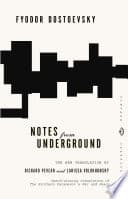
- Notes from Underground
Fyodor Dostoevsky
4.2 (84k) average on GoodreadsPsychologyFeatures an alienated, introspective narrator's philosophical ramblings and critiques of society.
- The Stranger
Albert Camus
4.1 (3k) average on GoodreadsFantasyWhile both explore themes of alienation and the absurd, The Book of Disquiet is almost entirely introspective, focusing on the inner world and observations of Bernardo Soares. Camus's The Stranger, in contrast, features a character (Meursault) who, despite his indifference, engages in external actions and a more traditional narrative arc, leading to a trial and confrontation with society. Pessoa's work is a pure philosophical diary, whereas Camus's is a philosophical novel with a distinct plot.
- Mrs Dalloway
Virginia Woolf
3.8 (361k) average on GoodreadsFictionBoth The Book of Disquiet and Mrs Dalloway delve deeply into the inner lives of their characters using modernist techniques. However, Woolf's novel, despite its stream-of-consciousness style and focus on internal monologues, is still anchored to a specific day's events and a more conventional narrative structure, following multiple characters leading up to a party. Pessoa's work is far less bound by external events or a cohesive timeline, existing as a collection of unbounded, unanchored reflections of a single consciousness over an indefinite period, making it a more radical departure from traditional narrative.
- Nineteen Eighty-Four
George Orwell
4.2 (5.5M) average on GoodreadsFictionWinston Smith dreams of truth and rebellion in a world where Big Brother watches all, but he confronts the terrifying power of a regime that controls not just actions, but thoughts.





Enjoyed the summary?
A summary gives you the shape of the book. The book itself has the detail, the examples and the voice.
Find The Book of Disquiet on AmazonAs an Amazon Associate, BookBrief earns from qualifying purchases. How we're funded