
Synopsis
Covers the whole plot, including the ending.
- Difficulty
- Medium
- Pacing
- Moderate
- Mood
- Philosophical, Reflective, Melancholy, Wise
- Read it if
- You enjoy philosophical fantasy, fables, and a thoughtful, introspective look at the Arthurian legend, especially if you appreciated 'The Once and Future King' and want a poignant conclusion.
- Skip it if
- You're looking for action-packed fantasy or prefer a more traditional, optimistic ending to the Arthurian saga without heavy philosophical discourse.
The Book of Merlyn Plot Summary
Covers the whole plot, including the ending.
Arthur's Final Night and Merlyn's Reappearance
King Arthur, old and tired, is alone in his tent on Salisbury Plain, the night before his final battle against his son, Mordred. He feels despair over his ruined ideals and the failure of his Round Table. To his surprise, his old tutor, Merlyn, appears. Merlyn, released from his magical prison, looks as he did when Arthur was young. He explains that he has returned to help Arthur understand humanity's failures and the true nature of war and peace before his end. Merlyn suggests a final series of lessons, like those he gave Arthur as a boy, to offer perspective on his life's work and the human condition.
The Ant Colony: A Lesson in Communism and War
Merlyn begins Arthur's final education by changing him into an ant. As an ant, Arthur sees the ants' strict, communal society, where individuals are not important, and communication is mostly through smell. He observes their constant, brutal, and seemingly pointless wars with other ant colonies, driven by instinct and a lack of reason. Merlyn points out how the ants' tribalism, their 'might makes right' approach, and human conflicts are similar. He shows how group identity can override individual ethics and lead to endless war without rational thought or compassion. Arthur is bothered by the ants' unquestioning obedience and their lack of a concept of peace.
The Geese: Brotherhood and Freedom
Next, Merlyn changes Arthur into a wild goose. As a goose, Arthur experiences the freedom of flight and the flock's communal life, led by a wise gander. He learns about their natural laws, migration patterns, and their lack of land disputes, only fighting over food. The geese respect individual space within the group and communicate well without violence. This experience is very different from the ants, showing Arthur another way to live together where individuals are free within a supportive community. Conflicts are rare because resources are shared, and there is no 'ownership' beyond immediate need. Arthur finds peace and natural order among the geese.
The Badger: The Origins of Man and Violence
Merlyn then changes Arthur into a badger. As a badger, Arthur listens to a wise old badger tell the ancient story of creation and humanity's unique, but flawed, nature. The badger explains that humans were given reason and the ability to choose, but also a dangerous capacity for violence and self-destruction. He discusses 'original sin' not as a religious idea, but as a flaw in human nature that often makes them choose power and conflict over peace and cooperation. This lesson explores the philosophical roots of human aggression, suggesting that while humans can be good, their instincts often mislead them, making peace a constant struggle.
The Owl and the Serpent: Nature's Balance
Merlyn continues Arthur's education by having him observe nature from different views, including as an owl and a snake. As an owl, Arthur experiences the predatory instinct and the need for the food chain, understanding that death is a natural part of life that keeps the ecosystem balanced. As a snake, he learns about a cold-blooded, instinct-driven life, free from human worries. These changes show how all living things are connected and part of a natural order. Even violence serves a purpose in keeping balance, unlike the often pointless violence of humans. Merlyn uses these examples to show Arthur that while nature has its 'cruelties,' they are usually functional, not driven by meanness or beliefs.
The Debate on War and Peace
Returning to his human form, Arthur has a deep philosophical debate with Merlyn. Arthur considers why humans wage war despite having reason, comparing it to animal behaviors. Merlyn explains that human wars come from fear, greed, pride, and the wrong use of reason, often fueled by nationalism, religion, and the desire for power. He argues that 'might makes right' is a basic instinct humans have not overcome. Merlyn says that true peace requires understanding, compassion, and a conscious effort to overcome these basic instincts. He emphasizes education and developing empathy as important tools.
The Fall of Humanity and the Beast Fable
Merlyn looks deeper into the human condition, explaining that humanity's 'fall' was not just a biblical event but an ongoing struggle with their own nature. He describes how humans, unlike animals, have self-awareness and the ability for abstract thought, which can lead to great good and great evil. He explains that the animal changes were not random lessons but a type of 'beast fable' designed to make Arthur think about human behavior by watching simpler, more instinct-driven lives. Merlyn stresses that peace comes from understanding these instincts and consciously choosing to overcome them through reason and compassion, rather than giving in to them.
The Importance of Education and the Round Table's Failure
Arthur regrets the failure of his Round Table, which was based on chivalry, justice, and peace, but ended in internal conflict. Merlyn explains that Arthur's good intentions were not enough; real change needs a basic shift in human nature, which only comes through education and developing individual conscience. He argues that the Round Table, though well-intentioned, became a rigid system that failed to adapt to human complexities and eventually gave in to the very flaws it tried to stop: pride, jealousy, and the desire for power. Merlyn emphasizes that knowledge and empathy are the real weapons against war.
The Future of Humanity and the Hope for Peace
Despite the bleakness of Arthur's current situation, Merlyn offers a careful glimmer of hope for the future. He speaks of humanity's ability to grow, to learn from mistakes, and to eventually choose reason and compassion over brute force and tribalism. He suggests that while Arthur's efforts might seem to have failed, the ideas of 'Might for Right' and the search for peace will last and inspire future generations. Merlyn believes that through continuous education, critical thinking, and a commitment to understanding, humanity can slowly move towards a more peaceful existence, even if it is a long and hard journey.
Arthur's Acceptance and Final Farewell
As dawn nears, signaling the coming battle, Arthur, now with new understanding and a sense of peace, accepts his unavoidable fate. He realizes that his life's work, though seemingly ending in tragedy, was not wasted. Merlyn's lessons have given him a deeper insight into the human condition and the ongoing struggle between good and evil, reason and instinct. Merlyn, having finished his purpose of guiding Arthur one last time, says a final goodbye, disappearing as quietly as he arrived. Arthur, alone again, prepares to face his destiny, carrying his knowledge and a quiet hope for humanity's future.
The Book of Merlyn Characters
King Arthur
Protagonist
The aging king, facing his final battle and reflecting on his life's failures.
King Arthur is presented as an old, weary, and disillusioned ruler, grappling with the impending doom of his kingdom and the failure of his ideals. He is deeply introspective, questioning the purpose of his life and the inherent flaws in humanity that led to the collapse of his Round Table. Despite his despair, he remains open to Merlyn's final lessons, demonstrating a lifelong thirst for knowledge and understanding. He embodies the tragic hero who tried to implement peace and justice but was ultimately undone by human nature.
Relationships: Merlyn (Student-mentor, deeply trusting and affectionate); Mordred (Illegitimate son and ultimate enemy); Lancelot (Close friend and most trusted knight, whose affair with Guenever ultimately shattered the Round Table); Guenever (Wife, whose affair with Lancelot contributed to the kingdom's downfall)
Merlyn
Mentor/Supporting
Arthur's ancient, wise tutor, returned for a final lesson on humanity.
Merlyn is the magical, anachronistic tutor to King Arthur, possessing knowledge from across time. He is a detached, philosophical observer of humanity, often cynical but ultimately hopeful. His role is to provide Arthur with a final, comprehensive education on the nature of war, peace, and the human condition, using a series of animal transformations and philosophical debates. He acts as the voice of reason and the embodiment of wisdom, challenging Arthur's assumptions and guiding him towards a deeper understanding of his own failures and the potential for future generations.
Relationships: King Arthur (Mentor-student, profound and enduring intellectual bond); Nimue (The sorceress who imprisoned him, but who eventually releases him)
Mordred
Antagonist
Arthur's illegitimate son and the leader of the rebellion against him.
Mordred is the illegitimate son of King Arthur and his half-sister Morgause. He represents the ultimate failure of Arthur's reign and the destructive forces of ambition, betrayal, and unbridled power. Though not directly present in the narrative of 'The Book of Merlyn,' his impending battle against Arthur is the catalyst for the entire story, symbolizing the collapse of Arthur's ideals and the tragic end of his kingdom. He is the personification of the human flaws that Merlyn seeks to explain to Arthur.
Relationships: King Arthur (Son and mortal enemy); Morgause (Mother)
The Ant
Supporting/Symbolic
A collective entity representing unthinking communism and perpetual warfare.
The Ant is not an individual character but a collective representation of a species. When Arthur is transformed into an ant, he observes their rigid, instinct-driven society, characterized by absolute conformity, a lack of individual thought, and incessant, brutal warfare against other colonies. The ants symbolize the dangers of extreme collectivism, where individual identity is suppressed, and conflict is an inherent, unreasoned part of existence. They serve as a stark contrast to human potential for reason and compassion, highlighting humanity's own tribalistic tendencies.
The Wild Goose
Supporting/Symbolic
A collective entity representing communal freedom and natural order.
Similar to the Ant, the Wild Goose represents a collective species. When Arthur is transformed into a goose, he experiences a different model of coexistence. The geese live in a communal yet free society, respecting individual space within the flock, sharing resources, and communicating without violence. They embody natural law and a peaceful existence, free from the territorial disputes and ideological conflicts of humans. They serve as a counterpoint to the ants, showing Arthur a potential for harmonious living within a natural order.
The Badger
Supporting/Symbolic
A wise, ancient creature representing the deep history of life and human origins.
The Badger is an ancient, wise animal that Arthur encounters during his transformations. It serves as a narrator for a 'history of man,' explaining humanity's unique position in creation – endowed with reason but also with a propensity for violence and self-destruction. The Badger's perspective is rooted in a deep, primal understanding of life's complexities and the inherent flaws in human nature, offering a philosophical foundation for Merlyn's lessons on war and peace. It underscores the idea that humanity's struggle is deeply ingrained in its very being.
Nimue
Mentioned
The sorceress who imprisoned Merlyn, then released him.
Nimue is not an active character in 'The Book of Merlyn' but is mentioned as the one who previously imprisoned Merlyn and, crucially, releases him to guide Arthur one last time. Her role is primarily to facilitate Merlyn's reappearance, enabling the entire narrative of Arthur's final lessons. She represents the shifting powers of magic and fate in Merlyn's world.
Relationships: Merlyn (Imprisoner and liberator)
Guenever
Mentioned
Arthur's wife, whose affair with Lancelot contributed to the kingdom's downfall.
Guenever is mentioned as Arthur's queen, whose tragic affair with Lancelot is one of the key factors in the dissolution of the Round Table and the ensuing civil war. She represents the human frailties and passions that undermined Arthur's grand vision for a peaceful kingdom. Her actions, though not directly depicted, serve as a tangible example of the human flaws that Merlyn discusses.
Relationships: King Arthur (Wife); Lancelot (Lover)
Lancelot
Mentioned
Arthur's most trusted knight, whose affair with Guenever led to conflict.
Lancelot is mentioned as Arthur's most esteemed knight, whose affair with Queen Guenever tragically shattered the bonds of loyalty and fellowship within the Round Table. His actions, driven by passion, directly contributed to the civil strife that now threatens Arthur's kingdom. Lancelot embodies the human capacity for both great nobility and devastating personal failings, serving as another example of the complex and often self-destructive nature of humanity that Merlyn explores.
Relationships: King Arthur (Closest friend and knight, then betrayer); Guenever (Lover)
The Book of Merlyn Themes
The Nature of War and Peace
This is the main theme, seen through Arthur's despair and Merlyn's lessons. The book explores the causes of conflict—instinct, greed, fear, misused reason—and compares human warfare with nature's functional 'violence.' It questions if peace is truly possible for humanity, suggesting it needs conscious effort, education, and overcoming basic instincts. The animal transformations provide different ways of living together and dealing with conflict, showing humanity's unique ability to make both destructive and constructive choices.
“The greatest tragedy of mankind is that they have reason, but do not use it.”
Humanity's Flawed Nature and Potential
The novel looks closely at humanity's flaws, such as pride, tribalism, and the desire for power, which often lead to self-destruction. Merlyn and the Badger discuss humanity's 'original sin' as an innate tendency towards violence despite having reason. However, the theme also explores humanity's potential for good, for empathy, and for learning from mistakes, suggesting that while flawed, humans can choose peace through education and conscious effort. Arthur's own journey shows this internal conflict.
“Man has been endowed with reason, which he uses to commit the most unreasonable acts.”
The Role of Education and Reason
Education, both formal and through experience, is shown as the main tool for overcoming humanity's destructive tendencies. Merlyn's teaching method—using animal transformations and philosophical debate—highlights the importance of gaining knowledge and using reason to understand the world and oneself. The Round Table's failure is partly due to a lack of basic change in human nature, which Merlyn believes can only happen through intellectual and moral education, encouraging critical thinking and empathy.
“The only thing that can conquer the world is reason.”
The Cycle of History and Hope for the Future
The book explores how human history often repeats, with cycles of war and the rise and fall of civilizations. Arthur's story, ending sadly, reflects this cycle. However, Merlyn offers a nuanced view that, despite apparent failures, the ideals of 'Might for Right' and the pursuit of peace can last and inspire future generations. There is a careful optimism that humanity, through slow and hard progress, can eventually learn and evolve towards a more peaceful future, breaking the cycle of violence.
“There is only one hope for the future: to teach men to think for themselves.”
Individual vs. Collective Identity
This theme is clearly shown through Arthur's animal transformations. The ant colony represents extreme group living where individual identity is suppressed for the group's sake, leading to thoughtless warfare. In contrast, the geese show a balanced communal life where individuals thrive within a supportive group without losing freedom or resorting to conflict. This comparison makes Arthur consider how human societies manage the balance between individual rights and group identity, and how this balance affects peace and conflict.
“They had no individuality, no personality, only the group. And they were always at war.”
Plot Devices & Literary Techniques
Beast Fable/Animal Transformation
Arthur's magical transformations into various animals to gain perspective.
This is the primary narrative device, where Merlyn transforms Arthur into an ant, a goose, and a badger (among others). Each transformation allows Arthur to experience life from a non-human perspective, observing different societal structures, forms of communication, and approaches to conflict. The animal fables serve as allegories, providing concrete examples that illuminate the abstract philosophical concepts Merlyn discusses about human nature, war, and peace. They allow Arthur, and the reader, to gain critical distance and compare human behavior to the instinct-driven world of animals.
Socratic Dialogue
Merlyn's method of teaching Arthur through questioning and debate.
Merlyn employs a Socratic method of teaching, guiding Arthur through questions and discussions rather than simply lecturing. This encourages Arthur to actively engage with the philosophical concepts, draw his own conclusions, and critically reflect on his past actions and the nature of humanity. The extended dialogues between Merlyn and Arthur are central to the book, serving as the vehicle for exploring the complex themes of war, peace, and human nature, and highlighting the importance of reasoned thought and intellectual inquiry.
Framing Device
The entire story is set during Arthur's final night before his last battle.
The entire narrative is framed by Arthur's last night on earth, alone in his tent before his final battle against Mordred. This creates a sense of urgency, introspection, and ultimate finality. The impending doom provides a poignant backdrop for Merlyn's lessons, emphasizing the stakes of Arthur's reflections and the timeless relevance of the questions being posed. It allows for a comprehensive retrospective on Arthur's life and reign, culminating in a moment of profound understanding before his inevitable end.
Anachronism (Merlyn's Knowledge)
Merlyn's awareness of future historical events and scientific concepts.
Merlyn possesses knowledge that transcends his historical period, including concepts like communism, nationalism, and even hints of future scientific understanding. This anachronistic wisdom allows him to provide Arthur with a broader, more detached perspective on human history and behavior, drawing parallels between Arthur's time and future conflicts. It reinforces Merlyn's magical nature and his role as an omniscient guide, enabling him to offer timeless insights into the human condition that resonate beyond the Arthurian legend.
The Book of Merlyn Quotes
“The best thing for being sad is to learn something.”
“The only thing that never changes is that everything changes.”
“We are all born mad. Some remain so.”
“The destiny of Man is to unite, not to divide.”
“Love is a force more formidable than any other.”
“To learn is to change. Education is not the filling of a pail, but the lighting of a fire.”
“The world is full of magic things, patiently waiting for our senses to grow sharper.”
“Courage is not the absence of fear, but the triumph over it.”
“History is a nightmare from which I am trying to awake.”
“The price of freedom is eternal vigilance.”
“We are what we pretend to be, so we must be careful about what we pretend to be.”
“The greatest enemy of knowledge is not ignorance, it is the illusion of knowledge.”
“To be yourself in a world that is constantly trying to make you something else is the greatest accomplishment.”
“The only way to deal with an unfree world is to become so absolutely free that your very existence is an act of rebellion.”
Quiz
10 questions on the plot and the characters. Each answer comes with a short explanation.
Question 1
In 'The Book of Merlyn', what is the primary setting where Arthur spends his final night?
- A dungeon in Camelot
- Merlyn's magical study
- The battlefield of Camlann
- A forest near Avalon
Show answer
B. Merlyn's magical study The story takes place primarily in Merlyn's enchanted study, where Arthur is transported on his last night to reflect on his life and the themes of war and peace.
Question 2
Which character from Arthur's past does Merlyn summon to help Arthur understand human nature?
- Sir Lancelot
- The Wart (young Arthur)
- Queen Guinevere
- Sir Gawain
Show answer
B. The Wart (young Arthur) Merlyn brings the young Arthur, known as the Wart from 'The Sword in the Stone', to contrast his innocence with the aged king's experiences, highlighting themes of growth and disillusionment.
Question 3
What major theme does 'The Book of Merlyn' explore through Arthur's reflections?
- The importance of chivalry in warfare
- The futility of war and quest for peace
- The role of magic in medieval politics
- The decline of the Round Table
Show answer
B. The futility of war and quest for peace The book delves deeply into the cyclical nature of war and humanity's struggle for peace, as Arthur contemplates his failures and the broader human condition.
Question 4
How does Merlyn help Arthur gain perspective on human society in the book?
- By showing him visions of future wars
- By transforming him into various animals
- By having him read ancient prophecies
- By introducing him to philosophers
Show answer
B. By transforming him into various animals Merlyn uses his magic to turn Arthur into animals like an ant and a goose, allowing him to observe different social structures and reflect on human nature and governance.
Question 5
What does Arthur realize about his own role in the wars he fought?
- That he was always a pacifist at heart
- That his ideals were corrupted by power
- That he failed to prevent war despite his efforts
- That he should have used more magic in battles
Show answer
C. That he failed to prevent war despite his efforts Through his discussions with Merlyn and reflections, Arthur comes to understand that his attempts to establish peace through might and justice ultimately could not overcome humanity's warlike tendencies.
Question 6
Which animal transformation does Arthur undergo to learn about totalitarianism?
- A badger
- An ant
- A goose
- A hedgehog
Show answer
B. An ant As an ant, Arthur experiences a highly regimented, warlike society that mirrors totalitarian regimes, teaching him about the dangers of blind obedience and lack of individuality.
Question 7
What is the significance of the goose transformation in Arthur's journey?
- It shows him the simplicity of rural life
- It demonstrates a peaceful, borderless society
- It teaches him about avian warfare tactics
- It allows him to fly away from his problems
Show answer
B. It demonstrates a peaceful, borderless society As a goose, Arthur encounters a society without property or borders, living in harmony, which contrasts sharply with human conflicts and offers a model for peace.
Question 8
How does T.H. White describe the ending of 'The Book of Merlyn' in relation to his Arthurian epic?
- As a tragic conclusion to a fallen hero
- As a hopeful new beginning for Camelot
- As turning the epic into a 'perfect fruit'
- As an unfinished sequel to earlier books
Show answer
C. As turning the epic into a 'perfect fruit' White wrote that this book would complete his Arthurian saga, making it 'rounded off and bright and done,' providing philosophical closure to Arthur's story.
Question 9
What historical context does White use to frame Arthur's meditations on war?
- The Napoleonic Wars
- World War II
- The Crusades
- The War of the Roses
Show answer
B. World War II Written during and after World War II, White infuses the book with contemporary reflections on modern warfare, making Arthur's struggles resonate with 20th-century conflicts.
Question 10
In what way does 'The Book of Merlyn' serve as a conclusion to 'The Once and Future King'?
- It reveals Arthur's secret lineage
- It provides a magical battle between Arthur and Mordred
- It offers philosophical resolution to Arthur's life lessons
- It introduces new characters to continue the legend
Show answer
C. It offers philosophical resolution to Arthur's life lessons This book acts as the thematic and philosophical capstone to White's Arthurian series, focusing on Arthur's final insights rather than plot events, thus completing his character arc.
The Book of Merlyn FAQ
What is 'The Book of Merlyn' about?
The novel follows King Arthur on his final night before the Battle of Camlann, where he is visited by the wizard Merlyn and transformed into various animals to learn lessons about humanity, war, and governance. Through these experiences, Arthur reflects on his life's work and the failure of his ideals, culminating in a philosophical exploration of peace versus violence.
Why should I read 'The Book of Merlyn'?
It offers a profound and bittersweet conclusion to T.H. White's Arthurian saga, blending fantasy, historical fiction, and philosophical inquiry. The book delves deeply into themes of war, human nature, and the tragic gap between ideals and reality, all while maintaining White's signature wit and imaginative storytelling.
What is the background/setting of 'The Book of Merlyn'?
Set primarily in a magical, timeless realm on the eve of the Battle of Camlann, the story alternates between Arthur's memories of Camelot and his transformative journeys as an ant, goose, and badger. This allows White to juxtapose medieval England with allegorical animal societies to critique human civilization.
What are the most memorable quotes?
Key quotes include Merlyn's advice, 'The best thing for being sad is to learn something,' and Arthur's lament, 'I have spent my life trying to get a single idea into people's heads: that might is not right.' These encapsulate the book's themes of education, pacifism, and the struggle against innate human aggression.
What writing style does the author use?
White employs a blend of whimsical fantasy, historical detail, and philosophical dialogue, with a tone that shifts from humorous to melancholic. His prose is rich with allegory and anthropomorphism, using animal transformations to explore complex ethical questions in an accessible way.
What minor details add significant meaning?
The depiction of the ant colony as a totalitarian war machine subtly critiques militarism and blind obedience, while the geese's peaceful, migratory society highlights alternatives to human conflict. These animal vignettes serve as microcosms for Arthur's reflections on his own kingdom's failures.
What are some subtle foreshadowing moments?
Early references to Arthur's 'round table' ideals being 'squared' by reality foreshadow the collapse of Camelot. Merlyn's repeated warnings about human nature's propensity for violence hint at the inevitable tragedy of Camlann, even as Arthur clings to hope for peace.
What unexpected character connections exist?
The animal characters Arthur encounters—like the philosophical badger and the communal geese—mirror human archetypes from his life, such as knights and peasants. This reinforces the theme that human struggles with power and community are universal, transcending species.
What are unspoken character motivations?
Arthur is driven by a deep-seated guilt over the wars and betrayals that marred his reign, seeking redemption through Merlyn's lessons. Merlyn, in turn, is motivated by a paternal desire to prepare Arthur for death with wisdom, masking his own sorrow with humor and magic.
What psychological complexities do characters exhibit?
Arthur grapples with depression and disillusionment, wrestling with the contradiction between his pacifist ideals and his role as a warrior-king. Merlyn displays a complex blend of omniscience and vulnerability, using his magic to teach while acknowledging the limits of changing human nature.
What are the major emotional turning points?
Key moments include Arthur's despair upon seeing the ant colony's mindless warfare, his joy in the geese's harmonious society, and his final acceptance of mortality and failure during the badger's teachings. These shifts mark his journey from hope to resignation.
How do relationship dynamics evolve?
Arthur and Merlyn's bond deepens from teacher-student to one of mutual grief and understanding, as they confront the futility of their efforts together. Arthur's relationship with his own past self evolves from pride to critical reflection, acknowledging his complicity in Camelot's downfall.
Which parts remain ambiguous or open-ended?
The ultimate effectiveness of Arthur's lessons is left ambiguous—whether his insights can change humanity or are merely a personal consolation before death. The fate of Camelot's ideals post-Arthur is also open, with White suggesting they may live on in memory rather than reality.
What are controversial scenes or decisions?
Arthur's decision to fight at Camlann despite his anti-war beliefs sparks debate over whether it represents tragic necessity or a betrayal of his principles. Some readers also question Merlyn's methods, as his harsh lessons border on cruelty in forcing Arthur to confront painful truths.
'The Book of Merlyn' ending explained: how it ends & what it means
The novel ends with Arthur accepting his death at Camlann, having gained wisdom but no solution to human violence. White implies that the struggle for peace is eternal and flawed, with Arthur's legacy being a bittersweet reminder of idealism's limits in a violent world.
About the author
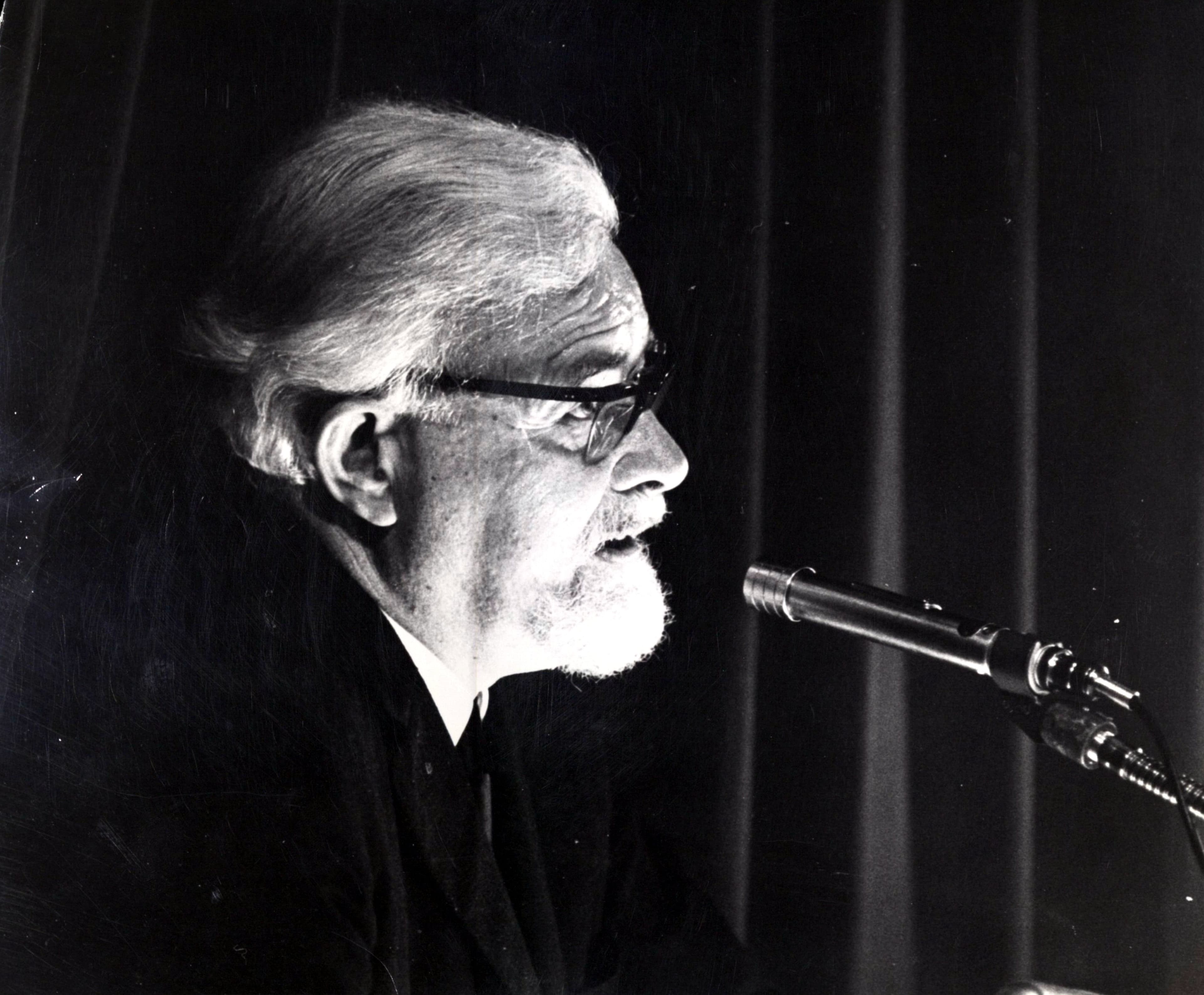
T.H. White was an English author best known for his works of fiction that explore themes of mythology and fantasy. His notable books include "The Sword in the Stone," which tells the story of the young King Arthur, and "The Book of Merlyn," which serves as a conclusion to the Arthurian saga. White's writing often combines humor and philosophical reflection.
Similar books
- Jonathan Livingston Seagull
Richard Bach
3.8 (202k) average on GoodreadsFantasyFeatures an animal protagonist used to explore philosophical themes of self-improvement and purpose.
- Animal Farm
George Orwell
4.0 (2.7M) average on GoodreadsPoliticsUses animal allegories to critique human society and political systems.
- The Mists of Avalon
Marion Zimmer Bradley
4.1 (192k) average on GoodreadsFantasyWhile Bradley re-centers the Arthurian narrative on female characters and the conflict between paganism and Christianity, White's Merlyn focuses on male leadership failures and the destructive nature of war, offering a different lens on the legend's downfall. Bradley's work is more about the clash of belief systems and gender roles, whereas White's is a meditation on human folly and pacifism.
- Harry Potter and the Sorcerer's Stone
J.K. Rowling
4.5 (7M) average on GoodreadsFantasyRescued from a miserable life under the stairs, an orphaned boy discovers he's a wizard destined for a magical school, where he uncovers a dangerous secret tied to the dark wizard who murdered his parents.
- The Hunger Games
Suzanne Collins
4.3 (6.4M) average on GoodreadsFantasyIn a future where children fight to the death on live television, Katniss Everdeen volunteers for the arena, turning a death sentence into a fight for survival and a spark of rebellion.
- 1984
George Orwell
4.2 (3.1M) average on GoodreadsPoliticsIn a future where surveillance and thought control are absolute, a man's search for truth clashes with the Party, showing that hope can be a form of rebellion.





Enjoyed the summary?
A summary gives you the shape of the book. The book itself has the detail, the examples and the voice.
Find The Book of Merlyn on AmazonAs an Amazon Associate, BookBrief earns from qualifying purchases. How we're funded