

Core Idea
- Difficulty
- Easy
- Read it if
- You enjoy humorous memoirs about childhood, relate to experiences of social anxiety or feeling misunderstood, or appreciate stories about finding your passion despite early challenges.
- Skip it if
- You prefer strictly instructional non-fiction or are looking for a book with a very serious or academic tone.
Key Takeaways from The Boy Who Failed Show and Tell
The Teacher Who Hated Me
Navigating a classroom where the educator seems to have a personal vendetta.
One of Jordan's most relatable challenges is the seemingly unfair hostility from his teacher. This teacher appears to actively undermine and punish him, even for small mistakes or genuine attempts to follow rules. This creates constant anxiety and frustration for Jordan, making school feel hostile and unfair. It shows the big power difference in the classroom and how much a biased or hostile teacher can affect a student's self-esteem and school experience. The story suggests that sometimes, despite a child's best efforts, outside forces can make school very difficult and discouraging.
“His teacher hates him. Like, really hates him. Like, is totally out to get him even when he's trying to be good, and is willing to fail him on the simplest things, like show and tell.”
In the book: The teacher's willingness to fail him on 'the simplest things, like show and tell,' despite his efforts.
Try this: For students in similar situations, it's crucial to find allies (parents, counselors) and develop coping mechanisms to maintain self-worth. For educators, it's a stark reminder of the responsibility to treat all students fairly and to recognize the long-term impact of perceived bias.
Related ideas: teacher-student-conflict, classroom-hostility, educational-bias
Asthma: An Invisible Burden
Living with a chronic health condition that makes basic functions a constant struggle.
Jordan's asthma is not just a minor breathing issue; it affects every part of his life. The book subtly shows how a chronic health condition, even one that seems manageable to others, can cause constant anxiety and physical limits. The phrase 'breathing is never really an optional activity' powerfully conveys the constant nature of this struggle. This takeaway highlights the hidden burdens many children carry, showing how health problems can affect their energy, confidence, and participation in daily activities, often without others fully understanding the effort involved in simply living.
“He has a slight breathing problem because of his asthma. And breathing is never really an optional activity.”
In the book: The direct statement about his asthma and the non-optional nature of breathing.
Try this: Develop empathy for those with chronic conditions; learn to advocate for accommodations if you have a condition. For parents, ensure open communication with schools about health needs. For peers, practice understanding and patience.
Related ideas: chronic-illness-childhood, asthma-management, invisible-disabilities
Snake Overpopulation Crisis
Unexpected pet proliferation leading to comical and overwhelming responsibility.
Amid his other struggles, Jordan faces a unique and funny challenge: an unexpected burst of baby snakes. This situation shows how life throws unexpected problems, even in ordinary circumstances. What started as simple pet ownership becomes a big logistical and emotional burden, requiring Jordan to find homes for many slithery offspring. This takeaway emphasizes life's unpredictable nature and the sometimes-absurd responsibilities that fall on us, even as children. It also shows Jordan's resilience and problem-solving skills, with a funny twist, as he deals with this snake problem.
“His pet snake has given birth to way, way, way too many baby snakes, all who need a home.”
In the book: The specific detail about the pet snake giving birth to 'way, way, way too many baby snakes.'
Try this: Be prepared for unexpected responsibilities and develop creative solutions. Learn about pet care thoroughly before acquiring animals. Embrace the humor in life's absurdities.
Related ideas: pet-responsibility, unexpected-challenges, childhood-humor
The World's Best Drummer (Maybe Not)
The gap between ambitious dreams and the reality of dedicated practice.
Jordan's dream of becoming 'The World's Best Drummer in no time whatsoever' is a classic childhood ambition—grand, ambitious, and completely unrealistic. This takeaway highlights the common experience of learning how much effort and dedication it takes to master a skill, contrasting it with the desire for instant results. It is a funny yet touching reminder that real achievement does not happen 'in no time whatsoever' but through consistent practice, perseverance, and accepting a learning curve. This journey, even if it does not lead to world-best status, is valuable for teaching patience and the rewards of steady progress.
“He is finding that becoming The World's Best Drummer in no time whatsoever is maybe not the easiest goal.”
In the book: Jordan's realization that achieving his drumming goal 'is maybe not the easiest.'
Try this: Set realistic goals, understand that mastery takes time and consistent effort. Embrace the process of learning and practicing, not just the end result. Find joy in small improvements.
Related ideas: goal-setting-childhood, perseverance-practice, musical-aspirations
Lunchbox Defense
Facing bullies with meager resources and unexpected resilience.
The image of Jordan defending himself against bullies with only a lunchbox is both funny and meaningful. It captures the vulnerability of childhood and the often-unequal power dynamics in bullying situations. This takeaway emphasizes that courage is not always about physical strength; it is about facing intimidating situations with whatever small resources one has, often with quick wit or an unexpected move. It speaks to the resourcefulness and resilience children develop when facing trouble and the importance of finding non-violent ways to handle conflict, even if it is just a symbolic act of defiance.
“There are bullies ready to stomp him when all he has to defend himself with is a lunchbox.”
In the book: The specific detail of 'bullies ready to stomp him' and his 'lunchbox' as defense.
Try this: Learn non-confrontational strategies for dealing with bullies. Encourage children to speak up and seek help. Practice self-advocacy and creative problem-solving in difficult situations.
Related ideas: bullying-strategies, childhood-resilience, self-defense-non-violent
The Freak Swing Set Accident
Unforeseen physical dangers and the fragility of childhood safety.
Beyond personal and internal conflicts, Jordan also faces purely accidental physical harm, like the 'freak swing set accident.' This detail reminds us that childhood is not always a safe, perfect time; unexpected dangers and injuries can come from seemingly harmless activities. It shows the fragility of physical well-being and the randomness of bad luck. This takeaway stresses that life's challenges are not always directly caused by people or choices, but can be random events that add to the stress and difficulty of growing up, forcing resilience when facing the unexpected.
“And all this doesn't even include the freak swing set accident...”
In the book: The explicit mention of 'the freak swing set accident' as another challenge.
Try this: Be aware of potential dangers in everyday activities. Learn basic first aid. Understand that accidents happen and that it's important to recover and learn from them.
Related ideas: childhood-accidents, unforeseen-danger, resilience-physical-trauma
Fears Inside His Head
Confronting internal anxieties and the power of imagination.
While outside conflicts are clear, Jordan also deals with 'the fears inside his head.' This acknowledges the significant role of internal struggles, anxieties, and how a child's imagination can sometimes create overwhelming worries. These internal fears can be just as, if not more, debilitating than outside threats. This takeaway emphasizes the importance of mental well-being in childhood, recognizing that a child's inner world is complex and often full of anxieties that need to be acknowledged and addressed. It suggests that growth involves not just overcoming outside obstacles, but also learning to manage and understand one's own thoughts and fears.
“...the fears inside his head...”
In the book: The direct phrase 'the fears inside his head,' indicating an internal struggle.
Try this: Practice mindfulness and self-awareness. Learn to identify and articulate fears. Seek support from trusted adults for managing anxiety. Understand that internal struggles are valid.
Related ideas: childhood-anxiety, internal-struggles, mental-wellbeing-kids
The Funniest Class Presentation Ever
Finding humor and self-expression amidst chaos and pressure.
Despite many challenges, Jordan gives 'the funniest class presentation ever.' This important detail highlights how humor and self-expression can be coping mechanisms and sources of triumph. It shows that even in the toughest situations, creativity and good comedic timing can turn a potential disaster into a personal victory and connection. This takeaway underscores the importance of finding one's voice, embracing unique talents, and using humor to navigate difficulties, proving that sometimes, the best defense against a tough world is a good laugh, shared with others.
“...or the funniest class presentation ever.”
In the book: The explicit mention of 'the funniest class presentation ever,' indicating a moment of success and humor.
Try this: Embrace humor as a coping mechanism. Develop public speaking skills. Find creative outlets for self-expression. Learn to turn challenging situations into opportunities for connection and laughter.
Related ideas: humor-coping-mechanism, public-speaking-kids, creative-expression-childhood
Keeping Cool, Banging Drums, and Humor
The core strategies for navigating a challenging childhood.
This quote summarizes Jordan's three main ways of coping: managing emotions ('keeping his cool'), a passionate hobby ('banging on the drums'), and a generally positive outlook ('keeping his sense of humor'). These are not just random actions; they are deliberate strategies that help him stay sane and maintain his identity amid constant trouble. 'Keeping his cool' suggests self-control, 'banging on the drums' provides an outlet for energy and frustration, and 'keeping his sense of humor' helps him reframe difficulties. This takeaway offers a practical framework for resilience, emphasizing the importance of a varied approach to dealing with life's problems.
“By keeping his cool (some of the time), banging on the drums (a lot), and keeping his sense of humor (all the time), Jordan's going to try to make it through the year...”
In the book: The direct enumeration of his strategies: 'keeping his cool,' 'banging on the drums,' and 'keeping his sense of humor.'
Try this: Identify and cultivate your own healthy coping mechanisms. Develop a hobby that provides an outlet for stress. Actively seek humor in everyday life. Practice emotional regulation techniques.
Related ideas: coping-mechanisms-kids, emotional-regulation-childhood, resilience-strategies
Growing Up to Write About It
Transforming difficult experiences into narrative and connection.
The final, overarching takeaway is the ultimate success: Jordan's ability to process and turn his difficult childhood experiences into a book. This shows not only his survival but also his mastery over the past, turning pain into art and personal history into a shared story. It highlights the power of storytelling to heal and the idea that even the most difficult times can become valuable material for reflection, connection, and empathy. This takeaway offers hope, suggesting that enduring hardship can lead to deep insights and the ability to help others by sharing one's journey, proving that every experience, good or bad, holds potential for growth and meaning.
“...and grow up to write a book about it!”
In the book: The concluding statement that he will 'grow up to write a book about it!'
Try this: Reflect on past experiences and consider how they've shaped you. Find ways to share your story, whether through writing, art, or conversation. Recognize the power of narrative for healing and connecting with others.
Related ideas: power-of-storytelling, memoir-writing, transformative-experiences
The Boy Who Failed Show and Tell Quotes
“Being normal is way overrated. The best people are never normal.”
“Every time you try to hide who you are, it's like putting a little brick in a wall around your heart.”
“The thing about being different is, you can either let it define you in a bad way, or you can let it define you in a magnificent way.”
“Sometimes the bravest thing you can do is just be yourself, even when everyone else is trying to be someone else.”
“It's funny how the things you're most afraid of are often the things that end up teaching you the most.”
“You don't need a superpower to be a hero. Sometimes, just being a good friend is enough.”
“The best stories aren't always the ones where everything goes perfectly. Sometimes, the best stories are the ones where you mess up, and then you figure out how to fix it.”
“Laughter is like a secret weapon. It can make everything better, even when things are really bad.”
“It takes a lot more courage to admit you're scared than to pretend you're not.”
“Sometimes, the biggest adventures happen when you least expect them, and they don't always involve dragons or treasure chests.”
“The world needs more people who aren't afraid to be a little weird.”
“You can't control what other people think of you, but you can control how you feel about yourself.”
“Even the smallest voices can make the biggest difference if they're speaking from the heart.”
“Failure isn't the end. It's just a different way to start over.”
Quiz
10 questions on the main ideas. Each answer comes with a short explanation.
Question 1
What is one of the primary reasons Jordan's teacher 'hates him,' according to the book's description?
- Jordan frequently skips class.
- Jordan struggles with simple tasks like show and tell.
- Jordan talks back to his teacher constantly.
- Jordan is always disrupting the class with pranks.
Show answer
B. Jordan struggles with simple tasks like show and tell. The description explicitly states his teacher 'is willing to fail him on the simplest things, like show and tell,' indicating a core conflict point related to his academic performance in specific areas.
Question 2
What medical condition does Jordan have that causes him a 'slight breathing problem'?
- Allergies
- Asthma
- Bronchitis
- Sinusitis
Show answer
B. Asthma The book description directly mentions, 'He has a slight breathing problem because of his asthma.'
Question 3
What unexpected event happens with Jordan's pet snake?
- It escapes from its cage.
- It gives birth to many baby snakes.
- It bites Jordan's teacher.
- It refuses to eat its food.
Show answer
B. It gives birth to many baby snakes. The description states, 'His pet snake has given birth to way, way, way too many baby snakes, all who need a home.'
Question 4
What musical ambition does Jordan pursue, which turns out to be 'not the easiest goal'?
- Becoming a guitar hero.
- Becoming The World's Best Drummer.
- Mastering the piano.
- Learning to sing professionally.
Show answer
B. Becoming The World's Best Drummer. The text explicitly mentions, 'He is finding that becoming The World's Best Drummer in no time whatsoever is maybe not the easiest goal.'
Question 5
What is Jordan's only listed defense against bullies?
- His older brother.
- A whistle.
- A lunchbox.
- His pet snake.
Show answer
C. A lunchbox. The description notes, 'There are bullies ready to stomp him when all he has to defend himself with is a lunchbox.'
Question 6
Beyond the teacher, pet snakes, and drumming, what other specific 'freak accident' is mentioned as going wrong for Jordan?
- A bicycle crash.
- A fall from a tree.
- A swing set accident.
- A mishap during a science experiment.
Show answer
C. A swing set accident. The text states, 'And all this doesn't even include the freak swing set accident...'
Question 7
What is the overarching theme Jordan uses to cope with all the challenges he faces?
- Seeking revenge on those who wrong him.
- Ignoring his problems and hoping they disappear.
- Keeping his cool, banging on drums, and maintaining a sense of humor.
- Relying solely on adult intervention for solutions.
Show answer
C. Keeping his cool, banging on drums, and maintaining a sense of humor. The summary concludes, 'By keeping his cool (some of the time), banging on the drums (a lot), and keeping his sense of humor (all the time), Jordan's going to try to make it through the year...' This highlights his coping mechanisms.
Question 8
The book description implies a meta-narrative. What is Jordan's ultimate goal with his experiences from this year?
- To become a professional comedian.
- To teach others how to avoid similar problems.
- To grow up and write a book about it.
- To forget everything that happened and move on.
Show answer
C. To grow up and write a book about it. The final line of the description states, '...and grow up to write a book about it!' directly referencing the book the reader is holding.
Question 9
What aspect of Jordan's internal struggle is mentioned alongside external problems like bullies and accidents?
- His struggle with maintaining friendships.
- The fears inside his head.
- His difficulty with academic subjects beyond show and tell.
- His constant desire to run away from home.
Show answer
B. The fears inside his head. The description states, 'And all this doesn't even include the freak swing set accident, the fears inside his head, or the funniest class presentation ever.' This highlights an internal, emotional challenge.
Question 10
The title 'The Boy Who Failed Show and Tell' emphasizes a particular challenge. How does this challenge connect to the broader theme of Jordan's year?
- It's an isolated incident, not representative of his other struggles.
- It symbolizes his general difficulty with simple tasks and his teacher's perceived animosity.
- It's the only problem he faces that he cannot solve with humor.
- It represents his artistic block as an aspiring drummer.
Show answer
B. It symbolizes his general difficulty with simple tasks and his teacher's perceived animosity. The description highlights the teacher 'is willing to fail him on the simplest things, like show and tell,' linking this specific failure to the larger problem of his teacher's attitude and his struggles with seemingly easy tasks, making it a symbolic cornerstone of his difficult year.
The Boy Who Failed Show and Tell FAQ
What is 'The Boy Who Failed Show and Tell' about?
It's a hilariously true middle-grade story by Jordan Sonnenblick, recounting a school year where everything seems to go wrong for him, from a teacher who 'hates' him to managing asthma, a snake giving birth, and aspiring to be a drummer.
Is 'The Boy Who Failed Show and Tell' a true story?
Yes, the book is an unbelievably hilarious true story from bestselling author Jordan Sonnenblick, detailing his own experiences during a particularly challenging and eventful school year.
Does Jordan overcome his teacher's dislike in the book?
The book explores Jordan's struggles with a teacher who seems to be 'out to get him,' even on simple tasks like show and tell. Readers will follow his journey to navigate this difficult relationship throughout the school year.
What role does drumming play in the story?
Becoming 'The World's Best Drummer' is one of Jordan's ambitious goals in the book, serving as an outlet and a significant part of his identity as he tries to make it through the year by 'banging on the drums (a lot)'.
How does Jordan deal with bullies in the book?
The story includes encounters with bullies, forcing Jordan to find ways to defend himself, sometimes with unexpected items like a lunchbox, while trying to keep his cool and sense of humor.
What challenges does Jordan face regarding his pet snake?
A major subplot involves Jordan's pet snake unexpectedly giving birth to 'way, way, way too many baby snakes,' creating a humorous and overwhelming challenge to find homes for all of them.
Is this book suitable for reluctant readers?
With its humorous tone, relatable struggles, and engaging narrative about a kid facing numerous mishaps, 'The Boy Who Failed Show and Tell' is often a great choice for middle-grade readers, including those who may be reluctant.
How does 'The Boy Who Failed Show and Tell' differ from other middle-grade memoirs?
This book stands out with its specific focus on an accumulation of humorous disasters in a single school year, combined with Jordan Sonnenblick's signature comedic voice and his personal journey of using humor and music to cope.
About the author

Jordan Sonnenblick is an author known for his works of middle-grade fiction, including "After Ever After," "Notes from the Midnight Driver," "Falling Over Sideways," and "The Boy Who Failed Show and Tell." His stories often explore themes of adolescence, resilience, and personal growth, resonating with young readers. Sonnenblick's engaging writing style and relatable characters have made his books popular in children's literature.
Similar books
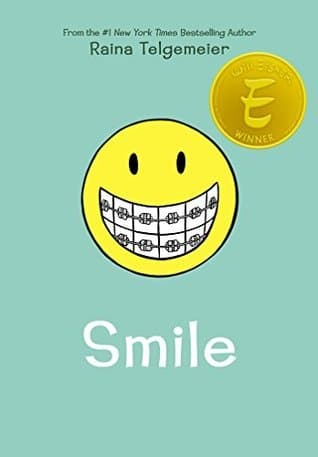
- Smile
Raina Telgemeier
4.3 (183k) average on GoodreadsChildren'sA graphic novel memoir about navigating middle school and physical challenges with humor.
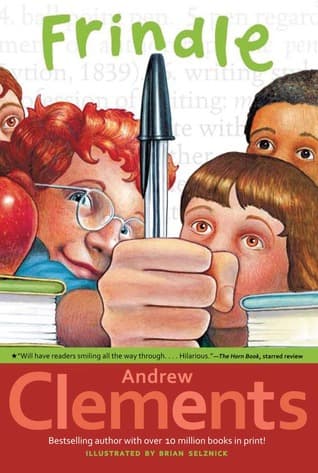
- Frindle
Andrew Clements
3.8 (104k) average on GoodreadsChildren'sClements's "Frindle" focuses on school life, ingenuity, and the power of words, often from a more external, plot-driven perspective. Sonnenblick's "The Boy Who Failed Show and Tell" is more intensely personal and retrospective, offering a memoir-like quality that explores internal experiences and their lasting impact, rather than a specific school-based innovation.
- The Diary of a Young Girl
Anne Frank
4.2 (2.7M) average on GoodreadsBiographyDuring the Nazi occupation, a teenage girl's diary, written from a secret annex, shares observations on humanity, hope, and the wait for freedom.
- Twisted 1. Twisted love
Ana Huang
3.7 (1.7M) average on GoodreadsA quiet billionaire with a difficult past finds his guarded heart opening to the woman he must protect, but their growing passion uncovers dangerous secrets and a shared, traumatic history.
- Eat, Pray, Love
Elizabeth Gilbert
3.6 (1.5M) average on GoodreadsLifestyleA heartbroken writer leaves her conventional life for a year-long global search for pleasure in Italy, spiritual devotion in India, and unexpected love and balance in Bali.
- Night
Elie Wiesel
4.3 (970k) average on GoodreadsBiographyIn the darkness of Auschwitz and Buchenwald, a teenage Elie Wiesel faces the extermination of his family, the loss of his faith, and the lasting scars of humanity's deepest cruelty.




Enjoyed the summary?
A summary gives you the shape of the book. The book itself has the detail, the examples and the voice.
Find The Boy Who Failed Show and Tell on AmazonAs an Amazon Associate, BookBrief earns from qualifying purchases. How we're funded