
Synopsis
Covers the whole plot, including the ending.
- Difficulty
- Medium
- Pacing
- Fast
- Mood
- Gothic, Dramatic, Suspenseful, Melodramatic, Mysterious
- Read it if
- You enjoy foundational Gothic literature, appreciate a dramatic, fast-paced plot, and are interested in the origins of supernatural horror and romance.
- Skip it if
- You prefer modern prose, dislike melodramatic plots, or are sensitive to themes of forced marriage and sudden character deaths.
The Castle of Otranto Plot Summary
Covers the whole plot, including the ending.
The Ill-Fated Wedding
The story begins on the wedding day of Conrad, the sickly son of Prince Manfred of Otranto, and Princess Isabella. As the ceremony is about to start, a large, enchanted helmet with black plumes falls from the sky and crushes Conrad in the castle courtyard. This strange event throws the castle into chaos. Manfred, upset by losing his only male heir, becomes fixated on a prophecy that says the castle and lordship of Otranto will pass from his family line when its true owner becomes too large to live there. He immediately decides to divorce his wife, Hippolita, and marry Isabella himself, believing this will secure his family line and stop the prophecy, even though Isabella was meant for his son.
Isabella's Escape
Manfred confronts Isabella in a dark hallway, telling her his terrible plan to marry her. Terrified, Isabella escapes through a secret passage under the castle, which leads to a church. During her escape, she meets a young peasant named Theodore, who looks a lot like a painting of Alfonso the Good, a former Prince of Otranto. Theodore, whom Manfred had unfairly jailed earlier for just commenting on the giant helmet, helps Isabella escape to the safety of the church, protecting her from Manfred's chase. Manfred is angry about her escape and Theodore's involvement.
Theodore's Imprisonment and Rescue
Manfred, furious about Isabella's escape and Theodore's help, orders Theodore's execution. Theodore is taken to the castle courtyard to be beheaded. Just as the executioner raises his axe, a group of knights arrives at Otranto, led by a mysterious, powerful figure whose face is hidden by his helmet. This knight demands Isabella's release and questions Manfred's right to rule. The arrival of these strangers, especially the lead knight, makes Manfred very worried and delays Theodore's immediate fate, as the knight's power and reason for being there are unclear but clearly strong.
The Mysterious Knight and Frederic
The mysterious knight eventually reveals himself as Frederic, the Marquis of Vicenza and Isabella's father, returned from the Holy Land. He demands his daughter back and questions Manfred's claim to Otranto, hinting at a deeper, forgotten history about the true rulers of the principality. Frederic's arrival complicates Manfred's plans further, as he cannot openly defy such a powerful and legitimate figure. Manfred tries to negotiate, offering Isabella to Frederic if Frederic will allow him to marry Matilda, Manfred's own daughter, and strengthen his claim to Otranto through a new alliance, showing his cleverness and desperation.
Matilda's Affection for Theodore
During his imprisonment and later release, Theodore talks with Matilda, Manfred's kind and religious daughter. Matilda, taken by Theodore's noble manner and his strong resemblance to the old painting, falls in love with him. Theodore is also drawn to Matilda's kindness and beauty. This growing romance adds another layer of difficulty to the already complex situation, as Theodore also helped Isabella, and both women are now caught in the fate of Otranto and Manfred's schemes. Their secret affection creates conflict for Matilda, who is loyal to her father but also drawn to Theodore.
The Tomb and the Prophecy
As the story continues, more supernatural events trouble the castle. Alfonso the Good's ghost appears, and his portrait sighs and bleeds. A hermit tells Frederic that the true heir to Otranto is a descendant of Alfonso. The prophecy, which says the castle will pass from Manfred's line when the true owner becomes too large to live there, becomes more urgent. The giant helmet that killed Conrad is eventually joined by other large, moving pieces of Alfonso's armor, further showing the supernatural forces at work and the coming doom for Manfred's false rule. These events slowly point to Theodore's true family line.
Manfred's Desperation and Matilda's Death
Driven by a frantic need to secure his family line and prevent the prophecy, Manfred chases Isabella through the castle again. He thinks he sees Isabella meeting Theodore in the dark secret passage. In a fit of rage and mistaking her identity, he stabs the figure he believes is Isabella, only to find, to his horror, that he has fatally wounded his own daughter, Matilda, who had gone to meet Theodore. This tragic accident is a devastating blow, confirming Manfred's decline into tyranny and despair, and fulfilling part of the prophecy through his own actions.
The Revelation of Theodore's Lineage
After Matilda's death, the full truth about Theodore's family is revealed. Theodore is the long-lost son of Father Jerome, the castle's priest, and a descendant of Alfonso the Good, the rightful Prince of Otranto. Father Jerome confesses his past as a count and the circumstances of Theodore's birth and abandonment. This revelation confirms Theodore as the true heir to Otranto, fitting perfectly with the prophecy and the supernatural signs that have troubled the castle. Manfred's false claim is completely disproved, and the divine will behind the events becomes clear.
Manfred's Abdication and Repentance
Overwhelmed by his daughter's death, the undeniable proof of Theodore's true family, and the constant supernatural events, Manfred's tyrannical spirit finally breaks. He publicly admits his seizing of Otranto and his many sins. With Hippolita by his side, he gives up his principality, giving his claim to Theodore, the rightful heir. Manfred and Hippolita decide to retire to separate monasteries, spending the rest of their lives in repentance and piety, seeking forgiveness for their past actions and the tragic results of Manfred's ambition.
Theodore Ascends to the Throne
With Manfred's abdication and the clear evidence of his birthright, Theodore is recognized as the true Prince of Otranto. Though saddened by Matilda's tragic death, Theodore accepts his destiny. He then marries Isabella, who, despite her initial connection to Conrad, has come to admire Theodore's courage and noble character, and is now free to pursue a relationship with him. The story ends with Theodore taking the throne of Otranto, marrying Isabella, and finally bringing peace and legitimate rule back to the principality, fulfilling the ancient prophecy and restoring order to the troubled castle.
The Castle of Otranto Characters
Manfred
Antagonist
The tyrannical Prince of Otranto, obsessed with maintaining his lineage.
Manfred is the Prince of Otranto, a tyrannical and superstitious man driven by an obsessive desire to secure his lineage and thwart an ancient prophecy. He is cunning, impulsive, and prone to violent outbursts when his will is challenged. His fear of losing his principality leads him to make increasingly desperate and morally reprehensible decisions, including attempting to divorce his wife and marry his son's betrothed. He is deeply flawed, believing himself above the laws of God and man in his pursuit of power.
Relationships: Hippolita (Wife, whom he disrespects and plans to divorce.); Matilda (Daughter, whom he tragically kills by mistake.); Conrad (Sickly son, whose death sets the plot in motion.); Isabella (His son's betrothed, whom he tries to marry.); Theodore (His rival for the throne, whom he persecutes.)
Isabella
Protagonist/Love Interest
The virtuous princess betrothed to Conrad, who becomes the object of Manfred's unwanted desire.
Isabella is a beautiful, virtuous, and courageous princess, initially betrothed to Conrad. After Conrad's death, she becomes the target of Manfred's incestuous and tyrannical advances. She displays remarkable strength and resourcefulness in escaping Manfred's clutches, seeking refuge and protection. She is pious and adheres to moral principles, even when facing extreme danger. Her purity and innocence contrast sharply with Manfred's depravity, making her a sympathetic figure whose plight drives much of the narrative.
Relationships: Conrad (Her betrothed, who dies on their wedding day.); Manfred (Her persecutor, who seeks to marry her.); Theodore (Her rescuer and eventual husband.); Frederic (Her father, who returns to protect her.)
Theodore
Protagonist
A noble peasant whose true lineage makes him the rightful heir to Otranto.
Theodore is a young, handsome, and courageous peasant, initially imprisoned by Manfred. He possesses an innate nobility, striking resemblance to Alfonso the Good, and a strong sense of justice and piety. He repeatedly risks his life to help Isabella and later falls in love with Matilda. Unbeknownst to him, he is the long-lost son of Father Jerome and the true descendant of Alfonso, destined to reclaim the principality of Otranto. His humble origins belie his heroic spirit and rightful claim.
Relationships: Isabella (Whom he rescues and eventually marries.); Matilda (Whom he loves, but who tragically dies.); Manfred (His persecutor and usurper of his birthright.); Father Jerome (His biological father.)
Matilda
Supporting
Manfred's gentle and pious daughter, who falls in love with Theodore.
Matilda is Manfred's kind, virtuous, and beautiful daughter. She is devoted to her father, despite his tyrannical nature, but also possesses a compassionate heart. She is pious and gentle, often serving as a moral counterpoint to Manfred's cruelty. She falls deeply in love with Theodore, creating a tragic romantic subplot. Her innocence and purity make her a sympathetic character, and her accidental death at her father's hand is the ultimate tragedy of the story, serving as a catalyst for Manfred's final downfall.
Relationships: Manfred (Her father, who tragically kills her.); Hippolita (Her mother, whom she loves and respects.); Theodore (Her beloved, who mourns her deeply.); Isabella (Her friend and rival for Theodore's affection.)
Hippolita
Supporting
Manfred's long-suffering and pious wife.
Hippolita is Manfred's pious, submissive, and long-suffering wife. Despite her husband's cruelty and his attempts to divorce her, she remains devoted and virtuous, embodying Christian patience and resignation. She is a figure of quiet dignity and unwavering faith, often lamenting her husband's actions but never directly defying him. Her sorrow over Conrad's death and Matilda's fate is profound, and she ultimately chooses a life of religious contemplation, becoming a symbol of enduring piety amidst chaos.
Relationships: Manfred (Her husband, whose actions cause her immense suffering.); Matilda (Her beloved daughter.); Conrad (Her beloved son.)
Frederic
Supporting
Isabella's father, the Marquis of Vicenza, who returns to challenge Manfred.
Frederic is Isabella's father, a powerful and respected Marquis who returns from a crusade in the Holy Land. He arrives at Otranto as a mysterious knight, demanding his daughter and questioning Manfred's authority. He initially entertains Manfred's proposal to marry Matilda, driven by his own ambitions and a desire for a male heir. However, he is ultimately a man of honor, guided by piety and a belief in divine justice, which leads him to support Theodore's rightful claim.
Relationships: Isabella (His daughter, whom he seeks to protect.); Manfred (His adversary, with whom he initially attempts to negotiate.); Theodore (His eventual ally and son-in-law.)
Father Jerome
Supporting
The castle priest, who is revealed to be Theodore's father.
Father Jerome is the pious and respected priest of Otranto Castle. He provides spiritual guidance and acts as a moral compass, often attempting to intervene in Manfred's tyrannical plans. He carries a secret past as a count and the true father of Theodore, a fact he has long kept hidden. His confession of his past and Theodore's parentage is a pivotal moment in the narrative, confirming Theodore's rightful claim to the principality.
Relationships: Theodore (His son.); Manfred (The prince he serves, whose actions he often disapproves of.)
Conrad
Mentioned
Manfred's sickly son, whose sudden death sets the entire plot in motion.
Conrad is Manfred's fifteen-year-old, sickly son, whose impending marriage to Isabella is abruptly cut short when he is crushed by a giant helmet. His death is the inciting incident of the entire story, triggering Manfred's desperate attempts to secure his lineage and fulfilling the initial part of the ancient prophecy. Though he appears only briefly and dies instantly, his absence and the manner of his death are central to the unfolding drama and supernatural events.
Relationships: Manfred (His father.); Hippolita (His mother.); Isabella (His betrothed.)
The Castle of Otranto Themes
The Curse of Usurpation and Divine Justice
The main theme is that taking power unfairly will lead to ruin, and that divine justice will eventually win. Manfred's ancestors took Otranto from Alfonso's rightful family line, and the whole plot is driven by the old prophecy that predicts the return of the true heirs. The supernatural events—the giant helmet, the bleeding portrait, the moving armor, Alfonso's ghost—all show this divine will, actively working to bring back the rightful lineage. Manfred's tragic end, losing his children and his throne, is the ultimate proof of this theme, showing that ill-gotten gains cannot be kept against fate. His attempt to defy fate only speeds up his downfall, ending in his repentance.
“The castle and lordship of Otranto should pass from the present line, whenever the real owner should be grown too large to inhabit it.”
Tyranny vs. Virtue
This theme looks at the sharp difference between Manfred's cruel rule and the good qualities shown by characters like Isabella, Matilda, and Theodore. Manfred represents uncontrolled ambition, cruelty, and a willingness to break moral and religious laws to stay in power. He tries incest, murder, and deceit. In contrast, Isabella shows courage and piety, Matilda embodies innocence and self-sacrifice, and Theodore shows nobility and honor despite his humble beginnings. The story consistently supports virtue, showing that even against great power, goodness and following moral rules ultimately win, leading to the tyrant's fall and the return of a just order.
“Heaven itself seemed to conspire against his designs.”
Supernatural Intervention and Fate
The story is greatly affected by supernatural elements that act as agents of fate, guiding the plot to its destined end. From the huge helmet that kills Conrad to Alfonso's moving portrait, the groaning ghost, and the growing pieces of armor, these mysterious events are not random but planned interventions. They are how the old prophecy is fulfilled and the true heir is revealed. These elements create a feeling of dread and inevitability, emphasizing that human plans (like Manfred's) are ultimately powerless against a greater, divine plan. The supernatural is not just for horror; it is a way to bring justice.
“A gigantic leg and arm of the same enormous dimensions with the helmet, had been just found in the gallery!”
Forbidden Love and Sacrifice
The theme of forbidden love and sacrifice appears mainly through the relationships between Theodore, Isabella, and Matilda. Manfred's desire for Isabella is an incestuous and tyrannical pursuit, a twisted form of love. In contrast, the pure love between Theodore and Matilda is tragically cut short by Manfred's violence, making Matilda a sacrificial figure whose death clears the way for the resolution. Isabella's first engagement to Conrad and her eventual marriage to Theodore also explore the complexities of love and duty. The sacrifices made by Matilda and Isabella's emotional suffering highlight the high cost of Manfred's ambition and the purity of true affection.
“Oh, my father! what have you done? cried the expiring Matilda.”
Plot Devices & Literary Techniques
The Ancient Prophecy
A cryptic prediction that dictates the fate of Otranto's ruling line.
The ancient prophecy states that 'the castle and lordship of Otranto should pass from the present line, whenever the real owner should be grown too large to inhabit it.' This prophecy is the driving force behind Manfred's actions and the central mystery of the plot. It creates suspense and foreshadows the eventual downfall of Manfred's illegitimate reign. All supernatural events and character developments are ultimately linked to its fulfillment, guiding the narrative towards the restoration of the rightful heirs.
Supernatural Manifestations
Unexplained, fantastical occurrences that signal divine intervention and the unfolding of fate.
The novel is replete with supernatural events: the gigantic helmet falling from the sky, the bleeding portrait of Alfonso, the animated and growing armor, the appearance of Alfonso's ghost, and disembodied voices. These manifestations are not mere frights but serve as explicit signs from a higher power, confirming the prophecy, challenging Manfred's authority, and guiding the characters (particularly Frederic and Theodore) towards the truth. They are essential for establishing the Gothic atmosphere and affirming the theme of divine justice.
The Subterranean Passage
A secret tunnel beneath the castle that facilitates escapes and secret meetings.
The subterranean passage serves as a crucial plot device for movement and concealment. Isabella uses it to escape Manfred's initial advances, finding refuge in the nearby church. Later, it becomes a place for clandestine meetings, notably between Theodore and Matilda, and tragically, the site of Matilda's death. It represents a hidden world beneath the oppressive castle, offering both escape and danger, and contributes to the atmosphere of secrecy and intrigue.
Mistaken Identity
Instances where characters are confused for others, leading to significant plot developments.
Mistaken identity plays a pivotal role, particularly in the climax. Manfred, in the dark passage, mistakes Matilda for Isabella and tragically stabs his own daughter. This error is directly responsible for Matilda's death and serves as the ultimate catalyst for Manfred's repentance and abdication. Earlier, Theodore's resemblance to the portrait of Alfonso hints at his true lineage, setting up his eventual revelation as the rightful heir. This device highlights the chaos and misdirection inherent in Manfred's tyrannical reign.
The Castle of Otranto Quotes
“The words were scarce uttered, when a young peasant, whom his companions had despatched to the castle with the news, arrived in an agony of terror, and announced that the prince, his master, was crushed to death by a prodigious helmet, that had fallen from the sky!”
“Heaven itself, it seems, engages in the cause of injured Isabella.”
“I will not marry the boy, his son, nor will I be a victim to your ambition.”
“What! is it not enough that I am a father? Must I be a murderer too?”
“Thy father's blood yet cries for vengeance, and till it is appeased, no peace shall visit the house of Otranto!”
“How many a father's heart has been wrung by the ingratitude of a child!”
“The hand of heaven is in this: it must be so.”
“Alas! I am but too sensible of the truth of your observation. I am a wretched being, full of faults and weaknesses.”
“The Castle of Otranto was the property of the present Prince Manfred. It was an edifice of great antiquity, and stood upon a rock, whose foot was washed by the sea.”
“It is not by these idle terrors that I shall be diverted from my purpose.”
“The giant form of Alfonso, at last, stood confessed before them.”
“There was a solemnity in his air, and a mixture of grief and piety, that charmed and awed all who beheld him.”
“The greatest crimes are often committed from the most specious motives.”
“Thus ended the house of Otranto, by the extinction of the male line, and the transfer of the sovereignty to the rightful heir.”
Quiz
10 questions on the plot and the characters. Each answer comes with a short explanation.
Question 1
What unusual event occurs at the beginning of the novel during the wedding of Conrad and Isabella?
- A mysterious knight challenges Manfred to a duel.
- A giant helmet falls from the sky, crushing Conrad.
- Isabella elopes with a stable boy.
- Manfred announces his abdication.
Show answer
B. A giant helmet falls from the sky, crushing Conrad. The novel famously opens with the sudden death of Conrad, Manfred's son, who is crushed by an enormous helmet that mysteriously falls from the sky, fulfilling a prophecy.
Question 2
What is the ancient prophecy concerning the Castle of Otranto?
- That the castle will fall when a true heir to the rightful prince appears.
- That the castle and lordship of Otranto should pass from the present line whenever the real owner should be grown too large to inhabit it.
- That the castle will be destroyed by a great flood.
- That a foreign invader will seize the castle.
Show answer
B. That the castle and lordship of Otranto should pass from the present line whenever the real owner should be grown too large to inhabit it. The prophecy states that the castle and lordship would pass from the current line when 'the real owner should be grown too large to inhabit it,' which is symbolically fulfilled by the giant armour pieces and the appearance of the true heir.
Question 3
After Conrad's death, what drastic action does Manfred attempt to take to secure his line and avoid the prophecy?
- He tries to marry his daughter Matilda to a powerful duke.
- He attempts to divorce Hippolita and marry Isabella, his son's betrothed.
- He seeks to have a new heir through a secret affair.
- He declares war on a neighboring principality.
Show answer
B. He attempts to divorce Hippolita and marry Isabella, his son's betrothed. Desperate for a male heir, Manfred decides to divorce his wife Hippolita, claiming their marriage was invalid, and force Isabella to marry him.
Question 4
Who is Theodore, and what is his initial role in the story?
- He is a traveling merchant who brings news from afar.
- He is a young peasant who helps Isabella escape and is later imprisoned by Manfred.
- He is a long-lost cousin of Manfred, seeking to claim the castle.
- He is a monk from a nearby monastery, offering spiritual guidance.
Show answer
B. He is a young peasant who helps Isabella escape and is later imprisoned by Manfred. Theodore is a young man discovered by Manfred, who helps Isabella escape from Manfred's advances. He is then imprisoned by Manfred, who sees him as a rival.
Question 5
What is the primary theme explored through Manfred's actions and fate?
- The triumph of love over adversity.
- The dangers of unchecked ambition and the inevitability of fate/divine justice.
- The importance of familial loyalty.
- The corrupting influence of wealth.
Show answer
B. The dangers of unchecked ambition and the inevitability of fate/divine justice. Manfred's relentless pursuit of an heir, disregard for moral boundaries, and ultimate downfall clearly demonstrate the Gothic theme of fate's power and the consequences of tyrannical ambition.
Question 6
Who is Frederic, and what is his relationship to Isabella?
- He is Isabella's estranged brother.
- He is Isabella's father, the Marquis of Vicenza.
- He is a rival suitor for Isabella's hand.
- He is a trusted advisor to Manfred.
Show answer
B. He is Isabella's father, the Marquis of Vicenza. Frederic is the Marquis of Vicenza and Isabella's father. He arrives at Otranto seeking his daughter and initially believes Theodore is a threat.
Question 7
How does Matilda, Manfred's daughter, die?
- She falls from a tower while trying to escape.
- She is accidentally stabbed by Manfred, who mistakes her for Isabella in the dark.
- She dies of a broken heart after Theodore's imprisonment.
- She is poisoned by a jealous servant.
Show answer
B. She is accidentally stabbed by Manfred, who mistakes her for Isabella in the dark. In a tragic climax, Manfred, believing he is pursuing Isabella, accidentally stabs and kills his own daughter, Matilda, in the castle's gloom.
Question 8
What is revealed about Theodore's true parentage at the end of the novel?
- He is the son of a powerful neighboring king.
- He is the true heir of Alfonso the Good, the rightful prince of Otranto.
- He is the illegitimate son of Manfred.
- He is a foundling with no known lineage.
Show answer
B. He is the true heir of Alfonso the Good, the rightful prince of Otranto. It is revealed that Theodore is the descendant of Alfonso the Good, the rightful prince of Otranto, whose line Manfred's ancestor had usurped.
Question 9
Which architectural element of the castle is frequently used as a setting for suspenseful or mysterious events?
- The grand ballroom.
- The sunlit courtyards.
- Secret passages, vaults, and the subterranean parts of the castle.
- The chapel's stained-glass windows.
Show answer
C. Secret passages, vaults, and the subterranean parts of the castle. The castle's labyrinthine structure, especially its secret passages, vaults, and subterranean areas, provides the perfect Gothic backdrop for escapes, pursuits, and mysterious occurrences.
Question 10
What ultimately happens to Manfred at the conclusion of the story?
- He is executed for his crimes.
- He abdicates his lordship and retires to a monastery with Hippolita.
- He dies in battle defending the castle.
- He maintains his rule, having outwitted the prophecy.
Show answer
B. He abdicates his lordship and retires to a monastery with Hippolita. After the truth of Theodore's lineage is revealed and Matilda's death, Manfred, accepting his fate, abdicates his lordship and retires to a monastery with his wife Hippolita.
The Castle of Otranto FAQ
What is the core premise of 'The Castle of Otranto'?
'The Castle of Otranto' is a gothic novel about the tyrannical Prince Manfred of Otranto, who is desperate to secure his lineage after his only son, Conrad, is crushed by a gigantic helmet on his wedding day. This bizarre event is the first in a series of supernatural occurrences and revelations that threaten Manfred's illegitimate claim to the principality, forcing him into increasingly desperate and villainous acts.
Who are the primary characters involved in the central conflict?
The central conflict revolves around Prince Manfred, his virtuous daughter Matilda, his devout wife Hippolita, and the mysterious peasant Theodore. Isabella, Conrad's intended bride, is also crucial as Manfred tries to force her into marriage, while Frederic, Isabella's long-lost father and a true heir, eventually enters the scene to challenge Manfred's reign.
What supernatural elements are most prominent in the story?
The most prominent supernatural elements include the colossal helmet that kills Conrad, the bleeding statue of Alfonso the Good, the animated portrait of Manfred's grandfather, and the giant arm and leg that appear. These elements are not merely decorative but serve as direct manifestations of divine justice and omens foretelling Manfred's downfall, often accompanied by prophetic pronouncements.
What is the prophecy that drives Manfred's actions?
The prophecy states that 'the Castle and Lordship of Otranto should pass from the present family, whenever the true owner should be grown too large to inhabit it.' This cryptic warning fuels Manfred's paranoia and his relentless pursuit of an heir, as he fears its fulfillment through the supernatural signs he witnesses, ultimately leading to his usurpation.
How does the ending resolve the various plot threads?
The ending culminates in Manfred's abdication after he accidentally kills his daughter Matilda, mistaking her for Isabella. The true heir, Theodore, is revealed to be the rightful prince and the grandson of Alfonso the Good, fulfilling the prophecy. Theodore marries Isabella, and the castle is restored to its legitimate line, bringing peace after much turmoil and suffering.
What is the significance of the gigantic helmet that kills Conrad?
The gigantic helmet is a direct physical manifestation of the prophecy and a supernatural sign of divine disapproval of Manfred's family. It belongs to Alfonso the Good, the rightful prince, and its sudden appearance marks the beginning of the supernatural intervention that will ultimately expose Manfred's usurpation and restore the true lineage.
How does the character of Theodore connect to the true lineage of Otranto?
Theodore is revealed to be the son of Father Jerome and Matilda's mother's sister, making him a descendant of Alfonso the Good. His noble birth, initially hidden, is crucial as it positions him as the rightful heir to Otranto, fulfilling the prophecy and allowing him to marry Isabella and restore order to the principality.
What is the symbolic meaning of the bleeding statue of Alfonso?
The bleeding statue of Alfonso the Good symbolizes the enduring injustice of Manfred's usurpation and the suffering of the true lineage. Its bleeding is a powerful supernatural sign, indicating that the rightful heir is still alive and that divine retribution is actively working to correct the wrong that has been committed against Alfonso's line.
Were there any subtle hints about Theodore's true identity before the reveal?
Theodore's noble demeanor, his surprising resemblance to the portrait of Alfonso, and his innate courage and virtue hint at his true heritage. Even his initial imprisonment by Manfred could be seen as an attempt by fate to keep the rightful heir close, allowing for the eventual revelation of his identity through Father Jerome.
How does Manfred's paranoia influence his decision-making throughout the novel?
Manfred's paranoia, fueled by the prophecy and the supernatural occurrences, drives him to increasingly irrational and cruel decisions, such as attempting to divorce Hippolita and marry Isabella. His fear of losing his power blinds him to reason and morality, leading him to commit heinous acts like accidentally murdering his own daughter, Matilda.
Discuss the psychological impact of the supernatural on the characters.
The supernatural elements have a profound psychological impact, primarily on Manfred, who descends into madness and tyranny due to fear. For characters like Isabella and Hippolita, these events instill terror and a sense of divine judgment, while for Theodore, they serve to affirm his destiny and righteous cause, bolstering his resolve against Manfred's oppression.
How does Matilda's character embody tragic innocence in the story?
Matilda embodies tragic innocence through her pure heart, kindness, and unwavering devotion to her family, despite her father's cruelty. Her love for Theodore and her attempt to help Isabella ultimately lead to her accidental death at Manfred's hand, making her a sacrificial figure whose innocence is tragically destroyed by the very evil she sought to alleviate.
What role does Isabella's resilience play in the narrative?
Isabella's resilience is crucial as she constantly evades Manfred's advances and schemes, refusing to succumb to his tyrannical will. Her determination to protect her virtue and escape his clutches propels much of the plot, forcing Manfred into desperate measures and ultimately leading to the discovery of her father and the unraveling of Manfred's lies.
Is 'The Castle of Otranto' primarily a moral allegory, or is it more focused on entertainment?
While highly entertaining with its dramatic plot and supernatural events, 'The Castle of Otranto' also functions as a moral allegory. It explores themes of usurpation, divine justice, and the consequences of tyranny, suggesting that illegitimate power will ultimately be overthrown by rightful authority, often through supernatural intervention.
How does the novel challenge or reinforce traditional gender roles of its time?
The novel both reinforces and subtly challenges gender roles. Women like Hippolita and Matilda are portrayed as virtuous and submissive, yet Isabella exhibits remarkable agency and courage in defying Manfred. While their ultimate roles often involve marriage or sacrifice, Isabella's active resistance and survival suggest a nascent subversion of purely passive female archetypes.
What is the significance of the castle itself as a setting?
The castle is more than just a setting; it is a character in itself, embodying the ancient lineage, the oppressive power of Manfred, and the weight of the past. Its labyrinthine passages and secret compartments mirror the hidden truths and dark secrets within the family, becoming a physical manifestation of the unfolding drama and divine judgment.
To what extent is fate a driving force in the novel compared to free will?
Fate, particularly the prophecy, acts as a powerful driving force, dictating the eventual downfall of Manfred and the rise of Theodore. While characters like Manfred attempt to exert free will to defy fate, their actions often inadvertently fulfill the prophecy. The supernatural elements emphasize the inescapable nature of this predetermined destiny, regardless of individual choices.
How does the ending's resolution of Theodore marrying Isabella reflect gothic conventions?
The ending, with Theodore marrying Isabella, reflects a common gothic convention of restoring order and justice through a rightful union. After chaos and terror, the virtuous hero and heroine are united, often through a revelation of noble birth, symbolizing the re-establishment of moral and social harmony following the defeat of the villain and the resolution of the central mystery.
About the author
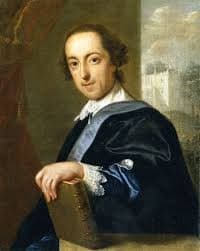
Horatio Walpole, 4th Earl of Orford, better known as Horace Walpole, was an English writer, art historian, man of letters, antiquarian, and Whig politician.
Similar books
- Frankenstein: The 1818 Text
Mary Shelley
3.8 (1.2M) average on GoodreadsFantasyAnother early work with supernatural elements, exploring themes of ambition, fate, and the monstrous.
- Northanger Abbey
Jane Austen
3.8 (298k) average on GoodreadsHistorical FictionA satirical take on Gothic novels, offering insight into the tropes and popularity of 'The Castle of Otranto' in its time.
- Harry Potter and the Sorcerer's Stone
J.K. Rowling
4.5 (7M) average on GoodreadsFantasyRescued from a miserable life under the stairs, an orphaned boy discovers he's a wizard destined for a magical school, where he uncovers a dangerous secret tied to the dark wizard who murdered his parents.
- The Hunger Games
Suzanne Collins
4.3 (6.4M) average on GoodreadsFantasyIn a future where children fight to the death on live television, Katniss Everdeen volunteers for the arena, turning a death sentence into a fight for survival and a spark of rebellion.
- 1984
George Orwell
4.2 (3.1M) average on GoodreadsPoliticsIn a future where surveillance and thought control are absolute, a man's search for truth clashes with the Party, showing that hope can be a form of rebellion.
- Divergent
Veronica Roth
4.2 (2.9M) average on GoodreadsFantasyIn a society divided by virtues, a sixteen-year-old's difference from the norm starts a rebellion that threatens her world.





Enjoyed the summary?
A summary gives you the shape of the book. The book itself has the detail, the examples and the voice.
Find The Castle of Otranto on AmazonAs an Amazon Associate, BookBrief earns from qualifying purchases. How we're funded