
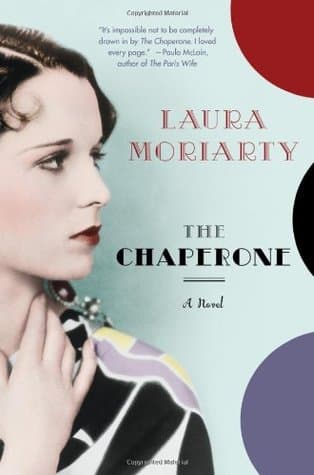
Synopsis
Covers the whole plot, including the ending.
- Difficulty
- Easy
- Pacing
- Moderate
- Mood
- Reflective, Evocative, Historical, Transformative
- Read it if
- You enjoy character-driven historical fiction set in the vibrant 1920s, exploring themes of identity, societal change, and the complexities of female relationships.
- Skip it if
- You prefer fast-paced thrillers or stories with a singular, high-stakes plot.
The Chaperone Plot Summary
Covers the whole plot, including the ending.
The Invitation and the Reluctant Chaperone
In 1922, Cora Carlisle, a 36-year-old housewife in Wichita, Kansas, receives a request from Alice Brooks, mother of 15-year-old Louise Brooks. Louise, a talented but rebellious dancer, has been accepted into the Denishawn School of Dancing in New York City for a summer program. Alice asks Cora to chaperone Louise, concerned by her wild nature. Cora, hesitant due to her quiet life and Louise's reputation, agrees. She is driven by a secret desire to uncover details about her own past in New York, where she was abandoned as an infant on an orphan train.
Arrival in the Roaring City
Cora and Louise arrive in New York City, a stark contrast to conservative Wichita. They settle into a rooming house. Cora immediately tries to control Louise's impulsive behavior and keep her focused on dance. Louise, however, prefers exploring the city's nightlife, flirting, and challenging Cora's traditional views. Cora constantly battles Louise's defiance, while also marveling at the city's energy and the new freedoms for women, which both excite and disorient her.
Cora's Secret Quest Begins
While Louise attends dance classes, Cora secretly begins her personal mission. She visits orphanages and contacts social workers, piecing together information about her abandonment. Her search is emotionally challenging; she confronts her painful past and the bureaucratic hurdles of finding old records. She learns she was placed on an orphan train in New York, leading her to believe her birth parents might still be in the city or have connections there.
Louise's Rebellions and New Friendships
Louise's rebellious nature grows. She frequently sneaks out, attends parties, and flirts, much to Cora's distress. During one outing, Louise befriends Joseph, a young jazz musician, and Norma, an experienced dancer. These new friends expose Louise to a more bohemian life and further challenge Cora's authority. Cora, despite her disapproval, finds herself admiring Louise's fearless pursuit of independence, even as she worries about the consequences.
A Revelation from the Past
Cora's search finally yields a breakthrough. An old orphanage record reveals the name of the woman who abandoned her: Mary O'Donnell, a young Irish immigrant. Further investigation leads her to a lawyer, Mr. Davies, who, to her astonishment, reveals himself to be her biological father. He explains that her mother, Mary, was a housemaid in his family's home, and their affair resulted in Cora's birth. This revelation is a shock, forcing Cora to re-evaluate her identity.
Confronting Her Father and the Truth
Cora meets with Mr. Davies, who, though resistant at first, eventually recounts the circumstances of her birth and abandonment. He explains that his family, fearing scandal, made Mary give up the baby and arranged for Cora to be placed on an orphan train. He offers Cora financial compensation and expresses a desire to establish a relationship. Cora grapples with anger, sadness, and a strange sense of liberation as the mystery of her origins is unveiled, with painful truths.
Louise's Performance and Growing Fame
Despite her distractions, Louise excels in her dance classes. During a public performance at the Denishawn school, her charisma and talent captivate the audience. Cora sees Louise's star quality firsthand, recognizing her magnetic pull. This moment marks a turning point in their relationship; Cora begins to see Louise not just as a defiant teenager, but as a young woman on the cusp of a remarkable career, a future icon.
Cora's Newfound Freedom and Decisions
With the knowledge of her parentage, Cora feels a shift within herself. She realizes her old life in Wichita no longer defines her. She decides to use the financial support from Mr. Davies to pursue her own aspirations, including a long-held dream of becoming a nurse. This decision signifies her embrace of independence and a rejection of the societal expectations that had limited her. Her time in New York, and her interactions with Louise, have changed her perspective.
Louise's Departure and Cora's Farewell
As summer ends, Louise, having impressed Denishawn, decides to leave the school to pursue other opportunities, aiming for professional performance. Cora, having completed her duties and found resolution in her personal quest, bids Louise farewell. Their parting is bittersweet; though their personalities often clashed, they have impacted each other. Cora recognizes that Louise's uninhibited spirit helped her break free from her own limitations.
Life After New York
After returning to Wichita, Cora tells her husband, Roger, of her decision to train as a nurse, a path he initially resists but eventually accepts. She pursues her education and finds purpose in her new profession. Meanwhile, Louise Brooks's career skyrockets; she becomes a celebrated silent film star and a symbol of the Jazz Age. Cora follows Louise's career from afar, occasionally exchanging letters, forever bound by the transformative summer they shared in New York, a summer that redefined both their lives.
Principal Figures
Cora Carlisle
Protagonist
A traditional Kansas housewife who secretly seeks her past.
Cora is a thirty-six-year-old woman from Wichita, Kansas, outwardly reserved and adhering to the societal norms of her time. Beneath her composed exterior lies a deep-seated longing to uncover the truth about her origins, having been abandoned as an infant on an orphan train in New York. She is initially hesitant to chaperone Louise Brooks, but the opportunity to return to New York proves too strong to resist. Cora is observant, intelligent, and possesses a quiet strength, often torn between her conventional upbringing and the allure of modern freedoms.
Relationships: Louise Brooks (Chaperone/charge; initially antagonistic, evolving into mutual respect and understanding.); Roger Carlisle (Husband; a traditional, somewhat complacent relationship that undergoes significant change.); Mr. Davies (Biological father; a newly discovered, complex, and strained relationship.)
Louise Brooks
Supporting/Co-protagonist
A rebellious, talented, and charismatic young dancer on the cusp of stardom.
Louise is a fifteen-year-old from Wichita, already possessing the striking beauty and rebellious spirit that would define her as a silent film icon. She is fiercely independent, irreverent, and disdainful of social conventions, particularly those imposed by Cora. Louise is driven by a desire for freedom and artistic expression, and she often uses her charm and wit to challenge authority. Despite her youthful defiance, she is incredibly talented and perceptive, often seeing through Cora's facade to her deeper motivations.
Relationships: Cora Carlisle (Charge/chaperone; a contentious but ultimately transformative relationship.); Alice Brooks (Mother; a distant and somewhat strained relationship, driven by Alice's concern for Louise's wildness.); Joseph (Friend/flirtation; a young jazz musician who introduces Louise to New York's bohemian scene.)
Roger Carlisle
Supporting
Cora's traditional and somewhat complacent husband.
Roger is Cora's husband, a kind but conventional man who works at a bank in Wichita. He represents the stable, predictable life Cora has built for herself, but also the limitations she feels. He is initially supportive of Cora's trip but struggles to understand her shifting perspectives and aspirations upon her return. He values order and tradition, making him a foil to Cora's burgeoning desire for independence and self-discovery.
Relationships: Cora Carlisle (Husband; their relationship is tested and redefined by Cora's journey.)
Mr. Davies
Supporting
Cora's biological father, a prominent but secretive New York lawyer.
Mr. Davies is a wealthy and influential New York lawyer, a man of his time who values reputation and appearances above all else. He is revealed to be Cora's biological father, having had an affair with her mother, a housemaid, decades earlier. He initially attempts to keep his past hidden but is forced to confront it when Cora tracks him down. He is a complex character, showing glimpses of regret and a desire to make amends, but still constrained by social expectations.
Relationships: Cora Carlisle (Biological father; a newly discovered, fraught, and emotionally charged relationship.)
Joseph
Supporting
A young, aspiring jazz musician in New York City.
Joseph is a charming and ambitious young jazz musician whom Louise befriends in New York. He represents the vibrant, progressive spirit of the Jazz Age and introduces Louise to a world of artistic freedom and unconventional lifestyles. He is kind and perceptive, and his interactions with Louise highlight her burgeoning independence and desire for a life beyond Wichita.
Relationships: Louise Brooks (Friend/flirtation; a connection that exposes Louise to new experiences.)
Alice Brooks
Mentioned
Louise Brooks's mother, concerned about her daughter's wild nature.
Alice Brooks is Louise's mother, who initiates the chaperoning arrangement with Cora. She is a worried parent, struggling to control her headstrong daughter and concerned about Louise's reputation and safety in the big city. Her decision to send Louise with a chaperone underscores the clash between traditional values and Louise's modern spirit.
Relationships: Louise Brooks (Mother; a relationship marked by worry and a generational divide.)
Themes & Insights
The Clash of Tradition and Modernity
The novel shows the cultural clash between conservative heartland values and the progressive spirit of 1920s New York City. Cora, from Wichita, represents tradition, while Louise Brooks, with her bobbed hair and defiant attitude, represents the 'new woman' of the Jazz Age. This theme is clear in their differing reactions to city life, fashion, social norms, and personal freedoms. For example, Cora's shock at women smoking and dancing freely contrasts sharply with Louise's embrace of these behaviors, highlighting rapid societal shifts.
“New York was a city of new ideas and new women, and Cora, who had thought herself modern enough, felt suddenly antiquated.”
Self-Discovery and Identity
Both Cora and Louise embark on journeys of self-discovery. Cora's main reason for going to New York is to uncover her past and parentage, which reshapes her understanding of herself and her place in the world. Louise, on the other hand, discovers her artistic voice and personal independence, forming her identity as a performer and a free spirit. The city acts as a catalyst for their transformations, allowing them to shed old ways and embrace new versions of themselves, as seen when Cora decides to pursue nursing after years of domestic life.
“She had come to New York to find her past, but she had found her future instead.”
Female Independence and Empowerment
The novel explores the growing movement for female independence and expanding opportunities for women in the 1920s. Cora's journey from housewife to a woman pursuing a nursing career, and Louise's pursuit of artistic ambitions, show this theme. The new fashions, social freedoms, and professional paths available to women in New York City contrast sharply with the more restrictive lives they might have led in Wichita. Cora's decision to embrace her own desires, even defying her husband's initial wishes, is a powerful statement of her newfound empowerment.
“A woman's life was not just marriage and children anymore; it was a canvas waiting to be painted.”
The Nature of Family and Belonging
Cora's central quest is to understand her biological family and where she belongs. Her discovery of her birth father and the circumstances of her abandonment forces her to redefine family beyond conventional structures. The novel looks at the complexities of chosen family versus biological ties, and the lasting impact of secrets on personal identity. While her biological family brings pain, her relationship with Louise, initially difficult, becomes a unique bond, suggesting that belonging can be found in unexpected connections.
“Family was not just blood; it was the people who saw you, truly saw you, for who you were.”
Plot Devices & Literary Techniques
The Chaperone Role
A narrative framework that facilitates contrasting characters and themes.
The role of the chaperone serves as the central plot device, bringing together two vastly different women, Cora and Louise, and forcing them into close proximity. This framework allows for a dynamic exploration of generational, cultural, and personal clashes and growth. It highlights the societal expectations placed on women in the 1920s, while simultaneously providing Cora with the unexpected opportunity to pursue her own hidden agenda of uncovering her past in New York. The chaperone's duty to control Louise ironically leads Cora to her own liberation.
The Orphan Train
A historical backdrop and personal mystery driving Cora's quest.
The orphan train serves as a significant historical plot device, directly impacting Cora's character and motivating her journey. Her abandonment on an orphan train in New York is the core mystery she seeks to unravel, providing her with a personal connection to a real historical phenomenon. This device not only grounds the narrative in a specific historical context but also provides a powerful emotional engine for Cora's quest for identity and belonging, shaping her entire life and ultimately leading her back to the city of her birth.
The City of New York (1920s)
A vibrant, transformative setting that acts as a character in itself.
New York City in the 1920s functions as a powerful plot device, almost a character in its own right. Its energy, modernity, and diverse culture serve as a catalyst for the transformations of both Cora and Louise. For Cora, it's the place where she can finally confront her past and envision a new future. For Louise, it's the stage where her talent can flourish and her rebellious spirit finds expression. The city's atmosphere of change and opportunity directly influences the characters' decisions and development, driving the narrative forward.
The Chaperone Quotes
“It was a time when women were expected to be decorative, not dramatic. But I had a secret, a longing that even I couldn't fully name.”
“New York City was a siren song, promising freedom and reinvention. For a girl from Wichita, it was a dizzying, dangerous dream.”
“Love, I learned, was not always a grand declaration. Sometimes it was a quiet understanding, a shared glance across a crowded room.”
“She was a force of nature, a comet streaking across the sky, and I was merely the humble earthbound observer.”
“The past, like a persistent ghost, always finds a way to haunt the present, no matter how far you run.”
“A chaperone's duty was to protect, but sometimes the greatest danger came from within, from the secrets we kept hidden.”
“Kansas felt a lifetime away, a sepia-toned memory, replaced by the dazzling, bewildering kaleidoscope of the city.”
“We all wear masks, I suppose, some more elaborate than others. But eventually, the true face always shows through.”
“To be truly free, one must first be brave enough to confront the truth of who they are, scars and all.”
“The jazz age was a symphony of rebellion, a clamor for new freedoms, and I, in my quiet way, was learning to dance to its rhythm.”
“Sometimes the most profound connections are made not through words, but through silences, through shared unspoken understandings.”
“Life had a way of surprising you, even when you thought you had it all figured out. Especially then.”
“The greatest adventure, I discovered, was not in traveling to faraway lands, but in journeying into the depths of one's own heart.”
Quiz
10 questions on the plot and the characters. Each answer comes with a short explanation.
Question 1
In what year does the primary storyline of 'The Chaperone' begin, when Louise Brooks travels to New York City?
- 1918
- 1922
- 1925
- 1929
Show answer
B. 1922 The novel explicitly states that the story begins in 1922, when fifteen-year-old Louise Brooks leaves Wichita for New York.
Question 2
What is the primary reason Cora Carlisle accompanies Louise Brooks to New York City?
- She is Louise's distant aunt, tasked with her care.
- She wants to pursue her own acting career in New York.
- She has a personal mission to discover information about her past.
- She is a professional chaperone hired by Louise's parents.
Show answer
C. She has a personal mission to discover information about her past. The synopsis mentions Cora has 'her own reasons for making the trip' and 'the city holds the promise of discovery that might answer the question at the core of her being.'
Question 3
What is the name of the dance school Louise Brooks intends to study at in New York?
- The Julliard School
- The Martha Graham Company
- The Denishawn School of Dancing
- The American Ballet Theatre
Show answer
C. The Denishawn School of Dancing The text clearly states Louise leaves Wichita 'to study with the prestigious Denishawn School of Dancing in New York.'
Question 4
How old is Louise Brooks when she first travels to New York with Cora Carlisle?
- Thirteen
- Fifteen
- Seventeen
- Nineteen
Show answer
B. Fifteen The synopsis specifies that 'a fifteen-year-old Louise Brooks leaves Wichita, Kansas, to study with the prestigious Denishawn School.'
Question 5
What significant historical movement, directly impacting women's roles and opportunities, is highlighted as changing during the novel's period?
- The temperance movement
- The suffrage movement
- The burgeoning movement for equal rights and new opportunities for women
- The labor union movement
Show answer
C. The burgeoning movement for equal rights and new opportunities for women The description mentions 'the burgeoning movement for equal rights and new opportunities for women' as one of the historical contexts.
Question 6
How does Cora Carlisle's perspective evolve during her time in New York with Louise?
- She becomes more critical of Louise's modern attitudes and returns to her traditional values.
- She realizes her personal mission was misguided and she should have stayed in Wichita.
- She gains a new understanding of the possibilities for being fully alive and is liberated.
- She decides to abandon her chaperone duties and pursue a career in the entertainment industry.
Show answer
C. She gains a new understanding of the possibilities for being fully alive and is liberated. The synopsis states, 'she is liberated in a way she could not have imagined' and gains 'a new understanding of the possibilities for being fully alive.'
Question 7
What specific physical characteristic is mentioned as being iconic for Louise Brooks even at fifteen?
- Her striking blue eyes
- Her famously long, curly red hair
- Her famous black bob with blunt bangs
- Her distinctive mole above her lip
Show answer
C. Her famous black bob with blunt bangs The text describes Louise as 'already stunningly beautiful and sporting her famous black bob with blunt bangs.'
Question 8
The novel draws on the history of which specific social welfare program, related to children, from the 1920s and '30s?
- Child labor laws
- Orphan trains
- Juvenile detention centers
- School lunch programs
Show answer
B. Orphan trains The description explicitly lists 'the orphan trains' as one of the historical elements the novel draws upon.
Question 9
What is the core thematic contrast explored through the relationship between Cora and Louise?
- The conflict between urban and rural lifestyles.
- The clash between traditional values and the rapidly changing attitudes of the 20th century.
- The struggle between artistic ambition and domestic responsibilities.
- The economic disparity between different social classes.
Show answer
B. The clash between traditional values and the rapidly changing attitudes of the 20th century. Cora is described as 'complicated but traditional,' while Louise is known for her 'lack of respect for convention.' The novel illustrates 'how rapidly everything, from fashion and hemlines to values and attitudes, was changing.'
Question 10
Beyond the 1920s, the novel's scope extends to which later historical period, encompassing significant events like the Great Depression?
- Only the 1920s
- The 1930s and beyond
- The 1940s only
- The 1950s and 60s
Show answer
B. The 1930s and beyond The text states the novel draws on 'the rich history of the 1920s,’30s, and beyond—from the orphan trains to Prohibition... and the onset of the Great Depression.'
The Chaperone FAQ
What is the central premise of 'The Chaperone'?
The novel follows 36-year-old Cora Carlisle as she chaperones 15-year-old future silent-film star Louise Brooks from Wichita, Kansas, to New York City in 1922. The five-week trip is meant for Louise to study dance, but it becomes a journey of self-discovery and transformation for both women amidst the changing social landscape of the 1920s.
Who is Cora Carlisle and what is her primary motivation for traveling to New York?
Cora Carlisle is a traditional yet complicated woman from Wichita. Her primary motivation for traveling to New York, beyond chaperoning Louise, is to uncover the truth about her own origins, specifically to find her birth parents and understand the circumstances of her being an orphan train child.
How is Louise Brooks portrayed in the novel at the beginning of her journey?
At 15, Louise Brooks is depicted as already possessing her iconic black bob and striking beauty, but also an arrogant, irreverent, and convention-defying personality. She is a free spirit, impatient with authority, and keenly aware of her own talent and allure, often clashing with Cora.
What kind of relationship develops between Cora and Louise during their time in New York?
Initially strained and often adversarial due to their generational and personality differences, their relationship evolves into a complex bond of mutual influence and grudging respect. Cora provides a stable presence, while Louise challenges Cora's traditional views, ultimately leading to a deeper understanding between them.
What societal changes of the 1920s does the book highlight through its characters?
The book vividly illustrates the rapid societal shifts of the 1920s, including the rise of flapper culture, Prohibition, the burgeoning women's rights movement, and new opportunities for women. These changes are reflected in Louise's modern attitudes and Cora's gradual awakening to new possibilities beyond traditional domestic roles.
What is the significance of the Denishawn School of Dancing for Louise?
The Denishawn School of Dancing represents Louise's initial foray into the professional dance world and her ambition to escape Wichita. While she struggles with its structured environment, it is her entry point into the artistic scene of New York and a stepping stone toward her eventual career in film.
How does Cora's search for her birth parents connect to the 'orphan train' historical context?
Cora's personal quest directly ties into the historical phenomenon of the orphan trains, where thousands of orphaned or abandoned children were sent from Eastern cities to the Midwest for adoption. Her journey reveals the lifelong impact and lingering questions these individuals carried about their origins.
Are there any specific historical figures, beyond Louise Brooks, who influenced the narrative or appear in the book?
While Louise Brooks is the prominent historical figure, the novel also touches upon the artistic and social circles of the 1920s, including references to figures like Ruth St. Denis and Ted Shawn, founders of the Denishawn School, who were significant in the dance world of that era, providing a rich historical backdrop.
How does Cora's discovery about her parentage impact her identity and future decisions?
Cora's discovery about her parentage is deeply unsettling but ultimately liberating. It challenges her preconceived notions of family and respectability, freeing her from long-held societal expectations and empowering her to pursue a more independent path, including exploring her own sexuality and career aspirations.
How does Cora's internal conflict between tradition and modernity manifest throughout the story?
Cora's internal conflict is evident in her initial disapproval of Louise's unconventional behavior versus her growing fascination with the freedoms of New York. This struggle culminates in her own choices to embrace aspects of modern life, like pursuing a career and exploring her identity, while still valuing certain traditional comforts.
What psychological impact does Louise Brooks's rebellious nature have on Cora?
Louise's rebellious nature acts as a catalyst for Cora, forcing her to confront her own repressed desires and societal conditioning. Witnessing Louise's unapologetic pursuit of freedom and self-expression subtly encourages Cora to question her own life choices and consider alternative paths.
How does the novel explore themes of identity and self-discovery through both main characters?
Both Cora and Louise undergo significant identity shifts. Louise solidifies her artistic identity and personal independence, while Cora embarks on a profound journey of self-discovery by uncovering her past and embracing new opportunities, ultimately defining herself beyond her traditional roles.
In what ways does Cora's relationship with her husband back in Wichita evolve or change after her New York experience?
Cora's New York experience profoundly alters her perception of her marriage. She gains a new sense of independence and self-worth, leading her to redefine her relationship with her husband. While the novel doesn't explicitly detail a divorce, it suggests a shift towards a more equitable or even separate existence, driven by her newfound liberation.
Is 'The Chaperone' primarily a story about Louise Brooks, or is she more of a catalyst for Cora's journey?
While Louise Brooks is a captivating character and a significant historical figure, the novel is arguably more about Cora Carlisle's personal transformation. Louise acts as a crucial catalyst, pushing Cora out of her comfort zone and into a world that allows her to embark on her own profound journey of self-discovery and liberation.
How does the novel portray the 'promise of the twentieth century' through Cora's eyes?
Through Cora's evolving perspective, the novel portrays the 'promise of the twentieth century' as a time of expanding possibilities for women, increased personal freedom, and a questioning of rigid social norms. She witnesses the vibrancy of urban life, new career paths, and a broader acceptance of diverse lifestyles, which she eventually embraces herself.
What is the significance of the novel spanning beyond the initial five weeks in New York?
The novel's broader timeline, extending into the 1930s and beyond, allows for a fuller exploration of the long-term impact of that transformative summer. It shows how the seeds of change planted in New York continued to shape Cora's life, demonstrating her enduring commitment to personal growth and independence over decades.
Could Cora's journey be seen as a metaphor for the broader changes women experienced in the 1920s?
Yes, Cora's journey can be interpreted as a powerful metaphor for the broader liberation of women in the 1920s. Her shedding of traditional constraints, pursuit of personal truth, and embrace of new opportunities reflect the societal shifts that allowed many women to redefine their roles and identities during that era.
How does the author use the setting of New York City to enhance the themes of the novel?
New York City serves as a vibrant, bustling backdrop that symbolizes modernity, freedom, and anonymity, contrasting sharply with the conservative environment of Wichita. Its energy, diverse population, and artistic scene facilitate both Louise's artistic development and Cora's personal awakening, making the city an essential character in itself.
About the author

Laura Moriarty is an American author known for her fiction. Her notable works include "The Chaperone," which explores themes of identity and societal change, and "The Center of Everything," a coming-of-age story set in the Midwest. Moriarty's writing often delves into personal and historical narratives.
Similar books
- The Paris Wife
Paula McLain
3.8 (267k) average on GoodreadsHistorical FictionHistorical fiction centered on a significant female figure in the early 20th century, blending personal narrative with historical context.
- Rules of Civility
Amor Towles
4.0 (147k) average on GoodreadsLiterary FictionCaptures the atmosphere and social dynamics of 1930s New York with strong female characters navigating ambition and self-discovery.
- To Kill a Mockingbird
Harper Lee
4.3 (4.5M) average on GoodreadsHistorical FictionIn the 1930s Jim Crow South, Harper Lee writes about racial injustice, moral growth, and the quiet courage of a lawyer father, Atticus Finch, as seen through his young daughter's eyes.
- The Great Gatsby
F. Scott Fitzgerald
3.9 (3.8M) average on GoodreadsHistorical FictionIn the opulent Roaring Twenties, a mysterious millionaire's lavish parties hide his desperate, tragic pursuit of a lost love, exposing the emptiness within the American Dream.
- Pride and Prejudice
Jane Austen
4.3 (3M) average on GoodreadsHistorical FictionIn a society focused on status and money, Elizabeth Bennet navigates love and pride, challenging Mr. Darcy and social expectations to find true affection.
- Angels & Demons
Dan Brown
3.9 (2.7M) average on GoodreadsThrillerA Harvard symbologist races through Rome's ancient sites, deciphering cryptic clues to unmask the Illuminati and stop a vengeful plot to destroy the Vatican with a stolen antimatter weapon.




Enjoyed the summary?
A summary gives you the shape of the book. The book itself has the detail, the examples and the voice.
Find The Chaperone on AmazonAs an Amazon Associate, BookBrief earns from qualifying purchases. How we're funded