
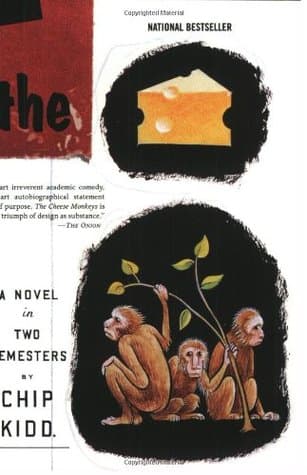
Synopsis
Covers the whole plot, including the ending.
- Difficulty
- Medium
- Pacing
- Moderate
- Mood
- Witty, Reflective, Inspiring, Humorous
- Read it if
- You enjoy coming-of-age stories set in academia, appreciate a blend of humor and poignant reflection, or are interested in the creative process and graphic design.
- Skip it if
- You dislike satirical takes on university life or prefer plots with high-stakes action over character-driven introspection.
The Cheese Monkeys Plot Summary
Covers the whole plot, including the ending.
Arrival at State U and the Dreaded Freshman Year
The story begins with the unnamed narrator starting at State University in the late 1950s. He chose to major in art against his parents' wishes; his father saw art as impractical. The narrator quickly experiences typical freshman life, including confusing general education courses and college social dynamics. He struggles to find his place, feeling disconnected and unsure about his path. His first art classes teach basic techniques and theory but lack the inspiration he wants, leaving him feeling lost and questioning his choice to study art.
The Enigma of Wintermute
The second semester begins with the narrator taking a required graphic design course, 'Introduction to Graphic Design,' taught by the eccentric Professor Wintermute. Wintermute immediately shows himself to be a strong and unusual figure. He is known for his sharp wit, direct honesty, and a teaching style that is almost like performance art. His first assignments seem simple but require deep thought and careful work, often leaving students confused. The narrator and his classmates are both scared and interested by Wintermute, realizing this class will be different from any other.
The First Assignments: 'Design a Box'
Wintermute's early assignments aim to break down old ideas about art and design. One task is to 'design a box,' a simple request that becomes a test for the students. Wintermute is not looking for a literal box but an exploration of shape, use, and ideas. He critiques their work harshly, often with humor, pushing them to explain every choice and to understand the 'why' behind their designs. The narrator, like his peers, struggles with this new approach, learning to see design as a rigorous problem-solving field, not just about looks. This period begins his real design education.
Developing Friendships and Rivalries
As the semester goes on, the shared experience of Wintermute's class creates both friendships and rivalries among the students. The narrator forms a close bond with another art student, who acts as a trusted friend. They complain about assignments, share ideas, and support each other. However, the competitive nature of the critiques also creates tension, with some students trying to impress Wintermute. These relationships become an important part of the narrator's college experience, offering a sense of community amid the academic pressure and the often-lonely pursuit of creative expression.
The 'Cheese Monkeys' Revelation
During a particularly harsh critique, Wintermute calls his students 'cheese monkeys,' meaning they are unrefined, easily distracted, and lack real artistic insight. This term, though initially shocking, becomes a turning point for many students. It shows Wintermute's low initial expectations but also his belief in their ability to improve. The narrator and his classmates must face their own limits and aim for a level of excellence that would prove Wintermute wrong. The 'cheese monkeys' name becomes an inside joke and a symbol of their shared struggle and determination to succeed.
The 'Design a Logo' Project
One of Wintermute's key assignments is the 'design a logo' project. This task requires creativity and a deep understanding of symbols, brand identity, and visual communication. Students must research, sketch, and refine their ideas, explaining their reasoning to Wintermute. The narrator dedicates himself to this project, experiencing the difficulties and breakthroughs of the design process. Wintermute's critiques during this phase are especially insightful, examining not just the appearance but the underlying conceptual strength and strategic thinking behind each logo. This assignment makes the narrator combine everything he has learned about graphic design.
Wintermute's Personal Struggles
Despite his tough exterior, Wintermute sometimes shows glimpses of his personal struggles, adding depth to his character. The narrator and his classmates notice hints of sadness or tiredness in their professor, suggesting a life outside the classroom that is not always as controlled as his professional image. These brief moments of vulnerability make Wintermute seem more human, allowing the students to see him not just as an intimidating authority figure but as a complex person. These insights deepen the narrator's understanding of his mentor, realizing that even brilliant minds deal with their own challenges, further strengthening their connection.
The Final Project: 'Design a Book Jacket'
The semester ends with the 'design a book jacket' project, a complex assignment that requires students to use all the graphic design principles they have learned. They must choose a book, analyze its content, and then visually represent its essence, considering type, images, and overall layout. This project tests their skills, requiring both artistic flair and an understanding of what sells. The narrator fully commits to this final challenge, seeing it as the culmination of his first year of serious design study. The pressure is high, but so is the chance for a breakthrough design.
Critique and Redemption
The final critiques for the book jacket project are tense. Wintermute, as always, is direct in his assessments, pointing out flaws and celebrating successes equally. For the narrator, this critique is a moment of truth. He presents his work, ready for criticism. However, Wintermute, while still demanding, offers a surprising amount of genuine praise for the narrator's effort and cleverness. This recognition is very validating, confirming the narrator's progress and strengthening his passion for design. It shows how far he has come from the unsure freshman who first entered Wintermute's classroom.
Looking Ahead: The End of Freshman Year
As the school year ends, the narrator thinks about the changes Wintermute's class brought. He has learned graphic design skills and developed a new way of seeing the world – a critical eye for form, use, and communication. His initial uncertainty about his art major is replaced by new conviction and passion. He recognizes Wintermute's impact on his intellectual and creative growth. The narrator leaves State U for the summer, no longer a 'cheese monkey' but a budding designer, looking forward to his continued journey in graphic arts, changed by his unusual mentor.
The Cheese Monkeys Characters
The Narrator (Unnamed)
Protagonist
A thoughtful, initially uncertain art student finding his calling.
The unnamed narrator is a young man in the late 1950s who, against his parents' wishes, decides to major in art at State University. He begins as somewhat naive and unsure of his path, grappling with the academic and social pressures of college. He is observant, introspective, and possesses an inherent curiosity for the world of art and design. He is initially intimidated by Professor Wintermute but slowly comes to respect and admire his eccentric mentor, absorbing his teachings and developing a profound passion for graphic design. His journey is one of self-discovery and artistic awakening.
Relationships: Professor Wintermute (Student-mentor, initially intimidated then deeply respectful and inspired); Narrator's Father (Strained, due to differing views on career practicality vs. artistic pursuit); Fellow Art Student (Close friendship, shared struggles and camaraderie in Wintermute's class)
Professor Wintermute
Supporting/Mentor
An eccentric, brilliant, and brutally honest graphic design professor.
Professor Wintermute is a legendary figure at State University, known for his unconventional teaching methods, sharp wit, and unyielding standards. He is a master of graphic design, possessing an encyclopedic knowledge and a keen eye for detail. His critiques are often harsh and laced with sarcasm, but they are always insightful and push his students to think critically and creatively. Beneath his intimidating exterior, there are hints of a complex and perhaps lonely individual, but his dedication to his craft and his students' development is unwavering. He serves as the primary catalyst for the narrator's transformation.
Relationships: The Narrator (Mentor-student, challenging and ultimately transformative); His Students (Strict, demanding teacher who inspires both fear and profound respect)
Narrator's Father
Supporting/Mentioned
A pragmatic parent who doubts the practicality of an art career.
The narrator's father represents the societal pressure for practical, financially stable careers. He is a well-meaning but somewhat traditional figure who struggles to understand his son's artistic aspirations. His concern for his son's future manifests as skepticism towards an art major, viewing it as an impractical and potentially financially unstable path. While not malicious, his lack of understanding creates a subtle tension in his relationship with the narrator, highlighting the generational and philosophical divide between them. He serves as a contrast to the narrator's emerging passion.
Relationships: The Narrator (Parent-child, with underlying tension due to career choice disagreement); Narrator's Mother (Spousal, implied traditional family dynamic)
Narrator's Mother
Mentioned
A supportive but less vocal parent.
The narrator's mother is a less prominent figure than his father, but she is generally depicted as more supportive and understanding of his artistic pursuits, albeit within the confines of her traditional role. She acts as a buffer between the narrator and his father's pragmatism, offering quiet encouragement. Her presence underscores the family dynamics and the narrator's struggle for independence and self-expression within his family unit. While not deeply explored, her character provides a softer counterpoint to the father's more rigid views.
Relationships: The Narrator (Supportive parent-child); Narrator's Father (Spousal, implied traditional family dynamic)
Fellow Art Student (Unnamed)
Supporting
A classmate who becomes the narrator's confidante and friend.
This unnamed fellow art student serves as the narrator's primary peer connection in Wintermute's class. They share the frustrations and triumphs of the challenging graphic design course, commiserating over assignments and offering mutual support. This character provides a relatable perspective for the narrator, reflecting the shared experience of being a 'cheese monkey' under Wintermute's demanding tutelage. Their conversations and shared struggles highlight the camaraderie that develops among students facing a common, formidable challenge, and helps to alleviate the narrator's initial sense of isolation.
Relationships: The Narrator (Close friendship, shared academic struggle and support)
Other Students in Wintermute's Class
Supporting
A diverse group of students reacting to Wintermute's teaching.
These students represent the broader cohort undergoing Wintermute's rigorous graphic design course. They exhibit a range of personalities, talents, and reactions to Wintermute's eccentric methods – from those who are completely bewildered to those who thrive under pressure, and some who resent his harsh critiques. Their collective presence creates the competitive yet communal atmosphere of the classroom. They serve to highlight the diverse impact of Wintermute's teaching and provide a backdrop against which the narrator's personal growth is measured. Their struggles and successes contribute to the overall dynamic of the course.
Relationships: The Narrator (Classmates, sometimes rivals, sometimes fellow sufferers); Professor Wintermute (Students, subject to his critiques and teachings)
The Cheese Monkeys Themes
The Nature of Creativity and Design
The novel explores creativity, especially in graphic design. It challenges the romantic idea of art, showing design as a rigorous, problem-solving field, not just spontaneous inspiration. Professor Wintermute always pushes his students to understand the 'why' behind their designs, focusing on concept, communication, and careful execution over just looks. Assignments like 'design a box' or 'design a logo' make students think conceptually and strategically, showing that true creativity in design combines intellect, skill, and persistent effort. It is about solving a visual problem effectively.
“Design is not about making things pretty. Design is about making things work.”
Mentorship and Its Transformative Power
A main theme is how an unusual mentor affects a student's development. Professor Wintermute, despite his intimidating and often harsh manner, helps the narrator's intellectual and creative awakening. His high standards and unique teaching methods force the narrator to go beyond his perceived limits, leading to growth that traditional education might not achieve. The narrator's initial fear slowly turns into deep respect, showing how a challenging mentor can unlock a student's true potential. Wintermute's influence goes beyond technical skills, shaping the narrator's entire view of design and life.
“You are all cheese monkeys. Until you prove otherwise.”
Coming-of-Age and Self-Discovery
The novel is a classic coming-of-age story, following the narrator's journey from an unsure freshman to a confident young designer. His time at State U, especially in Wintermute's class, is a period of intense self-discovery. He deals with parental expectations, finds his passion, and learns to handle independence. The demanding assignments and critiques make him face his own abilities and limits, leading to a deeper understanding of himself and his goals. This theme is clear in his early struggles with basic assignments and his later mastery of complex projects, showing his personal and professional maturation.
“I had come to college to be an artist, but Wintermute was teaching me how to be a professional.”
The Value of Discipline and Hard Work
Through Wintermute's demanding curriculum, the novel shows that talent alone is not enough; real mastery needs constant discipline and hard work. Wintermute emphasizes carefulness, repetition, and the willingness to start over. The 'cheese monkeys' name itself implies that students need to overcome their amateur habits through sheer effort. Scenes describing the many hours spent on projects, the numerous sketches, and the careful revisions highlight this theme. The narrator's success is shown not as genius but as the direct result of persistent effort and dedication to perfecting his craft under strict guidance.
“Good design is not magic. It’s work. Hard work.”
Plot Devices & Literary Techniques
The Unnamed Narrator
Creates a universal everyman quality, allowing readers to project themselves onto the character.
By leaving the narrator unnamed, the author creates a sense of universality, allowing readers to more easily identify with his experiences of self-discovery, academic struggle, and the search for purpose. This device enhances the coming-of-age theme, as the focus remains on the internal journey and the external forces shaping a young person, rather than on specific personal details. It also subtly emphasizes the transformative power of the mentor, Wintermute, as the narrator's identity is largely defined by his response to and growth under this influential figure, making his 'name' less important than his development.
The Eccentric Mentor (Professor Wintermute)
A demanding, unconventional teacher who serves as the primary catalyst for the protagonist's growth.
Professor Wintermute functions as a classic eccentric mentor figure, whose unusual teaching methods and brutally honest critiques are designed to shock students out of complacency and foster genuine creative thinking. His enigmatic personality and high standards create both fear and profound respect, pushing the narrator and his classmates to unprecedented levels of effort and insight. This device is crucial for driving the plot and the narrator's character arc, as Wintermute's challenges directly lead to the narrator's breakthroughs and his eventual embrace of graphic design as a calling. He embodies the transformative power of a truly impactful teacher.
The 'Cheese Monkeys' Metaphor
A derogatory but galvanizing term that defines the students' initial state and motivates their progress.
The term 'cheese monkeys' is a powerful metaphor used by Professor Wintermute to describe his students. It signifies their initial lack of sophistication, their unrefined skills, and their tendency towards superficiality in design. While harsh, this label acts as a galvanizing force, motivating the students, particularly the narrator, to prove Wintermute wrong. It becomes a shared experience of humility and a collective goal to transcend the 'cheese monkey' status. This device effectively encapsulates the theme of discipline and hard work, demonstrating that true artistry requires moving beyond initial, undeveloped inclinations through rigorous effort and critical self-assessment.
First-Person Retrospective Narration
The story is told from the narrator's older, reflective perspective, adding depth and insight.
The use of first-person retrospective narration allows the story to be told with the benefit of hindsight. The older, wiser narrator recounts his college experiences, imbuing the events with a layer of reflection and understanding that would be absent in a purely present-tense account. This device enables deeper insights into the significance of Wintermute's lessons and the narrator's own emotional and intellectual journey. It lends authority to his observations about design, creativity, and mentorship, as he is speaking from a position of having successfully navigated the path he describes, validating the transformative power of his education.
The Cheese Monkeys Quotes
“The greatest ideas are often the simplest ones.”
“Never mistake legibility for communication.”
“Good design is a lot like a clear pane of glass. It's there, but you don't notice it until it's dirty.”
“The problem with art school is that it tries to teach you how to be an artist, instead of just letting you be one.”
“There are no rules, only consequences.”
“A good logo is like a good joke. If you have to explain it, it's not a good one.”
“Mediocrity is a choice.”
“Sometimes the best solution is to walk away and come back with fresh eyes.”
“The trick is not to be afraid of making mistakes, but to learn from them.”
“Design is thinking made visual.”
“If you want to be interesting, be interested.”
“The blank page is both the greatest terror and the greatest opportunity.”
“It's not about what you look at, it's about what you see.”
“Every line has a purpose, every space has a reason.”
Quiz
10 questions on the plot and the characters. Each answer comes with a short explanation.
Question 1
What is the narrator's chosen major at State U?
- English Literature
- Fine Art
- Business Administration
- Pre-Law
Show answer
B. Fine Art The narrator decides to major in art at State U, much to his parents' dismay.
Question 2
In what decade is 'The Cheese Monkeys' primarily set?
- 1940s
- 1950s
- 1960s
- 1970s
Show answer
B. 1950s The book is explicitly set in the late 1950s at State U.
Question 3
Which of the following describes the teacher who inspires the narrator?
- Loving, demanding, and highly eccentric
- Distant, lenient, and uninspired
- Strict, traditional, and humorless
- Friendly, disorganized, and unchallenging
Show answer
A. Loving, demanding, and highly eccentric The book description highlights the teacher as 'loving, demanding, and highly eccentric,' who inspires the narrator.
Question 4
How long does the primary narrative of the novel span in terms of academic time?
- One academic year (two semesters)
- A single semester
- Four years (an entire degree)
- Three semesters
Show answer
A. One academic year (two semesters) The novel takes place over a 'tightly written two semesters,' which constitutes one academic year.
Question 5
What common literary genre elements does 'The Cheese Monkeys' incorporate, based on the description?
- Mystery and suspense
- Science fiction and fantasy
- Autobiographical, coming-of-age novel
- Historical romance
Show answer
C. Autobiographical, coming-of-age novel The description states it is an 'autobiographical, coming-of-age novel,' covering themes of maturity and finding a calling.
Question 6
What is the narrator's parents' initial reaction to his decision to major in art?
- Supportive and encouraging
- Indifferent
- Full of dismay
- Surprised but accepting
Show answer
C. Full of dismay The text explicitly states the narrator's decision to major in art was 'much to his parents’ dismay.'
Question 7
Before writing 'The Cheese Monkeys,' what was Chip Kidd's primary professional background mentioned in the description?
- Journalist for a major newspaper
- Professor of fine art at a university
- Book jacket designer at Knopf
- Screenwriter for Hollywood films
Show answer
C. Book jacket designer at Knopf Chip Kidd had 15 years of experience designing more than 1,500 book jackets at Knopf before crafting this novel.
Question 8
Given the book's themes, what kind of 'calling' is the narrator likely to be exploring or discovering?
- A calling in public service or politics
- A calling in a creative field, specifically art/design
- A calling in a scientific research field
- A calling in business management
Show answer
B. A calling in a creative field, specifically art/design Since the narrator majors in art and the book is about 'finding a calling in life' with an inspiring art teacher, it strongly implies a creative calling.
Question 9
The description calls the novel 'slap-happily funny and heartbreakingly sad.' What does this suggest about the narrative tone and events?
- It focuses exclusively on lighthearted college pranks.
- It features a blend of comedic and poignant, emotionally resonant moments.
- The humor is unintentional, making the sad parts feel more tragic.
- The story is primarily a tragedy with only brief, ironic humor.
Show answer
B. It features a blend of comedic and poignant, emotionally resonant moments. The phrase 'slap-happily funny and heartbreakingly sad' directly indicates a juxtaposition of humorous and somber, emotional content within the narrative.
Question 10
How does Chip Kidd's background in book jacket design potentially influence 'The Cheese Monkeys' as a work of fiction?
- It suggests the novel is primarily about the publishing industry.
- It might lend the narrative a strong visual aesthetic or focus on design principles.
- It implies the novel will be a non-fiction account of famous authors.
- It means the book will have an unusually complex plot structure.
Show answer
B. It might lend the narrative a strong visual aesthetic or focus on design principles. Given Kidd's extensive career in design, especially book jackets, his novel, which features an art major and an inspiring teacher, is very likely to explore themes of creativity, visual communication, and design principles.
The Cheese Monkeys FAQ
What is the central premise of 'The Cheese Monkeys'?
'The Cheese Monkeys' follows the unnamed narrator during his freshman year at State U in the late 1950s, where he enrolls in the graphic design program against his parents' wishes. The novel chronicles his coming-of-age experience, focusing on his artistic awakening and personal growth under the tutelage of an enigmatic and demanding professor.
Who is Professor Winterbottom, and what is his role in the story?
Professor Winterbottom is the eccentric and highly influential graphic design instructor who challenges his students to think critically and creatively. He serves as a mentor figure to the narrator, pushing him beyond his comfort zone and instilling in him a deep understanding of design principles and the importance of original thought, often through unconventional methods.
What kind of challenges does the narrator face during his freshman year?
The narrator grapples with parental disapproval of his art major, the rigorous and often bewildering demands of Professor Winterbottom's class, and the typical social awkwardness of college life. He also struggles with self-doubt and the pressure to find his own artistic voice amidst the expectations of his peers and instructors.
How does the narrator's relationship with his parents evolve throughout the book?
Initially, the narrator's parents are critical and unsupportive of his decision to pursue art, viewing it as an impractical career path. As the story progresses, and the narrator dedicates himself more fully to his studies and finds his passion, there is a subtle shift, though their complete approval remains elusive, reflecting a common generational divide.
What is the significance of the title, 'The Cheese Monkeys'?
The title 'The Cheese Monkeys' is a metaphor introduced by Professor Winterbottom to describe students who mindlessly copy existing designs or ideas without true understanding or originality. It critiques a lack of creative thought and serves as a constant reminder to the students to strive for innovation rather than imitation in their work.
Are there any subtle foreshadowing elements related to the narrator's future career?
The novel subtly foreshadows the narrator's future in book design through his meticulous attention to detail in projects and his growing fascination with typography and visual communication. Professor Winterbottom's emphasis on clarity and impact in design directly mirrors the skills required for effective book jacket creation, hinting at Kidd's own career path.
What is the underlying commentary on the state of art education in the late 1950s?
The book suggests that art education in the late 1950s could be both stifling and transformative. While some aspects of the university system might have encouraged conformity, Professor Winterbottom's class stands out as a radical anomaly, pushing for individuality and critical thinking, thereby highlighting the potential for truly inspiring teaching within a conventional framework.
How does Professor Winterbottom's teaching style impact the students beyond their artistic skills?
Professor Winterbottom's demanding and often enigmatic teaching style forces students to develop resilience, problem-solving abilities, and a strong sense of self-discipline. He encourages them to question authority and conventional wisdom, fostering not just artistic growth but also critical thinking and personal maturity in all aspects of their lives.
What psychological journey does the narrator undergo from the beginning to the end of the book?
The narrator begins as an uncertain, somewhat naive young man, swayed by parental expectations and lacking a clear direction. Through his experiences with Professor Winterbottom and his peers, he undergoes a psychological transformation, gaining confidence, discovering his passion for design, and developing a stronger, more independent sense of self and purpose.
How does the book explore the psychology of creative blocks and breakthroughs?
The novel vividly portrays the narrator's struggles with creative blocks, often induced by Professor Winterbottom's seemingly impossible assignments. It then illustrates the psychological process of breakthroughs, showing how persistence, unconventional thinking, and the willingness to embrace failure ultimately lead to innovative solutions and a deeper understanding of one's own creative potential.
What is the psychological impact of parental disapproval on the narrator's artistic pursuits?
Parental disapproval initially creates significant internal conflict and self-doubt for the narrator, causing him to question the validity of his artistic aspirations. While he ultimately perseveres, the underlying tension of not meeting his parents' expectations adds a layer of psychological pressure that fuels his determination to succeed and prove himself.
Is Professor Winterbottom a purely positive influence, or does he have a darker side?
While Professor Winterbottom is largely portrayed as an inspiring mentor, his methods can be seen as emotionally manipulative and psychologically taxing, pushing students to their breaking point. This complex portrayal suggests that transformative teaching often blurs the lines between tough love and potentially damaging pressure, inviting debate on his overall ethical impact.
To what extent is 'The Cheese Monkeys' an autobiographical novel, and how does this affect its interpretation?
Given Chip Kidd's background as a renowned book designer, 'The Cheese Monkeys' is widely interpreted as highly autobiographical, reflecting his own formative experiences in art school. This connection deepens the novel's themes of finding one's calling and the impact of influential mentors, making the narrator's journey resonate more authentically with readers familiar with Kidd's work.
How does the novel balance its 'slap-happily funny' and 'heartbreakingly sad' elements?
The novel deftly balances humor through the eccentricities of Professor Winterbottom and the relatable awkwardness of college life, creating an entertaining facade. Beneath this, the heartbreaking sadness emerges from the narrator's struggles with self-doubt, parental disapproval, and the profound challenges of truly finding oneself, creating a rich emotional tapestry.
What larger message about creativity and originality does the book convey?
The book champions the profound importance of genuine creativity and originality, arguing against mere imitation or 'cheese monkey' behavior. It suggests that true artistic expression requires courage, critical thinking, and a willingness to challenge established norms, ultimately leading to more meaningful and impactful work.
Does the novel offer a definitive answer to what constitutes 'good art' or 'good design'?
Rather than providing a definitive answer, the novel encourages readers and characters alike to critically engage with the concepts of 'good art' and 'good design.' Professor Winterbottom's lessons emphasize principles like clarity, impact, and originality, implying that 'good' is less about subjective beauty and more about effective communication and thoughtful execution.
How does the historical setting of the late 1950s influence the narrative and themes?
The late 1950s setting provides a backdrop of post-war conformity and traditional values, making the narrator's pursuit of a non-traditional art career and Professor Winterbottom's unconventional teaching methods stand out more sharply. This era also highlights the nascent stages of modern graphic design, adding historical context to the creative journey.
About the author

Chip Kidd is a celebrated American book designer and author. He is renowned for his innovative and often playful cover designs for numerous books, including those by Haruki Murakami and Cormac McCarthy. Kidd is also the author of several novels, including 'The Cheese Monkeys,' which explores themes of art, identity, and the creative process.
Similar books
- Stoner
John Williams
4.3 (103k) average on GoodreadsLiterary FictionExplores the life of a professor and the quiet struggles within academia, with a focus on personal growth.
- A Separate Peace
John Knowles
3.6 (191k) average on GoodreadsHistorical FictionA coming-of-age story set in a boarding school, dealing with friendship, rivalry, and self-discovery.
- The Secret History
Donna Tartt
3.9 (2k) average on GoodreadsPoliticsDonna Tartt's The Secret History also features a group of intellectually intense students under the sway of a charismatic, enigmatic professor at an elite institution, grappling with complex ideas and moral dilemmas. Both novels excel at creating a distinct, insular academic world. However, Tartt's novel is a psychological thriller with a darker, more sinister plot involving murder and betrayal, focusing on the corrupting influence of intellectual hubris. The Cheese Monkeys, while it has its dark moments and challenges, remains more firmly rooted in the bildungsroman tradition, centering on the protagonist's artistic awakening and identity formation, rather than a descent into crime.
- The Old Man and the Sea
Ernest Hemingway
3.8 (831k) average on GoodreadsLiterary FictionA Cuban fisherman's long struggle with a giant marlin becomes a story of endurance and dignity, now retold for young adults with illustrations, phonetic guides, and writing prompts in Traditional Chinese.
- One Hundred Years of Solitude
Gabriel García Márquez
4.1 (753k) average on GoodreadsLiterary FictionThrough the multi-generational story of the Buendía family, a mythical town deals with the repeating patterns of time, love, and solitude, as the extraordinary mixes with the ordinary.
- The Goldfinch
Donna Tartt
3.9 (720k) average on GoodreadsLiterary FictionHaunted by a tragic explosion and clutching a stolen Dutch masterpiece, a young orphan navigates the opulent drawing rooms of New York and the gritty underbelly of the art world, desperately seeking connection and redemption amidst a life spiraling into crime and obsession.




Enjoyed the summary?
A summary gives you the shape of the book. The book itself has the detail, the examples and the voice.
Find The Cheese Monkeys on AmazonAs an Amazon Associate, BookBrief earns from qualifying purchases. How we're funded