

Synopsis
Covers the whole plot, including the ending.
- Difficulty
- Medium
- Pacing
- Moderate
- Mood
- Thought-provoking, Reflective, Critical, Melancholy, Hopeful
- Read it if
- You enjoy medical dramas, stories of moral struggle and redemption, and historical fiction that critiques societal institutions. Fans of 'Doctor Zhivago' or 'Arrowsmith' will appreciate the blend of personal and professional challenges.
- Skip it if
- You prefer fast-paced thrillers or lighthearted reads. The book deals with serious themes and can be quite critical of human nature and systems.
The Citadel Plot Summary
Covers the whole plot, including the ending.
A Young Doctor's Idealism in a Welsh Mining Town
Dr. Andrew Manson, fresh out of medical school, arrives in the grim Welsh mining town of Drineffy as assistant to Dr. Page, who is incapacitated by a stroke. Manson immediately sees the realities of working-class life, widespread poverty, and the primitive medical conditions. He is idealistic and eager to help, often clashing with the established, often complacent, medical attitudes of the local practitioners. He meets Christine Barlow, a local schoolteacher, and they quickly develop a deep connection, sharing their hopes and frustrations. Manson's early experiences show his dedication, his attempts to improve sanitation and health, and his growing love for Christine, who becomes his moral guide and supporter.
Marriage, Mine Disasters, and Medical Innovation
Andrew and Christine marry, despite his meager income and her initial reluctance to leave her teaching post. Their early married life in Drineffy is simple but filled with mutual support. Andrew continues to work tirelessly, often without pay, for his impoverished patients. A mine explosion rocks the community, and Manson single-handedly performs a tracheotomy to save a trapped miner, showing his skill and courage. His innovative and often unconventional methods, such as draining a tuberculous abscess, earn him both respect and resentment from his more traditional colleagues. He feels stifled by the limited opportunities and the resistance to change in Drineffy, wanting a place where he can practice more advanced medicine.
Moving to Aberalaw and Confronting Medical Corruption
Seeking better opportunities and a chance to specialize, Andrew moves to Aberalaw, a larger mining town, where he takes on a position with a workers' medical aid society. He quickly uncovers widespread corruption, with doctors receiving payment for minimal work, neglecting patients, and participating in an unethical 'panel' system. Manson is appalled by the substandard care and the exploitation of the miners. He befriends Dr. Philip Denny, a fellow idealist who shares his disdain for the corrupt system. Together, they try to expose the malpractices and improve patient care, facing significant opposition from the entrenched medical establishment and the powerful local figures who benefit from the status quo.
A New Path: Research and the Pursuit of Knowledge
After a period of intense struggle against the corrupt medical system in Aberalaw, Andrew becomes disillusioned with general practice. He shifts his focus to medical research, especially the study of pneumoconiosis (miner's lung disease), a condition common in the mining communities. His dedication to scientific inquiry leads him to publish a paper on the subject, earning him recognition beyond general practice. This intellectual pursuit offers him a new sense of purpose, contrasting sharply with the ethical compromises he witnessed. His ambition drives him to seek a more stimulating environment, prompting him and Christine to move to London to further his research and career.
London's Lure: Ambition and Ethical Compromises
In London, Andrew initially struggles to establish himself. He works as an assistant to a successful, but ethically dubious, doctor, Dr. Thorndyke. Gradually, Manson becomes involved in fashionable, lucrative, but often superficial, private practice, catering to wealthy hypochondriacs and socialites. He begins to compromise his ideals, prioritizing financial gain and social standing over genuine medical need. He associates with doctors like Freddie Hampton and Charles Ivory, who show the commercialization of medicine. Christine, seeing his transformation, becomes concerned and critical of his choices, feeling he is losing touch with the principled doctor she married. His ambition starts to hurt their relationship, creating a rift between them.
The Price of Success: Marital Strain and Moral Decay
Andrew's success in London brings him wealth and recognition, but at a personal cost. He moves into a fashionable house, buys expensive clothes, and treats a clientele more interested in social cachet than genuine ailments. He performs unnecessary procedures and prescribes expensive, often ineffective, treatments to maintain his affluent patient base. Christine, disgusted by his moral decline and the superficiality of their new life, tries to remind him of his earlier ideals and the suffering of the poor. Their arguments become more frequent and bitter, and their emotional distance grows. Andrew's ambition blinds him to the damage he is inflicting on his marriage and his own integrity, as he becomes absorbed in the pursuit of status.
Tragedy Strikes and a Reckoning
The growing distance between Andrew and Christine ends in tragedy. Christine, feeling neglected and isolated, is killed in a traffic accident while crossing the street. Her sudden death shatters Andrew's world and forces him into a period of self-reflection. He is overwhelmed by grief and guilt, realizing the extent of his neglect and the true value of what he has lost. Christine's death acts as a catalyst, making him confront the emptiness of his ambition and the moral compromises he had made. He recognizes that, in his pursuit of success, he had sacrificed his integrity and the most important relationship in his life, leaving him bereft and lost.
Reclaiming His Integrity: The Unlicensed Operation
In the immediate aftermath of Christine's death, Andrew is consumed by despair. However, a sense of responsibility and his medical instincts begin to reassert themselves. He is called upon to treat a young girl suffering from a severe throat infection, a condition that requires an immediate and complex tracheotomy. Despite having let his license lapse due to his disillusionment, and knowing the immense professional risk, Andrew performs the life-saving operation. This act, done purely out of medical necessity and compassion, marks a turning point, signaling his return to the ethical principles that defined his early career. He is reported to the General Medical Council for practicing without a license.
The Trial and His Defense
Andrew stands trial before the General Medical Council for his unlicensed operation and for other alleged professional misconduct, including his past association with unethical practitioners. During the proceedings, he faces condemnation from many of his former colleagues, especially those whose corrupt practices he had exposed or whose superficiality he had embraced. However, he is defended by his loyal friends, Dr. Philip Denny and Dr. Freddie Hampton, who testify to his skill and integrity. Manson, in his own defense, delivers a powerful speech, not just defending his actions in saving the girl's life, but also criticizing the commercialization of medicine and the ethical failings within the profession.
Redemption and a Renewed Purpose
Despite the gravity of the charges, the GMC, swayed by the testimony and Andrew's defense, delivers a lenient verdict. He is acquitted of the most serious charges and given a symbolic reprimand. This outcome provides Andrew with a chance for redemption. Humbled and changed by his experiences and Christine's death, he dedicates himself to a new mission: reforming the medical profession. He resolves to work towards a system where medical care is accessible and ethical, free from the commercialism and corruption he witnessed. He finds renewed purpose in honoring Christine's memory by striving to be the principled doctor she always believed him to be, focusing on genuine patient care and advocating for systemic change.
The Citadel Characters
Dr. Andrew Manson
Protagonist
An idealistic Scottish doctor who navigates the moral complexities of medicine.
Andrew Manson begins as a zealous and principled young doctor, determined to serve the poor and advance medical science. He is intelligent, compassionate, and possesses a strong sense of justice, often clashing with established, complacent medical practices. His ambition, however, leads him astray in London, where he succumbs to the allure of wealth and status, compromising his ethical standards. He is deeply affected by the suffering of his patients and is driven by a desire to make a real difference, even if it means challenging the status quo. Christine is his moral anchor, and her death profoundly reshapes his values.
Relationships: Christine Barlow Manson (Wife, moral compass, and emotional support); Dr. Philip Denny (Close friend and fellow idealist); Dr. Freddie Hampton (Initially a superficial colleague, later a loyal friend and defender); Dr. Thorndyke (London employer, representative of commercialized medicine)
Christine Barlow Manson
Supporting
Andrew's wife, a schoolteacher and his moral conscience.
Christine is a compassionate and intelligent schoolteacher who becomes Andrew's wife and most steadfast supporter. She is practical, resilient, and possesses an unwavering moral compass. She recognizes Andrew's potential and consistently encourages him to uphold his ideals, even when it means personal sacrifice. She is deeply disturbed by Andrew's moral decline in London and tries to pull him back to his principles, often leading to conflict between them. Her tragic death serves as the ultimate catalyst for Andrew's redemption, solidifying her role as the embodiment of his lost integrity.
Relationships: Dr. Andrew Manson (Husband, whom she loves and strives to guide morally)
Dr. Philip Denny
Supporting
Andrew's loyal friend and an equally idealistic doctor.
Dr. Denny is a dedicated and principled doctor who shares Andrew's idealism and frustration with medical corruption. He is blunt, cynical about the system, but deeply committed to patient care. He becomes Andrew's closest friend and confidant, offering support and a shared sense of purpose in Aberalaw. Denny remains true to his principles throughout the story, serving as a foil to Andrew's temporary moral lapses. He testifies on Andrew's behalf at the GMC trial, demonstrating his unwavering loyalty and belief in Andrew's fundamental goodness.
Relationships: Dr. Andrew Manson (Close friend and professional ally)
Dr. Freddie Hampton
Supporting
A initially superficial London doctor who becomes a loyal friend.
Freddie Hampton is initially presented as a somewhat superficial London doctor, more concerned with social appearances and lucrative practices than profound medical ethics. He represents the kind of commercialized medicine that Andrew initially falls into. However, beneath his veneer of worldliness, Freddie possesses a genuine affection for Andrew and a surprising loyalty. He proves his friendship by standing by Andrew during his darkest hour, testifying in his defense at the General Medical Council, revealing a deeper character than initially perceived. His testimony is crucial in Andrew's acquittal.
Relationships: Dr. Andrew Manson (Colleague in London, later a loyal friend)
Dr. Page
Supporting
Andrew's initial, incapacitated employer in Drineffy.
Dr. Page is Andrew's first employer in Drineffy, though he is incapacitated by a stroke and plays a minimal active role. His illness necessitates Andrew's arrival and highlights the desperate need for medical care in the impoverished mining town. Page's condition symbolizes the antiquated and often neglected state of medicine that Andrew initially encounters, setting the stage for Andrew's idealistic efforts to improve conditions.
Relationships: Dr. Andrew Manson (Initial employer)
Dr. Hope
Supporting
A kind and ethical doctor in Aberalaw.
Dr. Hope is one of the few ethical and genuinely compassionate doctors Andrew encounters in Aberalaw, contrasting sharply with the corrupt medical panel. He is older, experienced, and quietly dedicated to his patients, providing a moral counterpoint to the widespread malpractice. He offers Andrew advice and a sense of camaraderie, embodying the kind of principled medicine Andrew strives for. Though not a major character, his presence reinforces the possibility of integrity within the flawed system.
Relationships: Dr. Andrew Manson (Ethical colleague in Aberalaw)
Dr. Thorndyke
Supporting
Andrew's commercially-driven employer in London.
Dr. Thorndyke is a successful but ethically questionable London practitioner who employs Andrew. He represents the commercialized and superficial side of medicine that tempts Andrew away from his ideals. Thorndyke prioritizes profit and social connections over genuine patient care, engaging in practices that are more about appearances and wealth than healing. His influence contributes to Andrew's moral decline in London, showing him the path to financial success at the expense of integrity.
Relationships: Dr. Andrew Manson (Employer in London)
Dr. Charles Ivory
Supporting
A highly successful but unethical London surgeon.
Dr. Charles Ivory is a prominent and highly regarded London surgeon whose success is built on a foundation of questionable ethics and self-promotion. He embodies the worst aspects of the commercialized medical establishment Andrew encounters. Ivory is skilled but arrogant, often performing unnecessary surgeries for profit and maintaining a public image of brilliance. Andrew initially admires his success but eventually recognizes the hollowness and moral bankruptcy behind it, using Ivory as a prime example in his critique of the medical profession.
Relationships: Dr. Andrew Manson (London colleague, representative of ethical failings)
The Citadel Themes
Medical Ethics vs. Commercialism
The novel examines the conflict between the ideals of medicine and the corrupting influence of profit and social ambition. Andrew begins as an idealist, committed to serving the poor, but is gradually drawn into the lucrative, yet ethically dubious, practices of London's high society doctors. His journey shows how the pursuit of wealth can lead to unnecessary procedures, neglect of genuine patient needs, and a loss of professional integrity, ending in his critique of the medical establishment during his trial.
“For the first time Manson felt the full horror of a system which allowed the poor to suffer while doctors preyed upon the rich.”
Idealism and Disillusionment
Andrew Manson starts his career with idealism, eager to make a difference in the lives of his patients in the impoverished Welsh mining towns. He sees the realities of poverty, ignorance, and medical corruption, which lead to periods of disillusionment. His experiences in Aberalaw, battling the 'panel' system, and later in London, succumbing to superficial practices, test his initial fervor. The novel explores how idealism can be challenged and eroded by systemic flaws and personal ambition, before being rekindled through tragedy and self-reflection.
“He began, for the first time, to doubt his own power, to feel a sense of impotence against the vast, impersonal forces of disease and ignorance.”
Social Class and Healthcare Inequality
The contrast between the healthcare available to the working-class in Welsh mining towns and the wealthy elite in London is a central theme. Andrew witnesses the suffering of miners and their families, often due to preventable diseases and lack of proper medical attention. His early efforts focus on improving conditions for the poor. Later, in London, he sees how the rich receive excessive, often unnecessary, treatments, showing a system where access and quality of care are dictated by social status and wealth rather than need, driving his eventual call for reform.
“It was a system which made the rich sicker than they need be, and the poor sicker than they ought to be.”
Love, Marriage, and Personal Integrity
Andrew's relationship with Christine is the emotional and moral core of the novel. Christine is his conscience, constantly reminding him of his initial ideals and the importance of integrity. Their marriage flourishes when Andrew is true to himself and his principles, but it strains and fractures as he succumbs to ambition and compromises his ethics in London. Christine's tragic death is the consequence of Andrew's moral straying, forcing him to confront the personal cost of his choices and guiding him back to a path of redemption, showing the link between personal relationships and moral steadfastness.
“You're losing touch, Andrew. You're losing touch with what really matters.”
Redemption and Self-Discovery
Andrew's journey is one of self-discovery and a quest for redemption. After his initial idealism, he loses his way in the pursuit of wealth and status, leading to professional and personal moral decay. Christine's death acts as a turning point, forcing him to confront the emptiness of his choices and the loss of his integrity. His subsequent decision to perform the unlicensed operation and his defense at the GMC trial mark his return to his core values. He finds redemption not in past successes, but in a renewed commitment to ethical medicine and systemic reform.
“He had lost Christine. He had lost his way. But he had not lost his essential self. It was still there, bruised and battered, but capable of revival.”
Plot Devices & Literary Techniques
The 'Panel' System
A corrupt medical aid system exploiting workers in Aberalaw.
The 'panel' system is a key plot device representing institutional corruption within the medical profession. In Aberalaw, miners pay into a fund for medical care, but doctors on the 'panel' often provide minimal, substandard service, prioritizing quantity of patients (and fees) over quality of care. Andrew's struggle against this system highlights the exploitation of the working class and the ethical decay within the medical establishment. It serves as a major source of his disillusionment and fuels his desire for reform, driving much of the conflict in the Aberalaw section of the novel.
Christine Barlow Manson
Andrew's moral compass and the catalyst for his redemption.
Christine functions as Andrew's moral compass and emotional anchor throughout the novel. Her unwavering integrity and belief in Andrew's ideals serve as a constant reminder of the principled doctor he strives to be. Her presence highlights Andrew's moral compromises, and her tragic death is the ultimate catalyst for his redemption. Her loss forces him to confront the emptiness of his ambition and rediscover his true purpose, making her a pivotal character whose influence extends even beyond her life.
Medical Cases and Operations
Specific medical scenarios that test Andrew's skill and ethics.
Various medical cases and operations serve as significant plot devices. From the tracheotomy during the mine disaster to the emergency operation on the young girl, these events showcase Andrew's skill, courage, and dedication to saving lives. Conversely, the unnecessary surgeries and superficial treatments performed in London highlight the moral decline he experiences. These specific medical scenarios are not just plot points but also serve to illustrate Andrew's evolving character, his ethical struggles, and the broader issues within the medical profession.
The General Medical Council (GMC) Trial
A legal and ethical confrontation that forces Andrew to account for his actions.
The GMC trial is a climactic plot device that brings all of Andrew's past actions and ethical dilemmas to a head. It serves as a crucible for his character, forcing him to defend his choices and articulate his critique of the medical profession. The trial allows for a retrospective examination of his journey, with testimonies from both his supporters and detractors. Its outcome is pivotal, offering Andrew a chance for redemption and a renewed sense of purpose, while also serving as the novel's platform for critiquing the systemic flaws in medicine.
The Citadel Quotes
“The greatest sin in medicine is to do nothing.”
“It is not enough to be a good doctor; one must also be a good man.”
“There are some things in life which are worse than death.”
“You can't cure a man with a stethoscope and a bottle of medicine if he's starving.”
“The only way to do great work is to love what you do.”
“Every man has his breaking point.”
“The truth is a terrible weapon, but it is the only one we have.”
“It takes courage to be different, and even more courage to be right when everyone else is wrong.”
“Money is not everything, but it helps.”
“The world is full of people who are waiting for something to happen instead of making it happen.”
“Sometimes the greatest victories are won by simply refusing to give up.”
“To be a doctor is to be a perpetual student.”
“The true measure of a man is not where he stands in moments of comfort and convenience, but where he stands at times of challenge and controversy.”
“There is no such thing as a small operation, only a small surgeon.”
Quiz
10 questions on the plot and the characters. Each answer comes with a short explanation.
Question 1
Where does Andrew Manson begin his medical career after qualifying?
- A prestigious London hospital
- A small mining town in Wales
- A rural practice in the Scottish Highlands
- An urban clinic in Manchester
Show answer
B. A small mining town in Wales Andrew Manson's first post after qualifying is as an assistant doctor in the bleak, coal-mining town of Drineffy in Wales, where he encounters the harsh realities of working-class life and primitive medical conditions.
Question 2
What is the name of Andrew Manson's wife, who initially supports his idealistic medical views?
- Christine
- Elizabeth
- Margaret
- Sarah
Show answer
A. Christine Andrew Manson marries Christine Barlow, a schoolteacher he meets in Wales. She is a strong, supportive character who believes in his principles and helps him navigate the early challenges of his career.
Question 3
Which of the following medical practices does Andrew Manson NOT engage in during his early career, reflecting his ethical stance?
- Treating miners' lung diseases
- Performing an emergency tracheotomy
- Accepting payment for unnecessary surgeries
- Working in a panel practice
Show answer
C. Accepting payment for unnecessary surgeries Andrew Manson is characterized by his strong ethical compass. He actively fights against corruption and malpractice, such as doctors performing unnecessary surgeries for financial gain, which he later observes and condemns in London.
Question 4
What major professional shift does Andrew make that leads him away from his early idealism and towards a more financially lucrative, but ethically compromised, path?
- He becomes a medical researcher in a university laboratory.
- He moves to London and joins a fashionable, high-paying practice.
- He opens a free clinic for the poor in a deprived area.
- He becomes a military doctor during wartime.
Show answer
B. He moves to London and joins a fashionable, high-paying practice. Andrew moves to London, where he initially tries to establish an honest practice but is drawn into the world of fashionable, wealthy patients and less scrupulous medical colleagues. This period sees him drift from his initial ideals for financial and social gain.
Question 5
The novel's themes include the conflict between idealism and pragmatism in medicine. Which character most consistently represents the corrupting influence of the medical establishment?
- Dr. Philip Denny
- Dr. Page
- Dr. Owen
- Dr. Hope
Show answer
B. Dr. Page Dr. Page is a character who exemplifies the outdated and often self-serving practices of the medical profession that Andrew initially fights against. He represents the established, unscientific, and sometimes dangerous methods Andrew seeks to reform.
Question 6
What tragic event significantly impacts Andrew Manson's life and causes him to re-evaluate his priorities and return to his core values?
- He loses his medical license due to malpractice.
- His wife, Christine, dies in a tragic accident.
- He fails a crucial medical examination.
- His groundbreaking medical research is discredited.
Show answer
B. His wife, Christine, dies in a tragic accident. The sudden and tragic death of Christine, his wife, is a pivotal moment for Andrew. It forces him to confront the emptiness of his pursuit of wealth and social status, leading him to rediscover his commitment to ethical and compassionate medicine.
Question 7
The novel is noted as an inspiration for the formation of the National Health Service (NHS). What aspect of the British medical system at the time does Cronin most heavily criticize through Andrew Manson's experiences?
- The lack of medical schools and training opportunities.
- The class-based access to quality healthcare and widespread medical malpractice.
- The over-reliance on traditional herbal remedies.
- The strict government regulation of medical innovation.
Show answer
B. The class-based access to quality healthcare and widespread medical malpractice. Cronin, through Manson, exposes the stark inequalities in healthcare, where the poor often received inadequate or exploitative treatment, and wealthier patients were subjected to unnecessary procedures. This critique highlighted the need for a more equitable and ethical healthcare system.
Question 8
Andrew Manson's early work in the mining towns of Wales involves significant research into which specific medical condition?
- Tuberculosis
- Typhoid fever
- Silicosis (miner's lung disease)
- Rickets
Show answer
C. Silicosis (miner's lung disease) In the Welsh mining towns, Andrew Manson dedicates himself to studying and combating silicosis, a severe lung disease prevalent among coal miners, demonstrating his early commitment to scientific medical investigation and public health.
Question 9
After his period of ethical compromise, Andrew Manson becomes involved in a project that aims to provide better, more accessible healthcare. What is the nature of this project?
- He establishes a private clinic for the wealthy, focused on preventative care.
- He works with a group of like-minded doctors to create a cooperative medical practice.
- He dedicates himself to writing a book exposing medical corruption.
- He joins a missionary group providing medical aid abroad.
Show answer
B. He works with a group of like-minded doctors to create a cooperative medical practice. Towards the end of the novel, Andrew, along with Dr. Philip Denny and other ethical practitioners, works to establish a more honest and patient-centered cooperative medical practice, reflecting his renewed commitment to his original ideals.
Question 10
What is the ultimate fate of Andrew Manson's medical career at the novel's conclusion?
- He retires from medicine, disillusioned.
- He is struck off the medical register but continues to practice underground.
- He faces a tribunal but is ultimately reinstated, having reaffirmed his ethical commitment.
- He achieves widespread fame and fortune as a pioneering surgeon.
Show answer
C. He faces a tribunal but is ultimately reinstated, having reaffirmed his ethical commitment. Andrew Manson faces a medical tribunal for his unconventional and ethically driven actions (including treating a patient after being struck off and performing an 'illegal' abortion to save a woman's life). While he is initially struck off, his sincere defense and the testimony of others lead to his reinstatement, allowing him to continue his work with integrity.
The Citadel FAQ
What is The Citadel about?
The Citadel follows the journey of Andrew Manson, a bright and idealistic young doctor from Scotland, as he begins his medical career in the harsh mining towns of South Wales and later moves to London. The novel chronicles his struggles against professional complacency, outdated medical practices, and the corrupting influence of wealth, all while striving to uphold his ethical principles and deliver genuine care to his patients.
Why should I read The Citadel?
You should read The Citadel for its powerful and enduring critique of the medical establishment, its compelling character development of Andrew Manson, and its realistic portrayal of the challenges faced by doctors in the early 20th century. It's a story of integrity versus compromise, offering a poignant look at the human cost of a flawed healthcare system and a doctor's unwavering commitment to his ideals, making it a timeless and impactful read.
What is the background/setting of The Citadel?
The Citadel is set in the interwar period, primarily in the bleak coal-mining towns of South Wales, such as Blaenelly and Aberalaw, and later in the more affluent, yet professionally stagnant, medical circles of London. This backdrop highlights the stark contrast between the desperate need for good medicine in impoverished communities and the bureaucratic, often self-serving, practices found in the capital.
What are the most memorable quotes?
One memorable quote is Andrew Manson's declaration, 'I want to be a doctor. I want to cure people.' This encapsulates his initial idealism. Another is 'The greatest pleasure in life is doing what people say you cannot do,' reflecting his tenacious spirit against adversity and professional skepticism.
What writing style does the author use?
A.J. Cronin employs a straightforward, realistic, and often didactic prose style, reflecting his own medical background. His writing is characterized by vivid descriptions, strong characterizations, and a clear narrative voice that effectively conveys Andrew Manson's internal struggles and the societal issues he confronts, making complex medical and ethical dilemmas accessible to the reader.
What minor details add significant meaning?
The detailed descriptions of the unsanitary conditions in the mining towns and the specific, often horrific, medical cases Andrew encounters, such as the silicosis in miners, are not just background. They underscore the desperate need for medical reform and fuel Andrew's passion and later his radical actions, highlighting the systemic failures of the time.
What are some subtle foreshadowing moments?
Early in the novel, Andrew's frustration with the established, ineffective medical practices in Blaenelly, particularly with Dr. Page's antiquated methods, subtly foreshadows his later, more dramatic clashes with the London medical establishment and his eventual decision to challenge conventional wisdom, even at the risk of his career.
What unexpected character connections exist?
The unexpected connection between Andrew Manson and Dr. Philip Denny, a cynical but brilliant older doctor, becomes crucial. Denny, initially appearing as a misanthropic figure, becomes Andrew's most loyal friend and intellectual sparring partner, offering support and challenging Andrew's evolving medical philosophy, a bond that transcends their differing personalities.
What are unspoken character motivations?
Beneath Andrew Manson's overt idealism lies a deep-seated need for validation and recognition, stemming from his humble beginnings. This unspoken motivation sometimes pushes him towards professional success and acceptance within the medical community, even as he simultaneously rails against its corruption, creating an internal conflict.
What psychological complexities do characters exhibit?
Andrew Manson exhibits a complex blend of idealism and ambition. While he genuinely desires to help patients, he also succumbs to the allure of wealth and prestige in London, leading to a period of moral compromise. His wife, Christine, displays quiet strength and unwavering moral clarity, often serving as his conscience, even as she struggles with her own desires for a stable life.
What are the major emotional turning points?
A major emotional turning point is the death of Christine, Andrew's wife, in a tragic accident. This event shatters Andrew's comfortable, if somewhat compromised, life in London, forcing him to re-evaluate his priorities and reigniting his commitment to his original ethical principles, leading him back to his true calling.
How do relationship dynamics evolve?
Andrew's relationship with Christine evolves from a passionate young love to a deep partnership where Christine becomes his moral compass. Their dynamic shifts as Andrew gains success and momentarily loses his way, with Christine's quiet disapproval and eventual death profoundly reshaping his character and commitment to medicine.
Which parts remain ambiguous or open-ended?
While Andrew's legal battle concludes, the long-term impact of his actions on the broader medical community and the extent of the reforms inspired by his trial are left somewhat open-ended. The novel suggests a positive shift but doesn't detail the full, lasting institutional changes, leaving room for interpretation regarding the ultimate success of his crusade.
What are controversial scenes or decisions?
Andrew's decision to perform a controversial, unsanctioned operation on a patient, bypassing established hospital protocols and risking his license, is highly controversial. This act, while medically successful, puts him in direct conflict with the medical council and sparks a debate about a doctor's right to innovate and prioritize patient welfare over rigid rules.
The Citadel ending explained: how it ends & what it means
The novel concludes with Andrew Manson successfully defending himself against charges of malpractice and unprofessional conduct before the General Medical Council, largely due to his strong moral character and the support of his true friends. This ending signifies his redemption and his re-commitment to ethical, patient-centered medicine, symbolizing the triumph of integrity over corruption and the enduring spirit of medical reform.
About the author

A.J. Cronin was a Scottish physician and novelist celebrated for his socially conscious fiction. His most famous works, 'The Citadel' and 'The Keys of the Kingdom,' explored themes of medical ethics and faith, achieving international bestseller status and critical acclaim. Cronin's vivid storytelling and moral seriousness left a significant mark on 20th-century literature.
Similar books
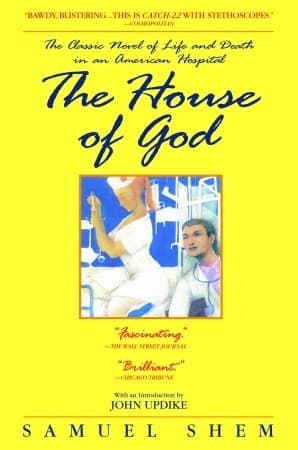
- The House of God
Samuel Shem
3.9 (17k) average on GoodreadsHealthA more satirical, but equally critical, look at the medical profession and the challenges faced by young doctors.
- Cutting for Stone
Abraham Verghese
4.3 (337k) average on GoodreadsLiterary FictionA sweeping medical saga focusing on doctors, ethics, and personal relationships.
- Tender is the Night
F. Scott Fitzgerald
3.8 (114k) average on GoodreadsLiterary FictionBoth novels depict a talented professional's moral and professional decline amidst a flawed society. However, in The Citadel, Dr. Manson's struggles are primarily external and systemic, battling an entrenched medical hierarchy in pursuit of reform. In contrast, Dr. Dick Diver's downfall in Tender Is the Night is largely psychological, driven by personal relationships, wealth, and the decadent society, leading to a more tragic and fatalistic outcome. Cronin's work is ultimately a call to action for systemic change, while Fitzgerald's is a lament for lost potential.
- To Kill a Mockingbird
Harper Lee
4.3 (4.5M) average on GoodreadsHistorical FictionIn the 1930s Jim Crow South, Harper Lee writes about racial injustice, moral growth, and the quiet courage of a lawyer father, Atticus Finch, as seen through his young daughter's eyes.
- The Great Gatsby
F. Scott Fitzgerald
3.9 (3.8M) average on GoodreadsHistorical FictionIn the opulent Roaring Twenties, a mysterious millionaire's lavish parties hide his desperate, tragic pursuit of a lost love, exposing the emptiness within the American Dream.
- Pride and Prejudice
Jane Austen
4.3 (3M) average on GoodreadsHistorical FictionIn a society focused on status and money, Elizabeth Bennet navigates love and pride, challenging Mr. Darcy and social expectations to find true affection.





Enjoyed the summary?
A summary gives you the shape of the book. The book itself has the detail, the examples and the voice.
Find The Citadel on AmazonAs an Amazon Associate, BookBrief earns from qualifying purchases. How we're funded