

Synopsis
Covers the whole plot, including the ending.
- Difficulty
- Medium
- Pacing
- Moderate
- Mood
- Reflective, poignant, hopeful, thought-provoking
The Clock of Life Plot Summary
Covers the whole plot, including the ending.
A Summer of Discovery
In the summer of 1980, ten-year-old Jason Lee Rainey lives in Hadlee, Mississippi, a town that appears peaceful but is racially segregated. He lives with his mother, Evelyn, and his grandmother, M'Dear, in the shadow of his deceased father, JD Rainey, a Vietnam War hero. Jason Lee's world expands when he befriends Samson Johnson, a Black boy from the other side of town. Their friendship, though innocent at first, is complicated by the era's racial prejudices and the town's unspoken rules. Jason Lee starts to notice how race dictates social interactions and opportunities, a sharp contrast to his simple bond with Samson.
Whispers of the Past
Jason Lee misses his father, JD Rainey, who died in Vietnam before Jason Lee knew him. He constantly seeks information about JD, piecing together his father's larger-than-life image through stories from family friends, veterans, and even strangers. These stories describe a brave, principled man who challenged racial norms and stood up for what was right. Jason Lee looks up to this image but also feels inadequate. He fears he can never live up to such a legacy, especially as he tries to understand the complex racial dynamics around him.
The Weight of Friendship
As Jason Lee and Samson's friendship grows, they spend their days exploring Hadlee, unaware of some deeper societal divides. However, their interactions increasingly expose them to the town's racial bigotry. They encounter subtle insults and open hostility from some white residents, which forces Jason Lee to confront the unfairness Samson endures. This period marks a loss of innocence for Jason Lee. He witnesses the painful realities of inequality and the dangers of their cross-racial friendship, making him question the values he has been taught.
A Mother's Grief and Resilience
Evelyn Rainey, Jason Lee's mother, is a complex character still recovering from the loss of her husband, JD. She carries her grief while trying to protect her son from Hadlee's harsh realities. Her past is tied to the town's history, and she harbors secrets and painful memories related to JD and the racial climate of their youth. Evelyn's quiet strength and determination to provide a good life for Jason Lee are clear, even as she struggles with her own emotions and the societal pressures that threaten her son's growing friendship with Samson.
The Vietnam Echoes
The Vietnam War affects Hadlee, especially its veterans. Jason Lee often meets men who served with his father. Many of them still deal with the physical and psychological scars of the conflict. These men, including Doc and others, offer Jason Lee glimpses into JD's character and his wartime experiences. Their stories not only explain his father's death but also reveal the deep trauma and often unspoken sacrifices made by those who fought. This further strengthens JD's heroic image in Jason Lee's mind.
The Confrontation at the Store
A key moment happens when Jason Lee and Samson are at the local store. Samson is unfairly accused of stealing and faces racist remarks from the owner, Mr. Higgins. Jason Lee is torn between his fear of confrontation and his loyalty to Samson. Seeing his friend's humiliation and the clear injustice, Jason Lee finds the courage to speak out, though hesitantly, defending Samson against the false accusations. This incident is a significant turning point, Jason Lee's first conscious act of defiance against his community's prejudice, and it strengthens his commitment to his friendship.
A Summer of Reckoning
As the summer continues, Hadlee's racial tensions become more obvious and directly threaten Jason Lee and Samson's friendship. Incidents of prejudice become more frequent and open, making it harder for the boys to maintain their bond without social consequences. Jason Lee sees the systemic unfairness that Samson and his family endure, leading him to question his town's morality and its people. This period forces both boys to mature quickly, understanding that their friendship is not just a personal bond but an act against the status quo.
The Tragic Incident
The story reaches a devastating climax with a senseless act of racial violence that results in the death of a young Black man, closely connected to Samson's community. This tragic event deeply affects Jason Lee, Samson, and the entire town. It is a brutal awakening to the extreme dangers of racial hatred and the fragility of life. The incident forces Jason Lee to confront the raw, ugly reality of prejudice in a way he had not before, leaving him with a deep sense of injustice and sorrow, and further strengthening his resolve to fight against such hatred.
The Seeds of Activism
After the tragedy, Jason Lee is deeply affected. The stories of his father's courage and principled stand against injustice, combined with the recent devastating event, spark a new sense of activism in him. He starts to understand that silence is complicity and that true courage means speaking out against wrong. This period marks the beginning of Jason Lee's transformation from a naive boy to a young man committed to standing up for what is right, even when it is difficult or unpopular, mirroring the values he admired in his father.
Finding His Father's Son
By the end of the summer, Jason Lee has changed profoundly. He no longer feels inadequate compared to his father. Instead, he realizes that he embodies JD's spirit through his own actions. He chooses to actively support Samson and challenge the racial injustices in Hadlee. His journey ends with the understanding that being his father's son is not about repeating JD's exact experiences, but about having the same moral courage, empathy, and willingness to stand up for others. He finds his own strength and purpose in the face of adversity, fully embracing his identity.
The Clock of Life Characters
Jason Lee Rainey
Protagonist
A young boy navigating racial prejudice and his father's legacy in 1980s Mississippi.
Ten-year-old Jason Lee is a curious and observant boy living in Hadlee, Mississippi. He is deeply affected by the absence of his father, JD Rainey, a Vietnam War hero, and spends much of his time seeking stories about him. Initially naive about the entrenched racial prejudice in his town, his friendship with Samson Johnson forces him to confront these harsh realities. He struggles with his identity and the pressure to live up to his father's heroic image, often feeling inadequate. Jason Lee is empathetic and possesses an innate sense of justice, which slowly develops into courage.
Relationships: Samson Johnson (Best friend); Evelyn Rainey (Mother); JD Rainey (Deceased father (idolized)); M'Dear (Grandmother)
Samson Johnson
Supporting
Jason Lee's Black best friend, who experiences the brunt of Hadlee's racial discrimination.
Samson is Jason Lee's best friend and a bright, resilient Black boy from the 'other side of the tracks' in Hadlee. He possesses a quiet strength and an understanding of the racial dynamics of his town, having grown up experiencing them firsthand. Despite the prejudice he faces, Samson maintains his dignity and his friendship with Jason Lee. He is often the direct recipient of racial slights and injustices, which serves as a catalyst for Jason Lee's awakening. Samson's presence highlights the stark inequalities of the time and place.
Relationships: Jason Lee Rainey (Best friend)
Evelyn Rainey
Supporting
Jason Lee's widowed mother, grappling with grief and the town's social complexities.
Evelyn is Jason Lee's mother, a strong yet emotionally reserved woman still mourning the loss of her husband, JD. She carries the weight of her past, including painful memories connected to JD and the racial tensions of their youth. Evelyn is protective of Jason Lee and tries to shield him from the harsher realities of Hadlee, but also recognizes the importance of his moral development. She is a woman of quiet strength and resilience, navigating the challenges of single motherhood in a racially charged environment while carrying her own burdens.
Relationships: Jason Lee Rainey (Son); JD Rainey (Deceased husband); M'Dear (Mother)
JD Rainey
Supporting
Jason Lee's deceased father, a Vietnam War hero whose legacy inspires and challenges his son.
JD Rainey is Jason Lee's father, who died in Vietnam before Jason Lee was old enough to know him. He is presented through the memories and stories of others, creating a heroic, almost mythical figure in Jason Lee's mind. JD was known for his courage, his principled stand against racial injustice, and his unwavering moral compass. His legacy serves as both an inspiration and a challenge for Jason Lee, who strives to understand and embody the kind of man his father was. JD represents a symbol of integrity and defiance against the status quo.
Relationships: Jason Lee Rainey (Son); Evelyn Rainey (Wife)
M'Dear
Supporting
Jason Lee's wise and loving grandmother, a source of comfort and traditional Southern wisdom.
M'Dear is Jason Lee's paternal grandmother, a traditional Southern woman who provides a stable and loving presence in his life. She is a fount of family history and often shares stories that subtly guide Jason Lee's understanding of his family and the world. While she embodies some of the older Southern attitudes, her love for Jason Lee transcends these, and she offers comfort and wisdom. She represents the enduring strength of family and the passing down of knowledge, both good and bad, through generations.
Relationships: Jason Lee Rainey (Grandson); Evelyn Rainey (Daughter-in-law)
Doc
Supporting
A Vietnam veteran and friend of JD, who shares insights into Jason Lee's father.
Doc is a Vietnam veteran and a friend of JD Rainey, who served alongside him. He is one of the key figures who shares stories about JD with Jason Lee, helping the boy piece together his father's character and experiences. Doc carries the unspoken burdens of war, like many veterans in Hadlee, and his interactions with Jason Lee are often tinged with a quiet melancholy. He represents the lingering impact of the Vietnam War on the community and provides a tangible link to JD's heroic past.
Relationships: JD Rainey (Fellow veteran/Friend); Jason Lee Rainey (Source of information about JD)
Mr. Higgins
Antagonist
The racist store owner who embodies the pervasive prejudice in Hadlee.
Mr. Higgins is the owner of the local store and represents the overt and ingrained racial prejudice prevalent in Hadlee. He is confrontational and quick to accuse Samson Johnson of stealing, using racist language and attitudes. His actions serve as a direct catalyst for Jason Lee's moral awakening, forcing the boy to confront injustice head-on. Mr. Higgins is not a complex character; rather, he is a clear embodiment of the bigotry that Jason Lee and Samson must contend with in their community.
The Clock of Life Themes
Racial Injustice and Segregation
The novel shows the deep-seated racial prejudice and segregation in 1980s Mississippi. It explores how these attitudes affect daily life, friendships, and the justice system, especially through Samson's experiences and Jason Lee's growing awareness. The theme highlights the lasting impact of the Civil Rights Movement and the slow, difficult process of change, showing how even an innocent childhood is shaped by systemic inequality and its dangers.
“The lines were drawn in Hadlee, invisible but as real as the pavement on Main Street, separating one side of town from the other.”
Coming of Age and Moral Awakening
Jason Lee's journey is a classic coming-of-age story, marked by a deep moral awakening. He changes from a naive child to a young man who understands the world's complexities and is willing to stand up for his beliefs. His friendship with Samson and the stories of his father's past drive this transformation. The theme explores the loss of innocence and the development of a personal moral compass when facing societal injustice, showing how defining moments can shape character.
“Sometimes you just gotta do what's right, even if it's scary. Your daddy knew that.”
The Legacy of War and Heroism
The Vietnam War and its aftermath affect the characters and the town. Jason Lee's deceased father, JD Rainey, is a central figure whose heroic legacy, shaped by his wartime experiences and principled stands, inspires Jason Lee. The theme explores how war affects individuals and communities, both directly and through stories passed down. It also examines heroism, suggesting it is not just about battlefield valor but also about moral courage in everyday life, especially when facing injustice.
“He wasn't just brave in the jungle, son. He was brave here too, when it mattered.”
Friendship Across Divides
The friendship between Jason Lee and Samson is a central theme, highlighting the power of human connection to cross societal barriers. Despite the racial segregation and prejudice of their town, their bond deepens. It is a source of hope and a challenge to the existing order. The theme explores the loyalty, understanding, and shared experiences that define their friendship, and how it forces Jason Lee to confront and ultimately reject the racist attitudes of his community, showing how genuine connection can transform.
“It didn't matter what color your skin was when you were catching tadpoles together. It only mattered to everyone else.”
Plot Devices & Literary Techniques
Flashbacks and Recollections
Stories from the past reveal JD Rainey's character and historical context.
The novel heavily relies on flashbacks and the recollections of various characters to reveal information about Jason Lee's deceased father, JD Rainey. These stories, shared by Evelyn, M'Dear, Doc, and other townspeople, piece together JD's character, his wartime experiences, and his principled stands against injustice. This device not only builds the mythical image of JD for Jason Lee but also provides crucial historical context about the Civil Rights Movement and the Vietnam War, showing how past events continue to shape the present.
Symbolism of the Clock
The 'Clock of Life' represents the passage of time and the cyclical nature of history.
The 'Clock of Life' serves as a symbolic motif throughout the novel, representing the relentless passage of time, the cyclical nature of history, and the idea that lessons from the past continue to resonate in the present. It suggests that while time moves forward, certain struggles and injustices can persist or reappear, requiring new generations to confront them. For Jason Lee, it symbolizes his journey through childhood and his understanding that he is part of a larger historical narrative, connected to his father's past and the ongoing fight for justice.
The Small Southern Town Setting
Hadlee, Mississippi, acts as a microcosm of broader societal issues.
The small town of Hadlee, Mississippi, in the 1980s, functions as a powerful plot device, serving as a microcosm for the broader societal issues of racial prejudice, segregation, and the lingering effects of historical events like the Civil Rights Movement and the Vietnam War. Its insular nature amplifies the tensions and makes Jason Lee's moral choices more impactful. The setting's charm and underlying bigotry create a compelling backdrop against which the characters' struggles for justice and understanding unfold, highlighting the deeply ingrained nature of these societal problems.
Quiz
10 questions on the plot and the characters. Each answer comes with a short explanation.
Question 1
What is the primary setting of "The Clock of Life"?
- New York City
- Hadlee, Mississippi
- Washington D.C.
- Los Angeles, California
Show answer
B. Hadlee, Mississippi The book is set in the small town of Hadlee, Mississippi.
Question 2
In what decade does the story primarily take place?
- 1960s
- 1970s
- 1980s
- 1990s
Show answer
C. 1980s The story is set during the 1980s in Hadlee, Mississippi.
Question 3
Who is the main protagonist struggling to find his way?
- Samson Johnson
- Jason Lee Rainey
- Nancy Klann-Moren
- Jason's Father
Show answer
B. Jason Lee Rainey Jason Lee Rainey is the main character who faces challenges in the story.
Question 4
What significant historical event, besides the Civil Rights Movement, is mentioned as affecting the characters' fates?
- World War I
- The Great Depression
- The Vietnam War
- The Cold War
Show answer
C. The Vietnam War The Vietnam War is mentioned as one of the two unsettling chapters in American history that affect the characters.
Question 5
What does Jason Lee learn about his father?
- His father was a prominent politician.
- His father was a famous musician.
- His father was killed in Vietnam and was larger-than-life.
- His father abandoned the family.
Show answer
C. His father was killed in Vietnam and was larger-than-life. Jason Lee learns through stories that his father was killed in Vietnam and was considered larger-than-life.
Question 6
Which of the following themes is NOT explicitly mentioned as being explored in the book?
- The bond of friendship
- The pain of senseless death
- The pursuit of wealth
- Courage to stand up for beliefs
Show answer
C. The pursuit of wealth While the book explores themes of friendship, death, and courage, the pursuit of wealth is not explicitly highlighted in the summary.
Question 7
What does Jason Lee long to become, but doubts he has the capacity for?
- A successful businessman
- The sort of man his father was
- A renowned athlete
- A respected community leader
Show answer
B. The sort of man his father was Jason Lee longs to emulate his larger-than-life father but doubts his own ability to do so.
Question 8
The summary mentions that the story explores how two chapters in American history affect the fate of a family, a town, and two boyhood friends. Which two chapters are these?
- The Civil Rights Movement and World War II
- The Great Depression and the Cold War
- The Civil Rights Movement and the Vietnam War
- The Industrial Revolution and the Korean War
Show answer
C. The Civil Rights Movement and the Vietnam War The summary explicitly states that the Civil Rights Movement and the Vietnam War are the two unsettling chapters affecting the characters.
Question 9
What does Jason Lee ultimately realize about himself by the end of the story?
- He is destined to repeat his father's mistakes.
- He is his father's son.
- He is better than his father.
- He needs to leave Hadlee to find himself.
Show answer
B. He is his father's son. The summary concludes by stating that Jason comes to realize he is his father's son, implying a connection and perhaps an inherited strength or character.
Question 10
Which of the following awards did "The Clock of Life" receive or finalize?
- Pulitzer Prize for Fiction
- National Book Award for Fiction
- Writer's Digest Self Published e-Book Awards (2nd place)
- Goodreads Choice Awards
Show answer
C. Writer's Digest Self Published e-Book Awards (2nd place) The provided text lists the Writer's Digest Self Published e-Book Awards, where it received 2nd place for Fiction, among other accolades.
The Clock of Life FAQ
What is 'The Clock of Life' about?
'The Clock of Life' is a historical fiction novel set in Hadlee, Mississippi, during the 1980s. It follows Jason Lee Rainey as he navigates Southern attitudes about race and deepens his friendship with a Black boy named Samson Johnson. The story explores themes of inequality, friendship, courage, and learning from the past.
What historical events are relevant to 'The Clock of Life'?
The novel is significantly influenced by two major chapters in American history: the Civil Rights Movement and the Vietnam War. These events shape the lives of the characters, the dynamics of the town, and the challenges faced by the two young friends.
Who are the main characters in 'The Clock of Life'?
The main characters are Jason Lee Rainey, a young boy struggling with societal expectations and his father's legacy, and Samson Johnson, his Black friend. The story also delves into the memory of Jason Lee's father, who was killed in Vietnam.
What are the main themes explored in the book?
Key themes include racial inequality, the complexities of friendship across racial divides, the impact of war on families and communities, finding courage, and understanding one's own identity and legacy.
What is Jason Lee's relationship with his father?
Jason Lee longs to emulate his larger-than-life father, who died in the Vietnam War. He learns about his father through stories and struggles with self-doubt, questioning if he possesses the same qualities. Ultimately, he comes to realize he is indeed his father's son.
How does the book portray race relations in the 1980s South?
The novel depicts the lingering 'old, steadfast Southern attitudes about race' that Jason Lee must contend with. It explores the realities of inequality and how these societal norms impact the lives and friendships of the characters.
What lessons does Jason Lee learn throughout the story?
Jason Lee learns valuable lessons from the past, confronts the realities of inequality, experiences the pain of loss, finds the courage to stand up for his beliefs, and ultimately comes to understand his own strength and identity.
Is 'The Clock of Life' based on a true story?
While the novel is set in a specific time and place and deals with universal themes, it is a work of historical fiction and not explicitly stated to be based on a single true story. It draws inspiration from historical events and the human experience.
What awards has 'The Clock of Life' received?
'The Clock of Life' has been recognized with several accolades, including the 2014 Kindle Book Review Awards, 2nd place for Fiction in the Writer's Digest Self Published e-Book Awards 2013, and was a Finalist in the Next Generation Indie Book Awards and Readers Favorite Book Awards 2013.
Who would enjoy reading 'The Clock of Life'?
Readers who enjoy historical fiction, coming-of-age stories, and novels that explore themes of friendship, race relations, and the impact of historical events would likely find 'The Clock of Life' engaging.
Similar books
- The Grapes of Wrath
John Steinbeck
4.0 (750k) average on GoodreadsHistorical Fiction"The Clock of Life" shares thematic commonalities with Steinbeck's "The Grapes of Wrath," particularly in its focus on the human cost of the Dust Bowl migration and the resilience of families facing displacement. However, Klann-Moren's novel offers a more intimate, child-centric perspective, contrasting with Steinbeck's broader, more overtly political and panoramic view of the Joad family's collective struggle. While Steinbeck's work is a sprawling epic of social injustice, Klann-Moren provides a quieter, more personal narrative, exploring the internal world and individual growth of a young girl amidst the chaos, making it feel less like a social commentary and more like a personal memoir of survival.
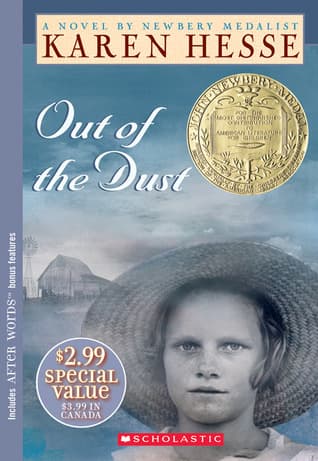
- Out of the Dust
Karen Hesse
3.8 (69k) average on GoodreadsChildren'sSimilar to Karen Hesse's "Out of the Dust," "The Clock of Life" centers on a young female protagonist navigating the hardships of the Dust Bowl era. Both novels employ a first-person perspective to convey the intimate struggles of their characters. However, Hesse's novel is written in verse, offering a spare, poetic, and often more immediate emotional impact, whereas Klann-Moren's prose is more traditional and descriptive, allowing for a richer, more detailed world-building. While both effectively capture the desolation and resilience, Klann-Moren delves deeper into the psychological complexities and long-term consequences of the period through a more extensive narrative arc.
- To Kill a Mockingbird
Harper Lee
4.3 (4.5M) average on GoodreadsHistorical FictionIn the 1930s Jim Crow South, Harper Lee writes about racial injustice, moral growth, and the quiet courage of a lawyer father, Atticus Finch, as seen through his young daughter's eyes.
- The Great Gatsby
F. Scott Fitzgerald
3.9 (3.8M) average on GoodreadsHistorical FictionIn the opulent Roaring Twenties, a mysterious millionaire's lavish parties hide his desperate, tragic pursuit of a lost love, exposing the emptiness within the American Dream.
- Pride and Prejudice
Jane Austen
4.3 (3M) average on GoodreadsHistorical FictionIn a society focused on status and money, Elizabeth Bennet navigates love and pride, challenging Mr. Darcy and social expectations to find true affection.
- Angels & Demons
Dan Brown
3.9 (2.7M) average on GoodreadsThrillerA Harvard symbologist races through Rome's ancient sites, deciphering cryptic clues to unmask the Illuminati and stop a vengeful plot to destroy the Vatican with a stolen antimatter weapon.





Enjoyed the summary?
A summary gives you the shape of the book. The book itself has the detail, the examples and the voice.
Find The Clock of Life on AmazonAs an Amazon Associate, BookBrief earns from qualifying purchases. How we're funded