
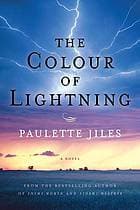
Synopsis
Covers the whole plot, including the ending.
- Difficulty
- Medium
- Pacing
- Moderate
- Mood
- Gritty, Resilient, Heartbreaking, Hopeful, Historical
- Read it if
- You enjoy historical fiction based on real events, particularly stories of resilience, family, and the American West, and are comfortable with a nuanced portrayal of difficult historical periods.
- Skip it if
- You prefer light-hearted stories, or are uncomfortable with graphic depictions of historical violence and trauma.
The Color Of Lightning Plot Summary
Covers the whole plot, including the ending.
A New Beginning in Texas
In 1863, Britt Johnson, a recently freed slave from Kentucky, travels with his wife Mary and their three children—Jube, Nancy, and infant Sally—to North Texas. They are part of a small group of Black families seeking a new life and land. Britt is a skilled frontiersman, determined to provide a safe future for his family. They settle near Elm Creek, where they begin to build a community, cultivate the land, and prepare for the challenges of the untamed frontier. Britt's initial optimism is high as he envisions a future free from the constraints of slavery.
The Elm Creek Raid
While Britt is away establishing trade in Weatherford, a brutal and unexpected raid by a large band of Comanche and Kiowa warriors hits the Elm Creek settlement. The attack is swift, killing many settlers, including Britt's eldest son, Jube, who dies defending his family. Mary, Nancy, and Sally are captured along with several other women and children. The raiders burn the cabins and steal horses, leaving a scene of devastation. Britt returns to find his home destroyed, his community shattered, and his family gone, leaving him with grief and a desperate resolve to find them.
Britt's Vow and Initial Search
Overwhelmed by the tragedy, Britt buries his son and the other victims. He feels grief and guilt but quickly turns his despair into a fierce determination to rescue Mary and his daughters. He understands the immense difficulty and danger of tracking the Comanche and Kiowa into their territory, but he is undeterred. Facing the skepticism and fear of the remaining settlers and local authorities, Britt prepares for a solo mission. He gathers what supplies he can, relying on his knowledge of the frontier and his resilience, setting out alone into the Texas plains, driven by a promise to his lost family.
Life Among the Comanche
Mary, Nancy, and Sally are taken deep into Comanche territory. Their lives as captives are harsh. Mary, traumatized and injured during the raid, struggles to protect her young daughters. They experience the customs and realities of tribal life, including forced labor, hunger, and constant fear. Nancy, being younger, begins to adapt more quickly, learning the language and ways of her captors, while Mary resists, clinging to the hope of rescue and the memory of her former life. The girls are separated from Mary at times, increasing her anguish and the difficulty of their survival.
Years of Searching and Learning
Britt's initial search is unsuccessful. He spends years traversing the plains, often alone, sometimes with temporary companions. He learns to track the nomadic tribes, studies their customs, and endures hardship, facing starvation, harsh weather, and encounters with both hostile Natives and wary settlers. He works odd jobs to survive and fund his quest, always listening for news of captive women or children. His resolve never wavers, but the physical and emotional toll of his journey is immense, shaping him into a hardened, solitary figure driven by his mission.
First Contact and Negotiations
After years, Britt finally locates a band of Comanche believed to be holding his family. He cautiously approaches, using his knowledge of the land and a calculated risk. Through intermediaries and his understanding of tribal protocols, he tries to negotiate for their release. The Comanche, especially the warriors who now consider Nancy and Sally their own, resist. They demand a high price in horses and goods, viewing the captives as valuable. Britt faces immense frustration and the realization that his family, especially the children, may no longer wish to return or are deeply integrated into the tribal way of life.
Nancy's Integration and Reluctance
Nancy, now older and known by a Comanche name, has fully assimilated into the tribe. She speaks their language, understands their customs, and has formed bonds, even a family, within the Comanche community. When Britt finally confronts her, she is wary and reluctant to leave. She views Britt as a stranger and the white world as alien. This revelation is a blow to Britt, who had imagined a joyful reunion. He struggles to understand her transformation and the deep attachment she now feels to her captors, highlighting the cultural difference between them.
Mary's Trauma and Sally's Bond
Mary, though physically alive, is deeply traumatized by her captivity and the loss of her children to the tribe. She longs for freedom but is emotionally fragile. Sally, still a young girl, has also been raised within the Comanche culture, but her memories of Britt and her former life are stronger than Nancy's. She is torn between her biological father and the Comanche family she has known for most of her life. Britt must manage Mary's delicate mental state and Sally's divided loyalties, adding complexity to his mission to bring them home.
The Difficult Return
Through persistent negotiation, significant payments of horses and goods, and sheer will, Britt eventually secures the release of Mary and Sally, though Nancy remains with the tribe by her own choice. The journey back to settled lands is arduous, marked by Mary's psychological distress and Sally's struggle to adjust to a world she barely remembers. Britt faces the task of helping them heal and reintegrate into a different society. He carries the burden of Nancy's absence, a constant reminder of his incomplete victory.
Rebuilding and Lingering Scars
Britt, Mary, and Sally return to a new home, attempting to build a normal life. Mary's trauma shows as deep withdrawal and emotional fragility, requiring Britt's constant care. Sally slowly relearns English and the customs of the white world, but she carries the marks of her Comanche upbringing, often feeling like an outsider. Britt dedicates himself to their recovery, providing stability and love, but he is also changed, haunted by the past and the knowledge of Nancy's absence. Their lives show resilience, but also the scars left by violence and loss.
Principal Figures
Britt Johnson
Protagonist
A determined freedman seeking to reclaim his family from Comanche captivity.
Britt Johnson is a former slave from Kentucky, a man of immense strength, resilience, and unwavering resolve. He is a skilled frontiersman, intelligent and resourceful, with a deep love for his family. After the devastating raid on his settlement, he dedicates his life to finding his captured wife and children, embarking on a multi-year quest across the dangerous Texas plains. He is driven by a powerful sense of duty and an unshakeable promise, enduring unimaginable hardships and personal sacrifices. His character embodies perseverance in the face of overwhelming odds.
Relationships: Mary Johnson (Devoted husband, protector, and caregiver.); Nancy Johnson (Father, desperate to reclaim her, but ultimately accepts her choice.); Sally Johnson (Loving father, instrumental in her re-adaptation.); Jube Johnson (Grieving father, his death fuels Britt's initial resolve.)
Mary Johnson
Supporting
Britt's wife, deeply traumatized by captivity and loss.
Mary is Britt's wife, a loving mother who endures unimaginable suffering during her captivity. She is physically and psychologically shattered by the raid, the death of her son, and the trauma of living as a Comanche captive. She struggles with profound grief, fear, and a sense of displacement. Her spirit is deeply wounded, and her return to the white world is marked by a long, arduous process of emotional and mental recovery. She represents the silent, enduring suffering of those caught in the crossfire of cultural conflict.
Relationships: Britt Johnson (Wife, dependent on his strength and care after her trauma.); Nancy Johnson (Mother, grieves her daughter's assimilation and loss.); Sally Johnson (Mother, finds solace and a reason to heal through her younger daughter.)
Nancy Johnson
Supporting
Britt's elder daughter, who fully assimilates into Comanche culture.
Nancy is Britt and Mary's elder daughter, captured as a young girl. Over the years, she fully assimilates into the Comanche way of life, learning their language, customs, and forming deep bonds within the tribe. She becomes known by a Comanche name and ultimately chooses to remain with her adoptive family, viewing Britt as a stranger and the white world as alien. Her character highlights the profound impact of cultural immersion and the complexities of identity, challenging conventional notions of 'rescue' and 'home.'
Relationships: Britt Johnson (Daughter, but views him as a stranger from a different world.); Mary Johnson (Daughter, but their bond is severed by her assimilation.); Comanche Adoptive Family (Forms deep familial bonds and loyalty.)
Sally Johnson
Supporting
Britt's younger daughter, caught between two cultures.
Sally is Britt and Mary's youngest daughter, an infant when captured. She grows up knowing both her biological family (through faint memories and Britt's eventual return) and her Comanche adoptive family. She is less fully assimilated than Nancy, retaining some connection to her past. Upon her return with Britt, she faces the challenge of re-learning English and adapting to a world she barely remembers, embodying the struggle of a child with a dual cultural identity. She is resilient but often confused by her divided loyalties.
Relationships: Britt Johnson (Loving daughter, relies on him for re-adaptation.); Mary Johnson (Daughter, her presence aids Mary's healing.); Comanche Adoptive Family (Has strong emotional ties to her Comanche caregivers.)
Jube Johnson
Mentioned
Britt's eldest son, killed during the raid.
Jube is Britt and Mary's eldest son, a young man who bravely attempts to defend his family during the Comanche-Kiowa raid on Elm Creek. He is killed in the attack. His death is a profound loss for Britt and Mary, serving as a powerful catalyst for Britt's unwavering quest for revenge and rescue. Though his presence in the narrative is brief, his memory fuels Britt's determination and represents the initial, devastating cost of the frontier's dangers.
Relationships: Britt Johnson (Son, his death is a driving force for Britt.); Mary Johnson (Son, his death adds to her trauma.)
Comanche Warriors/Leaders
Antagonist
The tribal members who capture and assimilate Britt's family.
The Comanche warriors and leaders are portrayed not as purely evil, but as people defending their way of life and participating in the brutal realities of frontier conflict. They are fierce, proud, and view captives as either property or, in the case of children, as potential new members of their tribe. Their actions, though devastating to Britt, are rooted in their cultural practices and survival strategies. They are initially resistant to returning the captives, especially Nancy, due to her assimilation and the value placed on her as a tribal member.
Relationships: Britt Johnson (Adversaries in negotiations and cultural conflict.); Nancy Johnson (Adoptive family, view her as one of their own.); Sally Johnson (Adoptive family, care for her as a tribal child.)
Settlers/Frontier Authorities
Supporting
The wary and often unhelpful white community on the frontier.
These characters represent the broader white society Britt encounters on his quest. They are often fearful, prejudiced, or simply overwhelmed by the dangers of the frontier. Many are skeptical of Britt's mission, offering little assistance or actively discouraging him. They embody the racial tensions and the general lack of support available to a Black man seeking justice in a post-Civil War landscape. Their interactions with Britt highlight his isolation and the systemic challenges he faces beyond the immediate threat of the Comanche.
Relationships: Britt Johnson (Offer limited, often prejudiced, assistance or hindrance.)
Themes & Insights
The Enduring Power of Family Love
The novel is driven by Britt Johnson's unwavering love for his family. His relentless, multi-year search for Mary, Nancy, and Sally, despite hardship and slim odds, shows the deep bond of kinship. This love is his primary motivator, sustaining him through despair, suffering, and the emotional toll of his quest. Even when faced with Nancy's assimilation and Mary's trauma, his commitment to their well-being remains absolute, highlighting that family connections can transcend cultural divides and loss, as seen in Britt's patient care for Mary after their return.
“He would not rest until his family was whole again.”
The Trauma of Captivity and Cultural Assimilation
The book portrays the psychological and physical scars left by captivity. Mary's trauma, her withdrawal, and her struggle to reintegrate into her former life show the lasting impact of such an ordeal. Nancy's complete assimilation into the Comanche tribe, her adoption of their language and customs, and her choice to remain with them, explores the complex nature of identity when forced into a new culture. This theme questions the definition of 'rescue,' suggesting that sometimes, the 'rescued' may no longer be the person they once were, or even wish to return, as seen in Nancy's reluctance to leave.
“She was a Comanche now, in everything but blood.”
Racial Prejudice and Frontier Justice
Britt Johnson, as a freed Black man, faces racial prejudice throughout his journey. The skepticism, reluctance, and hostility he encounters from white settlers and authorities highlight the additional burdens placed upon him. His quest for justice for his family is often met with indifference or suspicion, showing the racial inequalities in post-Civil War America. He cannot rely on the 'justice system' or the help of others in the same way a white man might, forcing him to rely solely on his own determination and resourcefulness, as shown by his solitary years of searching.
“A Black man's grief was often overlooked, his purpose questioned.”
The Harsh Realities of the American Frontier
The novel paints a picture of the brutal and unforgiving nature of the 19th-century American frontier. It is a land of danger, where life is precarious, and survival demands resilience. The Elm Creek raid itself shows unpredictable violence, while Britt's years of solitary searching highlight the physical hardships of the land, from extreme weather to scarcity of resources. This theme emphasizes that the frontier was not just a place of opportunity but also of immense suffering, where different cultures clashed violently, and personal tragedies were common.
“The plains took what they wanted, and sometimes, they wanted everything.”
Plot Devices & Literary Techniques
The Quest
Britt's long, arduous journey to find his family.
The entire narrative is structured around Britt Johnson's heroic quest to retrieve his captured family. This classic plot device provides a clear goal, drives the protagonist's actions, and allows for episodic encounters and character development. The quest is fraught with obstacles—physical dangers, cultural barriers, emotional tolls—and its prolonged nature emphasizes Britt's unwavering determination, making his eventual, bittersweet success all the more impactful.
Foreshadowing
Early hints of danger and the challenges of assimilation.
Subtle hints of the frontier's dangers and the complexities of tribal relations are woven into the early chapters. Britt's initial optimism is tempered by the vastness of the land and the known presence of Native tribes, subtly foreshadowing the impending raid. Furthermore, the descriptions of how other captives have integrated into Native societies hint at the challenges Britt will face in retrieving his daughters, particularly Nancy, preparing the reader for the difficult realities of cultural assimilation.
Cultural Clash
The conflict between Anglo-American and Comanche ways of life.
This device highlights the fundamental differences in worldview, values, and survival strategies between Britt's society and the Comanche. The raid itself is a violent manifestation of this clash. More subtly, it's evident in the differing perceptions of captivity, property, and family. The Comanche view of adopted children versus Britt's biological imperative to reclaim them creates the central conflict, forcing both characters and readers to confront the complexities and tragedies arising from these irreconcilable cultural perspectives.
Symbolism of the Frontier
The untamed land as a metaphor for freedom and danger.
The vast, untamed Texas frontier symbolizes both the promise of freedom and a new life for Britt and his family, and the immense, unpredictable dangers that threatened it. It represents the ultimate test of human endurance and resilience. For Britt, it's a labyrinth he must navigate; for the Comanche, it's their ancestral home and a source of sustenance. The harshness of the landscape mirrors the harshness of the events that unfold, serving as a constant, indifferent witness to human struggle and loss.
The Color Of Lightning Quotes
“He knew that one could not expect gratitude from a child, for gratitude was a thing that came with age, with the remembrance of what had been given.”
“The wind was a god that blew where it listed, and no man could command it.”
“Memory was a strange thing, a house with many rooms, some brightly lit and others dark, where things waited in the shadows.”
“There was a loneliness that came with responsibility, a kind of isolation that settled over a man like dust.”
“A man's worth was not in what he owned, but in what he could do, and what he would do for others.”
“The past was not a country one could visit, but a river that flowed through the present, shaping its banks.”
“Fear was a cold hand that gripped the heart, but courage was the breath that pushed it away.”
“The prairie was a place that taught one to be small, to know the vastness that lay beyond human knowing.”
“He had learned that sorrow was a thing that did not diminish with time, but changed its shape, like a stone worn smooth by a river.”
“Hope was a fragile thing, easily broken, but it was also a stubborn thing, that could sprout in the driest ground.”
“The world was full of small beauties, if one only knew where to look, and had the eyes to see them.”
“Justice was a long road, and often a dusty one, but it was a road that had to be walked.”
“Silence could be a comfort, but it could also be a heavy cloak, full of unspoken things.”
“There was a language in the land, if one only listened, a story told in the wind and the grass and the stones.”
Quiz
10 questions on the plot and the characters. Each answer comes with a short explanation.
Question 1
In what year do Britt and Mary Johnson venture west with their children?
- 1861
- 1863
- 1865
- 1870
Show answer
B. 1863 The book's synopsis states that Britt and Mary venture west in 1863, as the War Between the States creeps toward its conclusion.
Question 2
What happens to Britt Johnson's eldest son during the Indian raid?
- He is captured and taken away with Mary.
- He manages to escape the raid unharmed.
- He is killed during the attack.
- He is hidden by a neighbor and later reunited with Britt.
Show answer
C. He is killed during the attack. Upon returning, Britt finds his eldest son dead, his beloved Mary enslaved, and his remaining children absorbed into an alien society.
Question 3
What is Britt Johnson's primary motivation after the raid on his settlement?
- To seek revenge on the Native American raiders.
- To rebuild his business and forget his past.
- To reunite his family and make them whole again.
- To move further west to a safer territory.
Show answer
C. To reunite his family and make them whole again. The synopsis clearly states that the 'heartsick freedman vows not to rest until his family is whole again,' indicating his primary motivation is reunification.
Question 4
Where does Britt Johnson establish a business before the raid occurs?
- In a nearby large city.
- At the settlement where his family lives.
- Away from the settlement, requiring him to be absent.
- In Kentucky, before moving west.
Show answer
C. Away from the settlement, requiring him to be absent. The synopsis mentions the raid occurs 'while Britt is away establishing a business,' implying the business was not at the settlement.
Question 5
What is Mary Johnson's state after being enslaved by the raiders?
- She is physically unharmed but emotionally distant.
- She is described as 'severely damaged.'
- She quickly adapts to her new circumstances.
- She manages to send messages back to Britt.
Show answer
B. She is described as 'severely damaged.' The synopsis describes Mary as 'beloved and severely damaged' after being enslaved, indicating a profound impact on her.
Question 6
The novel is based on what type of historical information?
- Official government records and military reports.
- Personal diaries and letters from the period.
- Oral histories of the post-Civil War years in North Texas.
- Newspaper articles from contemporary frontier towns.
Show answer
C. Oral histories of the post-Civil War years in North Texas. The synopsis explicitly states the book is 'based on oral histories of the post-Civil War years in North Texas.'
Question 7
What is the broader historical context mentioned as 'creeping inevitably toward its bloody conclusion' at the start of the book?
- The American Revolutionary War.
- The War Between the States (Civil War).
- The Mexican-American War.
- The Spanish-American War.
Show answer
B. The War Between the States (Civil War). The synopsis clearly sets the scene: 'as the War Between the States creeps inevitably toward its bloody conclusion,' referring to the American Civil War.
Question 8
The synopsis mentions that Britt Johnson's remaining children are 'absorbed into an alien society that will never relinquish its hold on them.' What does this imply about their future?
- They will quickly be rescued by Britt and return to their former lives.
- They will likely be difficult, if not impossible, to fully integrate back into their original family/culture.
- They will become leaders within the Native American community.
- They are only temporarily with the raiders and will soon be traded.
Show answer
B. They will likely be difficult, if not impossible, to fully integrate back into their original family/culture. The phrase 'will never relinquish its hold on them' strongly suggests that their new cultural assimilation will be permanent and deeply impactful, making their return to their former lives extremely challenging.
Question 9
Considering Britt Johnson's background as a former slave and his subsequent journey, what central theme is highlighted by his unwavering vow to reunite his family?
- The pursuit of wealth and land ownership in the West.
- The resilience of the human spirit and the enduring power of family bonds against overwhelming odds.
- The futility of fighting against the forces of nature and fate.
- The importance of individual freedom above all else.
Show answer
B. The resilience of the human spirit and the enduring power of family bonds against overwhelming odds. Britt, a former slave, faces immense hardship, yet his 'vow not to rest until his family is whole again' exemplifies extreme resilience and the deep importance of family, a common theme in stories of hardship and loss.
Question 10
The description of the book as 'a courageous reexamination of a dark American history' suggests it will likely explore what aspect of the post-Civil War West?
- Romanticized narratives of cowboys and pioneers.
- The challenges and brutal realities faced by marginalized groups, including freed slaves and Native Americans, during westward expansion.
- The economic boom and rapid industrialization of the era.
- The formation of new political alliances and government structures.
Show answer
B. The challenges and brutal realities faced by marginalized groups, including freed slaves and Native Americans, during westward expansion. The phrase 'dark American history' combined with the context of a freed slave's struggles and an Indian raid strongly implies an exploration of the often-unpleasant truths and conflicts of westward expansion, particularly concerning racial and cultural clashes.
The Color Of Lightning FAQ
What is the central premise of 'The Color of Lightning'?
The novel centers on Britt Johnson, a former Kentucky slave, who moves his family west to Texas in 1863 seeking a new life. Their dreams are shattered by a Comanche raid, leading to the death of his eldest son, the enslavement of his wife Mary, and the capture of his other children, prompting Britt's relentless quest to reunite his family.
Who are the primary members of Britt Johnson's family?
Britt's family includes his wife, Mary, and their three children: Elijah, the eldest son who is killed during the raid; and the younger children, Martha and Jube, who are captured by the Comanche. The story is largely driven by his efforts to recover Mary, Martha, and Jube.
What event triggers the main conflict in the story?
The main conflict begins with a brutal Comanche raid on the Johnson's settlement while Britt is away. This raid results in the death of their eldest son, Elijah, the brutalization and capture of Mary, and the abduction of Martha and Jube, setting Britt on his arduous journey.
How does the historical context of 1863 influence the story?
The year 1863 places the story amidst the American Civil War, though in Texas, the conflict is often overshadowed by frontier violence and racial tensions. Britt's recent emancipation as a former slave highlights the challenges and precariousness of freedom for Black individuals seeking to establish themselves in a post-slavery, pre-Reconstruction America, particularly on the dangerous frontier.
What is Britt Johnson's primary motivation throughout the book?
Britt's unwavering motivation is to recover his entire family—his wife Mary and his children Martha and Jube—from their Comanche captors. He vows not to rest until they are whole again, driven by deep love and a profound sense of responsibility.
How does Mary's experience with the Comanche differ from her children's?
Mary endures horrific abuse and enslavement at the hands of the Comanche, experiencing profound physical and psychological trauma that leaves her severely damaged. Her children, Martha and Jube, are assimilated into the Comanche way of life, learning their language and customs, and forming bonds within the tribe, making their eventual return more complex.
Are there any specific historical figures or events that inspired the novel?
The novel is explicitly stated to be based on oral histories of the post-Civil War years in North Texas, drawing inspiration from the true story of Britt Johnson, a Black man who indeed undertook a remarkable quest to rescue his family from Comanche captivity in the 1860s. While fictionalized, the core event and character are rooted in history.
What role do the Comanche play in the narrative beyond being antagonists?
The Comanche are depicted not merely as antagonists but as a complex society with their own culture, motivations, and internal dynamics. The novel explores their perspective through the experiences of Martha and Jube, showing their resilience, customs, and the harsh realities of their existence on the frontier, challenged by encroaching white settlers.
How does Britt Johnson's race impact his journey and interactions with others?
Britt's identity as a Black man, recently freed from slavery, significantly complicates his quest. He faces racism and skepticism from white authorities and settlers, who are often unwilling to help him or even believe his story. His race makes him an outsider even among those who might otherwise sympathize, forcing him to rely heavily on his own determination and ingenuity.
How does Mary's trauma manifest after her return?
Mary returns profoundly scarred, both physically and psychologically, from her time with the Comanche. She struggles with severe PTSD, withdrawal, and the inability to reconnect with her former life and family, particularly Britt. Her trauma is a lasting wound that impacts her and Britt's relationship deeply.
Discuss the psychological impact of assimilation on Martha and Jube.
Martha and Jube undergo significant psychological transformation, adapting fully to Comanche life. They learn the language, adopt tribal customs, and form new family bonds, particularly Jube, who embraces his new identity. This assimilation makes their eventual return to Britt's world disorienting and painful, as they feel caught between two cultures and identities.
How does Britt's unwavering resolve affect his own mental state?
Britt's unwavering resolve is both his greatest strength and a tremendous burden. It drives him through unimaginable hardships, but also isolates him in his singular pursuit. He carries immense grief, guilt, and the pressure of his promise, which takes a heavy toll on his emotional and mental well-being throughout his long search.
In what ways does the novel explore the concept of 'freedom'?
The novel explores freedom on multiple levels: Britt's newfound emancipation from slavery, the freedom he seeks for his captured family, and the contrasting freedom of the Comanche on their ancestral lands. It questions what true freedom means when one is constantly battling societal prejudice, personal trauma, and the struggle for survival in a dangerous world.
How does the author use the 'color of lightning' metaphor in the book?
The phrase 'color of lightning' likely refers to the unpredictable, devastating, and often racially charged violence that strikes the lives of the characters, particularly Britt's family. It symbolizes the sudden, overwhelming destruction and chaos that can erupt on the frontier, often without warning, leaving lasting scars.
Is the ending of the book hopeful or tragic, considering the family's reunion?
The ending is complex, containing elements of both hope and tragedy. While Britt successfully reunites his family, the profound trauma endured by Mary and the assimilation of Martha and Jube mean that the family is 'whole' only in a physical sense. Psychologically and emotionally, they are irrevocably changed, suggesting that some wounds may never fully heal, leaving a bittersweet resolution.
What is the novel's stance on the 'American Dream' for freed slaves on the frontier?
The novel suggests that the 'American Dream' for freed slaves on the frontier was fraught with immense peril and often shattered. Britt's initial hope for a peaceful new life is brutally interrupted, highlighting that while freedom was granted, security, equality, and the ability to build a stable future were far from guaranteed, constantly threatened by racial prejudice and frontier violence.
How does the novel challenge traditional narratives of westward expansion?
The novel challenges romanticized narratives of westward expansion by focusing on the brutal realities for marginalized groups. It highlights the often-ignored experiences of Black settlers, the devastating impact of frontier violence on all parties, and the destruction of indigenous cultures, presenting a more complex and darker picture of American history than often portrayed.
What is the significance of Britt's persistence despite overwhelming odds?
Britt's persistence signifies the incredible resilience of the human spirit and the unbreakable bonds of family. It underscores the profound love and commitment he has for his wife and children, demonstrating that even in the face of unimaginable loss, racial prejudice, and the vast wilderness, hope and determination can drive extraordinary acts of courage.
About the author

Paulette Jiles is a novelist known for her historical fiction that often explores themes of resilience and the human spirit. Her notable works include "News of the World," which follows a traveling news reader in post-Civil War Texas, and "The Color of Lightning," a narrative centered on the life of a former slave in the American West.
Similar books
- News of the World
Paulette Jiles
4.1 (65k) average on GoodreadsLiterary FictionAnother historical novel by Jiles set in post-Civil War Texas, featuring a journey of reclamation and the clash of cultures.
- Lonesome Dove
Larry McMurtry
4.5 (149k) average on GoodreadsHistorical FictionEpic Western historical fiction with strong character development, exploring the harsh realities of the frontier and personal journeys.
- Blood Meridian
Cormac McCarthy
4.2 (227k) average on GoodreadsFictionBoth novels confront the brutal violence of the American frontier. However, Jiles's "The Color of Lightning," while not shying away from brutality, grounds its narrative in human resilience, familial bonds, and the complexities of recovery, offering a glimmer of hope. McCarthy's "Blood Meridian," conversely, presents a far more nihilistic and unrelenting vision of violence and human depravity, largely devoid of redemption or emotional warmth. Jiles's work, therefore, provides a more humanistic counterpoint to McCarthy's bleak realism.
- To Kill a Mockingbird
Harper Lee
4.3 (4.5M) average on GoodreadsHistorical FictionIn the 1930s Jim Crow South, Harper Lee writes about racial injustice, moral growth, and the quiet courage of a lawyer father, Atticus Finch, as seen through his young daughter's eyes.
- The Great Gatsby
F. Scott Fitzgerald
3.9 (3.8M) average on GoodreadsHistorical FictionIn the opulent Roaring Twenties, a mysterious millionaire's lavish parties hide his desperate, tragic pursuit of a lost love, exposing the emptiness within the American Dream.
- Pride and Prejudice
Jane Austen
4.3 (3M) average on GoodreadsHistorical FictionIn a society focused on status and money, Elizabeth Bennet navigates love and pride, challenging Mr. Darcy and social expectations to find true affection.





Enjoyed the summary?
A summary gives you the shape of the book. The book itself has the detail, the examples and the voice.
Find The Color Of Lightning on AmazonAs an Amazon Associate, BookBrief earns from qualifying purchases. How we're funded