
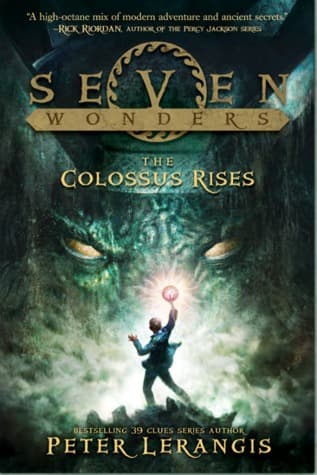
Synopsis
Covers the whole plot, including the ending.
- Difficulty
- Easy
- Pacing
- Fast
- Mood
- Adventurous, Mysterious, Suspenseful, Hopeful
- Read it if
- You enjoy fast-paced adventure stories with historical settings, ancient mysteries, and a quest for a magical cure.
- Skip it if
- You prefer realistic fiction or dislike cliffhanger endings.
The Colossus Rises Plot Summary
Covers the whole plot, including the ending.
The Diagnosis and the Mysterious Invitation
Jack McKinley, a seemingly ordinary twelve-year-old, is diagnosed with a rare and fatal genetic disease, a fast-moving form of mitochondrial disease. His parents are devastated, and Jack is terrified. Soon after this news, a mysterious woman named Dr. Helvetia offers him a place at a unique hospital called the Karai Institute. Desperate for hope, Jack's parents agree, and he goes to the institute, which at first looks like a modern medical facility. There, he meets three other children with similar illnesses brought there for unknown reasons: Aly Black, who loves books; Cass Williams, an athlete; and Marco Ramos, who is quiet and observant.
The Truth About the Karai Institute
After initial medical exams and introductions, Dr. Helvetia gathers Jack, Aly, Cass, and Marco. She reveals that the Karai Institute is not a typical hospital but an ancient organization protecting the world's wonders. She explains their diseases are not random but linked to a rare genetic marker, making them the only ones who can use powerful ancient artifacts called 'loculi.' Helvetia tells them their only chance to live is to find seven lost loculi, which, when combined, can cure them. These loculi are hidden within the Seven Wonders of the Ancient World, starting their dangerous quest.
The Great Pyramid and the First Loculus
Their first stop is the Great Pyramid of Giza in Egypt. Guided by Dr. Helvetia and an explorer named Bhegad, the children travel to the ancient site. Inside the pyramid, they find many traps and puzzles guarding the loculus. Jack's quick thinking and Aly's history knowledge help them navigate the dangerous chambers. They find the first loculus, a small, complex device, in a hidden room. However, shadowy figures known as the 'Corpus,' also seeking the loculi, attack them.
Escape from Egypt and the Corpus Threat
After getting the first loculus, the children and their guides must make a difficult escape from the Great Pyramid, pursued by the Corpus. They avoid capture thanks to Bhegad's skills and the children's quick thinking. During their escape, they learn the Corpus is a rival group that also knows about the loculi's power but wants them for bad reasons. The children realize how serious their situation is: they are not just on a treasure hunt but in a dangerous race against a powerful enemy who will stop at nothing to get the artifacts. The stakes for their lives and possibly the world are higher than they imagined.
The Hanging Gardens and the Serpent
Their second mission takes them to the ruins of the Hanging Gardens of Babylon. Using historical clues and Aly's research, they find a likely spot for the second loculus. The gardens, though empty, present their own challenges. They find a hidden room under the ancient terraces, but inside, a giant, monstrous serpent, a guardian of the loculus, confronts them. Cass's athletic ability and Jack's courage help distract and defeat the beast, allowing them to get the second loculus. The encounter leaves them shaken but more determined, confirming the dangers of their quest.
Doubts and Developing Powers
As the quest continues, Jack feels uneasy about Dr. Helvetia's true goals and the lack of information about their disease beyond the 'loculi cure.' He notices inconsistencies and evasiveness in her answers. Meanwhile, he experiences strange side effects from the loculi, including vivid dreams and an unusual connection to the artifacts, almost as if he can feel their presence. During a tense moment, Jack accidentally shows a strange ability — a brief, intense burst of energy or light from his hands — suggesting the loculi are not just objects but are waking up hidden powers in him and perhaps the other children.
The Temple of Artemis and the Betrayal
The team travels to the ruins of the Temple of Artemis at Ephesus. As they search for the third loculus, the Corpus launches a surprise, coordinated attack, more aggressive than before. During the chaos, Bhegad, who was a trusted guide, reveals he is a double agent working for the Corpus. This betrayal breaks the children's trust and leaves them vulnerable. They fight for their lives, barely escaping with the third loculus, but the betrayal hurts them deeply, making them question everyone and strengthening their resolve to find the full truth.
The Mausoleum at Halicarnassus and the Trap
Still dealing with Bhegad's betrayal, the children and Dr. Helvetia go to the site of the Mausoleum at Halicarnassus. The mood is tense, with suspicion in the air. As they move through the ancient ruins, it becomes clear that the Corpus expected them and set a trap. They are ambushed, and Marco, often quiet but observant, uses his sharp mind to find a hidden weakness in the Corpus's plan. The children must work together, using their strengths, to escape the immediate danger, get the fourth loculus, and avoid capture, realizing the Corpus is always one step ahead.
Unraveling the Mystery and Helvetia's Past
Back at a temporary safe house, Jack and Aly, increasingly suspicious, start putting together scattered information. Aly's research skills combine with Jack's growing intuition. They discover that their genetic disease is not just a random illness but a hidden trait, activated by something linked to the loculi and possibly ancient bloodlines. They also find evidence suggesting Dr. Helvetia has a much deeper, more personal connection to the loculi and the ancient groups than she has revealed, possibly having sought the loculi herself in the past for similar reasons, hinting at a cycle of this disease and quest.
The Colossus of Rhodes and the Cliffhanger
Their next goal is the Colossus of Rhodes, or its underwater remains. This mission is the most dangerous yet, requiring them to dive into the sea to reach submerged ruins. They face complex underwater puzzles and strong currents. As they finally find the fifth loculus, the Corpus launches a massive attack, overpowering their defenses. In a final fight, the children are separated from Dr. Helvetia. Despite their best efforts and new abilities, Jack, Aly, Cass, and Marco are captured by the Corpus. The book ends with a dramatic cliffhanger, with the children held hostage, and the fate of the remaining loculi and their lives uncertain.
Principal Figures
Jack McKinley
Protagonist
A twelve-year-old boy diagnosed with a fatal disease, chosen to find the loculi.
Jack is initially portrayed as an ordinary, somewhat timid twelve-year-old boy whose life is turned upside down by a terminal diagnosis. He possesses a strong sense of curiosity, a good heart, and surprising courage when faced with danger. Though not academically brilliant like Aly or physically strong like Cass, Jack demonstrates quick thinking, resourcefulness, and a growing ability to lead and make difficult decisions under pressure. He is driven by the desire to survive and protect his friends, but also by a deep-seated need to understand the truth behind their predicament.
Relationships: Aly Black (Close friend, intellectual partner); Cass Williams (Close friend, athletic companion); Marco Ramos (Close friend, quiet observer); Dr. Helvetia (Mentor/Guardian, but increasingly suspicious figure)
Aly Black
Supporting
A brilliant and bookish girl whose historical knowledge is crucial to the quest.
Aly is an exceptionally intelligent and academically gifted girl, often found with her nose in a book. Her vast knowledge of history, mythology, and ancient civilizations proves indispensable to the team, allowing them to decipher clues and navigate ancient puzzles. While physically less imposing than Cass, Aly is brave and determined, using her intellect as her primary weapon. She is a loyal friend and often the voice of reason, but also possesses a healthy skepticism, questioning inconsistencies and pushing for answers.
Relationships: Jack McKinley (Close friend, intellectual partner); Cass Williams (Friend); Marco Ramos (Friend)
Cass Williams
Supporting
An athletic and impulsive girl, providing physical strength and bravery to the group.
Cass is an athletic, energetic, and sometimes impulsive girl. Her physical prowess, agility, and courage are vital assets in overcoming physical obstacles and confronting dangers during their quest. She is quick to act and fiercely protective of her friends, often throwing herself into danger to help them. While sometimes headstrong, Cass also possesses a strong moral compass and a deep loyalty. Her direct approach often contrasts with Aly's intellectualism, providing a necessary balance to the team's dynamic.
Relationships: Jack McKinley (Close friend, athletic companion); Aly Black (Friend); Marco Ramos (Friend)
Marco Ramos
Supporting
A quiet and observant boy with a mysterious past and sharp perception.
Marco is the quietest member of the group, often observing rather than speaking. His reserved nature, however, masks a sharp mind and an incredible sense of perception. He notices details others miss and processes information deeply, often providing crucial insights at critical moments. Marco's past is hinted to be more complicated than the others, adding an air of mystery to his character. Despite his quiet demeanor, he is fiercely loyal and reliable, proving his worth through subtle actions and timely interventions.
Relationships: Jack McKinley (Close friend, quiet observer); Aly Black (Friend); Cass Williams (Friend)
Dr. Helvetia
Supporting/Antagonist (ambiguous)
The enigmatic head of the Karai Institute, guiding the children on their perilous quest.
Dr. Helvetia is the mysterious and authoritative head of the Karai Institute. She is the one who recruits the children and reveals the true nature of their mission to find the loculi. While she appears to be their guide and protector, her motives remain ambiguous throughout the book. She possesses extensive knowledge of ancient history and the loculi, but her evasiveness and occasional manipulative behavior lead Jack to question her true allegiance and the full extent of her plans. She is driven by a deep, personal connection to the loculi and their power.
Relationships: Jack McKinley (Mentor/Guardian, but increasingly suspicious figure); Aly Black (Mentor/Guardian); Cass Williams (Mentor/Guardian); Marco Ramos (Mentor/Guardian)
Bhegad
Antagonist
A seasoned explorer initially acting as a guide, later revealed as a double agent for the Corpus.
Bhegad is introduced as a knowledgeable and capable explorer, acting as a field guide and protector for the children and Dr. Helvetia during their initial expeditions. He is skilled in navigation, combat, and ancient lore, making him a seemingly invaluable asset. His demeanor is generally calm and experienced, earning the children's trust. However, his true allegiance is revealed to be with the Corpus, making him a cunning and dangerous double agent whose betrayal significantly impacts the team and heightens the stakes of their mission.
Relationships: Jack McKinley (Initially guide, then betrayer); Dr. Helvetia (Covert associate)
The Corpus
Antagonist
A shadowy, rival organization also seeking the loculi for unknown, nefarious purposes.
The Corpus is the primary antagonistic force in the story, a mysterious and well-organized group that relentlessly pursues the loculi. Their motives are initially unclear, but they are portrayed as ruthless and willing to use any means necessary, including violence and deception, to achieve their goals. They have extensive resources and a network of agents, demonstrating a deep understanding of the loculi and their power. Their constant pursuit forces the children into dangerous situations, making them a formidable and ever-present threat.
Relationships: Jack McKinley (Adversaries); Dr. Helvetia (Rival organization); Bhegad (Agent)
Themes & Insights
The Power of Friendship and Teamwork
This theme is central to the story, showing how the different skills and personalities of Jack, Aly, Cass, and Marco help each other. Jack's courage, Aly's intelligence, Cass's athleticism, and Marco's observation skills are all needed to overcome challenges. For example, in the Great Pyramid, Aly's history knowledge helps them solve puzzles, while Jack's quick thinking gets them out of trouble. Their shared illness creates a strong bond, showing how unity and support are vital for survival against overwhelming odds.
“Together, they were more than four sick kids; they were a force, each flaw and strength weaving into a tapestry of unexpected power.”
Facing Mortality and Finding Courage
The children's terminal illnesses drive their quest. This theme explores how facing death can create a strong sense of purpose and courage. Jack, at first terrified by his illness, finds the strength to confront ancient guardians and ruthless enemies, not just for himself but for his friends. Their desperate situation forces them to overcome fears and limits, turning them from ordinary children into brave adventurers. This theme shows that even when facing the greatest fear, the will to live and protect others can lead to extraordinary acts of bravery.
“He was dying. But if he was going to die, he wasn't going to do it quietly, or alone. He was going to fight.”
The Allure and Danger of Ancient Power
The loculi are a powerful, ancient force that can both heal and destroy. The story looks at the ethics of seeking and using such power. While the children desperately need the loculi to live, the artifacts also awaken strange abilities in Jack and attract the evil Corpus, who want them for bad reasons. This theme questions if such great power can ever truly be controlled or if it always corrupts, showing the thin line between a cure and a curse. The mystery around the loculi's origin and full abilities highlights their danger.
“The loculi were not just artifacts; they were echoes of a forgotten world, humming with a power that could save or utterly destroy.”
Trust and Betrayal
The theme of trust and betrayal appears throughout the story, especially with Dr. Helvetia and the shocking truth about Bhegad. The children must trust adults they barely know with their lives, creating constant suspicion. Bhegad's betrayal at the Temple of Artemis breaks their early trust in their guides and forces them to become more independent and careful. This theme explores the vulnerability of trusting others, especially when risks are high, and the devastating impact when that trust is broken, making the children question everyone's motives.
“The hardest part wasn't the monsters or the traps. It was realizing that sometimes, the greatest danger came from those you thought were on your side.”
Plot Devices & Literary Techniques
The MacGuffin (The Loculi)
Seven ancient artifacts that drive the entire plot.
The seven loculi serve as the primary MacGuffin of the story. These mysterious ancient artifacts are the objects of desire for both the protagonists, who need them for a cure, and the antagonists (the Corpus), who seek them for unknown, potentially destructive purposes. Their existence and the need to collect all seven propel the children on their journey across the Seven Wonders of the Ancient World, providing a clear objective and structure for the plot. The individual properties of each loculus, and their combined power, remain largely unknown, adding to their allure and mystery.
Ticking Clock
The children's rapidly progressing disease creates a sense of urgency.
The children's fatal genetic disease acts as a powerful ticking clock. Dr. Helvetia emphasizes that their condition is rapidly deteriorating, giving them only a few months to live if the loculi are not found. This constant threat of impending death creates immense urgency and pressure for the protagonists, justifying their dangerous quest and preventing them from delaying or giving up. It heightens the stakes of every challenge and failure, making the search for the loculi a desperate race against time and their own mortality.
The Chosen One Trope (with a twist)
Children with a specific genetic marker are uniquely suited for the quest.
The story employs a variation of the chosen one trope. Jack, Aly, Cass, and Marco are not chosen by prophecy or destiny in the traditional sense, but by a unique genetic marker linked to their disease. This marker makes them the only ones who can interact with the loculi without harm, and potentially even awaken latent abilities. This device provides a compelling reason why these specific children, despite their youth and illness, are indispensable to the quest, setting them apart from ordinary individuals and giving their personal struggle a larger, world-saving significance.
Ancient Wonders as Settings
The Seven Wonders of the Ancient World serve as primary locations and puzzle elements.
The Seven Wonders of the Ancient World are not merely backdrops but integral plot devices. Each wonder (or its ruins) houses a loculus and presents unique environmental challenges, historical puzzles, and guardians that the children must overcome. For example, the Great Pyramid requires navigation through traps, while the Hanging Gardens involve a mythical beast. This device grounds the fantastical quest in real-world historical sites, adding an educational element and a sense of grandeur, while leveraging the inherent mystery and legend associated with these iconic locations to enhance the adventure.
The Colossus Rises Quotes
“Sometimes the biggest mysteries are hidden in plain sight.”
“The past isn't just history; it's a map to the future.”
“Fear can be a powerful motivator, if you let it push you forward instead of hold you back.”
“Family isn't always about blood. Sometimes it's about who you choose to stand with.”
“Every legend has a grain of truth, and sometimes, that grain can grow into an avalanche.”
“The greatest treasures aren't always gold and jewels. Sometimes they're knowledge, or a friend.”
“Even the smallest actions can have the biggest consequences.”
“Trust is earned, not given. And once broken, it's hard to mend.”
“What you seek may be closer than you think, if only you open your eyes.”
“The world is full of wonders, both ancient and new, if you know where to look.”
“Sometimes, the only way forward is to face what scares you most.”
“Every puzzle has a solution, but you might need to look at it from a different angle.”
“The greatest power isn't in what you can destroy, but in what you can create and protect.”
“Even heroes need help sometimes.”
Quiz
10 questions on the plot and the characters. Each answer comes with a short explanation.
Question 1
What is the primary reason Jack McKinley needs to find the seven magic loculi?
- To gain immense power and become a superhero.
- To prevent a global catastrophe foretold by an ancient prophecy.
- To cure himself of a fatal illness he is destined to die from.
- To unlock a hidden treasure left by his ancestors.
Show answer
C. To cure himself of a fatal illness he is destined to die from. The book description explicitly states that Jack needs to find the loculi because he is going to die in a few months and they have the power to cure him.
Question 2
Where are the seven magic loculi hidden?
- In seven prominent museums around the world.
- Within the Seven Wonders of the Ancient World.
- Scattered across seven different continents.
- Deep within seven active volcanoes.
Show answer
B. Within the Seven Wonders of the Ancient World. The book's premise clearly states that the loculi are hidden in the Seven Wonders of the Ancient World.
Question 3
What is the nature of the magic loculi, according to the book's description?
- They are advanced technological devices from the future.
- They are the relics of a lost civilization.
- They are naturally occurring magical crystals.
- They are enchanted items forged by ancient gods.
Show answer
B. They are the relics of a lost civilization. The description specifies that 'the loculi are the relics of a lost civilization and haven’t been seen in thousands of years.'
Question 4
What is unique about Jack McKinley's 'problem' compared to other kids?
- He is secretly a prince from a hidden kingdom.
- He has a magical ability he can't control.
- He is destined to die in a few months.
- He is the only one who can communicate with mythical creatures.
Show answer
C. He is destined to die in a few months. The book description states, 'In a few months, he’s going to die,' which is presented as his extraordinary problem.
Question 5
What is implied about the difficulty of Jack's mission to find the loculi?
- It will be a straightforward journey with clear instructions.
- The loculi have been actively sought by many for centuries.
- The loculi haven't been seen in thousands of years, making them extremely hard to locate.
- He will have a team of experienced archaeologists to guide him.
Show answer
C. The loculi haven't been seen in thousands of years, making them extremely hard to locate. The description states, 'The loculi are the relics of a lost civilization and haven’t been seen in thousands of years,' indicating a significant challenge.
Question 6
What genre elements are most prominent in 'The Colossus Rises' based on the description?
- Science Fiction, Romance, Historical Fiction
- Fantasy, Children's, Mystery, Young Adult
- Horror, Thriller, Contemporary Fiction
- Biography, Self-help, Satire
Show answer
B. Fantasy, Children's, Mystery, Young Adult The provided information explicitly lists the genres as 'Fantasy, Children's, Mystery, Young Adult.'
Question 7
Which phrase best describes the overall tone or urgency of Jack's quest?
- A leisurely adventure to explore ancient sites.
- A desperate race against time to save his own life.
- A scholarly pursuit to uncover historical artifacts.
- A lighthearted journey of self-discovery.
Show answer
B. A desperate race against time to save his own life. The phrases 'In a few months, he’s going to die' and 'Jack needs to find seven magic loculi that, when combined, have the power to cure him' strongly imply a desperate, time-sensitive quest.
Question 8
What is the implied significance of the 'Seven Wonders' in the context of the story?
- They are merely beautiful tourist attractions Jack visits.
- They serve as the specific, challenging locations where the cure's components are hidden.
- They are the ancient homes of the lost civilization that created the loculi.
- They are magical portals that transport Jack to different dimensions.
Show answer
B. They serve as the specific, challenging locations where the cure's components are hidden. The description states, 'Because they’re hidden in the Seven Wonders of the Ancient World,' directly linking these wonders to the hiding places of the loculi, making them crucial to the quest.
Question 9
What major obstacle does the 'lost civilization' aspect of the loculi present for Jack?
- He needs to learn an ancient language to understand their instructions.
- The loculi are likely guarded by the descendants of that civilization.
- Their obscurity and the passage of thousands of years mean their locations are unknown and hard to trace.
- He must resurrect the lost civilization to gain their knowledge.
Show answer
C. Their obscurity and the passage of thousands of years mean their locations are unknown and hard to trace. The description states, 'The loculi are the relics of a lost civilization and haven’t been seen in thousands of years,' implying that their age and forgotten origins make finding them incredibly difficult due to lack of current knowledge or records.
Question 10
Given the premise, what kind of journey can readers expect Jack to embark on?
- A purely intellectual puzzle-solving adventure from his home.
- A physical quest involving travel, exploration, and overcoming obstacles at ancient sites.
- An internal, emotional journey focused on accepting his fate.
- A social mission to gather support from various communities.
Show answer
B. A physical quest involving travel, exploration, and overcoming obstacles at ancient sites. The mention of 'Seven Wonders of the Ancient World' as hiding places strongly suggests a physical journey requiring travel and exploration, aligning with the 'Colossus Rises' title and the adventure genre.
The Colossus Rises FAQ
What is the central premise of 'The Colossus Rises' and Jack McKinley's motivation?
The central premise revolves around Jack McKinley, a seemingly ordinary kid diagnosed with a rare, fatal disease that will claim his life in a few months. His primary motivation is to find seven ancient magic loculi, which, when combined, are believed to possess the power to cure his incurable condition. This quest forces him to travel the world, seeking these relics.
Who are Jack's companions on his quest, and what are their initial roles?
Jack is joined by Aly, a brilliant and resourceful girl with a photographic memory, and Cass, a quirky and often humorous boy who possesses an uncanny knack for languages and ancient scripts. Early on, they accompany Jack because they too are afflicted with similar, mysterious illnesses, making their survival intertwined with the success of the mission.
Where are the loculi hidden, and what danger does this present?
The seven magic loculi are hidden within the ruins and locations of the Seven Wonders of the Ancient World. This presents significant danger as these sites are often remote, booby-trapped, and guarded by various ancient puzzles and modern adversaries who are also seeking the powerful artifacts for their own nefarious purposes.
What is the significance of the 'Colossus' in the book's title?
The 'Colossus' in the title refers to the Colossus of Rhodes, one of the Seven Wonders of the Ancient World, which is the setting for the discovery of the first loculus. It also metaphorically represents the immense, seemingly insurmountable challenge Jack and his friends face in their quest, and perhaps hints at a larger, ancient power that is beginning to awaken.
What kind of organization is pursuing Jack and his friends, and what are their goals?
Jack and his friends are pursued by a shadowy organization known as the 'Medea Institute,' led by a mysterious figure. This group also seeks the loculi, believing they can harness their power for global control or to fulfill their own twisted vision of humanity's future, often putting them in direct conflict with Jack's life-saving mission.
How do the 'Seven Wonders' themselves play a role beyond just being hiding spots?
The Seven Wonders are not merely hiding spots; they are integral to the puzzles and challenges Jack and his friends face. Each wonder often contains specific traps, ancient mechanisms, or historical clues tied to its original construction and purpose, requiring the children to understand its history and architecture to retrieve the loculus.
Are there any clues early on that suggest a deeper connection between Jack, Aly, and Cass beyond their shared illness?
Yes, subtle clues emerge, such as their shared dreams or flashes of ancient memories they can't quite place, hinting at a predestined connection or perhaps even past lives. Their individual skills also complement each other almost too perfectly, suggesting they were meant to be a team, possibly for generations.
What is the true origin or nature of the loculi, beyond just being 'magic relics'?
The loculi are revealed to be more than just magic relics; they are fragments of a powerful ancient device or essence, possibly created by a lost civilization to maintain balance or wield immense power. Each loculus seems to embody a specific aspect of this power, and their true purpose extends beyond merely curing illnesses.
How does the author use the historical accuracy of the Seven Wonders to enhance the fantasy elements?
The author meticulously weaves historical details and myths surrounding each Wonder into the narrative, grounding the fantasy elements in reality. This blend makes the magical aspects, such as the loculi's powers and the ancient traps, feel more plausible and intriguing, creating a rich tapestry where history and fantasy intertwine.
How does Jack's impending death influence his decision-making and character development?
Jack's impending death is a constant, looming threat that provides intense urgency and often forces him to make incredibly brave, sometimes reckless, decisions. It fuels his determination, but also creates moments of fear and doubt, pushing him to mature quickly and value his friendships more deeply as he confronts his mortality.
What psychological impact does the constant pursuit by the Medea Institute have on the children?
The constant pursuit by the Medea Institute creates a persistent state of paranoia and stress for Jack, Aly, and Cass. It forces them to develop keen observational skills and quick thinking, but also isolates them, making it difficult to trust outsiders and constantly reminding them of the high stakes involved in their perilous journey.
How do Aly and Cass cope with their own similar illnesses and the pressure of the quest?
Aly copes by immersing herself in research and strategy, using her intellect as a shield and a weapon against their predicament, often suppressing her fear with logical solutions. Cass, on the other hand, often uses humor and his quirky personality to diffuse tension, but also shows moments of deep vulnerability and fear, demonstrating a more emotionally open coping mechanism.
In what ways do the characters' individual strengths and weaknesses contribute to the team's dynamic?
Jack's courage and leadership, Aly's intelligence and memory, and Cass's linguistic skills and problem-solving abilities are all crucial. Their weaknesses, such as Jack's impulsiveness, Aly's occasional over-reliance on logic, and Cass's moments of fear, create conflict and rely on the others to compensate, fostering a strong, interdependent team dynamic.
What is the broader message or theme about hope and resilience conveyed through Jack's journey?
Jack's journey strongly conveys the theme of hope and resilience in the face of insurmountable odds. Despite his dire prognosis and the relentless dangers, he never gives up, illustrating the power of human spirit and determination. It suggests that even when facing death, the pursuit of life and purpose can lead to extraordinary achievements.
Could the 'cure' for Jack's illness have unforeseen consequences, and is there any foreshadowing of this?
Yes, there is subtle foreshadowing that the 'cure' might have unforeseen consequences. The immense power of the loculi, and the desperation of the Medea Institute to control them, hints that such power might come with a price or alter Jack in unexpected ways, suggesting that salvation might not be as straightforward as a simple remedy.
Is the Medea Institute truly evil, or do they believe they are acting for a greater good?
While their methods are undeniably ruthless and harmful to Jack and his friends, there are hints that the Medea Institute, or at least some of its members, might genuinely believe they are acting for a greater good. Their leader's motivations could stem from a desire to prevent a larger catastrophe or to usher in a new era, albeit through morally questionable means.
How does the book challenge the traditional concept of 'ordinary kids' becoming heroes?
The book challenges this by presenting Jack, Aly, and Cass not as chosen ones with inherent powers, but as ordinary kids thrust into extraordinary circumstances due to their illnesses. Their heroism stems from their courage, intelligence, and teamwork, proving that even those facing personal tragedies can rise to become heroes through sheer will and resourcefulness.
What philosophical implications arise from the idea of ancient artifacts holding the key to modern life and death?
This raises philosophical questions about the cyclical nature of history, the enduring power of ancient knowledge, and humanity's continuous quest for control over life and death. It suggests that solutions to contemporary problems might lie hidden in the past, and that ancient civilizations possessed wisdom or technology we are only beginning to rediscover.
About the author
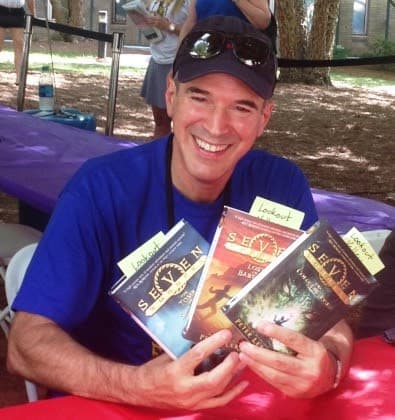
Peter Lerangis is an author known for his work in children's and young adult fiction. His notable books include "The Sword Thief," part of the 39 Clues series, and "The Colossus Rises," the first book in the Seven Wonders series. Lerangis has also written numerous other titles across various genres.
Similar books
- Harry Potter and the Sorcerer's Stone
J.K. Rowling
4.5 (7M) average on GoodreadsFantasyRescued from a miserable life under the stairs, an orphaned boy discovers he's a wizard destined for a magical school, where he uncovers a dangerous secret tied to the dark wizard who murdered his parents.
- The Hunger Games
Suzanne Collins
4.3 (6.4M) average on GoodreadsFantasyIn a future where children fight to the death on live television, Katniss Everdeen volunteers for the arena, turning a death sentence into a fight for survival and a spark of rebellion.
- 1984
George Orwell
4.2 (3.1M) average on GoodreadsPoliticsIn a future where surveillance and thought control are absolute, a man's search for truth clashes with the Party, showing that hope can be a form of rebellion.
- Divergent
Veronica Roth
4.2 (2.9M) average on GoodreadsFantasyIn a society divided by virtues, a sixteen-year-old's difference from the norm starts a rebellion that threatens her world.
- The Hobbit, or There and Back Again
J.R.R. Tolkien
4.3 (2.9M) average on GoodreadsFantasyA comfort-loving hobbit named Bilbo Baggins is whisked away by a mischievous wizard and a band of dwarves on an unexpected journey to reclaim stolen treasure from a fearsome dragon, discovering courage and a magical ring along the way.
- Animal Farm
George Orwell
4.0 (2.7M) average on GoodreadsPoliticsA farm animals' rebellion against humans turns into a pig-led dictatorship, showing how power corrupts and revolutionary ideals are betrayed.






Enjoyed the summary?
A summary gives you the shape of the book. The book itself has the detail, the examples and the voice.
Find The Colossus Rises on AmazonAs an Amazon Associate, BookBrief earns from qualifying purchases. How we're funded