

Synopsis
Covers the whole plot, including the ending.
- Difficulty
- Medium
- Pacing
- Variable
- Mood
- Atmospheric, Dark, Suspenseful, Melancholy, Macabre
- Read it if
- You want to explore the foundational works of gothic horror, psychological thrillers, and detective fiction, and appreciate intricate language and dark, atmospheric tales.
- Skip it if
- You prefer lighthearted stories, clear-cut happy endings, or are sensitive to themes of madness, death, and existential dread.
The Complete Stories and Poems Plot Summary
Covers the whole plot, including the ending.
The Fall of the House of Usher: Roderick's Descent
The narrator receives an urgent letter from his childhood friend, Roderick Usher, asking him to visit the remote House of Usher. Roderick suffers from a mysterious illness. When the narrator arrives, he is struck by the decaying mansion and Roderick's pale appearance. Roderick, a sensitive artist, is troubled by extreme nervousness, heightened senses, and a belief that the house itself is alive and making him sicker. His twin sister, Madeline, also has a wasting disease, making her seem almost dead. The narrator tries to cheer Roderick with art and books, but the sadness only grows.
The Fall of the House of Usher: Madeline's Apparent Death and Burial
Madeline Usher dies from her illness. Roderick fears her body might be dug up for scientific study because of her unusual disease, so he decides to bury her temporarily in a vault under the house instead of the family graveyard. The narrator helps Roderick carry Madeline's coffin. During this, the narrator notices how much the twins look alike and a slight blush on Madeline's cheeks, which he dismisses as a post-mortem change. Burying Madeline makes Roderick's fragile mind even worse; he becomes more agitated, convinced his sister's spirit is still in the house.
The Fall of the House of Usher: The Storm and Madeline's Return
One night, a fierce storm hits the Usher estate. Roderick, very agitated, tells the narrator he believes he heard Madeline moving in her coffin. To calm him, the narrator reads from 'The Mad Trist' by Sir Launcelot Canning. As he reads, strange sounds from the house seem to match the story's events: a cracking, a shriek, and a clang. Roderick, in terror, confesses he has known for days that Madeline was alive and heard her struggling. The chamber door bursts open, revealing Madeline, bloody, standing in the doorway. She collapses onto Roderick, pulling him to the floor, where he dies of terror. The narrator flees as the house cracks apart and sinks into the pond.
The Tell-Tale Heart: The Murder
The narrator, who claims to be sane, describes his desire to murder an old man he lives with. He acts not for money, but because of the old man's pale blue 'vulture eye,' which frightens him. The narrator insists he is sane, despite his careful planning of the murder. For seven nights, he creeps into the old man's room, shining a single light beam from a lantern onto the eye, but the eye is always closed. On the eighth night, the old man wakes and cries out. The narrator, despite the old man's fear, stays still for an hour, listening to the old man's heartbeat, which he thinks grows louder. Finally, he opens the lantern, lighting up the 'vulture eye,' and the old man screams once.
The Tell-Tale Heart: The Aftermath and Confession
After the old man's scream, the narrator pulls him to the floor and suffocates him with the heavy bed. He then dismembers the body in the bathtub, carefully collecting all blood, and hides the remains under the floorboards of the old man's room. At 4 AM, three police officers arrive, called by a neighbor who heard the scream. The narrator, confident in his crime, invites them in, acts cheerful, and even places his chair directly over the hidden body. As they talk, the narrator hears a faint, rhythmic thumping, which grows louder until he believes it is the old man's beating heart, driving him to confess.
The Raven: A Scholar's Grief
A scholar, deep in grief over his lost love Lenore, sits alone in his room late one December night, reading to distract himself. He hears a tapping at his door, which he thinks is a visitor. He opens the door but finds no one. The tapping then comes from his window. He opens it, and a raven flies in, landing on a bust of Pallas Athena above his door. Amused by the bird's serious look, the scholar asks its name. To his surprise, the raven replies, 'Nevermore.' Intrigued and disturbed, the scholar asks more questions about Lenore, his future, and comfort, always getting the same reply.
The Pit and the Pendulum: Condemnation and Dungeon
The narrator, a condemned prisoner of the Spanish Inquisition, wakes in total darkness after a harsh trial. He fears being buried alive and tries to explore his cell by walking its edge, finding a large, circular dungeon. He almost falls into a deep pit in the center, which he first finds by tripping, then by dropping a piece of his robe. He is given drugged water and food, causing him to sleep deeply. Waking, he finds himself tied to a wooden frame, facing up, with a sharp pendulum slowly swinging down from the ceiling, set to cut through him. Rats, attracted by nearby food, torment him.
The Pit and the Pendulum: Escape and Final Peril
As the pendulum descends, the narrator plans to escape. He rubs the meat he was given over his ropes, attracting rats. The rats gnaw through the ropes, freeing him just as the pendulum is about to reach his chest. He escapes the pendulum only to face a new horror: the iron walls of his cell heat up and slowly close in, pushing him toward the central pit. The walls have terrifying paintings of demons. Overwhelmed, he is about to be forced into the abyss when, at the last moment, the walls pull back, a trumpet sounds, and he is caught by a rescuing arm. General Lasalle has captured Toledo, and the Inquisition has fallen.
The Murders in the Rue Morgue: The Inexplicable Crime
In a crowded Parisian street, Rue Morgue, the bodies of Madame L'Espanaye and her daughter, Mademoiselle Camille L'Espanaye, are found brutally murdered in their fourth-story apartment. The doors and windows are locked from the inside, making entry and exit seem impossible. Madame L'Espanaye's throat is cut, and she is found in the courtyard below, thrown from a window. Camille is found crammed up the chimney. Witnesses heard two voices: one harsh and guttural, the other shrill and French. The police are baffled by the lack of motive, the extreme violence, and the secure crime scene. The narrator and his friend, C. Auguste Dupin, are interested in the case.
The Murders in the Rue Morgue: Dupin's Deductions
C. Auguste Dupin, using his strong reasoning, examines the Rue Morgue crime scene. He ignores the police's focus on the locked doors, instead noting the unusual strength needed for the murders and the non-human hair found. Dupin concludes that the 'shrill' voice was not French but an unknown foreign language, and the 'guttural' voice was not human. He finds a tuft of orangutan hair and realizes the killer must have been an escaped orangutan. Dupin places an advertisement for a lost orangutan, expecting its owner to come forward, revealing the killer and the strange circumstances.
The Murders in the Rue Morgue: The Sailor's Confession
A Maltese sailor responds to Dupin's advertisement. Dupin confronts the sailor, who admits he owns a large, fierce orangutan from Borneo. The sailor explains that the orangutan, after watching him shave, escaped with a razor and copied his actions on the two women, leading to the murders. In a panic, the ape threw Madame L'Espanaye out the window and stuffed Camille up the chimney to hide her. The sailor, having seen parts of the horror from outside, was terrified and ran. Dupin explains that the orangutan's strength and agility allowed it to enter and exit through a disguised window latch the police missed, solving the baffling locked-room mystery.
The Masque of the Red Death: Prince Prospero's Retreat
When the 'Red Death' plague spreads through his land, Prince Prospero, a rich ruler, decides to escape it by retreating to a fortified abbey. He invites a thousand favored nobles to join him, sealing the gates to prevent anyone from entering or leaving. Inside, Prospero holds lavish parties, providing music, jesters, and feasts. He believes that by isolating themselves, they can avoid the plague and live in endless celebration, untouched by the suffering outside. The outside world suffers, but inside, the masquerade continues.
The Masque of the Red Death: The Seven Chambers
Prince Prospero hosts a grand masked ball in his abbey, held in seven distinct chambers, each decorated and lit in a single, bright color: blue, purple, green, orange, white, violet, and finally, black. The last chamber, draped in black velvet and lit by a blood-red light through stained-glass windows, is unsettling, and few dare to enter. A large ebony clock in this room strikes each hour with a deep chime that silences everyone, causing a brief, uneasy pause before the party resumes. This black and red room and the clock serve as a subtle reminder of death amidst the forced celebration.
The Masque of the Red Death: The Uninvited Guest
As the masked ball peaks, the revelers gasp in horror. A new, uninvited guest appears, whose costume is so grotesque it outdoes all others. The figure is tall and thin, shrouded in grave-clothes, with a mask like a dead face. Most terrifying, the costume is splattered with the scarlet stains of the Red Death. Prince Prospero, angry at this macabre intrusion, demands to know the intruder's identity. He orders his courtiers to seize the figure, but they are too scared to obey, letting the spectral guest slowly move through the colored chambers.
The Masque of the Red Death: Prospero's Demise and the Plague's Triumph
Angry at his courtiers, Prince Prospero, dagger in hand, rushes toward the mysterious figure as it enters the black and red chamber. As he reaches the figure, it turns to face him. Prospero cries out and falls dead. The terrified courtiers then rush forward and grab the masked figure, only to find, to their horror, that there is no body under the grave-shroud and mask. The Red Death itself has entered their refuge. One by one, the revelers die from the plague in the very rooms where they tried to escape it. The ebony clock stops, and the lamps go out, plunging the abbey into darkness as the Red Death takes 'illimitable dominion over all'.
The Complete Stories and Poems Characters
Roderick Usher
Protagonist
The last male descendant of the Usher family, afflicted by a severe nervous disorder and hypersensitivity.
Roderick Usher is a highly cultured, reclusive artist, suffering from a profound mental and physical illness that has been exacerbated by the oppressive atmosphere of his ancient family home. He possesses an acute sensitivity to light, sound, and taste, believing his senses are unnaturally heightened. He is deeply attached to his twin sister, Madeline, and is tormented by a premonition of their shared doom. His artistic expressions, particularly his paintings and songs, reflect his morbid and melancholic state, often depicting themes of horror and despair. He is a victim of his environment and his own genetic predispositions.
Relationships: Madeline Usher (Twin sister, deeply intertwined by bloodline and shared fate); Narrator (Childhood friend, confidant, and witness to his decline)
Madeline Usher
Supporting
Roderick's twin sister, suffering from a mysterious, cataleptic illness that blurs the line between life and death.
Madeline Usher is Roderick's twin sister, a ghostly figure afflicted by a wasting, cataleptic disease that causes her to fall into death-like trances. Her illness is a physical manifestation of the Usher family's decay and the house's oppressive influence. She is a silent, spectral presence, yet her eventual return from the tomb is the catalyst for the story's terrifying climax. Her close, almost supernatural bond with Roderick is central to the narrative, suggesting a shared destiny and an incestuous undercurrent. She embodies the horror of being buried alive and the ultimate triumph of death over human attempts to defy it.
Relationships: Roderick Usher (Twin brother, deeply intertwined by bloodline and shared fate)
The Narrator (Usher)
Protagonist
An unnamed childhood friend of Roderick Usher, invited to the house and serving as the reader's perspective.
The narrator is a rational, well-meaning individual who journeys to the House of Usher out of loyalty to his friend, Roderick. He acts as an objective observer, initially attempting to apply logic and reason to the increasingly bizarre events and Roderick's deteriorating mental state. However, as the story progresses, he becomes increasingly affected by the house's oppressive atmosphere and Roderick's morbid influence. He struggles to maintain his composure and sanity in the face of the supernatural horror unfolding around him, ultimately fleeing the scene in terror as the house collapses. He is the audience's guide through the psychological and physical horror.
Relationships: Roderick Usher (Childhood friend, confidant, and subject of his observations)
The Narrator (Tell-Tale Heart)
Protagonist
An unnamed, unreliable narrator who insists on his sanity while recounting the meticulous murder of an old man.
This narrator is a complex psychological study, presenting himself as sane and reasonable, despite the heinous crime he commits. His obsession with the old man's 'vulture eye' is the sole motive for murder, highlighting a deep-seated psychological disturbance rather than logical malice. He is meticulous, cunning, and patient in his planning and execution of the murder and the disposal of the body. However, his carefully constructed facade of sanity crumbles under the weight of his guilt, which manifests as an auditory hallucination of the old man's beating heart. He is driven by irrational fear and an inability to tolerate perceived imperfection.
Relationships: The Old Man (Victim, a figure of irrational obsession for the narrator)
The Old Man
Supporting
The victim in 'The Tell-Tale Heart', known only for his 'vulture eye' that obsesses the narrator.
The Old Man is a largely passive character, defined almost entirely by the narrator's perception of his 'vulture eye'. He is wealthy and trusts the narrator enough to live with him, unaware of the narrator's murderous intentions. His fear and vulnerability in the face of the narrator's nightly visits are palpable, culminating in his final scream. He represents the catalyst for the narrator's madness, a symbol onto which the narrator projects his own anxieties and psychological instability. His death is not for personal gain, but purely to eradicate the perceived evil of his eye, making him a symbol of irrational obsession and victimhood.
Relationships: The Narrator (Tell-Tale Heart) (His murderer, who lives with him)
The Scholar (The Raven)
Protagonist
A grieving, unnamed student tormented by the loss of his beloved Lenore.
The scholar is a man consumed by sorrow and despair over the death of his love, Lenore. He seeks solace in books and tries to distract himself from his 'sorrow for the lost Lenore'. His mind is highly active and imaginative, allowing him to engage in a tortured 'dialogue' with the raven, even as he knows the bird's replies are meaningless. He represents the human struggle with grief, the longing for an afterlife, and the descent into madness when confronted with the finality of death. His questions to the raven become increasingly desperate, reflecting his inability to accept the loss and his desire for any glimmer of hope, however futile.
Relationships: Lenore (Deceased beloved, whose memory haunts him)
C. Auguste Dupin
Protagonist
An eccentric and brilliant amateur detective who uses 'ratiocination' to solve baffling crimes.
C. Auguste Dupin is a highly intelligent and reclusive Parisian gentleman, characterized by his keen powers of observation, deduction, and analytical reasoning, which he terms 'ratiocination'. He lives a nocturnal existence with his unnamed friend, the narrator. Dupin is not a professional detective but is drawn to complex mysteries that baffle the police, viewing them as intellectual puzzles. He possesses a unique ability to immerse himself in the mind of the criminal or the circumstances of the crime, seeing details that others overlook and connecting disparate facts with logical precision. He represents the triumph of intellect and reason over seemingly impenetrable chaos.
Relationships: Narrator (Murders) (Confidant and friend, who chronicles Dupin's deductions)
Prince Prospero
Protagonist
The wealthy, eccentric ruler who attempts to escape the Red Death by secluding himself and his courtiers in a fortified abbey.
Prince Prospero is a flamboyant, audacious, and ultimately arrogant ruler. He believes he can defy mortality and fate by creating an artificial paradise within his abbey, sealed off from the ravages of the Red Death. His taste for the bizarre and grotesque is evident in the design of his seven colored chambers and the masked ball. He embodies humanity's futile attempts to escape death through wealth, power, and hedonism. His anger and defiance when confronted by the masked figure of the Red Death highlight his hubris, as he believes his will can overcome even the most absolute force. He represents the ultimate failure of human agency against an inevitable, natural force.
Relationships: Courtiers (His subjects and guests, who follow his lead in escaping the plague)
The Red Death
Antagonist
A deadly, highly contagious plague personified as a masked figure.
The Red Death is not merely a disease but a symbolic, personified force of inevitable mortality. It is described as swift, painful, and marked by bleeding from the pores, leading to death within half an hour. It is the ultimate antagonist in the story, a force that cannot be reasoned with, escaped, or defeated. Its appearance as a masked figure at Prince Prospero's ball is the ultimate irony, demonstrating that no amount of wealth, power, or isolation can ward off death. It represents the universality and inescapability of mortality, reminding humanity that all attempts to defy it are ultimately futile. Its dominion is 'illimitable'.
Relationships: Prince Prospero (Its primary victim, who attempts to defy it)
The Complete Stories and Poems Themes
The Fragility of the Human Psyche
Poe often shows how easily the human mind can fall into madness, obsession, and fear. In 'The Fall of the House of Usher', Roderick's sensitivity and belief in the house's life drive him mad, and the narrator's own sanity begins to unravel. The narrator of 'The Tell-Tale Heart' claims sanity just before his mind creates sounds and he confesses. Similarly, the scholar in 'The Raven' is pushed to despair by grief and the bird's 'Nevermore,' unable to find peace.
“I heard all things in the heaven and in the earth. I heard many things in hell. How, then, am I mad?”
The Inevitability of Death and Decay
Death is a constant and often personified presence in Poe's work, often linked with physical and spiritual decay. 'The Fall of the House of Usher' shows this with the crumbling mansion and the decaying Usher family line, reflecting a shared, fatal illness. Madeline's seeming death and return highlight the horror of dying and the line between life and death. In 'The Masque of the Red Death', the plague itself appears, claiming Prince Prospero and his courtiers, showing that no wealth or isolation can escape death. The 'blood-red' marks of the Red Death are a clear reminder of life's short nature.
“And Darkness and Decay and the Red Death held illimitable dominion over all.”
The Power of Guilt and Conscience
Poe often explores how inner guilt, rather than external justice, causes his characters' downfall. In 'The Tell-Tale Heart', the meticulous murderer is not caught by police but driven to confess by his own imagined conscience, heard as the old man's heart. This inner torment is stronger than any outside threat. Similarly, Roderick Usher's deep anxiety and fears in 'The Fall of the House of Usher' can be seen as guilt or dread over his part in Madeline's early burial, which contributes to his death by terror when she returns. The psychological weight of wrong actions is a powerful, destructive force.
“I felt that I must scream or die!—and now—again!—hark! louder! louder! louder! louder!”
The Supernatural and the Unexplained
Poe often blurs the lines between mental breakdown and real supernatural events, making the reader question what is true. In 'The Fall of the House of Usher', the house's life and Madeline's return could be supernatural or the result of Roderick's and the narrator's troubled minds. 'The Raven' features a talking bird that answers questions with one word, which could be a supernatural being or a symbol of the scholar's grief. Even 'The Murders in the Rue Morgue', which has a logical explanation, initially feels inexplicable, challenging understanding until Dupin's deductions.
“And the Raven, never flitting, still is sitting, still is sitting / On the pallid bust of Pallas just above my chamber door.”
Reason vs. Emotion/Instinct
Many of Poe's stories contrast cold logic with strong emotion, instinct, or irrationality. C. Auguste Dupin in 'The Murders in the Rue Morgue' represents reason, using 'ratiocination' to solve crimes that confuse the emotional police. His methodical approach differs sharply from the primal violence of the orangutan. Conversely, characters like the narrator in 'The Tell-Tale Heart' are driven by irrational impulses (the 'vulture eye') that defy logic, leading to their ruin. Even in 'The Pit and the Pendulum', the narrator's survival relies on desperate, animalistic cunning to escape the pendulum, not pure intellect.
“It is by no means an axiom that the more profound the truth, the more difficult it is of apprehension.”
Plot Devices & Literary Techniques
Unreliable Narrator
A narrator whose credibility is compromised, often due to madness, obsession, or a skewed perspective.
Poe frequently employs unreliable narrators to heighten suspense and psychological horror. The most prominent example is the narrator of 'The Tell-Tale Heart', who repeatedly insists on his sanity while detailing his meticulous, irrational murder and subsequent auditory hallucinations. This forces the reader to question the narrative and delve deeper into the character's disturbed mind. The narrator in 'The Fall of the House of Usher', while initially rational, becomes increasingly affected by the oppressive atmosphere, making his account of the supernatural events potentially colored by his own psychological distress, leaving ambiguity about what is real and what is imagined.
Gothic Setting and Atmosphere
The use of decaying, isolated, and oppressive environments to create a mood of dread and foreboding.
Poe masterfully uses Gothic settings to establish a pervasive sense of gloom and impending doom. The House of Usher, with its crumbling façade, dark tarn, and oppressive interior, is almost a character itself, reflecting and influencing the decay of its inhabitants. The dungeon in 'The Pit and the Pendulum', with its absolute darkness, rats, and torturous devices, creates an atmosphere of claustrophobic terror. These settings are not just backdrops but integral to the psychological impact of the stories, mirroring the internal states of the characters and contributing to their ultimate downfall or torment. The atmosphere often becomes a tangible force of evil.
Symbolism
The use of objects, characters, or events to represent deeper meanings and abstract ideas.
Symbolism is central to Poe's narratives. In 'The Fall of the House of Usher', the decaying house symbolizes the Usher family's decline and ultimate destruction, while the fissure in its façade foreshadows its collapse. The 'vulture eye' in 'The Tell-Tale Heart' symbolizes the narrator's irrational fear and obsession, representing perceived evil that he feels compelled to eradicate. The ebony clock in 'The Masque of the Red Death' symbolizes the relentless march of time and the inevitability of death, its chimes serving as a constant reminder of mortality amidst the revelry. The Red Death itself is a potent symbol of inescapable mortality.
First-Person Narration
Stories told from the perspective of a character within the narrative, often revealing their subjective experiences.
Poe primarily utilizes first-person narration, which immerses the reader directly into the character's subjective experience and psychological state. This technique is crucial for building suspense and exploring the depths of human madness and fear. In 'The Tell-Tale Heart', the reader is privy to the murderer's warped logic and escalating paranoia. In 'The Pit and the Pendulum', the terror of the Inquisition is experienced directly through the prisoner's sensory perceptions and thoughts. This intimate perspective allows Poe to delve into the psychological nuances of his characters, making their fears and obsessions feel intensely personal and immediate to the reader.
Foreshadowing
Hints or clues about future events, building suspense and a sense of impending doom.
Poe frequently employs foreshadowing to create an atmosphere of dread and to prepare the reader for shocking developments. In 'The Fall of the House of Usher', the narrator's initial description of the 'fissure' in the house's façade subtly hints at its eventual collapse. Roderick's premonitions and his conviction that the house possesses sentience foreshadow the supernatural events and his own demise. In 'The Masque of the Red Death', the presence of the ebony clock and the unsettling black and red chamber implicitly warn of the inevitable arrival of death, despite Prospero's attempts to defy it. These subtle clues heighten the tension and make the eventual outcomes feel both shocking and predestined.
The Complete Stories and Poems Quotes
“All that we see or seem / Is but a dream within a dream.”
“Deep into that darkness peering, long I stood there wondering, fearing, / Doubting, dreaming dreams no mortal ever dared to dream before.”
“Once upon a midnight dreary, while I pondered, weak and weary, / Over many a quaint and curious volume of forgotten lore—”
“I was a child, and she was a child, / In this kingdom by the sea, / But we loved with a love that was more than love— / I and my Annabel Lee;”
“The boundaries which divide Life and Death are at best shadowy and vague. Who shall say where the one ends, and where the other begins?”
“I had walled the monster up in the tomb!”
“I became insane, with long intervals of horrible sanity.”
“The true genius often comes to light in the most unexpected places.”
“I felt my heart stop—then it beat again with a convulsive throb.”
“From childhood's hour I have not been / As others were—I have not seen / As others saw—I could not bring / My passions from a common spring.”
“The thousand injuries of Fortunato I had borne as I best could, but when he ventured upon insult I vowed revenge.”
“I heard all things in the heaven and in the earth. I heard many things in hell. How, then, am I mad?”
“There are chords in the hearts of the most reckless which cannot be touched without emotion.”
“The greatest astonishment of all is the astonishment at the absence of astonishment.”
Quiz
10 questions on the plot and the characters. Each answer comes with a short explanation.
Question 1
In 'The Tell-Tale Heart,' what specific physical feature of the old man does the narrator find most disturbing, ultimately leading to the murder?
- His pale, wrinkled hands
- His cataract-covered 'vulture eye'
- His long, white beard
- His stooped posture
Show answer
B. His cataract-covered 'vulture eye' The narrator explicitly states that it was the 'vulture eye' of the old man that drove him to commit the murder, despite claiming to love the old man.
Question 2
What is the name of the detective who solves the mystery in 'The Murders in the Rue Morgue'?
- Sherlock Holmes
- Auguste Dupin
- Hercule Poirot
- C. Auguste Lecoq
Show answer
B. Auguste Dupin C. Auguste Dupin is Poe's iconic detective, considered the first modern fictional detective, appearing in 'The Murders in the Rue Morgue,' 'The Mystery of Marie Rogêt,' and 'The Purloined Letter.'
Question 3
In 'The Raven,' what is the single word the raven repeats throughout the poem?
- Nevermore
- Lenore
- Forever
- Sorrow
Show answer
A. Nevermore The raven's ominous and repetitive utterance of 'Nevermore' contributes to the narrator's escalating despair and madness.
Question 4
What is the primary psychological affliction suffered by the narrator of 'The Fall of the House of Usher' as he observes Roderick Usher and the decaying mansion?
- Extreme paranoia
- Hypochondria
- A growing sense of dread and melancholia mirroring the Usher's decay
- Delusions of grandeur
Show answer
C. A growing sense of dread and melancholia mirroring the Usher's decay The narrator's mental state steadily declines throughout the story, as he becomes increasingly affected by the oppressive atmosphere of the house and the morbid nature of Roderick and Madeline.
Question 5
In 'The Cask of Amontillado,' what specific skill or passion does Montresor exploit to lure Fortunato into the catacombs?
- Fortunato's love for rare books
- Fortunato's pride in his connoisseurship of wine
- Fortunato's desire for gold
- Fortunato's interest in ancient artifacts
Show answer
B. Fortunato's pride in his connoisseurship of wine Montresor knows Fortunato prides himself on his wine expertise and uses the promise of a rare Amontillado sherry to lure him to his doom.
Question 6
What is the significance of the pendulum in 'The Pit and the Pendulum'?
- It is a symbol of the narrator's lost freedom.
- It represents the inescapable nature of time.
- It is a deliberate instrument of torture, slowly descending to kill the narrator.
- It is a hallucination caused by the narrator's starvation.
Show answer
C. It is a deliberate instrument of torture, slowly descending to kill the narrator. The pendulum is a key element of the Spanish Inquisition's torturous methods, designed to slowly and psychologically torment the prisoner before delivering a fatal blow.
Question 7
Which of the following themes is most prevalent in Poe's poetry and short stories, often explored through the lens of grief and the supernatural?
- The triumph of good over evil
- The power of nature to heal
- The psychological effects of guilt, madness, and the fragility of the human mind
- The pursuit of scientific discovery
Show answer
C. The psychological effects of guilt, madness, and the fragility of the human mind Poe consistently delves into the darkest recesses of the human psyche, exploring themes of madness, obsession, guilt, and the macabre, often exacerbated by loss and isolation.
Question 8
In 'The Masque of the Red Death,' what is the significance of the seventh, black chamber with scarlet windows?
- It is where Prince Prospero keeps his most valuable treasures.
- It represents the ultimate end of life, death itself, and cannot be escaped.
- It is a secret passage to the outside world.
- It is where the masked figure of the Red Death first appears, indicating its origin.
Show answer
B. It represents the ultimate end of life, death itself, and cannot be escaped. The black chamber with scarlet windows and the ebony clock symbolize death, particularly the Red Death, and its inescapable nature, causing discomfort and fear even among the revelers.
Question 9
What literary device is most prominently featured in 'The Raven' through its repetitive sounds and phrases, contributing to the poem's melancholic and haunting atmosphere?
- Hyperbole
- Alliteration and internal rhyme
- Metaphor
- Paradox
Show answer
B. Alliteration and internal rhyme Poe masterfully uses alliteration (e.g., 'doubting, dreaming dreams no mortal ever dared to dream before') and internal rhyme ('dreary'/'weary', 'morrow'/'sorrow') to create a musical, hypnotic, and ultimately mournful tone.
Question 10
In 'Ligeia,' what is the narrator's primary obsession regarding his deceased first wife, Ligeia, that drives his later actions and experiences?
- Her vast inheritance and wealth.
- Her profound intellect and 'gigantic volition' (willpower), leading him to believe she could defy death.
- Her physical beauty, which he tries to recreate in his second wife.
- Her mystical knowledge of ancient spells and incantations.
Show answer
B. Her profound intellect and 'gigantic volition' (willpower), leading him to believe she could defy death. The narrator is captivated by Ligeia's immense knowledge and, more importantly, her 'gigantic volition' or willpower, believing that such a powerful will might even overcome death, which fuels his desperate hope and eventual delusion.
The Complete Stories and Poems FAQ
What is the overarching theme explored across Poe's diverse collection of stories and poems?
Poe consistently delves into themes of death, loss, madness, and the human psyche's darker corners. His works frequently explore the psychological torment of grief, guilt, and fear, often manifesting in supernatural or macabre settings and events.
Which of Poe's works best exemplifies his use of an unreliable narrator, and what is the impact?
"The Tell-Tale Heart" stands out with its unnamed narrator meticulously detailing his 'perfect' crime while simultaneously revealing his profound madness. This technique immerses the reader in the narrator's disturbed mind, creating a chilling sense of dread and questioning the very nature of sanity.
How does Poe typically portray the female characters in his stories and poems, particularly figures like Ligeia or Lenore?
Female characters in Poe's work, such as Ligeia, Rowena, or the various iterations of Lenore, are often idealized figures, frequently beautiful and intelligent, but almost always doomed to an early death. Their demise serves as a catalyst for the male protagonist's descent into grief, obsession, or madness, making them more symbolic than fully developed individuals.
What role does the setting, often decaying mansions or isolated locales, play in Poe's narratives?
Settings like the House of Usher or the isolated abbey in "The Masque of the Red Death" are not mere backdrops; they are extensions of the characters' psychological states. These decaying, oppressive environments mirror the protagonists' deteriorating minds, enhancing the atmosphere of dread, despair, and claustrophobia.
Which of Poe's poems is considered his most famous, and what makes it so impactful?
"The Raven" is arguably Poe's most famous poem, renowned for its hypnotic rhythm, alliterative language, and the iconic refrain of "Nevermore." It powerfully captures the narrator's spiraling grief and descent into madness as he obsesses over his lost Lenore, tormented by a seemingly prophetic bird.
Are there any recurring symbols or motifs that appear frequently across different stories and poems?
Yes, several symbols recur: the raven often signifies ill omen or inescapable grief; eyes (like those of the old man in "The Tell-Tale Heart" or Ligeia) represent a window into the soul or madness; and bells frequently herald death or madness. Premature burial is also a recurring motif, symbolizing entrapment and overwhelming dread.
In "The Fall of the House of Usher," what is the significance of the fissure that develops in the house?
The fissure in the House of Usher is a profound symbol of the Usher family's genetic and psychological decay, mirroring the mental and physical deterioration of Roderick and Madeline. It suggests an inherent flaw and eventual collapse, reflecting the family's insular and incestuous nature, leading to their ultimate destruction.
How do Poe's detective stories, featuring C. Auguste Dupin, connect to his other macabre tales?
While seemingly different, Dupin's tales ("The Murders in the Rue Morgue," "The Mystery of Marie Rogêt") still explore the darker side of humanity through crime and mystery, but with a focus on rational deduction rather than supernatural horror. They demonstrate Poe's fascination with the complexities of the human mind, whether in madness or brilliant analysis.
Is there a subtle connection between the themes of love and death in many of Poe's works?
Absolutely. For Poe, love and death are inextricably linked, often with death serving as the ultimate expression or catalyst for intense, obsessive love. The death of a beloved woman frequently drives the male protagonist to extreme psychological states, demonstrating how grief can transmute into an enduring, albeit morbid, form of devotion.
Many of Poe's narrators exhibit extreme paranoia and delusion. What psychological concept does this reflect?
Poe's narrators, such as the protagonist in "The Black Cat" or the narrator of "The Pit and the Pendulum," often display classic symptoms of psychosis, including hallucinations, delusions of persecution, and a profound loss of touch with reality. This reflects a deep exploration of the destructive power of guilt, fear, and unchecked mental deterioration.
How does Poe use claustrophobia as a psychological tool in stories like "The Cask of Amontillado" or "The Pit and the Pendulum"?
Claustrophobia is a dominant psychological weapon, creating intense dread and helplessness. In "The Cask of Amontillado," Montresor's entombment of Fortunato exploits this fear. In "The Pit and the Pendulum," the protagonist's confinement and fear of the closing walls and the pit are central to his psychological torture, heightening the reader's anxiety.
What psychological effect does the repetition of phrases or sounds, like the raven's 'Nevermore,' have on the reader and the characters?
The repetition, whether it's the raven's 'Nevermore' or the beating heart in "The Tell-Tale Heart," serves to amplify the characters' growing obsession, guilt, or madness. For the reader, it creates a hypnotic, unsettling rhythm that builds tension and reinforces the psychological torment, making the experience more immersive and disturbing.
How does Poe's exploration of guilt manifest psychologically in his characters, for example, in "The Black Cat"?
In "The Black Cat," the narrator's initial acts of cruelty, fueled by alcohol, lead to overwhelming guilt and self-loathing, which ironically drives him to commit further, more heinous acts. His psychological torment is externalized through the spectral presence of the black cat, representing his conscience and the inescapable consequences of his deeds.
Is there an argument that Poe's seemingly supernatural events are actually manifestations of the characters' disturbed minds?
Yes, a strong argument can be made that many 'supernatural' occurrences in Poe's work are psychological projections. The revenant Ligeia, the beating heart, or the talking raven can be interpreted as hallucinations or delusions experienced by narrators on the brink of madness, blurring the line between external horror and internal psychological collapse.
How might one interpret the ending of "The Masque of the Red Death"? Is it purely allegorical or something more?
The ending of "The Masque of the Red Death" is primarily allegorical, symbolizing the inevitability of death and humanity's futile attempts to escape it, even through wealth and isolation. However, it can also be interpreted as a grim commentary on societal hubris and the universal vulnerability of life, making it a timeless, stark warning.
What is the enduring appeal of Poe's work, given its often dark and disturbing nature?
Poe's enduring appeal lies in his masterful command of language, atmosphere, and psychological depth. He taps into universal human fears of death, loss, and madness, exploring the darker aspects of the human condition with unparalleled artistry. His works remain compelling for their ability to evoke intense emotions and provoke profound thought.
Is there a consensus on whether Poe's stories are meant to be purely entertaining horror or contain deeper philosophical messages?
While certainly entertaining as horror, Poe's stories are widely considered to hold deeper philosophical messages. They grapple with existential dread, the nature of sanity, the fragility of life, and the human response to suffering and loss, elevating them beyond mere genre pieces into profound explorations of the human experience.
How does Poe's concept of 'unity of effect' influence the reader's experience of his short stories?
Poe's 'unity of effect' dictates that every element of a story, from plot to setting to word choice, should contribute to a single, dominant emotional or psychological impression. This meticulous design creates an incredibly focused and immersive reading experience, intensifying the intended mood – be it horror, dread, or melancholy – and making each story profoundly impactful.
About the author
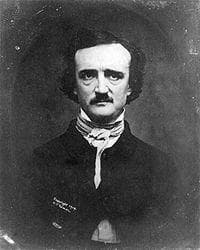
Edgar Allan Poe was an American writer, poet, editor, and literary critic who is best known for his poetry and short stories, particularly his tales of mystery and the macabre. He is widely regarded as a central figure of Romanticism in the United States, and of American literature. He was one of the country's earliest practitioners of the short story, and is considered the inventor of the detective fiction genre, as well as a significant contributor to the emerging genre of science fiction. He is the first well-known American writer to earn a living through writing alone, resulting in a financially difficult life and career.
Similar books
- Frankenstein: The 1818 Text
Mary Shelley
3.8 (1.2M) average on GoodreadsFantasyExplores gothic themes, psychological depth, and tragic outcomes with a focus on the monstrous and the human condition.
- Harry Potter and the Sorcerer's Stone
J.K. Rowling
4.5 (7M) average on GoodreadsFantasyRescued from a miserable life under the stairs, an orphaned boy discovers he's a wizard destined for a magical school, where he uncovers a dangerous secret tied to the dark wizard who murdered his parents.
- The Hunger Games
Suzanne Collins
4.3 (6.4M) average on GoodreadsFantasyIn a future where children fight to the death on live television, Katniss Everdeen volunteers for the arena, turning a death sentence into a fight for survival and a spark of rebellion.
- 1984
George Orwell
4.2 (3.1M) average on GoodreadsPoliticsIn a future where surveillance and thought control are absolute, a man's search for truth clashes with the Party, showing that hope can be a form of rebellion.
- Divergent
Veronica Roth
4.2 (2.9M) average on GoodreadsFantasyIn a society divided by virtues, a sixteen-year-old's difference from the norm starts a rebellion that threatens her world.
- The Hobbit, or There and Back Again
J.R.R. Tolkien
4.3 (2.9M) average on GoodreadsFantasyA comfort-loving hobbit named Bilbo Baggins is whisked away by a mischievous wizard and a band of dwarves on an unexpected journey to reclaim stolen treasure from a fearsome dragon, discovering courage and a magical ring along the way.






Enjoyed the summary?
A summary gives you the shape of the book. The book itself has the detail, the examples and the voice.
Find The Complete Stories and Poems on AmazonAs an Amazon Associate, BookBrief earns from qualifying purchases. How we're funded