
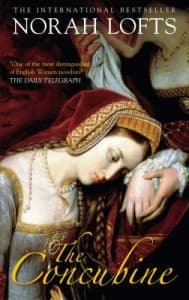
Synopsis
Covers the whole plot, including the ending.
- Difficulty
- Medium
- Pacing
- Moderate
- Mood
- Dramatic, Tragic, Ambitious, Political
- Read it if
- You enjoy historical biographies with a strong focus on character psychology and the intricate politics of the Tudor court.
- Skip it if
- You prefer fast-paced thrillers or lighthearted romance without the tragic elements of historical fact.
The Concubine Plot Summary
Covers the whole plot, including the ending.
Childhood and Early Ambition
Anne Boleyn, the younger daughter of Sir Thomas Boleyn and Lady Elizabeth Howard, grows up at Hever Castle. She is bright and clever, though not conventionally beautiful. She is especially close to her brother, George. Unlike her quieter sister, Mary, Anne has a sharp mind and a strong will. At a young age, she is sent to the Netherlands to serve Margaret of Austria, Regent of the Low Countries. There, she receives an excellent education in court manners, languages, and the arts. This time shapes her character, giving her a sophisticated understanding of court politics and a desire for influence, which sets her apart from other English ladies.
Return to England and a Forbidden Love
When she returns to England, Anne joins King Henry VIII's court, where her sister Mary is already the King's mistress. Anne, with her French sophistication and lively wit, quickly draws attention. She falls deeply in love with Henry Percy, the son of the Earl of Northumberland, and they become secretly engaged. Cardinal Wolsey discovers their growing romance. Acting on King Henry VIII's unspoken wishes, he intervenes forcefully. Wolsey, seeing the King's interest in Anne, brutally separates the young lovers, forcing Percy to marry another woman. This event leaves Anne heartbroken and resentful of the King and Wolsey, solidifying her ambition for power and security.
The King's Pursuit
King Henry VIII, initially drawn to Anne's energy and intelligence, begins to pursue her. Anne, cautious after her experience with Percy and seeing her sister Mary's discarded status as a royal mistress, resists the King's attempts to make her his concubine. She understands that to secure her future and maintain her dignity, she must insist on marriage. Her refusal only increases Henry's desire, turning his infatuation into an obsession. He begins to see her not just as a mistress but as a possible queen, believing she can give him the male heir that Catherine of Aragon has not produced. This marks a major shift in Henry's plans and in English history.
The Great Matter and the Divorce
Driven by his desire for Anne and his urgent need for a male heir, King Henry VIII questions the legitimacy of his marriage to Catherine of Aragon. He cites Leviticus, claiming their union was incestuous because she had been married to his deceased brother, Arthur. This starts the 'King's Great Matter,' a long and complex legal and religious fight for an annulment. Anne has a key, though often passive, role in this process, as Henry's determination to marry her fuels his defiance against the Pope and the Catholic Church. The long divorce proceedings cause great frustration for both Henry and Anne, and significant political unrest.
The Rise of Anne and Fall of Wolsey
As the annulment proceedings continue, Anne Boleyn's influence over King Henry VIII becomes clear. She uses her position, subtly encouraging the King's impatience with Cardinal Wolsey. Wolsey, despite his efforts, cannot get the Pope's approval for the annulment. Anne and her supporters at court actively work to undermine Wolsey, portraying him as an obstacle to the King's desires and the stability of the succession. Eventually, Wolsey loses power, stripped of his offices and wealth, a direct result of his failure to deliver the annulment and Anne's rise. His fall opens the way for new advisors, more agreeable to Henry's will and Anne's ambition.
Marriage and Coronation
Unable to wait longer, and with Anne pregnant, King Henry VIII secretly marries her in January 1533. This private union is followed by a break with the Pope and the Catholic Church, establishing the Church of England with Henry as its Supreme Head. In June 1533, Anne Boleyn is publicly crowned Queen of England in a grand ceremony at Westminster Abbey. This shows Henry's firm resolve and Anne's success. Her coronation is a revolutionary moment in English history, changing the nation's religious and political situation and securing her position, though precariously, as Henry's second queen.
Birth of Elizabeth and Shifting Fortunes
Despite the grand celebrations, Anne's reign as Queen begins with a disappointment: she gives birth to a daughter, Elizabeth, in September 1533, instead of the desired male heir. While Henry initially shows some affection for his new daughter, his need for a son remains paramount. This failure to produce a male heir immediately pressures Anne and starts to damage her standing with the King. The court, always watching the King's affections, notices his growing impatience and subtle shifts in his attention, hinting at the instability of Anne's position and the constant threat of his changing desires.
Miscarriages and Growing Disfavor
After Elizabeth's birth, Anne has several miscarriages, including a particularly difficult one in January 1536 of a male fetus. Each miscarriage further reduces Henry VIII's hopes for a legitimate male heir through Anne and increases his disappointment. The King, growing convinced that Anne cannot give him a son, begins to look elsewhere. Court factions, including Thomas Cromwell, who had supported Anne, start to turn against her. They sense the King's cooling affection and see a chance to advance their own goals. Anne's once secure position becomes more vulnerable as her failure to secure the succession weighs heavily on her.
Accusations and Arrest
In April and May 1536, a plot, mostly arranged by Thomas Cromwell, quickly unfolds against Queen Anne. She is accused of multiple counts of adultery, incest with her brother George Boleyn, and treason against the King. Several men, including Sir Henry Norris, Mark Smeaton, Sir Francis Weston, William Brereton, and her brother George, are arrested for having illegal relations with the Queen. These accusations, likely invented or exaggerated, are meant to give Henry grounds for an annulment and to get rid of Anne. Anne is arrested and imprisoned in the Tower of London, a dramatic and terrifying turn in her fate.
Trial and Condemnation
Anne Boleyn and the men accused with her face quick and biased trials. Despite a lack of solid evidence and the defendants' denials, especially George Boleyn's defense, the verdicts are decided beforehand. Anne is tried by a jury of her peers, including her uncle the Duke of Norfolk, who oversees the proceedings. She is found guilty of all charges, including treason, incest, and adultery. The court, pressured by the King's will, condemns her to death. The condemnation confirms the King's absolute power and his ruthlessness in removing any obstacle to his desires, even his queen.
Execution
On May 19, 1536, Anne Boleyn is executed on Tower Green, within the Tower of London. She maintains her innocence to the end, giving a dignified speech from the scaffold. She acknowledges the King's goodness while subtly hinting at the unfairness of her fate. A skilled French swordsman beheads her, a final, grim courtesy from Henry VIII. Her death marks the end of her difficult reign as Queen and a major turning point in English history. It confirms the King's break with Rome and sets a chilling precedent for the fate of queens who failed to provide a male heir. Her daughter, Elizabeth, is declared illegitimate, though she would later become queen.
The Concubine Characters
Anne Boleyn
Protagonist
King Henry VIII's ambitious and intelligent second queen.
Anne is depicted as a woman of sharp intellect, sophisticated charm, and strong will, rather than conventional beauty. Educated in France, she possesses a keen understanding of court politics and a desire for influence. She is fiercely independent and initially resists King Henry VIII's advances, aiming for marriage rather than concubinage. Her ambition is driven by a desire for security and a refusal to be discarded like her sister Mary. She is deeply loyal to her family, particularly her brother George, and capable of both great affection and fierce resentment. Her ultimate downfall is a consequence of her inability to produce a male heir and the King's ruthless pursuit of his desires.
Relationships: King Henry VIII (Obsessive love, then political marriage, then fatal disfavor); Mary Boleyn (Sisterly rivalry and eventual estrangement); George Boleyn (Close, supportive brotherly bond); Henry Percy (First love, tragically thwarted); Cardinal Wolsey (Political adversary, instrumental in her rise and his fall)
King Henry VIII
Antagonist
The powerful and increasingly tyrannical King of England, driven by desire and the need for a male heir.
Henry VIII is portrayed as a charismatic yet increasingly ruthless and self-absorbed monarch. Initially captivated by Anne's wit and refusal to become his mistress, his infatuation quickly morphs into an obsessive need to marry her and secure a male heir. He is depicted as absolute in his will, willing to defy the Pope, overturn centuries of tradition, and ultimately discard anyone who stands in his way. His desire for a son is paramount, overshadowing all other considerations, and he sees his wives primarily as instruments for succession. His actions are driven by a combination of religious conviction, political ambition, and personal desire, making him a formidable and dangerous figure.
Relationships: Anne Boleyn (Obsessive love, then political marriage, then fatal disfavor); Catherine of Aragon (Wife, then discarded for an annulment); Mary Boleyn (Former mistress); Cardinal Wolsey (Trusted advisor, then discarded for failure)
Cardinal Wolsey
Supporting
King Henry VIII's powerful chief minister, instrumental in the early stages of the King's Great Matter.
Cardinal Wolsey is depicted as a highly intelligent, ambitious, and politically astute churchman who serves as King Henry VIII's chief minister. He wields immense power and influence, acting as the King's primary agent in seeking the annulment from Catherine of Aragon. Wolsey is initially a formidable obstacle to Anne's relationship with Henry Percy, acting on the King's implicit wishes. He attempts to navigate the complex diplomatic and religious landscape to secure the King's divorce but ultimately fails to deliver the Pope's approval. His inability to achieve the annulment, combined with Anne's growing influence, leads to his spectacular downfall.
Relationships: King Henry VIII (Trusted advisor, then discarded for failure); Anne Boleyn (Political adversary, instrumental in his downfall)
George Boleyn
Supporting
Anne Boleyn's charming and loyal brother, who rises with her and falls with her.
George Boleyn is Anne's beloved younger brother, a witty, intelligent, and cultured man. He is depicted as being very close to Anne, sharing her intellectual curiosity and ambition. He benefits greatly from his sister's rise to power, gaining titles and influence at court. He is fiercely loyal to Anne and supports her throughout her reign as Queen. His bond with Anne is significant, and he is a key figure in her inner circle. Tragically, this closeness is twisted against them during Anne's downfall, as he is falsely accused of incest with his sister, a charge that ultimately leads to his execution alongside her.
Relationships: Anne Boleyn (Close, supportive brotherly bond); King Henry VIII (Loyal subject, then victim of his wrath)
Catherine of Aragon
Supporting
King Henry VIII's first queen, steadfast in her refusal to accept an annulment.
Catherine of Aragon is portrayed as a dignified, devout, and resolute queen. The daughter of Isabella and Ferdinand of Spain, she is fiercely proud of her royal lineage and her marriage to Henry, believing it to be legitimate in the eyes of God. She steadfastly refuses to acknowledge the validity of Henry's annulment proceedings, maintaining that she is his true wife and her daughter Mary is his legitimate heir. Her unwavering defiance, rooted in deep religious conviction and a sense of personal honor, becomes a major obstacle for Henry and Anne. She represents the old order and the Catholic faith that Henry seeks to overturn.
Relationships: King Henry VIII (Wife, then discarded for an annulment); Mary Tudor (Devoted mother)
Mary Boleyn
Supporting
Anne Boleyn's elder sister and King Henry VIII's former mistress.
Mary Boleyn is Anne's elder sister, initially more conventionally beautiful and less ambitious than Anne. She serves as a lady-in-waiting and becomes one of King Henry VIII's early mistresses. Her experience as a discarded royal mistress serves as a cautionary tale for Anne, demonstrating the precariousness of such a position. Mary eventually marries for love, outside of courtly influence, and lives a more private life. Her past relationship with the King, however, is later used as a point of contention and scandal during Anne's own downfall, as the King's prior intimacy with Mary is brought up to question the validity of his marriage to Anne.
Relationships: Anne Boleyn (Sisterly rivalry and eventual estrangement); King Henry VIII (Former mistress)
Thomas Cromwell
Supporting
King Henry VIII's chief minister after Wolsey, instrumental in Anne's rise and fall.
Thomas Cromwell is a shrewd and ambitious statesman who rises to prominence after Cardinal Wolsey's fall. He becomes King Henry VIII's most trusted advisor, a master of administration and political maneuvering. Cromwell is initially a key architect of the English Reformation and instrumental in facilitating Henry's marriage to Anne Boleyn. However, when Anne fails to produce a male heir and her position weakens, Cromwell, ever the pragmatist and loyal to the King's ultimate desire for succession, orchestrates her downfall. He is a master strategist, capable of both building up and tearing down powerful figures to serve the King's, and ultimately his own, interests.
Relationships: King Henry VIII (Trusted advisor, instrumental in his policies); Anne Boleyn (Political ally, then orchestrator of her downfall)
Henry Percy
Mentioned
Anne Boleyn's first love, whose relationship was cruelly thwarted by the King.
Henry Percy is the son of the Earl of Northumberland and a young nobleman at court. He and Anne Boleyn fall deeply in love and become secretly betrothed. Their romance, however, is short-lived and brutally crushed by Cardinal Wolsey, acting on King Henry VIII's behalf, who already had designs on Anne. Percy is forced to marry another woman, leaving Anne heartbroken and resentful. His story highlights the powerlessness of individuals, even noblemen, against the will of the monarch and the court. His tragic separation from Anne is a pivotal event that hardens Anne's resolve and shapes her future ambitions.
Relationships: Anne Boleyn (First love, tragically thwarted); Cardinal Wolsey (Agent of his forced separation from Anne)
The Concubine Themes
The Corrupting Nature of Power and Ambition
The novel shows how seeking and using power corrupts people and systems. King Henry VIII's absolute power allows him to dismantle religious institutions, execute queens, and ignore personal loyalties, all to satisfy his desires. Anne Boleyn, at first driven by a need for security and dignity, becomes more ruthless in her ambition. She contributes to Wolsey's downfall and alienates potential allies. The court itself is full of schemes and betrayal, where people like Thomas Cromwell rise by manipulating power. This shows that integrity often gives way to the demands of political survival. The constant search for a male heir drives much of this corruption, proving that even personal desires can be twisted by the pressures of dynastic succession.
“'The King's will was God's will, or so the King had decided it must be.”
The Objectification of Women in a Patriarchal Society
The story explores how women, no matter their intelligence or status, are mainly valued for their ability to produce male heirs in a society ruled by men. Anne Boleyn, despite her wit and charm, is ultimately judged by her fertility. Her failure to deliver a surviving son seals her fate, reducing her from a queen to a disposable vessel. Her sister Mary's experience as a discarded mistress further highlights this theme, showing how fleeting a woman's value is once her 'purpose' is served. The King's constant pursuit of a male heir drives the entire story, showing how women's bodies and reproductive capabilities are central to political and dynastic stability, often at the cost of their lives and dignity.
“A queen's first duty was to give the King a son; all other virtues were but ornaments.”
Religious and Political Upheaval
The novel takes place during one of the most important periods of religious and political change in English history: the English Reformation. King Henry VIII's desire for an annulment from Catherine of Aragon, fueled by his infatuation with Anne Boleyn, directly leads to England's break from the Catholic Church and the creation of the Church of England. This dramatic shift has major consequences, changing the nation's spiritual landscape and consolidating the King's power. The story details how religious doctrine becomes a tool for political maneuvering, with figures like Cardinal Wolsey and Thomas Cromwell navigating the complex issues of papal authority versus royal supremacy, ultimately reshaping the kingdom's identity.
“The King had not merely divorced a wife; he had divorced a kingdom from its ancient faith.”
Love, Desire, and Obsession
The book examines the complex interaction of love, desire, and obsession, especially in King Henry VIII's relationship with Anne Boleyn. Anne first experiences a real, youthful love with Henry Percy, which is cruelly destroyed. Henry VIII's desire for Anne begins as infatuation but quickly becomes an all-consuming obsession. This drives him to defy the Pope and change history. Anne, in turn, strategically uses Henry's desire to achieve her goals, turning it into a tool for power. However, as her ability to fulfill his ultimate desire (a male heir) lessens, his obsession turns cold, showing how destructive unchecked desire can be and how quickly love can turn into ruthless expediency.
“His desire for her was a fire that consumed all else, even reason, even God.”
Plot Devices & Literary Techniques
Foreshadowing
Hints and clues about future tragic events, particularly Anne's downfall.
Foreshadowing is used throughout the novel to build suspense and underscore the tragic inevitability of Anne's fate. Early in the story, Mary Boleyn's experience as a discarded mistress serves as a stark warning to Anne about the King's fickle nature. Cardinal Wolsey's fall from grace, orchestrated in part by Anne, foreshadows her own demise, demonstrating how quickly those in power can be brought down. The King's increasing impatience with Catherine of Aragon, and his ruthless determination to achieve his will, also subtly hints at the severity of his actions when Anne fails to provide him with a male heir, creating a sense of impending doom for the protagonist.
Dramatic Irony
The reader's awareness of Anne's historical fate, contrasting with her initial triumphs.
Dramatic irony is a powerful device, as most readers are aware of Anne Boleyn's historical end. This knowledge creates a constant undercurrent of tension, especially during moments of Anne's triumph – her coronation, the birth of Elizabeth – knowing that these successes are merely steps on her path to the scaffold. When Anne strategizes or celebrates, the reader is privy to the tragic outcome, making her victories bittersweet and her struggles more poignant. This device heightens the emotional impact of the narrative, transforming her ambition and eventual downfall into a more impactful and historically resonant tragedy.
The King's Great Matter
The historical and political crisis surrounding Henry VIII's divorce, serving as the central conflict.
The 'King's Great Matter' – Henry VIII's pursuit of an annulment from Catherine of Aragon – is not just a plot point but the central engine of the entire narrative. It drives all major developments, from Anne's initial resistance to Henry's advances, to the downfall of Cardinal Wolsey, the break with Rome, and ultimately Anne's marriage and coronation. This historical event serves as the primary conflict, shaping character motivations, political alliances, and the very structure of English society. It is the catalyst for the radical changes that define the era and directly dictate Anne Boleyn's rise and fall, making it a pivotal device for both historical accuracy and dramatic tension.
Symbolism of the Male Heir
The male heir as a symbol of power, legitimacy, and survival.
The elusive male heir functions as a powerful symbol throughout the novel, representing not just dynastic continuation but also the ultimate source of power, legitimacy, and survival for both the King and his queens. For Henry, a male heir symbolizes the stability of his reign and his legacy. For Anne, it represents her security, her triumph over Catherine, and her continued hold on the King's affection. The failure to produce this heir becomes the ultimate symbol of her downfall, demonstrating how deeply a woman's worth and fate were tied to her reproductive capabilities in this patriarchal society. The absence of a male heir becomes a void that consumes all other considerations.
The Concubine Quotes
“It was not a good place for a child, the castle, but then, what place was good for a child in those days?”
“Love was a luxury, and she had never been taught to expect luxuries.”
“A woman's beauty was her most potent weapon, and her most dangerous.”
“The King was a man, and men were fickle, especially kings.”
“She had learned that to survive, one must sometimes bend, even if it meant breaking a little inside.”
“Ambition was a fire that could warm you or consume you.”
“There were many ways to be a prisoner, and not all of them involved chains.”
“A queen might rule a kingdom, but a concubine ruled a king's heart, for a time.”
“Grief was a heavy cloak, and sometimes she felt she would be crushed beneath its weight.”
“The past was a shadow that followed you, no matter how fast you ran.”
“To be forgotten was a death worse than any other.”
“Hope was a dangerous thing, but a necessary one.”
“Children were anchors, binding you to the world, for good or ill.”
“Sometimes the greatest strength lay in enduring, not in fighting.”
Quiz
10 questions on the plot and the characters. Each answer comes with a short explanation.
Question 1
Which historical figure is the central 'concubine' character based on?
- Catherine of Aragon
- Jane Seymour
- Anne Boleyn
- Mary Tudor
Show answer
C. Anne Boleyn The book centers on the younger daughter of Tom Boleyn, who is historically Anne Boleyn, and her relationship with King Henry VIII.
Question 2
What was the name of the young man with whom the protagonist had a 'youthful love-affair' that the King 'smashed'?
- Charles Brandon
- Harry Percy
- Thomas Wyatt
- Francis Weston
Show answer
B. Harry Percy The synopsis explicitly states the King 'smashed her youthful love-affair with Harry Percy'.
Question 3
At what age did the King first notice the protagonist?
- 14
- 16
- 18
- 20
Show answer
B. 16 The synopsis clearly states, 'The King first noticed her when she was 16'.
Question 4
What characteristic is explicitly mentioned as lacking in the protagonist compared to 'most ladies of court'?
- Social grace
- Political ambition
- Bounteous charms
- Intellectual wit
Show answer
C. Bounteous charms The synopsis states, 'The younger daughter of Tom Boleyn lacked the bounteous charms of most ladies of court.'
Question 5
What is the King's primary motivation for pursuing the protagonist, as described in the synopsis?
- Genuine love and affection
- Political alliance
- Imperial greed and royal seduction
- Desire for an heir
Show answer
C. Imperial greed and royal seduction The synopsis uses the phrase 'with imperial greed he smashed her youthful love-affair... and began the process of royal seduction,' highlighting his possessive and self-serving intent.
Question 6
How does the synopsis characterize the protagonist's nature, distinguishing her from other court ladies?
- She was a devout religious woman.
- She was an ordinary woman, a maid-in-waiting to be possessed.
- She was no ordinary woman, no maid-in-waiting to be possessed.
- She was primarily interested in gaining power for her family.
Show answer
C. She was no ordinary woman, no maid-in-waiting to be possessed. The synopsis explicitly states, 'But this was no ordinary woman, no maid-in-waiting to be possessed,' indicating her unique and strong-willed character.
Question 7
What is the specific relationship of the protagonist to Tom Boleyn?
- His eldest daughter
- His niece
- His younger daughter
- His wife
Show answer
C. His younger daughter The synopsis begins with, 'The younger daughter of Tom Boleyn lacked the bounteous charms of most ladies of court.'
Question 8
The description implies a conflict between the King's 'imperial greed' and the protagonist's personal desires. What literary device best describes this tension?
- Foreshadowing
- Irony
- Man vs. Society
- Man vs. Fate/Power
Show answer
D. Man vs. Fate/Power The conflict is between the individual (the protagonist) and the overwhelming power and will of the King, representing a force akin to fate or an unchallengeable authority.
Question 9
Given the historical context and the synopsis, what is a likely central theme explored in 'The Concubine'?
- The triumph of true love over adversity.
- The corrupting influence of absolute power and its impact on personal freedom.
- The importance of family loyalty in court politics.
- The simplicity of life outside the royal court.
Show answer
B. The corrupting influence of absolute power and its impact on personal freedom. The synopsis emphasizes the King's 'imperial greed' and his 'smashing' of her love affair, contrasting it with her being 'no ordinary woman,' suggesting a struggle against his powerful, corrupting will.
Question 10
The phrase 'imperial greed' used to describe the King's motivation suggests he viewed the protagonist primarily as what?
- A potential loving partner
- A political ally to strengthen his reign
- A possession or object to be acquired
- A means to produce a male heir
Show answer
C. A possession or object to be acquired Greed implies a desire for acquisition and possession. 'Imperial greed' suggests a powerful ruler's desire to own and control, treating the individual as property rather than a person with agency.
The Concubine FAQ
What is the central conflict Anne Boleyn faces at the beginning of 'The Concubine'?
Anne Boleyn initially struggles with the forced termination of her genuine love affair with Henry Percy, orchestrated by King Henry VIII. This act of royal interference shatters her personal happiness and sets the stage for her reluctant entanglement with the King, forcing her into a political and romantic situation she initially resists.
How does King Henry VIII first become interested in Anne Boleyn, despite her not being conventionally 'bounteous'?
King Henry VIII first notices Anne Boleyn when she is sixteen, captivated by a certain quality in her that transcends conventional beauty. While the novel doesn't explicitly detail a specific 'first look,' it implies a growing awareness of her sharp wit and spirited nature, which intrigues him more than the typical courtly charms of other ladies.
Describe the initial relationship between Anne Boleyn and Henry Percy. What was its significance to Anne?
Anne Boleyn and Henry Percy shared a deep, genuine, and youthful love affair, characterized by mutual affection and a desire for marriage. For Anne, this relationship represented true personal happiness and the promise of a life chosen by her heart, making its destruction by the King a profound personal tragedy and a catalyst for her later ambition.
What role do Anne's family, particularly Tom Boleyn, play in her rise to power?
Tom Boleyn, Anne's father, actively encourages and facilitates Anne's relationship with King Henry VIII, viewing it as a means to advance his family's status and power at court. He is instrumental in positioning her for the King's attention and later in navigating the political landscape to ensure her ascendancy, often at the expense of her personal feelings.
How does the novel portray Anne Boleyn's personality beyond her role as the King's mistress?
'The Concubine' portrays Anne Boleyn as intelligent, strong-willed, and fiercely independent, with a sharp wit and a keen understanding of court politics. She is not merely a passive object of the King's desire but a woman who, once her heart is broken, learns to wield influence and ambition to navigate her treacherous circumstances.
Are there any subtle foreshadowings of Anne's eventual fate within the early chapters?
Yes, subtle foreshadowings exist, particularly in the description of Henry VIII's 'imperial greed' and his ruthless dismissal of Anne's love for Percy. This demonstrates his capacity for absolute power and disregard for individual feelings, hinting at the potential for his affections to turn just as fiercely against her when she ceases to serve his will.
Does the novel suggest that Anne Boleyn truly loved King Henry VIII at any point, or was it always a strategic relationship after Percy?
The novel strongly suggests that after the destruction of her love for Henry Percy, Anne's relationship with King Henry VIII became primarily strategic, fueled by ambition and a desire for security and revenge. While she may have felt some affection or admiration for the King's power, genuine romantic love, as she experienced with Percy, is not depicted as a driving force.
How does the author subtly show Anne's growing disillusionment with her position, even amidst her success?
The author subtly conveys Anne's disillusionment through her internal monologues and observations of court life, often contrasting her public triumphs with her private anxieties and the constant pressure she feels. Her forced smiles and the increasing weight of expectations, particularly regarding a male heir, highlight her growing weariness despite her outward success.
Are there any mentions or implications of Anne's sister, Mary Boleyn, and her prior relationship with the King, and how does this affect Anne?
While the prompt focuses on Anne, historical context often includes Mary Boleyn's prior relationship with the King. If mentioned in the book, it would subtly influence Anne by setting a precedent for a Boleyn woman being the King's mistress, perhaps making Anne more cautious or determined to secure a more permanent position than her sister achieved.
How does Anne Boleyn's initial heartbreak over Henry Percy shape her ambition and resilience?
Anne's initial heartbreak over Henry Percy profoundly shapes her by transforming her from a romantic idealist into a pragmatic and ambitious woman. The pain and injustice of losing Percy instill in her a fierce determination to never again be a pawn, driving her to seek power and security through her relationship with the King, rather than succumbing to despair.
Analyze King Henry VIII's psychological motivation for pursuing Anne Boleyn so relentlessly.
King Henry VIII's relentless pursuit of Anne Boleyn stems from a complex mix of infatuation, imperial greed, and a deep-seated desire for a male heir and an uncontested succession. Psychologically, he is driven by an absolute belief in his divine right, an inability to be denied, and a growing frustration with Catherine of Aragon, seeing Anne as the key to both his personal and dynastic desires.
How does Anne's struggle for power affect her relationships with other women at court, particularly her ladies-in-waiting?
Anne's struggle for power creates a complex dynamic with other women at court. While she might cultivate allies, her position often breeds jealousy and suspicion among her ladies-in-waiting, who are caught between loyalty and ambition. This environment fosters a sense of isolation for Anne, as true confidantes become rare amidst the political machinations.
In what ways does Anne Boleyn display agency, even within the confines of a patriarchal court and the King's desires?
Anne Boleyn displays agency through her sharp intellect, her refusal to become a mere mistress, and her strategic manipulation of the King's affections to demand marriage and the throne. She actively navigates the political landscape, uses her wit to charm and influence, and consistently pushes for her own terms, demonstrating a remarkable will despite the overwhelming power dynamics.
Is Anne Boleyn portrayed as a victim, a manipulator, or both, and why is this ambiguity important to the narrative?
Anne Boleyn is portrayed as both a victim and a manipulator, and this ambiguity is crucial to the narrative's depth. She is a victim of the King's power and the destruction of her first love, but she also becomes a skilled manipulator to survive and thrive. This duality makes her a complex, human character, allowing readers to empathize with her suffering while acknowledging her ambitious actions.
How does the novel challenge or uphold traditional perceptions of Anne Boleyn?
The novel challenges traditional perceptions by moving beyond the caricature of Anne as solely an ambitious seductress, presenting her as a woman initially wronged and then driven by a complex mix of grief, ambition, and a desire for security. It upholds perceptions of her intelligence and strong will but adds layers of vulnerability and strategic calculation.
What is the significance of the title 'The Concubine' given Anne's eventual marriage to the King?
The title 'The Concubine' is highly significant because it reflects Anne's initial, prolonged status and the King's initial intent for her, despite her eventual marriage. It highlights the precariousness of her position, the scandal surrounding their relationship, and arguably foreshadows the ultimate failure of her marriage, as she was always viewed by many as merely a royal mistress, not a legitimate queen.
Does the book imply any specific moral judgment on Anne's choices, or does it present her circumstances more neutrally?
The book largely presents Anne's choices within the context of her circumstances, aiming for a more nuanced and empathetic portrayal rather than explicit moral judgment. While her ambition is evident, it is often framed as a response to injustice and a drive for self-preservation in a brutal court, allowing readers to interpret her actions rather than being told how to feel.
To what extent does 'The Concubine' engage with feminist themes, particularly concerning women's agency in historical settings?
'The Concubine' engages with feminist themes by showcasing Anne Boleyn's remarkable agency in a deeply patriarchal society. Despite being a woman in a male-dominated court, she uses her intelligence, wit, and strategic thinking to navigate power, challenge norms, and achieve a level of influence rarely seen for women of her time, even if her ultimate fate is tragic.
About the author
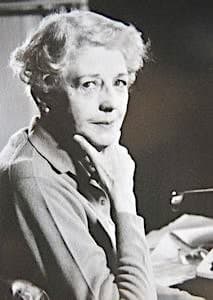
Norah Lofts was a British author known for her historical fiction. Among her notable works are "The Concubine," which explores themes of love and power in a historical context, and "Charlotte," a novel that delves into personal and societal struggles. Her writing often reflects a deep understanding of character and setting.
Similar books
- The Other Boleyn Girl
Philippa Gregory
4.1 (456k) average on GoodreadsHistorical FictionExplores the Boleyn sisters' lives and their relationship with Henry VIII, with a focus on court intrigue and romance.
- Wolf Hall
Hilary Mantel
3.9 (166k) average on GoodreadsLiterary FictionOffers a detailed, character-driven perspective on the Tudor court and the rise of Thomas Cromwell during Henry VIII's reign.
- To Kill a Mockingbird
Harper Lee
4.3 (4.5M) average on GoodreadsHistorical FictionIn the 1930s Jim Crow South, Harper Lee writes about racial injustice, moral growth, and the quiet courage of a lawyer father, Atticus Finch, as seen through his young daughter's eyes.
- The Great Gatsby
F. Scott Fitzgerald
3.9 (3.8M) average on GoodreadsHistorical FictionIn the opulent Roaring Twenties, a mysterious millionaire's lavish parties hide his desperate, tragic pursuit of a lost love, exposing the emptiness within the American Dream.
- Pride and Prejudice
Jane Austen
4.3 (3M) average on GoodreadsHistorical FictionIn a society focused on status and money, Elizabeth Bennet navigates love and pride, challenging Mr. Darcy and social expectations to find true affection.
- Angels & Demons
Dan Brown
3.9 (2.7M) average on GoodreadsThrillerA Harvard symbologist races through Rome's ancient sites, deciphering cryptic clues to unmask the Illuminati and stop a vengeful plot to destroy the Vatican with a stolen antimatter weapon.






Enjoyed the summary?
A summary gives you the shape of the book. The book itself has the detail, the examples and the voice.
Find The Concubine on AmazonAs an Amazon Associate, BookBrief earns from qualifying purchases. How we're funded