
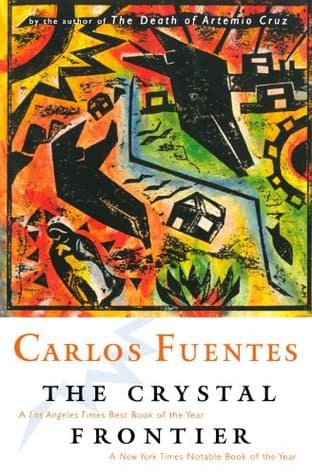
Synopsis
Covers the whole plot, including the ending.
- Difficulty
- Medium
- Pacing
- Variable
- Mood
- Reflective, Observational, Evocative, Melancholy
- Read it if
- You are interested in exploring the multifaceted relationship between Mexico and the United States through a series of interconnected, character-driven narratives.
- Skip it if
- You prefer a single, continuous plotline rather than a collection of linked short stories or novellas.
The Crystal Frontier Plot Summary
Covers the whole plot, including the ending.
The Old Gringo
The first story introduces Don Leonardo Barroso, a wealthy Mexican industrialist who represents the border's corrupting power. He arranges a meeting between his lawyer, the Mexican-American José Francisco, and 'the Old Gringo,' a disillusioned American writer. Barroso uses his wealth to control the flow of goods and people across the U.S.-Mexico border, exploiting both nations for his gain. He sees people as tools in his plans, especially in his goal to get a contract for a new industrial park, showing his ruthless practicality. His actions directly affect his employees and family, setting the stage for the linked fates explored in the collection.
The Border of Glass
José Francisco, a young lawyer, is assigned by Don Leonardo Barroso to work with the legal aspects of the U.S.-Mexico border. He struggles with his mixed background, feeling separate from both American and Mexican cultures. While working on Barroso's industrial park, he meets people whose lives are shaped by the border, including desperate migrants and cynical officials. José Francisco tries to keep his integrity amid Barroso's questionable deals, torn between wanting success and wanting justice. His internal struggle shows how hard it is to find a personal identity and moral standing within the 'crystal frontier' that divides and connects the two nations.
The Two Elenas
This part focuses on Elena, Don Leonardo Barroso's daughter, and her complex relationship with American academic Dr. Jonathan Brewster. Elena, a sophisticated woman, is a younger generation dealing with her powerful parents' legacy. She likes Brewster's intelligence but also struggles with his perceived American arrogance and his superficial understanding of Mexican culture. Their romance has many misunderstandings and cultural clashes, leading to betrayal. Elena's story explores identity, love across cultures, and the past's influence on relationships, especially under her father's manipulations and the wider tensions of the border region.
The Golden Age
Laura, a young American woman, travels to Mexico looking for a real experience and a connection to a culture she admires. She becomes involved with Mexican intellectuals and artists, some connected to Barroso. At first charmed by Mexican life, Laura slowly becomes disappointed as she faces poverty, corruption, and the superficiality of some new acquaintances. Her journey reflects the common idea of Americans seeking exotic experiences abroad, only to find their ideal vision clashing with a more complex reality. This story shows cultural misunderstanding and how hard it is to truly bridge the gap between different national viewpoints.
The Lost City
This part follows a Mexican migrant worker, unnamed, as he tries to cross into the United States for work and a better life. His journey is full of danger, exploitation, and dehumanization by smugglers and border patrols. The story shows the physical and emotional cost of illegal migration, highlighting the desperation that makes people risk everything. In the 'promised land,' he finds not the opportunities he imagined, but low-wage work, discrimination, and a deep sense of being alone. This story reminds readers of the human cost of the border and the often-unmet dreams of those who cross it.
The Crystal Frontier
The title story focuses on a wealthy American family on vacation in Mexico. They represent Americans who see Mexico mainly as a tourist spot, often unaware of the social and economic complexities. Their interactions with Mexicans are superficial and show a sense of entitlement. Small problems and cultural misunderstandings slowly break their comfortable bubble, making them face their own biases and the clear inequalities between their world and that of the Mexicans they meet. This story makes fun of American narrow-mindedness and shows the 'crystal frontier' as a permeable but often invisible barrier of perception and privilege.
The Other Shore
A Mexican artist, struggling to find his style, feels more and more influenced by American popular culture and the art market's commercial demands. He deals with the tension between keeping his Mexican heritage and adopting global art trends. His work shows this internal conflict, moving between traditional themes and contemporary, often American-inspired, images. This story explores the challenges artists face in a global world, especially when their cultural identity is tied to a powerful neighboring nation. It questions what it means to be an 'authentic' Mexican artist when American culture is dominant.
The Family
This section looks deeper into the Barroso family, showing the complex and often tense relationships within it. Don Leonardo's wife, children, and relatives are all affected by his ambition and wealth. The story explores inheritance, legacy, and the moral compromises made for power. Family members deal with their own identities and desires, often clashing with Don Leonardo's expectations. This part shows how the 'crystal frontier' not only divides nations but also creates divisions within families, as members have different views on their heritage and future in a binational world.
The Reunion
The final story brings together several characters from earlier stories, creating a picture of linked lives shaped by the U.S.-Mexico border. José Francisco, Elena, and others cross paths, their individual experiences forming a larger comment on the region. The story emphasizes the cyclical nature of the border's influence, where past choices and historical forces still affect the present. The 'crystal frontier' is a permanent, yet changing, reality that defines identities, relationships, and fates. The various storylines show that despite individual struggles, the border is an inescapable force, a source of both division and unexpected connection.
The Crystal Frontier Characters
Don Leonardo Barroso
Antagonist/Central Figure
A powerful and ruthless Mexican industrialist who exploits the border for profit.
Don Leonardo Barroso is the patriarch of a wealthy Mexican family and a highly influential industrialist. He is a shrewd and pragmatic businessman, utterly devoid of sentimentality, who views the U.S.-Mexico border as a vast opportunity for personal enrichment. His power extends across both nations, allowing him to manipulate legal systems, exploit labor, and dictate terms. He embodies the corrupting influence of unchecked capitalism and the blurred ethical lines of the border region. Barroso is driven by an insatiable desire for wealth and control, seeing people as instruments to achieve his goals rather than individuals with their own agency.
Relationships: José Francisco (employer-employee; Barroso manipulates José Francisco's idealism); Elena Barroso (father-daughter; a complex relationship marked by Elena's rebellion against his values); Various migrants and workers (exploiter-exploited)
José Francisco
Supporting/Protagonist in some stories
An idealistic Mexican-American lawyer caught between two cultures.
José Francisco is a young, ambitious lawyer of Mexican-American heritage working for Don Leonardo Barroso. He represents the struggle of individuals with dual identities, feeling a sense of belonging to neither the U.S. nor Mexico fully. He is initially idealistic, hoping to use his skills to bridge cultural divides and promote justice, but he is increasingly confronted with the moral ambiguities of Barroso's empire. José Francisco grapples with his conscience, torn between the allure of success and his personal ethics. His journey highlights the challenges of navigating a complex cultural and moral landscape.
Relationships: Don Leonardo Barroso (employee; struggles with Barroso's unethical demands); Elena Barroso (acquaintance/potential romantic interest; shares a nuanced understanding of the border's complexities)
Elena Barroso
Supporting/Protagonist in some stories
Don Leonardo's independent daughter, who seeks her own path amidst family expectations.
Elena Barroso is Don Leonardo's sophisticated and intelligent daughter. Unlike her father, she possesses a more critical and nuanced perspective on the world, particularly regarding the U.S.-Mexico border and its implications. She is independent-minded and often rebels against her father's values and expectations. Elena represents a younger generation attempting to forge their own identity while grappling with the legacy of their powerful, often morally compromised, parents. Her relationships, particularly with American men, are marked by cultural misunderstandings and a search for genuine connection that often eludes her.
Relationships: Don Leonardo Barroso (daughter; a strained relationship marked by her rejection of his values); Dr. Jonathan Brewster (romantic interest; a relationship complicated by cultural differences and betrayal); José Francisco (acquaintance; shares a more progressive viewpoint than her father)
The Old Gringo
Supporting
An aging, disillusioned American writer living in Mexico, symbolizing cultural displacement.
The Old Gringo is a nameless, aging American writer who has abandoned his past in the United States to live in Mexico. He is a figure of disillusionment, representing a certain type of American who seeks something profound in Mexico but ultimately finds only a reflection of his own internal emptiness. He is often cynical and world-weary, having witnessed both the beauty and the harsh realities of Mexico without fully integrating or understanding it. His presence highlights the theme of cultural displacement and the difficulty of truly escaping one's origins, even in a foreign land.
Relationships: Don Leonardo Barroso (acquaintance; Barroso attempts to use him for his own purposes); José Francisco (brief interaction; offers a cynical perspective on the border)
Laura
Supporting/Protagonist in some stories
A young American woman seeking an idealized Mexico, only to face disillusionment.
Laura is a young American woman who travels to Mexico with romanticized notions of its culture and people. She embodies the well-meaning but often naive American tourist or expatriate seeking an 'authentic' experience. Initially charmed by what she perceives as Mexico's vibrancy, she gradually becomes disillusioned as she confronts the complexities of poverty, corruption, and the superficiality of some of her new acquaintances. Her journey serves to critique the idealized view of foreign cultures and highlights the gap between expectation and reality, particularly for outsiders.
Relationships: Mexican intellectuals/artists (acquaintances; she seeks connection but often finds superficiality)
Dr. Jonathan Brewster
Supporting
An American academic who struggles with cultural arrogance and misunderstanding.
Dr. Jonathan Brewster is an American academic who becomes romantically involved with Elena Barroso. He represents a certain intellectual arrogance, believing he understands Mexican culture through his studies, yet often demonstrates a profound lack of genuine empathy or understanding in his personal interactions. His relationship with Elena is fraught with cultural misunderstandings and a subtle sense of American superiority. He embodies the challenges of cross-cultural relationships when one party fails to fully acknowledge or respect the other's background, leading to betrayal and heartbreak.
Relationships: Elena Barroso (romantic interest; their relationship is a microcosm of U.S.-Mexico cultural clashes)
Mexican Migrant Worker (Unnamed)
Supporting/Protagonist in some stories
A nameless figure representing the struggles and hopes of those who cross the border for work.
This unnamed character embodies the collective experience of Mexican migrant workers who risk everything to cross the U.S.-Mexico border in search of economic opportunity. His story is one of profound desperation, physical hardship, and the constant threat of exploitation and dehumanization. He faces dangerous journeys, encounters with unscrupulous coyotes, and the harsh realities of low-wage labor and discrimination in the United States. His narrative highlights the human cost of the border and the often-unfulfilled promise of a better life on 'the other side,' serving as a powerful symbol of the millions who share similar fates.
Relationships: Coyotes/Border Patrol (antagonistic; figures of exploitation and control)
The Crystal Frontier Themes
The Permeable and Impenetrable Border
The U.S.-Mexico border is not just a physical line but a 'crystal frontier' – clear yet dividing. It lets goods, money, and some cultural exchange flow, but it remains a strong barrier for people seeking a better life, often leading to exploitation and suffering. Don Leonardo Barroso easily crosses and uses this border for his business ('The Old Gringo'), while the unnamed migrant worker faces great hardship and danger trying to cross illegally ('The Lost City'). This theme shows how the border works differently for the privileged versus the poor, highlighting its contradictions and unfairness.
“The border was not a wall but a pane of glass, allowing a distorted vision of what lay beyond.”
Cultural Identity and Hybridity
The novel explores the complexities of cultural identity for those living in or influenced by the border region. Characters like José Francisco struggle with their Mexican-American background, feeling separate from both cultures ('The Border of Glass'). Mexican artists deal with American popular culture's influence on their work ('The Other Shore'), while Americans like Laura seek a 'real' Mexican experience only to find their ideal views challenged ('The Golden Age'). This theme shows that identity in this region is often mixed, broken, and always being redefined, shaped by the interaction of two powerful nations.
“He was a man of two names, two languages, and no true home.”
Exploitation and Corruption
A main theme is the exploitation of people and resources, especially by powerful figures like Don Leonardo Barroso. Barroso's wealth and influence come from manipulating legal systems, exploiting cheap labor, and ignoring human dignity across the border ('The Old Gringo', 'The Family'). This corruption goes beyond money, affecting politics and personal relationships. The unnamed migrant worker's struggle ('The Lost City') is a direct result of this systemic exploitation, showing how profit often comes at the cost of the most vulnerable.
“Money was the only true border, and it could be crossed by those who knew how to make it.”
The American Dream and its Disillusionment
The novel critiques the idea of the 'American Dream' from the Mexican perspective and the reality of pursuing it. Many Mexican characters, especially the unnamed migrant worker ('The Lost City'), make dangerous journeys to the United States hoping for economic opportunity and a better life, only to face discrimination, low-wage work, and a deep sense of being alone. For Americans like Laura ('The Golden Age'), their ideal vision of Mexico also leads to disappointment. This theme reveals the gap between the promise of prosperity and the often-harsh realities encountered by those seeking it across the border.
“They came for a dream, and found only the waking nightmare of the border.”
Interconnected Destinies
Despite the physical and cultural divisions, the lives of American and Mexican characters are deeply linked. Don Leonardo Barroso's actions in Mexico directly affect American businesses and people, just as American economic policies affect Mexican communities. The various stories, though separate, feature recurring characters and themes that show this connection ('The Reunion'). The novel suggests that the futures of both nations and their people are tied together by the 'crystal frontier,' making isolation impossible. Their shared history and geography mean that choices made on one side inevitably affect the other.
“Their lives, like the two nations, were bound by an invisible thread, pulled taut across the frontier.”
Plot Devices & Literary Techniques
Interconnected Short Stories (Composite Novel)
A collection of seemingly standalone stories that collectively form a larger narrative.
The Crystal Frontier is structured as a composite novel, a series of individual short stories that are thematically and often character-wise linked. While each story can be read independently, they cumulatively build a panoramic view of the U.S.-Mexico border, its inhabitants, and its complex dynamics. Characters from one story may appear as minor figures or be referenced in another, creating a sense of a shared universe. This structure allows Fuentes to explore diverse perspectives and facets of the border experience without being confined to a single protagonist or linear plot, ultimately contributing to a richer, more comprehensive understanding of the 'crystal frontier.'
Symbolism of the 'Crystal Frontier'
The border as a transparent yet divisive barrier.
The titular 'crystal frontier' is a powerful metaphor for the U.S.-Mexico border. It represents a barrier that is seemingly transparent, allowing for a superficial view of the 'other side,' but ultimately impenetrable in terms of true understanding, equality, and free movement for all. It highlights the economic and cultural permeability of the border for goods and capital, contrasted with its rigid, often violent, nature for human migration. This symbolism underscores the novel's critique of the uneven power dynamics and the profound misunderstandings that persist between the two nations, despite their close proximity.
Multiple Perspectives
The narrative shifts between various American and Mexican viewpoints.
Fuentes employs multiple perspectives, narrating from the viewpoints of diverse characters – from powerful Mexican industrialists like Barroso to struggling migrant workers, from idealistic Mexican-American lawyers to disillusioned American academics. This device allows the author to present a multifaceted and nuanced portrayal of the U.S.-Mexico border, avoiding a monolithic interpretation. By offering insights into the hopes, fears, biases, and realities of individuals on both sides of the frontier, the novel challenges simplistic narratives and fosters a deeper understanding of the complex cultural, economic, and human issues at play.
Irony and Satire
Used to highlight cultural misunderstandings and societal critiques.
Fuentes frequently employs irony and satire to expose the absurdities, hypocrisies, and cultural misunderstandings inherent in the U.S.-Mexico relationship. This is evident in the portrayal of wealthy American tourists who visit Mexico with idealized notions, often oblivious to the true socio-economic realities (e.g., 'The Crystal Frontier' story). Similarly, the Old Gringo's cynical observations and Barroso's ruthless pragmatism are presented with a satirical edge that critiques both American ethnocentrism and Mexican corruption. This device adds depth and critical commentary, allowing the author to subtly challenge readers' preconceived notions about the border and its inhabitants.
The Crystal Frontier Quotes
“The frontier, my friend, is not a line on a map. It's a wound. And it bleeds.”
“We were all strangers, even to ourselves, in that land where the sun was a constant, blinding interrogation.”
“To be Mexican is to carry a past that is always present, a future that is always uncertain.”
“The American dream, from this side of the fence, looked like a mirage, shimmering with false promises.”
“Language is not just words; it's a way of seeing, a way of being, a way of remembering.”
“History does not repeat itself, but it rhymes. And the rhymes are often bloody.”
“In the end, we are all just stories we tell ourselves to make sense of the chaos.”
“The desert doesn't forgive. It only remembers.”
“Every border crossed is a piece of yourself left behind, and a piece of the new world taken in.”
“Justice, like beauty, is often in the eye of the beholder, and the beholders rarely agree.”
“The past is a country we can never truly leave, no matter how far we travel.”
“We build walls to keep things out, but sometimes, the walls end up trapping us inside.”
“Love, too, can be a frontier, requiring courage to cross and an open heart to navigate.”
“The silence of the land spoke more eloquently than any human voice.”
Quiz
10 questions on the plot and the characters. Each answer comes with a short explanation.
Question 1
In 'The Crystal Frontier,' what is the primary economic activity of Leonardo Barroso, the wealthy Mexican entrepreneur who connects many of the stories?
- Oil exploration and refining
- Textile manufacturing and maquiladoras
- Agriculture and cattle ranching
- Tourism and hotel development
Show answer
B. Textile manufacturing and maquiladoras Leonardo Barroso is a powerful figure in the maquiladora industry, owning factories that assemble goods for export to the U.S., a central theme in the book's exploration of cross-border economics.
Question 2
Which of the following best describes the 'crystal frontier' referred to in the title?
- A physical wall made of glass separating Mexico and the U.S.
- The transparent yet impenetrable barrier of cultural and economic differences between Mexico and the U.S.
- A metaphor for the clarity of vision achieved by characters who cross the border
- The clear, pristine waters of the Rio Grande
Show answer
B. The transparent yet impenetrable barrier of cultural and economic differences between Mexico and the U.S. The 'crystal frontier' symbolizes the invisible but powerful divisions and understandings between the two nations, highlighting their proximity and yet profound differences.
Question 3
In the story 'The Old Gringo,' which is a direct reference to a novel by Carlos Fuentes himself, what is the fate of the American writer who disappears into Mexico?
- He successfully integrates into Mexican society and starts a new family.
- He is discovered by his family and returns to the U.S.
- He dies during the Mexican Revolution, his body found by Harriet Winslow.
- He becomes a wealthy landowner, exploiting local labor.
Show answer
C. He dies during the Mexican Revolution, his body found by Harriet Winslow. This specific story is a direct excerpt from Fuentes's earlier novel 'The Old Gringo,' where the American writer, Ambrose Bierce, is believed to have disappeared during the Mexican Revolution.
Question 4
Which character represents the American perspective of a young, idealistic student trying to understand Mexican culture and border issues, often with good intentions but limited understanding?
- Roland Mitchel
- Gus Davenport
- Dickie Barroso
- Don Leonardo Barroso
Show answer
A. Roland Mitchel Roland Mitchel, an American student, appears in several stories, often grappling with the complexities of U.S.-Mexico relations and his own cultural biases.
Question 5
In the story 'Malintzin of the Maquiladoras,' what is the primary conflict faced by the young indigenous woman working in the factory?
- A struggle against American corporate espionage
- Her longing for traditional village life versus the allure of urban opportunity and modern consumerism.
- A labor dispute over unfair wages and working conditions.
- A political struggle for indigenous land rights.
Show answer
B. Her longing for traditional village life versus the allure of urban opportunity and modern consumerism. Malintzin, named after Cortés's indigenous interpreter, faces an internal conflict between her ancestral heritage and the new, often alienating, modern world of the maquiladora.
Question 6
Which recurring motif or symbol in 'The Crystal Frontier' highlights the blurred lines between identity and the impact of cross-cultural exchange?
- Ancient Aztec calendars
- The interchangeable names and sometimes confused identities of characters across the border.
- The specific brand names of American consumer goods.
- The distinct architectural styles of Mexican and American homes.
Show answer
B. The interchangeable names and sometimes confused identities of characters across the border. Fuentes often plays with names and identities, showing how individuals can be perceived differently, or even mistaken for others, across the border, emphasizing the fluid and sometimes lost sense of self.
Question 7
In the story 'Apollo and the Whores,' what is the significance of the character Apollo, a Mexican migrant worker who works as a gardener in the U.S.?
- He represents the triumph of the American Dream for Mexican immigrants.
- He embodies the struggle of maintaining dignity and identity despite exploitation and objectification.
- He is a symbol of political resistance against U.S. immigration policies.
- He ultimately returns to Mexico disillusioned with American life.
Show answer
B. He embodies the struggle of maintaining dignity and identity despite exploitation and objectification. Apollo, despite his physical beauty and name, is exploited and reduced to an object by the wealthy American women, highlighting the dehumanizing aspects of cross-border labor and class dynamics.
Question 8
The collection of stories in 'The Crystal Frontier' is often described as a 'Balzacian novel in nine masterly stories.' What does this comparison primarily imply about the book's structure and scope?
- Each story is entirely independent with no thematic or character connections.
- It features a vast cast of interconnected characters and social strata, building a comprehensive portrait of a specific society and era.
- The stories are all romantic comedies set in high society.
- The narrative focuses on a single protagonist's journey through life.
Show answer
B. It features a vast cast of interconnected characters and social strata, building a comprehensive portrait of a specific society and era. Like Balzac's 'La Comédie humaine,' Fuentes uses a series of interconnected stories with recurring characters (like Barroso and his family) to paint a detailed, panoramic portrait of society, specifically the U.S.-Mexico border region.
Question 9
In the story 'The Virgin's Tongue,' what is the ironic twist involving the American tourist, Gus Davenport, and the local Mexican woman?
- He believes he is experiencing authentic Mexican culture, but is actually being deliberately misled.
- He attempts to teach her English, but she teaches him Spanish instead.
- He is robbed by her, but then falls in love with her.
- He travels to Mexico seeking solitude but finds unexpected companionship.
Show answer
A. He believes he is experiencing authentic Mexican culture, but is actually being deliberately misled. Gus Davenport, seeking an 'authentic' Mexican experience, is deliberately manipulated by the local woman who plays into his stereotypes, highlighting the complex power dynamics and misunderstandings between tourists and locals.
Question 10
Which overarching theme is consistently explored across multiple stories in 'The Crystal Frontier' regarding the relationship between the U.S. and Mexico?
- The complete assimilation of Mexican culture into American society.
- The inherent superiority of one culture over the other.
- The complex interdependence, often characterized by power imbalances and mutual misunderstanding, between the two nations.
- The eventual disappearance of the border through globalization.
Show answer
C. The complex interdependence, often characterized by power imbalances and mutual misunderstanding, between the two nations. Fuentes consistently delves into the intricate and often fraught relationship between the U.S. and Mexico, portraying a dynamic of economic dependency, cultural clash, and personal struggles shaped by their shared border.
The Crystal Frontier FAQ
What is the overarching premise of 'The Crystal Frontier'?
'The Crystal Frontier' is a collection of nine interconnected stories, all revolving around the powerful Mexican billionaire Leonardo Barroso and the various individuals whose lives are touched by his empire, whether as employees, family members, or those caught in the cultural and economic clash between Mexico and the United States. The novel explores the complex and often painful realities of the border, immigration, and the search for identity in a rapidly changing world.
Who is Leonardo Barroso and what is his significance in the book?
Leonardo Barroso is the central, albeit often unseen, figure of the novel. He is a ruthless Mexican industrialist and landowner whose vast wealth and influence connect all nine stories. Barroso embodies the powerful forces shaping modern Mexico and its relationship with the U.S., representing both opportunity and exploitation, and his actions deeply impact the lives of his family, workers, and even his distant acquaintances.
How do the individual stories connect to form a cohesive narrative?
Each story in 'The Crystal Frontier' features different characters and settings, but they are all linked by their connection to Leonardo Barroso, his family, or his business interests. The connections range from direct employment to familial ties, shared experiences of migration, or even just the pervasive influence of his economic power. This interconnectedness builds a mosaic portrait of the border region and its human drama.
What themes are explored regarding the U.S.-Mexico border?
The novel deeply explores themes of cultural collision, economic disparity, identity formation, and the often-brutal realities of immigration across the U.S.-Mexico border. It examines the dreams and disillusionments of those who cross, the exploitation they face, and the profound impact of two distinct cultures attempting to coexist and integrate, sometimes violently, sometimes with unexpected beauty.
What role does language play in the characters' experiences?
Language is a crucial element, symbolizing the cultural divide and the struggle for identity. Characters often navigate between Spanish and English, reflecting their dual allegiances or their attempts to assimilate. The ability or inability to communicate effectively across the linguistic border often determines their success, their exploitation, or their sense of belonging in either Mexico or the United States.
Are there any recurring symbols or motifs beyond the obvious border theme?
Beyond the literal border, the concept of 'the frontier' itself is a recurring motif, representing a psychological or social boundary that characters attempt to cross or are trapped within. The 'crystal' in the title can symbolize both the fragility and the transparency (or lack thereof) of these boundaries, as well as the allure and hardness of wealth and power, particularly Barroso's empire.
How does Barroso's past influence his present actions and the lives of others?
While Barroso's past isn't always explicitly detailed, his rise from more humble beginnings to immense power subtly informs his ruthless pragmatism and his view of human capital. His own experiences likely hardened him, leading to the transactional way he treats people, which in turn creates the very conditions of exploitation and struggle that many characters face in his orbit.
Is there a character who successfully navigates the 'crystal frontier' without significant loss?
It is difficult to point to a single character who navigates the 'crystal frontier' without significant loss or compromise. Even those who achieve material success, like some of Barroso's associates, often do so at the cost of their morality or genuine human connection. The novel largely suggests that crossing this frontier inevitably entails a form of sacrifice, whether physical, psychological, or cultural.
What is the significance of the story 'The Old Gringo' in relation to Barroso's empire?
While 'The Old Gringo' is a separate, earlier novel by Fuentes, its themes of American intervention in Mexico and the clash of cultures resonate deeply with 'The Crystal Frontier.' In this collection, the influence of the 'gringo' culture and economy, often represented by Barroso's dealings with American businesses and his children's Americanized perspectives, shows a continuation of this historical and cultural tension, but now from a modern, economic standpoint.
How does Fuentes portray the psychology of exploitation in the novel?
Fuentes portrays the psychology of exploitation through the dehumanizing effects of economic systems that prioritize profit over human dignity. Characters like the migrant workers are often reduced to labor units, their personal stories and suffering overlooked by the powerful. Barroso's detachment and the desperation of those seeking work illustrate how systemic exploitation can warp both the exploiter and the exploited.
What psychological impact does the constant movement and displacement have on the characters?
The constant movement and displacement create deep psychological stress, leading to feelings of rootlessness, alienation, and a fractured sense of identity. Characters often struggle with belonging to neither Mexico nor the U.S. completely, leading to an existential crisis as they search for a stable sense of self amidst perpetual transition and the loss of traditional community ties.
How do Barroso's children reflect different psychological responses to his legacy?
Barroso's children represent diverse psychological responses to his immense power and the cultural hybridity of their upbringing. Some embrace the American lifestyle and distance themselves from their Mexican heritage, while others struggle with their father's legacy, seeking authenticity or rebelling against his influence. Their internal conflicts reflect the broader cultural tensions of the novel, manifesting as identity crises, ambition, or disillusionment.
Discuss the psychological burden carried by those who 'return' to Mexico after living in the U.S.
Those who 'return' to Mexico after living in the U.S. often carry a significant psychological burden, feeling like outsiders in their own homeland. They may be perceived as 'Americanized,' having lost their authentic Mexican identity, and struggle to reintegrate into a society that has moved on without them. This creates a sense of being caught between two worlds, truly belonging to neither.
Is Leonardo Barroso meant to be a purely villainous character, or is there nuance to his portrayal?
While Barroso's actions are often ruthless and lead to exploitation, Fuentes presents him with some nuance, suggesting he is a product of his environment and ambitions. He embodies the forces of modern capitalism and globalization, and while his methods are harsh, he also represents a powerful, self-made figure shaping Mexico's future. His character invites readers to consider the complexities of power, rather than simply labeling him as purely villainous.
What is Fuentes's ultimate message about the future of the U.S.-Mexico relationship?
Fuentes offers a complex, rather than definitive, message about the future. He highlights the inevitability of the 'meshing' of cultures and economies but emphasizes the pain and unevenness of this process. The novel suggests that while integration is ongoing, it will remain fraught with tension, exploitation, and the constant struggle for identity and justice, underscoring that a truly equitable 'crystal frontier' is still a distant dream.
How does the structure of interconnected short stories contribute to the novel's overall impact?
The structure of interconnected short stories creates a multifaceted and panoramic view of the border experience, allowing Fuentes to explore diverse perspectives without being confined to a single narrative arc. This mosaic approach emphasizes the pervasive influence of figures like Barroso and the systemic nature of the issues, building a richer, more complex understanding of the 'crystal frontier' from many angles.
Does the novel offer any hope or solutions for the challenges it presents?
The novel primarily serves as a powerful diagnosis of the challenges rather than offering explicit solutions. While individual characters might find moments of resilience or fleeting connection, the overall tone is one of stark realism and often tragedy. Any 'hope' lies in the novel's ability to illuminate these complex issues, prompting readers to reflect on the human cost of economic and cultural borders.
How does Fuentes use magical realism, if at all, in 'The Crystal Frontier'?
Unlike some of his earlier works, 'The Crystal Frontier' leans more towards gritty realism and social commentary, with very little overt magical realism. Its power comes from its stark portrayal of human experiences and the social forces at play, rather than supernatural elements. The 'crystal' in the title is more metaphorical than a literal magical object, representing the qualities of the border itself.
About the author
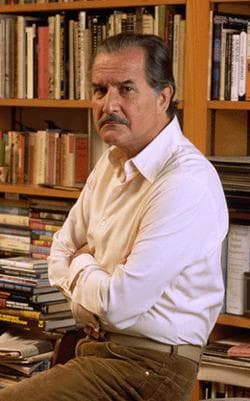
Carlos Fuentes Macías was a Mexican novelist and essayist. Among his works are The Death of Artemio Cruz (1962), Aura (1962), Terra Nostra (1975), The Old Gringo (1985) and Christopher Unborn (1987). In his obituary, The New York Times described Fuentes as "one of the most admired writers in the Spanish-speaking world" and an important influence on the Latin American Boom, the "explosion of Latin American literature in the 1960s and '70s", while The Guardian called him "Mexico's most celebrated novelist". His many literary honors include the Miguel de Cervantes Prize as well as Mexico's highest award, the Belisario Domínguez Medal of Honor (1999). He was often named as a likely candidate for the Nobel Prize in Literature, though he never won. His parents were both Mexicans.
Similar books
- The House of the Spirits
Isabel Allende
4.2 (190k) average on GoodreadsFantasyExplores complex family sagas and political history within a Latin American context, with a focus on interconnected lives.
- The Death of Artemio Cruz
Carlos Fuentes
3.9 (9k) average on GoodreadsHistorical FictionAnother Fuentes novel that dissects Mexican history and identity through a non-linear, multi-perspective narrative.
- The House on Mango Street
Sandra Cisneros
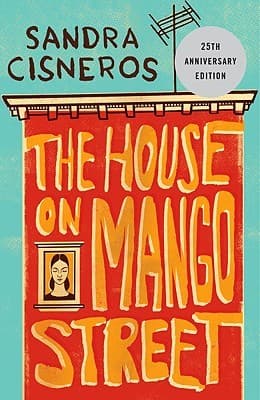
3.6 (126k) average on GoodreadsYoung AdultBoth The Crystal Frontier and The House on Mango Street explore the lives of individuals at the margins of mainstream society, particularly within Hispanic communities. However, Cisneros's novel offers a more intimate, coming-of-age perspective through the singular voice of Esperanza Cordero, focusing on a specific neighborhood and its inhabitants. Fuentes's work, in contrast, takes a broader, multi-vocal approach, encompassing diverse experiences across the entire U.S.-Mexico border, and often delves into the political and economic macro-level forces shaping these lives, whereas Cisneros's focus is more micro and personal.
- To Kill a Mockingbird
Harper Lee
4.3 (4.5M) average on GoodreadsHistorical FictionIn the 1930s Jim Crow South, Harper Lee writes about racial injustice, moral growth, and the quiet courage of a lawyer father, Atticus Finch, as seen through his young daughter's eyes.
- The Great Gatsby
F. Scott Fitzgerald
3.9 (3.8M) average on GoodreadsHistorical FictionIn the opulent Roaring Twenties, a mysterious millionaire's lavish parties hide his desperate, tragic pursuit of a lost love, exposing the emptiness within the American Dream.
- Pride and Prejudice
Jane Austen
4.3 (3M) average on GoodreadsHistorical FictionIn a society focused on status and money, Elizabeth Bennet navigates love and pride, challenging Mr. Darcy and social expectations to find true affection.





Enjoyed the summary?
A summary gives you the shape of the book. The book itself has the detail, the examples and the voice.
Find The Crystal Frontier on AmazonAs an Amazon Associate, BookBrief earns from qualifying purchases. How we're funded